456 books match the query 'India' and 28 start with m
cover of Maharajah of Bikaner: India

Maharajah of Bikaner

India

Hugh Purcell

Haus Publishing, 2010

The story of the Indian soldiery in the Great War needs a new telling and one important chapter of it will be about the Maharajah of Bikaner: Dashing, autocratic and a formidable public speaker, Ganga Singh commanded his own camel corps called the Ganga Risala, fought on the Western Front and in Egypt, became the first Indian general in the British Indian army and persuaded the maharajas to unite into the Chamber of Princes. As a result of this and his war record he was invited by Lloyd George to attend the Imperial War Conference in 1917 and then the Versailles Peace Conference two years later, where he persuaded the other delegates to include India in the new League of Nations, quite an achievement as it was not an independent nation. Less successfully he tried to prevent the dismemberment of Turkey.
[more]
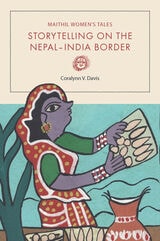
cover of Maithil Women's Tales: Storytelling on the Nepal-India Border

Maithil Women's Tales

Storytelling on the Nepal-India Border

Coralynn V. Davis

University of Illinois Press, 2014

Constrained by traditions restricting their movements and speech, the Maithil women of Nepal and India have long explored individual and collective life experiences by sharing stories with one another. Sometimes fantastical, sometimes including a kind of magical realism, these tales allow women to build community through a deeply personal and always evolving storytelling form.
 
In Maithil Women’s Tales, Coralynn V. Davis examines how these storytellers weave together their own life experiences--the hardships and the pleasures--with age-old themes. In so doing, Davis demonstrates, they harness folk traditions to grapple personally as well as collectively with social values, behavioral mores, relationships, and cosmological questions.
 
Each chapter includes stories and excerpts that reveal Maithil women’s gift for rich language, layered plots, and stunning allegory. In addition, Davis provides ethnographic and personal information that reveal the complexity of women’s own lives, and includes works painted by Maithil storytellers to illustrate their tales. The result is a fascinating study of being and becoming that will resonate for readers in women’s and Hindu studies, folklore, and anthropology.
[more]
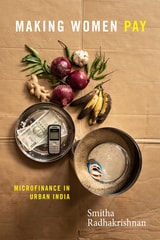
cover of Making Women Pay: Microfinance in Urban India

Making Women Pay

Microfinance in Urban India

Smitha Radhakrishnan

Duke University Press, 2022
In Making Women Pay, Smitha Radhakrishnan explores India's microfinance industry, which in the past two decades has come to saturate the everyday lives of women in the name of state-led efforts to promote financial inclusion and women's empowerment. Despite this favorable language, Radhakrishnan argues, microfinance in India does not provide a market-oriented development intervention, even though it may appear to help women borrowers. Rather, this commercial industry seeks to extract the maximum value from its customers through exploitative relationships that benefit especially class-privileged men. Through ethnography, interviews, and historical analysis, Radhakrishnan demonstrates how the unpaid and underpaid labor of marginalized women borrowers ensures both profitability and symbolic legitimacy for microfinance institutions, their employees, and their leaders. In doing so, she centralizes gender in the study of microfinance, reveals why most microfinance programs target women, and explores the exploitative implications of this targeting.
[more]
cover of Management of Smallpox Eradication in India

Management of Smallpox Eradication in India

Lawrence B. Brilliant

University of Michigan Press, 2025
Doctor Lawrence Brilliant and Doctor Isao Arita, Chief, Smallpox Eradication Programme, World Health Organization, Geneva, Switzerland, visited West Bengal during the autumn of 1973 in order to initiate the first trial of the smallpox eradication program, namely, a statewide search for hidden cases in a population of sixty million. Eighteen months of intensive work produced a final result of the recording of the last smallpox case in India; the date of onset of rash was May 24, 1975. No more cases have been detected.
[more]
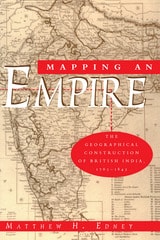
cover of Mapping an Empire: The Geographical Construction of British India, 1765-1843

Mapping an Empire

The Geographical Construction of British India, 1765-1843

Matthew H. Edney

University of Chicago Press, 1997

In this fascinating history of the British surveys of India, Matthew H. Edney relates how imperial Britain used modern survey techniques to not only create and define the spatial image of its Empire, but also to legitimate its colonialist activities.

"There is much to be praised in this book. It is an excellent history of how India came to be painted red in the nineteenth century. But more importantly, Mapping an Empire sets a new standard for books that examine a fundamental problem in the history of European imperialism."—D. Graham Burnett, Times Literary Supplement

"Mapping an Empire is undoubtedly a major contribution to the rapidly growing literature on science and empire, and a work which deserves to stimulate a great deal of fresh thinking and informed research."—David Arnold, Journal of Imperial and Commonwealth History

"This case study offers broadly applicable insights into the relationship between ideology, technology and politics. . . . Carefully read, this is a tale of irony about wishful thinking and the limits of knowledge."—Publishers Weekly
[more]
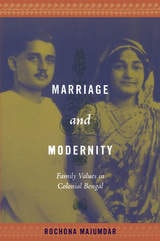
cover of Marriage and Modernity: Family Values in Colonial Bengal

Marriage and Modernity

Family Values in Colonial Bengal

Rochona Majumdar

Duke University Press, 2009

An innovative cultural history of the evolution of modern marriage practices in Bengal, Marriage and Modernity challenges the assumption that arranged marriage is an antiquated practice. Rochona Majumdar demonstrates that in the late colonial period Bengali marriage practices underwent changes that led to a valorization of the larger, intergenerational family as a revered, “ancient” social institution, with arranged marriage as the apotheosis of an “Indian” tradition. She meticulously documents the ways that these newly embraced “traditions”—the extended family and arranged marriage—entered into competition and conversation with other emerging forms of kinship such as the modern unit of the couple, with both models participating promiscuously in the new “marketplace” for marriages, where matrimonial advertisements in the print media and the payment of dowry played central roles. Majumdar argues that together the kinship structures newly asserted as distinctively Indian and the emergence of the marriage market constituted what was and still is modern about marriages in India.

Majumdar examines three broad developments related to the modernity of arranged marriage: the growth of a marriage market, concomitant debates about consumption and vulgarity in the conduct of weddings, and the legal regulation of family property and marriages. Drawing on matrimonial advertisements, wedding invitations, poems, photographs, legal debates, and a vast periodical literature, she shows that the modernization of families does not necessarily imply a transition from extended kinship to nuclear family structures, or from matrimonial agreements negotiated between families to marriage contracts between individuals. Colonial Bengal tells a very different story.

[more]
cover of Masked: The Life of Anna Leonowens, Schoolmistress at the Court of Siam

Masked

The Life of Anna Leonowens, Schoolmistress at the Court of Siam

Alfred Habegger

University of Wisconsin Press, 2014

A brave British widow goes to Siam and—by dint of her principled and indomitable character—inspires that despotic nation to abolish slavery and absolute rule: this appealing legend first took shape after the Civil War when Anna Leonowens came to America from Bangkok and succeeded in becoming a celebrity author and lecturer. Three decades after her death, in the 1940s and 1950s, the story would be transformed into a powerful Western myth by Margaret Landon’s best-selling book Anna and the King of Siam and Rodgers and Hammerstein’s musical The King and I.
            But who was Leonowens and why did her story take hold? Although it has been known for some time that she was of Anglo-Indian parentage and that her tales about the Siamese court are unreliable, not until now, with the publication of Masked, has there been a deeply researched account of her extraordinary life. Alfred Habegger, an award-winning biographer, draws on the archives of five continents and recent Thai-language scholarship to disclose the complex person behind the mask and the troubling facts behind the myth. He also ponders the curious fit between Leonowens’s compelling fabrications and the New World’s innocent dreams—in particular the dream that democracy can be spread through quick and easy interventions.
Exploring the full historic complexity of what it once meant to pass as white, Masked pays close attention to Leonowens’s midlevel origins in British India, her education at a Bombay charity school for Eurasian children, her material and social milieu in Australia and Singapore, the stresses she endured in Bangkok as a working widow, the latent melancholy that often afflicted her, the problematic aspects of her self-invention, and the welcome she found in America, where a circle of elite New England abolitionists who knew nothing about Southeast Asia gave her their uncritical support. Her embellished story would again capture America’s imagination as World War II ended and a newly interventionist United States looked toward Asia.

Best Books for General Audiences, selected by the American Association of School Librarians

Best Regional Special Interest Boosk, selected by the Public Library Reviewers
[more]
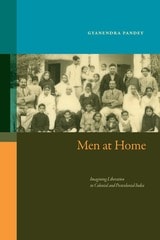
cover of Men at Home: Imagining Liberation in Colonial and Postcolonial India

Men at Home

Imagining Liberation in Colonial and Postcolonial India

Gyanendra Pandey

Duke University Press, 2025

In Men at Home, Gyanendra Pandey offers a detailed exploration of men’s comportment and conduct in the home and the implications of their ambiguous commitment to this critical part of their lives. The author draws on a wealth of archival materials—autobiographies, memoirs, fiction, and ethnographies—to situate Indian men firmly in the domestic world, underlining their dependence on the family and home. He investigates how men negotiate marriage, intimacy, and conjugality and focuses the effects of the humiliating and constant assertion of gender, caste, and class power in familial interactions. To uncover the nuances of these relationships, Pandey attends to the domestic commitments of upper-, middle-, and lower-class men across religion and caste. He considers issues of honor and shame, rights and responsibilities, citizenship and belonging through this exploration of how men across the subcontinent understand themselves in and beyond their domestic relationships. As much as it is a book about masculinity and conjugality, this is a book about Indian modernity, nationalism, and society as seen from the location of men in the home.
[more]
cover of Metabolic Living: Food, Fat, and the Absorption of Illness in India

Metabolic Living

Food, Fat, and the Absorption of Illness in India

Harris Solomon

Duke University Press, 2016

The popular narrative of "globesity" posits that the adoption of Western diets is intensifying obesity and diabetes in the Global South and that disordered metabolisms are the embodied consequence of globalization and excess. In Metabolic Living Harris Solomon recasts these narratives by examining how people in Mumbai, India, experience the porosity between food, fat, the body, and the city. Solomon contends that obesity and diabetes pose a problem of absorption between body and environment. Drawing on ethnographic fieldwork carried out in Mumbai's home kitchens, metabolic disorder clinics, food companies, markets, and social services, he details the absorption of everything from snack foods and mangoes to insulin, stress, and pollutants. As these substances pass between the city and the body and blur the two domains, the onset and treatment of metabolic illness raise questions about who has the power to decide what goes into bodies and when food means life. Evoking metabolism as a condition of contemporary urban life and a vital political analytic, Solomon illuminates the lived predicaments of obesity and diabetes, and reorients our understanding of chronic illness in India and beyond.
 
[more]
cover of Mexican Americans and Health: ¡Sana! ¡Sana!

Mexican Americans and Health

¡Sana! ¡Sana!

Adela de la Torre and Antonia Estrada

University of Arizona Press, 2001

By the middle of the twenty-first century, one out of every six Americans will be of Mexican descent; and as health care becomes of increasing concern to all Americans, the particular needs of Mexican Americans will have to be more thoroughly addressed. Mexican Americans and Health explains how the health of Mexican-origin people is often related to sociodemographic conditions and genetic factors, while historical and political factors influence how Mexican Americans enter the health care system and how they are treated once they access it. It considers such issues as occupational hazards for Mexican-origin agricultural workers—including pesticide poisoning, heat-related conditions, and musculoskeletal disorders—and women's health concerns, such as prenatal care, preventable cancers, and domestic violence. The authors clearly discuss the health status of Mexican Americans relative to the rest of the U.S. population, interweaving voices of everyday people to explain how today's most pressing health issues have special relevance to the Mexican American community:
- how values such as machismo, familismo, and marianismo influence care-seeking decisions and treatment of illness;
- how factors such as cultural values, socioeconomic status, peer pressure, and family concerns can contribute to substance abuse;
- how cultural attitudes toward sex can heighten the risk of AIDS—and how approaches to AIDS prevention and education need to reflect core cultural values such as familismo, respeto, and confianza. The book also addresses concerns of Mexican Americans regarding the health care system. These include not only access to care and to health insurance but also the shortage of bilingual and bicultural health care professionals. This coverage stresses not only the importance of linguistic competency but also the need to understand folklore illnesses, herbal remedies, and spiritual practices that can delay the treatment of illness and either complement or compromise treatment. Of all the issues that face the contemporary Mexican American community, none is as important to its very survival as health and health care. This timely book gives readers a broad understanding of these complex issues and points the way toward a healthier future for all people of Mexican origin. Mexican Americans and Health and
Chicano Popular Culture are the first volumes in the series The Mexican American Experience, a cluster of modular texts designed to provide greater flexibility in undergraduate education. Each book deals with a single topic concerning the Mexican American population. Instructors can create a semester-length course from any combination of volumes, or may choose to use one or two volumes to complement other texts.
[more]
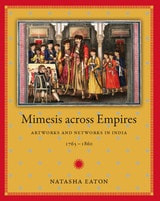
cover of Mimesis across Empires: Artworks and Networks in India, 1765-1860

Mimesis across Empires

Artworks and Networks in India, 1765-1860

Natasha Eaton

Duke University Press, 2013

In Mimesis Across Empires, Natasha Eaton examines the interactions, attachments, and crossings between the visual cultures of the Mughal and British Empires during the formative period of British imperial rule in India. Eaton explores how the aesthetics of Mughal "vernacular" art and British "realist" art mutually informed one another to create a hybrid visual economy. By tracing the exchange of objects and ideas—between Mughal artists and British collectors, British artists and Indian subjects, and Indian elites and British artists—she shows how Mughal artists influenced British conceptions of their art, their empire, and themselves, even as European art gave Indian painters a new visual vocabulary with which to critique colonial politics and aesthetics. By placing her analysis of visual culture in relation to other cultural encounters—ethnographic, legislative, diplomatic—Eaton uncovers deeper intimacies and hostilities between the colonizer and the colonized, linking artistic mimesis to the larger colonial project in India.
[more]
cover of Missy: A Novel

Missy

A Novel

Raghav Rao

Northwestern University Press, 2026

A remarkable young woman flees India to chase the dream of self-reinvention in America

The orphaned girls of St. Ursula’s convent are destined to be nuns or servants, but seventeen-year-old Savi dreams of escape. She is chosen to work as a governess for the wealthy Nandiyar family at their country estate in Tamil Nadu, where she falls for a lively and carefree apprentice sculptor. After the violent and horrific events of a single night, they are forced to flee, leaving their homeland forever in the rearview.

Decades later, Savi has become known to all as “Missy” and runs a successful driving school in Chicago. She is a pillar of the South Asian community and the mother of two brilliant, stubborn young women, Mansi and Shilpa. But when Varun, a charming doctor with mysterious connections to her past, enters their lives, a chain of events is set off that puts Missy’s carefully constructed world in jeopardy. Can Missy outrun her secrets? And, if she is forced to face them, what will become of those she loves?

 

[more]
cover of Modern Cows and Bovine Transformations: The Remaking of India's Cattle, 1790-1950

Modern Cows and Bovine Transformations

The Remaking of India's Cattle, 1790-1950

David Arnold

University of Chicago Press, 0

Examines how India’s cattle underwent profound changes during the years of British colonial rule.

Drawing on extensive, untapped archives, Modern Cowsand Bovine Transformations illustrates the radical remaking of India’s cattle against the backdrop of colonial policies, environmental change, and anticolonial politics. Historian David Arnold examines the history of cows in India from 1790 to 1950, focusing on science, technology, and medicine to provide a secular account of imperial animal husbandry.

Doing justice to the wide variety of Indian cattle breeds, Arnold unpacks “bovine technology” and its subaltern linkages, covering topics such as the role of cattle in agriculture and the military; haulage and transport; breeding strategies; bacteriology and nutrition science, and India’s milk revolution. He also examines the dispersal of Indian cattle around the globe and the role that colonial policies played in spreading knowledge of Indian cattle breeds and facilitating their export. Finally, he addresses the “cattle crisis” brought on by famines, droughts, and disease, and disputes between colonial rulers and Hindu nationalists. He concludes with the impact of World War II and Partition on bovine populations, illustrating the consequences for independent India’s attempts to restore the milk supply and rebuild cattle breeds while also respecting the Hindu cow protection agenda. In the end, Arnold argues, the history of cattle in India provides us with a new way of understanding the power of the colonial state, its ambitions to transform India, its appropriation of the Indian subcontinent’s resources, and the myriad contradictions of its policies.
[more]
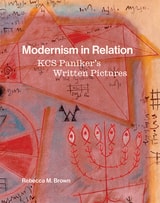
cover of Modernism in Relation: KCS Paniker’s Written Pictures

Modernism in Relation

KCS Paniker’s Written Pictures

Rebecca M. Brown

J. Paul Getty Trust, The, 0

This innovative book reimagines modernism through the illegible scribbles and vibrant colors of southern Indian artist KCS Paniker.

KCS Paniker (1911–1977) is a canonical figure in India’s twentieth-century modernism. He was principal of the Madras School of Art and founder of one of the world’s longest-standing artists’ communities. Yet, even within India, he remains a marginal figure, positioned at the periphery of a dominant art world centered in the north. Paniker’s best-known body of work, the Words and Symbols series (1963–77), calls on us to reconsider how knowledge is produced and disseminated in a postcolonial, decolonizing world. These “written pictures”—paintings filled with symbols, tables, equations, and illegible scribbles—invite decoding, only to undermine the pursuit of wholeness or stable meaning.

Paniker famously called Paul Klee his “guru.” In this book, art historian Rebecca M. Brown explores what that might mean, moving beyond tracing influence and derivation to embrace a fuller sense of artistic relation across geography and time. Featuring over 100 stunning illustrations, Modernism in Relation explores the dynamic, twisting currents of modernism, tracing how Paniker navigated its waters on his own terms—abandoning prescriptions for what modern art should be or what Indian modernism should look like. The book reveals a maker seeking new creative languages, challenging ways of knowing, and exploring the unpredictable, ever-changing nature of relation.
[more]
cover of Mohandas Gandhi: Experiments in Civil Disobedience

Mohandas Gandhi

Experiments in Civil Disobedience

Talat Ahmed

Pluto Press, 2016

Mohandas Gandhi, icon of Indian liberation, remains an inspiration for anti-capitalists and peace activists globally. His campaigns for national liberation based on non-violence and mass civil disobedience were critical to defeating the power of the British Empire.

This biography examines his campaigns from South Africa to India to evaluate the successes and failures of non-violent resistance. Seventy years after his death, his legacy remains contested: was he a saint, revolutionary, class conciliator, or self-obsessed spiritual zealot?

The contradictions of Gandhi’s politics are unpicked through an analysis of the social forces at play in the mass movement around him. Entrusted to liberate the oppressed of India, his key support base were industrialists, landlords and the rich peasantry. Gandhi’s moral imperatives often clashed with these vested material interests, as well as with more radical currents to his left.

Today, our world is scarred by permanent wars, racism and violence, environmental destruction and economic crisis. Can non-violent resistance win against state and corporate power? This book explores Gandhi’s experiments in civil disobedience to assess their relevance for struggles today.
[more]
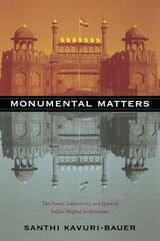
cover of Monumental Matters: The Power, Subjectivity, and Space of India's Mughal Architecture

Monumental Matters

The Power, Subjectivity, and Space of India's Mughal Architecture

Santhi Kavuri-Bauer

Duke University Press, 2011

Built in the sixteenth and seventeenth centuries, India’s Mughal monuments—including majestic forts, mosques, palaces, and tombs, such as the Taj Mahal—are world renowned for their grandeur and association with the Mughals, the powerful Islamic empire that once ruled most of the subcontinent. In Monumental Matters, Santhi Kavuri-Bauer focuses on the prominent role of Mughal architecture in the construction and contestation of the Indian national landscape.

She examines the representation and eventual preservation of the monuments, from their disrepair in the colonial past to their present status as protected heritage sites. Drawing on theories of power, subjectivity, and space, Kavuri-Bauer’s interdisciplinary analysis encompasses Urdu poetry, British landscape painting, imperial archaeological surveys, Indian Muslim identity, and British tourism, as well as postcolonial nation building, World Heritage designations, and conservation mandates. Since Independence, the state has attempted to construct a narrative of Mughal monuments as symbols of a unified, secular nation. Yet modern-day sectarian violence at these sites continues to suggest that India’s Mughal monuments remain the transformative spaces—of social ordering, identity formation, and national reinvention—that they have been for centuries.
[more]
cover of Mother India: Selections from the Controversial 1927 Text, Edited and with an Introduction by Mrinalini Sinha

Mother India

Selections from the Controversial 1927 Text, Edited and with an Introduction by Mrinalini Sinha

Katherine Mayo

University of Michigan Press, 2000

Mother India, a polemical attack against Indian self-rule written by U.S. historian Katherine Mayo, was met with a storm of controversy when it was published in 1927. The controversy generated still reverberates and thus is still worth revisiting, some fifty years after Indian independence. In responding to Mayo's argument laid out in Mother India, the leaders of the national movement and the independent women's movement in India laid the foundations of an alliance that gave modern Indian nationalism its distinctive character.
Mrinalini's Sinha's edition provides selections of this controversial book and commentary on the Mother India phenomenon. It also reprints a range of responses from Mayo's contemporaries. Sinha's edition works to locate the book and the controversy it incited in the context of U.S. domestic, British Imperial, and Indian nationalist politics. Unlike previous editions, Sinha's examines the history of cultural feminisms and the relations between women's movements in the United States, Britain, and India; the examination of these different movements reveals intriguing insights into the nature of the varied reactions to Mayo's book. The edition includes several formerly obscure contemporary responses to Mother India from representatives of the women's movement and of the anti-caste movement in India.
Intended as a tool for students and teachers alike, this book will be an important text in the field of women's studies, cultural studies, political science, history, and religion, among others.
Mrinalini Sinha is Associate Professor of History, Southern Illinois University. She is the author of Colonial Masculinity: The 'Manly Englishman' and the 'Effeminate Bengali' in the Late Nineteenth Century.
[more]
cover of Mother Teresa's General Letters to Her Sisters

Mother Teresa's General Letters to Her Sisters

Brian Kolodiejchuk

Catholic University of America Press, 2024

Mother Teresa’s General Letters to Her Sisters is a collection of Mother Teresa’s circular letters to the members of her religious congregation, the Missionaries of Charity Sisters. Not intended for those outside her community, they were written informally and spontaneously, often with little editing. It was for Mother Teresa a way of “being present” to the members of her rapidly expanding religious order. Seemingly of little interest except for those to whom they were addressed, the letters reveal the spiritual depth and pragmatic leadership of one of the most popular modern saints, as well as the inner dynamics underlying one of the most flourishing religious congregations of the last century. At the same time, and perhaps surprisingly, these letters may also prove to be worthwhile reading for a wider audience. Something of God’s wisdom and love seems to shine through Mother Teresa’s guidance and counsels, giving the reader light and help even though he or she is not living the same religious life as one of the Sisters. Mother Teresa’s unpolished statements are at times humble and at times humbling. They inspire confidence and encourage generosity. Many a time they are humorous but more often challenging. They are sprinkled with serene joy but also permeated with deep pain. She delighted in her Sisters’ accomplishments yet did not shy away from correcting even the smallest flaw, which didn’t escape her very observant eye. Sometimes she sounded just like a mother, full of tender loving care, and at other times more like a commander in chief, exhibiting an iron will and uncompromising determination. In either case, her followers seemed to have been drawn into the mystery of her charism, endeavoring to keep pace with her. Was it the attraction of what could be termed as her “leadership style” in the unremitting service of the poorest of the poor, or the perceived love of a mother’s heart that made her so unanimously loved and admired by the members of her congregation? Or was it both? The letters will reveal the answer! Inspiring in their simplicity, the letters may well serve as a treasure trove where anyone from a reflective scholar to a caring mother of a family may find satisfaction for their spiritual palate. The attractiveness of perennial truth often makes Mother Teresa’s presentation of traditional spiritual themes likewise relevant for contemporary needs. In the context of Mother Teresa’s statement that “we are created for greater things, to love and to be loved’,” these letters will help the reader discover and experience God’s presence through the little miracles of His love in one’s daily life. They will inspire us “to put our love into living action,” sharing His love with all those we meet, and so make our lives “something beautiful for God.”
[more]
cover of Mother Teresa: Just a Pencil In God's Hand: Reflections in Honor of a Saint

Mother Teresa

Just a Pencil In God's Hand: Reflections in Honor of a Saint

Brian Kolodiejchuk

Catholic University of America Press, 2024
This anthology contains a collection of intellectual explorations honoring the enduring legacy of Mother Teresa. The symposium, held on 10 September 2022 at the Catholic University of America (CUA), brought together leading scholars to speak of Mother Teresa's legacy to produce the following papers, each shedding light on a life characterized by compassion, selflessness, and devoted service to the poorest of the poor, the forgotten, and the outcast of society. The keynote address by George Weigel, “Mother Teresa and John Paul II: Lessons for Our Troubled Times,” uncovers the lessons from the partnership of two great saints and their efforts to make way for Love in a dark world. "Mother Teresa: Holiness, Process of Canonization, and Miracle;" by the postulator of her cause, Fr. Brian Kolodiejchuk, MC, explores the nature of holiness, several characteristics of Mother Teresa’s holiness and the process that led to her canonization in 2016. In “Praxiological Approach to the Poor: Mother Teresa’s authentic retrieval of Christian praxis through faith, hope, and charity,” presented by Fr Darren Dentino, MC, we delve into Mother Teresa’s profound relationship with the underprivileged, showcasing a service approach that transcends simple social work and touches and heals the physical and inner wounds of many. Janice Breidenbach, a professor at Ave Maria University, sheds light on her own experience as a mother and explains Mother Teresa’s deep understanding of motherhood in her paper “Mother Teresa’s Philosophy of Motherhood.” "Mother Teresa: A Carmelite Perspective" by CUA professor, Fr Stephen Payne, OCD, explores the connections between Mother Teresa and the Carmelite tradition, highlighting the influence of Carmelite spirituality on her life and journey. Jim Towey's paper delves into Mother Teresa's motherhood and her humanity, emphasizing how her ordinary yet profound acts of love and compassion were reflective of her saintly character. In the annual conference held the following year, Catholic University of America professor Bradley Gregory, examines the phrase “you did it to me” from the judgment scene in the gospel of Matthew (25:40) which Mother Teresa would refer to as “the gospel on five fingers.” Drawing on the rich theological resources of Scripture and the Church’s tradition, Professor Bradley expounds on how this passage relates to the gospel of grace, which calls us into God’s work of redeeming and healing the world. Each paper testifies to Mother Teresa’s enduring legacy as a reflection of God’s love in the world, providing readers an opportunity to contemplate her steadfast dedication and honor the legacy of one of the 20th century's most profound figures.
[more]
cover of Mourning the Nation: Indian Cinema in the Wake of Partition

Mourning the Nation

Indian Cinema in the Wake of Partition

Bhaskar Sarkar

Duke University Press, 2009

What remains of the “national” when the nation unravels at the birth of the independent state? The political truncation of India at the end of British colonial rule in 1947 led to a social cataclysm in which roughly one million people died and ten to twelve million were displaced. Combining film studies, trauma theory, and South Asian cultural history, Bhaskar Sarkar follows the shifting traces of this event in Indian cinema over the next six decades. He argues that Partition remains a wound in the collective psyche of South Asia and that its representation on screen enables forms of historical engagement that are largely opaque to standard historiography.

Sarkar tracks the initial reticence to engage with the trauma of 1947 and the subsequent emergence of a strong Partition discourse, revealing both the silence and the eventual “return of the repressed” as strands of one complex process. Connecting the relative silence of the early decades after Partition to a project of postcolonial nation-building and to trauma’s disjunctive temporal structure, Sarkar develops an allegorical reading of the silence as a form of mourning. He relates the proliferation of explicit Partition narratives in films made since the mid-1980s to disillusionment with post-independence achievements, and he discusses how current cinematic memorializations of 1947 are influenced by economic liberalization and the rise of a Hindu-chauvinist nationalism. Traversing Hindi and Bengali commercial cinema, art cinema, and television, Sarkar provides a history of Indian cinema that interrogates the national (a central category organizing cinema studies) and participates in a wider process of mourning the modernist promises of the nation form.
[more]
cover of Mr. Sampath--the Printer of Malgudi

Mr. Sampath--the Printer of Malgudi

R. K. Narayan

University of Chicago Press, 1949

"There are writers—Tolstoy and Henry James to name two—whom we hold in awe, writers—Turgenev and Chekhov—for whom we feel a personal affection, other writers whom we respect—Conrad for example—but who hold us at a long arm's length with their 'courtly foreign grace.' Narayan (whom I don't hesitate to name in such a context) more than any of them wakes in me a spring of gratitude, for he has offered me a second home. Without him I could never have known what it is like to be Indian."—Graham Greene

Offering rare insight into the complexities of Indian middle-class society, R. K. Narayan traces life in the fictional town of Malgudi. The Dark Room is a searching look at a difficult marriage and a woman who eventually rebels against the demands of being a good and obedient wife. In Mr. Sampath, a newspaper man tries to keep his paper afloat in the face of social and economic changes sweeping India. Narayan writes of youth and young adulthood in the semiautobiographical Swami and Friends and The Bachelor of Arts. Although the ordinary tensions of maturing are heightened by the particular circumstances of pre-partition India, Narayan provides a universal vision of childhood, early love and grief.

"The experience of reading one of his novels is . . . comparable to one's first reaction to the great Russian novels: the fresh realization of the common humanity of all peoples, underlain by a simultaneous sense of strangeness—like one's own reflection seen in a green twilight."—Margaret Parton, New York Herald Tribune

"Narayan's limits are meticulously imposed and observed but his humor and compassion come from a deep universal well, with the result that he has transformed his imaginary township of Malgudi into a bubbling parish of the world."—Christopher Wordsworth, Observer
[more]
cover of Much Maligned Monsters: A History of European Reactions to Indian Art

Much Maligned Monsters

A History of European Reactions to Indian Art

Partha Mitter

University of Chicago Press, 1992
In this fascinating study, Partha Mitter traces the history of European reactions to Indian art, from the earliest encounters of explorers with the exotic. East to the more sophisticated but still incomplete appreciations of the early twentieth century. Mitter's new Preface reflects upon the profound changes in Western interpretations of non-Western societies over the past fifteen years.
[more]
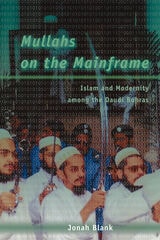
cover of Mullahs on the Mainframe: Islam and Modernity among the Daudi Bohras

Mullahs on the Mainframe

Islam and Modernity among the Daudi Bohras

Jonah Blank

University of Chicago Press, 2001
In Jonah Blank's important, myth-shattering book, the West gets its first look at the Daudi Bohras, a unique Muslim denomination who have found the core of their religious beliefs largely compatible with modern ideology. Combining orthodox Muslim prayer, dress, and practice with secular education, relative gender equality, and Internet use, this community serves as a surprising reminder that the central values of "modernity" are hardly limited to the West.
[more]
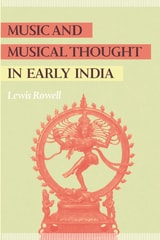
cover of Music and Musical Thought in Early India

Music and Musical Thought in Early India

Lewis Rowell

University of Chicago Press, 1992

Offering a broad perspective of the philosophy, theory, and aesthetics of early Indian music and musical ideology, this study makes a unique contribution to our knowledge of the ancient foundations of India's musical culture. Lewis Rowell reconstructs the tunings, scales, modes, rhythms, gestures, formal patterns, and genres of Indian music from Vedic times to the thirteenth century, presenting not so much a history as a thematic analysis and interpretation of India's magnificent musical heritage.

In Indian culture, music forms an integral part of a broad framework of ideas that includes philosophy, cosmology, religion, literature, and science. Rowell works with the known theoretical treatises and the oral tradition in an effort to place the technical details of musical practice in their full cultural context. Many quotations from the original Sanskrit appear here in English translation for the first time, and the necessary technical information is presented in terms accessible to the nonspecialist. These features, combined with Rowell's glossary of Sanskrit terms and extensive bibliography, make Music and Musical Thought in Early India an excellent introduction for the general reader and an indispensable reference for ethnomusicologists, historical musicologists, music theorists, and Indologists.
[more]
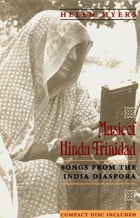
cover of Music of Hindu Trinidad: Songs from the India Diaspora

Music of Hindu Trinidad

Songs from the India Diaspora

Helen Myers

University of Chicago Press, 1998

Like many other small towns in Trinidad, Felicity is populated almost entirely by East Indians. In their Caribbean exile, the residents of Felicity have created and recreated the music of their Hindu ancestors. Music of Hindu Trinidad is a fascinating account of the history and cultural significance of Hindu music that explores its symbolic, aesthetic, and psychological aspects while asking the larger question of how this music has contributed to the formation of identity in the midst of their great diaspora.

Myers details the musical repertory of Felicity, which is based largely on north Indian genres including the traditional Bhojpuri folk songs and drumming styles brought by the first indentured laborers in 1845. In her engaging exploration of the fate of Indian classical music and new popular styles such as Hindi calypso, soca, and chutney, she even finds herself at the ancestral home of Trinidadian V. S. Naipaul in India. Copiously illustrated and accompanied by a compact disk, Music of Hindu Trinidad is a model ethnographic study.
[more]
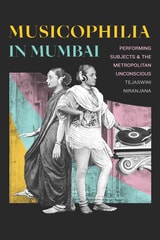
cover of Musicophilia in Mumbai: Performing Subjects and the Metropolitan Unconscious

Musicophilia in Mumbai

Performing Subjects and the Metropolitan Unconscious

Tejaswini Niranjana

Duke University Press, 2020
In Musicophilia in Mumbai Tejaswini Niranjana traces the place of Hindustani classical music in Mumbai throughout the long twentieth century as the city moved from being a seat of British colonial power to a vibrant postcolonial metropolis. Drawing on historical archives, newspapers, oral histories, and interviews with musicians, critics, students, and instrument makers as well as her own personal experiences as a student of Hindustani classical music, Niranjana shows how the widespread love of music throughout the city created a culture of collective listening that brought together people of diverse social and linguistic backgrounds. This culture produced modern subjects Niranjana calls musicophiliacs, whose subjectivity was grounded in a social rather than an individualistic context. By attending concerts, learning instruments, and performing at home and in various urban environments, musicophiliacs embodied forms of modernity that were distinct from those found in the West. In tracing the relationship between musical practices and the formation of the social subject, Niranjana opens up new ways to think about urbanity, subjectivity, culture, and multiple modernities.
[more]
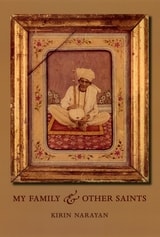
cover of My Family and Other Saints

My Family and Other Saints

Kirin Narayan

University of Chicago Press, 2007

In 1969, young Kirin Narayan’s older brother, Rahoul, announced that he was quitting school and leaving home to seek enlightenment with a guru. From boyhood, his restless creativity had continually surprised his family, but his departure shook up everyone— especially Kirin, who adored her high-spirited, charismatic brother.

A touching, funny, and always affectionate memoir, My Family and Other Saints traces the reverberations of Rahoul's spiritual journey through the entire family. As their beachside Bombay home becomes a crossroads for Westerners seeking Eastern enlightenment, Kirin’s sari-wearing American mother wholeheartedly embraces ashrams and gurus, adopting her son’s spiritual quest as her own. Her Indian father, however, coins the term “urug”—guru spelled backward—to mock these seekers, while young Kirin, surrounded by radiant holy men, parents drifting apart, and a motley of young, often eccentric Westerners, is left to find her own answers. Deftly recreating the turbulent emotional world of her bicultural adolescence, but overlaying it with the hard-won understanding of adulthood, Narayan presents a large, rambunctious cast of quirky characters. Throughout, she brings to life not just a family but also a time when just about everyone, it seemed, was consumed by some sort of spiritual quest.

“A lovely book about the author's youth in Bombay, India. . . . The family home becomes a magnet for truth-seekers, and Narayan is there to affectionately document all of it.”—Body + Soul
 
“Gods, gurus and eccentric relatives compete for primacy in Kirin Narayan's enchanting memoir of her childhood in Bombay.”—William Grimes, New York Times
[more]
cover of Mysore Modern: Rethinking the Region under Princely Rule

Mysore Modern

Rethinking the Region under Princely Rule

Janaki Nair

University of Minnesota Press, 2011

Mysore Modern reconceptualizes modernity in India using the history of the Princely State of Mysore. In this forcefully argued work, Janaki Nair critiques earlier notions of the native states of India as spaces that were either defined entirely by the dominant narratives of colonial/national modernity or were relatively untouched by them.

Grounded in political history, and deriving insights from a wide range of visual, social, and legal texts and issues, Mysore Modern reperiodizes the modern by connecting these apparently discrepant registers to build up a case for a specifically regional, “monarchical modern” moment in Indian history. Nair examines mural and portraiture traditions, as well as forms of memorialization and nationalization of art and architectural practices. The volume also considers bureaucratic efforts centered on the use of law and development as instruments of modernity.

As Nair demonstrates, the resolution of struggles about the significance of the past in the present, the control of women’s sexuality and labor, and the role of the bureaucracy in Mysore reveal the imperatives of taking the region as the inaugural site for writing a history of Indian modernity.

[more]