Results by title
1787 books match the query 'Literary Collections' and 71 start with m
Mad Heart Be Brave
Essays on the Poetry of Agha Shahid AliKazim Ali, Editor
University of Michigan Press, 2017
Mafeking Diary
A Black Man’s View of a White Man’s WarSol T. Plaatje
Ohio University Press, 1990
“Sol Plaatje’s Mafeking Diary is a document of enduring importance and fascination. The product of a young black South African court interpreter, just turned 23 years old when he started writing, it opens an entirely new vista on the famous Siege of Mafeking. By shedding light on the part played by the African population of the town, Plaatje explodes the myth, maintained by belligerents, and long perpetuated by both historians and the popular imagination, this this was a white man’s affair. One of the great epics of British imperial history, and perhaps the best remembered episode of the Anglo-Boer war of 1899–1902, is presented from a wholly novel perspective.
“At the same time, the diary provides an intriguing insight into the character of a young man who was to play a key role in South African political and literary history during the first three decades of this century. It reveals much of the perceptions and motives that shaped his own attitudes and intellectual development and, indeed, those of an early generation of African leaders who sought to build a society which did not determine the place of its citizens by the colour of their skin. The diary therefore illuminates the origins of a struggle which continues to this day.”
— John L. Comaroff (ed.) in his preface
Major Women Writers of Seventeenth-Century England
James Fitzmaurice, Josephine A. Roberts, Carol L. Barash, Eugene R. Cunnar, and Nancy A. Gutierrez, Editors
University of Michigan Press, 1997
Man in the Moon
Essays on Fathers and FatherhoodStephanie G'Schwind
University Press of Colorado, 2014
"Science claims it will one day be able to eliminate fathers from the equation by mating bone marrow with ovum. When that day comes, I imagine this book, along with a handful of other works (King Lear, Fun Home) will become even more necessary. Herein find the blueprints for the mystery, the maps for the uncharted, the keys to the archetype."
—Nick Flynn, author of The Reenactments and Another Bullshit Night in Suck City
"At this moment, I find myself at loose ends, lost in the various vacuums left by my father's dying and my sons' departures out into the voids. Yet this stunning constellation of essays centered me, became for me fine instruments of reckoning of where to stand in the ceaseless entropic dynamic of kin, of paternal keening. These waxing meditations demonstrate the inflationary universe, the heft and velocity of that big ol' nothing. They elegantly fill, with sober hope and the balm of joy, the terrifying, infinite spaces between those waning stars."
—Michael Martone, author of Michael Martone and Four for a Quarter
"What an unreachable mystery the father is, preoccupied, unknowable, pervasive. In these fascinating essays, a shared portrait emerges as writers articulate the perpetual puzzle of the father and, with grace and candor, explore what it means to not know him, to never know him. As one voice, these essays investigate the man—his inventories, his myths, his mere traces—who makes up our horizons, who forever shimmers there beyond our collective grasp."
—Susanna Sonnenberg, author of Her Last Death and She Matters: A Life in Friendships
Selected from the country's leading literary journals and publications—Crazyhorse, Colorado Review, The Nervous Breakdown, Creative Nonfiction, Georgia Review, Gulf Coast, The Missouri Review, The Normal School, and others—Man in the Moon brings together essays in which sons, daughters, and fathers explore the elusive nature of this intimate relationship and find unique ways to frame and understand it: through astronomy, arachnology, storytelling, map-reading, television, puzzles, DNA, and so on. In the collection's title essay, Bill Capossere considers the inextricable link between his love of astronomy and memories of his father: "The man in the moon is no stranger to me,” he writes. "I have seen his face before, and it is my father's, and his father's, and my own.” Other essays include Dinty Moore's "Son of Mr. Green Jeans: A Meditation on Missing Fathers,” in which Moore lays out an alphabetic investigation of fathers from popular culture—Ward Cleaver, Jim Anderson, Ozzie Nelson—while ruminating on his own absent father and hesitation to become a father himself. In "Plot Variations,” Robin Black attempts to understand, through the lens of teaching fiction to creative writing students, her inability to attend her father's funeral. Deborah Thompson tries to reconcile her pride in her father's pioneering research in plastics and her concerns about their toxic environmental consequences in "When the Future Was Plastic.” At turns painfully familiar, comic, and heartbreaking, the essays in this collection also deliver moments of seari
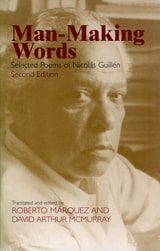
Man-Making Words
Selected Poems of Nicolas GuillenNicolas Guillen
University of Massachusetts Press, 2003
The Cuban poet Nicolás Guillén, who was born in the eastern province of Camagüey in 1902, died in 1989. This new edition of his selected poems, reissued thirty years after its original publication, includes an extensive, new introductory essay by Roberto Márquez, one of the original translators and a leading authority on Caribbean and Latin American literature and culture.
Many Californias
Literature from the Golden StateGerald W. Haslam
University of Nevada Press, 1999
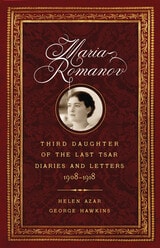
Maria Romanov
Third Daughter of the Last Tsar, Diaries and Letters, 1908–1918Helen Azar
Westholme Publishing, 2019
In the twilight of the nineteenth century, a third daughter was born to Tsar Nicholas II and his wife Alexandra. Grand Duchess Maria Nikolaevna—known to her family and friends simply as “Mashka”—grew into an empathetic, down-to-earth girl, unaffected by her imperial status. Often overshadowed by her two older sisters, Olga and Tatiana, and later, her brother Alexei and younger sister Anastasia, Maria ultimately proved to have a uniquely strong and solid personality.
In Maria Romanov: Third Daughter of the Last Tsar, Diaries and Letters, 1908–1918, by translator and researcher Helen Azar with George Hawkins, Mashka’s voice is heard again through her intimate writings, presented for the first time in English. The Grand Duchess was much more than a pretty princess wearing white dresses in hundreds of faded sepia photographs; Maria’s surviving diaries and letters offer a fascinating insight into the private life of a loving family—from festivals and faith, to Rasputin and the coming Revolution; it is clear why this middle child ultimately became a pillar of strength and hope for them all. Maria’s gentle character belied her incredible courage, which emerged in the darkest hours of her brief life. “The incarnation of modesty elevated by suffering,” as Maria was described during the last weeks of her life, she was able to maintain her kindness and optimism, even in the midst of violence and degradation.
On a stuffy summer night in 1918, only a few weeks after her nineteenth birthday, Maria was murdered along with the rest of her family in a cellar of a house chosen for this “special purpose.” Two sets of charred remains, confirmed to be Maria’s and her brother Alexei’s, were not discovered until almost ninety years later, separately from those of the other victims of the massacre. As the authors relate, it is still unknown if these remains will ever be allowed to be laid to rest.
Mark Twain Speaking
Paul Fatout
University of Iowa Press, 1976
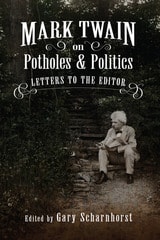
Mark Twain on Potholes and Politics
Letters to the EditorEdited by Gary Scharnhorst
University of Missouri Press, 2014
A frequent outlet for Twain’s wit was in letters to the editors of various newspapers and periodicals. Sharing his thoughts and opinions on topical issues ranging from national affairs to local social events, with swipes along the way at woman suffrage, potholes, literary piracy and other scams, slow mail delivery, police corruption, capital punishment, and the removal of Huck Finn from libraries, Twain never hesitated to speak his mind. And now thanks to Gary Scharnhorst, more than a hundred of these letters are available in one place for us to enjoy.
From his opinions on the execution of an intellectually brilliant murderer, to his scathing review of a bureau he perceived as “a pack of idiots” running on a currency of doughnuts, Twain’s pure, unbridled voice is evident throughout his letters. Mark Twain on Potholes and Politicsgives readers a chance to delve further than ever before into the musings of the most recognizable voice in American literature.
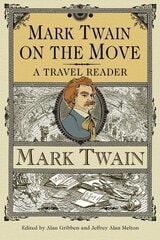
Mark Twain on the Move
A Travel ReaderAlan Gribben
University of Alabama Press, 2008
Journeys, humor, and insight from Mark Twain's travel narratives - America’s literary master.
Mark Twain on the Move gathers the very best passages from all five of Mark Twain’s travel narratives: The Innocents Abroad (1869), Roughing It (1872), A Tramp Abroad (1880), Life on the Mississippi (1883), and Following the Equator (1897). Although Twain’s travel narratives were his best sellers throughout his career, modern readers are largely unfamiliar with them. Thus, readers are not only missing some of Twain’s most hilarious and insightful material, they are also missing a complete understanding of a beloved literary and cultural icon.
Mark Twain on the Move presents the best of these works—sometimes respectful, often irreverent and outlandish—at their most lively and captures his renowned experiences as an American tourist. And they demonstrate why Twain’s greatest popularity in his lifetime derived from his travel writings rather than from his novels. Twain was always entertaining and provocative while on the move and this collection captures that fabled energy for modern readers.
Mark Twain
The Complete InterviewsEdited by Gary Scharnhorst
University of Alabama Press, 2006
Mark Twain: The Complete Interviews is an annotated and indexed scholarly edition of every known interview with Mark Twain. In these interviews that span his entire career, Twain discusses matters as varied as his lecture style, his writings, and his bankruptcy, while holding forth on such timeless issues as human nature, politics, war and peace, government corruption, humor, race relations, imperialism, international copyright, the elite, and his impressions of other writers.
These interviews are oral performances in their own right and a new basis for evaluating contemporary responses to Twain’s writings. The interviews are records of verbal conversations rather than texts written in Twain’s hand. Four interviews are new to scholarship; fewer than a fifth have ever been reprinted.
.
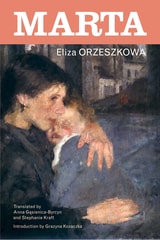
Marta
A NovelEliza Orzeszkowa
Ohio University Press, 2018
Eliza Orzeszkowa was a trailblazing Polish novelist who, alongside Leo Tolstoy and Henryk Sienkiewicz, was a finalist for the 1905 Nobel Prize in Literature. Of her many works of social realism, Marta (1873) is among the best known, but until now it has not been available in English. Easily a peer of The Awakening and A Doll’s House, the novel was well ahead of the English literature of its time in attacking the ways the labor market failed women.
Suddenly widowed, the previously middle-class Marta Świcka is left penniless and launched into a grim battle for her survival and that of her small daughter. As she applies for job after job in Warsaw—portrayed here as an every-city, an unforgiving commercial landscape that could be any European metropolis of the time—she is told time after time that only men will be hired, that men need jobs because they are fathers and heads of families.
Marta burns with Orzeszkowa’s feminist conviction that sexism was not just an annoyance but a threat to the survival of women and children. It anticipated the need for social safety nets whose existence we take for granted today, and could easily read as an indictment of current efforts to dismantle those very programs. Tightly plotted and exquisitely translated by Anna Gąsienica-Byrcyn and Stephanie Kraft, Marta resonates beyond its Polish setting to find its place in women’s studies, labor history, and among other works of nineteenth-century literature and literature of social change.
Mary Austin Holley
The Texas Diary, 1835–1838Edited by J. P. Bryan
University of Texas Press, 1965
Master Class
Lessons from Leading WritersNancy Bunge
University of Iowa Press, 2005
Master Class: Lessons from Leading Writers gathers more than two decades of wisdom from twenty-nine accomplished authors. It offers previously unpublished interviews along with freshly edited versions of ten interviews from Nancy Bunge's well-received previous collection, Finding the Words. The first section, Theory, incorporates interviews which document the golden age of writing programs in which authors with a strong sense of social and cultural responsibility taught as seriously as they wrote. These conversations delve into the writers' philosophies and teaching methods. The second section, Practice, presents interviews with authors who discuss how they've approached the writing of particular works. Altogether the interviews introduce authors as inspirational models and provide insightful techniques for other writers to try. One piece of advice recurs with striking consistency: to produce fresh, interesting work, aspiring writers must develop a passionate self-trust. This rule has an essential corollary: improving as a writer means constantly stretching oneself with new information and skills. Sure to interest writing and literature teachers as well as writers at every stage of development, Master Class is highly recommended for undergraduate and graduate writing courses.
Interviews with Marvin Bell, Ivan Doig, Sandra Gilbert, Allen Ginsberg, Donald Hall, Jim Harrison, Etheridge Knight, Margot Livesey, Larry McMurtry, James Alan McPherson, Clarence Major, Bobbie Ann Mason, Sue Miller, N. Scott Momaday, Kyoko Mori, Thylias Moss, W. S. Penn, Kit Reed, Alix Kates Shulman, William Stafford, Wallace Stegner, Ruth Stone, Scott Turow, Katherine Vaz, Diane Wakoski, Anne Waldman, Richard Wilbur, Richard Yates, and Helen Yglesias.

Maverick Heart
The Further Adventures Of Zane GreyStephen J. May
Ohio University Press, 2000
In 1927, at the peak of his career, Zane Grey bought a three-masted schooner, which he sailed to the Galapagos Islands, later journeying to Tahiti, New Zealand, Australia, and Fiji.
As colorful as his characters were, so too was their creator. A consummate explorer, Zane Grey toured the world, was an acclaimed expert on salt- and freshwater fishing, and incorporated the sights and sounds he witnessed into his writings.
As a companion to his biographical work of Grey’s literary life, Zane Grey: Romancing the West, author Stephen J. May now gives as a remarkable look into another aspect of Grey’s existence, the side little known but central to the measure of the man.
Maverick Heart makes use of Grey’s own memoirs and letters to give an enlightening portrait of this larger-than-life American character and a telling insight into one of the key shapers of the cultural heritage of our country.

May Days
Samuel F., Jr. Pickering
University of Iowa Press, 1995
Medea
Euripides
University of Chicago Press, 2014
This new translation of Medea by classicist Oliver Taplin, originally published as part of the acclaimed third edition of Chicago’s Complete Greek Tragedies, brilliantly replicates the musicality and strength of Euripides’s verse while retaining the play’s dramatic and emotional impact. Taplin has created an edition of Medea that is particularly suited to performance, while not losing any of the power it has long held as an object of reading or study. This edition is poised to become the new standard, and to introduce a new generation of readers to the heights and depths of Greek tragedy.
Medieval Manuscripts from the Mainz Charterhouse in the Bodleian Library, Oxford
A Descriptive CatalogueDaniela Mairhofer
Bodleian Library Publishing, 2017
These volumes contain descriptions of more than one hundred medieval manuscripts, mostly Latin, from the Charterhouse St. Michael at Mainz. Dating from the tenth to the fifteenth centuries, they reflect the spirituality and literary interest of the Carthusian order. The first major publication on the Mainz Charterhouse manuscript collection, this two-volume edition provides authoritative and superbly detailed descriptions, including information about the physical characteristics, decoration, binding, and provenance of the manuscripts.
Melt with Me
Coming of Age and Other ’80s PerilsPaul Crenshaw
The Ohio State University Press, 2023
Memoirs (1630-1680)
Sophia of Hanover
Iter Press, 2013
Memoirs of the Count of Comminge and The Misfortunes of Love
Claudine-Alexandrine Guérin de Tencin
Iter Press, 2016
Memory Fever
Ray Gonzalez
University of Arizona Press, 1999
Through 29 storylike essays, Gonzalez takes readers into the heart of the desert and the soul of a developing poet. He introduces us to the people who shaped his life. We learn of his father's difficulties with running a pool hall and of his grandmother's steadfast religious faith. We meet sinister Texas Rangers, hallucinatory poets, illegal aliens, and racist high school jocks. His vivid recollections embrace lizard hunts and rattlesnake dreams, rock music and menudo making—all in stories that convey the pains and joys of growing up on the border. As Gonzalez leads us through his desert of hope and vision, we come to recognize the humor and sadness that permeate this special place.
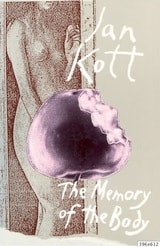
Memory of the Body
Essays on Theater and DeathJan Kott
Northwestern University Press, 1992
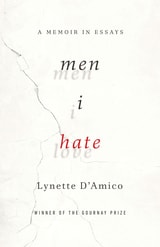
Men I Hate
A Memoir in EssaysLynette D'Amico
The Ohio State University Press, 2026
Can a lesbian who loves a trans man still call herself a lesbian? Against the backdrop of a traditional Sicilian American upbringing, Lynette D’Amico identified as a lesbian despite the expectation that her future hinged on the man she married. As a teenager, she fled her St. Louis home in the dark of night to escape her fate. No boys allowed, until one day D’Amico’s life was completely upended when her lover and spouse of twenty years—P. Carl, the acclaimed author of Becoming a Man: The Story of a Transition—told her he was a man.
Seemingly overnight, D’Amico no longer recognized her spouse in photos of past vacations or of the couple celebrating their legal gay marriage. In Men I Hate, she asks: What happens when the people we are closest to change? As D’Amico tries to engage more deeply with the man she is married to, she looks at all the men—historical figures, politicians, men in her family—in search of clear dividing lines between good men and bad, between the men she loves and the men she hates. These lines dissolve as she writes her way toward an understanding of the words marriage,husband, and home—and how we reconcile who we are with who we become.
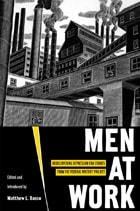
Men at Work
Rediscovering Depression-era Stories from the Federal Writers’ ProjectMatthew Basso
University of Utah Press, 2012
As part of Roosevelt’s New Deal program of the 1930s, the Works Progress Administration (WPA) provided relief jobs to millions of Americans. One facet of the WPA was the hiring of men and women to document the history and folklore of America so as to capture the “soul” of the nation. While researching at the Montana Historical Society Research Center more than a decade ago, historian Matthew Basso stumbled upon copies of six stories that had been submitted for inclusion in a volume titled Men at Work.They arrived too late to be considered. Federal Writers’ Project (FWP) staff had already chosen thirty-four stories from submissions across the country and the volume was nearing publication. In the end, however, that publication was waylaid by the eruption of World War II and the manuscript was forgotten. Now, Basso is bringing these rediscovered stories to their intended audience—the American people.
Works of fiction that have a creative nonfiction feel, these narratives stem from direct observation of or participation in the work described and offer portraits of Americans from diverse ethnic backgrounds who labored in jobs as varied as logging, mining, fruit packing, and rodeo riding. The writers, directed by editor Harold Rosenberg, also represent a variety of backgrounds and experience. Some, like Jack Conroy, Jim Thompson, and Chester Himes, became strong voices in the literary world. The vivid accounts in Men at Work illuminate the meaning of work during a time when jobs were scarce and manual labor highly valued. With our country once again in financial crisis and workers facing an anemic job market, today’s readers will find these stories especially poignant.
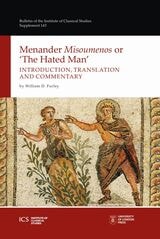
Menander "Misoumenos" or "The Hated Man"
Introduction, Translation, and CommentaryWilliam Furley
University of London Press, 2021
Menander’s Misoumenos, or The Hated Man, is one of his most popular plays to have survived from classical times. Dating to approximately 300 BCE, it tells the story of a mercenary soldier and the captive girl he acquires while on campaign in Cyprus. The play follows the soldier’s growing despair as the girl spurns his advances and slowly turns against him, culminating in his suicidal thoughts.
The play belongs to the ancient genre of New Comedy, of which Menander was the acknowledged master. This edition presents a significantly updated text and the fullest English language translation of the play to date. It aims to restore as much as possible of the action of Misoumenos, reconstructing the language, stagecraft, and theatrical dialogue of the original based on hypothesis and reconstruction. Some sections can be restored nearly in full, permitting access to brilliantly original theatrical dialogue which had been lost for over two millennia. Apart from meter and sophisticated idiom, the themes of love, despair, and sadness that Menander treats are utterly timeless.

Mencken’s America
H. L. MenckenS. T. Joshi
Ohio University Press, 2004
Long famous as a political, social, and cultural gadfly, journalist and essayist H. L. Mencken was unafraid to speak his mind on controversial topics and to express his views in a deliberately provocative manner.
Mencken was prolific; much of his best work lies buried in the newspapers and magazines in which it originally appeared. Mencken’s America is a sampling of this uncollected work, arranged to present the wide-ranging treatise on American culture that Mencken himself never wrote.
The core of the book is a series of six articles on “The American” published in the Smart Set in 1913-14. Never before reprinted, they embody the essence of Mencken’s views on the deficiencies of his countrymen.
What was the problem with America? For Mencken, it could be summed up in one word: Puritanism. Puritanism accounted for much that was wrong with American culture: the prevalence of “militant morality” represented by Prohibition, by campaigns against prostitution, and by religious fundamentalism. American hostility toward the fine arts led to furious attempts to suppress any work of art that was thought to contravene conventional morality-attempts that Mencken chronicles with impressive scholarship in the essay “Puritanism as a Literary Force.”
Mencken reserved his greatest scorn for American political institutions. Opposed to the very principle of democracy and universal suffrage, he maintained that, in the absence of an educated electorate, all politicians are compelled to become demagogues.
Bracing, infuriating, and pungent, H. L. Mencken’s writings retain their relevance even after the passage of nearly a hundred years, cogently discussing issues with which Americans of the twenty-first century are still wrestling. Sagaciously edited by S. T. Joshi, one of the country’s foremost Mencken scholars, Mencken’s America is a superb example of America’s turning the looking glass on itself.
Metawritings
Toward a Theory of NonfictionJill Talbot
University of Iowa Press, 2012
Mexican Folk Tales
Anthony John Campos
University of Arizona Press, 1977
Mexico Reading the United States
Linda Egan
Vanderbilt University Press, 2009
In a time of ever-increasing migration of capital and human beings, this book turns on its head the usual perspective of U.S. economic and cultural dominance in order to deepen understanding of the bi-national relationship.
Mezcal
By Charles Bowden
University of Texas Press, 1988
Praise for Mezcal:
"Mezcal is also a lyrical meditation upon the ultimate strength of the land, specifically the desert Southwest, and how that land prevails and endures despite every effort of modern industry and development to rape and savage it in the name of progress. Mezcal lingers in the mind as only the very best books manage to do."—Harry Crews
"The author . . . excavates his own tormented life—and its relation to the land he loves—in a series of powerful, imagistic autobiographical essays. Like the desert he cherishes, this memoir is harsh yet lovely, full of sour self-truth. . . . A potent presentation of the wounds of one man's life, packed with indelible impressions; but there's little healing here, making this a bitter if beautiful read."—Kirkus Review
"In Mezcal . . . Bowden drops the journalistic veil, exploring the ecology of his interior landscape at least as thoroughly as the changing scenery that surrounds him. . . . Others—Aldo Leopold, Edward Abbey—have already staked inviolate claims on the Southwestern deserts. But Bowden owns the complex terrain where, like a mezcal-inspired mirage, the Sonoran sun-belt overlaps the gray convolutions of the American mind."—Los Angeles Times
Michigan Quarterly Review
Vol. 57, No. 1Khaled Mattawa
Michigan Publishing Services, 2018
Michigan Quarterly Review
Vol. 57, No. 3Khaled Mattawa
Michigan Publishing Services, 2018
Michigan Quarterly Review
Vol. 58, No. 2Khaled Mattawa
Michigan Publishing Services, 2019
Michigan Quarterly Review
Volume 58, Issue 3: Summer 2019Khaled Mattawa
Michigan Publishing Services, 2019
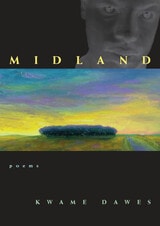
Midland
PoemsKwame Dawes
Ohio University Press, 2000
The winning manuscript of the fourth annual Hollis Summers Poetry Prize is also the exciting American debut by a poet who has already established himself as an important international poetic voice. Midland, the seventh collection by Kwame Dawes, draws deeply on the poet’s travels and experiences in Africa, the Caribbean, England, and the American South. Marked equally by a lushness of imagery, an urgency of tone, and a muscular rhythm, Midland, in the words of the final judge, Eavan Boland, is “a powerful testament of the complexity, pain, and enrichment of inheritance…It is a compelling meditation on what is given and taken away in the acts of generation and influence. Of a father’s example and his oppression. There are different places throughout the book. They come willfully in and out of the poems: Jamaica. London. Africa. America. But all the places become one place in the central theme and undersong here: which is displacement…The achievement of this book is a beautifully crafted voice which follows the painful and vivid theme of homelessness in and out of the mysteries of loss and belonging.”
Midland is the work of a keen and transcendent intellect, a collection of poems that speaks to the landscape from inside, from an emotional and experiential place of risk and commitment.
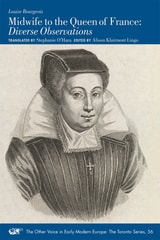
Midwife to the Queen of France
Diverse ObservationsLouise Bourgeois
Iter Press, 2017
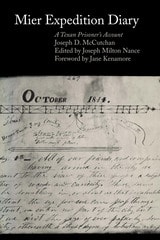
Mier Expedition Diary
A Texan Prisoner's AccountJoseph D. McCutchan
University of Texas Press, 1979
Few episodes in Texas history have excited more popular interest than the Mier Expedition of 1842. Nineteen-year-old Joseph D. McCutchan was among the 300 Texans who, without the cover of the Lone Star flag, launched their own disastrous invasion across the Rio Grande.
McCutchan's diary provides a vivid account of his experience—the Texans' quick dispatch by Mexican troops at the town of Mier, the hardships of a forced march to Mexico City, over twenty months of imprisonment, and the journey back home after release. Although there are other firsthand accounts of the Mier Expedition, McCutchan was the only diarist who followed the Tampico route to Mexico City. His account documents a different experience than that of the main body of prisoners who marched to the national capital by way of Monterrey, Saltillo, and Agua Nueva.
Among the last of the prisoners to be freed, McCutchan covers in his journal the whole period of confinement from December 26, 1842, to the final release on September 16, 1844.
The McCutchan diary is set apart from other Mier accounts not only by the new information it provides, but also by Joseph Milton Nance's superb editing. Nance is an acknowledged authority on the hostilities between Texas and Mexico during the era of the Texas Republic. He has transcribed, edited, and annotated the diary with characteristic scholarship and painstaking attention to detail.
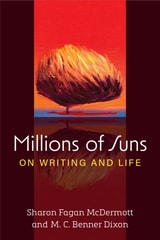
Millions of Suns
On Writing and LifeSharon Fagan McDermott and M. C. Benner Dixon
University of Michigan Press, 2023
With decades of combined teaching experience, McDermott and Benner Dixon share practical craft-of-writing advice with the reader, including over fifty engaging writing prompts to spark the creative process. These prompts guide readers toward the freedom and joy that comes with finding one’s authentic voice. Embracing both the painful and the playful, Millions of Suns is an ideal text for classrooms, professional development, or daily writing practice. Through humor, lyricism, and poignancy, the fundamental message of the book remains the same for newcomers and career authors, whether they write poetry, fiction, non-fiction, or memoir. Let Millions of Suns open a door for you into your creative work, inviting imagination, memory, and inspiration into your writing life.

Mimesis and the Human Animal
On the Biogenetic Foundations of Literary RepresentationRobert Storey
Northwestern University Press, 1996
A unique approach to the subject of mimesis, Storey's book goes beyond the politicizing of literature grounded in literary theory to develop a scientific basis for the creation of literature and art.

Mirages
The Unexpurgated Diary of Anaïs Nin, 1939–1947Anaïs Nin
Ohio University Press, 2013
Mirages collects, for the first time, the story that was cut from all of Nin’s other published diaries, particularly volumes 3 and 4 of The Diary of Anaïs Nin, which cover the same time period. It is the long-awaited successor to the previous unexpurgated diaries Henry and June, Incest, Fire, and Nearer the Moon. Mirages answers the questions Nin readers have been asking for decades: What led to the demise of Nin’s love affair with Henry Miller? Just how troubled was her marriage to Hugh Guiler? What is the story behind Nin’s “children,” the effeminate young men she seemed to collect at will? Mirages is a deeply personal story of heartbreak, despair, desperation, carnage, and deep mourning, but it is also one of courage, persistence, evolution, and redemption that reaches beyond the personal to the universal.
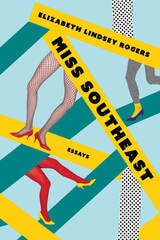
Miss Southeast
EssaysElizabeth Lindsey Rogers
Northwestern University Press, 2024
A collection of narrative essays on femininity, sexuality, community, and belonging
Miss Southeast explores the strange, often contradictory cultural circumstances of being queer and female in the American South and beyond. Born and raised in North Carolina, the youngest in a family of precocious daughters, Rogers spends her teenage years as a half-closeted lesbian desperate to escape the South, convinced the rest of the United States must be “more enlightened than our cow-dotted corner of the county.”
Adulthood takes Rogers to Ohio, New York, Louisiana, Arkansas, Washington, DC, and China, but each essay finds her reckoning with participation in and resistance to rigid cultural institutions—whether a coming-out story set at a high school beauty pageant or a meditation on swimming pools as emblems of racial divides across the South. In lyric prose enlivened by a poet’s sense of musicality, Miss Southeast considers how both place and our layered identities shape our sense of belonging.
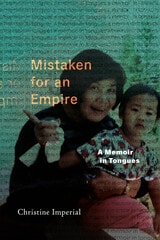
Mistaken for an Empire
A Memoir in TonguesChristine Imperial
The Ohio State University Press, 2023

Mixed Feelings
Feminism, Mass Culture, and Victorian SensationalismCvetkovich, Ann
Rutgers University Press, 1992
Modernism - Dada - Postmodernism
Richard Sheppard
Northwestern University Press, 1999
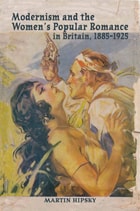
Modernism and the Women’s Popular Romance in Britain, 1885–1925
Martin Hipsky
Ohio University Press, 2011
Today’s mass-market romances have their precursors in late Victorian popular novels written by and for women. In Modernism and the Women’s Popular Romance Martin Hipsky scrutinizes some of the best-selling British fiction from the period 1885 to 1925, the era when romances, especially those by British women, were sold and read more widely than ever before or since.
Recent scholarship has explored the desires and anxieties addressed by both “low modern” and “high modernist” British culture in the decades straddling the turn of the twentieth century. In keeping with these new studies, Hipsky offers a nuanced portrait of an important phenomenon in the history of modern fiction. He puts popular romances by Mrs. Humphry Ward, Marie Corelli, the Baroness Orczy, Florence Barclay, Elinor Glyn, Victoria Cross, Ethel Dell, and E. M. Hull into direct relationship with the fiction of Virginia Woolf, Katherine Mansfield, James Joyce, and D. H. Lawrence, among other modernist greats.
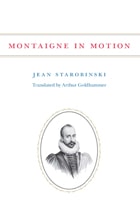
Montaigne in Motion
Jean Starobinski
University of Chicago Press, 1985
Educated in the humanities and trained in psychiatry, Jean Starobinski is a central figure in the Geneva School of criticism. His classic work, Montaigne in Motion, is a subtly conceived and elegantly written study of the Essais of Montaigne, whose deceptively plainspoken meditations have entranced readers and stimulated philosophers since their first publication in 1580 and 1595.
Here Starobinski offers a decidedly postmodern reading of Montaigne. In chapters dealing with the themes of public and private life, friendship, death, the body, and love, Starobinski reveals much that will remind us that Montaigne’s thought is as apropos to our time as it was to his own.
“The most important contribution to Montaigne studies since Friedrich’s work . . . . [It] will be the critical framework in which scholars will discuss Montaigne in the years to come.”—Choice
“Starobinski brings Montaigne to life by treating him as our contemporary and asking him modern questions.”—Hudson Review
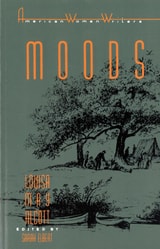
Moods
Elbert, Sarah
Rutgers University Press, 1991
Moods, Louisa May Alcott's first novel was published in 1864, four years before the best-selling Little Women. The novel unconventionally presents a "little woman," a true-hearted abolitionist spinster, and a fallen Cuban beauty, their lives intersecting in Alcott's first major depiction of the "woman problem."
Sylvia Yule, the heroine of Moods, is a passionate tomboy who yearns for adventure. The novel opens as she embarks on a river camping trip with her brother and his two friends, both of whom fall in love with her. These rival suitors, close friends, are modeled on Ralph Waldo Emerson and Henry Daniel Thoreau. Aroused, but still "moody" and inexperienced, Sylvia marries the wrong man. In the rest of the novel, Alcott attempts to resolve the dilemma she has created and leave her readers asking whether, in fact, there is a place for a woman such as Sylvia in a man's world.
In 1882, eighteen years after the original publication, Alcott revised and republished the novel. Her own literary success and the changes she helped forge in women's lives now allowed her heroine to meet, as Alcott said, "a wiser if less romantic fate than in the former edition." This new volume contains the complete text of the 1864 Moods and Alcott's revisions for the 1882 version, along with explanatory notes by the editor. A critical introduction places Moods in the context of Alcott's own literary history and in the larger historical setting of nineteenth-century society and culture.

Moon City Review 2026
A Literary AnthologyMichael Czyzniejewski
Moon City Press, 2026
Moon City Press’ 2026 edition proudly boasts selections by established and up-and-coming writers, including poems, short stories, flash fiction, creative nonfiction, graphic narrative, and translation.
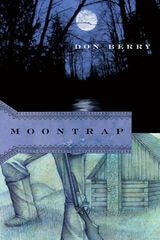
Moontrap
Don Berry
Oregon State University Press, 1962
Winner of the Western Writers of America Spur Award for best historical novel, Moontrap is a book of remarkable beauty and power about a man caught between his vivid past and an uncertain future.
The year is 1850, a transitional period in the new Oregon Territory, with settlers and lawmakers working to subdue the untamed region. Johnson Monday, a former mountain man, has been living on a bend of the Willamette River near Oregon City for seven years with his Shoshone Indian wife, struggling to make a place in settled society. One day, Webster T. Webster, a raucous, unrepentant trapper, arrives for an unexpected visit. With his earthy humor and stubborn adherence to the simple life, "Webb" leads Monday through adventures that flirt dangerously close to lawlessness, while helping him to rediscover his moral center. Through defiance, triumph, and tragedy, Moontrap follows Johnson Monday as he realizes that relinquishing the stark honesty of mountain life for the compromises of civilization may be too high a price to pay.
Following Trask in Don Berry's trilogy of novels set in the Oregon Territory, Moontrap offers a richly comic and intensely poignant portrayal of pioneer life.