Results by title
279 books match the query 'Management' and 22 start with m

Maintaining Effective Engineering Leadership
A new dependence on effective processRaymond Morrison
The Institution of Engineering and Technology, 2013

Making Shift Happen
Directing ImpactMargareth de Wit
Amsterdam University Press, 2021
Margareth de Wit has inspired hundreds of professionals within the education sector to see themselves as playing the central role in providing better education through intelligent collaboration in self-managing school teams. Her experiences show that systematic attention to leadership and group dynamics creates organizations that are both successful and future-proof. Providing striking examples from her broad practice and experience, historical comparisons, human interactions, analytical schemes, and evidence-based methods, de Wit paints a picture of the road that leads to effective leadership. While this transition is never finished, it is nevertheless one that always leads to both personal and organizational improvement.
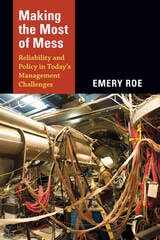
Making the Most of Mess
Reliability and Policy in Today's Management ChallengesEmery Roe
Duke University Press, 2013
Throughout, Roe focuses on the global financial mess of 2008 and its ongoing aftermath, showing how mismanagement has allowed it to morph into other national and international messes. More effective management is still possible for this and many other policy messes but that requires better recognition of patterns and formulation of scenarios, as well as the ability to translate pattern and scenario into reliability. Developing networks of professionals who respond to messes is particularly important. Roe describes how these networks enable the avoidance of bad or worse messes, take advantage of opportunities resulting from messes, and address societal and professional challenges. In addition to finance, he draws from a wide range of case material in other policy arenas. Roe demonstrates that knowing how to manage policy messes is the best approach to preventing crises.
Management Basics for Information Professionals
G. Edward Evans
American Library Association, 2020
The recipient of rave reviews from far and wide (Journal of Hospital Librarianship deemed it “a librarian’s dream … very forward-thinking”), since its initial publication this text has served as an essential resource for both LIS students and practitioners. The new fourth edition offers an updated, comprehensive examination of the myriad of basic skills effective library managers must exercise throughout their careers. Throughout, Evans and new co-author Greenwell pay close attention to management in "new normal" straitened economic conditions and the pervasive impact of technology on a library manager’s role. This book’s coverage includes
- a new focus on how being in the public/nonprofit sector influences the application of management basics such as planning, accountability, trust and delegation, decision making, principles of effective organizational communication, fostering change and innovation, quality control, and marketing;
- the managerial environment, organizational skill sets, the importance of a people-friendly organization, and legal issues;
- key points on leadership, team-building, and human resource management;
- budget, resource, and technology management;
- management ethics, with a lengthy discussion of why ethics matter; and
- tips for planning a library career, with a look at the work/life debate.
This book, to quote Australian Library Journal, is “a recommended text for library science students, but is also an excellent source of information for career librarians wanting to refresh their knowledge of library management in a fast-moving information services environment.”

Management Basics for Information Professionals
G. Edward Evans
American Library Association, 2013
Management of Smallpox Eradication in India
Lawrence B. Brilliant
University of Michigan Press, 2025
Managerial Capitalism
Ownership, Management, and the Coming New Mode of ProductionGérard Duménil and Dominique Lévy
Pluto Press, 2018
Drawing examples from the United States and Europe, the authors offer a historically rooted interpretation of major current economic and political trends. Without eschewing Marx’s theory of history and political economy, they update it to take account of the changes underway in class patterns and relationships to production. The result is a robust new Marxism for the present and the future.

Managerial Psychology
Managing Behavior in OrganizationsHarold J. Leavitt and Homa Bahrami
University of Chicago Press, 1988

Managing Business Archives
Sarah Polirer
Society of American Archivists, 2021

Managing Complexity in Software Engineering
R.J. Mitchell
The Institution of Engineering and Technology, 1990
Managing Contracted Services in the Nonprofit Agency
Administrative, Ethical, and Political IssuesSusan R. Bernstein, foreword by Roger A. Lohmann
Temple University Press, 1991
Through interviews conducted with nonprofit agency managers in the New York City metropolitan area, Susan Bernstein vividly describes their experiences with "contracting out," the principal way that the "reluctant" American welfare state has of providing public services through the private sector. The agency administrators look upon this as a nightmarish game and their stories illuminate how welfare state mechanisms work in practice as well as the tangled nature of bureaucracies Bernstein illustrates and analyzes these administrators’ strategies for managing the administrative, ethical, and political issues of contracted services. Managing Contracted Services is one of the first books to examine how administrators manage contracted services in a bureaucratic and political environment.
Managing Electronic Government Information in Libraries
American Library Association, 2008
Managing Electronic Records
American Library Association, 2009
Managing Electronic Resources
Ryan Weir
American Library Association, 2012
Managing the Infosphere
Governance, Technology, and Cultural Practice in MotionStephen D. McDowell, Philip E. Steinberg and Tami K. Tomasello
Temple University Press, 2007
The authors argue that the roles of these systems in cyberspace cannot be fully understood unless they are seen as mutually constituting each other in specific historical structures, institutions, and practices. With vision and insight, the authors look beyond the Internet to examine the entire networked world, from cell phones and satellites to global tourism and business travel.

Marketing the Wilderness
Outdoor Recreation, Indigenous Activism, and the Battle over Public LandsJoseph Whitson
University of Minnesota Press, 2025
How outdoor industry marketing promotes an image of “the wilderness” as an unpeopled haven
Marketing the Wilderness analyzes the relationship between the outdoor recreation industry, public lands in the United States, and Indigenous sovereignty and representation in recreational spaces. Combining social media analysis, digital ethnography, and historical research, Joseph Whitson offers nuanced insights into more than a century of the outdoor recreation industry’s marketing strategies, unraveling its complicity in settler colonialism.
Complicating the narrative of outdoor recreation as a universal good, Whitson introduces the concept of “wildernessing” to describe the physical, legal, and rhetorical production of pristine, empty lands that undergirds the outdoor recreation industry, a process that further disenfranchises Indigenous people from whom these lands were stolen. He demonstrates how companies such as Patagonia and REI align with the mining and drilling industries in their need to remove Indigenous peoples and histories from valuable lands. And he describes the ways Indigenous and decolonial activists are subverting and resisting corporate marketing strategies to introduce new narratives of place.
Through the lens of environmental justice activism, Marketing the Wilderness reconsiders the ethics of recreational land use, advocating for engagement with issues of cultural representation and appropriation informed by Indigenous perspectives. As he discusses contemporary public land advocacy around places such as Bears Ears National Monument, Whitson focuses on the deeply fraught relationship between the outdoor recreation industry and Indigenous communities. Emphasizing the power of the corporate system and its treatment of land as a commodity under capitalism, he shows how these tensions shape the American idea of “wilderness” and what it means to fight for its preservation.
Retail e-book files for this title are screen-reader friendly with images accompanied by short alt text and/or extended descriptions.
Media and Management
Rutvica Andrijasevic
University of Minnesota Press, 2021
An essential account of how the media devices we use today inherit the management practices governing factory labor
This book argues that management is enabled by media forms, just as media gives life to management. Media technologies central to management have included the stopwatch, the punch card, the calculator, and the camera, while management theories are taught in printed and virtual textbooks and online through TED talks. In each stage of the evolving relationship between workers and employers, management innovations are learned through media, with media formats producing fresh opportunities for management.
Drawing on rich historical and ethnographic case studies, this book approaches key instances of the industrial and service economy—the legacy of Toyotism in today’s software industry, labor mediators in electronics manufacturing in Central and Eastern Europe, and app-based food-delivery platforms in China—to push media and management studies in new directions. Media and Management offers a provocative insight on the future of labor and media that inevitably cross geographical boundaries.

Medicine and the Management of Living
Taming the Last Great BeastWilliam Ray Arney and Bernard J. Bergen
University of Chicago Press, 1984
Medicine and the Management of Living questions how it has been possible for the patient to change from a silenced specimen observed in the clinic to a person whose subjective experience of illness is important to medical practice and discourse. Arney and Bergen ask, What incited the demand that medicine take the whole person, including the patient's presentation of his or her illness, into consideration? And in whose terms are patients speaking about themselves? The authors argue that the inclusion of patients' experiences in medical discourse that has come about since the 1950s is not so much a result of a "patient rebellion" as an activity preciptated by the medical establishment itself. Drawing inspiration from the work of Michel Foucault, Arney and Bergen examine the structure of medical power, contending that new social technologies like support groups make the patient's subjectivity available for medical evaluation, judgment, and manipulation.
Throughout this sensitively written discussion, the authors vivify the issues they raise with excerpts from many sources—the writings of a poet dying of cancer, the comments of doctors pondering their own fatal illnesses, and excerpts from popular magazines, medical journals, and sociological studies. They examine the changing role of the medical profession through history, using a modern advertising image and woodcuts from Vesalius's Renaissance anatomy text to show the symbolic portrayal of health and medicine. Their wide-ranging concerns lead the reader through such topics as teenage pregnancy; the historical treatment of medical anomalies like hermaphrodites and the "elephant man" (John Merrick); and literary representations of illness in Sartre, Chekhov, and Brian Clark's recent Broadway drama, "Whose Life Is It Anyway?"
In a provocative yet thoughtful way, Medicine and the Management of Living points the way for a radical reassessment of medical power and the medical establishment.
Models of Management
Work, Authority, and Organization in a Comparative PerspectiveMauro F. Guillén
University of Chicago Press, 1994
Guillén's study of two liberal-democratic societies (the United States and Great Britain) and two corporatist societies (Germany and Spain) reveals significant differences in the way managerial elites and firms have adopted the three models. His data show that ideas themselves—independent of material interests and technology—can cause organizational change. Throughout the book, contrasts between modernist-technocratic and liberal-humanist mentalities, as well as between Protestant and Catholic religious backgrounds, emerge as decisive factors in determining managerial ideology and practice.
In addition to analyzing management methods in organizations, Guillén explores larger issues: the interaction among managerial, government, and labor elites; the impact of the state and the professions on managerial behavior; and the role that managers play in modern societies.
Module 8
Becoming a Trusted Digital RepositorySteve Marks
Society of American Archivists, 2015
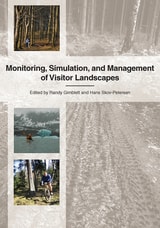
Monitoring, Simulation, and Management of Visitor Landscapes
Randy Gimblett
University of Arizona Press, 2008
Conventional methods used in the planning and management of human-landscape interactions fall far short of the needs of today’s land management professionals. Monitoring, Simulation, and Management of Visitor Landscapes presents a growing body of applied research that provides decision makers with tools to maintain the ecological integrity of public places by evaluating the impacts of humans in various landscapes across space and time. This timely volume, available in both print and electronic editions, presents the latest research in this field, specifically focusing on the intersection of research and applied techniques. The contributors examine environmental management from around the world, including river traffic analysis in Melbourne, Australia; wilderness solitude and land use in the backcountry recreation areas of North America; the spatial modeling of visitor behavior at recreational areas near Vienna, Austria; the application of visibility studies and data from automatic visitor counters to simulation models in Denmark; and the integration of recreation and biodiversity in high-use environments in the Netherlands. This invaluable reference will help land managers and policy makers construct strategies for evaluating interactions between humans and the environment and expand the model of land management to include social and geographic, as well as environmental, factors.

Moving Image and Sound Collections for Archivists
Anthony Cocciolo
Society of American Archivists, 2017