58 books match the query 'Mass media and culture' and 6 start with m
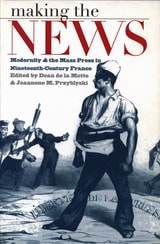
cover of Making the News: Modernity and the Mass Press in Nineteenth-Century France

Making the News

Modernity and the Mass Press in Nineteenth-Century France

Dean de la Motte

University of Massachusetts Press, 1999

Much recent writing on print culture has focused on the social and political implications of the transition from “elite” to “mass” culture in the 1800s. The essays in this volume add significantly to our understanding of the role of the nineteenth-century French press in producing the commodities, consumers, and ideological frameworks that are the hallmarks of this shift. The book also offers an opportunity for useful comparisons with recent scholarship on the rise on the popular press in the United States, Great Britain, and Germany. 

The essays address a wide range of topics, from the emergence of commercial daily newspapers during the July Monarchy to the photographic representation of women in the Paris Commune. Together they demonstrate that the French mass press was far more heterogeneous than previously supposed, tapping into an expanding readership composed of a variety of publics—from affluent bourgeois to disaffected workers to disenfranchised women. It was also relentlessly innovative, using caricature, argot, advertisements, and other attention-grabbing techniques that blurred the lines separating art, politics, and the news.

[more]
cover of Manufacturing Celebrity: Latino Paparazzi and Women Reporters in Hollywood

Manufacturing Celebrity

Latino Paparazzi and Women Reporters in Hollywood

Vanessa Diaz

Duke University Press, 2020
In Manufacturing Celebrity Vanessa Díaz traces the complex power dynamics of the reporting and paparazzi work that fuel contemporary Hollywood and American celebrity culture. Drawing on ethnographic fieldwork, her experience reporting for People magazine, and dozens of interviews with photographers, journalists, publicists, magazine editors, and celebrities, Díaz examines the racialized and gendered labor involved in manufacturing and selling relatable celebrity personas. Celebrity reporters, most of whom are white women, are expected to leverage their sexuality to generate coverage, which makes them vulnerable to sexual exploitation and assault. Meanwhile, the predominantly male Latino paparazzi can face life-threatening situations and endure vilification that echoes anti-immigrant rhetoric. In pointing out the precarity of those who hustle to make a living by generating the bulk of celebrity media, Díaz highlights the profound inequities of the systems that provide consumers with 24/7 coverage of their favorite stars.
[more]
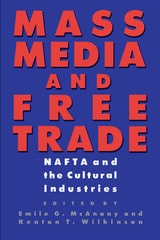
cover of Mass Media and Free Trade: NAFTA and the Cultural Industries

Mass Media and Free Trade

NAFTA and the Cultural Industries

Edited by Emile G. McAnany and Kenton T. Wilkinson

University of Texas Press, 1997

As United States television programs, movies, music, and other cultural products make their way around the globe, a vigorous debate over "cultural imperialism" is growing in many countries. This book brings together experts in economics, sociology, anthropology, the humanities, and communications to explore what effects the North American Free Trade Agreement will have on the flow of cultural products among Mexico, the United States, and Canada.

After an overview of free trade and the cultural industries, the book covers the following topics: dominance and resistance, cultural trade and identity in relation to Mexico and to French Canada, and intellectual property rights. Based on present trends, the contributors predict that there will be a steadily increasing flow of cultural products from the United States to its neighbors.

This book grew out of a 1994 conference that brought together leaders of the cultural industries, policy makers, and scholars. It represents state-of-the-art thinking about the global influence of U.S. cultural industries.
[more]
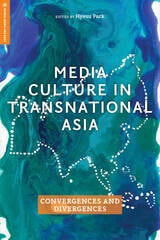
cover of Media Culture in Transnational Asia: Convergences and Divergences

Media Culture in Transnational Asia

Convergences and Divergences

Hyesu Park

Rutgers University Press, 2020

Media Culture in Transnational Asia: Convergences and Divergences examines contemporary media use within Asia, where over half of the world’s population resides. The book addresses media use and practices by looking at the transnational exchanges of ideas, narratives, images, techniques, and values and how they influence media consumption and production throughout Asia, including Sri Lanka, Bangladesh, South Korea, Singapore, Vietnam, Afghanistan, Iran and many others. The book’s contributors are especially interested in investigating media and their intersections with narrative, medium, technologies, and culture through the lenses that are particularly Asian by turning to Asian sociopolitical and cultural milieus as the meaningful interpretive framework to understand media. This timely and cutting-edge research is essential reading for those interested in transnational and global media studies.


[more]
cover of Media and Values: Intimate Transgressions in a Changing Moral and Cultural Landscape

Media and Values

Intimate Transgressions in a Changing Moral and Cultural Landscape

David E. Morrison, Matthew Kieran, Michael Svennevig and Sarah Ventress

Intellect Books, 2007
Media and Values investigates the moral performance of the media. Based on an exhaustive number of focus groups, surveys, and interviews with senior media staffers in the United Kingdom and Europe, this book charts the changing status of the media as a moral voice. The authors argue that television has lost the authority to espouse a single vision of the proper way to live, and instead reflects the norms of a variety of social groups.  This groundbreaking volume addresses the lack of moral certainty reflected both in television programs and their audiences.
 
“There are great riches here: from the interviews with senior media executives . . . to the discussion of popular television culture's celebration of celebrity.”—John Lloyd, Prospect
 
“This profoundly original and learned book creatively illuminates citizens’ moral reasoning about the media, culture, and government. A tour de force of nuanced interdisciplinary scholarship, Media & Values offers wide-ranging insights into the responsibilities of the communication industry, the justifications and consequences of telecoms regulation—and the nature of the good society itself.”—Robert M. Entman, J. B. and M. C. Shapiro Professor of Media & Public Affairs, George Washington University
 
“This is a very important book—a ‘must read.’ The intellectual scope is astonishing: the problem it addresses is quite crucial—namely the moral incoherence of the contemporary world and the way that this shows up in empirical research into individual attitudes/opinions/tastes/judgements. It is clearly a cumulative critical reassessment of the implications of research going back to the sixties. It’s original, powerful, thoughtful and spot-on as a diagnosis of the times and the very real issues we confront today. A major piece of work.”—Paddy Scannell, Department of Communication Studies, University of Michigan


[more]
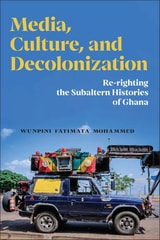
cover of Media, Culture, and Decolonization: Re-righting the Subaltern Histories of Ghana

Media, Culture, and Decolonization

Re-righting the Subaltern Histories of Ghana

Wunpini Fatimata Mohammed

Rutgers University Press, 2026

Media, Culture, and Decolonization: Re-righting the Subaltern Histories of Ghana invites us to look at media and culture from a decolonial perspective. Through Dagbaŋ epistemologies and knowledge systems, this book examines media by highlighting how African languages, cultures, and traditions can shift how we think of knowledge. It is an offering to anyone curious about the relationship between culture, language, and media. By focusing on African language media in Ghana such as film, television, and radio, the book emphasizes the importance of espousing a decolonial politic and praxis in the process of co-creating knowledge with Indigenous communities. It connects the struggles of global majority countries and demonstrates the ways in which (neo)colonialism and imperialism impede the work toward liberatory futures. This book demonstrates the potential that African language media hold as tools of cultural and epistemological decolonization.

[more]