Results by title
71 books match the query 'Mexicans' and 11 start with m
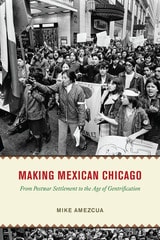
Making Mexican Chicago
From Postwar Settlement to the Age of GentrificationMike Amezcua
University of Chicago Press, 2022
Though Chicago is often popularly defined by its Polish, Black, and Irish populations, Cook County is home to the third-largest Mexican-American population in the United States. The story of Mexican immigration and integration into the city is one of complex political struggles, deeply entwined with issues of housing and neighborhood control. In Making Mexican Chicago, Mike Amezcua explores how the Windy City became a Latinx metropolis in the second half of the twentieth century.
In the decades after World War II, working-class Chicago neighborhoods like Pilsen and Little Village became sites of upheaval and renewal as Mexican Americans attempted to build new communities in the face of white resistance that cast them as perpetual aliens. Amezcua charts the diverse strategies used by Mexican Chicagoans to fight the forces of segregation, economic predation, and gentrification, focusing on how unlikely combinations of social conservatism and real estate market savvy paved new paths for Latinx assimilation. Making Mexican Chicago offers a powerful multiracial history of Chicago that sheds new light on the origins and endurance of urban inequality.
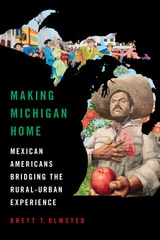
Making Michigan Home
Mexican Americans Bridging the Rural-Urban ExperienceBrett T. Olmsted
University of Illinois Press, 2025
Mexican Emigration to the United States, 1897–1931
Lawrence A. Cardoso
University of Arizona Press, 1980
During the same era, capitalist modernization in the United States was creating a strong demand for low-paid, unskilled labor, especially for agricultural and railroad work. Mexico's newly created class of migrant workers rushed across the border to fill this demand, setting in motion a social, economic, and political phenomenon that Lawrence Cardoso analyzed here in detail. What set this study apart, however, is the author's focus on the ' Human element," as revealed through the Mexican workers' hopes, fears, and reactions to events of their time.
Mexican Migration to the United States
Perspectives From Both Sides of the BorderEdited by Harriett D. Romo and Olivia Mogollon-Lopez
University of Texas Press, 2016
Borderlands migration has been the subject of considerable study, but the authorship has usually reflected a north-of-the-border perspective only. Gathering a transnational group of prominent researchers, including leading Mexican scholars whose work is not readily available in the United States and academics from US universities, Mexican Migration to the United States brings together an array of often-overlooked viewpoints, reflecting the interconnectedness of immigration policy.
This collection’s research, principally empirical, reveals significant aspects of labor markets, family life, and educational processes. Presenting recent data and accessible explanations of complex histories, the essays capture the evolving legal frameworks and economic implications of Mexico-US migrations at the national and municipal levels, as well as the experiences of receiving communities in the United States. The volume includes illuminating reports on populations ranging from undocumented young adults to elite Mexican women immigrants, health-care rights, Mexico’s incorporation of return migration, the impact of Deferred Action for Childhood Arrivals on higher education, and the experiences of young children returning to Mexican schools after living in the United States. Reflecting a multidisciplinary approach, the list of contributors includes anthropologists, demographers, economists, educators, policy analysts, and sociologists.
Underscoring the fact that Mexican migration to the United States is unique and complex, this timely work exemplifies the cross-border collaboration crucial to the development of immigration policies that serve people in both countries.
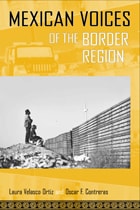
Mexican Voices of the Border Region
Mexicans and Mexican Americans Speak about Living along the WallAuthored by Laura Velasco Ortiz and Oscar F. Contreras with translations by Sandra del Castillo
Temple University Press, 2011
Every day, 40,000 commuters cross the U.S. Mexico border at Tijuana San Diego to go to work. Untold numbers cross illegally. Since NAFTA was signed into law, the border has become a greater obstacle for people moving between countries. Transnational powers have exerted greater control over the flow of goods, services, information, and people.
Mexican Voices of the Border Region examines the flow of people, commercial traffic, and the development of relationships across this border. Through first-person narratives, Laura Velasco Ortiz and Oscar F. Contreras show that since NAFTA, Tijuana has become a dynamic and significant place for both nations in terms of jobs and residents. The authors emphasize that the border itself has different meanings whether one crosses it frequently or not at all. The interviews probe into matters of race, class, gender, ethnicity, place, violence, and political economy as well as the individual's sense of agency.
Mexican-Origin Foods, Foodways, and Social Movements
Decolonial PerspectivesDevon Peña
University of Arkansas Press, 2017
This collection of new essays offers groundbreaking perspectives on the ways that food and foodways serve as an element of decolonization in Mexican-origin communities.
The writers here take us from multigenerational acequia farmers, who trace their ancestry to Indigenous families in place well before the Oñate Entrada of 1598, to tomorrow’s transborder travelers who will be negotiating entry into the United States. Throughout, we witness the shifting mosaic of Mexican-origin foods and foodways in the fields, gardens, and kitchen tables from Chiapas to Alaska.
Global food systems are also considered from a critical agroecological perspective, including the ways colonialism affects native biocultural diversity, ecosystem resilience, and equality across species, human groups, and generations.
Mexican-Origin Foods, Foodways, and Social Movements is a major contribution to the understanding of the ways that Mexican-origin peoples have resisted and transformed food systems. It will animate scholarship on global food studies for years to come.
Mexicans and Mexican Americans in Michigan
Rudolph V. Alvarado
Michigan State University Press, 2003
Unlike most of their immigrant counterparts, up until the turn of the twentieth century most Mexicans and Mexican Americans did not settle permanently in Michigan but were seasonal laborers, returning to homes in the southwestern United States or Mexico in the winter. Nevertheless, during the past century the number of Mexicans and Mexican Americans settling in Michigan has increased dramatically, and today Michigan is undergoing its third “great wave” of Mexican immigration. Though many Mexican and Mexican American immigrants still come to Michigan seeking work on farms, many others now come seeking work in manufacturing and construction, college educations, opportunities to start businesses, and to join family members already established in the state. In Mexicans and Mexican Americans in Michigan, Rudolph Valier Alvarado and Sonya Yvette Alvarado examine the settlement trends and growth of this population, as well as the cultural and social impact that the state and these immigrants have had on one another. The story of Mexicans and Mexican Americans in Michigan is one of a steadily increasing presence and influence that well illustrates how peoples and places combine to create traditions and institutions.
Mexicans in California
Transformations and ChallengesEdited by Ramon A. Gutierrez and Patricia Zavella
University of Illinois Press, 2008
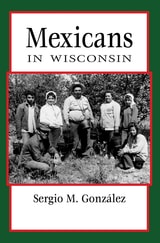
Mexicans in Wisconsin
Sergio González
Wisconsin Historical Society Press, 2017
From agricultural and factory workers to renowned writers and musicians, the Mexican immigrants who have made their homes in Wisconsin over the past century have become a significant and diverse part of this state’s cultural and economic history. Coming from a variety of educational and professional backgrounds, the earliest Mexican immigrants traveled north in search of better economic opportunities and relief from the violence and economic turmoil of the Mexican Revolution. They found work in tanneries and foundries, and on beet farms where they replaced earlier European immigrant workers who had moved on to family farms. As Mexican immigration has grown to the present day, these families have become integral members of Wisconsin communities, building businesses, support systems, and religious institutions. But their experience has also been riddled with challenges, as they have fought for adequate working conditions, access to education, and acceptance amid widespread prejudice. In this concise history, learn the fascinating stories of this vibrant and resilient immigrant population: from the Tejano migrant workers who traveled north seasonally to work in the state’s cucumber fields, to the determined labor movement led by Jesus Salas, to the young activists of the Chicano Movement, and beyond.
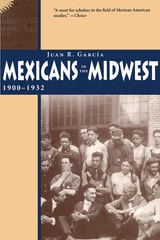
Mexicans in the Midwest, 1900-1932
Juan R. García
University of Arizona Press, 1996
Here is a book that persuasively challenges many prevailing assumptions about Mexican people and the communities they established in the Midwest. The author notes the commonalities and differences between Mexicans in that region and their compadres who settled elsewhere. He further demonstrates that although Mexicans in the Midwest maintained a strong sense of cultural identity, they were quick to adopt the consumer culture and other elements of U.S. life that met their needs.
Focusing on a people, place, and time rarely covered before now, this wide-ranging work will be welcomed by scholars and students of history, sociology, and Chicano studies. General readers interested in ethnic issues and the multicultural fabric of American society will find here a window to the past as well as new perspectives for understanding the present and the future.
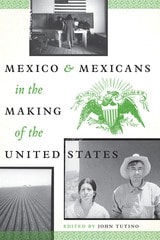
Mexico and Mexicans in the Making of the United States
Edited by John Tutino
University of Texas Press, 2012
Mexico and Mexicans have been involved in every aspect of making the United States from colonial times until the present. Yet our shared history is a largely untold story, eclipsed by headlines about illegal immigration and the drug war. Placing Mexicans and Mexico in the center of American history, this volume elucidates how economic, social, and cultural legacies grounded in colonial New Spain shaped both Mexico and the United States, as well as how Mexican Americans have constructively participated in North American ways of production, politics, social relations, and cultural understandings.
Combining historical, sociological, and cultural perspectives, the contributors to this volume explore the following topics: the Hispanic foundations of North American capitalism; indigenous peoples’ actions and adaptations to living between Mexico and the United States; U.S. literary constructions of a Mexican “other” during the U.S.-Mexican War and the Civil War; the Mexican cotton trade, which helped sustain the Confederacy during the Civil War; the transformation of the Arizona borderlands from a multiethnic Mexican frontier into an industrializing place of “whites” and “Mexicans”; the early-twentieth-century roles of indigenous Mexicans in organizing to demand rights for all workers; the rise of Mexican Americans to claim middle-class lives during and after World War II; and the persistence of a Mexican tradition of racial/ethnic mixing—mestizaje—as an alternative to the racial polarities so long at the center of American life.