Results by title
683 books match the query 'Middle East' and 39 start with m
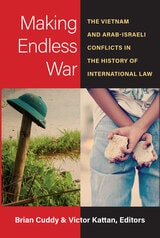
Making Endless War
The Vietnam and Arab-Israeli Conflicts in the History of International LawBrian Cuddy and Victor Kattan, Editors
University of Michigan Press, 2023
Making Endless War is built on the premise that any attempt to understand how the content and function of the laws of war changed in the second half of the twentieth century should consider two major armed conflicts, fought on opposite edges of Asia, and the legal pathways that link them together across time and space. The Vietnam and Arab-Israeli conflicts have been particularly significant in the shaping and attempted remaking of international law from 1945 right through to the present day. This carefully curated collection of essays by lawyers, historians, philosophers, sociologists, and political geographers of war explores the significance of these two conflicts, including their impact on the politics and culture of the world’s most powerful nation, the United States of America. The volume foregrounds attempts to develop legal rationales for the continued waging of war after 1945 by moving beyond explaining the end of war as a legal institution, and toward understanding the attempted institutionalization of endless war.
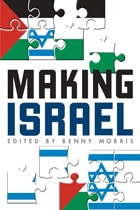
Making Israel
Benny Morris, Editor
University of Michigan Press, 2007
---Zeev Maoz, Professor of Political Science at the University of California, Davis, and Distinguished Fellow at the Interdisciplinary Center, Herzliya
---William B. Quandt, University of Virginia
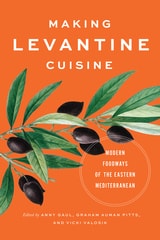
Making Levantine Cuisine
Modern Foodways of the Eastern MediterraneanEdited by Anny Gaul, Graham Auman Pitts, and Vicki Valosik
University of Texas Press, 2021
Melding the rural and the urban with the local, regional, and global, Levantine cuisine is a mélange of ingredients, recipes, and modes of consumption rooted in the Eastern Mediterranean. Making Levantine Cuisine provides much-needed scholarly attention to the region’s culinary cultures while teasing apart the tangled histories and knotted migrations of food. Akin to the region itself, the culinary repertoires that constitute Levantine cuisine endure and transform—are unified but not uniform. This book delves into the production and circulation of sugar, olive oil, and pistachios; examines the social origins of kibbe, Adana kebab, shakshuka, falafel, and shawarma; and offers a sprinkling of family recipes along the way. The histories of these ingredients and dishes, now so emblematic of the Levant, reveal the processes that codified them as national foods, the faulty binaries of Arab or Jewish and traditional or modern, and the global nature of foodways. Making Levantine Cuisine draws from personal archives and public memory to illustrate the diverse past and persistent cultural unity of a politically divided region.
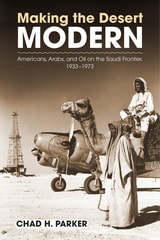
Making the Desert Modern
Americans, Arabs, and Oil on the Saudi Frontier, 1933–1973Chad Parker
University of Massachusetts Press, 2015
In 1933 American oilmen representing what later became the Arabian American Oil Company (Aramco) signed a concession agreement with the Saudi Arabian king granting the company sole proprietorship over the oil reserves in the country's largest province. As drilling commenced and wells proliferated, Aramco soon became a major presence in the region. In this book Chad H. Parker tells Aramco's story, showing how an American company seeking resources and profits not only contributed to Saudi “nation building” but helped define U.S. foreign policy during the early Cold War.
In the years following World War II, as Aramco expanded its role in Saudi Arabia, the idea of “modernization” emerged as a central component of American foreign policy toward newly independent states. Although the company engaged in practices supportive of U.S. goals, its own modernizing efforts tended to be pragmatic rather than policy-driven, more consistent with furthering its business interests than with validating abstract theories. Aramco built the infrastructure necessary to extract oil and also carved an American suburb out of the Arabian desert, with all the air-conditioned comforts of Western modern life. At the same time, executives cultivated powerful relationships with Saudi government officials and, to the annoyance of U.S. officials, even served the monarchy in diplomatic disputes. Before long the company became the principal American diplomatic, political, and cultural agent in the country, a role it would continue to play until 1973, when the Saudi government took over its operation.
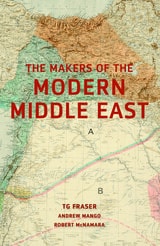
Making the Modern Middle East
Second EditionT.G. Fraser, Andrew Mango, and Robert McNamara
Gingko, 2015
This fully revised and updated second edition of The Makers of the Modern Middle East traces those changes and the ensuing history of the region through the rest of the twentieth century and on to the present. Focusing in particular on three leaders—Emir Feisal, Mustafa Kemal, and Chaim Weizmann—the book offers a clear, authoritative account of the region seen from a transnational perspective, one that enables readers to understand its complex history and the way it affects present-day events.

Making the World Safe for Capitalism
How Iraq Threatened the US Economic Empire and had to be DestroyedChristopher Doran
Pluto Press, 2012
The Iraq war defined the first decade of the twenty-first century – leading to mass protests and raising profound questions about domestic politics and the use of military force. Yet most explanations of the war have a narrow focus either on political personalities or oil.
Christopher Doran provides a unique perspective, arguing that the drive to war came from the threat Iraq might pose to American economic hegemony if the UN sanctions regime was ended. Doran argues that this hegemony is rooted in third world debt and corporate market access. It was protection of these arrangements that motivated US action, not Iraq’s alleged weapons of mass destruction or a simplistic desire to seize its oil.
This book will provide new insights on the war which still casts a shadow over global politics, and will have wide appeal to all those concerned about the Middle East, world peace and global development.
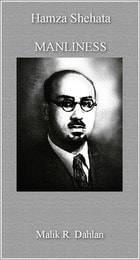
Manliness
Malik R. Dahlan
Haus Publishing, 2016
Using a framework that was both scientific and philosophical, Shehata convinced his audience that conventional views of virtue and vice were a deceptive simplification and that social and religious reform was necessary. A humble man at heart, he was reluctant to publish his talk in his lifetime, but thanks to Malik R. Dahlan’s expert translation and insightful discussion of the larger historical and geographical context for the speech, readers are now able to appreciate a fascinating snapshot of Arabian history that would otherwise be lost.
Mark Twain on the Move
A Travel ReaderAlan Gribben
University of Alabama Press, 2008
Journeys, humor, and insight from Mark Twain's travel narratives - America’s literary master.
Mark Twain on the Move gathers the very best passages from all five of Mark Twain’s travel narratives: The Innocents Abroad (1869), Roughing It (1872), A Tramp Abroad (1880), Life on the Mississippi (1883), and Following the Equator (1897). Although Twain’s travel narratives were his best sellers throughout his career, modern readers are largely unfamiliar with them. Thus, readers are not only missing some of Twain’s most hilarious and insightful material, they are also missing a complete understanding of a beloved literary and cultural icon.
Mark Twain on the Move presents the best of these works—sometimes respectful, often irreverent and outlandish—at their most lively and captures his renowned experiences as an American tourist. And they demonstrate why Twain’s greatest popularity in his lifetime derived from his travel writings rather than from his novels. Twain was always entertaining and provocative while on the move and this collection captures that fabled energy for modern readers.
Married to Another Man
Israel's Dilemma in PalestineGhada Karmi
Pluto Press, 2007
Two rabbis, visiting Palestine in 1897, observed that the land was like a bride, 'beautiful, but married to another man'. By which they meant that, if a place was to be found for Israel in Palestine, where would the people of Palestine go? This is a dilemma that Israel has never been able to resolve.
No conflict today is more dangerous than that between Israel and the Palestinians. The implications it has for regional and global security cannot be overstated. The peace process as we know it is dead and no solution is in sight. Nor, as this book argues, will that change until everyone involved in finding a solution accepts the real causes of conflict, and its consequences on the ground.
Leading writer Ghada Karmi explains in fascinating detail the difficulties Israel's existence created for the Arab world and why the search for a solution has been so elusive. Ultimately, she argues that the conflict will end only once the needs of both Arabs and Israelis are accommodated equally. Her startling conclusions overturn conventional thinking -- but they are hard to refute.
Master and Disciple
The Cultural Foundations of Moroccan AuthoritarianismAbdellah Hammoudi
University of Chicago Press, 1997
Building on the work of Foucault, Hammoudi argues that at the heart of Moroccan culture lies a paradigm of authority that juxtaposes absolute authority against absolute submission. Rooted in Islamic mysticism, this paradigm can be observed in the drama of mystic initiation, with its fundamental dialectic between Master and Disciple; in conflict with other cultural forms, and reelaborated in colonial and postcolonial circumstances, it informs all major aspects of Moroccan personal, political, and gender relations. Its influence is so pervasive and so firmly embedded that it ultimately legitimizes the authoritarian structure of power. Hammoudi contends that as long as the Master-Disciple dialectic remains the dominant paradigm of power relations, male authoritarianism will prevail as the dominant political form.
"Connecting political domination to gift exchange, ritual initiation, social loyalty, and gender reversals, Master and Disciple is nothing less than a thoroughgoing revision of our understanding of authoritarian rule in Morocco and in the Arab world in general."—Clifford Geertz, Institute for Advanced Study
Matthew's Christian-Jewish Community
Anthony J. Saldarini
University of Chicago Press, 1994
Recent research reveals that among both Jews and Christians of the first century many groups believed in Jesus while remaining close to Judaism. Saldarini argues that the author of the Gospel of Matthew belonged to such a group, supporting his claim with an informed reading of Matthew's text and historical context. Matthew emerges as a Jewish teacher competing for the commitment of his people after the catastrophic loss of the Temple in 70 C.E., his polemics aimed not at all Jews but at those who oppose him. Saldarini shows that Matthew's teaching about Jesus fits into first-century Jewish thought, with its tradition of God-sent leaders and heavenly mediators.
In Saldarini's account, Matthew's Christian-Jewish community is a Jewish group, albeit one that deviated from the larger Jewish community. Contributing to both New Testament and Judaic studies, this book advances our understanding of how religious groups are formed.
Mecca and Eden
Ritual, Relics, and Territory in IslamBrannon Wheeler
University of Chicago Press, 2006
Integrating Islamic examples into the comparative study of religion, Brannon Wheeler shows how the treatment of rituals, relics, and territory is related to the more general mythological depiction of the origins of Islamic civilization. Along the way, Wheeler considers the contrast between Mecca and Eden in Muslim rituals, the dispersal and collection of relics of the prophet Muhammad, their relationship to the sanctuary at Mecca, and long tombs associated with the gigantic size of certain prophets mentioned in the Quran.
Mecca and Eden succeeds, as few books have done, in making Islamic sources available to the broader study of religion.
Media in New Turkey
The Origins of an Authoritarian Neoliberal StateBilge Yesil
University of Illinois Press, 2016
Yesil confronts essential questions regarding: the role of the state and military in building the structures that shaped Turkey's media system; media adaptations to ever-shifting contours of political and economic power; how the far-flung economic interests of media conglomerates leave them vulnerable to state pressure; and the ways Turkey's politicized judiciary criminalizes certain speech.
Drawing on local knowledge and a wealth of Turkish sources, Yesil provides an engrossing look at the fault lines carved by authoritarianism, tradition, neoliberal reform, and globalization within Turkey's increasingly far-reaching media.
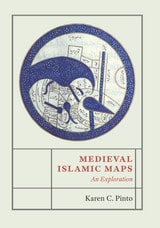
Medieval Islamic Maps
An ExplorationKaren C. Pinto
University of Chicago Press, 2016
Pinto focuses on the distinct tradition of maps known collectively as the Book of Roads and Kingdoms (Kitab al-Masalik wa al-Mamalik, or KMMS), examining them from three distinct angles—iconography, context, and patronage. She untangles the history of the KMMS maps, traces their inception and evolution, and analyzes them to reveal the identities of their creators, painters, and patrons, as well as the vivid realities of the social and physical world they depicted. In doing so, Pinto develops innovative techniques for approaching the visual record of Islamic history, explores how medieval Muslims perceived themselves and their world, and brings Middle Eastern maps into the forefront of the study of the history of cartography.
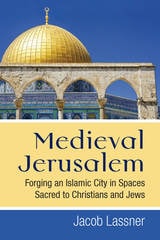
Medieval Jerusalem
Forging an Islamic City in Spaces Sacred to Christians and JewsJacob Lassner
University of Michigan Press, 2017
Examining Muslim historiography and religious lore in light of Jewish traditions about the city, Jacob Lassner points out how these reworked Jewish traditions and the imposing monumental Islamic architecture of the city were meant to demonstrate that Islam had superseded Judaism and Christianity as the religion for all monotheists. He interrogates the literary sources of medieval Islamic historiography and their modern interpreters as if they were witnesses in a court of law, and applies the same method for the arguments about the monuments of the city’s material culture, including the great archaeological discoveries along the south wall of the ancient Temple Mount.
This book will be of interest to a broad range of readers given the significance of the city in the current politics of the Near East. It will in part serve as a corrective to narratives of Jerusalem’s past that are currently popular for scholarly and political reasons.

Memoirs of a Fortunate Jew
An Italian StoryDan Vittorio Segre
University of Chicago Press, 2008
“Taut and illuminating . . . memorable . . . written with the humility of he who confesses himself and with the honesty of he who bore witness.”—Primo Levi
“The writing of memoirs is a difficult art that Dan Segre fully possesses. Under his pen, history and psychology merge in one captivating narrative which illuminates the turmoils, fears and triumphs of his generation.”—Elie Wiesel
“Beautifully written. . . . [A] labyrinthine, spell-binding autobiography, full of passionate tenderness.”—New York Review of Books
“An unusually attractive book—attractive in its irony, its energy and its moral insight. Mr. Segre had some rich material to work with, and he has done it justice.”—New York Times
Memoirs of a Palestinian Communist
The Secret Life of Najati SidqiNajati Sidqi; translated by Margaret Litvin, Gideon Gordon, and Anas Farhan
University of Texas Press, 2025
The secret life of a Palestinian Communist activist during the leadup to World War II.
In the public eye, Najati Sidqi was known as a journalist and writer, a translator of Russian classics, and an outspoken opponent of Nazism. However, Sidqi concealed a critical component of his life from the world and his family. He was an underground activist for the Palestinian Communist Party, a risky and influential pursuitthat took him to early Bolshevik Moscow, British courts and prison cells in Palestine, Nazi Germany, intrigue-heavy interwar Paris, and Civil War Spain, Morocco, and Algeria. Throughout his journey, Sidqi continued to write, even as he faced fascism, intense surveillance, active warzones, the death of friends, and exile.
Memoirs of a Palestinian Communist brings Sidqi’s incredible life and work to light, wryly narrating his international travels, his work as an activist, and his political dealings at a crucial moment for Palestine and the international fight against fascism. Translated from Arabic into English for the first time, it is a riveting firsthand account of an often-overlooked aspect of the history of the global left. Generous supplementary materials make the memoir accessible to students and non-specialist scholars: a preface by Sidqi’s grandson, a foreword by renowned historian Joel Beinin, a translators’ introduction that presents new research on Sidqi’s family history, a map of his travels, and a timeline, as well as a bibliographic essay offering pointers for further research.
Memories of Revolt
The 1936–1939 Rebellion and the Palestinian National PastTed Swedenburg
University of Arkansas Press, 2003
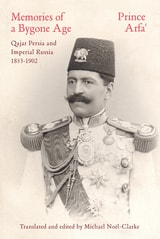
Memories of a Bygone Age
Qajar Persia and Imperial Russia 1853-1902Prince Arfa
Gingko, 2016
Prince Arfa writes with arresting wit about the deadly intrigues of the Qajar court. Lamentingly, but resolutely, he chronicles the decline of Iran from a once great empire to an almost bankrupt, lawless state, in which social unrest is channelled and exploited by the clergy. He describes the complex interactions between Iran and Europe, including an account of Naser-od-Din Shah’s profligate visits to Britain and France; the splendor and eccentricities of the doomed Tsar Nicholas II’s court; the Tsar’s omen-laden coronation; and his own favor with the Tsarina, who would grant him concessions on matters of vital importance to his country. The result is a memoir of extraordinary political intrigue.
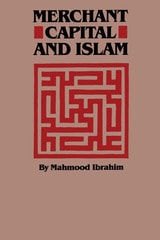
Merchant Capital and Islam
By Mahmood Ibrahim
University of Texas Press, 1990
The rise of merchant capital in Mecca conditioned the development of Meccan social, economic, religious, and political structure. Mahmood Ibrahim traces the roots of capitalism from the emergence of merchants as the main force in Mecca through the first civil war in Islam (656–661). Through a rereading of original Arabic sources and drawing from modern scholarship on the subject, Ibrahim offers a new interpretation of the rise of Islam.
He argues that Islam contributed certain institutional beliefs and practices that unblocked obstacles and helped merchants gain political and economic hegemony over western Asia. Ibrahim contends that, with the conquest of Mecca, the newly formed Muslim state spread its control to the rest of Arabia, which mobilized a significant social force and allowed for further expansion outside Arabia, thus extending merchant control to include new surplus-producing regions, a vast network of trade routes, and wider markets.
This extensively researched study offers a new interpretation of the history of Islam, including the formation of Islamic society and the unfolding of the first civil war. In offering a better understanding of the Umayyad Caliphate that ruled Islam for a century to come, Ibrahim helps lay the groundwork for understanding the Middle East as it is today.
Of interest to scholars of Middle Eastern studies, this important work will be necessary reading for students of Near Eastern and North African history, as well as students of the history of Medieval Europe.
Mesopotamian Chronicles
Jean-Jacques Glassner
SBL Press, 2004
Mission for Development
Utah Universities and the Point Four Program in IranRichard Garlitz
Utah State University Press, 2018
The Point Four Program sponsored American technical assistance for developing countries during the 1950s—an American Cold War strategy to cultivate friendly governments and economic development in countries purportedly susceptible to Communist influence. Between 1951 and 1964, advisors from Brigham Young University sought to modernize Iranian public education, experts from Utah State University worked to improve agricultural production, and doctors and nurses from the University of Utah helped with the Iranian government’s rural health initiatives. In A Mission for Development, author Richard Garlitz offers a critical and clear-eyed assessment of the challenges the Utahns faced and the contributions they made to Iranian development.
The book also reexamines the Iranian political crisis of the early 1950s and the overthrow of Prime Minister Mohammad Mossadegh through the eyes of the Utah advisors. A Mission for Development provides rare insight into the university role in international development and will be of interest to historians and policy makers.
Modern Middle Eastern Jewish Thought
Writings on Identity, Politics, and Culture, 1893–1958Edited by Moshe Behar and Zvi Ben-Dor Benite
Brandeis University Press, 2013
Modernity, Islam, and Secularism in Turkey
Bodies, Places, and TimeAlev Cinar
University of Minnesota Press, 2005
Monotheistic Kingship
The Medieval VariantsAziz Al-Azmeh
Central European University Press, 2004
This volume of essays intends to present diverse aspects of monotheistic kingship during the Middle Ages in two general-theoretical articles and a series of “case studies” on the relationship of religion and rulership. The authors discuss examples of the role of religion—based on both textual and iconic evidence—in Carolingian, Ottonian and late medieval western Europe; in Byzantium and Armenia; Georgia; Hungary; the Khazar Khanate; Poland, and Rus’. Two studies explore the issue in medieval Jewish and Islamic political thought. The editors hope that these special inquiries will engender more comparative studies on the subject.
Moon and Henna Tree
By Ahmed Toufiq
University of Texas Press, 2013
Set in the High Atlas in pre-modern Morocco, Moon and Henna Tree chronicles the rise and fall of a local potentate, Hmmu. Not content with the territory left to him upon his father’s death, Hmmu, under the influence of his scheming advisor, Ibn al-Zara, begins a campaign to acquire those lands that adjoin his, either through marriage or physical force.
Ahmed Toufiq’s subtle investigation of the abuse of power and its effects on those who suffer under its tyranny also provides a unique look at Amazigh (Berber) culture. While most of Toufiq’s contemporaries focus on modern urban Morocco, he provides a fascinating, and accurate, account of the customs and traditions of a large, yet often ignored, segment of the population. Moon and Henna Tree (in the original Arabic) won the Moroccan Book Prize in 1989.
Mount Sinai
A History of Travellers and PilgrimsGeorge Manginis
Haus Publishing, 2016
As an important site for multiple religions, Mount Sinai has become a major destination for hundreds of visitors per day. In this multifaceted book, George Manginis delves into the natural environment of Mount Sinai, its importance in the Muslim tradition, the cult of Saint Catherine, the medieval pilgrimage phenomenon, modern-day tourism, and much more. Featuring notes, a bibliography, and illustrations from nineteenth-century travelers’ books, this deft blend of historical analysis, art history, and archaeological interpretation will appeal to tourists and scholars alike.
Movement and the Ordering of Freedom
On Liberal Governances of MobilityHagar Kotef
Duke University Press, 2015
Mumbai To Mecca
A Pilgrimage to the Holy Sites of IslamIlija Trojanow
Haus Publishing, 2017
This book presents Ilija Trojanow’s journey from Mumbai to Mecca in the tradition of the rihla, one of the oldest genres of classical Arabic literature, describing the Hajj, the pilgrimage to the holy sites of Islam. Every Muslim, regardless of geographical location, is implored by tradition to undertake the Hajj at least once in their life if they are able. Trojanow, with the help of his friends, donned the ihram, the traditional garb of the pilgrim, and joined the hundreds of thousands of Muslims who each year go on the Hajj. Over the course of a mere three weeks he experienced a tradition dating back over a thousand years. This personal and enlightening account will provide insights not only for Muslims who have yet to embark on the Hajj, but for those who have already made the journey and want to see a different perspective on it. Mumbai to Mecca also presents a unique glimpse into this pivotal tradition for those non-Muslims who remain barred from the most holy Muslim sites.
the pilgrimage to the holy sites of Islam, through the eyes of a Westener, but with the heart of a Muslim.
Mummy Portraits of Roman Egypt
Emerging Research from the APPEAR ProjectMarie Svoboda
J. Paul Getty Trust, The, 2020
Once interred with mummified remains, nearly a thousand funerary portraits from Roman Egypt survive today in museums around the world, bringing viewers face-to-face with people who lived two thousand years ago. Until recently, few of these paintings had undergone in-depth study to determine by whom they were made and how.
An international collaboration known as APPEAR (Ancient Panel Paintings: Examination, Analysis, and Research) was launched in 2013 to promote the study of these objects and to gather scientific and historical findings into a shared database. The first phase of the project was marked with a two-day conference at the Getty Villa. Conservators, scientists, and curators presented new research on topics such as provenance and collecting, comparisons of works across institutions, and scientific studies of pigments, binders, and supports. The papers and posters from the conference are collected in this publication, which offers the most up-to-date information available about these fascinating remnants of the ancient world.
The free online edition of this open-access publication is available at www.getty.edu/publications/mummyportraits/ and includes zoomable illustrations and graphs. Also available are free PDF, EPUB, and Kindle/MOBI downloads of the book.
Music, Sound, and Architecture in Islam
Edited by Michael Frishkopf and Federico Spinetti
University of Texas Press, 2018
Tracing the connections between music making and built space in both historical and contemporary times, Music, Sound, and Architecture in Islam brings together domains of intellectual reflection that have rarely been in dialogue to promote a greater understanding of the centrality of sound production in constructed environments in Muslim religious and cultural expression.
Representing the fields of ethnomusicology, anthropology, art history, architecture, history of architecture, religious studies, and Islamic studies, the volume’s contributors consider sonic performances ranging from poetry recitation to art, folk, popular, and ritual musics—as well as religious expressions that are not usually labeled as “music” from an Islamic perspective—in relation to monumental, vernacular, ephemeral, and landscape architectures; interior design; decoration and furniture; urban planning; and geography. Underscoring the intimate relationship between traditional Muslim sonic performances, such as the recitation of the Qur’an or devotional songs, and conventional Muslim architectural spaces, from mosques and Sufi shrines to historic aristocratic villas, gardens, and gymnasiums, the book reveals Islam as an ideal site for investigating the relationship between sound and architecture, which in turn proves to be an innovative and significant angle from which to explore Muslim cultures.
Muslim Land, Christian Labor
Transforming Ottoman Imperial Subjects into Bulgarian National Citizens, c. 1878-1939Anna M. Mirkova
Central European University Press, 2017
Muslim Reformers in Iran and Turkey
The Paradox of ModerationBy Güneş Murat Tezcür
University of Texas Press, 2010
Moderation theory describes the process through which radical political actors develop commitments to electoral competition, political pluralism, human rights, and rule of law and come to prefer negotiation, reconciliation, and electoral politics over provocation, confrontation, and contentious action. Revisiting this theory through an examination of two of the most prominent moderate Islamic political forces in recent history, Muslim Reformers in Iran and Turkey analyzes the gains made and methods implemented by the Reform Front in the Islamic Republic of Iran and the Justice and Development Party in Turkey.
Both of these groups represent Muslim reformers who came into continual conflict with unelected adversaries who attempted to block their reformist agendas. Based on extensive field research in both locales, Muslim Reformers in Iran and Turkey argues that behavioral moderation as practiced by these groups may actually inhibit democratic progress. Political scientist Güneş Murat Tezcür observes that the ability to implement conciliatory tactics, organize electoral parties, and make political compromises impeded democracy when pursued by the Reform Front and the Justice and Development Party. Challenging conventional wisdom, Tezcür's findings have broad implications for the dynamics of democratic progress.
Muslim Women in War and Crisis
Representation and RealityEdited by Faegheh Shirazi
University of Texas Press, 2010
Representing diverse cultural viewpoints, Muslim Women in War and Crisis collects an array of original essays that highlight the experiences and perspectives of Muslim women—their dreams and nightmares and their daily struggles—in times of tremendous social upheaval. Analyzing both how Muslim women have been represented and how they represent themselves, the authors draw on primary sources ranging from poetry and diaries to news reports and visual media. Topics include:
- Peacebrokers in Indonesia
- Exploitation in the Islamic Republic of Iran
- Chechen women rebels
- Fundamentalism in Afghanistan, from refugee camps to Kabul
- Memoirs of Bengali Muslim women
- The 7/7 London bombings, British Muslim women, and the media
Also exploring such images in the United States, Spain, the former Yugoslavia, Tunisia, Algeria, Lebanon, and Iraq, this collection offers a chorus of multidimensional voices that counter Islamophobia and destructive clichés. Encompassing the symbolic national and religious identities of Muslim women, this study goes beyond those facets to examine the realities of day-to-day existence in societies that seek scapegoats and do little to defend the victims of hate crimes. Enhancing their scholarly perspectives, many of the contributors (including the editor) have lived through the strife they analyze. This project taps into their firsthand experiences of war and deadly political oppression.
Muting Israeli Democracy
How Media and Cultural Policy Undermine Free ExpressionAmit M. Schejter
University of Illinois Press, 2009
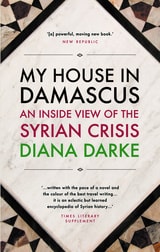
My House in Damascus
An Inside View of the Syrian CrisisDiana Darke
Haus Publishing, 2014
Diana Darke, a fluent Arabic speaker who moved to Damascus in 2004 after decades of regular visits, details how the Assad regime, and its relationship to the people, differs from the regimes in Egypt, Tunisia, and Libya—and why it was thus always less likely to collapse quickly, even in the face of widespread unrest and violence. Through the author’s firsthand experiences of buying and restoring a house in the old city of Damascus, which she later offered as a sanctuary to friends, Darke presents a clear picture of the realities of life on the ground and what hope there is for Syria’s future. Including additional material on topics like the advance of the Islamic State, as well as a new epilogue describing the current turmoil surrounding her house and the refugees she tried to help, this edition of My House in Damascus powerfully documents the human cost of the ongoing civil war.
My Life in the PLO
The Inside Story of the Palestinian StruggleShafiq Al-Hout
Pluto Press, 2011
This is the inside story of the Palestine Liberation Organisation (PLO), from its beginnings in 1964 to the signing of the Oslo agreement in 1993.
For over three decades, the main goal of the PLO was to achieve a just peace in the Arab-Israeli conflict, and to build a democratic state in Palestine for all its citizens. Shafiq Al-Hout, a high ranking PLO official until his resignation in 1993, provides previously unavailable details on the key events in its history such as its recognition by the UN and the Oslo peace negotiations. Taking us right to the heart of the decision making processes, this book explains the personalities and internal politics that shaped the PLO's actions and the Palestinian experience of the twentieth century.
Although he was an insider, Al-Hout's book does not shy from analysing and criticising decisions and individuals, including Yasser Arafat. This book is an essential piece of history that sheds new light on the significance of the PLO in the Palestinian struggle for justice.
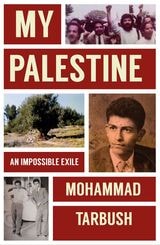
My Palestine
An Impossible ExileMohammad Tarbush
Haus Publishing, 2025
Mohammad Tarbush was born in British Mandate Palestine. As an infant, he and his family were forced to evacuate their village together with its entire population, after the Zionist victory that led to the establishment of the State of Israel. Then as landless refugees in the West Bank, the family sank into poverty. When, as a teenager, Tarbush left home one day under the pretext of visiting relatives in Jordan, he in fact set off on a year-long hitchhiking journey to Europe, where he would eventually become a highly successful international banker and a key behind-the-scenes promoter of the Palestinian cause. In My Palestine, Mohammad Tarbush combines a poignant personal memoir with incisive political and economic commentary on the tumultuous events that shaped the history of Israel, Palestine, and the modern Middle East.

My Voice Is My Weapon
Music, Nationalism, and the Poetics of Palestinian ResistanceDavid A. McDonald
Duke University Press, 2013