Results by title
56 books match the query 'Mississippian culture' and 9 start with m

Mastodons to Mississippians
Adventures in Nashville's Deep PastAaron Deter-Wolf
Vanderbilt University Press, 2021
Was Nashville once home to a giant race of humans?
No, but in 1845, you could have paid a quarter to see the remains of one who allegedly lived here before The Flood. That summer, Middle Tennessee well diggers had unearthed the skeleton of an American mastodon. Before it went on display, it was modified and augmented with wooden “bones” to make it look more like a human being and passed off as an antediluvian giant. Then, like so many Nashvillians, after a little success here, it went on tour and disappeared from history.
But this fake history of a race of Pre-Nashville Giants isn’t the only bad history of what, and who, was here before Nashville. Sources written for schoolchildren and the public lead us to believe that the first Euro-Americans arrived in Nashville to find a pristine landscape inhabited only by the buffalo and boundless nature, entirely untouched by human hands. Instead, the roots of our city extend some 14,000 years before Illinois lieutenant-governor-turned-fur-trader Timothy Demonbreun set foot at Sulphur Dell.
During the period between about AD 1000 and 1425, a thriving Native American culture known to archaeologists as the Middle Cumberland Mississippian lived along the Cumberland River and its tributaries in today’s Davidson County. Earthen mounds built to hold the houses or burials of the upper class overlooked both banks of the Cumberland near what is now downtown Nashville. Surrounding densely packed village areas including family homes, cemeteries, and public spaces stretched for several miles through Shelby Bottoms, and the McFerrin Park, Bicentennial Mall, and Germantown neighborhoods. Other villages were scattered across the Nashville landscape, including in the modern neighborhoods of Richland, Sylvan Park, Lipscomb, Duncan Wood, Centennial Park, Belle Meade, White Bridge, and Cherokee Park.
This book is the first public-facing effort by legitimate archaeologists to articulate the history of what happened here before Nashville happened.
Megadrought in the Carolinas
The Archaeology of Mississippian Collapse, Abandonment, and CoalescenceJohn S. Cable
University of Alabama Press, 2020
A prevailing enigma in American archaeology is why vast swaths of land in the Southeast and Southwest were abandoned between AD 1200 and 1500. The most well-known abandonments occurred in the Four Corners and Mimbres areas of the Southwest and the central Mississippi valley in the twelfth and thirteenth centuries and in southern Arizona and the Ohio Valley during the fifteenth century. In Megadrought in the Carolinas: The Archaeology of Mississippian Collapse, Abandonment, and Coalescence, John S. Cable demonstrates through the application of innovative ceramic analysis that yet another fifteenth-century abandonment event took place across an area of some 34.5 million acres centered on the South Carolina coast.
Most would agree that these sweeping changes were at least in part the consequence of prolonged droughts associated with a period of global warming known as the Medieval Climatic Anomaly. Cable strengthens this inference by showing that these events correspond exactly with the timing of two different geographic patterns of megadrought as defined by modern climate models.
Cable extends his study by testing the proposition that the former residents of the coastal zone migrated to surrounding interior regions where the effects of drought were less severe. Abundant support for this expectation is found in the archaeology of these regions, including evidence of accelerated population growth, crowding, and increased regional hostilities. Another important implication of immigration is the eventual coalescence of ethnic and/or culturally different social groups and the ultimate transformation of societies into new cultural syntheses. Evidence for this process is not yet well documented in the Southeast, but Cable draws on his familiarity with the drought-related Puebloan intrusions into the Hohokam Core Area of southern Arizona during the thirteenth and fourteenth centuries to suggest strategies for examining coalescence in the Southeast. The narrative concludes by addressing the broad implications of late prehistoric societal collapse for today’s human-propelled global warming era that portends similar but much more long-lasting consequences.
Mississippian Communities and Households
Edited by J. Daniel Rogers and Bruce D. Smith
University of Alabama Press, 1995
During the Mississippian period (approximately A.D. 1000-1600) in the midwestern and southeastern United States a variety of greater and lesser chiefdoms took shape. Archaeologists have for many years explored the nature of these chiefdoms from the perspective common in archaeological investigations—from the top down, investigating ceremonial elite mound structures and predicting the basic domestic unit from that data. Because of the increased number of field investigations at the community level in recent years, this volume is able to move the scale of investigation down to the level of community and household, and it contributes to major revisions of settlement hierarchy concepts.

Mississippian Polity and Politics on the Gulf Coastal Plain
A View from the Pearl River, MississippiPatrick Livingood
University of Alabama Press, 2011
The definition of the regional limits of chiefly influence during the Mississippian period in the southeastern United States remains unresolved. In the Gulf Coastal Plain between the Mississippi and Black Warrior rivers, some studies have explored the role that interpolity interactions played in influencing a polity’s social and political complexity through time. It has been argued that the larger, more complex polities were able to preempt the development of more complex political structures among the smaller polities.
Using research at the Pevey (22Lw510) and Lowe-Steen (22Lw511) mound sites on the Pearl River in Lawrence County, Mississippi, this book explores the social and political mechanisms by which these polities may have interacted with each other and the geographic limit to the effects of inter-polity competition. The Pevey site is a nine-mound Mississippian site and Lowe-Steen is a two-mound site located 18 kilometers to the north of Pevey. These sites provide a “missing link” of sorts to explore questions about inter-polity interactions because of their centrality to the study region and their unusual size. By filling a void in the regional dataset, this study allows us to better understand the capacity of the largest polities to negatively effect the political development of their smaller neighbors.
Mississippian Towns and Sacred Spaces
Searching for an Architectural GrammarEdited by R. Barry Lewis and Charles Stout
University of Alabama Press, 1998
Archaeologists and architects draw upon theoretical perspectives from their fields to provide valuable insights into the structure, development, and meaning of prehistoric communities.
Architecture is the most visible physical manifestation of human culture. The built environment envelops our lives and projects our distinctive regional and ethnic identities to the world around us. Archaeology and architecture find common theoretical ground in their perspectives of the homes, spaces, and communities that people create for themselves. Although archaeologists and architects may ask different questions and apply different methods, the results are the same—a deeper understanding of what it means to be human.
In this volume, prominent archaeologists examine the architectural design spaces of Mississippian towns and mound centers of the eastern United States. The diverse Mississippian societies, which existed between A.D. 900 and 1700, created some of the largest and most complex Native American archaeological sites in the United States. The dominant architectural feature shared by these communities was one or more large plazas, each of which was often flanked by buildings set on platform mounds. The authors describe the major dimensions of an architectural grammar, centered on the design of the plaza and mound complex that was shared by different societies across the Mississippian world. They then explore these shared architectural features as physical representations or metaphors for Mississippian world views and culture.
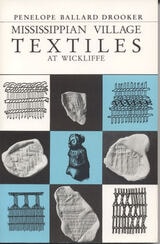
Mississippian Village Textiles at Wickliffe
Penelope Ballard Drooker
University of Alabama Press, 1992
Because textiles rarely are preserved in the archaeological record outside of deserts and permafrost areas, in many regions of the world very little is known about their characteristics, functions, production technology, or socioeconomic importance. While this fact is also true of organic fabrics produced during the Mississippian period in southeastern North Anerica, a wide variety of Mississippian textiles has been preserved in the form of impressions on large pottery vessels. From attribute analysis of 1,574 fabrics impressed on Wickliffe pottery sherds and comparison of the impressions with extant Mississippian textile artifacts, Drooker presents the first comparative analysis of these materials and the most inclusive available summary of information on Mississippian textiles.
Mound Excavations at Moundville
Architecture, Elites and Social OrderVernon James Knight, Jr.
University of Alabama Press, 2010
How social and political power was wielded in order to build Moundville
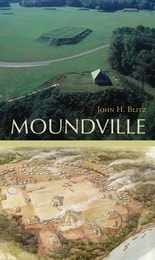
Moundville
John H. Blitz
University of Alabama Press, 2008
Exploring the legacy of America’s great mound builders.
In the 13th century, Moundville was one of the largest Native American settlements north of Mexico. Spread over 325 acres were 29 earthen mounds arranged around a great plaza, a mile-long stockade, and dozens of dwellings for thousands of people. Moundville, in size and complexity second only to the Cahokia site in Illinois, was a heavily populated town, as well as a political and religious center.
Moundville was sustained by tribute of food and labor provided by the people who lived in the nearby floodplain as well as other smaller mound centers. The immediate area appears to have been thickly populated, but by about A.D. 1350, Moundville retained only ceremonial and political functions. A decline ensued, and by the 1500s the area was abandoned. By the time the first Europeans reached the Southeast in the 1540s, the precise links between Moundville's inhabitants and what became the historic Native American tribes had become a mystery.
Illustrated with 50 color photos, maps, and figures, Moundville tells the story of the ancient people who lived there, the modern struggle to save the site from destruction, and the scientific saga of the archaeologists who brought the story to life. Moundville is the book to read before, during, or after a visit to Alabama’s prehistoric metropolis.
Moundville's Economy
Paul D. Welch
University of Alabama Press, 1991
A Dan Josselyn Memorial Publication
Anthropologists have long talked about chiefdoms as a form of sociopolitical organization, and for several decades Elman Service's description of chiefdoms has been widely accepted as definitive. Nevertheless, in the 1970s, scholars began to question whether all, or any, chiefdoms had the entire range of characteristics described by Service. Most of the questions focused on the (nonmarket) economic organization of these polities, and several contrasting economic models were suggested. None of the models, however, was comprehensively tested against actual chiefdom economies.
This study examines the economic organization of the late prehistoric (A.D. 1000 to 1540) chiefdom centered at Moundville, Alabama. Rather than attempting to show that this case fits one or another model, the economic organization is determined empirically using archaeological data. The pattern of production and distribution of subsistence goods, domestic nonutilitarian goods, and imported prestige goods does not fit precisely any of the extant models. Because Moundville's economy was organized in a way that promoted stability, it may be no accident that Moundville was the dominant regional polity for several hundred years. This research opens a new field of archaeological investigation: the relationship between fine details of economic organization and large-scale political fortunes.