Results by title
213 books match the query 'Political parties' and 13 start with m

Machine Politics in Transition
Party and Community in ChicagoThomas M. Guterbock
University of Chicago Press, 1980
For three years, Thomas M. Guterbock participated in the daily activities of the Regular Democratic Organization in one North Side Chicago ward in order to discover how political machines win the support of the urban electorate. Guterbock's participant observation data, supplemented by a sample survey of ward residents' attitudes toward, and contacts with the machine, provide convincing evidence that the most widely accepted notions of how political machines work are no longer correct.
Contrary to conventional wisdom about the machine, Guterbock finds that the party does not secure votes by doing "favors" for people, nor do services rendered determine actual voting behavior. Instead, party loyalty is governed by such factors as social status, educational achievement, and bureaucratic competence. Guterbock finds that Democratic loyalists are drawn disproportionately from the ward's lowest strata. Ironically, the characteristics of these loyal Democrats contrast sharpely with the characteristics of those most likely to use party services.
What keeps the machine going, then? To answer this question, Guterbock takes us behind the scenes for a unique look inside the ward club. He shows how members develop loyalty and motivation beyond concern for their own pocketbooks. And he analyzes the public involvement of machine politicians in neighborhood affairs, describing the skillful—sometimes devious—ways in which they appeal to their constituents' sense of community. By focusing on the interplay of party loyalty and community attachments, Guterbock is able to explain the continued hegemony of Chicago's political machine and its enduring image of legitimacy.
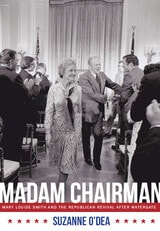
Madam Chairman
Mary Louise Smith and the Republican Revival after WatergateSuzanne O'Dea
University of Missouri Press, 2012
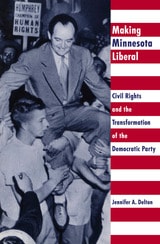
Making Minnesota Liberal
Civil Rights And The Transformation Of The Democratic PartyJennifer A. Delton
University of Minnesota Press, 2002
Mandates, Parties, and Voters
How Elections Shape the FutureJames H Fowler and Oleg Smirnov
Temple University Press, 2007
Most research on two-party elections has considered the outcome as a single, dichotomous event: either one or the other party wins. In this groundbreaking book, James Fowler and Oleg Smirnov investigate not just who wins, but by how much, and they marshal compelling evidence that mandates-in the form of margin of victory-matter. Using theoretical models, computer simulation, carefully designed experiments, and empirical data, the authors show that after an election the policy positions of both parties move in the direction preferred by the winning party-and they move even more if the victory is large. In addition, Fowler and Smirnov not only show that the divergence between the policy positions of the parties is greatest when the previous election was close, but also that policy positions are further influenced by electoral volatility and ideological polarization.
This pioneering book will be of particular interest to political scientists, game theoreticians, and other scholars who study voting behavior and its short-term and long-range effects on public policy.
Mastery and Drift
Professional-Class Liberals since the 1960sEdited by Brent Cebul and Lily Geismer
University of Chicago Press, 2025
Since the 1960s, American liberalism and the Democratic Party have been remade along professional class lines, widening liberalism’s impact but narrowing its social and political vision. In Mastery and Drift, historians Brent Cebul and Lily Geismer have assembled a group of scholars to address the formation of “professional-class liberalism” and its central role in remaking electoral politics and the practice of governance. Across subjects as varied as philanthropy, consulting, health care, welfare, race, immigration, economics, and foreign conflicts, the authors examine not only the gaps between liberals’ egalitarian aspirations and their approaches to policymaking but also how the intricacies of contemporary governance have tended to bolster professional-class liberals’ power.
The contributors to Mastery and Drift all came of age amid the development of professional-class liberalism, giving them distinctive and important perspectives in understanding its internal limitations and its relationship to neoliberalism and the Right. With never-ending disputes over the meaning of liberalism, the content of its governance, and its relationship to a resurgent Left, now is the time to consider modern liberalism’s place in contemporary American life.

Military Ascendancy and Political Culture
A Study of Indonesia's GolkarLeo Suryadinata
Ohio University Press, 1989
Leo Suryadinata traces the birth, struggle, and emergence of this party so closely identified with Indonesia’s President Suharto. Yet, to claim that Suharto and the military dominate the party is to view Golkar superficially, for the party is also composed of factions of civil servants and the Minister of Security and Defense, as well as several other governmental agencies. A complex and well-detailed cultural history of Indonesia’s most powerful political party, this case study should have wider implications for the study of military behavior in the Third World.
Millennial Makeover
MySpace, YouTube, and the Future of American PoliticsWinograd, Morley
Rutgers University Press, 2008
A 2008 New York Times Notable Book of the Year
It happens in America every four decades and it is about to happen again. America’s demand for change in the 2008 election will cause another of our country’s periodic political makeovers. This realignment, like all others before it, will result from the coming of age of a new generation of young Americans—the Millennial Generation—and the full emergence of the Internet-based communications technology that this generation uses so well. Beginning in 2008, almost everything about American politics and government will transform—voting patterns, the fortunes of the two political parties, the issues that engage the nation, and our government and its public policy.
Building on the seminal work of previous generational theorists,Morley Winograd and Michael D. Hais demonstrate and describe, for the first time, the two types of realignments—“idealist” and “civic”—that have alternated with one another throughout the nation’s history. Based on these patterns, Winograd and Hais predict that the next realignment will be very different from the last one that occurred in 1968. “Idealist” realignments, like the one put into motion forty years ago by the Baby Boomer Generation, produce, among other things, a political emphasis on divisive social issues and governmental gridlock. “Civic” realignments, like the one that is coming, and the one produced by the famous GI or “Greatest” Generation in the 1930s, by contrast, tend to produce societal unity, increased attention to and successful resolution of basic economic and foreign policy issues, and institution-building.
The authors detail the contours and causes of the country’s five previous political makeovers, before delving deeply into the generational and technological trends that will shape the next. The book’s final section forecasts the impact of the Millennial Makeover on the elections, issues, and public policies that will characterize America’s politics in the decades ahead.
For additional information go to:
Millennial Makeover website.
Minority Parties in U.S. Legislatures
Conditions of InfluenceJennifer Hayes Clark
University of Michigan Press, 2015
Challenging conventional assumptions that the majority party dominates the legislature, Jennifer Hayes Clark investigates precisely the ways in which—and under what conditions—members of the minority party successfully pursue their interests. For this study, Clark collects fine-grained data from both the U.S. Congress and state legislatures to get a close look at three key points in the legislative process: committee assignments, bill cosponsorship, and roll-call votes. She finds that minority party members are not systematically excluded throughout the policymaking process. Indeed, their capacity to shape legislative decision-making is enhanced when party polarization is low, when institutional prerogatives are broadly dispersed rather than centralized, and when staff resources are limited. Under these conditions, bipartisanship bill cosponsorship and voting coalitions are also more prevalent.
With the sharp increase of partisan polarization in state legislatures and in Congress, it is essential to understand how and when a minority party can effectively represent constituents.
Minority Party Misery
Political Powerlessness and Electoral DisengagementJacob F. H. Smith
University of Michigan Press, 2021
This book examines the role of minority party status on politicians’ engagement in electoral politics. Jacob Smith argues that politicians are more likely to be engaged in electoral politics when they expect their party to be in the majority in Congress after the next election and less likely when they anticipate their party will be in the minority. This effect is particularly likely to hold true in recent decades where parties disagree on a substantial number of issues. Politicians whose party will be in the majority have a clear incentive to engage in electoral politics because their preferred policies have a credible chance of passing if they are in the majority. In contrast, it is generally difficult for minority party lawmakers to get a hearing on—much less advance—their preferred policies, particularly when institutional rules inside Congress favor the majority party. Instead, minority party lawmakers spend most of their time fighting losing battles against policy proposals from the majority party. Minority Party Misery examines the consequences of the powerlessness that politicians feel from continually losing battles to the majority party in Congress. Its findings have important consequences for democratic governance, as highly qualified minority party politicians may choose to leave office due to their dismal circumstances rather than continue to serve until their party eventually reenters the majority.
Mixed-Member Electoral Systems in Constitutional Context
Taiwan, Japan, and BeyondEdited by Nathan F. Batto, Chi Huang, Alexander C. Tan, and Gary W. Cox
University of Michigan Press, 2016
The findings presented here demonstrate that the success of electoral reform depends not only on the specification of new electoral rules per se but also on the political context—and especially the constitutional framework—within which such rules are embedded.
Money, Power, and Ideology
Political Parties in Post-Authoritarian IndonesiaMarcus Mietzner
National University of Singapore Press, 2013
Mr. Democrat
Jim Farley, the New Deal and the Making of Modern American PoliticsDaniel Scroop
University of Michigan Press, 2006
Mr. Democrat tells the story of Jim Farley, Franklin D. Roosevelt's campaign manager. As party boss, Farley experienced unprecedented success in the New Deal years. And like his modern counterpart Karl Rove, Farley enjoyed unparalleled access and power. Unlike Rove, however, Farley was instrumental in the creation of an overwhelming new majority in American politics, as the emergence of the New Deal transformed the political landscape of its time.
Mr. Democrat is timely and indispensable not just because Farley was a fascinating and unduly neglected figure, but also because an understanding of his career advances our knowledge of how and why he revolutionized the Democratic Party and American politics in the age of the New Deal.
Daniel Scroop is Lecturer in American History, University of Liverpool School of History.
Multi-Party Politics in Kenya
The Kenyatta and Moi States and the Triumph of the System in the 1992 ElectionDavid Throup
Ohio University Press, 1997
This book uses the Kenyan political system to address issues relevant to recent political developments throughout Africa.
The authors analyze the construction of the Moi state since 1978. They show the marginalization of Kikuyu interests as the political economy of Kenya has been reconstructed to benefit President Moi’s Kalenjin people and their allies. Mounting Kikuyu dissatisfaction led to the growth of demands for multi-party democracy.
The book places contemporary Kenyan politics and the 1992 election in their historical context, contrasting the present multi-party era with the previous one during the sixties.
The authors question the hopes for a “second independence” in Africa by demonstrating the problems faced by fledgling opposition parties in weak civil societies.