Results by title
1427 books match the query 'Politics' and 69 start with m

Macedonia
The Politics of Identity and DifferenceJane K. Cowan
Pluto Press, 2000

Making Home
Faith, Love and the Politics of Belonging in Japanese-Filipino FamiliesMario Ivan Lopez
National University of Singapore Press, 2026
How do faith, family, and migration intersect in the intimate lives of transnational couples? This ethnography examines Japanese-Filipino marriages in contemporary Japan to reveal how gendered Catholic practices, cultural negotiation, and the politics of belonging shape everyday life. Set in Northern Kyushu, Making Home explores the often tense dynamics of these relationships—how love, faith, and social expectations are navigated across multiple domains. Through long-term fieldwork, it shows how Filipino migrants and their Japanese partners create “contact zones” where faith becomes both a resource for connection and a site of struggle.
Religion, far from being a private matter, becomes a powerful tool for migrants to sustain family ties, negotiate identities, and transform the intimate spaces they live in. Centering religious practices within migration studies, this book offers fresh insights into the evolving landscape of transnational families in Japan.
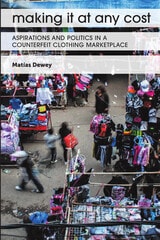
Making It at Any Cost
Aspirations and Politics in a Counterfeit Clothing MarketplaceBy Matías Dewey
University of Texas Press, 2020
La Salada is South America’s largest marketplace for fraudulently labeled clothing, a sprawling and dangerous bazaar on the fringes of Buenos Aires where counterfeit goods are bought and sold, armed thieves roam the nearby streets, and corrupt police and politicians turn a blind eye to widespread unlawful behaviors. Despite conditions traditionally considered inhospitable to economic growth—including acute interpersonal distrust, pervasive personal insecurity, and rampant violence—business in La Salada is booming under an established order completely detached from the state.
Matías Dewey dives deep into the world of La Salada to examine how market exchanges function outside the law and how agreements and norms develop in the economy for counterfeit clothing. Drawing on seven months of ethnographic research and more than a hundred interviews, Dewey argues that aspirations for a better future shape garment workers’ everyday practices, from their home-based sweatshops to the market stalls. The book unearths a new configuration of garment production and commercialization detached from global supply chains, submerged in the shadows of informality and illegality, and rooted in aspiration and opportunity.
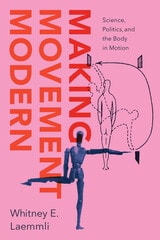
Making Movement Modern
Science, Politics, and the Body in MotionWhitney E. Laemmli
University of Chicago Press, 2026
In the early twentieth century, human bodily movement garnered interest among researchers who were convinced that understanding and controlling it could help govern an increasingly frazzled, fragmented world. Making Movement Modern traces one movement visualization technique, Labanotation, from its origins in expressionist dance, Austro-Hungarian military discipline, and contemporary physiology to its employment in factories and offices a half-century later. Frustrated by societies that seemed plagued by regimentation and alienation, the users of Laban-inspired systems—from artists and scientists to factory owners, politicians, lawyers, anthropologists, psychiatrists, and computer scientists—hoped to provide opportunities for individual expression while simultaneously harnessing movement to serve the needs of larger communities, businesses, and states.
Making Movement Modern reveals how Labanotation’s creator, choreographer Rudolf Laban, and his acolytes offered this system to a surprising variety of individuals and groups. It was a technique that promised liberation through expressive movement; it was also a means of organizing fascist displays of pure “Aryan” culture. The book explores these political ambiguities as Laban-based systems entered postwar society in the United States and the United Kingdom, where they were used to document disappearing folk cultures, treat Holocaust survivors, and make even the dullest, most repetitive work feel spiritually meaningful. Central to these efforts were vast programs to collect and store new kinds of personal movement data, and this history also has much to tell us about mass data collection today. This is a book for anyone interested in the relationship between art, science, data, and the human body across the tumultuous twentieth century.
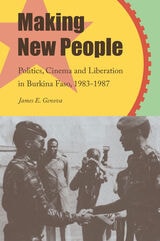
Making New People
Politics, Cinema, and Liberation in Burkina Faso, 1983–1987James Genova
Michigan State University Press, 2022

Making the Forever War
Marilyn B. Young on the Culture and Politics of American MilitarismMary L. Dudziak
University of Massachusetts Press, 2021
Making the Forever War brings Young's articles and essays on American war together for the first time, including never before published works. Moving from the first years of the Cold War to Korea, Vietnam, and more recent "forever" wars in Iraq and Afghanistan, Young reveals the ways in which war became ever-present, yet more covert and abstract, particularly as aerial bombings and faceless drone strikes have attained greater strategic value. For Young, U.S. empire persisted because of, not despite, the inattention of most Americans. The collection concludes with an afterword by prominent military historian Andrew Bacevich.

Making the News
Politics, the Media, and Agenda SettingAmber E. Boydstun
University of Chicago Press, 2013
With Making the News, Amber Boydstun offers an eye-opening look at the explosive patterns of media attention that determine which issues are brought before the public. At the heart of her argument is the observation that the media have two modes: an “alarm mode” for breaking stories and a “patrol mode” for covering them in greater depth. While institutional incentives often initiate alarm mode around a story, they also propel news outlets into the watchdog-like patrol mode around its policy implications until the next big news item breaks. What results from this pattern of fixation followed by rapid change is skewed coverage of policy issues, with a few receiving the majority of media attention while others receive none at all. Boydstun documents this systemic explosiveness and skew through analysis of media coverage across policy issues, including in-depth looks at the waxing and waning of coverage around two issues: capital punishment and the “war on terror.”
Making the News shows how the seemingly unpredictable day-to-day decisions of the newsroom produce distinct patterns of operation with implications—good and bad—for national politics.
Making the Radical University
Identity and Politics on the American College Campus, 1966–1991Elizabeth M. Kalbfleisch
University of Massachusetts Press, 2024
In the 1960s, professors, students, and activists on the political Left viewed college curricula as useful sites for political transformation. They coordinated efforts to alter general education requirements at the college level to foster change in American thought, with greater openness toward people who had previously been excluded, including women, people of color, the poor and working classes, people with disabilities, and members of the LGBTQ community. Their work reshaped American culture and politics, while prompting a significant backlash from conservatives attempting to, in their view, protect classical education from modern encroachment.
Elizabeth M. Kalbfleisch details how American universities became a battleground for identity politics from the 1960s through the 1980s. Focusing on two case studies at Stanford University and the University of Texas at Austin, Making the Radical University examines how curricular changes led to polarizing discussions nationwide around academic standards and identity politics, including the so-called canon wars. Today, these debates have only become more politically charged, complex, and barbed.
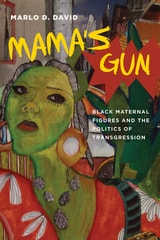
Mama's Gun
Black Maternal Figures and the Politics of TransgressionMarlo D. David
The Ohio State University Press, 2016
Taking inspiration from African American fiction, historical accounts of black life, Afrofuturism, and black popular culture in music and on screen, David turns her attention to Sapphire’s Push, Octavia Butler’s Dawn, and Suzan-Lori Parks’s Getting Mother’s Body as well as the performance art of Erykah Badu and the films of Tyler Perry. She draws out the implications of black maternal figures in these texts who balk at tradition and are far from “ideal.” David’s study shows how representations of blackness are deeply embedded in the neoliberal language of contemporary American politics and how black writers and performers resist such mainstream ideologies with their own transgressive black maternal figures.
Man Is by Nature a Political Animal
Evolution, Biology, and PoliticsEdited by Peter K. Hatemi and Rose McDermott
University of Chicago Press, 2011

Mano Dura
The Politics of Gang Control in El SalvadorBy Sonja Wolf
University of Texas Press, 2017
In 1992, at the end of a twelve-year civil war, El Salvador was poised for a transition to democracy. Yet, after longstanding dominance by a small oligarchy that continually used violence to repress popular resistance, El Salvador’s democracy has proven to be a fragile one, as social ills (poverty chief among them) have given rise to neighborhoods where gang activity now thrives. Mano Dura examines the ways in which the ruling ARENA party used gang violence to solidify political power in the hands of the elite—culminating in draconian “iron fist” antigang policies that undermine human rights while ultimately doing little to address the roots of gang membership.
Drawing on extensive ethnographic fieldwork and policy analysis, Mano Dura examines the activities of three nongovernmental organizations (NGOs) that have advocated for more nuanced policies to eradicate gangs and the societal issues that are both a cause and an effect of gang proliferation. While other studies of street gangs have focused on relatively distant countries such as Colombia, Argentina, and Jamaica, Sonja Wolf’s research takes us to a country closer to the United States, where forced deportation has brought with it US gang culture. Charting the limited success of NGOs in influencing El Salvador’s security policies, the book brings to light key contextual aspects—including myopic media coverage and the ironic populist support for ARENA, despite the party’s protection of the elite at the expense of the greater society.
Man’s Quest for Political Knowledge
The Study and Teaching of Politics in Ancient TimesWilliam Anderson
University of Minnesota Press, 1964
Man's Quest for Political Knowledge was first published in 1964. Minnesota Archive Editions uses digital technology to make long-unavailable books once again accessible, and are published unaltered from the original University of Minnesota Press editions.
Considering the importance of political science as an academic subject in our time, it is surprising that more attention has not been given, until now, to the history of political study and teaching. As Professor Anderson's book makes clear, an understanding of this history throws light on questions significantly related to basic problems of contemporary political science.
By placing in their historical context pertinent developments in ancient times, Professor Anderson shows how the study and teaching of politics may flourish under certain conditions and falter or fail under others. Throughout the book he demonstrates the truth of what Aristotle said about the study of politics: "In this subject as in others the best method of investigation is to study things in the process of development from the beginning."
In early chapters the author examines three literate societies of the ancient Near East—Mesopotamia, Egypt, and Israel. He then discusses, in the major section of the book, the accomplishments of the Greeks, who, with their many self-governing city-states and their secular attitude toward politics, opened up the study of politics in a realistic way. Here he gives Aristotle the most prominent role and finds Plato less important than most scholars might expect. Finally, he traces the decline of the political study and teaching in the Hellenistic period and in the time of the Roman Empire.
The volume will be of particular interest not only to political scientists but to historians, philosophers, and classical scholars.

Mapping Gay L.A.
Intersection Of Place And PoliticsMoira Rachel Kenney
Temple University Press, 2001
By tracking the terrain of the movement since the beginnings of gay liberation in 1960s Los Angeles, Kenney shows how activists laid claim to streets, buildings, neighborhoods, and, in the example of West Hollywood, an entire city. Exploiting the area's lack of cohesion, they created a movement that maintained a remarkable flexibility and built support networks stretching from Venice Beach to East LA. Taking a different path from San Francisco and New York, gays and lesbians in Los Angeles emphasized social services, decentralized communities (usually within ethnic neighborhoods), and local as well as national politics. Kenney's grounded reading of this history celebrates the public and private forms of activism that shaped a visible and vibrant community.
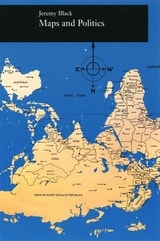
Maps and Politics
Jeremy Black
University of Chicago Press, 1997
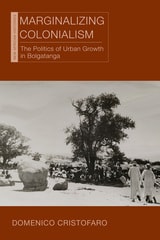
Marginalizing Colonialism
The Politics of Urban Growth in BolgatangaDomenico Cristofaro
Ohio University Press, 2026
Marginalizing Colonialism offers a social, political, and spatial history of Bolgatanga, a northern Ghanaian town whose colonial-era urban development has been largely overlooked in African historiography. Covering the late nineteenth century through the 1940s, the book traces how this settlement—long characterized as a remote hinterland of the British Empire—emerged as a commercial and political center in the region. Rather than depicting urbanization as an imperial project, it reveals how African actors actively shaped Bolgatanga’s growth and repeatedly marginalized, redirected, and evaded colonial authority.
The narrative follows Bolgatanga’s transformation from a dispersed settlement organized around kinship, ritual geographies, and earth shrines into a dynamic urban hub integrated into regional trade networks. Central to this shift were new land tenure systems, commercial expansion, and changing spatial practices. By the 1930s and 1940s, trade in kola, groundnuts, livestock, and other goods surged, stimulated by new roads and increased mobility. Population growth converted farmland into leased plots, permanent buildings replaced older compounds, and areas around the market became focal points of economic and social life.
These changes were driven not by the colonial state but rather by local negotiations and strategic adaptations. Chiefs, earth priests, merchants, and migrant traders mediated and reshaped colonial policies, while missionaries and settlers concluded land agreements beyond official oversight. Roads and marketplaces, planned through negotiations between colonial officials and local chiefs and built largely through African labor, became central infrastructures of local economic life. Even as colonial administrators sought to codify land tenure and regulate commerce, their influence remained largely nominal—a background presence in a story propelled by African initiative.
Drawing on archival documents, oral histories, and unpublished manuscripts by local intellectuals, Marginalizing Colonialism provides the first comprehensive urban history of Bolgatanga. It challenges dominant narratives in African colonial and urban historiography by exposing the silences of the colonial archive and highlighting the significance of medium-sized towns as arenas of negotiation and creativity. Ultimately, the book argues that Bolgatanga’s urbanization was a locally driven process that redefined power, space, and governance—leaving a legacy that continues to shape the city’s identity and regional role today.
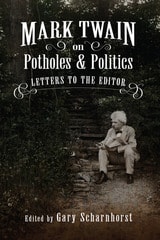
Mark Twain on Potholes and Politics
Letters to the EditorEdited by Gary Scharnhorst
University of Missouri Press, 2014
A frequent outlet for Twain’s wit was in letters to the editors of various newspapers and periodicals. Sharing his thoughts and opinions on topical issues ranging from national affairs to local social events, with swipes along the way at woman suffrage, potholes, literary piracy and other scams, slow mail delivery, police corruption, capital punishment, and the removal of Huck Finn from libraries, Twain never hesitated to speak his mind. And now thanks to Gary Scharnhorst, more than a hundred of these letters are available in one place for us to enjoy.
From his opinions on the execution of an intellectually brilliant murderer, to his scathing review of a bureau he perceived as “a pack of idiots” running on a currency of doughnuts, Twain’s pure, unbridled voice is evident throughout his letters. Mark Twain on Potholes and Politicsgives readers a chance to delve further than ever before into the musings of the most recognizable voice in American literature.
Markets and Medicine
The Politics of Health Care Reform in Britain, Germany, and the United StatesSusan Giaimo
University of Michigan Press, 2002
Marxist Literary Criticism Today
Barbara Foley
Pluto Press, 2019

Mastering Discourse
The Politics of Intellectual CulturePaul A. Bové
Duke University Press, 1992
Mastering Discourses offers an account of why "theory" fails to deal adequately with the politics of discursive cultures and warns that unless critics take much more seriously their own disciplinary inscriptions they will always reproduce structures of power and knowledge that they claim to oppose. Moreover, Bové argues, they will not fulfill the main role of the post-enlightenment intellectual, namely: to respond effectively to the present, through new theoretical and historical formulations that address the changing world of transnational capitalism and its neoliberal ideologies.
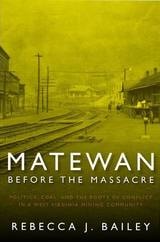
Matewan Before the Massacre
Politics, Coal, and the Roots of Conflict in a West Virginia Mining CommunityRebecca J. Bailey
West Virginia University Press, 2008
On May 19, 1920, gunshots rang through the streets of Matewan, West Virginia, in an event soon known as the “Matewan Massacre.” Most historians of West Virginia and Appalachia see this event as the beginning of a long series of tribulations known as the second Mine Wars. But was it instead the culmination of an even longer series of proceedings that unfolded in Mingo County, dating back at least to the Civil War? Matewan Before the Massacre provides the first comprehensive history of the area, beginning in the late eighteenth century continuing up to the Massacre. It covers the relevant economic history, including the development of the coal mine industry and the struggles over land ownership; labor history, including early efforts of unionization; transportation history, including the role of the N&W Railroad; political history, including the role of political factions in the county’s two major communities—Matewan and Williamson; and the impact of the state’s governors and legislatures on Mingo County.
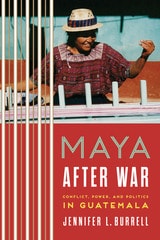
Maya after War
Conflict, Power, and Politics in GuatemalaBy Jennifer L. Burrell
University of Texas Press, 2013
Guatemala’s thirty-six-year civil war culminated in peace accords in 1996, but the postwar transition has been marked by continued violence, including lynchings and the rise of gangs, as well as massive wage-labor exodus to the United States. For the Mam Maya municipality of Todos Santos Cuchumatán, inhabited by a predominantly indigenous peasant population, the aftermath of war and genocide resonates with a long-standing tension between state techniques of governance and ancient community-level power structures that incorporated concepts of kinship, gender, and generation. Showing the ways in which these complex histories are interlinked with wartime and enduring family/class conflicts, Maya after War provides a nuanced account of a unique transitional postwar situation, including the complex influence of neoliberal intervention.
Drawing on ethnographic field research over a twenty-year period, Jennifer L. Burrell explores the after-war period in a locale where community struggles span culture, identity, and history. Investigating a range of tensions from the local to the international, Burrell employs unique methodologies, including mapmaking, history workshops, and an informal translation of a historic ethnography, to analyze the role of conflict in animating what matters to Todosanteros in their everyday lives and how the residents negotiate power. Examining the community-based divisions alongside national postwar contexts, Maya after War considers the aura of hope that surrounded the signing of the peace accords, and the subsequent doubt and waiting that have fueled unrest, encompassing generational conflicts. This study is a rich analysis of the multifaceted forces at work in the quest for peace, in Guatemala and beyond.

Means Without End
Notes on PoliticsGiorgio Agamben
University of Minnesota Press, 2000

Media in the Enlarged Europe
Politics, Policy and IndustryEdited by Alec Charles
Intellect Books, 2009
Looking beyond national and cultural boundaries, Media in the Enlarged Europe focuses on the complexity and instability of the European Union and its relationship with the mass media. Contributors to this volume address the continuing growth and expansion of the European Union, relationships between old and new Europe, and social and political developments in the former communist countries. Media in the Enlarged Europe presents snapshots of media politics, policies, industries, and cultures in the European Union as a whole, while incorporating case studies of the history and current state of mass media in specific nations. This will be an essential volume for students and experts in media studies, international relations, and international studies.
Mediating Morality
The Politics of Teen Pregnancy in the Post-Welfare EraClare Daniel
University of Massachusetts Press, 2017
Daniel investigates coordinated teen pregnancy prevention efforts within federal political discourse, along with public policy, popular culture, national advocacy, and local initiatives, revealing the evidence of this transformation. In the 1970s and 1980s, political leaders from both parties used teen pregnancy to strengthen their attacks on racialized impoverished communities. With a new welfare policy in 1996 that rhetoric moved toward blaming teen pregnancy—seemingly in a race- and class-neutral way—on the teens who engaged in sex prematurely and irresponsibly. Daniel effectively illustrates that the construction of teen pregnancy as an individual's problem has been a key component in a neoliberal agenda that frees the government from the responsibility of addressing systemic problems of poverty, lack of access to education, ongoing structural racism, and more.
Mediators
Aesthetics, Politics, and the CityReinhold Martin
University of Minnesota Press, 2014
Forerunners: Ideas First is a thought-in-process series of breakthrough digital publications. Written between fresh ideas and finished books, Forerunners draws on scholarly work initiated in notable blogs, social media, conference plenaries, journal articles, and the synergy of academic exchange. This is gray literature publishing: where intense thinking, change, and speculation take place in scholarship.
Medical Necessity
Health Care Access and the Politics of Decision MakingDaniel Skinner
University of Minnesota Press, 2019
How the politics of “medical necessity” complicates American health care
The definition of medical necessity has morphed over the years, from a singular physician’s determination to a complex and dynamic political contest involving patients, medical companies, insurance companies, and government agencies. In this book, Daniel Skinner constructs a comprehensive understanding of the politics of defining this concept, arguing that sustained political engagement with medical necessity is essential to developing a health care system that meets basic public health objectives.
From medical marijuana to mental health to reproductive politics, the concept of medical necessity underscores many of the most divisive and contentious debates in American health care. Skinner’s close reading of medical necessity’s production illuminates the divides between perceptions of medical need as well as how the gatekeeper concept of medical necessity tends to frame medical objectives. He questions the wisdom of continuing to use medical necessity when thinking critically about vexing health care challenges, exploring the possibility that contracts, rights, and technology may resolve the contentious politics of medical necessity.
Skinner ultimately contends that a major shift is needed, one in which health care administrators, doctors, and patients admit that medical necessity is, at its base, a contestable political concept.
Medievalism, Popular Culture and Politics in Metal Music
The Case of Hispanic Epic ThemesAmaranta Saguar García
Intellect Books, 2026
Challenging the common view of metal music as just a form of Western pop culture, this innovative book draws attention to medievalizing epicism, a distinctive strand within metal that evokes the medieval and the epic in both aesthetics and sensibility. While often shaped by fantasy literature, cinema, and more recently, video games, this fascination with the medieval has deeper roots in nationalist ideologies. Through a rich exploration of Spain and Portugal’s transitions after their period of authoritarian rule, this book reveals how medievalizing epicism plays a key role in shaping nationalist and ethnocentric discourses, fascist narratives, and official efforts to foster patriotic sentiment, and how metal bands confront these origins.
Drawing on an impressive breadth of scholarship and a deep knowledge of metal music culture, Amaranta Saguar García skillfully weaves together diverse reference points without losing focus or clarity. This book invites both scholars and music fans to reflect more broadly on how metal music imagines and reuses medieval heritage.
Mediterranean Crossings
The Politics of an Interrupted ModernityIain Chambers
Duke University Press, 2008
In evocative and erudite prose, Chambers renders the Mediterranean a mutable space, profoundly marked by the linguistic, literary, culinary, musical, and intellectual dissemination of Arab, Jewish, Turkish, and Latin cultures. He brings to light histories of Mediterranean crossings—of people, goods, melodies, thought—that are rarely part of orthodox understandings. Chambers writes in a style that reflects the fluidity of the exchanges that have formed the region; he segues between major historical events and local daily routines, backwards and forwards in time, and from one part of the Mediterranean to another. A sea of endlessly overlapping cultural and historical currents, the Mediterranean exceeds the immediate constraints of nationalism and inflexible identity. It offers scholars an opportunity to rethink the past and present and to imagine a future beyond the confines of Western humanistic thought.
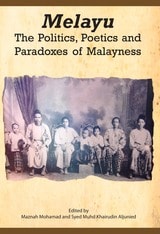
Melayu
The Politics, Poetics and Paradoxes of MalaynessEdited by Maznah Mohamad and Syed Muhd Khairudin Aljunied
National University of Singapore Press, 2012
In Melayu: The Politics, Poetics and Paradoxes of Malayness, the contributors examine the checkered, wavering and changeable understanding of the word Melayu by considering hitherto unexplored case studies dealing with use of the term in connection with origins, nations, minority-majority politics, Filipino Malays, Riau Malays, Orang Asli, Straits Chinese literature, women's veiling, vernacular television, social dissent, literary women, and modern Sufism. Taken as a whole, this volume offers a creative approach to the study of Malayness while providing new perspectives to the studies of identity formation and politics of ethnicity that have wider implications beyond the Southeast Asian region.
Memory Construction and the Politics of Time in Neoliberal South Korea
Namhee Lee
Duke University Press, 2022
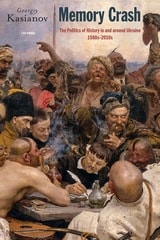
Memory Crash
Politics of History in and around Ukraine, 1980s–2010sGeorgiy Kasianov
Central European University Press, 2022
This account of historical politics in Ukraine, framed in a broader European context, shows how social, political, and cultural groups have used and misused the past from the final years of the Soviet Union to 2020. Georgiy Kasianov details practices relating to history and memory by a variety of actors, including state institutions, non-governmental organizations, political parties, historians, and local governments. He identifies the main political purposes of these practices in the construction of nation and identity, struggles for power, warfare, and international relations.
Kasianov considers the Ukrainian case in the context of a global increase in the politics of history and memory, with particular emphasis on a distinctive East-European variety. He pays special attention to the use and abuse of history in relations between Ukraine, Russia, and Poland.
Men's College Athletics and the Politics of Racial Equality
Five Pioneer Stories of Black Manliness, White Citizenship, and American DemocracyGregory J Kaliss
Temple University Press, 2014
College sports have provided a compelling means to discuss issues regarding racial equality and fairness in American life. As previously-white institutions of higher learning gradually (and grudgingly) opened their playing fields to African-American athletes in men's basketball and football, black and white spectators interpreted mixed-race team sports in often contradictory ways. In Men's College Athletics and the Politics of Racial Equality, Gregory Kaliss offers stunning insights into Americans' contested visions of equality, fairness, black manhood, citizenship, and an equal opportunity society.
Kaliss looks at Paul Robeson, Jackie Robinson, Wilt Chamberlain, Charlie Scott, John Mitchell, Wilbur Marshall, and Bear Bryant to show how Americans responded to racial integration over time. Men's College Athletics and the Politics of Racial Equality reveals that as fans, media members, university students, faculty, and administration—black and white—discussed the achievements and struggles of these athletes, they inevitably talked about much more than what occurred on the field.
Mennonites, Politics, and Peoplehood
1525 to 1980James Urry
University of Manitoba Press, 2006
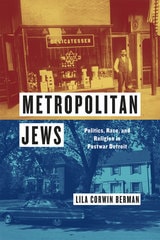
Metropolitan Jews
Politics, Race, and Religion in Postwar DetroitLila Corwin Berman
University of Chicago Press, 2015
Complex and subtle, Metropolitan Jews pushes urban scholarship beyond the tenacious black/white, urban/suburban dichotomy. It demands a more nuanced understanding of the process and politics of suburbanization and will reframe how we think about the American urban experiment and modern Jewish history.

Mexican Americans and the Politics of Diversity
¡Querer es poder!Lisa Magaña
University of Arizona Press, 2005

Michael Oakeshott on Religion, Aesthetics, and Politics
Elizabeth Campbell Corey
University of Missouri Press, 2006
For much of his career, British political philosopher Michael Oakeshott was identified with Margaret Thatcher’s conservative policies. He has been called by some a guru to the Tories, while others have considered him one of the last proponents of British Idealism. Best known for such books as Experience and Its Modes and Rationalism in Politics, Oakeshott has been the subject of numerous studies, but always with an emphasis on his political thought.
Gnosticism and considers both thinkers’ treatment of Hobbes to delineate their philosophical differences.

Michigan Government, Politics, and Policy
John S. Klemanski and David A. Dulio, editors
University of Michigan Press, 2017
As the state continues to deal with many of these challenges, Michiganders more than ever need a clear picture of how their state’s political institutions, actors, and processes work. To that end, this book provides a comprehensive analysis of Michigan’s politics and government that will help readers better understand the state’s history and its future prospects. Chapters elucidate the foundational aspects of the state’s government (the Michigan Constitution and intergovernmental relations); its political institutions (the state legislature, governor, and court system); its politics (political parties and elections); and its public policy (education, economic development, and budget and fiscal policy). The book’s four themes—historical context, decline, responses to challenges, and state-local government relations—run throughout and are buttressed by coverage of recent events. Moreover, they are brought together in a compelling chapter with a particular focus on the Flint water crisis.
An ideal fit for courses on state and local government, this thorough, well-written text will also appeal to readers simply interested in learning more about the inner workings of government in the Great Lakes State.

Migrant Song
Politics and Process in Contemporary Chicano LiteratureBy Teresa McKenna
University of Texas Press, 1996
Migration and continuity have shaped both the Chicano people and their oral and written literature. In this pathfinding study of Chicano literature, Teresa McKenna specifically explores how these works arise out of social, political, and psychological conflict and how the development of Chicano literature is inextricably embedded in this fact.
McKenna begins by appraising the evolution of Chicano literature from oral forms—including the important role of the corrido in the development of Chicano poetry. In subsequent chapters she examines the works of Richard Rodriguez and Rolando Hinojosa. She also devotes a chapter to the development of the Chicana voice in Chicano literature. Her epilogue considers the parallel development of Chicano literary theory and discusses some possible directions for research.
In McKenna's own words, "I believe that the future of this literature, as that of all literatures by people of color in the United States, rests largely on its being effectively introduced into the curricula at all levels, as well as its entrance into the critical consciousness of literary theory." This book will be an important step in that process.
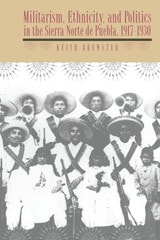
Militarism, Ethnicity, and Politics in the Sierra Norte de Puebla, 1917-1930
Keith Brewster
University of Arizona Press, 2003
Gabriel Barrios Cabrera, leader of the Brigada Serrana, rose from rural obscurity in the tiny village of Cuacuila to a position of unprecedented military strength during the Revolution, and throughout the 1920s he and his brother Demetrio came to enjoy the confidence of the nation's presidents. This work provides an in-depth look at how a local political boss held on to power. Keith Brewster reveals how the story of the Sierra is inextricably linked to that of the Barrios Cabrera family, and he investigates the ways in which this interconnection developed.
Brewster argues that Barrios owed his long prominence to his sensitivity to the region's culture, but also shows that the extent of his power was exaggerated by both contemporaries and historians. Barrios was able to develop a working relationship with the federal government by endorsing its objectives and convincing them of his own indispensability, but his authority depended on the weakness of the federal government and on infighting within the Puebla state government; once both governments stabilized, Barrios quickly lost his grip on power.
Masterfully blending archival sources and oral history, Brewster captures life in the Sierra during the 1920s and examines the decision-making processes that determined how communities responded to new pressures, such as requests for soldiers or support for development projects. He shows that subaltern groups were able to shape and even resist state reforms, mustering evidence that the Sierra's indigenous communities drove hard bargains over issues affecting their everyday lives. Although many communities used Barrios as an intermediary, Brewster reveals that they did not universally accept his legitimacy but simply used his connections to pursue their own local agendas.
Brewster depicts the Sierra de Puebla of the 1920s as a scene of shifting balances of power where political, economic, social, and ethnic factors combined to produce the temporary ascendancy of different interest groups beyond and within the region. His study forces us to question assumptions about how power was exercised at the local and regional levels in postrevolutionary Mexico and will be of lasting interest to all concerned with the dynamics of caciquismo and the evolution of the Mexican political system.
Millennial Style
The Politics of Experiment in Contemporary African Diasporic CultureAliyyah I. Abdur-Rahman
Duke University Press, 2024

Mimesis, Masochism, and Mime
The Politics of Theatricality in Contemporary French ThoughtTimothy Murray, Editor
University of Michigan Press, 1997

Miniature Messages
The Semiotics and Politics of Latin American Postage StampsJack Child
Duke University Press, 2008
Child combines history and political science with philatelic research of nearly forty thousand Latin American stamps. He focuses on Argentina and the Southern Cone, highlighting stamps representing the consolidation of the Argentine republic and those produced under its Peronist regime. He compares Chilean stamps issued by the leftist government of Salvador Allende and by Augusto Pinochet’s dictatorship. Considering postage stamps produced under other dictatorial regimes, he examines stamps from the Dominican Republic, Guatemala, Nicaragua, and Paraguay. Child studies how international conflicts have been depicted on the stamps of Argentina, Chile, and Peru, and he pays particular attention to the role of South American and British stamps in establishing claims to the Malvinas/Falkland Islands and to Antarctica. He also covers the cultural and political history of stamps in Bolivia, Brazil, Colombia, Cuba, Grenada, Mexico, Uruguay, Venezuela and elsewhere. In Miniature Messages, Child finds the political history of modern Latin America in its “tiny posters.”

Misconceiving Mothers
Legislators, Prosecutors, and the Politics of Prenatal Drug ExposureLaura Gomez
Temple University Press, 1997
Misconceiving Mothers is a case study of how public policy about reproduction and crime is made. Laura E. Gomez uses secondary research and first-hand interviews with legislators and prosecutors to examine attitudes toward the criminalization and/or medicalization of drug use during pregnancy by the legislature and criminal justice systems in California. She traces how an initial tendency toward criminalization gave way to a trend toward seeing the problem of "crack babies" as an issue of social welfare and public health.
It is no surprise that in an atmosphere of mother-blaming, particularly targeted at poor women and women of color, "crack babies" so easily captured the American popular imagination in the late 1980s. What is surprising is the was prenatal drug exposure came to be institutionalized in the state apparatus. Gomez attributes this circumstance to four interrelated cause: the gendered nature of the social problem; the recasting of the problem as fundamentally "medical" rather than "criminal"; the dynamic nature of t he process of institutionalization; and the specific feature of the legal institutions -- that is, the legislature and prosecutors' offices -- the became prominent in the case.
At one level Misconceiving Mothers tells the story of a particular problem at a particular time and place -- how the California legislature and district attorneys grappled with pregnant women's drug use in the late 1980s and early 1990s. At another level, the book tells a more general story about the political nature of contemporary social problems. The story it tells is political not just because it deals with the character of political institutions but because the process itself and the nature of the claims-making concern the power to control the allocation of state resources.
A number of studies have looked at how the initial criminalization of social problems takes place. Misconceiving Mothers looks at the process by which a criminalized social problem is institutionalized through the attitudes and policies of elite decision-makers.
Misframing Men
The Politics of Contemporary MasculinitiesKimmel, Michael
Rutgers University Press, 2010
This past decade has witnessed an extraordinary transformation in men's lives. For years, wave after wave of the women's movement, a movement that reshaped every aspect of American life, produced nary a ripple among men. But suddenly men are in the spotlight.
Yet, the public discussions often seem strained, silly, and sometimes flat-out wrong. The spotlight itself seems to obscure as much as it illuminates. Old tired clichTs about men's resistance to romantic commitment or reluctance to be led to the marriage altar seem perennially recyclable in advice books and on TV talk shows, but these days the laughter feels more forced, the defensiveness more pronounced. Pop biologists avoid careful confrontation with serious scientific research in their quest to find anatomical or evolutionary bases for promiscuity or porn addiction, hoping that by fiat, one can pronounce that "boys will be boys" and render it more than a flaccid tautology. And political pundits wring their hands about the feminization of American manhood, as if gender equality has neutered these formerly proud studs. Misframing Men, a collection of Michael Kimmel's commentaries on contemporary debates about masculinity, argues that the media have largely misframed this debate.
Kimmel, among the world's best-known scholars in gender studies, discusses political moments such as the Virginia Military Institute and Citadel cases that reached the Supreme Court (he participated as expert witness for the Justice Department) along with Promise Keepers rallies, mythopoetic gatherings, and white supremacists. He takes on antifeminists as the real male bashers, questions the unsubstantiated assertions that men suffer from domestic violence to the same degree as women, and examines the claims made by those who want to rescue boys from the "misandrous" reforms initiated by feminism.
In writings both solidly grounded and forcefully argued, Kimmel pushes the boundaries of today's modern conversation about men and masculinity.

Mississippian Polity and Politics on the Gulf Coastal Plain
A View from the Pearl River, MississippiPatrick Livingood
University of Alabama Press, 2011
The definition of the regional limits of chiefly influence during the Mississippian period in the southeastern United States remains unresolved. In the Gulf Coastal Plain between the Mississippi and Black Warrior rivers, some studies have explored the role that interpolity interactions played in influencing a polity’s social and political complexity through time. It has been argued that the larger, more complex polities were able to preempt the development of more complex political structures among the smaller polities.
Using research at the Pevey (22Lw510) and Lowe-Steen (22Lw511) mound sites on the Pearl River in Lawrence County, Mississippi, this book explores the social and political mechanisms by which these polities may have interacted with each other and the geographic limit to the effects of inter-polity competition. The Pevey site is a nine-mound Mississippian site and Lowe-Steen is a two-mound site located 18 kilometers to the north of Pevey. These sites provide a “missing link” of sorts to explore questions about inter-polity interactions because of their centrality to the study region and their unusual size. By filling a void in the regional dataset, this study allows us to better understand the capacity of the largest polities to negatively effect the political development of their smaller neighbors.
Missouri Government and Politics
Revised and Enlarged EditionEdited by Richard J. Hardy, Richard R. Dohm, & David A. Leuthold
University of Missouri Press, 1995
Since the publication of the first edition in 1985, Missouri Government and Politics has been widely acclaimed as an outstanding text. This revised and enlarged edition updates all of the chapters to reflect the changes that have occurred in the state's government during the last decade. Five new chapters have been added on topics previously unaddressed: economic development, energy, and the environment; state policy making in higher education; funding for education in the 1990s; the statewide elected executive officials; and the types of law in Missouri.
The twenty-six chapters are grouped into four main categories: "The Context of Missouri Politics," "State Governmental Framework," "Policies and Policy Making in Missouri," and "Local Government and Politics in Missouri." Helpful additions to the basic text include more than fifty tables and figures, a glossary giving clear definitions of many governmental terms, and a bibliography on Missouri politics and government.
The authors have become experts about Missouri by serving as teachers and researchers in Missouri colleges and universities, as candidates and workers in Missouri political campaigns, and as officeholders and public administrators in Missouri state government. Their collective experience in Missouri politics ensures that this new edition provides the most thorough and comprehensive overview of the structure and inner workings of Missouri's political system.
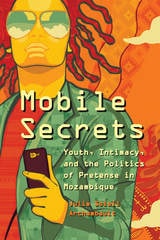
Mobile Secrets
Youth, Intimacy, and the Politics of Pretense in MozambiqueJulie Soleil Archambault
University of Chicago Press, 2017
With Mobile Secrets, Julie Soleil Archambault offers a complete rethinking of how we understand uncertainty, truth, and ignorance by revealing how better access to information may in fact be anything but desirable. By engaging with young adults in a Mozambique suburb, Archambault shows how, in their efforts to create fulfilling lives, young men and women rely on mobile communication not only to mitigate everyday uncertainty but also to juggle the demands of intimacy by courting, producing, and sustaining uncertainty. In their hands, the phone has become a necessary tool in a wider arsenal of pretense—a means of creating the open-endedness on which harmonious social relations depend in postwar postsocialist Mozambique. As Mobile Secrets shows, Mozambicans have harnessed the technology not only to acquire information but also to subvert regimes of truth and preserve public secrets, allowing everyone to feign ignorance about the workings of the postwar intimate economy.

Models of Strategic Choice in Politics
Peter C. Ordeshook, Editor
University of Michigan Press, 1989
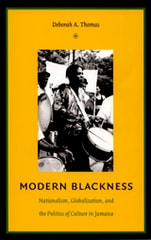
Modern Blackness
Nationalism, Globalization, and the Politics of Culture in JamaicaDeborah A. Thomas
Duke University Press, 2004
Thomas combines historical research with fieldwork she conducted in Jamaica between 1993 and 2003. Drawing on her research in a rural hillside community just outside Kingston, she looks at how Jamaicans interpreted and reproduced or transformed on the local level nationalist policies and popular ideologies about progress. With detailed descriptions of daily life in Jamaica set against a backdrop of postcolonial nation-building and neoliberal globalization, Modern Blackness is an important examination of the competing identities that mobilize Jamaicans locally and represent them internationally.
Modern French Jewish Thought
Writings on Religion and PoliticsEdited by Sarah Hammerschlag
Brandeis University Press, 2018