Results by title
4743 books match the query 'Religion' and 235 start with m

MT
Kabbalat Shabbat - CustomElyse D. Frishman
Central Conference of American Rabbis, 0
MT
Weekdays/Festivals: JBI - LP EditionElyse D. Frishman
Central Conference of American Rabbis, 0
Machzor, Volume 1
Challenge and ChangeRabbi Hara E. Person
Central Conference of American Rabbis, 2010
After having developed and published a new High Holy Day machzor, the CCAR invites Reform Jews to engage in study on related themes. This collection includes a wealth of material for individual or group study, including presentations on Un'taneh Tokef, Kol Nidrei, and Avinu Malkeinu, High Holy Day-themed essays from back issues of the CCAR Journal, and discussion questions.
Mad and Divine
Spirit and Psyche in the Modern WorldSudhir Kakar
University of Chicago Press, 2009
Sudhir Kakar, India’s foremost practitioner of psychoanalysis, has focused his career on infusing this preeminently Western discipline with ideas and views from the East. In Mad and Divine, he takes on the separation of the spirit and the body favored by psychoanalysts, cautioning that a single-minded focus on the physical denies a person’s wholeness. Similarly, Kakar argues, to focus on the spirit alone is to hold in contempt the body that makes us human.
Mad and Divine looks at the interplay between spirit and psyche and the moments of creativity and transformation that occur when the spirit overcomes desire and narcissism. Kakar examines this relationship in religious rituals and healing traditions— both Eastern and Western—as well as in the lives of some extraordinary men: the mystic and guru Rajneesh, Gandhi, and the Buddhist saint Drukpa Kunley.
Enriched with a novelist’s felicity of language and an analyst’s piercing insights and startling interpretations, Mad and Divine is a valuable addition to the literature on the integration of the spirit and psyche in the evolving psychology of the individual.
Madness and Grace
A Practical Guide for Pastoral Care and Serious Mental IllnessMatthew Stanford
Templeton Press, 2021
Research tells us that when most people suffer from a mental health crisis, the first person they turn to for help is not a physician, a psychiatrist, or a social worker, but a pastor, a priest, or a minister. In other words, a leader in their church. Unfortunately, many church leaders are not trained to recognize mental illness and don’t know when to refer someone to a mental health professional. The consequence—unintended yet tragic—is continued and unnecessary suffering.
Madness and Grace is a comprehensive guide for church ministry to alleviate this situation. Written by Dr. Matthew Stanford, the book is carefully constructed to help build competency in detecting a wide spectrum of mental disorders, such as knowing when a person is contemplating suicide based on telltale patterns of speech. It also explodes common discriminatory myths that stigmatize people with mental illness, such as the myth that they are more prone to violence than others.
Dr. Stanford has treated clients throughout his career who were afflicted with all manner of mental disorders. In Madness and Grace, he takes the full extent of his experience and makes it accessible and actionable for the lay reader. He begins by explaining what constitutes a mental illness and how these disorders are classified according to science. He next teaches how to notice the presence of a mental illness by listening carefully to phraseology, observing behavior, and asking discerning questions. He goes on to discuss methods of treatment, common religious concerns about mental health, and ways church communities can support people on the road to recovery.
As a Christian, Dr. Stanford wants his fellow believers to know that acknowledging and seeking help for a mental illness is not a sign of weak faith. That’s why, in addition to sharing his medical expertise with church leaders, he commends pertinent biblical passages that underscore God’s concern for our mental wellbeing. These passages provide strength and comfort as complements to clinically-derived treatment and are essential to Dr. Stanford’s approach. “When working with those in severe psychological distress,” he writes, “compassion and grace are always the first line of pastoral care.”
Madumo, a Man Bewitched
Adam Ashforth
University of Chicago Press, 2000
So begins this true story of witchcraft and friendship set against the turbulent backdrop of contemporary Soweto. Adam Ashforth, an Australian who has spent many years in the black township, finds his longtime friend Madumo in dire circumstances: his family has accused him of using witchcraft to kill his mother and has thrown him out on the street. Convinced that his life is cursed, Madumo seeks help among Soweto's bewildering array of healers and prophets. An inyanga, or traditional healer, confirms that he has indeed been bewitched. With Ashforth by his side, skeptical yet supportive, Madumo embarks upon a physically grueling treatment regimen that he follows religiously-almost to the point of death-despite his suspicion that it may be better to "Westernize my mind and not think about witchcraft."
Ashforth's beautifully written, at times poignant account of Madumo's struggle shows that the problem of witchcraft is not simply superstition, but a complex response to spiritual insecurity in a troubling time of political and economic upheaval. Post-apartheid Soweto, he discovers, is suffering from a deluge of witchcraft. Through Madumo's story, Ashforth opens up a world that few have seen, a deeply unsettling place where the question "Do you believe in witchcraft?" is not a simple one at all. The insights that emerge as Ashforth accompanies his friend on an odyssey through Soweto's supernatural perils have profound implications even for those of us who live in worlds without witches.
Magic
A Theory from the SouthErnesto de Martino
HAU, 2015
Though his work was little known outside Italian intellectual circles for most of the twentieth century, anthropologist and historian of religions Ernesto de Martino is now recognized as one of the most original thinkers in the field. This book is testament to de Martino’s innovation and engagement with Hegelian historicism and phenomenology—a work of ethnographic theory way ahead of its time.
This new translation of Sud e Magia, his 1959 study of ceremonial magic and witchcraft in southern Italy, shows how De Martino is not interested in the question of whether magic is rational or irrational but rather in why it came to be perceived as a problem of knowledge in the first place. Setting his exploration within his wider, pathbreaking theorization of ritual, as well as in the context of his politically sensitive analysis of the global south’s historical encounters with Western science, he presents the development of magic and ritual in Enlightenment Naples as a paradigmatic example of the complex dynamics between dominant and subaltern cultures. Far ahead of its time, Magic is still relevant as anthropologists continue to wrestle with modernity’s relationship with magical thinking.
Magic’s Translations
Reality Politics in Colonial IndonesiaMargaret J. Wiener
Duke University Press, 2025
Maimonides and Spinoza
Their Conflicting Views of Human NatureJoshua Parens
University of Chicago Press, 2012
Until the last century, it was generally agreed that Maimonides was a great defender of Judaism, and Spinoza—as an Enlightenment advocate for secularization—among its key opponents. However, a new scholarly consensus has recently emerged that the teachings of the two philosophers were in fact much closer than was previously thought. In his perceptive new book, Joshua Parens sets out to challenge the now predominant view of Maimonides as a protomodern forerunner to Spinoza—and to show that a chief reason to read Maimonides is in fact to gain distance from our progressively secularized worldview.
Maimonides' "Guide of the Perplexed"
A Philosophical GuideAlfred L. Ivry
University of Chicago Press, 2016
Drawing on a lifetime of study, Alfred L. Ivry has written the definitive guide to the Guide—one that makes it comprehensible and exciting to even those relatively unacquainted with Maimonides’ thought, while also offering an original and provocative interpretation that will command the interest of scholars. Ivry offers a chapter-by-chapter exposition of the widely accepted Shlomo Pines translation of the text along with a clear paraphrase that clarifies the key terms and concepts. Corresponding analyses take readers more deeply into the text, exploring the philosophical issues it raises, many dealing with metaphysics in both its ontological and epistemic aspects.

Maimonides' Empire of Light
Popular Enlightenment in an Age of BeliefRalph Lerner
University of Chicago Press, 2000
Lerner describes the brilliant and sometimes wily ways in which Maimonides sought to break through the despair and superstition that gripped the Jewish people's minds, without sacrificing the dignity and core of his message. These writings—presented here in uncommonly accurate, mostly new translations—also reveal that Maimonides was willing to risk the scorn of his contemporaries to enlighten both his own and future generations. By addressing the writings of Maimonides' disciples, including Shem Tov ben Joseph Ibn Falaquera in the mid-thirteenth century and Joseph Albo in the fifteenth century, Lerner shows how this technique was passed on.
In striking contrast to the Enlightenment of the eighteenth century, Maimonides' enlightenment is premised on the inequality of understandings and other differences between the elite and the common people. Instead of scorning the past, Lerner shows, Maimonides' enlightenment invests it with a new and ennobling dignity. A valuable reference for students of political philosophy and Jewish studies, Lerner's elegantly written book also brings to life the richness and relevance of medieval Jewish thought for all those interested in the Jewish tradition.

Maimonides' Ethics
The Encounter of Philosophic and Religious MoralityRaymond L. Weiss
University of Chicago Press, 1991
The gulf between classical philosophy and the Torah made the task of Maimonides extraordinarily difficult. Weiss shows that Maimonides subtly preserves the tension between those traditions while producing a practical accommodation between them. To explain how Maimonides was able to accomplish this twofold goal, Weiss takes seriously the multilevel character of Maimonides' works. Weiss interprets Maimonides as a heterodox thinker who, with utter integrity, faces the Law's encounter with philosophy and gives both the Torah and philosophy their due.
Maimonides' "Guide of the Perplexed" in Translation
A History from the Thirteenth Century to the TwentiethEdited by Josef Stern, James T. Robinson, and Yonatan Shemesh
University of Chicago Press, 2019
A collection of essays by scholars from a range of disciplines, the book unfolds in two parts. The first traces the history of the translations of the Guide, from medieval to modern renditions. The second surveys its influence in translation on Latin scholastic, early modern, and contemporary Anglo-American philosophy, as well as its impact in translation on current scholarship. Interdisciplinary in approach, this book will be essential reading for philosophers, historians, and religious studies scholars alike.
Major Themes of the Qur'an
Second EditionFazlur Rahman
University of Chicago Press, 2009
Major Themes of the Qur’an is Fazlur Rahman’s introduction to one of the richest texts in the history of religious thought. In this classic work, Rahman unravels the Qur’an’s complexities on themes such as God, society, revelation, and prophecy with the deep attachment of a Muslim educated in Islamic schools and the clarity of a scholar who taught for decades in the West.
“Generations of scholars have profited from [Rahman’s] pioneering scholarly work by taking the questions he raised and the directions he outlined to new destinations.”--Ebrahim Moosa, from his new foreword
“The religious future of Islam and the future of interfaith relationship . . . will be livelier and saner for the sort of Quranic centrality which Major Themes of the Qur’an exemplifies and serves.”--Kenneth Cragg, Middle East Journal
“There shines through [a] rare combination of balanced scholarly judgment and profound personal commitment. . . . [Rahman is] eager to open up the mysteries of the Qur’an to a shrinking world sorely in need of both moral regeneration and better mutual understanding.”--Patrick D. Gaffney, Journal of Religion
“I can’t think of any book more important, still, than Major Themes of the Qur’an.”--Michael Sells, author of Approaching the Qur’an
Make Yourselves Gods
Mormons and the Unfinished Business of American SecularismPeter Coviello
University of Chicago Press, 2019
Over these turbulent decades, Mormons would appear by turns as heretics, sex-radicals, refugees, anti-imperialists, colonizers, and, eventually, reluctant monogamists and enfranchised citizens. Reading Mormonism through a synthesis of religious history, political theology, native studies, and queer theory, Peter Coviello deftly crafts a new framework for imagining orthodoxy, citizenship, and the fate of the flesh in nineteenth-century America. What emerges is a story about the violence, wild beauty, and extravagant imaginative power of this era of Mormonism—an impassioned book with a keen interest in the racial history of sexuality and the unfinished business of American secularism.
Make Yourselves Gods
Mormons and the Unfinished Business of American SecularismPeter Coviello
University of Chicago Press, 2019
From the perspective of Protestant America, nineteenth-century Mormons were the victims of a peculiar zealotry, a population deranged––socially, sexually, even racially––by the extravagances of belief they called “religion.” Make Yourselves Gods offers a counter-history of early Mormon theology and practice, tracking the Saints from their emergence as a dissident sect to their renunciation of polygamy at century’s end.
Over these turbulent decades, Mormons would appear by turns as heretics, sex-radicals, refugees, anti-imperialists, colonizers, and, eventually, reluctant monogamists and enfranchised citizens. Reading Mormonism through a synthesis of religious history, political theology, native studies, and queer theory, Peter Coviello deftly crafts a new framework for imagining orthodoxy, citizenship, and the fate of the flesh in nineteenth-century America. What emerges is a story about the violence, wild beauty, and extravagant imaginative power of this era of Mormonism—an impassioned book with a keen interest in the racial history of sexuality and the unfinished business of American secularism.
Making History
Studies in Rabbinic History, Literature, and Culture in Honor of Richard L. KalminCarol Bakhos
SBL Press, 2024
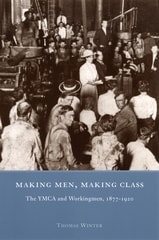
Making Men, Making Class
The YMCA and Workingmen, 1877-1920Thomas Winter
University of Chicago Press, 2002
Starting in the 1870s, the leaders ("secretaries") of the YMCA sought to reduce political radicalism and labor unrest by instilling new ideals of manliness among workers. By involving workingmen in a range of activities on the job and off, the YMCA hoped to foster team spirit, moral conduct, and new standards of manhood that would avoid conflict and instead encourage cooperation along the lines of a Christian, pious manliness. In their efforts to make better men, the secretaries of the YMCA also crafted new ideals of middle-class manliness for themselves that involved a sense of mission and social purpose. In doing so, they ended up "making" class, too, as they began to speak a language of manhood structured by class differences.
Making Modern Spain
Religion, Secularization, and Cultural ProductionAzariah Alfante
Bucknell University Press, 2024
Making Shabbat
Celebrating and Learning at American Jewish Summer CampsJoseph Reimer
Brandeis University Press, 2022
This book tells the story of how Jewish camps have emerged as creators of positive spiritual experiences for Jewish youth in North America. When Jewish camps began at the dawn of the twentieth century, their leaders had little interest in creating Jewish spiritual experiences for their campers. Yet over the course of the past century, Jewish camps have gradually moved into providing primal Jewish experiences that diverse campers can enjoy, parents appreciate, and alumni fondly recall. Making Shabbat Real explores how Shabbat at camp became the focal point for these primal Jewish experiences, providing an interesting perspective on changing approaches to Jewish education and identity in North America.
Making Space for Mormon Thought and Culture
The Enduring Influence of Eugene EnglandRobert A. Rees
Signature Books, 2025
This intimate collection brings together a broad array of tributes to Eugene England, a leading Latter-day Saint scholar–teacher of the late twentieth century. It includes the voices of those who knew Gene and his work—family, friends, students, and colleagues—to illuminate the profound impact of one of Mormonism’s most influential thinkers. Through personal narratives and thoughtful reflections, these essays reveal Gene not just as a brilliant theologian and beloved professor, but as a compassionate mentor, faithful questioner, and dedicated disciple.
England’s influence on Latter-day Saint thought, culture, and religion was not only indelible but lasting. His legacy as a founding figure in modern Mormon intellectual life emerges through stories of his classroom teachings, his founding of Dialogue: A Journal of Mormon Thought, and his courageous exploration of difficult questions within a framework of faith. Contributors share how England modeled a life devoted to both unflinching inquiry and deep spiritual commitment—demonstrating that devotion and intellectualism could strengthen rather than threaten one another.
These personal accounts paint a portrait of a man whose theological insights and generous spirit continue to influence Mormon studies and whose example inspires those seeking to harmonize faith with intellectual honesty. For both those who knew England and those discovering him for the first time, this collection offers a window into the heart and mind of a remarkable Mormon thinker and his enduring influence.
Making War and Minting Christians
Masculinity, Religion, and Colonialism in Early New EnglandR. Todd Romero
University of Massachusetts Press, 2011
In this book, R. Todd Romero traces the interaction of notions of gender, the practice of religion, and the conduct of warfare in colonial America. He shows how Native and Anglo-American ideas of manhood developed in counterpoint, in the context of Christian evangelization, colonial expansion, and recurrent armed conflict.
For the English, the cultivation of manliness became an important aspect of missionary efforts. Conversion demanded that the English “make men” of the Indians before they could “make them Christians,” a process that involved reshaping Native masculinity according to English patriarchal ideals that the colonists themselves rarely matched. For their part, Native Americans held on to older ways of understanding the divine and defining gender even as they entered English “praying towns” and negotiated the steep demands of the missionaries.
Evolving ideas of masculinity resonated with religious significance and shaped the meaning of warfare for Natives and colonists alike. Just as the English believed that their territorial expansion was divinely sanctioned, Indians attributed a string of victories in King Philip's War to “the Great God” and the perception that their enemies “were like women.” Trusting that war and manliness were necessarily linked, both groups engaged in ritual preparations for battle, believed deeply in the efficacy of the supernatural to affect the outcome of combat, and comprehended the meaning of war in distinctly religious ways.
Making a Mantra
Tantric Ritual and Renunciation on the Jain Path to LiberationEllen Gough
University of Chicago Press, 2021
Typically, Jainism is characterized as a celibate, ascetic path to liberation in which one destroys karma through austerities, while the tantric path to liberation is characterized as embracing the pleasures of the material world, requiring the ritual use of mantras to destroy karma. Gough, however, argues that asceticism and Tantra should not be viewed in opposition to one another. She does so by showing that Jains perform “tantric” rituals of initiation and meditation on mantras and maṇḍalas. Jainism includes kinds of tantric practices, Gough provocatively argues, because tantric practices are a logical extension of the ascetic path to liberation.
Making the Right Choice
Narratives of Marriage in Sri LankaAsha L. Abeyasekera
Rutgers University Press, 2021
Making the Right Choice unravels the entangled relationship between marriage, morality, and the desire for modernity as it plays out in the context of middle-class status concerns and aspirations for upward social mobility within the Sinhala-Buddhist community in urban Sri Lanka. By focusing on individual life-histories spanning three generations, the book illuminates how narratives about a gendered self and narratives about modernity are mutually constituted and intrinsically tied to notions of agency. The book uncovers how "becoming modern" in urban Sri Lanka, rather than causing inter-generational conflict, is a collective aspiration realized through the efforts of bringing up educated and independent women capable of making "right" choices. The consequence of this collective investment is a feminist conundrum: agency does not denote the right to choose, but the duty to make the "right" choice; hence agency is experienced not as a sense of "freedom," but rather as a burden of responsibility.
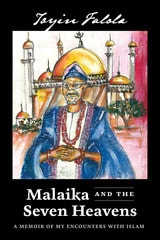
Malaika and the Seven Heavens
A Memoir of My Encounters with IslamToyin Falola
University of Michigan Press, 2025
Although faith is a lifelong journey, Falola identifies key moments in his upbringing that shaped his perception of faith, such as observing Islamic prayers, witnessing the significance of pilgrimage, engaging with spiritual leaders, and interacting with both Muslims and non-Muslims. By blending personal observations and reflections with the broader historical and cultural contexts of Islam, the book provides a unique perspective on the lived experiences of Muslims. In addition, Falola’s comparative perspective on the interaction of Christianity, Islam, and African Traditional Religion illustrates how these faiths influence and coexist with one another. Chapters explore firsthand experiences at madrassas, Islamic education, the influence of Islamic music on Yoruba culture, the historical importance of places like Oja Oba in Ibadan, the role of women in Islam, the intersection of traditional medicine with Islamic healing practices, and the broader social and political implications of Islam in Nigerian cities such as Ilorin and Lagos. Ultimately, Malaika and the Seven Heavens aims to foster a deeper appreciation for our shared humanity, inspire meaningful conversations that bridge cultural divides, and enrich our collective knowledge.
Malraux, the Absolute Agnostic; or, Metamorphosis as Universal Law
Claude Tannery
University of Chicago Press, 1991
Man and the Sacred
Roger Caillois
University of Illinois Press, 1959
Drawing on a diverse array of ethnographic contexts, including the sexual rituals of the Ba-Thong of South Africa and evidence drawn from aboriginal Australian, Eskimo, and traditional Chinese social systems, Caillois analyzes the role of the forbidden in the social cohesion of the group. He examines the character of the sacred in the light of specific instances of taboos and transgressions, exploring wide differences in attitudes toward diet and sex and extreme behaviors associated with the sacred, such as rapture and paroxysm. He also discusses the festival--an exuberant explosion following a period of strict repression--and compares its functions with those of modern war.
A classic study of one of the most fundamental aspects of human social and spiritual life, Man and the Sacred--presented here in Meyer Barash's superb English translation--is a companion volume to Caillois's Man, Play and Games.

Manichaeism
Michel Tardieu. Translated from the French by Malcolm DeBevoise.
University of Illinois Press, 2007
Manichaeism, once the state religion of Persia and long a vigorous contender for converts throughout the ancient Near East, is best remembered for the simplicity of its teachings about divine power. For Manicheans, the universe was ruled by a Lord of Light and a Lord of Darkness, who fought continuously for supremacy. All that was good was a gift from the Lord of Light, and all that was evil was an affliction visited by the Lord of Darkness. This dualism extended to cosmogony and ethics, splitting the universe into a spiritual realm that acted on the goodness of the human soul and a material realm that abetted the evil of the human body. These stark oppositions mask a remarkable degree of doctrinal and liturgical complexity, the details of which have been obscured by centuries of suppression and persecution, first by the Christian church, then by Islam.
One of the world's foremost experts on ancient religions, Michel Tardieu examines the fragmentary sources that have come down to us, pieces together the life and teachings of the prophet Mani (the itinerant Persian preacher and founder of this long lost faith), illuminates Manichaeism's ecclesiastical hierarchy and distinctive moral code, and investigates its ideas about the pre-life and afterlife. Manichaeism provides a brilliantly compact survey of what was once one of the world's great faiths, and then became one of its great heresies, surviving now only as a shadowy presence haunting the religions that superseded it.
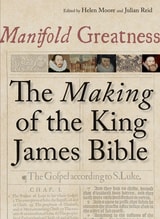
Manifold Greatness
The Making of the King James BibleEdited by Helen Moore and Julian Reid
Bodleian Library Publishing, 2011
Published to commemorate the four hundredth anniversary of the publication of the King James Bible, Manifold Greatness tells the story of the creation and immediate afterlife of the King James translation of the Bible, first published in 1611. Revolutionary at its time, the King James translation quickly became the dominant authorized translation of the Christian Bible in English. There are more than one billion copies in print, making it the best-selling book of all time, and its effect on the English language is incalculable, both in common speech and in literature.
This accessible and richly illustrated visual history contains eighty color illustrations, including images of rare manuscripts, artifacts, and archival material such as the annotated Bodleian Bishops’ Bible of 1602, pages from the Wycliffite and Tyndale Bibles, and an edition of the Bishop’s Bible owned by Elizabeth I. Eight chapters contributed by leading academics in the field discuss the history of biblical translation, the political background of the project, the Oxford Translators—including Henry Savile, John Rainolds, and John Harmar—and their working milieu, the cultural politics, and the reception and influence of the King James Bible up until the 1769 publication of the Oxford Standard Edition, which was the first revision of the original 1611 translation. Also included is a look at the later reception of the King James Bible in America, including a chapter specifically on the King James Bible and the Folger Shakespeare Library.
Manifold Greatness brings together key research and documentation to provide a lively and comprehensive visual account to celebrate one of the most important occasions in publishing and modern religious history.
Mantle of Mercy
Islamic Chaplaincy in North AmericaMuhammad A. Ali
Templeton Press, 2022
Working in a variety of settings—including hospitals, prisons, universities, and the armed forces—Muslim chaplains encounter unique challenges on a daily basis, requiring them to call upon the resources of their Islamic faith with wisdom and tenderness. The contributors to this volume explore these circumstances vividly and honestly. Their personal stories are instructive of how Islamic principles can be employed with spiritual insight to bring strength and comfort to the sick and suffering.
Manual de Doctrina Social de la Iglesia
Una guia para los cristianos en el mundo de hoyMartin Schlag
Saint Paul Seminary Press, 2021
Manufacturing Confucianism
Chinese Traditions and Universal CivilizationLionel M. Jensen
Duke University Press, 1998
Tracing the history of the Jesuits’ invention of Confucius and of themselves as native defenders of Confucius’s teaching, Jensen reconstructs the cultural consequences of the encounter between the West and China. For the West, a principal outcome of this encounter was the reconciliation of empirical investigation and theology on the eve of the scientific revolution. Jensen also explains how Chinese intellectuals in the early twentieth century fashioned a new cosmopolitan Chinese culture through reliance on the Jesuits’ Confucius and Confucianism. Challenging both previous scholarship and widespread belief, Jensen uses European letters and memoirs, Christian histories and catechisms written in Chinese, translations and commentaries on the Sishu, and a Latin summary of Chinese culture known as the Confucius Sinarum Philosophus to argue that the national self-consciousness of Europe and China was bred from a cultural ecumenism wherein both were equal contributors.
Many Worlds
New Universe Extraterrestrial LifeSteven Dick
Templeton Press, 2000
In Many Worlds, renowned scientists in fields from physics to astronomy discuss the possibility of a cosmic evolutionary process that guides not only our universe, but other planets and universes as well. Physicist and author Paul Davies observes that “if it turns out to be the case that the universe is inherently bio-friendly, then the scientific, theological, and philosophical implications will be extremely significant.”
Many Worlds first focuses on what lessons might be learned from the latest knowledge of the origin and evolution of life. After establishing a well-grounded relationship between science and religion, authors such as Arthur Peacocke and John Leslie evaluate the intricate configuration of events that must occur to create a dynamic and chemically enriched environment capable of not only supporting life, but evolutionary processes as well. The final section addresses the provocative question of extraterrestrial life. What we may find could drastically change our relation to the universe and our creator.
As we reflect on the possibilities that the universe presents, author and contributor Christian de Duve aptly states, “Many myths have had to be abandoned. But mystery remains, more profound and beautiful than ever before, a reality almost inaccessible to our feeble human means.” Is our existence part of a divine scheme ingenuously designed to support life, or is it an extraordinary chain of accidents that culminate in a life-permitting environment? The scientific advancements of the past century cannot help but capture the imagination and inspire renewed hope for the future. This volume will add dimension and insight to these yet unanswered questions.

Map is not Territory
Studies in the History of ReligionsJonathan Z. Smith
University of Chicago Press, 1992
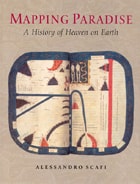
Mapping Paradise
A History of Heaven on EarthAlessandro Scafi
University of Chicago Press, 2006
Mapping Paradise is a history of the cartography of paradise that journeys from the beginning of Christianity to the present day. Instead of dismissing the medieval belief in a paradise on earth as a picturesque legend and the cartography of paradise as an example of the period’s many superstitions, Alessandro Scafi explores the intellectual conditions that made the medieval mapping of paradise possible. The challenge for mapmakers, Scafi argues, was to make visible a place that was geographically inaccessible and yet real, remote in time and yet still the scene of an essential episode of the history of salvation. Mapping Paradise also accounts for the transformations, in both theological doctrine and cartographical practice, that brought about the decline of the belief in a terrestrial paradise and the emergence of the new historical and regional mapping of the Garden of Eden that began at the time of the Reformation and still continues today.
The first book to show how paradise has been expressed in cartographic form throughout two millennia, Mapping Paradise reveals how the most deeply reflective thoughts about the ultimate destiny of all human life have been molded and remolded, generation by generation.
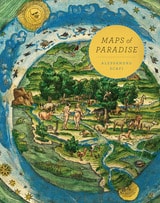
Maps of Paradise
Alessandro Scafi
University of Chicago Press, 2013
Maps of Paradise charts the diverse ways in which scholars and mapmakers from the eighth to the twenty-first century rose to the challenge of identifying the location of paradise on a map, despite the certain knowledge that it was beyond human reach. Over one hundred illustrations celebrate this history of a paradox: the mapping of the unmappable. It is also a mirror to the universal dream of perfection and happiness, and the yearning to discover heaven on earth.
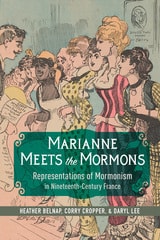
Marianne Meets the Mormons
Representations of Mormonism in Nineteenth-Century FranceHeather Belnap, Corry Cropper, and Daryl Lee
University of Illinois Press, 2022
Surprising and innovative, Marianne Meets the Mormons looks at how nineteenth-century French observers engaged with the idea of Mormonism in order to reframe their own cultural preoccupations.
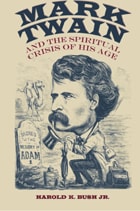
Mark Twain and the Spiritual Crisis of His Age
Harold K. Bush
University of Alabama Press, 2007
Discover the spiritual depths behind America’s greatest humorist.
Mark Twain is often pictured as a severe critic of religious piety, shaking his fist at God and mocking the devout. Such a view, however, is only partly correct. It ignores the social realities of Twain’s major period as a writer and his own spiritual interests: his participation in church activities, his socially progressive agenda, his reliance on religious themes in his major works, and his friendships with clergymen, especially his pastor and best friend, Joe Twichell. It also betrays a conception of religion that is more contemporary than that of the period in which he lived.
Harold K. Bush Jr. highlights Twain’s attractions to and engagements with the wide variety of religious phenomena of America in his lifetime, and how these matters affected his writings. Though Twain lived in an era of tremendous religious vigor, it was also a time of spiritual upheaval and crisis. The rise of biological and psychological sciences, the criticism of biblical texts as literary documents, the influx of world religions and immigrant communities, and the trauma of the Civil War all had dramatic effects on America’s religious life. At the same time mass urban revivalism, the ecumenical movement, Social Christianity, and occultic phenomena, like spiritualism and mind sciences, all rushed in to fill the voids. The rapid growth of agnosticism in the 1870s and 1880s is also clearly reflected in Twain’s life and writings. Thus Twain’s career reflects in an unusually resonant way the vast changes in American belief during his lifetime.
Bush’s study offers both a new and more complicated understanding of Twain and his literary output and serves as the cultural biography of an era.
Mark, Mutuality, and Mental Health
Encounters with JesusSimon Mainwaring
SBL Press, 2014
An incitement to re-assess how society relates to persons with poor mental health
Mainwaring explores the societal contexts of those who suffer poor mental health, and in particular the relational dynamics of how identity, agency, and dialogue are negotiated in personal encounters. This work seeks to serve as an experiment, such that interested readers might better understand the dynamics of relational power that pervade encounters with persons with poor mental health.
Features:
- Foucauldian analysis of the relational dynamics of poor mental health used to re-imagine hegemonic relational dynamics
- Close readings of encounters between individual characters to evaluate how mutuality operates in those encounters
- Study of mutuality as it has emerged in mental health literature, feminist theologies, and theologies of disability
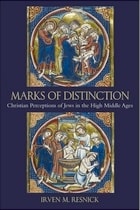
Marks of Distinctions
Christian Perceptions of Jews in the High Middle AgesIrven M. Resnick
Catholic University of America Press, 2012

Marriage and Divorce in the Jewish State
Israel's Civil WarSusan M. Weiss and Netty C. Gross-Horowitz
Brandeis University Press, 2012

Marriage on Trial
Ludwig Schmugge
Catholic University of America Press, 2012
Marten Micron (1522/23-1559) – Minor Prophet
His Reforming Ecclesiology in 'Van de weerdicheydt, nutheydt ende noodicheyt der christelicker vergaderinghen'Central European University Press, 2026
Martha Tolton and Her Son Augustus
A Black Catholic Family's Experience of Slavery and FreedomEmilie Leumas
Catholic University of America Press, 2026
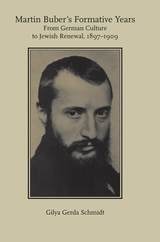
Martin Buber's Formative Years
From German Culture to Jewish Renewal, 1897–1909Gilya Gerda Schmidt
University of Alabama Press, 1995
Martin Buber (1878–1965) has had a tremendous impact on the development of Jewish thought as a highly influential figure in 20th-century philosophy and theology. However, most of his key publications appeared during the last forty years of his life and little is known of the formative period in which he was searching for, and finding, the answers to crucial dilemmas affecting Jews and Germans alike. Now available in paperback, Martin Buber’s Formative Years illuminates this critical period in which the seeds were planted for all of his subsequent work.
During the period from 1897 to 1909, Buber's keen sense of the crisis of humanity, his intimate knowledge of German culture and Jewish sources, and his fearlessness in the face of possible ridicule challenged him to behave in a manner so outrageous and so contrary to German-Jewish tradition that he actually achieved a transformation of himself and those close to him. Calling on spiritual giants of great historical periods in German, Christian, and Jewish history—such as Nicolas of Cusa, Jakob Boehme, Israel Baal Shem Tov, Rabbi Nachman of Brazlav, Johann Wolfgang von Goethe, and Friedrich Nietzsche—Buber proceeded to subvert the existing order by turning his upside-down world of slave morality right side up once more.
By examining the multitude of disparate sources that Buber turned to for inspiration, Gilya Gerda Schmidt elucidates Buber's creative genius and his contribution to turn-of-the-century Jewish renewal. This comprehensive study concludes that Buber was successful in creating the German-Jewish symbiosis that emancipation was to have created for the two peoples but that this synthesis was tragic because it came too late for practical application by Jews in Germany.
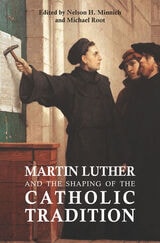
Martin Luther and the Shaping of the Catholic Tradtion
Nelson H. Minnich
Catholic University of America Press, 2022
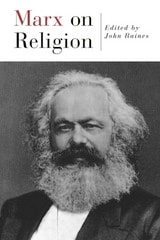
Marx On Religion
John Raines
Temple University Press, 2002
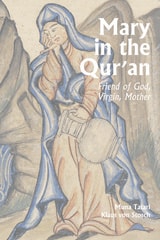
Mary in the Qur'an
Friend of God, Virgin, MotherMuna Tatari and Klaus von Stosch
Gingko, 2025
An entire chapter (surah) is dedicated to her, and she is the only woman mentioned by name in the Qur’an—indeed, her name appears more frequently than that of either Muhammad or Jesus. From the earliest times to the present day, Mary, the mother of Jesus, continues to be held in high regard by Christians and Muslims alike, yet she has also been the cause of much tension between these two religions.
In this groundbreaking study, Muna Tatari and Klaus von Stosch painstakingly reconstruct the picture of Mary that is presented in the Qur’an and show how veneration of the Blessed Virgin Mary in the Roman Catholic Church intersects and interacts with the testimony of the Qur’an. This sensitive and scholarly treatise offers a significant contribution to contemporary interfaith dialogue.
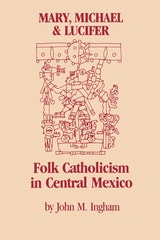
Mary, Michael, and Lucifer
Folk Catholicism in Central MexicoBy John M. Ingham
University of Texas Press, 1986
The physical signs of Roman Catholicism pervade the Mexican countryside. Colonial churches and neighborhood chapels, wayside shrines, and mountaintop crosses dot the landscape. Catholicism also permeates the traditional cultures of rural communities, although this ideational influence is less immediately obvious. It is often couched in enigmatic idiom and imagery, and it is further obscured by the vestiges of pagan customs and the anticlerical attitudes of many villagers. These heterodox tendencies have even led some observers to conclude that Catholicism in rural Mexico is little more than a thin veneer on indigenous practice.
In Mary, Michael, and Lucifer John M. Ingham attempts to develop a modern semiotic and structuralist interpretation of traditional Mexican culture, an interpretation that accounts for the culture's apparent heterodoxy. Drawing on field research in Tlayacapan, Morelos, a village in the central highlands, he shows that nearly every domain of folk culture is informed with religious meaning. More precisely, the Catholic categories of spirit, nature, and evil compose the basic framework of the villagers' social relations and subjective experiences.
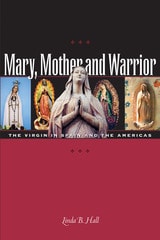
Mary, Mother and Warrior
The Virgin in Spain and the AmericasBy Linda B. Hall
University of Texas Press, 2004
A Mother who nurtures, empathizes, and heals... a Warrior who defends, empowers, and resists oppression... the Virgin Mary plays many roles for the peoples of Spain and Spanish-speaking America. Devotion to the Virgin inspired and sustained medieval and Renaissance Spaniards as they liberated Spain from the Moors and set about the conquest of the New World. Devotion to the Virgin still inspires and sustains millions of believers today throughout the Americas.
This wide-ranging and highly readable book explores the veneration of the Virgin Mary in Spain and the Americas from the colonial period to the present. Linda Hall begins the story in Spain and follows it through the conquest and colonization of the New World, with a special focus on Mexico and the Andean highlands in Peru and Bolivia, where Marian devotion became combined with indigenous beliefs and rituals. Moving into the nineteenth century, Hall looks at national cults of the Virgin in Mexico, Bolivia, and Argentina, which were tied to independence movements. In the twentieth century, she examines how Eva Perón linked herself with Mary in the popular imagination; visits contemporary festivals with significant Marian content in Spain, Peru, and Mexico; and considers how Latinos/as in the United States draw on Marian devotion to maintain familial and cultural ties.