Results by title
22279 books match the query 'Social Science' and 1258 start with m
M Archive
After the End of the WorldAlexis Pauline Gumbs
Duke University Press, 2018

MEDIA
A Transdisciplinary InquiryEdited by Jeremy Swartz and Janet Wasko
Intellect Books, 2020
MEDIA: A Transdisciplinary Inquiry explores evolving definitions of media and interrogates how media technologies are transforming media theory and practice. The collection addresses the emerging roles of media across a wide range of disciplines, featuring contributions from an array of internationally known scholars and practitioners.
The definition of media itself is in a constant state of flux, expanding to include an ever-widening range of concepts, products, services, and institutions. Here, the authors reconceptualize media, drawing not only on media and communication studies, but also philosophy, sociology, political science, biology, art, computer science, and information studies, among other disciplines. The collection challenges traditional notions of media, explores emerging media, and reexamines concepts including technology, environment, and ecology; multimedia, mediation, and labor; and participation, repair, and curation. These timely and original discussions by established scholars in the field provide a valuable contribution to the fusion of media across disciplines.
MEDICAL REVOLUTIONARIES
The Enslaved Healers of Eighteenth-Century Saint DomingueKarol K. Weaver
University of Illinois Press, 2006
MEN AND VIOLENCE
GENDER, HONOR, AND RITUALS IN MODERN EUROPE AND AMERICAPieter Spierenburg
The Ohio State University Press, 1998
The essays focus on the United States and western Europe from the seventeenth to the twentieth centuries. The contributors are Ute Frevert, Steven Hughes, Robert Nye, Daniele Boschi, Amy Sophia Greenberg, Martin J. Wiener, Stephen Kantrowitz, and Terence Finnegan. Men and Violence will be welcomed and widely used by a broad range of scholars and students.
MP3
The Meaning of a FormatJonathan Sterne
Duke University Press, 2012
MP3s are products of compression, a process that removes sounds unlikely to be heard from recordings. Although media history is often characterized as a progression toward greater definition, fidelity, and truthfulness, MP3: The Meaning of a Format illuminates the crucial role of compression in the development of modern media and sound culture. Taking the history of compression as his point of departure, Jonathan Sterne investigates the relationships among sound, silence, sense, and noise; the commodity status of recorded sound and the economic role of piracy; and the importance of standards in the governance of our emerging media culture. He demonstrates that formats, standards, and infrastructures—and the need for content to fit inside them—are every bit as central to communication as the boxes we call "media."
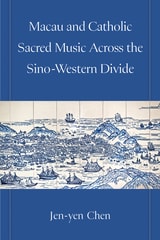
Macau and Catholic Sacred Music Across the Sino-Western Divide
Jen-yen Chen
University of Michigan Press, 2026
Drawing from sound studies and musicological methods, Chen argues that Chinese descriptions of Catholic sounds in Macau, including the ringing of church bells, the playing of the organ, and choral singing, illuminate spatial, sonic, and ideological mobilities that reconfigure Chinese and European identities. Macau and Catholic Music Across the Sino-Western Divide also extends to contemporary times to explore how present day members of Macau’s Catholic community position themselves in relation to the historical narratives often told about their city, cultivating a rich individuality of identity that refuses conformity to fixed notions of Asianness or Westernness.
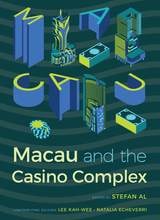
Macau and the Casino Complex
Stefan Al
University of Nevada Press, 2018
In only a decade, Macau has exploded from a sleepy backwater to the world’s casino capital. It was bound to happen. Macau, a former Portuguese colony that became a special administrative region within the People’s Republic of China in 1999, was the only place in China where gambling was legal. With a consumer base of 1.3 billion mainland Chinese deprived of casino gambling, and the world’s largest growing consumer class, international corporations rushed in to enter the games. As a result, the casino influx has permanently transformed the Macau peninsula: its ocean reclaimed, hillside excavated, roads congested, air polluted, and glimmering hotel towers tossed into the skyline, dwarfing the 19th century church towers.
Essays by a number of experts give a deeper insight on topics ranging from the myth of the Chinese gambler, the role of feng shui in casino design, the city’s struggle with heritage conservation, the politics of land reclamation, and the effect of the casino industry on the public realm. Drawings and photographs in vivid color visualize Macau’s patchwork of distinct urban enclaves: from downtown casinos, their neon-blasting storefronts eclipsing adjacent homes and schools, to the palatial complexes along a new highway, a Las Vegas-style strip. They also reveal how developers go to great lengths to impress the gambler with gimmicks such as fluorescent lighting, botanic gardens, feng shui dragon statues, cast members’ costumes, Chinese art imitations, and crystal chandelier-decked elevators. It is a book that helps readers grasp the complex process of the development of the casino industry and its overall impact on the social and architectural fabric of the first and last colonial enclave in China.
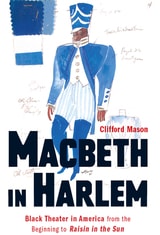
Macbeth in Harlem
Black Theater in America from the Beginning to Raisin in the SunClifford Mason
Rutgers University Press, 2020
2021 PROSE Awards Finalist, Music & the Performing Arts
In 1936 Orson Welles directed a celebrated all-black production of Macbeth that was hailed as a breakthrough for African Americans in the theater. For over a century, black performers had fought for the right to perform on the American stage, going all the way back to an 1820s Shakespearean troupe that performed Richard III, Othello, and Macbeth, without relying on white patronage.
"Macbeth" in Harlem tells the story of these actors and their fellow black theatrical artists, from the early nineteenth century to the dawn of the civil rights era. For the first time we see how African American performers fought to carve out a space for authentic black voices onstage, at a time when blockbuster plays like Uncle Tom’s Cabin and The Octoroon trafficked in cheap stereotypes. Though the Harlem Renaissance brought an influx of talented black writers and directors to the forefront of the American stage, they still struggled to gain recognition from an indifferent critical press.
Above all, "Macbeth" in Harlem is a testament to black artistry thriving in the face of adversity. It chronicles how even as the endemic racism in American society and its theatrical establishment forced black performers to abase themselves for white audiences’ amusement, African Americans overcame those obstacles to enrich the nation’s theater in countless ways.

Machine
Thomas Pringle
University of Minnesota Press, 2018
On the social consequences of machines
Automation, animation, and ecosystems are terms of central media-philosophical concern in today’s society of humans and machines. This volume describes the social consequences of machines as a mediating concept for the animation of life and automation of technology. Bernard Stiegler’s automatic society illustrates how digital media networks establish a new proletariat of knowledge workers. Gertrud Koch offers the animation of the technical to account for the pathological relations that arise between people and their devices. And Thomas Pringle synthesizes how automation and animation explain the history of intellectual exchanges that led to the hybrid concept of the ecosystem, a term that blends computer and natural science. All three contributions analyse how categories of life and technology become mixed in governmental policies, economic exploitation and pathologies of everyday life thereby both curiously and critically advancing the term that underlies those new developments: ‘machine.’

Machine Dreams
Race, Robots, and the Asian American BodyMargaret Rhee
Duke University Press, 2027

Machine Politics in Transition
Party and Community in ChicagoThomas M. Guterbock
University of Chicago Press, 1980
For three years, Thomas M. Guterbock participated in the daily activities of the Regular Democratic Organization in one North Side Chicago ward in order to discover how political machines win the support of the urban electorate. Guterbock's participant observation data, supplemented by a sample survey of ward residents' attitudes toward, and contacts with the machine, provide convincing evidence that the most widely accepted notions of how political machines work are no longer correct.
Contrary to conventional wisdom about the machine, Guterbock finds that the party does not secure votes by doing "favors" for people, nor do services rendered determine actual voting behavior. Instead, party loyalty is governed by such factors as social status, educational achievement, and bureaucratic competence. Guterbock finds that Democratic loyalists are drawn disproportionately from the ward's lowest strata. Ironically, the characteristics of these loyal Democrats contrast sharpely with the characteristics of those most likely to use party services.
What keeps the machine going, then? To answer this question, Guterbock takes us behind the scenes for a unique look inside the ward club. He shows how members develop loyalty and motivation beyond concern for their own pocketbooks. And he analyzes the public involvement of machine politicians in neighborhood affairs, describing the skillful—sometimes devious—ways in which they appeal to their constituents' sense of community. By focusing on the interplay of party loyalty and community attachments, Guterbock is able to explain the continued hegemony of Chicago's political machine and its enduring image of legitimacy.
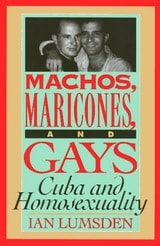
Machos Maricones & Gays
Cuba and HomosexualityIan Lumsden
Temple University Press, 1996
This remarkable account of gays in Cuba links the treatment of male homosexuality under Castro with prejudices and preconceptions prevalent in Cuban society before the Revolution. Ian Lumsden argues that much of the present discussion does not acknowledge the significant improvements that have occurred in the last decade. As an antidote to what he considers wide-spread misinformation, Lumsden locates the current issues surrounding homosexual identity within the broad context of Cuban culture, history, and social policy and makes revealing comparisons to the experience of homosexuals in other Latin American countries.
Lumsden explores the historic roots of the oppression of homosexuals through such issues as race, religion, and gender. He considers the cultural history and current erosion of traditional "machismo," the correlation between traditional women's roles and the relationships between gay men, and homosexuality as defined by the law and as presented in typical sexual education. He addresses the international controversy over state-imposed sanatoriums for HIV/AIDS patients, and details the social scene, the varying ideals among different generations of gay Cubans, gay life and family ties, and the difference between being publicly and privately gay in Cuba.
Lumsden's involvement over the years in gay culture in Cuba, his interviews with gay Cuban men, and his formidable scholarship produce a strikingly honest, accurate portrayal of the changes in homosexual life.

Mad Dogs and Meerkats
A History of Resurgent Rabies in Southern AfricaKaren Brown
Ohio University Press, 2011
Through the ages, rabies has exemplified the danger of diseases that transfer from wild animals to humans and their domestic stock. In South Africa, rabies has been on the rise since the latter part of the twentieth century despite the availability of postexposure vaccines and regular inoculation campaigns for dogs.
In Mad Dogs and Meerkats: A History of Resurgent Rabies in Southern Africa, Karen Brown links the increase of rabies to the HIV/AIDS epidemic. Her study shows that the most afflicted regions of South Africa have seen a dangerous rise in feral dog populations as people lack the education, means, or will to care for their pets or take them to inoculation centers. Most victims are poor black children. Ineffective disease control, which in part depends on management policies in neighboring states and the diminished medical and veterinary infrastructures in Zimbabwe, has exacerbated the problem.
This highly readable book is the first study of rabies in Africa, tracing its history in South Africa and neighboring states from 1800 to the present and showing how environmental and economic changes brought about by European colonialism and global trade have had long-term effects.
Mad Dogs and Meerkats is recommended for public health policy makers and anyone interested in human-animal relations and how societies and governments have reacted to one of the world’s most feared diseases.

Mad Men Unzipped
Fans on Sex, Love, and the Sixties on TVKaren L. Dill-Shackleford, Cynthia Vinney, Jeri Lynn Hogg, Kristin Hopper-Losenicky
University of Iowa Press, 2015
In answering these questions, the authors explore not just the online commentary but also Mad Men fans’ fan fiction, cosplay, cocktail making, and vintage furniture collecting. Whether tweeting as one of the main characters (or just a lowly mail clerk), setting Peggy up with the man who’ll treat her right, or figuring out just which “Mad Man” they are at heart, fans integrate the show into their lives and use it to make sense of their own choices in work, leisure, and love.
Mad River, Marjorie Rowland, and the Quest for LGBTQ Teachers’ Rights
Margaret A. Nash
Rutgers University Press, 2022
In the first in-depth treatment of this foundational legal case, authors Margaret A. Nash and Karen L. Graves tell the story of that case and of Marjorie Rowland, the pioneer who fought for employment rights for LGBTQ educators and who paid a heavy price for that fight. It brings the story of LGBTQ educators’ rights to the present, including commentary on Bostock v Clayton County, the 2020 Supreme Court case that struck down employment discrimination against LGBT workers.
Mad at School
Rhetorics of Mental Disability and Academic LifeMargaret Price
University of Michigan Press, 2011
"A very important study that will appeal to a disability studies audience as well as scholars in social movements, social justice, critical pedagogy, literacy education, professional development for disability and learning specialists in access centers and student counseling centers, as well as the broader domains of sociology and education."
---Melanie Panitch, Ryerson University
"Ableism is alive and well in higher education. We do not know how to abandon the myth of the 'pure (ivory) tower that props up and is propped up by ableist ideology.' . . . Mad at School is thoroughly researched and pathbreaking. . . . The author's presentation of her own experience with mental illness is woven throughout the text with candor and eloquence."
---Linda Ware, State University of New York at Geneseo
Mad at School explores the contested boundaries between disability, illness, and mental illness in the setting of U.S. higher education. Much of the research and teaching within disability studies assumes a disabled body but a rational and energetic (an "agile") mind. In Mad at School, scholar and disabilities activist Margaret Price asks: How might our education practices change if we understood disability to incorporate the disabled mind?
Mental disability (more often called "mental illness") is a topic of fast-growing interest in all spheres of American culture, including popular, governmental, aesthetic, and academic. Mad at School is a close study of the ways that mental disabilities impact academic culture. Investigating spaces including classrooms, faculty meeting rooms, and job searches, Price challenges her readers to reconsider long-held values of academic life, including productivity, participation, security, and independence. Ultimately, she argues that academic discourse both produces and is produced by a tacitly privileged "able mind," and that U.S. higher education would benefit from practices that create a more accessible academic world.
Mad at School is the first book to use a disability-studies perspective to focus specifically on the ways that mental disabilities impact academic culture at institutions of higher education. Individual chapters examine the language used to denote mental disability; the role of "participation" and "presence" in student learning; the role of "collegiality" in faculty work; the controversy over "security" and free speech that has arisen in the wake of recent school shootings; and the marginalized status of independent scholars with mental disabilities.
Margaret Price is Associate Professor of English at Spelman College.

Madagascar
A Short HistorySolofo Randrianja and Stephen Ellis
University of Chicago Press, 2009
Madam C. J. Walker's Gospel of Giving
Black Women's Philanthropy during Jim CrowTyrone McKinley Freeman
University of Illinois Press, 2020
- AFP/Skystone Partners Prize for Research on Fundraising and Philanthropy, Association of Fundraising Professionals, 2021
- Terry McAdam Book Award, given by the Alliance for Nonprofit Management
- 2023 Peter Dobkin Hall History of Philanthropy Prize from the Association for Research on Nonprofit and Voluntary Action (ARNOVA).
Founder of a beauty empire, Madam C. J. Walker was celebrated as America's first self-made female millionaire in the early 1900s. Known as a leading African American entrepreneur, Walker was also devoted to an activist philanthropy aimed at empowering African Americans and challenging the injustices inflicted by Jim Crow.
Tyrone McKinley Freeman's biography highlights how giving shaped Walker's life before and after she became wealthy. Poor and widowed when she arrived in St. Louis in her twenties, Walker found mentorship among black churchgoers and working black women. Her adoption of faith, racial uplift, education, and self-help soon informed her dedication to assisting black women's entrepreneurship, financial independence, and activism. Walker embedded her philanthropy in how she grew her business, forged alliances with groups like the National Association of Colored Women, funded schools and social service agencies led by African American women, and enlisted her company's sales agents in local charity and advocacy work.
Illuminating and dramatic, Madam C. J. Walker’s Gospel of Giving broadens our understanding of black women’s charitable giving and establishes Walker as a foremother of African American philanthropy.
Madam Chairman
Mary Louise Smith and the Republican Revival after WatergateSuzanne O'Dea
University of Missouri Press, 2012
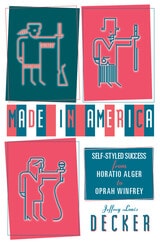
Made In America
Self-Styled Success from Horatio Alger to Oprah WinfreyJeffrey Louis Decker
University of Minnesota Press, 1997
The first look at self-made men and women from a multicultural perspective.
Brings gender, race, and ethnicity to bear on the myth of the “self-made man.”
Made in America presents the first look at self-made men and women from a multicultural perspective. Jeffrey Louis Decker discusses the emergence of self-starters like Andrew Carnegie, Booker T. Washington, Madam C. J. Walker, Younghill Kang, and Lee Iacocca in relation to the changing consumer markets of the twentieth century.Decker locates the new breed of entrepreneurs within the changing rhetoric of personal success, which shifted its emphasis over the past century from religious “character” to psychological “personality” to celebrity “image.” The book concludes by surveying the life stories of enterprising celebrities such as Oprah Winfrey and Arnold Schwarzenegger.Decker analyzes the autobiographical expressions of famous entrepreneurs, from Carnegie to Ross Perot, alongside more marginal ones in order to examine how mainstream society shapes and is shaped by the cultures of subordinate groups. In addition, he looks at the link between self-making and nation-building, and in doing so discovers the origins of another pervasive myth: the “American dream.”Underlying Decker’s study are these questions: What happened to the myth of self-making in America? If it is dead, what caused its demise? If it lives on, what form has it taken? Written in a lucid and engaging style, Made in America uncovers the richness, complexity, and diversity of self-styled success in our time. By bringing gender, race, and ethnicity to bear on the myth of the “self-made man,” this book provides a timely and fascinating reexamination of a traditional area of inquiry in American cultural studies.200 pages Translation rights: University of Minnesota Press
Made from Bone
Trickster Myths, Music, and History from the AmazonJonathan D. Hill
University of Illinois Press, 2008
Made-from-Bone is the first work to provide a complete set of English translations of narratives about the mythic past and its transformations from the indigenous Arawak-speaking people of South America. Among the Arawak-speaking Wakuénai of southernmost Venezuela, storytellers refer to these narratives as "words from the primordial times," and they are set in an unfinished space-time before there were any clear distinctions between humans and animals, men and women, day and night, old and young, and powerful and powerless. The central character throughout these primordial times and the ensuing developments that open up the world of distinct peoples, species, and places is a trickster-creator, Made-from-Bone, who survives a prolonged series of life-threatening attacks and ultimately defeats all his adversaries.
Carefully recorded and transcribed by Jonathan D. Hill, these narratives offer scholars of South America and other areas the only ethnographically generated cosmogony of contemporary or ancient native peoples of South America. Hill includes translations of key mythic narratives along with interpretive and ethnographic discussion that expands on the myths surrounding this fascinating and enigmatic character with broad appeal throughout various folkloric traditions.
Made in America
A Social History of American Culture and CharacterClaude S. Fischer
University of Chicago Press, 2010
Our nation began with the simple phrase, “We the People.” But who were and are “We”? Who were we in 1776, in 1865, or 1968, and is there any continuity in character between the we of those years and the nearly 300 million people living in the radically different America of today?
With Made in America, Claude S. Fischer draws on decades of historical, psychological, and social research to answer that question by tracking the evolution of American character and culture over three centuries. He explodes myths—such as that contemporary Americans are more mobile and less religious than their ancestors, or that they are more focused on money and consumption—and reveals instead how greater security and wealth have only reinforced the independence, egalitarianism, and commitment to community that characterized our people from the earliest years. Skillfully drawing on personal stories of representative Americans, Fischer shows that affluence and social progress have allowed more people to participate fully in cultural and political life, thus broadening the category of “American” —yet at the same time what it means to be an American has retained surprising continuity with much earlier notions of American character.
Firmly in the vein of such classics as The Lonely Crowd and Habits of the Heart—yet challenging many of their conclusions—Made in America takes readers beyond the simplicity of headlines and the actions of elites to show us the lives, aspirations, and emotions of ordinary Americans, from the settling of the colonies to the settling of the suburbs.
Made in Asia/America
Why Video Games Were Never (Really) about UsChristopher B. Patterson and Tara Fickle, editors
Duke University Press, 2024
Contributors. Matthew Seiji Burns, Edmond Y. Chang, Naomi Clark, Miyoko Conley, Toby Đỗ, Anthony Dominguez, Tara Fickle, Sarah Christina Ganzon, Yuxin Gao, Domini Gee, Melos Han-Tani, Huan He, Matthew Jungsuk Howard, Rachael Hutchinson, Paraluman (Luna) Javier, Sisi Jiang, Marina Ayano Kittaka, Minh Le, Haneul Lee, Rachel Li, Christian Kealoha Miller, Patrick Miller, Keita C. Moore, Souvik Mukherjee, Christopher B. Patterson, Pamela (Pam) Punzalan, Takeo Rivera, Yasheng She, D. Squinkifer, Lien B. Tran, Prabhash Ranjan Tripathy, Emperatriz Ung, Gerald Voorhees, Yizhou (Joe) Xu, Robert Yang, Mike Ren Yi
Made in China
Women Factory Workers in a Global WorkplacePun Ngai
Duke University Press, 2005
Pun Ngai conducted ethnographic work at an electronics factory in southern China’s Guangdong province, in the Shenzhen special economic zone where foreign-owned factories are proliferating. For eight months she slept in the employee dormitories and worked on the shop floor alongside the women whose lives she chronicles. Pun illuminates the workers’ perspectives and experiences, describing the lure of consumer desire and especially the minutiae of factory life. She looks at acts of resistance and transgression in the workplace, positing that the chronic pains—such as backaches and headaches—that many of the women experience are as indicative of resistance to oppressive working conditions as they are of defeat. Pun suggests that a silent social revolution is underway in China and that these young migrant workers are its agents.
Made in NuYoRico
Fania Records, Latin Music, and Salsa’s Nuyorican MeaningsMarisol Negrón
Duke University Press, 2024
Made of Salmon
Alaska Stories from the Salmon ProjectEdited by Nancy Lord
University of Alaska Press, 2016
Made of Salmon brings together more than fifty diverse Alaska voices to celebrate the salmon and its place in Alaska life. A mix of words and images, the book interweaves longer works by some of Alaska’s finest writers with shorter, more anecdotal accounts and stunning photographs of Alaskans fishing for, catching, preserving, and eating salmon throughout the state. A love letter to a fish that has been central to Alaska life for centuries, Made of Salmon is a reminder of the stakes of this great, ongoing conservation battle.
Made to Be Seen
Perspectives on the History of Visual AnthropologyEdited by Marcus Banks and Jay Ruby
University of Chicago Press, 2011
Made to be Seen brings together leading scholars of visual anthropology to examine the historical development of this multifaceted and growing field. Expanding the definition of visual anthropology beyond more limited notions, the contributors to Made to be Seen reflect on the role of the visual in all areas of life. Different essays critically examine a range of topics: art, dress and body adornment, photography, the built environment, digital forms of visual anthropology, indigenous media, the body as a cultural phenomenon, the relationship between experimental and ethnographic film, and more.
The first attempt to present a comprehensive overview of the many aspects of an anthropological approach to the study of visual and pictorial culture, Made to be Seen will be the standard reference on the subject for years to come. Students and scholars in anthropology, sociology, visual studies, and cultural studies will greatly benefit from this pioneering look at the way the visual is inextricably threaded through most, if not all, areas of human activity.
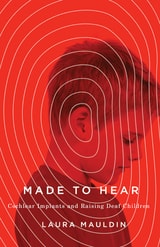
Made to Hear
Cochlear Implants and Raising Deaf ChildrenLaura Mauldin
University of Minnesota Press, 2016
A mother whose child has had a cochlear implant tells Laura Mauldin why enrollment in the sign language program at her daughter’s school is plummeting: “The majority of parents want their kids to talk.” Some parents, however, feel very differently, because “curing” deafness with cochlear implants is uncertain, difficult, and freighted with judgment about what is normal, acceptable, and right. Made to Hear sensitively and thoroughly considers the structure and culture of the systems we have built to make deaf children hear.
Based on accounts of and interviews with families who adopt the cochlear implant for their deaf children, this book describes the experiences of mothers as they navigate the health care system, their interactions with the professionals who work with them, and the influence of neuroscience on the process. Though Mauldin explains the politics surrounding the issue, her focus is not on the controversy of whether to have a cochlear implant but on the long-term, multiyear undertaking of implantation. Her study provides a nuanced view of a social context in which science, technology, and medicine are trusted to vanquish disability—and in which mothers are expected to use these tools. Made to Hear reveals that implantation has the central goal of controlling the development of the deaf child’s brain by boosting synapses for spoken language and inhibiting those for sign language, placing the politics of neuroscience front and center.
Examining the consequences of cochlear implant technology for professionals and parents of deaf children, Made to Hear shows how certain neuroscientific claims about neuroplasticity, deafness, and language are deployed to encourage compliance with medical technology.

Made with Words
May Swenson
University of Michigan Press, 1998
Made with Words includes a rich assortment of Swenson's prose, including several short stories, by turns amusing, provocative, and poetic, and inextricably bound with her poetic oeuvre; a one-act play entitled The Floor, produced in New York in the mid-sixties; interviews and book reviews that shed light on Swenson's poetic development as well as her literary and artistic tastes; and finally, a collection of Swenson's letters to the poet Elizabeth Bishop that reveal the intricacies of three decades of their personal and professional relationship. The critical and biographical introduction provides an engaging glimpse into the creative life and prose work of an important contemporary American poet.
Gardner McFall is Assistant Professor of Literature, Cooper Union for the Advancement of Science and Art. She is the author of The Pilot's Daughter; Naming the Animals; and Jonathan's Cloud.
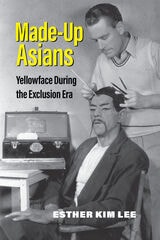
Made-Up Asians
Yellowface During the Exclusion EraEsther Kim Lee
University of Michigan Press, 2022

Madonnaland
And Other Detours into Fame and FandomBy Alina Simone
University of Texas Press, 2016
When Alina Simone agreed to write a book about Madonna, she thought it might provide an interesting excuse to indulge her own eighties nostalgia. Wrong. What Simone discovered instead was a tidal wave of already published information about Madonna—and her own ambivalence about, maybe even jealousy of, the Material Girl’s overwhelming commercial success. With the straight-ahead course stymied, Simone set off on a quirky detour through the backroads of celebrity and fandom and the people who love or loathe Madonna.
In this witty, sometimes acerbic, always perceptive chronicle, Simone begins by trying to understand why Madonna’s birthplace, Bay City, Michigan, won’t even put up a sign to celebrate its most famous citizen, and ends by asking why local bands who make music that’s authentic and true can disappear with barely a trace. In between, she ranges from Madonna fans who cover themselves with tattoos of the singer’s face and try to make fortunes off selling her used bustiers and dresses, to Question Mark and the Mysterians—one-hit wonders best known for “96 Tears”—and Flying Wedge, a Detroit band that dropped off an amazing two-track record in the office of CREEM magazine in 1972 and vanished, until Simone tracked it down.
Filled with fresh insights about the music business, fandom, and what it takes to become a superstar, Madonnaland is as much a book for people who, like Simone, prefer “dark rooms, coffee, and state-subsidized European films filled with existential despair” as it is for people who can’t get enough of Madonna.
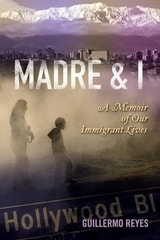
Madre and I
A Memoir of Our Immigrant LivesGuillermo Reyes
University of Wisconsin Press, 2010
In one memorable scene, after realizing that her friend Carmen is cleaning the house of one of the producers of Annie Hall, María recruits her to take her picture as she poses dramatically with Mr. Joffe’s Oscar in hand. It is María’s defiant yet determined attitude amidst her sacrifices that allows for Guillermo’s spirited coming of age and coming out.
Their common ground is the drama of their encounters with discovery, heartbreak, and passion—the explosive emotions that light up the stage of their two-actor theater.
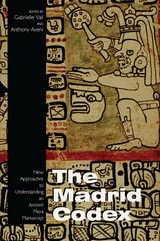
Madrid Codex
New Approaches to Understanding an Ancient Maya ManuscriptGabrielle Vail
University Press of Colorado, 2004
Contributors include: Harvey M. Bricker, Victoria R. Bricker, John F. Chuchiak IV, Christine L. Hernández, Bryan R. Just, Merideth Paxton, and John Pohl. Additional support for this publication was generously provided by the Eugene M. Kayden Fund at the University of Colorado.
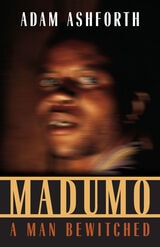
Madumo, a Man Bewitched
Adam Ashforth
University of Chicago Press, 2000
So begins this true story of witchcraft and friendship set against the turbulent backdrop of contemporary Soweto. Adam Ashforth, an Australian who has spent many years in the black township, finds his longtime friend Madumo in dire circumstances: his family has accused him of using witchcraft to kill his mother and has thrown him out on the street. Convinced that his life is cursed, Madumo seeks help among Soweto's bewildering array of healers and prophets. An inyanga, or traditional healer, confirms that he has indeed been bewitched. With Ashforth by his side, skeptical yet supportive, Madumo embarks upon a physically grueling treatment regimen that he follows religiously-almost to the point of death-despite his suspicion that it may be better to "Westernize my mind and not think about witchcraft."
Ashforth's beautifully written, at times poignant account of Madumo's struggle shows that the problem of witchcraft is not simply superstition, but a complex response to spiritual insecurity in a troubling time of political and economic upheaval. Post-apartheid Soweto, he discovers, is suffering from a deluge of witchcraft. Through Madumo's story, Ashforth opens up a world that few have seen, a deeply unsettling place where the question "Do you believe in witchcraft?" is not a simple one at all. The insights that emerge as Ashforth accompanies his friend on an odyssey through Soweto's supernatural perils have profound implications even for those of us who live in worlds without witches.
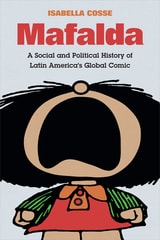
Mafalda
A Social and Political History of Latin America's Global ComicIsabella Cosse
Duke University Press, 2019
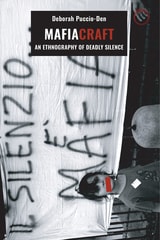
Mafiacraft
An Ethnography of Deadly SilenceDeborah Puccio-Den
HAU, 2021

Magdalene House
A Place about MercySarah VanHooser Suiter
Vanderbilt University Press, 2012
However, the story of the Magdalene community is not about these statistics, but about the stories the women tell. They say they thrive in the community because it is a place where they are free to be themselves, safe to give and receive love, and free to speak their trutheven to complain sometimes about how their storytelling is exploited "for the good of the community." A Place about Mercy is a participantobservation account of the history of this remarkable community founded in 1997, its structure, its Thistle Farms beauty products operation, and Reverend Becca Stevens's communal and spiritual vision. The book is finally about what it means to walk the path of healing with a group of unlikely women as guide.
Magdalene House was the subject of a multiplepart documentary on National Public Radio.
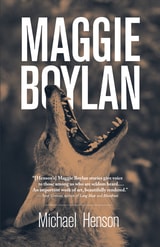
Maggie Boylan
Michael Henson
Ohio University Press, 2018
Finalist, 2019 Weatherford Award (Fiction) • A Great Group Reads Selection for National Reading Group Month from The Women’s National Book Association
Set in Appalachian Ohio amid an epidemic of prescription opiate abuse, Michael Henson’s linked collection tells of a woman’s search for her own peculiar kind of redemption, and brings the novel-in-stories form to new heights. Maggie Boylan is an addict, thief, liar, and hustler. But she is also a woman of deep compassion and resilience. The stories follow Maggie as she spirals through her addictive process, through the court system and treatment, and into a shaky new beginning.
In these masterful stories, we rarely occupy Maggie’s perspective, but instead gain a multilayered portrait of a community as we see other people’s lives bump up against hers—and we witness her inserting herself into their spheres, refusing to be rebuffed. The result is a prismatic view of a community fighting to stay upright against the headwinds of a drug epidemic: always on edge, always human.
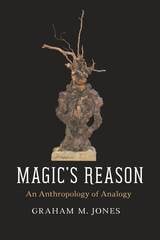
Magic's Reason
An Anthropology of AnalogyGraham M. Jones
University of Chicago Press, 2017
Using French magicians’ engagements with North African ritual performers as a case study, Jones shows how magic became enshrined in anthropological reasoning. Acknowledging the residue of magic’s colonial origins doesn’t require us to dispense with it. Rather, through this radical reassessment of classic anthropological ideas, Magic’s Reason develops a new perspective on the promise and peril of cross-cultural comparison.
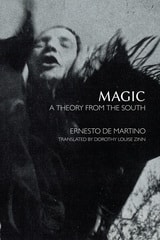
Magic
A Theory from the SouthErnesto de Martino
HAU, 2015
Though his work was little known outside Italian intellectual circles for most of the twentieth century, anthropologist and historian of religions Ernesto de Martino is now recognized as one of the most original thinkers in the field. This book is testament to de Martino’s innovation and engagement with Hegelian historicism and phenomenology—a work of ethnographic theory way ahead of its time.
This new translation of Sud e Magia, his 1959 study of ceremonial magic and witchcraft in southern Italy, shows how De Martino is not interested in the question of whether magic is rational or irrational but rather in why it came to be perceived as a problem of knowledge in the first place. Setting his exploration within his wider, pathbreaking theorization of ritual, as well as in the context of his politically sensitive analysis of the global south’s historical encounters with Western science, he presents the development of magic and ritual in Enlightenment Naples as a paradigmatic example of the complex dynamics between dominant and subaltern cultures. Far ahead of its time, Magic is still relevant as anthropologists continue to wrestle with modernity’s relationship with magical thinking.
Magical Arrows
The Maori, The Greeks, And The Folklore Of The UniverseGregory A. Schrempp
University of Wisconsin Press, 1992
Schrempp suggests that perhaps the most noteworthy Zenoian insight is that paradox is intrinsic to cosmological speculation. But he points out that there are many other characteristics of Zeno’s approach, including the strategy of juxtaposing concrete images to mathematical forms of representation, that reappear persistently in Western intellectual history. Schrempp proceeds through a series of juxtapositions—between Zeno, Kant, Lovejoy, and Lévi-Strauss, and between Western cosmologists and those from other cultures—to highlight subtle similarities and differences among intellectual traditions and to examine the conceptual apparatus of Western social science.
Schrempp concludes that a meaningful comparative cosmology is possible and that the tradition of Zeno provides a propitious starting point for such a perspective.
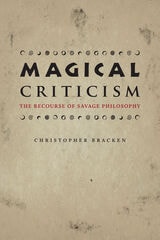
Magical Criticism
The Recourse of Savage PhilosophyChristopher Bracken
University of Chicago Press, 2007
Christopher Bracken’s Magical Criticism brings the unacknowledged history of this racialization to light and shows how, even as we have rejected ethnocentric notions of “the savage,” they remain active today in everything from attacks on postmodernism to Native American land disputes. Here Bracken reveals that many of the most influential Western thinkers dabbled in savage philosophy, from Marx, Nietzsche, and Proust, to Freud, C. S. Peirce, and Walter Benjamin. For Bracken, this recourse to savage philosophy presents an opportunity to reclaim a magical criticism that can explain the very real effects created by the discourse of historians, anthropologists, philosophers, the media, and governments.

Magical Habits
Monica Huerta
Duke University Press, 2021
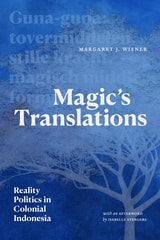
Magic’s Translations
Reality Politics in Colonial IndonesiaMargaret J. Wiener
Duke University Press, 2025
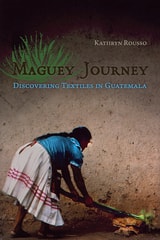
Maguey Journey
Discovering Textiles in GuatemalaKathryn Rousso
University of Arizona Press, 2010
In this fascinating book, Kathryn Rousso, an accomplished textile artist, takes a detailed look at the state of maguey culture, use, and trade in Guatemala. She has spent years traveling in Guatemala, highlighting maguey workers’ interactions in many locations and blending historical and current facts to describe their environments. Along the way, Rousso has learned the process of turning a raw leaf into beautiful and useful textile products and how globalization and modernization are transforming the maguey trade in Guatemala.
Featuring a section of full-color illustrations that follow the process from plant to weaving to product, Maguey Journey presents the story of this fiber over recent decades through the travels of an impassioned artist. Useful to cultural anthropologists, ethnobotanists, fiber artists, and interested travelers alike, this book offers a snapshot of how the industry stands now and seeks to honor those who keep the art alive in Guatemala.
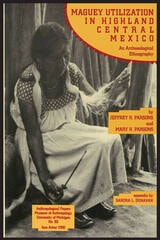
Maguey Utilization in Highland Central Mexico
An Archaeological EthnographyJeffrey R. Parsons and Mary H. Parsons
University of Michigan Press, 1990
Mahan and Baekje
The Complex Origins of Korean KingdomsRory Walsh
Michigan Publishing Services, 2020
Mahan and Baekje is a pioneering study of the Korean past from the perspective of everyday objects: ceramics made, used, and left behind by ancient Koreans themselves. Focusing on the third to fifth centuries CE in southwestern Korea, this book reexamines the social, political, and economic construction of the interconnected societies known as Mahan and the kingdom of Baekje. Pottery, which played central roles in Mahan’s and Baekje’s culinary practices, community gatherings, trade, and ritual, now sheds new light on the origins of Korean civilization.
Using advanced archaeological and geochemical techniques, this book traces the production, exchange, and use of pottery from Mahan and Baekje. The patterns reveal the shared underpinnings of Mahan and Baekje political economy, showing that the Baekje kingdom developed locally and not as the result of outside forces. Long-distance trade in Mahan and Baekje suggest a cosmopolitan ethos with roots in the deep past, while smaller scale exchanges hint at the complex web of social interactions that typified early Korean societies. Mahan and Baekje provides exciting new details of life at an epochal moment in ancient Korea.
Maid as Muse
How Servants Changed Emily Dickinson’s Life and LanguageAífe Murray
University of New Hampshire Press, 2010
Maid for Television
Race, Class, Gender, and a Representational EconomyL. S. Kim
Rutgers University Press, 2023
Maid for Television examines race, class, and gender relations as embodied in a long history of television servants from 1950 to the turn of the millennium. Although they reside at the visual peripheries, these figures are integral to the idealized American family. Author L. S. Kim redirects viewers' gaze towards the usually overlooked interface between characters, which is drawn through race, class, and gender positioning. Maid for Television tells the stories of servants and the families they work for, in so doing it investigates how Americans have dealt with difference through television as a medium and a mediator.The book philosophically redirects the gaze of television and its projection of racial discourse.
Main Ridge Community At Lost City
Virgin Anazazi Architecture, Ceramics, and BurialsMargaret Lyneis
University of Utah Press, 1992