Results by title
226 books match the query 'Southwest, New' and 19 start with m
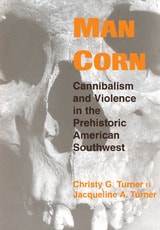
Man Corn
Cannibalism and Violence in the Prehistoric American SouthwestChristy G Turner
University of Utah Press, 1999
Until quite recently, Southwest prehistory studies have largely missed or ignored evidence of violent competition. Christy and Jacqueline Turner’s study of prehistoric violence, homicide, and cannibalism explodes the myth that the Anasazi and other Southwest Indians were simple, peaceful farmers. Using detailed osteological analyses and other lines of evidence the Turners show that warfare, violence, and their concomitant horrors were as common in the ancient Southwest as anywhere else in the world.
The special feature of this massively documented study is its multi-regional assessment of episodic human bones assemblages (scattered floor deposits or charnel pits) by taphonomic analysis, which considers what happens to bones from the time of death to the time of recovery. During the past thirty years, the authors and other analysts have identified a minimal perimortem taphonomic signature of burning, pot polishing, anvil abrasions, bone breakage, cut marks, and missing vertebrae that closely match the signatures of animal butchering and is frequently associated with additional evidence of violence. More than seventy-five archaeological sited containing several hundred individuals are carefully examined for the cannibalism signature. Because this signature has not been reported for any sites north of Mexico, other than those in the Southwest, the authors also present detailed comparisons with Mesoamerican skeletal collections where human sacrifice and cannibalism were known to have been practiced. The authors review several hypotheses for Southwest cannibalism: starvation, social pathology, and institutionalized violence and cannibalism. In the latter case, they present evidence for a potential Mexican connection and demonstrate that most of the known cannibalized series are located temporally and spatially near Chaco great houses.
Manufactured Light
Mirrors in the Mesoamerican RealmEmiliano Gallaga
University Press of Colorado, 2015
Complex and time-consuming to produce, iron-ore mirrors stand out among Prehispanic artifacts for their aesthetic beauty, their symbolic implications, and the complexity and skill of their assembly. Manufactured Light presents the latest archaeological research on these items, focusing on the intersection of their significance and use and on the technological aspects of the manufacturing processes that created them.
The volume covers the production, meaning, and utilization of iron-ore mirrors in various Mesoamerican communities. Chapters focus on topics such as experimental archaeology projects and discussions of workshops in archaeological contexts in the Maya, Central Mexico, and northwest Mexico regions. Other chapters concentrate on the employment and ideological associations of these mirrors in Prehispanic times, especially as both sacred and luxury items. The final chapters address continuities in the use of mirrors from Prehispanic to modern times, especially in contemporary indigenous communities, with an emphasis on examining the relationship between ethnographic realities and archaeological interpretations.
While the symbolism of these artifacts and the intricacy of their construction have long been recognized in archaeological discussions, Manufactured Light is the first synthesis of this important yet under-studied class of material culture. It is a must-read for students and scholars of Mesoamerican archaeology, ethnography, religion, replicative experimentation, and lithic technology.
Contirbutors include: Marc G. Blainey, Thomas Calligaro, Carrie L. Dennett, Emiliano Gallaga, Julie Gazzola, Sergio Gómez Chávez, Olivia Kindl, Brigitte Kovacevich, Achim Lelgemann, José J. Lunazzi, John J. McGraw, Emiliano Melgar, Joseph Mountjoy, Reyna Solis, and Karl Taube.

Masked Gods
Navaho and Pueblo CeremonialismFrank Waters
Ohio University Press, 1950
Masked Gods is a vast book, a challenging and profoundly original account of the history, legends, and ceremonialism of the Navajo and Pueblo Indians of the Southwest. Following a brief but vivid history of the two tribes through the centuries of conquest, the book turns inward to the meaning of Native American legends and ritual—Navajo songs, Pueblo dances, Zuni kachina ceremonies. Enduring still, these rituals and ceremonies express a view of life, of man’s place in the creation, which is compared with Taoism and Buddhism—and with the aggressive individualism of the Western world.
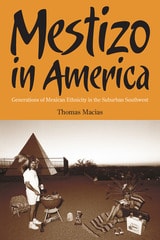
Mestizo in America
Generations of Mexican Ethnicity in the Suburban SouthwestThomas Macias
University of Arizona Press, 2006
Mexican Macaws
Comparative Osteology and Survey of Remains from the SouthwestLyndon L. Hargrave
University of Arizona Press, 1970
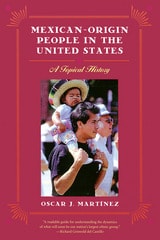
Mexican-Origin People in the United States
A Topical HistoryOscar J. Martínez
University of Arizona Press, 2001
Focusing on social, economic, and political change during the twentieth century—particularly in the American West—Martínez provides a survey of long-term trends among Mexican Americans and shows that many of the difficult conditions they have experienced have changed decidedly for the better. Organized thematically, the book addresses population dynamics, immigration, interaction with the mainstream, assimilation into the labor force, and growth of the Mexican American middle class. Martínez then examines the various forms by which people of Mexican descent have expressed themselves politically: becoming involved in community organizations, participating as voters, and standing for elective office. Finally he summarizes salient historical points and offers reflections on issues of future significance. Where appropriate, he considers the unique circumstances that distinguish the experiences of Mexican Americans from those of other ethnic groups.
By the year 2000, significant numbers of people of Mexican origin had penetrated the middle class and had achieved unprecedented levels of power and influence in American society; at the same time, many problems remain unsolved, and the masses face new challenges created by the increasingly globalized U.S. economy. This concise overview of Mexican-origin people puts these successes and challenges in perspective and defines their contribution to the shaping of modern America.

Mezcal
By Charles Bowden
University of Texas Press, 1988
Praise for Mezcal:
"Mezcal is also a lyrical meditation upon the ultimate strength of the land, specifically the desert Southwest, and how that land prevails and endures despite every effort of modern industry and development to rape and savage it in the name of progress. Mezcal lingers in the mind as only the very best books manage to do."—Harry Crews
"The author . . . excavates his own tormented life—and its relation to the land he loves—in a series of powerful, imagistic autobiographical essays. Like the desert he cherishes, this memoir is harsh yet lovely, full of sour self-truth. . . . A potent presentation of the wounds of one man's life, packed with indelible impressions; but there's little healing here, making this a bitter if beautiful read."—Kirkus Review
"In Mezcal . . . Bowden drops the journalistic veil, exploring the ecology of his interior landscape at least as thoroughly as the changing scenery that surrounds him. . . . Others—Aldo Leopold, Edward Abbey—have already staked inviolate claims on the Southwestern deserts. But Bowden owns the complex terrain where, like a mezcal-inspired mirage, the Sonoran sun-belt overlaps the gray convolutions of the American mind."—Los Angeles Times
Migration and Ethnicity in Middle Range Societies
A View from the SouthwestTammy Stone
University of Utah Press, 2015
Author Tammy Stone focuses on a number of general deliberations on the archaeology of middle-range society and the prehistory of the American Southwest. This includes the complex dynamics of migration, identity, ethnic interaction, and the ability of archaeologists to identify these patterns in the archaeological record. The integration and ultimate expulsion of a group of Kayenta Anasazi at Point of Pines Pueblo in the Mogollon Highlands of east-central Arizona provides a case study and location where these themes played out. Stone uses a detailed architectural analysis of the pueblo to attain a nuanced and dynamic understanding of migration from the perspective of both the Kayenta migrants and their Mogollon hosts. By examining the choices that individuals, families, and small groups made about identity and alliance from the perspective of both the migrants and host community—the latter being an aspect often missing from analyses of migration—this volume provides never-before-published data on Point of Pines Pueblo and contributes considerably to the study of community dynamics at large.
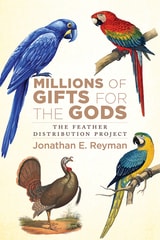
Millions of Gifts for the Gods
The Feather Distribution ProjectJonathan Reyman
University Press of Colorado, 2025
Grounded in Sol Tax’s concept of “action anthropology,” the project facilitated community-driven decision-making rather than imposing external solutions. This collaborative approach enabled Indigenous communities to maintain cultural practices that have persisted for over a millennium, dating back to the Ancestral Pueblo people and the Mogollon and Sinagua tribes, who viewed birds as sacred beings that helped humans emerge from the underworld. Yet the project’s impact extended far beyond cultural preservation. Over three decades, it distributed approximately 14.5 million feathers, valued at $20 million, to the Southwest Pueblos and other Indigenous Americans at no cost to them. Through partnerships with turkey hunters, zoos, bird clubs, the National Wild Turkey Federation, and dozens of volunteers, the initiative reduced illegal bird smuggling from Latin America, alleviated pressure on threatened bird populations, and eliminated harmful plucking practices.
Millions of Gifts for the Gods is an extended case study in applied anthropology, demonstrating how sustained collaboration between anthropologists and Indigenous communities can effectively address complex cultural, legal, and environmental challenges while preserving sacred traditions. This unique project is of special interest to anthropologists working in the American Southwest, as well as students and scholars of archaeology, ethnography, and ethnohistory.
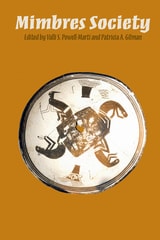
Mimbres Society
Edited by Valli S. Powell-Marti and Patricia A. Gilman
University of Arizona Press, 2006
While the attention to the extraordinary Mimbres painted pottery is well merited, the focus on its artistry alone has obscured other equally remarkable achievements and compelling questions about this unique and sophisticated society. Was the society as truly egalitarian as it has often been suggested? Was the pottery produced by specialists? How did Mimbres architecture—among the first to break living spaces into apartment-style room blocks—reflect the relationships among individuals, families, and communities? Did aggregate housing units translate into social equality, or did subtle hierarchies exist?
Tracing the way technology evolved in ceramic decoration, architecture, and mortuary practices, this collection of eight original contributions brings new insights into previously unexplored dimensions of Mimbres society. The contributors also provide vivid examples of how today’s archaeologists are linking field data to social theory.
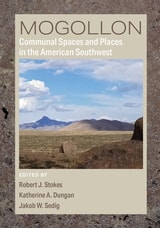
Mogollon Communal Spaces and Places in the Greater American Southwest
Edited by Robert J. Stokes, Katherine A. Dungan, and Jakob W. Sedig
University of Utah Press, 2023
This volume presents the latest research on the development and use of communal spaces and places across the Mogollon region, located in what is now the southwestern United States and northwestern Mexico. New data demonstrate that these spaces and places, though diverse in form and function, were essential to community development and cohesion, particularly during critical formative periods associated with increasing sedentism and farming, and during comparable periods of social change.
The authors ask questions crucial to understanding past communities: What is a communal space or place? How did villagers across the Mogollon region use such places? And how do modern archaeologists investigate the past to learn how ancient people thought about themselves and the world around them? Contributors use innovative approaches to explore the development patterns and properties of communal spaces and places, as well as how and why these places were incorporated into the daily lives of village residents. Buildings and other types of communal spaces are placed into broader cultural and social contexts, acknowledging the enduring importance of the kiva-type structure to many Native American societies of the southwestern United States and northwestern Mexico.
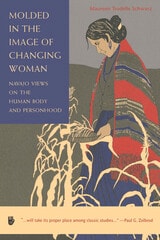
Molded in the Image of Changing Woman
Navajo Views on the Human Body and PersonhoodMaureen Trudelle Schwarz
University of Arizona Press, 1997
This book focuses on the complex interweaving of the cosmological, social, and bodily realms that Navajo people navigate in an effort alternately to control, contain, or harness the power manifested in various effects. Following the Navajo life-course from conception to puberty, Maureen Trudelle Schwarz explores the complex rules defining who or what can affect what or whom in specific circumstances as a means of determining what these effects tell us about the cultural construction of the human body and personhood for the Navajo.
Schwarz shows how oral history informs Navajo conceptions of the body and personhood, showing how these conceptions are central to an ongoing Navajo identity. She treats the vivid narratives of emergence life-origins as compressed metaphorical accounts, rather than as myth, and is thus able to derive from what individual Navajos say about the past their understandings of personhood in a worldview that is actually a viable philosophical system. Working with Navajo religious practitioners, elders, and professional scholars. Schwarz has gained from her informants an unusually firm grasp of the Navajo highlighted by the foregrounding of Navajo voices through excerpts of interviews. These passages enliven the book and present Schwarz and her Navajo consultants as real, multifaceted human beings within the ethnographic context.
Moquis and Kastiilam
Hopis, Spaniards, and the Trauma of History, Volume I, 1540–1679Edited by Thomas E. Sheridan, Stewart B. Koyiyumptewa, Anton Daughters, Dale S. Brenneman, T. J. Ferguson, Leigh Kuwanwisiwma, and Lee Wayne Lomayestewa
University of Arizona Press, 2015
The editors argue that the Spanish record is incomplete, and only the Hopi perspective can balance the story. The Spanish documentary record (and by extension the documentary record of any European or Euro-American colonial power) is biased and distorted, according to the editors, who assert there are enormous silences about Hopi responses to Spanish missionization and colonization. The only hope of correcting those weaknesses is to record and analyze Hopi oral traditions, which have been passed down from generation to generation, and give voice to Hopi values and Hopi social memories of what was a traumatic period in their past.
Spanish abuses during missionization—which the editors address specifically and directly as the sexual exploitation of Hopi women, suppression of Hopi ceremonies, and forced labor of Hopis—drove Hopis to the breaking point, inspiring a Hopi revitalization that led them to participate in the Pueblo Revolt. Those abuses, the revolt, and the resistance that followed remain as open wounds in Hopi society today.
Moquis and Kastiilam
Hopis, Spaniards, and the Trauma of History, Volume II, 1680–1781Edited by Thomas E. Sheridan, Stewart B. Koyiyumptewa, Anton Daughters, Dale S. Brenneman, T. J. Ferguson, Leigh Kuwanwisiwma, and Lee Wayne Lomayestewa
University of Arizona Press, 2020
The second in a two-volume series, Moquis and Kastiilam, Volume II, 1680–1781 continues the story of the encounter between the Hopis, who the Spaniards called Moquis, and the Spaniards, who the Hopis called Kastiilam, from the Pueblo Revolt in 1680 through the Spanish expeditions in search of a land route to Alta California until about 1781. By comparing and contrasting Spanish documents with Hopi oral traditions, the editors present a balanced presentation of a shared past. Translations of sixteenth-, seventeenth-, and eighteenth-century documents written by Spanish explorers, colonial officials, and Franciscan missionaries tell the perspectives of the European visitors, and oral traditions recounted by Hopi elders reveal the Indigenous experience.
The editors argue that only the Hopi perspective can balance the story recounted in the Spanish documentary record, which is biased, distorted, and incomplete (as is the documentary record of any European or Euro-American colonial power). The only hope of correcting those weaknesses and the enormous silences about the Hopi responses to Spanish missionization and colonization is to record and analyze Hopi oral traditions, which have been passed down from generation to generation since 1540, and to give voice to Hopi values and social memories of what was a traumatic period in their past.
Volume I documented Spanish abuses during missionization, which the editors address specifically and directly as the sexual exploitation of Hopi women, suppression of Hopi ceremonies, and forced labor of Hopi men and women. These abuses drove Hopis to the breaking point, inspiring a Hopi revitalization that led them to participate in the Pueblo Revolt and to rebuff all subsequent efforts to reestablish Franciscan missions and Spanish control. Volume II portrays the Hopi struggle to remain independent at its most effective—a mixture of diplomacy, negotiation, evasion, and armed resistance. Nonetheless, the abuses of Franciscan missionaries, the bloodshed of the Pueblo Revolt, and the subsequent destruction of the Hopi community of Awat’ovi on Antelope Mesa remain historical traumas that still wound Hopi society today.

Mormon Battalion
United States Army of the West, 1846-1848Norma Baldwin Ricketts
Utah State University Press, 1997
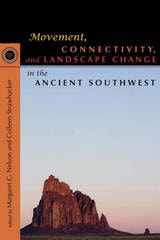
Movement, Connectivity, and Landscape Change in the Ancient Southwest
Margaret C. Nelson
University Press of Colorado, 2026
Particular attention is paid to the various ways that archaeology can and should contribute to contemporary social and environmental issues. Contributors come together to provide a synthetic volume on current research and possibilities for future explorations. Moving forward, they argue that archaeologists must continue to include researchers from across political and disciplinary boundaries and enhance collaboration with Native American groups.
This book will be of interest to professional and academic archaeologists, as well as students working in the field of the American Southwest.

Mushrooms and Truffles of the Southwest
Jack S. States
University of Arizona Press, 1990
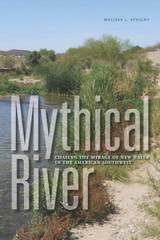
Mythical River
Chasing the Mirage of New Water in the American SouthwestMelissa L. Sevigny
University of Iowa Press, 2016
In contrast to this fantasy of abundance, Sevigny explores acts of restoration. From a dismantled dam in Arizona to an accidental wetland in Mexico, she examines how ecologists, engineers, politicians, and citizens have attempted to secure water for desert ecosystems. In a place scarred by conflict, she shows how recognizing the rights of rivers is a path toward water security. Ultimately, Sevigny writes a new map for the future of the American Southwest, a vision of a society that accepts the desert’s limits in exchange for an intimate relationship with the natural world.
meXicana Roots and Routes
Listening to People, Places, and PastsEdited by Vanessa Fonseca-Chávez and Anita Huízar-Hernández
University of Arizona Press, 2025
In this collection, established and emerging scholars draw upon their rootedness in the U.S. Southwest and U.S.-Mexico borderlands. The meXicana contributors use personal and scholarly inquiry to discuss what it means to cultivate spaces of belonging, navigate language policies, and explore and excavate silences in various spaces, among other important themes.
From the recruitment of Latinas for the U.S. Benito Juárez Squadron in World War II, to the early twentieth-century development of bilingual education in Arizona, to new and insightful analyses of Bracero Program participants and their families, the book details little-known oral histories and archival material to present a rich account of lives along the border with emphasis on women and the working class.
As the inaugural publication of the Arizona Crossroads series, readers will find Arizona featured as a central node of borderlands roots and routes. Each section of the book intentionally centers Arizona within broader comparative and cross-state dialogues, alongside chapters that reflect regional concerns in other southwestern states, including Texas, California, Colorado, and New Mexico. Throughout, this volume highlights the ways in which personal experience, community building, and scholarly perspectives can provide a powerful space for community voices.
Contributors
Vanessa Fonseca-Chávez
Lillian Gorman
Gloria Holguín Cuádraz
Anita Huízar-Hernández
Christine Marin
Valerie A. Martínez
Alina R. Méndez
Karen R. Roybal
Yvette J. Saavedra
Liliana Toledo-Guzmán
Andrea Tovar