Results by title
53 books match the query 'Success' and 7 start with m
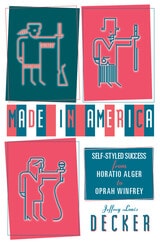
Made In America
Self-Styled Success from Horatio Alger to Oprah WinfreyJeffrey Louis Decker
University of Minnesota Press, 1997
The first look at self-made men and women from a multicultural perspective.
Brings gender, race, and ethnicity to bear on the myth of the “self-made man.”
Made in America presents the first look at self-made men and women from a multicultural perspective. Jeffrey Louis Decker discusses the emergence of self-starters like Andrew Carnegie, Booker T. Washington, Madam C. J. Walker, Younghill Kang, and Lee Iacocca in relation to the changing consumer markets of the twentieth century.Decker locates the new breed of entrepreneurs within the changing rhetoric of personal success, which shifted its emphasis over the past century from religious “character” to psychological “personality” to celebrity “image.” The book concludes by surveying the life stories of enterprising celebrities such as Oprah Winfrey and Arnold Schwarzenegger.Decker analyzes the autobiographical expressions of famous entrepreneurs, from Carnegie to Ross Perot, alongside more marginal ones in order to examine how mainstream society shapes and is shaped by the cultures of subordinate groups. In addition, he looks at the link between self-making and nation-building, and in doing so discovers the origins of another pervasive myth: the “American dream.”Underlying Decker’s study are these questions: What happened to the myth of self-making in America? If it is dead, what caused its demise? If it lives on, what form has it taken? Written in a lucid and engaging style, Made in America uncovers the richness, complexity, and diversity of self-styled success in our time. By bringing gender, race, and ethnicity to bear on the myth of the “self-made man,” this book provides a timely and fascinating reexamination of a traditional area of inquiry in American cultural studies.200 pages Translation rights: University of Minnesota Press[more]
Make Your Job a Calling Resource Guide
Bryan J. Dik
Templeton Press, 2014
Whether you feel stuck or overwhelmed, hopeful or uncertain, or energized and ready to go, the Make Your Job a Calling Resourse Guide can assist you in that journey.
It is designed to assist instructors, book study leaders, career counselors, human resources professionals, and individual readers who seek to delve deeper into the book, Make Your Job a Calling. In each chapter of the guide, the reader is given (1) a chapter summary, (2) general themes, (3) discussion questions, and (4) suggested activities. The suggested activities often involve a free write where you are encouraged to write your thoughts down without editing yourself. In a free-write you are not concerned with proper grammar or punctuation. Rather, you write your immediate thoughts down in a free-flowing manner. This allows for deep exploration and can inform rich discussion of ideas in a productive learning environment.
The elements in this guide are designed to facilitate the reflection and discussion process, providing readers with useful starting points. Of course, not all group leaders will find every question or activity useful for their particular group, which is why we encourage flexible use of the material. By all means, pick, choose, add to, and adapt according to your sense of what will be most helpful for the group you are leading.
Whether you feel stuck or overwhelmed, hopeful or uncertain, or energized and ready to go, this guide can assist you in that journey.
[more]
Make Your Job a Calling
How the Psychology of Vocation Can Change Your Life at WorkBryan J. Dik
Templeton Press, 2013
Do you ever feel sick of your job? Do you ever envy those people who seem to positively love what they do? While those people head off to work with a sense of joy and purpose, for the rest of us trudging back to the office on Monday morning or to the factory for the graveyard shift or to the job site on a hundred-degree day can be an exercise in soul crushing desperation. “If only we could change jobs,” we tell ourselves, “that would make it better.” But we don’t have the right education . . . or we don’t have enough experience . . . or the economy isn’t right . . . or we can’t afford the risk right now. So we keep going back to the same old unsatisfying jobs.
The wonderful truth, though, is that almost any kind of occupation can offer any one of us a sense of calling. Regardless of where we are in our careers, we can all find joy and meaning in the work we do, from the construction zone flagger who keeps his crew safe to the corporate executive who believes that her company’s products will change the world. In Make Your Job a Calling authors Bryan J. Dik and Ryan D. Duffy explore this powerful idea and help the reader navigate the many challenges—both internal and external—that may arise along the pathway to a sense of calling at work.
Over the course of four sections, the authors define the idea of calling, review cutting-edge research on the subject, provide practical guidelines for discerning a calling at all stages of work and life, and explore what calling will look like as workplace norms continue to evolve. They also take pains to present a realistic view of the subject by unpacking the perils and challenges of pursuing one’s higher purpose, especially in an uncertain economy.
The lessons presented will resound with anyone in any line of work and will show how the power of calling can beneficially shape individuals, organizations, and society as a whole.
[more]
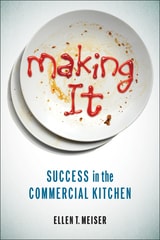
Making It
Success in the Commercial KitchenEllen T. Meiser
Rutgers University Press, 2025
The restaurant industry is one of the few places in America where workers from lower-class backgrounds can rise to positions of power and prestige. Yet with over four million cooks and food-preparation workers employed in America’s restaurants, not everyone makes it to the high-status position of chef. What factors determine who rises the ranks in this fiercely competitive pressure-cooker environment?
Making It explores how the career path of restaurant workers depends on their accumulation of kitchen capital, a cultural asset based not only on their ability to cook but also on how well they can fit into the workplace culture and negotiate its hierarchical structures. After spending 120 hours working in a restaurant kitchen and interviewing fifty chefs and cooks from fine-dining establishments and greasy-spoon diners across the country, sociologist Ellen Meiser discovers many strategies for accumulating kitchen capital. For some, it involves education and the performance of expertise; others climb the ranks by controlling their own emotions or exerting control over coworkers. Making It offers a close and personal look at how knowledge, power, and interpersonal skills come together to determine who succeeds and who fails in the high-pressure world of the restaurant kitchen.
Making It explores how the career path of restaurant workers depends on their accumulation of kitchen capital, a cultural asset based not only on their ability to cook but also on how well they can fit into the workplace culture and negotiate its hierarchical structures. After spending 120 hours working in a restaurant kitchen and interviewing fifty chefs and cooks from fine-dining establishments and greasy-spoon diners across the country, sociologist Ellen Meiser discovers many strategies for accumulating kitchen capital. For some, it involves education and the performance of expertise; others climb the ranks by controlling their own emotions or exerting control over coworkers. Making It offers a close and personal look at how knowledge, power, and interpersonal skills come together to determine who succeeds and who fails in the high-pressure world of the restaurant kitchen.
[more]
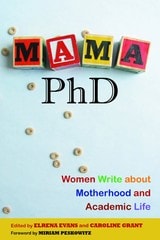
Mama, PhD
Women Write about Motherhood and Academic LifeEvans, Elrena
Rutgers University Press, 2008
Every year, American universities publish glowing reports stating their commitment to diversity, often showing statistics of female hires as proof of success. Yet, although women make up increasing numbers of graduate students, graduate degree recipients, and even new hires, academic life remains overwhelming a man's world. The reality that the statistics fail to highlight is that the presence of women, specifically those with children, in the ranks of tenured faculty has not increased in a generation. Further, those women who do achieve tenure track placement tend to report slow advancement, income disparity, and lack of job satisfaction compared to their male colleagues.
Amid these disadvantages, what is a Mama, PhD to do? This literary anthology brings together a selection of deeply felt personal narratives by smart, interesting women who explore the continued inequality of the sexes in higher education and suggest changes that could make universities more family-friendly workplaces.
The contributors hail from a wide array of disciplines and bring with them a variety of perspectives, including those of single and adoptive parents. They address topics that range from the level of policy to practical day-to-day concerns, including caring for a child with special needs, breastfeeding on campus, negotiating viable maternity and family leave policies, job-sharing and telecommuting options, and fitting into desk/chair combinations while eight months pregnant.
Candid, provocative, and sometimes with a wry sense of humor, the thirty-five essays in this anthology speak to and offer support for any woman attempting to combine work and family, as well as anyone who is interested in improving the university's ability to live up to its reputation to be among the most progressive of American institutions.
[more]

Managing to Make It
Urban Families and Adolescent SuccessFrank F. Furstenberg, Thomas D. Cook, Jacquelynne Eccles, Glen H. Elder Jr.,
University of Chicago Press, 1999
One of the myths about families in inner-city neighborhoods is that they are characterized by poor parenting. Sociologist Frank Furstenberg and his colleagues explode this and other misconceptions about success, parenting, and socioeconomic advantage in Managing to Make It. This unique study—the first in the MacArthur Foundation Studies on Successful Adolescent Development series—focuses on how and why youth are able to overcome social disadvantages.
Based on nearly 500 interviews and case studies of families in inner-city Philadelphia, Managing to Make It lays out in detail the creative means parents use to manage risks and opportunities in their communities. More importantly, it also depicts the strategies parents develop to steer their children away from risk and toward resources that foster positive development and lead to success.
"Indispensible to anyone concerned about breaking the cycle of poverty and helplessness among at-risk adolescents, this book has a readable, graphic style easily grasped by those unfamiliar with statistical techniques." —Library Journal
[more]
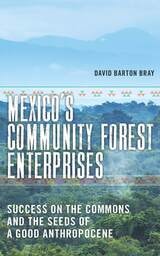
Mexico’s Community Forest Enterprises
Success on the Commons and the Seeds of a Good AnthropoceneDavid Barton Bray
University of Arizona Press, 2020
The road to sustainable forest management and stewardship has been debated for decades. Some advocate for governmental control and oversight. Some say that the only way to stem the tide of deforestation is to place as many tracts as possible under strict protection. Caught in the middle of this debate, forest inhabitants of the developing world struggle to balance the extraction of precarious livelihoods from forests while responding to increasing pressures from national governments, international institutions, and their own perceptions of environmental decline to protect biodiversity, restore forests, and mitigate climate change.
Mexico presents a unique case in which much of the nation’s forests were placed as commons in the hands of communities, who, with state support and their own entrepreneurial vigor, created community forest enterprises (CFEs). David Barton Bray, who has spent more than thirty years engaged with and researching Mexican community forestry, shows that this reform has transformed forest management in that country at a scale and level of maturity unmatched anywhere else in the world.
For decades Mexico has been conducting a de facto large-scale experiment in the design of a national social-ecological system (SES) focused on community forests. What happens when you give subsistence communities rights over forests, as well as training, organizational support, equipment, and financial capital? Do the communities destroy the forest in the name of economic development, or do they manage them sustainably, generating current income while maintaining intergenerational value as a resource for their children? Bray shares the scientific and social evidence that can now begin to answer these questions. This is an invaluable resource for students, researchers, and the interested public on the future of global forest resilience and the possibilities for a good Anthropocene.
[more]