Results by title
923 books match the query 'Urban' and 54 start with m
Macau and the Casino Complex
Stefan Al
University of Nevada Press, 2018
In only a decade, Macau has exploded from a sleepy backwater to the world’s casino capital. It was bound to happen. Macau, a former Portuguese colony that became a special administrative region within the People’s Republic of China in 1999, was the only place in China where gambling was legal. With a consumer base of 1.3 billion mainland Chinese deprived of casino gambling, and the world’s largest growing consumer class, international corporations rushed in to enter the games. As a result, the casino influx has permanently transformed the Macau peninsula: its ocean reclaimed, hillside excavated, roads congested, air polluted, and glimmering hotel towers tossed into the skyline, dwarfing the 19th century church towers.
Essays by a number of experts give a deeper insight on topics ranging from the myth of the Chinese gambler, the role of feng shui in casino design, the city’s struggle with heritage conservation, the politics of land reclamation, and the effect of the casino industry on the public realm. Drawings and photographs in vivid color visualize Macau’s patchwork of distinct urban enclaves: from downtown casinos, their neon-blasting storefronts eclipsing adjacent homes and schools, to the palatial complexes along a new highway, a Las Vegas-style strip. They also reveal how developers go to great lengths to impress the gambler with gimmicks such as fluorescent lighting, botanic gardens, feng shui dragon statues, cast members’ costumes, Chinese art imitations, and crystal chandelier-decked elevators. It is a book that helps readers grasp the complex process of the development of the casino industry and its overall impact on the social and architectural fabric of the first and last colonial enclave in China.

Machine Politics in Transition
Party and Community in ChicagoThomas M. Guterbock
University of Chicago Press, 1980
For three years, Thomas M. Guterbock participated in the daily activities of the Regular Democratic Organization in one North Side Chicago ward in order to discover how political machines win the support of the urban electorate. Guterbock's participant observation data, supplemented by a sample survey of ward residents' attitudes toward, and contacts with the machine, provide convincing evidence that the most widely accepted notions of how political machines work are no longer correct.
Contrary to conventional wisdom about the machine, Guterbock finds that the party does not secure votes by doing "favors" for people, nor do services rendered determine actual voting behavior. Instead, party loyalty is governed by such factors as social status, educational achievement, and bureaucratic competence. Guterbock finds that Democratic loyalists are drawn disproportionately from the ward's lowest strata. Ironically, the characteristics of these loyal Democrats contrast sharpely with the characteristics of those most likely to use party services.
What keeps the machine going, then? To answer this question, Guterbock takes us behind the scenes for a unique look inside the ward club. He shows how members develop loyalty and motivation beyond concern for their own pocketbooks. And he analyzes the public involvement of machine politicians in neighborhood affairs, describing the skillful—sometimes devious—ways in which they appeal to their constituents' sense of community. By focusing on the interplay of party loyalty and community attachments, Guterbock is able to explain the continued hegemony of Chicago's political machine and its enduring image of legitimacy.

Major Infrastructure Planning and Delivery
Exploring Nationally Significant Infrastructure Projects (NSIPs) in England and WalesBen Clifford and Janice Morphet
University College London, 2023
Nationally Significant Infrastructure Projects (NSIPs) are the major UK projects involving power stations and large renewable energy schemes, motorways, railways, and a range of other high profile, high impact, and sometimes controversial development schemes, including some closely linked to the United Kingdom’s transition to Net Zero. This book explains where the separate system for governing major infrastructure came from and how it operates in practice, with a particular focus on the relationship between planning, consent, and delivery of these infrastructure projects.
Detailed case studies of the A14 highway, Thames Tideway super sewer, Galloper offshore windfarm, and Progress Power station, drawing on research by the authors, illustrate issues of the often-overlooked continuing role of local government, the engagement of local communities and stakeholders, and the modification of schemes between consent and construction.
Confronting ongoing government planning reform, increased concern about climate change, and still unresolved consequences of Brexit, as well as timeless debates like over national need versus local impact, this timely book offers rich detail on the particular approach to major infrastructure planning in England but also speaks to wider issues around the governance of development and implementation of government policy under late capitalism.
Majoritarian Cities
Policy Making and Inequality in Urban PoliticsNeil Kraus
University of Michigan Press, 2013
Neil Kraus evaluates both the influence of public opinion on local policy-making and the extent to which public policy addresses economic and social inequalities. Drawing on several years of fieldwork and multiple sources of data, including surveys and polls; initiatives, referenda, and election results; government documents; focus groups; interviews; and a wide assortment of secondary sources, Kraus presents case studies of two Midwestern cities, Minneapolis, Minnesota, and Gary, Indiana. Specifically, he focuses on several major policy decisions in recent decades concerning education, law enforcement, and affordable housing in Minneapolis; and education and riverboat casino development in Gary.
Kraus finds that, on these issues, local officials frequently take action that reflects public opinion, yet the resulting policies often fail to meet the needs of the disadvantaged or ameliorate the effects of concentrated poverty. In light of citizens’ current attitudes, he concludes that if patterns of inequality are to be more effectively addressed, scholars and policymakers must transform the debate about the causes and effects of inequality in urban and metropolitan settings.
Makers of Democracy
A Transnational History of the Middle Classes in ColombiaA. Ricardo López-Pedreros
Duke University Press, 2019
Making It at Any Cost
Aspirations and Politics in a Counterfeit Clothing MarketplaceBy Matías Dewey
University of Texas Press, 2020
La Salada is South America’s largest marketplace for fraudulently labeled clothing, a sprawling and dangerous bazaar on the fringes of Buenos Aires where counterfeit goods are bought and sold, armed thieves roam the nearby streets, and corrupt police and politicians turn a blind eye to widespread unlawful behaviors. Despite conditions traditionally considered inhospitable to economic growth—including acute interpersonal distrust, pervasive personal insecurity, and rampant violence—business in La Salada is booming under an established order completely detached from the state.
Matías Dewey dives deep into the world of La Salada to examine how market exchanges function outside the law and how agreements and norms develop in the economy for counterfeit clothing. Drawing on seven months of ethnographic research and more than a hundred interviews, Dewey argues that aspirations for a better future shape garment workers’ everyday practices, from their home-based sweatshops to the market stalls. The book unearths a new configuration of garment production and commercialization detached from global supply chains, submerged in the shadows of informality and illegality, and rooted in aspiration and opportunity.
Making Mexican Chicago
From Postwar Settlement to the Age of GentrificationMike Amezcua
University of Chicago Press, 2022
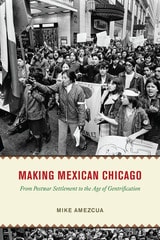
Though Chicago is often popularly defined by its Polish, Black, and Irish populations, Cook County is home to the third-largest Mexican-American population in the United States. The story of Mexican immigration and integration into the city is one of complex political struggles, deeply entwined with issues of housing and neighborhood control. In Making Mexican Chicago, Mike Amezcua explores how the Windy City became a Latinx metropolis in the second half of the twentieth century.
In the decades after World War II, working-class Chicago neighborhoods like Pilsen and Little Village became sites of upheaval and renewal as Mexican Americans attempted to build new communities in the face of white resistance that cast them as perpetual aliens. Amezcua charts the diverse strategies used by Mexican Chicagoans to fight the forces of segregation, economic predation, and gentrification, focusing on how unlikely combinations of social conservatism and real estate market savvy paved new paths for Latinx assimilation. Making Mexican Chicago offers a powerful multiracial history of Chicago that sheds new light on the origins and endurance of urban inequality.
Making Our Neighborhoods, Making Our Selves
George C. Galster
University of Chicago Press, 2019
Urban theorists have tried for decades to define exactly what a neighborhood is. But behind that daunting existential question lies a much murkier problem: never mind how you define them—how do you make neighborhoods productive and fair for their residents? In Making Our Neighborhoods, Making Our Selves, George C. Galster delves deep into the question of whether American neighborhoods are as efficient and equitable as they could be—socially, financially, and emotionally—and, if not, what we can do to change that. Galster aims to redefine the relationship between places and people, promoting specific policies that reduce inequalities in housing markets and beyond.
Making Precarity Work
Life on the Edge of Venice BeachLaura A. Orrico
University of Chicago Press, 2025
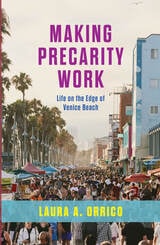
In Making Precarity Work, sociologist Laura A. Orrico shows how Los Angeles’s Venice Beach boardwalk, which is a magnet for tourists, is also a workplace, one that wouldn’t exist without the motley crew of people selling art, drinking, performing, using drugs, and working odd jobs who gather daily to engage in varied activities, from selling crafts to minding each other’s wares and asking for spare change.
Throughout the book, Orrico lifts up this workplace as a collective accomplishment, demonstrating how it can be a safety net to manage insecurity and inequality for those opting into its flexible and precarious structure, as well as how the LA government’s efforts to stabilize this work often disrupt the success of this collaborative and creative ecosystem. She also presents the ways this work can exacerbate those very inequalities. Sharing the personal stories of boardwalk workers, Orrico considers these juxtaposed realities and asks her audience to question how we can and should respond to a society whose best option for the disadvantaged is precarity.

Making Space for Empire
Colonial Elites, Whiteness, and the Planning of Modern Puerto RicoJoaquin Villanueva
Duke University Press, 2027
Making a Global Immigrant Neighborhood
Brooklyn's Sunset ParkTarry Hum
Temple University Press, 2014
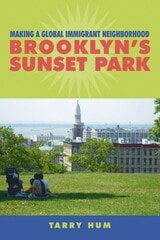
Based on more than a decade of research, Making a Global Immigrant Neighborhood charts the evolution of Sunset Park--with a densely concentrated working-poor and racially diverse immigrant population--from the late 1960s to its current status as one of New York City's most vibrant neighborhoods.
Tarry Hum shows how processes of globalization, such as shifts in low-wage labor markets and immigration patterns, shaped the neighborhood. She explains why Sunset Park's future now depends on Asian and Latino immigrant collaborations in advancing common interests in community building, civic engagement, entrepreneurialism, and sustainability planning. She shows, too, how residents' responses to urban development policies and projects and the capital represented by local institutions and banks foster community activism.
Hum pays close attention to the complex social, political, and spatial dynamics that forge a community and create new models of leadership as well as coalitions. The evolution of Sunset Park so astutely depicted in this book suggests new avenues for studying urban change and community development.
Making a Mass Institution
Indianapolis and the American High SchoolKyle P. Steele
Rutgers University Press, 2020
Making a Promised Land
Harlem in Twentieth-Century Photography and FilmMassood, Paula J.
Rutgers University Press, 2013
Making a Promised Land examines the interconnected histories of African American representation, urban life, and citizenship as documented in still and moving images of Harlem over the last century. Paula J. Massood analyzes how photography and film have been used over time to make African American culture visible to itself and to a wider audience and charts the ways in which the “Mecca of the New Negro” became a battleground in the struggle to define American politics, aesthetics, and citizenship. Visual media were first used as tools for uplift and education. With Harlem’s downturn in fortunes through the 1930s, narratives of black urban criminality became common in sociological tracts, photojournalism, and film. These narratives were particularly embodied in the gangster film, which was adapted to include stories of achievement, economic success, and, later in the century, a nostalgic return to the past. Among the films discussed are Fights of Nations (1907), Dark Manhattan (1937), The Cool World (1963), Black Caesar (1974), Malcolm X (1992), and American Gangster (2007). Massood asserts that the history of photography and film in Harlem provides the keys to understanding the neighborhood’s symbolic resonance in African American and American life, especially in light of recent urban redevelopment that has redefined many of its physical and demographic contours.
Making a Scene
Urban Landscapes, Gentrification, and Social Movements in SwedenKimberly A. Creasap
Temple University Press, 2022
In the three largest cities in Sweden, social movement “scenes”—networks of social movement actors and the places they inhabit—challenge threats such as gentrification. The geography of the built environment influences their ability to lay claim to urban space and to local political processes. In Making a Scene, Kimberly Creasap emphasizes that it is the centrality, concentration, and visibility of these scenes that make them most effective. Whereas some scenes become embedded as part of everyday life—as in Malmö—in contrast, scenes in Göteborg and Stockholm often fail to become part of the fabric of urban neighborhoods.
Creasap investigates key spaces for scenes, from abandoned industrial areas and punk clubs to street festivals, bookstores, and social centers, to show how activists create sites and develop structures of resistance that are anti-capitalist, anti-fascist, anti-gentrification, queer, and feminist. She also charts the relationship between scenes and city spaces to show these autonomous social movements create their own cultural landscapes. Making a Scene encourages critical thinking about spatiality and place in the sociology of social movements and the role of social movements as important actors in urban development.
Making the Second Ghetto
Race and Housing in Chicago 1940-1960Arnold R. Hirsch
University of Chicago Press, 1998
"In this excellent, intricate, and meticulously researched study, Hirsch exposes the social engineering of the post-war ghetto."—Roma Barnes, Journal of American Studies
"According to Arnold Hirsch, Chicago's postwar housing projects were a colossal exercise in moral deception. . . . [An] excellent study of public policy gone astray."—Ron Grossman, Chicago Tribune
"An informative and provocative account of critical aspects of the process in [Chicago]. . . . A good and useful book."—Zane Miller, Reviews in American History
"A valuable and important book."—Allan Spear, Journal of American History
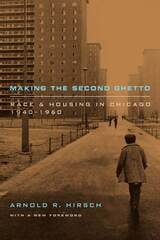
Making the Second Ghetto
Race and Housing in Chicago, 1940-1960Arnold R. Hirsch
University of Chicago Press, 2021
Hirsch’s classic and groundbreaking work of urban history is a revelatory look at Chicago in the decades after the Great Depression, a period when the city dealt with its rapidly growing Black population not by working to abolish its stark segregation but by expanding and solidifying it. Even as the civil rights movement rose to prominence, Chicago exploited a variety of methods of segregation—including riots, redevelopment, and a host of new legal frameworks—that provided a national playbook for the emergence of a new kind of entrenched inequality. Hirsch’s chronicle of the strategies employed by ethnic, political, and business interests in reaction to the Great Migration of Southern Blacks in the mid-twentieth century makes startingly clear how the violent reactions of an emergent white population found common ground with policy makers to segregate first a city and then the nation.
This enlarged edition of Making the Second Ghetto features a visionary afterword by historian N. D. B. Connolly, explaining why Hirsch’s book still crackles with “blistering relevance” for contemporary readers.
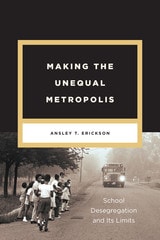
Making the Unequal Metropolis
School Desegregation and Its LimitsAnsley T. Erickson
University of Chicago Press, 2016
Taking Nashville as her focus, Erickson uncovers the hidden policy choices that have until now been missing from popular and legal narratives of inequality. In her account, inequality emerges not only from individual racism and white communities’ resistance to desegregation, but as the result of long-standing linkages between schooling, property markets, labor markets, and the pursuit of economic growth. By making visible the full scope of the forces invested in and reinforcing inequality, Erickson reveals the complex history of, and broad culpability for, ongoing struggles in our schools.
Mama Might Be Better Off Dead
The Failure of Health Care in Urban AmericaLaurie Kaye Abraham
University of Chicago Press, 1994
Mama Might Be Better Off Dead immerses readers in the lives of four generations of a poor, African-American family in the neighborhood, who are beset with the devastating illnesses that are all too common in America’s inner-cities. Headed by Jackie Banes, who oversees the care of a diabetic grandmother, a husband on kidney dialysis, an ailing father, and three children, the Banes family contends with countless medical crises. From visits to emergency rooms and dialysis units, to trials with home care, to struggles for Medicaid eligibility, Laurie Kaye Abraham chronicles their access—or more often, lack thereof—to medical care. Told sympathetically but without sentimentality, their story reveals an inadequate health care system that is further undermined by the direct and indirect effects of poverty.
Both disturbing and illuminating, Mama Might Be Better Off Dead is an unsettling, profound look at the human face of health care in America. Published to great acclaim in 1993, the book in this new edition includes an incisive foreword by David Ansell, a physician who worked at Mt. Sinai Hospital, where much of the Banes family’s narrative unfolds.
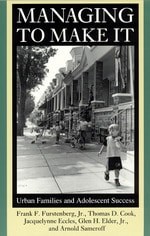
Managing to Make It
Urban Families and Adolescent SuccessFrank F. Furstenberg, Thomas D. Cook, Jacquelynne Eccles, Glen H. Elder Jr.,
University of Chicago Press, 1999
Based on nearly 500 interviews and case studies of families in inner-city Philadelphia, Managing to Make It lays out in detail the creative means parents use to manage risks and opportunities in their communities. More importantly, it also depicts the strategies parents develop to steer their children away from risk and toward resources that foster positive development and lead to success.
"Indispensible to anyone concerned about breaking the cycle of poverty and helplessness among at-risk adolescents, this book has a readable, graphic style easily grasped by those unfamiliar with statistical techniques." —Library Journal

Manifold Destiny
Arabs at an American Crossroads of Exceptional RuleJohn Tofik Karam
Vanderbilt University Press, 2021
At the border where Brazil, Paraguay, and Argentina meet under the scrutiny of the US and Mercosur (the large South American trade bloc), Arabs have long fulfilled what author John Tofik Karam calls a "manifold destiny." Karam casts Lebanese, Palestinians, and Syrians at this American border as circumstantial protagonists of a hemispheric saga.
For the more than six decades since they started settling at the trinational border between Brazil, Paraguay, and Argentina, Arabs have animated the hemisphere. Their transnational economic and social projects reveal a heretofore unacknowledged venue of exceptional rule in which the community accommodates and abides multiple states' varied suspensions of norms and laws. Arabs set up businesses and community centers at the border under authoritarian military governments between the 1950s and 1980s; thereafter, when denied full democratic enfranchisement, they instead underwent increasing surveillance from the 1990s to today. Karam reveals an unfinished history of exceptional rule that Arabs accommodate from an authoritarian past to a counterterrorist present.
Karam's riveting account draws on anthropological and historical research from each side of this trinational South American border, as well as from the US—where government bureaucrats still suspect Arabs at the border of would-be-terrorist subversion. Offering a fresh understanding of the hemisphere, Manifold Destiny brings the transnational turn of Middle Eastern studies to bear upon the fields of American studies, Brazilian studies, and Latin American studies.
Manufacturing Suburbs
Building Work And Homeedited by Robert Lewis
Temple University Press, 2004
Mapping AsiaTown Cleveland
Race and Redevelopment in the Rust BeltRebecca Jo Kinney
Temple University Press, 2025
Mapping AsiaTown Cleveland challenges ideas about the invisibility of Asian Americans in the urban Midwest by linking the contemporary development of Cleveland’s “AsiaTown” to the multiple and fragmented histories of Cleveland’s Asian American communities from the 1940s to present day. Kinney’s sharp insights illustrate how region matters for Japanese Americans who resettled from concentration camps and Chinese Americans food purveyors, as well as the ways in which Asian American community leaders have had to fight for visibility and representation in city planning—even as the Cleveland Asian Festival is branded as a marquee “diversity” event for the city.
Mapping AsiaTown Cleveland recognizes the vibrant Asian American community formations and belonging that have developed in seemingly unexpected spaces and places.
In the series Asian American History and Culture
Marketing Schools, Marketing Cities
Who Wins and Who Loses When Schools Become Urban AmenitiesMaia Bloomfield Cucchiara
University of Chicago Press, 2013
Markets of Dispossession
NGOs, Economic Development, and the State in CairoJulia Elyachar
Duke University Press, 2005
Julia Elyachar studied the efforts of bankers, social scientists, ngo members, development workers, and state officials to turn the craftsmen and unemployed youth of Cairo into the vanguard of a new market society based on microenterprise. She considers these efforts in relation to the alternative notions of economic success held by craftsmen in Cairo, in which short-term financial profit is not always highly valued. Through her careful ethnography of workshop life, Elyachar explains how the traditional market practices of craftsmen are among the most vibrant modes of market life in Egypt. Long condemned as backward, these existing market practices have been seized on by social scientists and development institutions as the raw materials for experiments in “free market” expansion. Elyachar argues that the new economic value accorded to the cultural resources and social networks of the poor has fueled a broader process leading to their economic, social, and cultural dispossession.
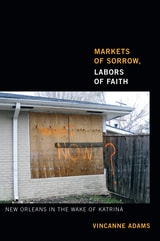
Markets of Sorrow, Labors of Faith
New Orleans in the Wake of KatrinaVincanne Adams
Duke University Press, 2013
Filled with the often desperate voices of residents who returned to New Orleans, Markets of Sorrow, Labors of Faith describes the human toll of disaster capitalism and the affect economy it has produced. While for-profit companies delayed delivery of federal resources to returning residents, faith-based and nonprofit groups stepped in to rebuild, compelled by the moral pull of charity and the emotional rewards of volunteer labor. Adams traces the success of charity efforts, even while noting an irony of neoliberalism, which encourages the very same for-profit companies to exploit these charities as another market opportunity. In so doing, the companies profit not once but twice on disaster.
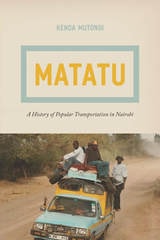
Matatu
A History of Popular Transportation in NairobiKenda Mutongi
University of Chicago Press, 2017
As Mutongi shows, matatus offer a window onto the socioeconomic and political conditions of late-twentieth-century Africa. In their diversity of idiosyncratic designs, they reflect multiple and divergent aspects of Kenyan life—including, for example, rapid urbanization, organized crime, entrepreneurship, social insecurity, the transition to democracy, and popular culture—at once embodying Kenya’s staggering social problems as well as the bright promises of its future. Offering a shining model of interdisciplinary analysis, Mutongi mixes historical, ethnographic, literary, linguistic, and economic approaches to tell the story of the matatu and explore the entrepreneurial aesthetics of the postcolonial world.
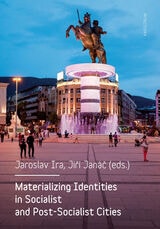
Materializing Identities in Socialist and Post-Socialist Cities
Edited by Jaroslav Ira and Jirí Janác
Karolinum Press, 2017
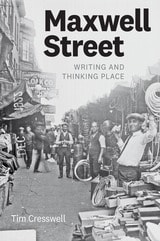
Maxwell Street
Writing and Thinking PlaceTim Cresswell
University of Chicago Press, 2019
In Maxwell Street, Cresswell advocates approaching the study of place as an “assemblage” of things, meanings, and practices. He models this innovative approach through a montage format that exposes the different types of texts—primary, secondary, and photographic sources—that have attempted to capture the essence of the area. Cresswell studies his historical sources just as he explores the different elements of Maxwell Street—exposing them layer by layer. Brilliantly interweaving words and images, Maxwell Street sheds light on a historic Chicago neighborhood and offers a new model for how to write about place that will interest anyone in the fields of geography, urban studies, or cultural history.
Mediators
Aesthetics, Politics, and the CityReinhold Martin
University of Minnesota Press, 2014
Forerunners: Ideas First is a thought-in-process series of breakthrough digital publications. Written between fresh ideas and finished books, Forerunners draws on scholarly work initiated in notable blogs, social media, conference plenaries, journal articles, and the synergy of academic exchange. This is gray literature publishing: where intense thinking, change, and speculation take place in scholarship.
Men in a Developing Society
Geographic and Social Mobility in Monterrey, MexicoBy Jorge Balán, Harley L. Browning, and Elizabeth Jelin
University of Texas Press, 1973
The central objective of Men in a Developing Society is to show, as concretely as possible, how men experience a period of rapid economic development, particularly in the areas of migration, occupational mobility, and status attainment. It is based mainly on a sample of 1,640 men in Monterrey, Mexico, a large and rapidly growing manufacturing metropolis in northern Mexico with much in-migration, and a sample of 380 men in Cedral, San Luis Potosí, a small, economically depressed community with high rates of out-migration, much of it to Monterrey.
The study of men in Monterrey is perhaps the most thorough one yet conducted of geographic and social mobility in a Latin American city. In part, this was possible because of the innovation of collecting complete life histories that record what each man was doing for any given year in the lay areas of residence, education, family formation, and work. These data permit the effective use of the concepts of life cycle and cohort analysis in the interpretation of the men's geographic and occupational mobility.
The experience of the Monterrey men in adapting to the varied changes required by their mobility was not found to be as difficult as is often indicated in the social science literature on the consequences of economic development. In part this may be because Monterrey, in comparison with most other Latin American cities, has been unusually successful in its economic growth. The impact of migration also was lessened because most of the men had visited the city prior to moving there and many had friends or relatives in the city.
The age of the migrants upon arrival in Monterrey made a significant difference in subsequent occupational mobility; those of nonfarm background who arrived before age 25 fared better than natives of the city. Although it appears that status inheritance in Monterrey is somewhat higher than in industrialized countries, a considerable proportion of men do move up the occupational ladder. And perhaps as important, the Monterrey men, whether or not they themselves are moving up, perceive the society as an open one.
The very success of Monterrey's development created conditions that would bring about changes in the educational, economic, and cultural expectations of its inhabitants. Thus, paradoxically, the general satisfaction and the lack of group and class conflict in Monterrey over the previous decades may well have given rise to future dissatisfaction and conflict.
Metagraffiti
Graffiti Art and the Urban Image in Latin AmericaChandra Morrison Ariyo
Rutgers University Press, 2025
Metropolis 1890-1940
Edited by Anthony Sutcliffe
University of Chicago Press, 1984
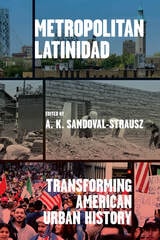
Metropolitan Latinidad
Transforming American Urban HistoryEdited by A. K. Sandoval-Strausz
University of Chicago Press, 2025
Latino urban history has been underappreciated not only in its own right but for the centrality of its narratives to urban history as a field. A scholarly discipline that has long scrutinized economics, politics, and the built environment has too often framed race as literally Black and white. This has resulted in a fundamental misunderstanding of the full social canvas of American cities since at least the early twentieth century.
Traversing metropolitan areas like Atlanta, Chicago, El Paso, Fort Worth, Los Angeles, Miami, and New York, this collection of essays brings together both established and emerging scholars, including long-time urbanists and academics working in the fields of Latino, borderlands, political, landscape, and religious history. Organized at different scales—including city, suburb, neighborhood, and hemisphere—this impressive body of work challenges long-standing narratives about metropolitan America. The contributors—Llana Barber, Mauricio Castro, Eduardo Contreras, Sandra I. Enríquez, Monika Gosin, Cecilia Sánchez Hill, Felipe Hinojosa, Michael Innis-Jiménez, Max Krochmal, Becky M. Nicolaides, Pedro A. Regalado, Iliana Yamileth Rodriguez, and Thomas J. Sugrue—engage a diverse range of subjects, such as urban rebellions, the suburbanization of Latinos, affordable housing, labor, the built environment, transnationalism, place-making, and religious life. The scholars also explore race within Latino communities, as well as the role that political and economic dynamics have played in creating Latino urban spaces. After reading this book, you will never see American cities the same way again.
Metropolitan Resilience in a Time of Economic Turmoil
Edited by Michael A. Pagano
University of Illinois Press, 2013
Cities, counties, school districts and other local governments have suffered a long-lasting period of fiscal challenges since the beginning of the Great Recession. Metropolitan governments continue to adjust to the "new normal" of sharply lower property values, consumer sales, and personal income. Contributors to this volume include elected officials, academics, key people in city administrations, and other nationally recognized experts who discuss solutions to the urban problems created by the Great Recession.
Metropolitan Resilience in a Time of Economic Turmoil looks at the capacity of local governments to mobilize resources efficiently and effectively, as well as the overall effects of the long-term economic downturn on quality of life. Introducing the reader to the fiscal effects of the Great Recession on cities, the book examines the initial fraying and subsequent mending of the social safety net, the opportunities for pursuing economic development strategies, the challenges of inter-jurisdictional cooperation, and the legacy costs of pension liabilities and infrastructure decay.
Contributors are Phil Ashton, Raphael Bostic, Richard Feiock, Rachel A. Gordon, Rebecca Hendrick, Geoffrey J.D. Hewings, David Merriman, Richard Nathan, Michael A. Pagano, Breeze Richardson, Annette Steinacker, Nik Theodore, Rachel Weber, and Margaret Weir.
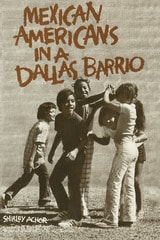
Mexican Americans in a Dallas Barrio
Shirley Achor
University of Arizona Press, 1978
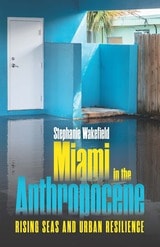
Miami in the Anthropocene
Rising Seas and Urban ResilienceStephanie Wakefield
University of Minnesota Press, 2025
Reimagining adaptation amidst climate change–driven mutations of urban space and life
Between its susceptibility to flooding and an ever-expanding real estate market powered by global surges of people and capital, Miami is an epicenter of the urban Anthropocene and a living laboratory for adaptation to sea level rise. Miami in the Anthropocene explores the social, environmental, and technical transformations involved in climate adaptation infrastructure and imaginaries in a global city seen as climate change ground zero.
Using Miami as a compelling microcosm for understanding the complex interplay between urbanization and environmental upheaval in the twenty-first century, Stephanie Wakefield shows how “aqua-urban futures” are being imagined for the city, from governmental scenario exercises for severe weather events to proposals to transform the city’s metropolitan area into an archipelago of islands connected by bridges. She examines the shifts reweaving the fabric of urban life and presents designs that imagine dramatic new ways of living with water.
Grounded in the dynamic landscape of Miami but reaching far beyond its shores, Miami in the Anthropocene delves into the broader debates shaping urban thought and practice in the Anthropocene. Focusing on postresilience urban designs, Wakefield illuminates the path toward a future where cities embrace opportunities for evolution rather than merely for survival.
Midnight Basketball
Race, Sports, and Neoliberal Social PolicyDouglas Hartmann
University of Chicago Press, 2016
Organized in the 1980s and ’90s by dozens of American cities, late-night basketball leagues were designed for social intervention, risk reduction, and crime prevention targeted at African American youth and young men. In Midnight Basketball, Hartmann traces the history of the program and the policy transformations of the period, while exploring the racial ideologies, cultural tensions, and institutional realities that shaped the entire field of sports-based social policy. Drawing on extensive fieldwork, the book also brings to life the actual, on-the-ground practices of midnight basketball programs and the young men that the programs intended to serve. In the process, Midnight Basketball offers a more grounded and nuanced understanding of the intricate ways sports, race, and risk intersect and interact in urban America.
Migrants and City-Making
Dispossession, Displacement, and Urban RegenerationAyse Caglar and Nina Glick Schiller
Duke University Press, 2018
Mill and Mansion
A Study of Architecture and Society in Lowell, Massachusetts, 1820-1865John Coolidge
University of Massachusetts Press, 1993
Misplacing Ogden, Utah
Race, Class, Immigration, and the Construction of Urban ReputationsPepper Glass
University of Utah Press, 2020
Ogden, a working-class city with a history of racial and immigrant diversity, has long held a reputation among Utahns as a “sin city” in the middle of an entrenched religious culture. Glass blends ethnographic research with historical accounts, census reports, and other secondary sources to provide insight into Ogden’s reputation, past and present. Capturing residents’ perceptions of an entire city, as opposed to only some of its neighborhoods, and exploring the regional contexts shaping these views, is rare among urban researchers. Glass’s unique approach suggests we can better confront urban problems by rethinking assumptions about place and promoting interventions that break down boundaries.
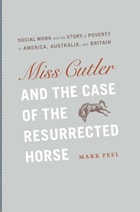
Miss Cutler and the Case of the Resurrected Horse
Social Work and the Story of Poverty in America, Australia, and BritainMark Peel
University of Chicago Press, 2011
Social workers produced thousands of case files about the poor during the interwar years. Analyzing almost two thousand such case files and traveling from Boston, Minneapolis, and Portland to London and Melbourne, Miss Cutler and the Case of the Resurrected Horse is a pioneering comparative study that examines how these stories of poverty were narrated and reshaped by ethnic diversity, economic crisis, and war.
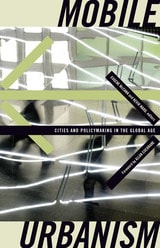
Mobile Urbanism
Cities and Policymaking in the Global AgeEugene McCann
University of Minnesota Press, 2010
The essays in this volume argue for a theorizing of both urban policymaking and place-making that understands them as groups of territorial and relational geographies. It broadens our comprehension of agents of transference, reconceiving how policies are made mobile, and acknowledging the importance of interlocal policy mobility. Through the richness of its empirical examples from Europe, North America, South America, Africa, Asia, and Australia, contributors bring to light the significant methodological challenges that researchers face in the study of an urban–global, territorial–relational conceptualization of cities and suggest productive new approaches to understanding urbanism in a networked world.
Contributors: S. Harris Ali, York U, Toronto; Allan Cochrane, Open U; Roger Keil , York U, Toronto; Doreen Massey, Open U; Donald McNeill, U of Western Sydney; Jamie Peck, U of British Columbia; Jennifer Robinson, University College London.
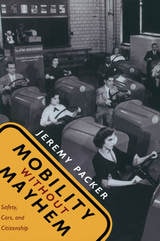
Mobility without Mayhem
Safety, Cars, and CitizenshipJeremy Packer
Duke University Press, 2007
Packer focuses on cultural figures that have been singled out as particularly dangerous. Women drivers, hot-rodders, bikers, hitchhikers, truckers, those who “drive while black,” and road ragers have all been targets of fear. As Packer debunks claims about the dangers posed by each figure, he exposes biases against marginalized populations, anxieties about social change, and commercial and political desires to profit by fomenting fear. Certain populations have been labeled as dangerous or deviant, he argues, to legitimize monitoring and regulation and, ultimately, to curtail access to automotive mobility. Packer reveals how the boundary between personal freedom and social constraint is continually renegotiated in discussions about safe, proper driving.
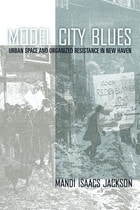
Model City Blues
Urban Space and Organized Resistance in New HavenMandi Isaacs Jackson
Temple University Press, 2008
Model City Blues tells the story of how regular people, facing a changing city landscape, fought for their own model of the “ideal city” by creating grassroots plans for urban renewal. Filled with vivid descriptions of significant moments in a protracted struggle, it offers a street-level account of organized resistance to institutional plans to transform New Haven, Connecticut in the 1960s. Anchored in the physical spaces and political struggles of the city, it brings back to center stage the individuals and groups who demanded that their voices be heard.
By reexamining the converging class- and race-based movements of 1960s New Haven, Mandi Jackson helps to explain the city's present-day economic and political struggles. More broadly, by closely analyzing particular sites of resistance in New Haven, Model City Blues employs multiple academic disciplines to redefine and reimagine the roles of everyday city spaces in building social movements and creating urban landscapes.
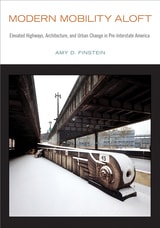
Modern Mobility Aloft
Elevated Highways, Architecture, and Urban Change in Pre-Interstate AmericaAmy D. Finstein
Temple University Press, 2020
In the first half of the twentieth century, urban elevated highways were much more than utilitarian infrastructure, lifting traffic above the streets; they were statements of civic pride, asserting boldly modern visions for a city’s architecture, economy, and transportation network. Yet three of the most ambitious projects, launched in Chicago, New York, and Boston in the spirit of utopian models by architects such as Le Corbusier and Hugh Ferriss, ultimately fell short of their ideals.
Modern Mobility Aloft is the first study to focus on pre-Interstate urban elevated highways within American architectural and urban history. Amy Finstein traces the idealistic roots of these superstructures, their contrasting realities once built, their impacts on successive development patterns, and the recent challenges they have posed to contemporary urban designers.
Filled with more than 100 historic photographs and illustrations of beaux arts and art deco architecture, Modern Mobility Aloft provides a critical understanding of urban landscapes, transportation, and technological change as cities moved into the modern era.
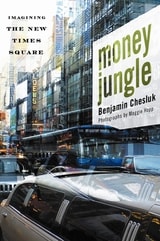
Money Jungle
Imagining the New Times SquareChesluk, Benjamin
Rutgers University Press, 2008
For more than a century, Times Square has mesmerized the world with the spectacle of its dazzling supersigns, its theaters, and its often-seedy nightlife. New York City’s iconic crossroads has drawn crowds of revelers, thrill-seekers, and other urban denizens, not to mention lavish outpourings of advertising and development money.
Many have hotly debated the recent transformation of this legendary intersection, with voices typically falling into two opposing camps. Some applaud a blighted red-light district becoming a big-budget, mainstream destination. Others lament an urban zone of lawless possibility being replaced by a Disneyfied, theme-park version of New York. In Money Jungle, Benjamin Chesluk shows that what is really at stake in Times Square are fundamental questions about city life—questions of power, pleasure, and what it means to be a citizen in contemporary urban space.
Chesluk weaves together surprising stories of everyday life in and around the Times Square redevelopment, tracing the connections between people from every level of this grand project in social and spatial engineering: the developers, architects, and designers responsible for reshaping the urban public spaces of Times Square and Forty-second Street; the experimental Midtown Community Court and its Times Square Ink. job-training program for misdemeanor criminals; encounters between NYPD officers and residents of Hell’s Kitchen; and angry confrontations between city planners and neighborhood activists over the future of the area.
With an eye for offbeat, telling details and a perspective that is at once sympathetic and critical, Chesluk documents how the redevelopment has tried, sometimes successfully and sometimes not, to reshape the people and places of Times Square. The result is a colorful and engaging portrait, illustrated by stunning photographs by long-time local photographer Maggie Hopp, of the street life, politics, economics, and cultural forces that mold America’s urban centers.
Monstrous Politics
Geography, Rights, and the Urban Revolution in Mexico CityBen Gerlofs
Vanderbilt University Press, 2022
Transdisciplinary by design, Monstrous Politics first moves historically through Mexico City’s turbulent twentieth century, driven centrally by the contentious imbrication of the Institutional Revolutionary Party (PRI) and its capital city. Participant observation, expert interviews, and archival materials demonstrate the shifting strategies and alliances of recent decades, provide the reader with a sense of the texture of contemporary political life in the city during a time of unprecedented change, and locate these dynamics within the history and geography of twentieth-century urbanization and political revolution. Substantive ethnographic chapters trace the emergence and decline of the political language of “the right to the city,” the establishment and contestation of a “postpolitical” governance regime, and the culmination of a century of urban politics in the processes of “political reform” by which Mexico City finally wrested back significant political autonomy and local democracy from the federal state.
A four-fold transection of the revolutionary structure of feeling that pervades the city in this historic moment illustrates the complex and contradictory sentiments, appraisals, and motivations through which contemporary politics are understood and enacted. Drawing on theories of social revolution that embrace complexity, and espousing a methodology that foregrounds the everyday nature of politics, Monstrous Politics develops an understanding of revolutionary urban politics at once contextually nuanced and conceptually expansive, and thus better able to address the realities of politics in the “urban age” even beyond Mexico City.
More Peoples of Las Vegas
One City, Many FacesJerry L Simich
University of Nevada Press, 2010
The remarkable economic growth of Las Vegas between 1980 and 2007 created a population boom and a major increase in the ethnic and religious diversity of the city. Today, over 21 percent of the city’s population is foreign born, and over 30 percent speak a language other than English at home. The local court system offers interpreters in 82 languages, and in 2005/2006, for example, more than 11,000 people, originating from 138 countries, were naturalized there as American citizens.More Peoples of Las Vegas extends the survey of this city’s cosmopolitan population begun in The Peoples of Las Vegas (University of Nevada Press, 2005). As in the previous book, this volume includes well-established groups like the Irish and Germans, and recently arrived groups like the Ethiopians and Guatemalans. Essays describe the history of each group in Las Vegas and the roles they play in the life and economy of the city. The essays also explore the influence of modern telecommunications and accessible air travel, showing how these factors allow newcomers to create transnational identities and maintain ties with families and culture back home. They also examine the role of local institutions—including clubs, religious organizations, shops, restaurants, and newspapers and other media—in helping immigrants maintain their ethnic and religious identities and in disseminating national and even regional cultures of origin.More Peoples of Las Vegas adds to our awareness of the rich and varied ethnic and religious character of Las Vegans. In a broader context, it offers thoughtful perspectives on the impact of globalization on a major American city and on the realities of immigrant life in the twenty-first century.
More Than Bread
Ethnography of a Soup KitchenIrene Glasser
University of Alabama Press, 2010
A powerful ethnographic portrait of hunger, dignity, and community in America.
In More than Bread: Ethnography of a Soup Kitchen, sociologist Irene Glasser presents a compelling and deeply human exploration of poverty, hunger, and community through the lens of an American soup kitchen. Drawing on immersive ethnographic research, Glasser moves beyond stereotypes and statistics to examine the daily experiences of individuals who depend on emergency food assistance, as well as the volunteers and staff who work to meet their needs.
Through firsthand observations and personal narratives, the book reveals the complex social relationships, challenges, and acts of resilience that unfold within this vital community institution. Glasser explores how issues such as homelessness, unemployment, inequality, mental health, and social isolation intersect in the lives of those seeking assistance, while also highlighting the dignity and humanity of people often overlooked in public discussions of poverty.
More than Bread invites readers to consider broader questions about social responsibility, public policy, and the effectiveness of charitable responses to human need. A valuable resource for understanding the realities of food insecurity in America, this book offers an informative and compassionate perspective on one of society's most pressing challenges. It is an essential read for students, scholars, social workers, policymakers, nonprofit professionals, and anyone interested in poverty, homelessness, and social justice.
Moving Boarders
Skateboarding and the Changing Landscape of Urban Youth SportsMatthew Atencio
University of Arkansas Press, 2018
This excellent treatise on the contemporary youth sports scene examines how modern families embrace skateboarding and the role commerce plays in this unexpected new parent culture, and highlights how private corporations, community leaders, parks and recreation departments, and nonprofits like the Tony Hawk Foundation have united to energize skate parks—like soccer fields before them—as platforms for community engagement and the creation of social and economic capital.