Results by title
453 books match the query 'Wisconsin' and 22 start with m

Madison Chefs
Stories of Food, Farms, and PeopleLindsay Christians and Chris Hynes
University of Wisconsin Press, 2021
Farm-to-table is a cliché, but its roots among the farmers and chefs of south-central Wisconsin are deep, vibrant, and resilient. From brats and burgers to bibimbap, Madison’s food scene looks substantially different than it did just a decade ago. Though the city has always been ahead of the locavore movement, a restaurant boom in the 2010s radically changed the dining landscape. Even when individual eateries close or chefs move on, their ideas, connections, and creativity have lasting power. Much larger cities have been unable to match the culinary variety, innovation, and depth of talent found in Wisconsin’s state capital.
Lindsay Christians’s in-depth look at nine creative, intense, and dedicated chefs captures the reason why Madison’s food culture remains a gem in America’s Upper Midwest. This beautifully illustrated book will leave you salivating—or making reservations.

Mai Ya's Long Journey
Sheila Cohen
Wisconsin Historical Society Press, 2005
The story of Mai Ya Xiong and her family and their journey from the Ban Vinai refugee camp in Thailand to a new life in Madison, Wisconsin, is extraordinary. Yet it is typical of the stories of the 200,000 Hmong people who now live in the United States and who struggle to adjust to American society while maintaining their own culture as a free people.
Mai Ya's Long Journey follows Mai Ya Xiong, a young Hmong woman, from her childhood in Thailand's Ban Vinai Refugee Camp to her current home in Wisconsin. Mai Ya's parents fled Laos during the Vietnam War and were refugees in Thailand for several years before reaching the United States. But the story does not end there. Students will read the challenges Mai Ya faces in balancing her Hmong heritage and her adopted American culture as she grows into adulthood.

Main Street Ready-Made
Arnold Alanen
Wisconsin Historical Society Press, 1987
Main Street Ready-Made
The New Deal Community of Greendale, WisconsinArnold R. Alanen
Wisconsin Historical Society Press, 2012
The dream of the suburb is an old one in America. For more than a century, city dwellers have sought to escape the crowding and pollution of industrial centers for the quiet streets and green spaces on their fringes. In the 1930s, that dream inspired the largest migration of Americans in the twentieth century and led to the creation of Greendale, Wisconsin, one of three planned communities initially begun to resettle the rural poor hit hard by the Great Depression. This idea, though, quickly developed into a plan to revitalize cities and stabilize farming communities around the nation. The result was three “greenbelt towns” built from scratch, expressly for working-class families and within easy commuting distance of urban employment. Greendale, completed in 1938, was consciously designed as a midwestern town in both its physical character and social organization, where ordinary citizens could live in a safe, attractive, economical community that was in harmony with the surrounding farmland.
“Main Street Ready-Made” examines Greendale as an outgrowth of public policy, an experiment in social engineering, and an organic community that eventually evolved to embrace a huge shopping mall, condominiums, and expensive homes while still preserving much of the architecture and ambiance of the original village. A snapshot of 1930s idealism and ingenuity, “Main Street Ready-Made” makes a significant contribution to the history of cities, suburbs, and social planning in mid-century America.

Make Way for Liberty
Wisconsin African Americans in the Civil WarJeff Kannel
Wisconsin Historical Society Press, 2020
Making It Work
Low-Wage Employment, Family Life, and Child DevelopmentHirokazu Yoshikawa
Russell Sage Foundation, 2006
Mapping Wisconsin History
Teacher's Guide and Student MaterialsWisconsin Historical Society Press, 2000
Mary Nohl
A Lifetime in ArtBarbara Manger
Wisconsin Historical Society Press, 2013
LOOK INSIDE THE LIFE — AND HOME — OF LEGENDARY 'OUTSIDER' ARTIST MARY NOHL
"Mary Nohl: A Lifetime in Art" by Barbara Manger and Janine Smith, tells the story of Milwaukee-born artist, Mary Nohl. A prolific and fanciful maker who worked in a variety of media, Nohl was both a mysterious figure and an iconic "outsider" artist. This new addition to the Badger Biographies series captures her life and will capture the imagination of readers, and artists, of all ages.
Nohl didn't just make art — she lived it. From the time she was young, Mary enjoyed making things, from the model airplane that won her a citywide prize to assignments in shop class, where she learned to work with tools.
Her interests in art blossomed during the years she spent training at the Art Institute of Chicago, leading to a lifetime of curiosity and ventures into new artistic media. From pottery to silver jewelry and oil painting to concrete sculpture, Mary explored new ways of making art. Many of her pieces were made from found objects that other people might think of as junk — like chicken bones, bedsprings and sand that she made into concrete.
Nohl, who made her home on the shores of Lake Michigan, decorated the interior of her cottage with bright colors and eye-catching figures in driftwood and glass. During her later years, her home became known as the "Witch's House" — a place of local legend known far beyond Fox Point. Though she died in 2001, Mary's legacy continues. Her art is held at the John Michael Kohler Arts Center in Sheboygan, and her home is listed on the National Register of Historic Places.
The popular Badger Biographies series for young readers explores the lives of famous and not-so-famous figures in Wisconsin history. The Wisconsin Historical Society Press is proud to celebrate the release of this, the 21st book in the series.
Meet Me on the Midway
A History of Wisconsin FairsJerry Apps
Wisconsin Historical Society Press, 2022
Merchants, Midwives, and Laboring Women
ITALIAN MIGRANTS IN URBAN AMERICADiane C. Vecchio
University of Illinois Press, 2006
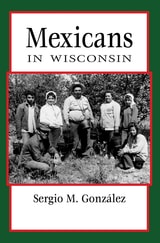
Mexicans in Wisconsin
Sergio González
Wisconsin Historical Society Press, 2017
From agricultural and factory workers to renowned writers and musicians, the Mexican immigrants who have made their homes in Wisconsin over the past century have become a significant and diverse part of this state’s cultural and economic history. Coming from a variety of educational and professional backgrounds, the earliest Mexican immigrants traveled north in search of better economic opportunities and relief from the violence and economic turmoil of the Mexican Revolution. They found work in tanneries and foundries, and on beet farms where they replaced earlier European immigrant workers who had moved on to family farms. As Mexican immigration has grown to the present day, these families have become integral members of Wisconsin communities, building businesses, support systems, and religious institutions. But their experience has also been riddled with challenges, as they have fought for adequate working conditions, access to education, and acceptance amid widespread prejudice. In this concise history, learn the fascinating stories of this vibrant and resilient immigrant population: from the Tejano migrant workers who traveled north seasonally to work in the state’s cucumber fields, to the determined labor movement led by Jesus Salas, to the young activists of the Chicano Movement, and beyond.
Milking in the Shadows
Migrants and Mobility in America’s DairylandKeller, Julie C
Rutgers University Press, 2019

Milwaukee Mayhem
Murder and Mystery in the Cream City's First CenturyMatthew J. Prigge
Wisconsin Historical Society Press, 2015
From murder and matchstick men to all-consuming fires, painted women, and Great Lakes disasters--and the wide-eyed public who could not help but gawk at it all--"Milwaukee Mayhem" uncovers the little-remembered and rarely told history of the underbelly of a Midwestern metropolis. "Milwaukee Mayhem" offers a new perspective on Milwaukee's early years, forgoing the major historical signposts found in traditional histories and focusing instead on the strange and brutal tales of mystery, vice, murder, and disaster that were born of the city's transformation from lakeside settlement to American metropolis. Author Matthew J. Prigge presents these stories as they were recounted to the public in the newspapers of the era, using the vivid and often grim language of the times to create an engaging and occasionally chilling narrative of a forgotten Milwaukee.
Through his thoughtful introduction, Prigge gives the work context, eschewing assumptions about "simpler times" and highlighting the mayhem that the growth and rise of a city can bring about. These stories are the orphans of Milwaukee's history, too unusual to register in broad historic narratives, too strange to qualify as nostalgia, but nevertheless essential to our understanding of this American city.
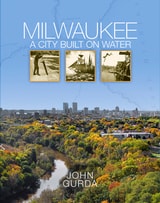
Milwaukee
A City Built on WaterJohn Gurda
Wisconsin Historical Society Press, 2026
The success and survival of Milwaukee lies in the rivers that meander through its streets and the great lake at its eastern boundary. The Indigenous peoples of the region recognized the value of an abundant, clean water supply for food and transportation. Generations of immigrants, entrepreneurs, innovators, and recreationists used the same waters to travel greater distances, power million-dollar industries, and even have a bit of fun.
In Milwaukee: A City Built on Water, celebrated historian John Gurda relates the history of the waters that gave Milwaukee life—and occasionally threatened the city through erosion, invasive species, and water-borne diseases. Telling tales of brewers, brickmakers, ecologists, and engineers, Gurda explores the city’s complicated connections with its most precious resource and greatest challenge. You’ll meet the generations of people, from a Potawatomi chief to fur traders and fishermen, who settled on the small spit of land known as Jones Island; learn how Milwaukee’s unique water composition creates its distinct cream-colored bricks; visit Wisconsin’s first waterparks; and see how city leaders transformed the Milwaukee River—once described as a “vast sewer” with an “odorous tide”—into today’s lively and lovely Riverwalk.
Now available in paperback, Milwaukee: A City Built on Water is the sweeping chronicle of a critical natural resource that has weathered heavy use and flagrant abuse to emerge as a focal point of both celebration and concern in the twenty-first century.

Modern Jungles
A Hmong Refugee’s Childhood Story of SurvivalPao Lor
Wisconsin Historical Society Press, 2021
Born in a small farming village, Pao was destined to be a Hmong clan leader, wedding negotiator, or shaman. But the course of his life changed dramatically in the 1970s, when the Hmong faced persecution for their role in helping US forces fighting communism in the region. After more than two years in Thai refugee camps, Pao and his surviving family members boarded the belly of an “iron eagle” bound for the United States, where he pictured a new life of comfort and happiness. Instead, Pao found himself navigating a frightening and unfamiliar world, adjusting to a string of new schools and living situations while struggling to fulfill the hopes his parents had once held for his future. Now in Modern Jungles, Pao Lor shares his inspiring coming-of-age tale about perseverance, grit, and hope.
Included are discussion questions for use by book clubs, in classrooms, or around the dinner table.

Moments of Happiness
A Wisconsin Band StoryMike Leckrone and Doug Moe
University of Wisconsin Press, 2024
This book is the next best thing to sitting down with this master storyteller. Coauthor Doug Moe captures the joys of performing—whether at Camp Randall, in the Kohl Center, or along the Rose Bowl Parade route. Reading Leckrone’s story, one comes to understand the mix of discipline, showmanship, work ethic, warmth, toughness, wit, and musical skill that make him a Wisconsin treasure. Even for people who know Leckrone, Moments of Happiness details the stories behind the highlights and the unglamorous work that made his accomplishments possible. It both cements his legend and offers unprecedented insights into a career that will never be equaled.
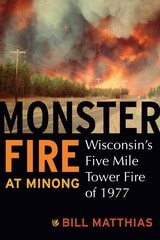
Monster Fire at Minong
Wisconsin’s Five Mile Tower Fire of 1977Bill Matthias
Wisconsin Historical Society Press, 2010

More Stories from the Round Barn
Jacqueline Dougan Jackson
Northwestern University Press, 2002

More Than Words
A Memoir of a Writing LifeJerry Apps
Wisconsin Historical Society Press, 2022

More than They Bargained For
Scott Walker, Unions, and the Fight for WisconsinJason Stein and Patrick Marley
University of Wisconsin Press, 2013
“Stein and Marley deliver an impressively objective account of the struggle, ably describing the objectives and tactics of each side in a confident and engaging style.”—Kirkus Reviews
“Stein and Marley deliver a swashbuckling tale of Wisconsin's Republican Governor Scott Walker's election and tumultuous first year in office. . . . Instead of an expected dry read, the authors' lively, economical prose, supplemented by snippets of social media reporting in real time, place readers in the crowded Capitol building stairwells, or in the midst of Wisconsin's largest sustained demonstration since Vietnam protests rocked the University of Wisconsin campus.”—Publishers Weekly
“This book is a political thriller, an activists’ handbook (for the Left on how to organize mass protests, and for the Right on how to effectively fight public employee unions), and a work of investigative journalism all rolled into one. Social scientists, political junkies, and anyone interested in public affairs will devour it.”—Library Journal
“Not only have Stein and Marley organized this mass of material into a coherent whole, but they also write well, ensuring that even the drier parts of their narrative are clear as well as fair. Their book provides plenty of ammunition for both sides. But it also offers something far better: the basis for an adult conversation about what actually happened.”—Milwaukee Journal Sentinel
“This timely account covers the ethics investigations, public demonstrations, runaway legislators, recalls, and physical confrontation between two state Supreme Court justices. . . . This book is written in a concise, unbiased manner and includes complete details. In a greater sense, it explores the drastic polarization endemic in American society today.”—Choice
“A testament to the information-gathering powers of good beat reporters. In Bob Woodward style, they reconstruct the backroom meetings that ushered Gov. Scott Walker’s Act 10 legislation through the protester-crammed halls of the Wisconsin State Capitol.”—Milwaukee Magazine
“Stein and Marley have managed to produce a very readable, well-researched, and thoroughly interesting narrative without any notable bias—a major accomplishment.”—Wisconsin People & Ideas Magazine
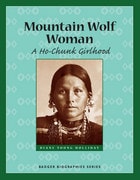
Mountain Wolf Woman
A Ho-Chunk GirlhoodDiane Holliday
Wisconsin Historical Society Press, 2007
With the seasons of the year as a backdrop, author Diane Holliday describes what life was like for a Ho-Chunk girl who lived in the late nineteenth and early twentieth century. Central to the story is the movement of Mountain Wolf Woman and her family in and around Wisconsin. Like many Ho-Chunk people in the mid-1800s, Mountain Wolf Woman's family was displaced to Nebraska by the U.S. government. They later returned to Wisconsin but continued to relocate throughout the state as the seasons changed to gather and hunt food.
Based on her own autobiography as told to anthropologist Nancy Lurie, Mountain Wolf Woman's words are used throughout the book to capture her feelings and memories during childhood. Author Holliday draws young readers into this Badger Biographies series book by asking them to think about how the lives of their ancestors and how their lives today compare to the way Mountain Wolf Woman lived over a hundred years ago.

My Life with the Green & Gold
Tales from 20 Years of SportscastingJessie Garcia
Wisconsin Historical Society Press, 2013
Ever wonder what it’s like to interview famous athletes and coaches? For twenty years, sportscaster Jessie Garcia has done just that. In My Life with the Green & Gold she brings fans to the sidelines at Lambeau Field, inside the locker room, aboard the Packers bus, and into the host’s chair at The Mike McCarthy Show.
A self-proclaimed “terrible athlete” born without sports in her blood, Garcia reported on Wisconsin’s beloved Green Bay Packers during the Holmgren, Rhodes, Sherman, and McCarthy years. She’s been a Packers sideline reporter for preseason games and covered the team during their Super Bowl showdowns against the Patriots, Broncos, and Steelers. She’s traveled with the team to Tokyo and the White House and to schools and retirement homes, where the gridiron heroes interacted with their fans. She’s visited the hometowns of players and coaches, she’s met their proud parents and their pets, she’s interviewed the team trainer about their strength exercises. My Life with the Green & Gold also features up-close and personal stories about other teams and athletes she’s covered, from the Badgers and Brewers to Wisconsin Olympians such as Bonnie Blair and Casey FitzRandolph.
Garcia’s expertise is capturing behind-the-scenes, human-interest stories. In My Life with the Green & Gold, she shares a personal and humorous insider’s look at many Wisconsin sports heroes from the perspective of a female sports journalist who has ridden the adrenaline rush to be on the air at 5:00 a.m., 10:00 p.m., and any hour in between, while also juggling the many demands of family life. Not many parents can say they’ve changed their child’s diaper in the tunnel at Lambeau, but Jessie Garcia can.