Results by title
22279 books match the query 'Social Science' and 1258 start with m
Meanings of Maple
An Ethnography of SugaringMichael Lange
University of Arkansas Press, 2017
Readers will go deep into a Vermont sugar bush and its web of plastic tubes, mainline valves, and collection tanks. They will visit sugarhouses crammed with gas evaporators and reverse-osmosis machines. And they will witness encounters between sugar makers and the tourists eager to invest Vermont with mythological fantasies of rural simplicity.
So much more than a commodity study, Meanings of Maple frames a new approach for evaluating the broader implications of iconic foodways, and it will animate conversations in food studies for years to come.
Meanings of Mobility
Family, Education, and Immigration in the Lives of Latino YouthLeah Schmalzbauer
Russell Sage Foundation, 2023
To better understand these experiences, Schmalzbauer draws on interviews with 60 low-income Latino youth who graduated or were set to graduate from Amherst College, one of the most selective private colleges in the United States. The vast majority of these students were the first in their immigrant families to go to college in the U.S. She finds that while most of the students believed attending Amherst provided them with previously unimaginable opportunities, adjusting to life on campus came with significant challenges. Many of the students Schmalzbauer spoke with had difficulties adapting to the cultural norms at Amherst as well as with relating to their non-Latino, non-low-income peers. The challenges these students faced were not limited to life on campus. As they attempted to adapt to Amherst, many felt distanced from the family and friends they left behind who could not understand the new challenges they faced.
The students credit their elite education for access to extraordinary educational and employment opportunities. However, their experiences while in college and afterward reveal that the relationship between educational and social mobility is much more complicated and less secure than popular conversations about the “American Dream” suggest. Many students found that their educational attainment was not enough to erase the core challenges of growing up in a marginalized immigrant family: many were still poor, faced racism, and those who were undocumented or had undocumented family members still feared deportation.
Schmalzbeauer suggests ways elite colleges can better support low-income Latino students and lower the emotional price of educational mobility, including the creation of immigration offices on campus to provide programming and support for undocumented students and their families. She recommends educating staff to better understand the centrality of family for these students and the challenges they face, as well as educating more privileged students about inequality and the life experiences of their marginalized peers.
Meanings of Mobility provides compelling insights into the difficulties faced by low-income Latinos pursuing educational and social mobility in America’s elite institutions.
Measuring America
How Economic Growth Came to Define American Greatness in the Late Twentieth CenturyAndrew L. Yarrow
University of Massachusetts Press, 2010
The United States has always fancied itself a nation apart—"exceptional" in its values, traditions, and way of life. For most of the country's history, ideas about what made America distinctive generally were framed in terms of a liberal idealism rooted in the thought of John Locke and articulated by Jefferson, Madison, and other Founders. While some commentators also observed that the United States was a land of plenty, it wasn't until the mid-twentieth century that material abundance emerged as the principal standard of American “greatness,” as measured by a host of new economic indicators.
Beginning in earnest in the wake of World War II, opinion-shapers in politics, business, academia, the media, the schools, and public diplomacy gloried in the nation's booming economy. Where “plenty” had once been a largely abstract concept, it was now quantifiable, thanks to new national income accounting and other economic data collection and analysis techniques. One could tally up production and consumption of an ever-expanding cornucopia of goods and services that made up the gross national product (GNP), the king of postwar statistics. American preeminence and American identity were increasingly linked with this measurable prosperity, presented in the language of a newly influential economics profession.
In Measuring America, Andrew L. Yarrow explores this history, telling two parallel, interlocking stories—of how economic ideas came to have vastly greater influence on American culture after World War II, and how those ideas dovetailed with a growing belief that the meaning and value of the United States resided in its material output. How and why this new way of “measuring America” developed, how it was expressed, and what it has meant and means for Americans today are the subject of this well-researched and insightful book.
Measuring Distribution and Mobility of Income and Wealth
Raj Chetty, John N. Friedman, Janet C. Gornick, Barry Johnson, and Arthur Kennickell
University of Chicago Press, 2022
Economic research is increasingly focused on inequality in the distribution of personal resources and outcomes. One aspect of inequality is mobility: are individuals locked into their respective places in this distribution? To what extent do circumstances change, either over the lifecycle or across generations? Research not only measures inequality and mobility, but also analyzes the historical, economic, and social determinants of these outcomes and the effect of public policies. This volume explores the latest developments in the analysis of income and wealth distribution and mobility. The collection of twenty-three studies is divided into five sections. The first examines observed patterns of income inequality and shifts in the distribution of earnings and in other factors that contribute to it. The next examines wealth inequality, including a substantial discussion of the difficulties of defining and measuring wealth. The third section presents new evidence on the intergenerational transmission of inequality and the mechanisms that underlie it. The next section considers the impact of various policy interventions that are directed at reducing inequality. The final section addresses the challenges of combining household-level data, potentially from multiple sources such as surveys and administrative records, and aggregate data to study inequality, and explores ways to make survey data more comparable with national income accounts data.

Measuring Mamma's Milk
Fascism and the Medicalization of Maternity in ItalyElizabeth Dixon Whitaker
University of Michigan Press, 2000

Measuring the Flow of Time
The Works of James A. Ford, 1935-1941James A. Ford, edited by R. Lee Lyman and Michael J. O'Brien
University of Alabama Press, 1999
This collection of Ford's works focuses on the development of ceramic chronology—a key tool in Americanist archaeology.
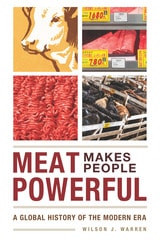
Meat Makes People Powerful
A Global History of the Modern EraWilson J. Warren
University of Iowa Press, 2018
From large-scale cattle farming to water pollution, meat— more than any other food—has had an enormous impact on our environment. Historically, Americans have been among the most avid meat-eaters in the world, but long before that meat was not even considered a key ingredient in most civilizations’ diets. Labor historian Wilson Warren, who has studied the meat industry for more than a decade, provides this global history of meat to help us understand how it entered the daily diet, and at what costs and benefits to society.
Spanning from the nineteenth century to current and future trends, Warren walks us through the economic theory of food, the discovery of protein, the Japanese eugenics debate around meat, and the environmental impact of livestock, among other topics. Through his comprehensive, multifaceted research, he provides readers with the political, economic, social, and cultural factors behind meat consumption over the last two centuries. With a special focus on East Asia, Meat Makes People Powerful reveals how national governments regulated and oversaw meat production, helping transform virtually vegetarian cultures into major meat consumers at record speed.
As more and more Americans pay attention to the sources of the meat they consume, Warren’s compelling study will help them not only better understand the industry, but also make more informed personal choices. Providing an international perspective that will appeal to scholars and nutritionists alike, this timely examination will forever change the way you see the food on your plate.

Meat and the Birth of Rome
Zooarchaeology, Foodways, and Religious RitualsVictoria C. Moses
University of Alabama Press, 2026
Meat and the Birth of Rome explores faunal remains from archaeological sites dating to the early Iron Age through early Republican period in Rome and its environs and challenges a prevailing view of Rome’s exceptionalism. Victoria C. Moses tempers the myth by illuminating the roles of meat production, distribution, and consumption and ritual sacrifice in the social hierarchy, economy, and religious practices as Rome grew. During the transformative period around the eighth century BCE, Romans conserved older foodways and their diverse ritual practices. These findings within the broader zooarchaeological data from peninsular Italy show that, despite Rome’s later success, it shared many early characteristics with its neighbors.
This compelling narrative adds to the current archaeological conversations and research on the history of the eternal city.
Meat!
A Transnational AnalysisSushmita Chatterjee and Banu Subramaniam, editors
Duke University Press, 2021
Contributors. Neel Ahuja, Irina Aristarkhova, Sushmita Chatterjee, Mel Y. Chen, Kim Q. Hall, Jennifer A. Hamilton, Anita Mannur, Elspeth Probyn, Parama Roy, Banu Subramaniam, Angela Willey, Psyche Williams-Forson
Meat, Modernity, and the Rise of the Slaughterhouse
Paula Young Lee
University of New Hampshire Press, 2008
Contributors include: Dorothee Brantz, Kyri Claflin, Jared Day, Roger Horowitz, Lindgren Johnson, Ian MacLachlan, Christopher Otter, Dominic Pacyga, Richard Perren, Jeffrey Pilcher, and Sydney Watts.

Mechademia 5
FanthropologiesFrenchy Lunning
University of Minnesota Press, 2010

Medea’s Daughters
Forming and Performing the Woman Who KillsJennifer Jones
The Ohio State University Press, 2003
In Medea's Daughters, Jennifer Jones explores the legal, cultural, and dramatic representations of six accused murderesses to look at how English-speaking society responded to and controlled anxiety over female transgressions. The woman who kills—in particular, the woman who kills a member of her own family—has not only broken the law, she has also violated gender expectations. Jones argues that dramatic representations of criminal women, especially women who kill, proliferate during times of heightened feminist activity and that theatrical narratives, as evidenced in plays, television, and film, serve to contain women and deflect attention away from issues of women’s systematic repression.
Medea’s Daughters focuses on six women (of whom Lizzie Borden, Susan Smith, and Louise Woodward are the best known) whose murder trials caught the attention of their respective cultures. This broad spectrum allows an examination of how women’s legal status has evolved over five centuries.
Media Amnesia
Rewriting the Economic CrisisLaura Basu
Pluto Press, 2018
Media Backends
Digital Infrastructures and Sociotechnical RelationsEdited by Lisa Parks, Julia Velkova, and Sander de Ridder
University of Illinois Press, 2023
Media backends--the electronics, labor, and operations behind our screens--significantly influence our understanding of the sociotechnical relations, economies, and operations of media. Lisa Parks, Julia Velkova, and Sander De Ridder assemble essays that delve into the evolving politics of the media infrastructural landscape. Throughout, the contributors draw on feminist, queer, and intersectional criticism to engage with infrastructural and industrial issues. This focus reflects a concern about the systemic inequalities that emerge when tech companies and designers fail to address workplace discrimination and algorithmic violence and exclusions. Moving from smart phones to smart dust, the essayists examine topics like artificial intelligence, human-machine communication, and links between digital infrastructures and public service media alongside investigations into the algorithmic backends at Netflix and Spotify, Google’s hyperscale data centers, and video-on-demand services in India.
A fascinating foray into an expanding landscape of media studies, Media Backends illuminates the behind-the-screen processes influencing our digital lives.
Contributors: Mark Andrejevic, Philippe Bouquillion, Jonathan Cohn, Faithe J. Day, Sander De Ridder, Fatima Gaw, Christine Ithurbide, Anne Kaun, Amanda Lagerkvist, Alexis Logsdon, Stine Lomborg, Tim Markham, Vicki Mayer, Rahul Mukherjee, Kaarina Nikunen, Lisa Parks, Vibodh Parthasarathi, Philipp Seuferling, Ranjit Singh, Jacek Smolicki, Fredrik Stiernstedt, Matilda Tudor, Julia Velkova, and Zala Volcic
Media Constrained by Context
International Assistance and Democratic Media Transition in the Western BalkansKristina Irion
Central European University Press, 2018
Media Crossroads
Intersections of Space and Identity in Screen CulturesPaula J. Massood, Angel Daniel Matos, and Pamela Robertson Wojcik, editors
Duke University Press, 2021
Contributors. Amy Corbin, Desirée J. Garcia, Joshua Glick, Noelle Griffis, Malini Guha, Ina Rae Hark, Peter C. Kunze, Paula J. Massood, Angel Daniel Matos, Nicole Erin Morse, Elizabeth Patton, Matthew Thomas Payne, Merrill Schleier, Jacqueline Sheean, Sarah Louise Smyth, Erica Stein, Kirsten Moana Thompson, John Vanderhoef, Pamela Robertson Wojcik
Media Culture in Transnational Asia
Convergences and DivergencesHyesu Park
Rutgers University Press, 2020
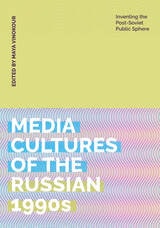
Media Cultures of the Russian 1990s
Inventing the Post-Soviet Public SphereEdited by Maya Vinokour
Amherst College Press, 2025
Written by an interdisciplinary group of experts, this edited collection addresses the mutual influence among disparate spheres of public life that enabled the media “Wild West” of the first post-Soviet decade. As a joint platform, the volume and the associated Multimedia Sourcebook of the Russian 1990s present the decade’s media cultures in a manner that reflects their historical interconnectedness and relationship to the global present.
Edited by Maya Vinokour with contributions from Bradley Gorski, Courtney Doucette, Fabrizio Fenghi, Rita Safariants, Daniil Leiderman, Thomas Keenan, and Pavel Khazanov.
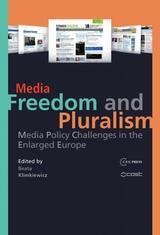
Media Freedom and Pluralism
Media Policy Challenges in the Enlarged EuropeBeata Klimkiewicz
Central European University Press, 2010

Media Freedom
The Contradictions of Communications in the Age of ModernityRichard Barbrook
Pluto Press, 1995
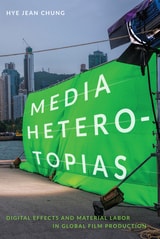
Media Heterotopias
Digital Effects and Material Labor in Global Film ProductionJean Hye Chung
Duke University Press, 2018
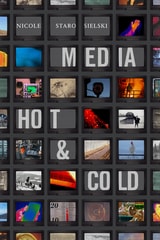
Media Hot and Cold
Nicole Starosielski
Duke University Press, 2021

Media Imaginaries
A Critical PlaybookEdited by Annette Hill, Joke Hermes, and Simon Dawes
Intellect Books, 2027
How does media shape ways of being in the world? This collection explores media imaginaries as a tool for reflection.
Media imaginaries are shapeshifters. The term refers to the cultural and infrastructural work of texts and artifacts, audience engagement and experiences, and commercial and civic organizations. The authors in this volume empirically and conceptually examine media imaginaries in all their diversity, providing space for dialogue on themes of political-social imaginaries, cultural-technological imaginaries, and reflecting imaginaries.
The volume explores how media affects both real and imagined experiences, examining the interplay of media practice, culture, and imagination across past, present, and future contexts. It highlights the impact of AI-enabled content and media ecologies on everyday life globally, offering fresh insights for media and cultural studies.
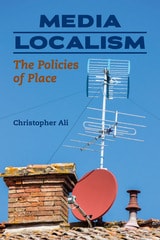
Media Localism
The Policies of PlaceChristopher Ali
University of Illinois Press, 2017

Media Making as Peacemaking
Israel/PalestineYuval Katz
Rutgers University Press, 2026
The horrific events of October 7 and the devastating war in Gaza have brought Israel/Palestine to the headlines once again. We have seen this all play out before: another ambitious peace plan, which secured a ceasefire, is imagined as the dawn of a new era of peace in the Middle East. But is it? Critiquing traditional state-centered approaches to peace, which usually highlight the work of diplomats and politicians, and which historically failed miserably in Israel/Palestine, Media Making as Peacemaking shifts our attention to the experiences of ordinary people. Investigating the idea of media encounters, this book shows how the collaboration of Palestinian and Jewish media practitioners and the popular texts they create together in television dramas, digital activism and mainstream journalism offer a new and exciting way to think about peace—a peace which does not maintain a repressive status quo, but seeks to deliver equality and justice to all people, Palestinians and Jews, living between the Jordan River and the Mediterranean Sea.

Media Marathon
A Twentieth-Century MemoirErik Barnouw
Duke University Press, 1996
Born in Holland in 1908 and an immigrant to the United States at the age of eleven, Barnouw spent his early working years in an astounding array of occupations—actor and stage manager, lyricist, translator, director, producer, teacher, and union official. This varied background, described here in rich detail, informs his writings about the world in which he moved, specifically regarding the shifting channels of twentieth-century mass communication. Telling his story through a series of personal profiles of the famous, the infamous, and the little known but powerfully influential, Barnouw recounts the events that took him from the vaudeville stage to the Library of Congress, where he became the first chief of its newly formed Motion Picture, Broadcasting, and Recording Sound Division. Thornton Wilder, Pearl S. Buck, Joshua Logan, Dwight Eisenhower, Lynn Fontanne, Tallulah Bankhead, and Akira Iwasaki—these are among the featured characters in the drama of American media, rendered here in striking close-ups.
From The Hague to retirement in Vermont, with stops in India, Japan, and Russia, Barnouw’s remarkable story gives readers the chance to relive crucial chapters of modern media history—and to relive them with one of that history’s masters as an incomparable guide. A book for those interested in the “mass media,” its evolution, and role in society, Media Marathon will appeal to students, scholars, and general readers alike.
Media Materialities
Form, Format, and Ephemeral MeaningEdited by Iain A. Taylor and Oliver Carter
Intellect Books, 2025
Media Materialities brings together a team of scholars to analyze the increasingly complex relationships between media forms and formats, materiality, and meaning. Deploying a number of different qualitative methodologies, the contributors address three overarching concepts: form, format, and ephemeral meaning. They investigate a range of media artifacts, such as 8mm film, board game maps, videogames, cassette tapes, transistor radios, and Twitter. Their goal is to create spaces for conversation and debate about the implications that this plurality of material meanings might have for the study of media, culture, and society.
Media Pasts and Futures
Critical Reflections on 'Power Without Responsibility'Edited by Des Freedman and Michael Klontzas
University of Westminster Press, 2025
Media Pluralism and Online News
The Consequences of Automated Curation for SocietyTim Dwyer and Derek Wilding
Intellect Books, 2023
In the transition to a media landscape increasingly dominated by broadband internet distribution and the dominance of US-centric new media behemoths Google, Facebook, Apple, Amazon, and Netflix, Media Pluralism and Online News investigates measures that can be taken to reduce this ongoing march of concentration and the attenuation of media voices. The authors argue that there is an urgent need for revitalized thinking for a media policy agenda to deal with the trend of concentrated media power, which is an ongoing global risk to public interest journalism. Securing the public interest in a vibrant and sustainable news media sector will require that merger decisions assess whether there is a reduction in diversity, calling for a new public interest test and a more expansive policy focus than in the past.
Media Primitivism
Technological Art in AfricaDelinda Collier
Duke University Press, 2020
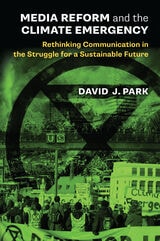
Media Reform and the Climate Emergency
Rethinking Communication in the Struggle for a Sustainable FutureDavid J. Park
University of Michigan Press, 2021
Award-winning author David J. Park argues that the battle against global warming is also a fight for media reform. With his new book Media Reform and the Climate Emergency: Rethinking Communication in the Struggle for a Sustainable Future, he critically examines how advertising, the digital infrastructure, and journalism advance the climate emergency and lays out a path of reform to help create a more sustainable world. The production and consumption of goods and services within consumer societies lead to unsustainable greenhouse gas emissions, and Park finds that much of mass communication is either dependent upon or closely tied to the success of this social organization. As a result, he suggests successful environmental movements creatively dismantle or reform institutional infrastructures that extend the planetary global warming crisis and the unsustainable consumption of nature.
Communication policies and industries are part of these infrastructures. Advertising evolved to propel a new consumer society that would encourage the over-consumption of goods and services with harmful and unsustainable production processes. Our digital infrastructure is largely premised upon the surveillance of online consumer habits and preferences, with the goal to create individualized messages to more effectively persuade people to increase their consumption habits. Much of commercial journalism resists the drastic and immediate regulatory changes necessary to address the worst aspects of this crisis. This is because so many of the needed changes challenge the media’s source of income, their libertarian philosophy, and the general status quo, which is preferred by elites. Bound to foster conversations among scholars, activists, politicians, and those who work in the communication industries, this book rethinks mass communication and highlights how immediate reform is needed in the struggle for a sustainable planet.

Media Rurality
Patrick Brodie and Darin Barney, editors
Duke University Press, 2026
Contributors. Christopher Ali, Patrick Bresnihan, Patrick Brodie, Darin Barney, Jenna Burrell, Jordan B. Kinder, Burç Köstem, Cindy Lin, Emily Ng, Lisa Parks, Anne Pasek, Esther Peeren, Nicole Starosielski, Ishita Tiwary, Hunter Vaughan, Ayesha Vemuri, Megan Wiessner, Assatu Wisseh
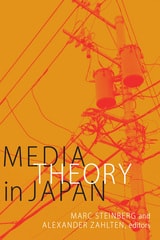
Media Theory in Japan
Marc Steinberg and Alexander Zahlten, editors
Duke University Press, 2017
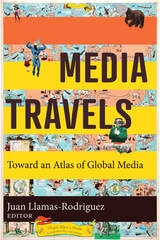
Media Travels
Toward an Atlas of Global MediaJuan Llamas-Rodriguez
Amherst College Press, 2025
Media studies courses, particularly introductory courses, are often narrowly focused on US and Western European canons. Instructors for introductory media studies courses wishing to expand the offerings in their curricula will find in these essays new ways of approaching foundational concepts and issues in the field, including globalization, social difference, and diverse media cultures. Scholars wishing to expand their research into specific media forms or representational issues can also turn to these case studies for approaches from beyond the US. By including a variety of media and several geographical areas, the collection introduces readers to the formal, technological, and cultural diversity of global media studies.
Edited by Juan Llamas-Rodriguez with contributions from Anthony Adah and Añulika Agina, Maria Corrigan, Benjamin Han, Anna Shah Hoque, Meryem Kamil, Angelica Marie Lawson, Lilia Adriana Perez Limon, Sonia Robles, Kuhu Tanvir, David Tenorio, and Rachel van der Merwe.

Media and Dependency in South Africa
A Case Study of the Press and the Ciskei “Homeland”Les Switzer
Ohio University Press, 1985
Media and Identity in Contemporary Europe
Consequences of global convergenceRichard Collins
Intellect Books, 1995
Because technological change in broadcasting has enabled us to open up media markets, the shape of media and of society has become more internationally-oriented. Indeed, modern international media has bought into question the very legitimacy of national communities and ideologies. And this is a phenomenon whose greatest impact has been in Europe.
These studies address the future of public service broadcasting and the power of national regulators to shape trans-national media relationships. The author takes an empirical approach to analysis of these issues, exploring media and communication studies very much as a social science.

Media and Management
Rutvica Andrijasevic
University of Minnesota Press, 2021
An essential account of how the media devices we use today inherit the management practices governing factory labor
This book argues that management is enabled by media forms, just as media gives life to management. Media technologies central to management have included the stopwatch, the punch card, the calculator, and the camera, while management theories are taught in printed and virtual textbooks and online through TED talks. In each stage of the evolving relationship between workers and employers, management innovations are learned through media, with media formats producing fresh opportunities for management.
Drawing on rich historical and ethnographic case studies, this book approaches key instances of the industrial and service economy—the legacy of Toyotism in today’s software industry, labor mediators in electronics manufacturing in Central and Eastern Europe, and app-based food-delivery platforms in China—to push media and management studies in new directions. Media and Management offers a provocative insight on the future of labor and media that inevitably cross geographical boundaries.
Media and Values
Intimate Transgressions in a Changing Moral and Cultural LandscapeDavid E. Morrison, Matthew Kieran, Michael Svennevig and Sarah Ventress
Intellect Books, 2007
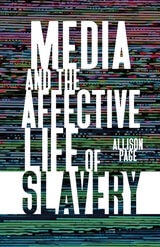
Media and the Affective Life of Slavery
Allison Page
University of Minnesota Press, 2022
How media shapes our actions and feelings about race
Amid fervent conversations about antiracism and police violence, Media and the Affective Life of Slavery delivers vital new ideas about how our feelings about race are governed and normalized by our media landscape. Allison Page examines U.S. media from the 1960s to today, analyzing how media culture instructs viewers to act and feel in accordance with new racial norms created for an era supposedly defined by an end to legal racism.
From the classic television miniseries Roots to the edutainment video game Mission 2: Flight to Freedom and the popular website slaveryfootprint.org, Media and the Affective Life of Slavery provides an in-depth look at the capitalist and cultural artifacts that teach the U.S. public about slavery. Page theorizes media not only as a system of representation but also as a technology of citizenship and subjectivity, wherein race is seen as a problem to be solved. Ultimately, she argues that visual culture works through emotion, a powerful lever for shaping and managing racialized subjectivity.
Media and the Affective Life of Slavery delivers compelling, provocative material and includes a wealth of archival research into such realms as news, entertainment, television, curricula, video games, and digital apps, providing new and innovative scholarship where none currently exists.
Media in Europe Today
Edited by Josef Trappel, Werner A. Meier, Leen d’Haenens, Jeanette Steemers, and Barbara Thomass for the Euromedia Research Group
Intellect Books, 2011
Media in Europe Today provides a comprehensive overview of European media in its current state of transformation. Through a focus on specific European media sectors, it assesses the impact of new technologies across industries and addresses a wide range of practices, strategies, and challenges facing European media today. The Euromedia Research Group has more than twenty years of experience in the observation of trends affecting media today, and this book marks the strong continuation of that long tradition.
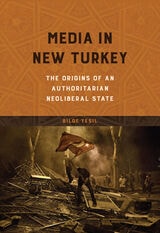
Media in New Turkey
The Origins of an Authoritarian Neoliberal StateBilge Yesil
University of Illinois Press, 2016
Yesil confronts essential questions regarding: the role of the state and military in building the structures that shaped Turkey's media system; media adaptations to ever-shifting contours of political and economic power; how the far-flung economic interests of media conglomerates leave them vulnerable to state pressure; and the ways Turkey's politicized judiciary criminalizes certain speech.
Drawing on local knowledge and a wealth of Turkish sources, Yesil provides an engrossing look at the fault lines carved by authoritarianism, tradition, neoliberal reform, and globalization within Turkey's increasingly far-reaching media.
Media in the Enlarged Europe
Politics, Policy and IndustryEdited by Alec Charles
Intellect Books, 2009
Looking beyond national and cultural boundaries, Media in the Enlarged Europe focuses on the complexity and instability of the European Union and its relationship with the mass media. Contributors to this volume address the continuing growth and expansion of the European Union, relationships between old and new Europe, and social and political developments in the former communist countries. Media in the Enlarged Europe presents snapshots of media politics, policies, industries, and cultures in the European Union as a whole, while incorporating case studies of the history and current state of mass media in specific nations. This will be an essential volume for students and experts in media studies, international relations, and international studies.
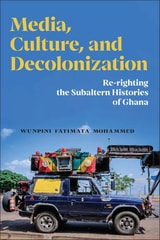
Media, Culture, and Decolonization
Re-righting the Subaltern Histories of GhanaWunpini Fatimata Mohammed
Rutgers University Press, 2026
Media, Culture, and Decolonization: Re-righting the Subaltern Histories of Ghana invites us to look at media and culture from a decolonial perspective. Through Dagbaŋ epistemologies and knowledge systems, this book examines media by highlighting how African languages, cultures, and traditions can shift how we think of knowledge. It is an offering to anyone curious about the relationship between culture, language, and media. By focusing on African language media in Ghana such as film, television, and radio, the book emphasizes the importance of espousing a decolonial politic and praxis in the process of co-creating knowledge with Indigenous communities. It connects the struggles of global majority countries and demonstrates the ways in which (neo)colonialism and imperialism impede the work toward liberatory futures. This book demonstrates the potential that African language media hold as tools of cultural and epistemological decolonization.
Media, Democracy and European Culture
Edited by Ib Bondebjerg and Peter Madsen
Intellect Books, 2008
Media, Democracy and European Culture presents up-to-date and cutting-edge research on the political and cultural dimension of democracy in Europe and its representation in the media. This interdisciplinary volume brings together the work of some of the most prominent European scholars in media, political science, sociology, cultural studies and law. The contributors explore issues of globalization, the role of the media and communication policy to order to provide a comparative country-to-country look at how the media constructs European identity. This timely and forward-looking collection will be of interest to scholars of media, international and cultural studies.

Media, Erotics, and Transnational Asia
Purnima Mankekar and Louisa Schein, eds.
Duke University Press, 2012
Judith Farquhar examines how health magazines serve as sources of both medical information and erotic titillation to readers in urban China. Tom Boellstorff analyzes how queer zines produced in Indonesia construct the relationship between same-sex desire and citizenship. Purnima Mankekar examines the rearticulation of commodity affect, erotics, and nation on Indian television. Louisa Schein describes how portrayals of Hmong women in videos shot in Laos create desires for the homeland among viewers in the diaspora. Taken together, the essays offer fresh insights into research on gender, erotics, media, and Asia transnationally conceived.
Contributors. Anne Allison, Tom Boellstorff, Nicole Constable, Heather Dell, Judith Farquhar, Sarah L. Friedman, Martin F. Manalansan IV, Purnima Mankekar, Louisa Schein, Everett Yuehong Zhang
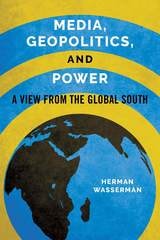
Media, Geopolitics, and Power
A View from the Global SouthHerman Wasserman
University of Illinois Press, 2018
Herman Wasserman analyzes the debates surrounding South Africa's new media presence against the backdrop of rapidly changing geopolitics. His exploration reveals how South African disputes regarding access to, and representation in, the media reflect the domination and inequality in the global communication sphere. Optimists see post-apartheid media as providing a vital space that encourages exchanges of opinion in a young democracy. Critics argue the public sphere mirrors South Africa's past divisions and privileges the viewpoints of the elite. Wasserman delves into the ways these simplistic narratives obscure the country's internal tensions, conflicts, and paradoxes even as he charts the diverse nature of South African entry into the global arena.
Media, Markets and Public Spheres
European Media at the CrossroadsEdited by Jostein Gripsrud and Lennart Weibull
Intellect Books, 2010
Using a sample of European newspapers and their TV listings as a stepping stone, Media, Markets and Public Spheres presents an overview of changes in European public spheres over the last fifty years. With in-depth analyses of structural changes in press and broadcasting, changing relations between media, and changes in media policies, this book explores how and why the media decisively influence most aspects of society. Media, Markets and Public Spheres will be useful to students in media and communication studies and European studies, as well as for those studying sociology and political science.
Media, Monarchy and Power
Neil Blain and Hugh O'Donnell
Intellect Books, 2013
Media, Nationalism and European Identities
Karol Jakubowicz
Central European University Press, 2011
Media, Technology, and Society
Theories of Media EvolutionW. Russell Neuman
University of Michigan Press, 2010
"This book is the perfect primer for understanding media in the digital age. We are in an era when newspaper, radio, and television are fast becoming archeological concepts. Herein are the reasons why."
---Nicholas Negroponte, founder and chairman of One Laptop per Child and cofounder of the MIT Media Laboratory
"Congratulations to Neuman and colleagues for a fascinating exploration of how previous new media were constructed, whether things could have been otherwise, and what can be learned for future media."
---Sonia Livingstone, Department of Media and Communications, the London School of Economics and Political Science
In Media, Technology, and Society, some of the most prominent figures in media studies explore the issue of media evolution. Focusing on a variety of compelling examples in media history, ranging from the telephone to the television, the radio to the Internet, these essays collectively address a series of notoriously vexing questions about the nature of technological change. Is it possible to make general claims about the conditions that enable or inhibit innovation? Does government regulation tend to protect or thwart incumbent interests? What kinds of concepts are needed to address the relationship between technology and society in a nonreductive and nondeterministic manner? To what extent can media history help us to understand and to influence the future of media in constructive ways? The contributors' historically grounded responses to these questions will be relevant to numerous fields, including history, media and communication studies, management, sociology, and information studies.
W. Russell Neuman is John Derby Evans Professor of Media Technology and Research Professor, Center for Political Studies, Institute for Social Research, at the University of Michigan.
DIGITALCULTUREBOOKS: a collaborative imprint of the University of Michigan Press and the University of Michigan Library