Results by title
2728 books match the query 'Education' and 106 start with m

Meeting at the Hyphen
Schools-Universities-Communities-Professions in Collaboration for Student Achievement and Well BeingEdited by Mary M. Brabeck, Mary E. Walsh, and Rachel Latta
University of Chicago Press, 2003
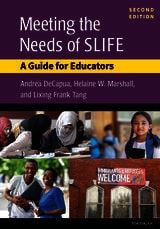
Meeting the Needs of SLIFE, Second Ed.
A Guide for EducatorsAndrea DeCapua, Helaine W. Marshall, and Lixing Frank Tang
University of Michigan Press, 2020
Like its predecessor, this book is grounded in research and is designed to be an accessible and practical resource for teachers, staff, and administrators who work with students with limited or interrupted formal education. Chapters 3-5 focus on classroom instruction, but others address issues of concern to administrators and staff too. For example, Chapter 6 explores different program models for SLIFE instruction, but the planning and commitment to creating a successful program require the involvement of many across the school community, not just teachers.
This edition features case studies, model programs, and teaching techniques and tips; also included is a new chapter focused on the Mutually Adaptive Learning Paradigm (MALP (R)). A major theme of this new edition is moving school personnel away from a deficit perspective, when it comes to teaching SLIFE, and toward one of difference. The goal is to help all stakeholders in the school community create and foster inclusion of, and equity for, a population that is all too often marginalized, ignored, and underserved.
Mere and Easy
Collage as a Critical Practice in PedagogyEdited by Jorge Lucero
University of Illinois Press, 2017
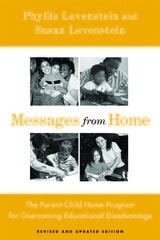
Messages From Home
The Parent-Child Home Program For Overcoming Educational DisadvantagePhyllis Levenstein and Susan Levenstein
Temple University Press, 2008
The Parent-Child Home Program, a pre-preschool home visiting program, has grown greatly since the first edition of Messages from Home was published in 1988. This expanded and updated edition shows the continued success of this program-spearheaded by the late Phyllis Levenstein-which prepares at-risk children for school success, overcoming educational disadvantage.
Since The Parent-Child Home Program was founded in the 1960s, it has enriched the cognitive, social, and emotional school readiness of tens of thousands of children. The Program's methods, its theoretical underpinnings, and its impressive results are presented in detail. The success stories of both parents and children make inspiring reading. The combination of lively writing and data-driven scientific rigor give it both broad appeal and academic relevance.
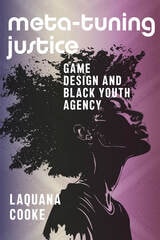
Meta-Tuning Justice
Game Design and Black Youth AgencyLaquana Cooke
University of Massachusetts Press, 2026
Exploring how Black youth are reshaping game design to dismantle stereotypes and spark social change
In the early 2000s, digital gaming rose to cultural and economic prominence. Communities of color, however, and especially Black youth, were largely excluded from gaming culture. The rare Black character in games tended to reinforce stereotypes, while racial bias was often surreptitiously embedded in game design platforms—what decolonial scholars call “whitestream” computing. Progressive game design education initiatives and new technologies have recently begun to dismantle these barriers. Yet, because biases remain, historically excluded young people still need to actively reconfigure these digital spaces to fully develop and convey their own perspectives.
In Meta-Tuning Justice, digital rhetoric scholar Laquana Cooke explores how Black youth express cultural identity and challenge dominant narratives through innovative game design. Cooke introduces the Transformative Constructionist Learning (TCL) paradigm and its core theory of “meta-tuning”—the idea that students are better able to adjust to new challenges through trial-and-error and experimentation in educational environments that correspondingly adjust to their evolving learning needs. In contrast to traditional education practices, which assume the neutrality of technology, Cooke approaches it as a tool for social transformation. Drawing on the TCL paradigm, she explores how the unique cultural algorithms and expressions (like popping and locking dance forms) that inform the programming and designs of Black youth represent a powerful form of resistance and creation.
Through rich ethnographic case studies across multiple educational settings, and with gaming as its experimental center, this book presents a compelling vision of how TCL and meta-tuning can help make technologies more equitable. Cooke’s innovative study offers insights crucial to scholars and practitioners in game studies, Science and Technology Studies, STEM education, and racial equity in digital learning.

Metamorphoses
Memoirs of a Life in MedicineWilliam G. Anlyan, M. D.
Duke University Press, 2004
Born in Alexandria, Egypt, in 1925, and schooled in the British tradition, Anlyan attended Yale University as an undergraduate and medical student before coming to the relatively unknown medical school at Duke University in 1949 for an internship in general and thoracic surgery. He stayed on, first as a resident, then as a staff surgeon. By 1961, he was a full professor of surgery. In 1964, Anlyan was named dean of the medical school, the first in a series of administrative posts at the medical school and hospital. Anlyan’s role in the transformation of the Duke University Medical Center into an internationally renowned health system is manifest: he restructured the medical school and hospital and supervised the addition of almost four million square feet of new or renovated space. He hired outstanding administrators and directed a staff that instituted innovative programs and groundbreaking research centers, such as the Cancer Center and the Physician’s Assistant Program.
Anlyan describes a series of metamorphoses in his own life, in the world of medicine, in Durham, and at Duke. At the time of his prep school upbringing in Egypt, medicine was a matter of controlling infectious diseases like tuberculosis and polio. As he became an immigrant medical student and then a young surgeon, he observed vast advances in medical practice and changes in the financing of medical care. During his tenure at Duke, Durham was transformed from a sleepy mill and tobacco town into the “City of Medicine,” a place where patients routinely travel for open-heart surgery and cutting-edge treatments for cancer and other diseases.
Anyone interested in health care, medical education, and the history of Duke University will find Anlyan’s memoir of interest.
Methods That Matter
Integrating Mixed Methods for More Effective Social Science ResearchEdited by M. Cameron Hay
University of Chicago Press, 2016
Historically, the largest division between social science methods has been that between quantitative and qualitative measures. For people trained in psychology or sociology, the bias has been toward the former, using surveys and experiments that yield readily comparable numerical results. For people trained in anthropology, it has been toward the latter, using ethnographic observations and interviews that offer richer nuances of meaning but are difficult to compare across societies. Discussing their own endeavors to combine the quantitative with the qualitative, the authors invite readers into a conversation about the best designs and practices of mixed methodologies to stimulate creative ideas and find new pathways of insight. The result is an engaging exploration of a promising new approach to the social sciences.
Mexican Americans and Education
El saber es poderEstela Godinez Ballón
University of Arizona Press, 2015
Mexican Americans and Education begins with a brief overview of historical educational conditions that have impacted the experiences and opportunities of Mexican American students, and moves into an examination of major contemporary institutional barriers to academic success, including segregation, high-stakes testing, and curriculum tracking. Ballón also explores the status of Mexican American students in higher education and introduces theories and pedagogies that aim to understand and improve school conditions. Through her extensive examination of the major issues impacting Mexican American students, Ballón provides a broad introduction to an increasingly relevant topic.
Ballón uses understandable and accessible language to examine institutional and ideological factors that have negatively impacted Mexican Americans’ public school experiences, while also focusing on their strengths and possibilities for future action. This unique overview serves as a foundation for both education and Chicana/o studies courses, as well as in teacher and professional development.
Michigan Journal of Community Service Learning
Volume 23 Number 1 - Fall 2016Jeffrey Howard, editor
Michigan Publishing Services, 2017
Each issue consists of articles at the cutting edge of research, theory, pedagogy, and other matters related to academic service-learning, campus-community partnerships, and engaged, public scholarship in higher education that extend the knowledge base and support and strengthen researchers’ and practitioners’ work. We also publish review essays of newly-released books pertinent to service-learning and community engagement.
Michigan Journal of Community Service Learning
Volume 23 Number 2 - Spring 2017Jeffrey Howard, editor
Michigan Publishing Services, 2017
Each issue consists of articles at the cutting edge of research, theory, pedagogy, and other matters related to academic service-learning, campus-community partnerships, and engaged, public scholarship in higher education that extend the knowledge base and support and strengthen researchers’ and practitioners’ work. We also publish review essays of newly-released books pertinent to service-learning and community engagement.

Michigan Journal of Community Service Learning
Volume 24 Number 1 - Winter 2017Jeffrey Howard
Michigan Publishing Services, 2017
Launched in 1994, the Michigan Journal of Community Service Learning (MJCSL) is an international, peer-reviewed, multi-disciplinary academic journal for college and university faculty and administrators, with an editorial board and cadre of peer reviewers representing faculty from many higher education disciplines and professional fields. It is a publication of the University of Michigan’s Ginsberg Center.
Each issue consists of articles at the cutting edge of research, theory, pedagogy, and other matters related to academic service-learning, campus-community partnerships, and engaged, public scholarship in higher education that extend the knowledge base and support and strengthen researchers’ and practitioners’ work. We also publish review essays of newly-released books pertinent to service-learning and community engagement.
Michigan One-Room Schoolhouses
Mary Keithan
University of Michigan Press, 2008
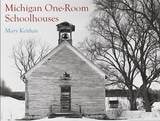
Nostalgic reminders of a time now past, one-room schoolhouses are deeply embedded in our heritage. Decades after their original purpose and inhabitants have vanished, they dot the rural landscape in all conditions, from neglected and near collapse to handsomely renovated places repurposed into a new existence as living quarters. Today no matter their state they stand as miniature gems of nineteenth-century American history as well as charming examples of rural architecture---above all, things to be treasured and preserved. Mary Keithan's Michigan One-Room Schoolhouses is a beautifully illustrated chronicle that details nearly a hundred of the state's early schoolhouses. Together with information about each schoolhouse's architecture and history, including interviews with former students and teachers, Keithan's photographs bring these structures back to life and assure their place in history.
Mary Keithan is a professional photographer living in Ray, Michigan. Her previous books include Michigan's Heritage Barns and A Time in Michigan: A Photographic Series. New York Times critic Vicki Goldberg selected Keithan's 1995 image "Desert Storm Barn" for the Light Impression Biennial.
Michigan State University
The Rise of a Research University and the New Millennium, 1970-2005Douglas A. Noverr
Michigan State University Press, 2015
Through the vicissitudes of government funding and other challenges, the university has established itself as a renowned research and educational institution with a remarkably rich array of facilities, scientists, and researchers who continue to make landmark contributions to their fields. At the same time it has strived to be known for its accessibility, diversity, equality of opportunity, and antidiscrimination policies and practices. Michigan State University sheds new light on the growth of this dynamic and multifaceted institution.

Michigan's County Courthouses
John Fedynsky
University of Michigan Press, 2011
John Fedynsky documents in narrative and photos every county courthouse of Michigan's eighty-three counties, as well as the Michigan Hall of Justice. These buildings are symbols: physically they stand, but figuratively they speak. They embody the purposes for which they were created: law, order, justice, and the promise of a better tomorrow.
Fedynsky tells the story of each building. For Michigan, the typical evolution begins in the cabin, tavern, or hotel of a prominent local settler and progresses through incarnations of simple log or wooden clapboard, and then opulent stone or brick, before the structure arrives in modern and utilitarian form. But there are myriad exceptions to this rule, and they add to the diversity of Michigan's county courthouses.
In Fedynsky's descriptions, verifiable facts and local lore weave together in dramatic tales of outrageous crime, courtroom intrigue, backroom dealing, jury determination, and judicial prerogative. Released jail inmates assist with evacuating and extinguishing a courthouse fire, residents during a natural disaster seek and find physical refuge behind the sure walls of the courthouse, and vigilant legions of homebound defenders are stationed in wartime throughout the courthouse towers scanning the skies for signs of foreign aircraft.
Then there are the homey touches that emphasize the "house" half of Michigan's courthouses: local folks dropping off plants in the courthouse atrium to use it as a winter greenhouse, cows grazing on the public square, county fairs in or near the courthouse, and locally made artwork hanging in public hallways. The courthouses bear within their walls a richness of soul endowed by the good people who make each one special.
Cover design by Heidi Dailey
Cover photos: John Fedynsky
Microcomputers and Education
Edited by Jack Culbertson and Luvern L. Cunningham
University of Chicago Press, 1986

Mind The Gap
The Education Of A Nature WriterJohn Hay
University of Nevada Press, 2006

Mindful Movement
The Evolution of the Somatic Arts and Conscious ActionMartha Eddy
Intellect Books, 2016
Minding Bodies
How Physical Space, Sensation, and Movement Affect LearningSusan Hrach
West Virginia University Press, 2021
What happens to teaching when you consider the whole body (and not just “brains on sticks”)?
Starting from new research on the body—aptly summarized as “sitting is the new smoking”—Minding Bodies aims to help instructors improve their students’ knowledge and skills through physical movement, attention to the spatial environment, and sensitivity to humans as more than “brains on sticks.” It shifts the focus of adult learning from an exclusively mental effort toward an embodied, sensory-rich experience, offering new strategies to maximize the effectiveness of time spent learning together on campus as well as remotely.
Minding Bodies draws from a wide range of body/mind research in cognitive psychology, kinesiology, and phenomenology to bring a holistic perspective to teaching and learning. The embodied learning approaches described by Susan Hrach are inclusive, low-tech, low-cost strategies that deepen the development of disciplinary knowledge and skills. Campus change-makers will also find recommendations for supporting a transformational mission through an attention to students’ embodied learning experiences.

Minnesota History
A Study OutlineTheodore C. Blegen
University of Minnesota Press, 1931
Minnesota History was first published in 1931. Minnesota Archive Editions uses digital technology to make long-unavailable books once again accessible, and are published unaltered from the original University of Minnesota Press editions.

Minnesota History
Guide to Reading and StudyTheodore C. Blegen
University of Minnesota Press, 1960
Minnesota History was first published in 1960. Minnesota Archive Editions uses digital technology to make long-unavailable books once again accessible, and are published unaltered from the original University of Minnesota Press editions.
Anyone interested in Minnesota history, whether as a teacher, as a student, or as a general reader, will find this an invaluable guide to reading and study. The book contains an outline of the state's history, questions and suggestions for the student, and lists of reading material for each of the 42 topical sections into which the outline is divided.
The outline covers the entire history of the state from the time of the Indians, before the French and British explorations, to the present. The reading references include accounts written from the seventeenth through the twentieth centuries. The aim in preparing the reading lists was to include any article or book bearing upon the Minnesota story which met the qualifications of good historical writing and fair accessibility. Materials of particular interest or importance to the topic under consideration are so designated, and there are liberal annotations to help the reader in his choice of readings. References which are particularly appropriate for young readers are also specially designated. A number of maps are provided for additional guidance.
This is a complete revision of a book long out of print, Minnesota History: A Study Outline by Theodore C. Blegen.
Minor Re/Visions
Asian American Literacy Narratives as a Rhetoric of CitizenshipMorris Young
Southern Illinois University Press, 2004
Through a blend of personal narrative, cultural and literary analysis, and discussions about teaching, Minor Re/Visions: Asian American Literacy Narratives as a Rhetoric of Citizenship shows how people of color use reading and writing to develop and articulate notions of citizenship. Morris Young begins with a narration of his own literacy experiences to illustrate the complicated relationship among literacy, race, and citizenship and to reveal the tensions that exist between competing beliefs and uses of literacy among those who are part of dominant American culture and those who are positioned as minorities.
Influenced by the literacy narratives of other writers of color, Young theorizes an Asian American rhetoric by examining the rhetorical construction of American citizenship in works such as Richard Rodriguez’s Hunger of Memory, Victor Villanueva’s Bootstraps: From an American Academic of Color, Carlos Bulosan’s America Is in the Heart, and Maxine Hong Kingston’s “Song for a Barbarian Reed Pipe” from Woman Warrior. These narratives, Young shows, tell stories of transformation through education, the acquisition of literacy, and cultural assimilation and resistance. They also offer an important revision to the American story by inserting the minor and creating a tension amid dominant discourses about literacy, race, and citizenship. Through a consideration of the literacy narratives of Hawai`i, Young also provides a context for reading literacy narratives as responses to racism, linguistic discrimination, and attempts at “othering” in a particular region.
As we are faced with dominant discourses that construct race and citizenship in problematic ways and as official institutions become even more powerful and prevalent in silencing minor voices, Minor Re/Visions reveals the critical need for revising minority and dominant discourses. Young’s observations and conclusions have important implications for the ways rhetoricians and compositionists read, teach, and assign literacy narratives.

Mirage-Land
Images of NevadaWilbur S. Shepperson
University of Nevada Press, 1996
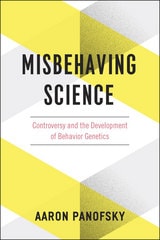
Misbehaving Science
Controversy and the Development of Behavior GeneticsAaron Panofsky
University of Chicago Press, 2014
In Misbehaving Science, Aaron Panofsky traces the field of behavior genetics back to its origins in the 1950s, telling the story through close looks at five major controversies. In the process, Panofsky argues that persistent, ungovernable controversy in behavior genetics is due to the broken hierarchies within the field. All authority and scientific norms are questioned, while the absence of unanimously accepted methods and theories leaves a foundationless field, where disorder is ongoing. Critics charge behavior geneticists with political motivations; champions say they merely follow the data where they lead. But Panofsky shows how pragmatic coping with repeated controversies drives their scientific actions. Ironically, behavior geneticists’ struggles for scientific authority and efforts to deal with the threats to their legitimacy and autonomy have made controversy inevitable—and in some ways essential—to the study of behavior genetics.
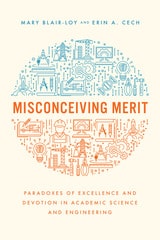
Misconceiving Merit
Paradoxes of Excellence and Devotion in Academic Science and EngineeringMary Blair-Loy and Erin A. Cech
University of Chicago Press, 2022
In Misconceiving Merit, sociologists Mary Blair-Loy and Erin A. Cech uncover the cultural foundations of a paradox. On one hand, academic science, engineering, and math revere meritocracy, a system that recognizes and rewards those with the greatest talent and dedication. At the same time, women and some racial and sexual minorities remain underrepresented and often feel unwelcome and devalued in STEM. How can academic science, which so highly values meritocracy and objectivity, produce these unequal outcomes?
Blair-Loy and Cech studied more than five hundred STEM professors at a top research university to reveal how unequal and unfair outcomes can emerge alongside commitments to objectivity and excellence. The authors find that academic STEM harbors dominant cultural beliefs that not only perpetuate the mistreatment of scientists from underrepresented groups but hinder innovation. Underrepresented groups are often seen as less fully embodying merit compared to equally productive white and Asian heterosexual men, and the negative consequences of this misjudgment persist regardless of professors’ actual academic productivity. Misconceiving Merit is filled with insights for higher education administrators working toward greater equity as well as for scientists and engineers striving to change entrenched patterns of inequality in STEM.
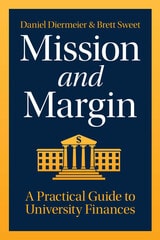
Mission and Margin
A Practical Guide to University FinancesDaniel Diermeier and Brett C. Sweet
University of Chicago Press, 2025
An insider’s guide to university finances, for non-insiders.
The finances of higher education have never been more challenging. From two-year institutions to the Ivy Leagues, from department chairs to provosts, administrators face revenue shortfalls and financial insecurity. A fundamental understanding of financial management is more essential than ever for university leaders at every level—as is a true partnership between academic leaders and their CFOs.
In Margin and Mission, Daniel Diermeier and Brett Sweet distill the principles for successful financial management in higher education, based on their work together at Vanderbilt University. Their concise, practical guide develops the reader’s understanding step-by-logical-step with the help of real-world examples. Margin and Mission aims to give university leaders, from board members to department chairs, the knowledge to make sound economic decisions that preserve their institutions’ purpose—even in the face of uncertainty.

Mission on the Rhine
"Reeducation" and Denazification in American-Occupied GermanyJames F. Tent
University of Chicago Press, 1982
For this meticulously researched study, James F. Tent has drawn on a wealth of recently declassified documents and on numerous personal interviews with veterans of the Occupation. He brings to life not only the dilemmas American officials faced in balancing the need for a political purge against the need to rehabilitate a disrupted society but also the paradoxes involved in a democracy's attempt to impose its ideals on another people. His book chronicles the dedicated work of many Americans; it also illuminates America's Occupation experience as a whole.
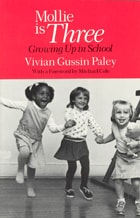
Mollie Is Three
Growing Up in SchoolVivian Gussin Paley
University of Chicago Press, 1986
Mollie Is Three describes a year in the life of a little girl and her preschool classmates in a nursery school classroom run by Vivian Gussin Paley, whose groundbreaking ideas about the best way to teach young children continue to be influential today. We first encounter Mollie on the first day of school, just before her third birthday, and we follow her and her classmates for the next year. Alongside her, we go from confusion and uncertainty in new surroundings to growing understanding and confidence, as patterns emerge and Mollie begins to grasp their significance--and her teacher begins to understand how to track her growth and development.
Rather than offer an account of an idealized, all but imaginary child, Paley presents us with one actual kid, in all their complexity and confusion. The result is a landmark contribution to our understanding of child development and the role early education can play in fostering it.
Money, Mandates, and Local Control in American Public Education
Bryan Shelly
University of Michigan Press, 2013
Pointing to the disparities between wealthy and impoverished school districts in areas where revenue depends primarily upon local taxes, reformers repeatedly call for the centralization of school funding. Their proposals meet resistance from citizens, elected officials, and school administrators who fear the loss of local autonomy.
Bryan Shelly finds, however, that local autonomy has already been compromised by federal and state governments, which exercise a tremendous amount of control over public education despite their small contribution to a school system's funding. This disproportionate relationship between funding and control allows state and federal officials to pass education policy yet excuses them from supplying adequate funding for new programs. The resulting unfunded and underfunded mandates and regulations, Shelly insists, are the true cause of the loss of community control over public education.
Shelly outlines the effects of the most infamous of underfunded federal mandates, the No Child Left Behind Act of 2001 (NCLB), and explores why schools implemented it despite its unpopularity and out-of-pocket costs. Shelly's findings hold significant implications for school finance reform, NCLB, and the future of intergovernmental relations.
Moral Enterprise
Literature and Education in Antebellum AmericaDerek Pacheco
The Ohio State University Press, 2013

Moral Principles
John Dewey. Preface by Sidney Hook
Southern Illinois University Press, 1975
Moral Problems in Higher Education
Steven Cahn
Temple University Press, 2011
Moral Problems in Higher Education brings together key essays that explore ethical issues in academia. The editor and contributors-all noted philosophers and educators-consider such topics as academic freedom and tenure, free speech on campus, sexual harassment, preferential student admissions, affirmative action in faculty appointments, and the ideal of a politically neutral university. Chapters address possible restrictions on research because of moral concerns, the structure of peer review, telling the truth to colleagues and students, and concerns raised by intercollegiate athletics.
Cahn selects two key readings in each area to offer a readable introductory guide to these critical subjects for students studying academic ethics and higher education policy. In addition to the selections and a general introduction, Cahn provides study questions for use in the classroom.
Contributors include Scott F. Aikin, Derek Bok, William G. Bowen, Myles Brand, Richard T. DeGeorge, Paul D. Eisenberg, Leslie Pickering Francis, Martin P. Golding, Philip Kitcher, Charles R. Lawrence III, David Lewis, Paul J. Olscamp, Nancy Tuana, David Shatz, George Sher, Robert L. Simon, Robert B. Talisse, Stephan Thernstrom, Abigail Thernstrom, Laurence Thomas, Robert Paul Wolff, and the editor.

More Than Science and Sputnik
The National Defense Education Act of 1958Wayne J. Urban
University of Alabama Press, 2010
Sparked by dramatic Soviet achievements, particularly in nuclear technology and the development of the Sputnik space orbiter, the United States responded in the late 1950s with an extraordinary federal investment in education. Designed to overcome a perceived national failure to produce enough qualified scientists, engineers, and mathematicians to compete with the Communist bloc, the effort resulted in the National Defense Education Act of 1958 (NDEA). Representative Carl Elliott and Senator Lister Hill both from Alabama, and then Assistant Secretary of Health, Education, and Welfare, Elliot Richardson were the prime movers in shaping of this landmark legislation.
More than Science and Sputnik analyzes primary documents of the three leaders to describe the political process that established the NDEA. The book illustrates what the assumptions of the key players were, and why they believed the act was needed.
More than Lore
Reminiscences of Marion TalbotMarion Talbot
University of Chicago Press, 2015
Originally published in 1936, More than Lore is a unique firsthand account of the early days of the university, capturing the excitement and travails of life on an academic frontier. Talbot shares gossip from the faculty lounge, relays student antics in the dorms, and tells stories from the living rooms of Hyde Park. It’s also a fascinating look at life as an early twentieth-century college woman, with scandals over improper party invitations and underground sororities, petitions calling for more female professors, and campaigns to have students be known as “university women” instead of “college girls.” With Talbot as our guide, we reenter a lost world where simply to be a woman was to be a pioneer and where the foundations of the modern undergrad experience were being established.
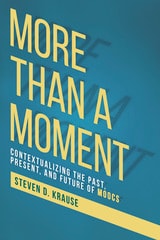
More than a Moment
Contextualizing the Past, Present, and FutureSteven D. Krause
Utah State University Press, 2019
Krause writes about his own experiences as a participant in several MOOCs and the experiences of faculty who developed and taught MOOCs. Contrary to many early claims from educational entrepreneurs, they were never entirely “new,” and MOOCs and their aftermath are still at the heart of the tensions between nonprofit universities and for-profit entities, particularly online program management firms, in delivering distance education.
While MOOCs are no longer a threat to education in the United States, they are part of the ongoing corporatization of education and remain part of conversations about experienced-based credit, corporate training, and open education. Presenting historical, student, teacher, and administrative perspectives, More than a Moment is a well-rounded treatment that will be of interest to academics and entrepreneurs interested in distance education, online pedagogy, online program management, and public-private partnerships in higher education.
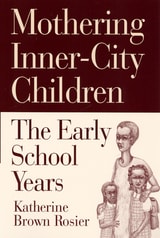
Mothering Inner-City Children
The Early School YearsKatherine Brown Rosier
Rutgers University Press, 2000
There are few groups more stereotyped and demonized than "welfare mothers," particularly low-income, African American women raising children in the inner city. But what are the day-to-day stories behind the stereotypes? How do African American mothers (both single women and those living with a partner) in poor families handle their roles as parents? What support networks do they rely on to help raise their children? How do their personal histories affect their parenting styles?
Sociologist Katherine Brown Rosier spent three years interviewing and observing Indianapolis mothers as their children made the transition from a Head Start program to kindergarten and through second grade, analyzing the families in their homes, schools, and other social settings. She brings forth the voices of the mothers, children, and their teachers, providing a multifaceted picture of how low-income African American families cope with the daily pressures and responsibilities of child rearing.
Rosier also examines how larger socio-economic factors influence these families' specific circumstances and histories. What child-rearing strategies do these mothers employ, she asks, to promote a smooth transition into school despite complex discontinuities among their homes, schools, and communities? How are these strategies viewed and supported or impeded by teachers, family, friends, and neighbors?
Until now, most research on poor African American families has focused so intently on the problems confronted by this seemingly homogenous group that the routine practices of every day life have been ignored. In this unique project, Rosier allows the families' individual experiences and thoughts to contribute to and complicate current research.
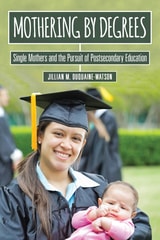
Mothering by Degrees
Single Mothers and the Pursuit of Postsecondary EducationDuquaine-Watson, Jillian M.
Rutgers University Press, 2017
In Mothering by Degrees, Jillian Duquaine-Watson shows how single mothers pursuing college degrees must navigate a difficult course as they attempt to reconcile their identities as single moms, college students, and in many cases, employees. They also negotiate a balance between what they think a good mother should be, and what society is telling them, and how that affects their choices to go to college, and whether to stay in college or not.
The first book length study to focus on the lives and experiences of single mothers who are college students, Mothering by Degrees points out how these women are influenced by dominant American ideologies of motherhood, and the institutional parameters of the schools they attend, and argues for increased attention to the specific ways in which the choices, challenges, and opportunities available to mothers are shaped within their specific environments, as well as the ways in which mothers help shape those environments...
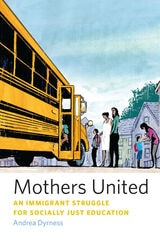
Mothers United
An Immigrant Struggle for Socially Just EducationAndrea Dyrness
University of Minnesota Press, 2010
In Mothers United, Andrea Dyrness chronicles the experiences of five Latina immigrant mothers in Oakland, California—one of the most troubled urban school districts in the country—as they become informed and engaged advocates for their children’s education. These women, who called themselves “Madres Unidas” (“Mothers United”), joined a neighborhood group of teachers and parents to plan a new, small, and autonomous neighborhood-based school to replace the overcrowded Whitman School. Collaborating with the author, among others, to conduct interviews and focus groups with teachers, parents, and students, these mothers moved from isolation and marginality to take on unfamiliar roles as researchers and community activists while facing resistance from within the local school district.
Mothers United illuminates the mothers’ journey to create their own space—centered around the kitchen table—that enhanced their capacity to improve their children’s lives. At the same time, Dyrness critiques how community organizers, teachers, and educational policy makers, despite their democratic rhetoric, repeatedly asserted their right as “experts,” reproducing the injustice they hoped to overcome. A powerful, inspiring story about self-learning, consciousness-raising, and empowerment, Mothers United offers important lessons for school reform movements everywhere.
Mothers, Daughters, and Political Socialization
Two Generations at an American Women's CollegeKrista Jenkins
Temple University Press, 2013
Using a unique data set comparing mothers and daughters who attended Douglass College—the women's college of Rutgers University—twenty-five years apart, Krista Jenkins perceptively observes the changes in how women acquire their attitudes toward gender roles and behaviors in the post-women's movement years.
Mothers, Daughters, and Political Socialization examines the role of intergenerational transmission—the maternal influences on younger women—while also looking at differences among women in attitudes and behaviors relative to gender roles that might be attributed to the nature of the times during their formative years. How do daughters coming of age in an era when the women's movement is far less visible deal with gendered expectations compared to their mothers? Do they accept the contemporary status quo their feminist mothers fought so hard to achieve? Or, do they press forward with new goals?
Jenkins shows how contemporary women are socialized to accept or reject traditional gender roles that serve to undermine their equality.
Motivation for Learning
A Guide for the Teacher of the Young AdultStanford C. Ericksen
University of Michigan Press, 1974
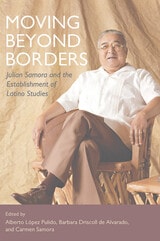
Moving Beyond Borders
Julian Samora and the Establishment of Latino StudiesEdited by Alberto Lopez Pulido, Barbara Driscoll de Alvarado, and Carmen Samora
University of Illinois Press, 2008
Moving Beyond Borders examines the life and accomplishments of Julian Samora, the first Mexican American sociologist in the United States and the founding father of the discipline of Latino studies. Detailing his distinguished career at the University of Notre Dame from 1959 to 1984, the book documents the history of the Mexican American Graduate Studies program that Samora established at Notre Dame and traces his influence on the evolution of border studies, Chicano studies, and Mexican American studies.
Samora's groundbreaking ideas opened the way for Latinos to understand and study themselves intellectually and politically, to analyze the complex relationships between Mexicans and Mexican Americans, to study Mexican immigration, and to ready the United States for the reality of Latinos as the fastest growing minority in the nation. In addition to his scholarly and pedagogical impact, his leadership in the struggle for civil rights was a testament to the power of community action and perseverance. Focusing on Samora's teaching, mentoring, research, and institution-building strategies, Moving Beyond Borders explores the legacies, challenges, and future of ethnic studies in United States higher education.
Contributors are Teresita E. Aguilar, Jorge A. Bustamante, Gilberto Cárdenas, Miguel A. Carranza, Frank M. Castillo, Anthony J. Cortese, Lydia Espinosa Crafton, Barbara Driscoll de Alvarado, Herman Gallegos, Phillip Gallegos, José R. Hinojosa, Delfina Landeros, Paul López, Sergio X. Madrigal, Ken Martínez, Vilma Martínez, Alberto Mata, Amelia M. Muñoz, Richard A. Navarro, Jesus "Chuy" Negrete, Alberto López Pulido, Julie Leininger Pycior, Olga Villa Parra, Ricardo Parra, Victor Rios, Marcos Ronquillo, Rene Rosenbaum, Carmen Samora, Rudy Sandoval, Alfredo Rodriguez Santos, and Ciro Sepulveda.
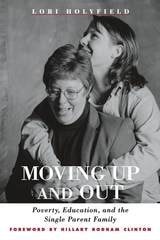
Moving Up And Out
Poverty, Education & Single Parent FamilyLori Holyfield, foreword by Hillary Rodham Clinton
Temple University Press, 2001
Multicultural Girlhood
Racism, Sexuality, and the Conflicted Spaces of American EducationMary E. Thomas
Temple University Press, 2011
High school turf wars are often a teenage rite of passage, but there are extremes—as when a race riot at a Los Angeles campus in the spring of 2005 resulted in a police lockdown. In her fascinating book,Multicultural Girlhood, Mary Thomas interviewed 26 Latina, Armenian, Filipina, African-American, and Anglo girls at this high school to gauge their responses to the campus violence. They all denounced the outbreak, calling for multicultural understanding and peaceful coexistence.
However, as much as the girls want everyone to just “get along,” they also exhibit strong racist beliefs and validate segregated social spaces on campus and beyond. How can teenagers and “girl power” work together to empower instead of alienate multicultural groups? In her perceptive book, Thomas foregrounds the spaces of teen girlhood and the role that space plays in girls' practices that perpetuate social difference, and she explains the ways we navigate the intellectual terrain between scholarship and school yard.
Multiethnic Moments
The Politics of Urban Education ReformSusan E. Clarke, Rodney E. Hero, Mara S. Sidney, Luis Fraga and Bari Anhalt Erlichson, foreword by Clarence N. Stone
Temple University Press, 2006
Multilingual Writing in Entanglement
Becoming With Others Through Chronotopic Figuring and Unpredictable EncountersXiqiao Wang
Utah State University Press, 2025
This longitudinal qualitative study follows Morgan and Leo through their undergraduate careers, collecting rich ethnographic data across private, academic, and digital spaces. The resulting theoretical framework conceptualizes multilingual writing as simultaneously strategic, agentive, creative, diffused, contingent, and messy—a phenomenon shaped by dynamic interplay between ephemeral encounters and established practices. Employing chronotopic figuring as a methodological tool, Wang illuminates aspects of multilingual writing often elided in research: fleeting encounters that energize composition, reciprocal relationships that distribute writing labor, unexpected detours that redirect the writing process, and the layering of writing and identity practices across multiple historical trajectories. This approach moves beyond examining writing in isolated moments to trace how meaning emerges across languages, modes, and spacetimes.
Multilingual Writing in Entanglement offers crucial insights into how international students strategically and improvisationally reconfigure their semiotic and rhetorical repertoires to write multilingual lives into meaning. This work is influential for scholars and educators in composition, literacy studies, multilingual education, ESL, and linguistics.
Multimodal Composing and Writing Transfer
Kara Poe Alexander
Utah State University Press, 2024
Over the past two decades the concepts of multimodal composing and writing transfer have grown and reshaped the nature of writing studies, but rarely have the ways in which these areas overlap been studied. This collection shows how this shift in writing studies has been mutually informative, covering a wider range of contexts for multimodality and writing transfer than just in first-year composition courses. It places composition teaching practices and multimodal research in conversation with learning transfer theory to provide an in-depth examination of how they influence one another.
Multimodal Composing and Writing Transfer develops these intersections to connect multimodal composition and writing practices across a wide array of fields and contexts. Scholars across disciplines, postsecondary writing teachers, writing program administrators, writing center directors, and graduate students will find this collection indispensable.
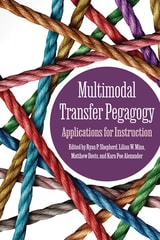
Multimodal Transfer Pedagogy
Applications for InstructionRyan P. Shepherd
Utah State University Press, 2027
Multimodal Transfer Pedagogy provides practical methods and materials for composition teachers and directors to facilitate multimodal transfer. This rich collection of resources presents new ways of incorporating digital texts, exploring modes of meaning beyond traditional print and encouraging students to think about rhetorical approaches to meaning making.
Together with its online companion materials, the book delivers a distinctive synthesis of multimodal composing practices, writing transfer research, and theory to provide clear, actionable guidance to teachers and directors to apply multimodal composition pedagogy effectively. Twenty-three chapters cover multimodal transfer pedagogy—including social media, composing with AI, visual rhetoric and design, public advocacy, tabletop games, podcasting, and more.
Multimodal Transfer Pedagogy is built from contextualized pedagogical approaches and course materials—syllabi, assignments, assessment documents—that specifically direct pedagogical application toward multimodal transfer in a range of contexts, from first-year writing to the science writing classroom and writing center. A natural follow-up to Multimodal Composition and Writing Transfer, the book introduces a unique practical-pedagogical model for implementing multimodal work in the classroom.
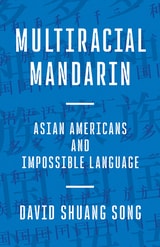
Multiracial Mandarin
Asian Americans and Impossible LanguageDavid Shuang Song
University of Minnesota Press, 2026
Understanding the entanglement of language education with ethnicity and racialization
Who has the “right” to learn Mandarin Chinese? In Multiracial Mandarin, author David Shuang Song examines how matters of race and privilege shape US Mandarin language education and who has access to it. Through a two-year ethnographic study of two Bay Area high schools where diasporic and heritage speakers learn Mandarin alongside Black and Latinx students, Song advances a sociological and educational–linguistic inquiry into how language interacts with our understanding of identity and equity.
Comparing classroom activities in two public schools, Song investigates teachers who seek to make Mandarin accessible while detaching it from its cultural roots. As he explores the difficulties of limited resources, racial inequality, and pedagogical practices inherent in multiracial Mandarin instruction, Song shows how language education complicates how educators understand Asian American students and troubles conventional conversations around race and racial equity in schools.
Arguing that language practice and instruction must always be considered in relation to diaspora, ethnicity, and racialization, Multiracial Mandarin offers a frank analysis of the risks and benefits of teaching a diasporic language and asks if this practice ought to be replicated in more schools. As he applies innovative conceptual frameworks for talking about language among Asian Americans, Song’s timely and theoretically sophisticated analysis has wide-ranging implications for how students, teachers, and administrators approach essential questions around education, privilege, and language survival.
Retail e-book files for this title are screen-reader friendly.
Music Education in the United States
Contemporary IssuesJ. Terry Gates
University of Alabama Press, 1988
Exploring the ideas, innovations, and challenges shaping the future of music education.
This solid collection of essays, written by outstanding American music educators, reflects the current issues in music education and the ongoing attempt to overcome obstacles to excellence in teaching music. It stands as the most important and far-ranging professional overview of the discipline since the publication of the landmark Basic Concepts in Music Education in 1958, and early reviews indicate that it will generate both critical discussion and acclaim.
Several themes recur:(1) that music and, therefore, music education exist in a variety of social and cultural contexts, even when examined in controlled situations; (2) that music teaching has not yet freed itself from its traditional over-reliance on technical training, in spite of attention to aesthetic education; and (3) that there is a remarkable undercurrent of agreement among this diverse group of authors concerning the profession’s basic obligation to expand and refine the musical sensitivity of all age group of Americans. This book reflects some advanced thinking about these themes, which establishes new foundations for next generation theorizing and research.
Music Making and Civic Imagination
A Holistic PhilosophyDave Camlin
Intellect Books, 2025
Music Making and Civic Imagination makes a powerful case for the potential of music to aid in human flourishing. Dave Camlin, a musician and educator, lays out a holistic philosophy of music, acknowledging the complex web of meaning that spreads across its many complementary dimensions. As a performance of ethical human values of love, reciprocity, and justice, the making of music, Camlin shows, can help facilitate ethical human connection and be a resource for both imagining and inhabiting the kind of world we might wish to live in.
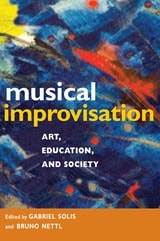
Musical Improvisation
Art, Education, and SocietyEdited by Gabriel Solis and Bruno Nettl
University of Illinois Press, 2008
Contributors are Stephen Blum, Patricia Shehan Campbell, Sabine M. Feisst, Lawrence Gushee, Robert S. Hatten, William Kinderman, Natalie Kononenko, Robert Levin, Charlotte Mattax Moersch, Ingrid Monson, John P. Murphy, Bruno Nettl, A. Jihad Racy, Anne K. Rasmussen, Stephen Slawek, Gabriel Solis, Nicholas Temperley, John Toenjes, and Thomas Turino.