Results by title
4030 books match the query 'Language Arts & Disciplines' and 196 start with m
Markedness Theory
Edna Andrews
Duke University Press, 1990

Marketing Today's Academic Library
A Bold New Approach to Communicating with StudentsBrian Mathews
American Library Association, 2009
Marketing Your Library's Electronic Resources
Marie R. Kennedy
American Library Association, 2018
Marketing with Social Media
A LITA GuideBeth Thomsett-Scott
American Library Association, 2020
This all-new edition gathers a range of contributors to explore real-world uses of library marketing technology, perfect for novices ready to dive in as well as practitioners on the lookout for ways to improve existing efforts. Inside, librarians share insights on how they use their favorite social media tools to promote their library and build community. Applicable to all types of institutions, this guide
- covers popular tools such as Snapchat, Tumblr, Instagram, Facebook, and Twitter;
- shares four easy-to-use tools for creating memes, tips for creating short videos, and ways to integrate blogs into social media;
- demonstrates how to use reaction GIFs and tagging to boost your Tumblr posts;
- shows how to tailor messages to communicate effectively with different generations and audiences; and
- includes screen shots, illustrations, sample social media policies to help you navigate controversies, and free online training resources.
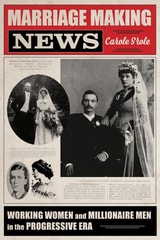
Marriage Making News
Working Women and Millionaire Men in the Progressive EraCarole Srole
University of Illinois Press, 2026
Women’s desire for autonomy, a rising divorce rate, the declining power of the upper class, new ideas of beauty and sexuality—newspaper tales of cross-class nuptials brought a host of anxieties about gender and class to the front page. Srole focuses particular attention on the economic changes faced by working-class women while also surveying newspaper attacks on their morality and womanhood, and their complicity in their own poverty. As she shows, working women and their advocates persevered by asserting an independence they pursued through union activism, professionalism, land ownership, and filling traditionally male jobs.
An engaging merger of media and women’s history, Marriage Making News looks at a rags-to-riches genre and illuminates the forces of change at work behind the stories.
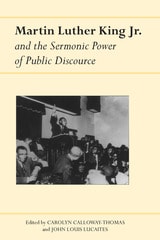
Martin Luther King Jr. and the Sermonic Power of Public Discourse
Carolyn Calloway-Thomas
University of Alabama Press, 1993
Critical studies of the prophetic voice that reshaped a nation.
Martin Luther King Jr. and the Sermonic Power of Public Discourse presents a rich and illuminating examination of Dr. King’s rhetorical mastery, revealing how his most iconic speeches and writings drew deeply from African American sermonic traditions to articulate a moral vision capable of transforming public consciousness. Through nine incisive essays, the volume explores how King’s oratory fused theology, ethics, metaphor, and call‑and‑response patterns to mobilize audiences and frame the civil rights movement as a universal moral struggle.
The collection focuses on five pivotal works—“Death of Evil on the Seashore,” “Letter from Birmingham Jail,” “I Have a Dream,” “A Time to Break Silence,” and “I’ve Been to the Mountaintop”—each analyzed for its rhetorical structure, historical context, and thematic force. These pieces span the full arc of King’s public career, illustrating not only his evolving political and theological commitments but also his sustained effort to envision and communicate a “beloved community” rooted in justice, equality, and human dignity.
In addition to unpacking King’s metaphoric language, ethical appeals, and theological grounding, several essays highlight the ways his rhetoric bridged diverse audiences and invited collective participation in social change. Scholars examine how King re‑constructed the rhetorical situation in “Letter from Birmingham Jail,” framed equality as a universal ideal, and used orality and performance to elevate “I Have a Dream” into one of the most resonant speeches in American history.
Far more than an anthology of commentary, this volume provides a nuanced, interdisciplinary understanding of King as a rhetorician whose discourse transcended political advocacy to become a powerful form of moral persuasion. It is an essential resource for readers interested in rhetoric, communication, civil rights history, and the enduring power of prophetic speech.
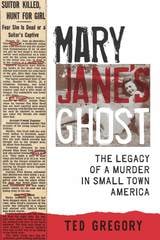
Mary Jane's Ghost
The Legacy of a Murder in Small Town AmericaTed Gregory
University of Iowa Press, 2017
Fast forward fifty years. Eccentric entrepreneur Michael Arians moves to Oregon, opens a roadhouse, gets elected mayor, and becomes obsessed with the crime. He comes up with a scandalous conspiracy theory and starts to believe that Mary Jane’s ghost is haunting his establishment. He also reaches out to the Chicago Tribune for help.
Arians’s letter falls on the desk of general assignment reporter Ted Gregory. For the next thirteen years, while he ricochets from story to story and his newspaper is deconstructed around him, Gregory remains beguiled by the case of the teenaged telephone operator Mary Jane and twenty-eight-year-old Navy vet Stanley—and equally fascinated by Arians’s seemingly hopeless pursuit of whoever murdered them. Mary Jane’s Ghost is the story of these two odysseys.
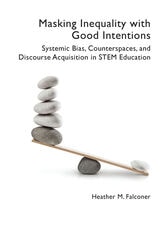
Masking Inequality with Good Intentions
Systemic Bias, Counterspies, and Discourse Acquisition in STEM EducationHeather M. Falconer
University Press of Colorado, 2023
In Masking Inequality with Good Intentions, Heather M. Falconer examines the impact of systemic bias on disciplinary discourse acquisition and identity development by asking “How do the norms and expectations of higher education and STEM, specifically, impact the development of scientific identity and discursive skill?” and “What role do societal markers like race and gender play in the negotiation of identity in STEM learning environments?”
Drawing on the experiences and writings of six students from historically underrepresented backgrounds in STEM, each participating in an undergraduate research program, Falconer discusses how programmatic and pedagogical choices can work to either further marginalize students and disrupt their writing and identity development as scientists or create counterspaces—spaces where students can thrive and push back against dominant, oppressive forces. Practical applications for pedagogy, curriculum, and program design are included.
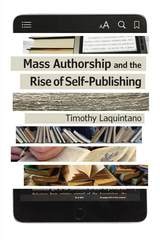
Mass Authorship and the Rise of Self-Publishing
Timothy Laquintano
University of Iowa Press, 2016
Drawing on eight years of research and interviews with more than eighty self-published writers, Mass Authorship avoids the polemics, instead showing how writers are actually thinking about and dealing with this brave new world. Timothy Laquintano compares the experiences of self-publishing authors in three distinct genres—poker strategy guides, memoirs, and romance novels—as well as those of writers whose self-published works hit major bestseller lists. He finds that the significance of self-publishing and the challenge it presents to traditional publishing depend on the aims of authors, the desires of their readers, the affordances of their platforms, and the business plans of the companies that provide those platforms.
In drawing a nuanced portrait of self-publishing authors today, Laquintano answers some of the most pressing questions about what it means to publish in the twenty-first century: How do writers establish credibility in an environment with no editors to judge quality? How do authors police their copyrights online without recourse to the law? How do they experience Amazon as a publishing platform? And how do they find an audience when, it sometimes seems, there are more writers than readers?
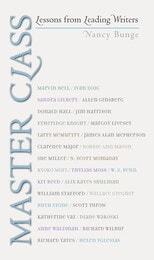
Master Class
Lessons from Leading WritersNancy Bunge
University of Iowa Press, 2005
Master Class: Lessons from Leading Writers gathers more than two decades of wisdom from twenty-nine accomplished authors. It offers previously unpublished interviews along with freshly edited versions of ten interviews from Nancy Bunge's well-received previous collection, Finding the Words. The first section, Theory, incorporates interviews which document the golden age of writing programs in which authors with a strong sense of social and cultural responsibility taught as seriously as they wrote. These conversations delve into the writers' philosophies and teaching methods. The second section, Practice, presents interviews with authors who discuss how they've approached the writing of particular works. Altogether the interviews introduce authors as inspirational models and provide insightful techniques for other writers to try. One piece of advice recurs with striking consistency: to produce fresh, interesting work, aspiring writers must develop a passionate self-trust. This rule has an essential corollary: improving as a writer means constantly stretching oneself with new information and skills. Sure to interest writing and literature teachers as well as writers at every stage of development, Master Class is highly recommended for undergraduate and graduate writing courses.
Interviews with Marvin Bell, Ivan Doig, Sandra Gilbert, Allen Ginsberg, Donald Hall, Jim Harrison, Etheridge Knight, Margot Livesey, Larry McMurtry, James Alan McPherson, Clarence Major, Bobbie Ann Mason, Sue Miller, N. Scott Momaday, Kyoko Mori, Thylias Moss, W. S. Penn, Kit Reed, Alix Kates Shulman, William Stafford, Wallace Stegner, Ruth Stone, Scott Turow, Katherine Vaz, Diane Wakoski, Anne Waldman, Richard Wilbur, Richard Yates, and Helen Yglesias.
Mastering Academic Reading
Lawrence J. Zwier with contributions by Matthew S. Weltig
University of Michigan Press, 2010
Mastering Academic Reading is meant to challenge advanced academically oriented students of English. The units and the readings within them are long. The comprehension and expansion exercises after them are demanding. The hoped-for outcome is that students trained using this textbook will be able to better hold their own in university classes where the reading volume across disciplines and vocabulary demands are high.
Almost every reading is taken, in minimally adapted form, from a book or academic / professional journal. Two introductory passages have been composed expressly for this book in order to provide narrowly focused background material. Beyond these pieces, readers are in the hands of “real-world” authors and their difficult, lexically diffuse, and allusion-filled creations. Journal articles and book excerpts predominate, but Mastering Academic Reading also offers a book review and a government pamphlet as well.
Since one aspect of reading practice builds on others, the units are laid out in tiers, not in sections. Each unit has been organized into three tiers. In general, there is one reading per tier, although the first tier in Unit 3 contains two passages (both necessary to provide conceptual background for the other two tiers). Each reading is 3,500-5,000 words. The book focuses on the three primary goals of academic reading: reading to learn; reading to integrate, write, and critique texts; and reading for basic comprehension.

Matchmaking in the Archive
19 Conversations with the Dead and 3 Encounters with GhostsE.G. Crichton
Rutgers University Press, 2023
Working with the archives of the Gay Lesbian Bisexual Transgender Historical Society, artist E.G. Crichton decided to do something to bridge this generation gap. She selected 19 innovative LGBTQ artists, writers, and musicians, then paired each of them with a deceased person whose personal artifacts are part of the archive.
Including 25 pages of vivid images, Matchmaking in the Archive documents this monumental creative project and adds essays by Jonathan D. Katz, Michelle Tea, and Chris Vargas, who describe their own unique encounters with the ghosts of LGBTQ history. Together, they make the archive come alive in remarkably intimate ways.
Material Culture of Writing
edited by Cydney Alexis and Hannah J. Rule
University Press of Colorado, 2022
The collection features scholars across the disciplines—such as art, art history, English, museum studies, and writing studies—who work as teachers, historians, museum curators/conservators, and faculty. Each chapter features methods and questions from contributors’ own disciplines while at the same time speaking to writing studies’ interest in writers, writing identity, and writing practice. The authors in this volume also work with a variety of methodologies, including literary analysis, archival research, and qualitative research, providing models for the types of research possible using a material culture studies framework. The collection is organized into three sections—Writing Identity, Writing Work, Writing Genre—each with a contextualizing introduction from the editors that introduces the chapters themselves and imagines possible directions for writing studies research facilitated by material culture studies.
The Material Culture of Writing serves as an accessible introduction to work in material culture studies for writing studies scholars, graduate students, and undergraduates, especially as it makes a distinctive contribution to writing studies in its material culture studies approach. Because of the interdisciplinarity of material culture studies and this volume’s contributors, this collection will appeal to a wide range of scholars and readers, including those interested in writing studies, the history of the book, print culture, genre studies, archival methods, and authorship studies.
Contributors: Cydney Alexis, Debby Andrews, Diane Ehrenpreis, Keri Epps, Desirée Henderson, Kevin James, Jenny Krichevsky, Anne Mackay, Emilie Merrigan, Laura R. Micciche, Hannah J. Rule, Kate Smith
Mathematical Structures in Languages
Edward Keenan and Larry Moss
CSLI, 2015
Maximizing School Librarian Leadership
Building Connections for Learning and AdvocacyJudi Moreillon
American Library Association, 2018
Maxwell's Handbook for AACR2
Explaining and Illustrating the Anglo-American Cataloguing Rules through the 2003 UpdateRobert L. Maxwell
American Library Association, 2004
Maxwell's Handbook for RDA
Explaining and Illustrating RDARobert L. Maxwell
American Library Association, 2013
Winner of several prestigious honors, including the 2014 ABC-CLIO Greenwood Award for the Best Book in Library Literature, the first edition of this clear and comprehensive handbook has become an essential resource for catalogers, LIS students, and cataloging instructors. Now, in this second edition, Maxwell explains the changes to RDA: Resource Description and Access brought about by 3R, and brings his handbook fully in line with all the new developments. Designed to interpret and explain RDA, this resource illustrates the cataloging standard for every type of information format. From books to electronic materials to music and beyond, Maxwell
- explains the alignment of the new RDA with the IFLA’s Library Reference Model (LRM), offering value to library and cultural heritage communities;
- incorporates the changes made to the RDA Toolkit after the completion of the 3R Project that allow for greater personalization and accessibility;
- addresses the new structural changes to RDA that allow for greater flexibility and reuse;
- explores the new emphasis on relationships between entities and what it means for RDA users; and
- provides abundant sample records to illustrate RDA principles.
Meaning and Partiality
Reinhard Muskens
CSLI, 1995
Meaning, Creativity, and the Partial Inscrutability of the Human Mind
Julius M. Moravcsik
CSLI, 1998
Meaning, Form, and Body
Mark Turner, Fey Parrill, and Vera Tobin
CSLI, 2010
Meaning, Form, and Body brings together renowned figures in the field of cognitive linguistics to discuss two related research areas in the study of linguistics: the integration of form and meaning and language and the human body. Among the numerous topics discussed are grammatical constructions, conceptual integration, and gesture.
Meaning, Intentions, and Argumentation
Kepa Korta and Garmendia
CSLI, 2008

Meaningful Metrics
A 21St Century Librarian's Guide ToRobin Chin Roemer
Assoc of College & Research Libraries, 2015
Meaningful Metrics
A 21St Century Librarian's Guide to Bibliometrics, Altmetrics, and Research ImpactRobin Chin Roemer
Assoc of College & Research Libraries, 2015
Meaningful Writing Project
Learning, Teaching and Writing in Higher EducationMichele Eodice
Utah State University Press, 2017
In the face of the continuing discourse of crisis in US education, The Meaningful Writing Project offers readers an affirming story of writing in higher education that shares students’ experiences in their own voices. In presenting the results of a three-year study consisting of surveys and interviews of university seniors and their faculty across three diverse institutions, authors Michele Eodice, Anne Ellen Geller, and Neal Lerner consider students’ perceptions of their meaningful writing experiences, the qualities of those experiences, and instructors’ perspectives on assignment design and delivery.
This study confirms that meaningful assignments offer students opportunities to engage with instructors, peers, and texts and are relevant to past experiences and passions as well as to future aspirations and identities. Meaningful writing occurs across majors, in both required and elective courses, and beyond students’ years at college. Additionally, the study makes clear that faculty across the curriculum devote significant care and attention to creating writing assignments that support student learning, as they understand writing performance to be a developmental process connected to overall cognitive and social development, student engagement with learning, and success in a wide variety of disciplines and professions.
The Meaningful Writing Project provides writing center directors, WPAs, other composition scholars, and all faculty interested in teaching and learning with writing an unprecedented look into the writing projects students find meaningful.
Mechanisms of Syntactic Change
Edited by Charles N. Li
University of Texas Press, 1977
Historical linguistics, the oldest field in linguistics, has been traditionally dominated by phonological and etymological investigations. Only in the late twentieth century have linguists begun to focus their interest and research on the area of syntactic change and the insight it provides on the nature of language. This volume represents the first major contribution on the mechanisms of syntactic change.
The fourteen articles that make up this volume were selected from the Symposium on the Mechanisms of Syntactic Change held at the University of California, Santa Barbara, in 1976, one of a series of three conferences sponsored by the National Science Foundation.
These papers clearly demonstrate that the generative approach to the study of language does not explain diachronic processes in syntax. This collection is enlightening, provocative, and carefully documented with data drawn from a great variety of language families.

Media Between Culture and Commerce
An IntroductionEdited by Els de Bens
Intellect Books, 2007
In the face of declining newspaper sales, challenges from online competitors, and flagging ratings for broadcast news programs, media companies have struggled to maintain their relevance. Media between Culture and Commerce brings together a group of European media experts to address the consequences of a system that is increasingly powered by global media conglomerates that set the pace of news and information. As national borders blur and the corporations behind journalism and broadcasting continue to merge, this timely volume will prove a necessary resource to those interested in European media studies and globalization.
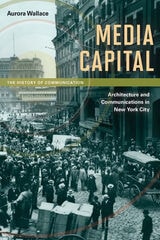
Media Capital
Architecture and Communications in New York CityAurora Wallace
University of Illinois Press, 2012
Media Localism
The Policies of PlaceChristopher Ali
University of Illinois Press, 2017

Media Making as Peacemaking
Israel/PalestineYuval Katz
Rutgers University Press, 2026
The horrific events of October 7 and the devastating war in Gaza have brought Israel/Palestine to the headlines once again. We have seen this all play out before: another ambitious peace plan, which secured a ceasefire, is imagined as the dawn of a new era of peace in the Middle East. But is it? Critiquing traditional state-centered approaches to peace, which usually highlight the work of diplomats and politicians, and which historically failed miserably in Israel/Palestine, Media Making as Peacemaking shifts our attention to the experiences of ordinary people. Investigating the idea of media encounters, this book shows how the collaboration of Palestinian and Jewish media practitioners and the popular texts they create together in television dramas, digital activism and mainstream journalism offer a new and exciting way to think about peace—a peace which does not maintain a repressive status quo, but seeks to deliver equality and justice to all people, Palestinians and Jews, living between the Jordan River and the Mediterranean Sea.
Media, Geopolitics, and Power
A View from the Global SouthHerman Wasserman
University of Illinois Press, 2018
Herman Wasserman analyzes the debates surrounding South Africa's new media presence against the backdrop of rapidly changing geopolitics. His exploration reveals how South African disputes regarding access to, and representation in, the media reflect the domination and inequality in the global communication sphere. Optimists see post-apartheid media as providing a vital space that encourages exchanges of opinion in a young democracy. Critics argue the public sphere mirrors South Africa's past divisions and privileges the viewpoints of the elite. Wasserman delves into the ways these simplistic narratives obscure the country's internal tensions, conflicts, and paradoxes even as he charts the diverse nature of South African entry into the global arena.

Media, Market, and Democracy in China
Between the Party Line and the Bottom LineYuezhi Zhao
University of Illinois Press, 1998
How do market forces influence the media in China? How does the Party both introduce and try to contain the market's influence? How do commercial imperatives both accommodate and challenge Party control?
Yuezhi Zhao interviewed a wide range of scholars, media administrators, and media professionals to answer these and other questions. Working in China in 1994 and 1995, she monitored media content, carried out extensive documentary research in Beijing, and held off-the-record meetings with Chinese media insiders. What she found informs an in-depth look at the intertwining nature of the Communist Party and the news media in China, how they affect each other, and what the future might hold for each.
A rare on-the-ground portrait, Media, Market, and Democracy in China is must reading for scholars, media and business professionals, and policymakers who need to understand what happened to China and its mass media during a period of dynamic growth and change.
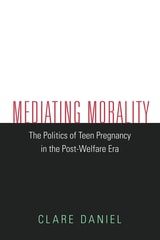
Mediating Morality
The Politics of Teen Pregnancy in the Post-Welfare EraClare Daniel
University of Massachusetts Press, 2017
Daniel investigates coordinated teen pregnancy prevention efforts within federal political discourse, along with public policy, popular culture, national advocacy, and local initiatives, revealing the evidence of this transformation. In the 1970s and 1980s, political leaders from both parties used teen pregnancy to strengthen their attacks on racialized impoverished communities. With a new welfare policy in 1996 that rhetoric moved toward blaming teen pregnancy—seemingly in a race- and class-neutral way—on the teens who engaged in sex prematurely and irresponsibly. Daniel effectively illustrates that the construction of teen pregnancy as an individual's problem has been a key component in a neoliberal agenda that frees the government from the responsibility of addressing systemic problems of poverty, lack of access to education, ongoing structural racism, and more.
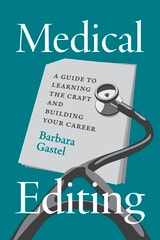
Medical Editing
A Guide to Learning the Craft and Building Your CareerBarbara Gastel
University of Chicago Press, 2025
Medical editing is a thriving and wide-ranging specialty within the editorial profession. Its practitioners occupy a unique ecosystem that involves its own style manuals and the ability to work with highly technical medical terminology and issues, and its work helps ensure that health practitioners, researchers, and the public receive sound, understandable medical information. Today, opportunities abound for medical editors—who come from many backgrounds and work in many settings, such as medical journals, medical institutions, and the freelance realm.
Written by an experienced and award-winning editor, Medical Editing: A Guide to Learning the Craft and Building Your Career provides a thorough introduction to the profession. At levels ranging from the punctuation mark to the publication, Barbara Gastel provides accessible and concrete instruction in editing medical writing. Distinctively, the book also explores ethical issues encountered in medical editing and other topics such as working effectively with medical authors, editing medical writing by and for nonnative users of English, and editing medical conference presentations.
For those considering entering medical editing or transitioning from other employment, the book also provides helpful career guidance. Readers will learn about the range of medical editing positions, receive advice on taking medical editing tests for employment, learn about certificates and certifications in the field, and more.
Enhanced by examples, exercises, and humor, Medical Editing will benefit both prospective and beginning medical editors while serving as a useful resource for experienced editors, teachers of courses in related fields, and supervisors mentoring interns or new hires.
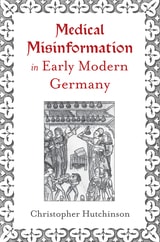
Medical Misinformation in Early Modern Germany
Christopher Hutchinson
University of Delaware Press, 2026
Medical Misinformation in Early Modern Germany examines how doctors, writers, and printers in sixteenth-century Germany responded to the rapid expansion of print and its implications for medical knowledge. The spread of printed texts generated widespread suspicion about print’s reliability as a conduit of information and led writers to reflect on questions of audience, vernacularity, and medical authority in their responses to disease. The book investigates literary texts alongside popular vernacular medical pamphlets on the major epidemic diseases of the period––plague, syphilis, and the English sweating sickness––to reveal a widespread concern with the impact of printed texts on public health. During the 1529 outbreak of the English sweating sickness, this concern culminated in writers’ use of a “rhetoric of virality,” explicitly comparing the circulation of texts to the spread of disease, as they confronted the parallel contagions of disease and information.
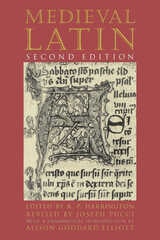
Medieval Latin
Second EditionEdited by K. P. Harrington
University of Chicago Press, 1997
To help place the selections within their wider historical, social, and political contexts, Pucci has written extensive introductory essays for each of the new edition's five parts. Headnotes to individual selections have been recast as interpretive essays, and the original bibliographic paragraphs have been expanded. Reprinted from the best modern editions, the selections have been extensively glossed with grammatical notes geared toward students of classical Latin who may be reading medieval Latin for the first time.
Includes thirty-two full-page plates (with accompanying captions) depicting medieval manuscript and book production.
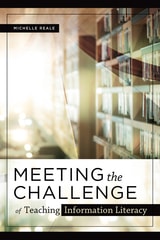
Meeting the Challenge of Teaching Information Literacy
Michelle Reale
American Library Association, 2020
While the profession has generated many books on information literacy, none to date have validated exactly why it is so difficult to teach. In her new book, Reale posits that examining and reflecting on the reality of those factors is what will enable practitioners to meet the challenge of their important mandate. Using the same warm and conversational tone as in her previous works, she
- uses personal anecdotes to lay out the key reasons that teaching information literacy is so challenging, from the limited amount of time given to instructors and lack of collaboration with faculty to one’s own anxieties about the work;
- examines how these factors are related and where librarians fit in;
- validates readers’ struggles and frustrations through an honest discussion of the emotional labor of librarianship, including “imposter syndrome,” stress, and burnout;
- offers a variety of approaches, strategies, and topics of focus that will assist readers in their daily practice;
- looks at how a vibrant community of practice can foster positive change both personally and institutionally; and
- presents “Points to Ponder” at the end of each chapter that encourage readers to self-reflect and then transform personal insights into action.

Mencken’s America
H. L. MenckenS. T. Joshi
Ohio University Press, 2004
Long famous as a political, social, and cultural gadfly, journalist and essayist H. L. Mencken was unafraid to speak his mind on controversial topics and to express his views in a deliberately provocative manner.
Mencken was prolific; much of his best work lies buried in the newspapers and magazines in which it originally appeared. Mencken’s America is a sampling of this uncollected work, arranged to present the wide-ranging treatise on American culture that Mencken himself never wrote.
The core of the book is a series of six articles on “The American” published in the Smart Set in 1913-14. Never before reprinted, they embody the essence of Mencken’s views on the deficiencies of his countrymen.
What was the problem with America? For Mencken, it could be summed up in one word: Puritanism. Puritanism accounted for much that was wrong with American culture: the prevalence of “militant morality” represented by Prohibition, by campaigns against prostitution, and by religious fundamentalism. American hostility toward the fine arts led to furious attempts to suppress any work of art that was thought to contravene conventional morality-attempts that Mencken chronicles with impressive scholarship in the essay “Puritanism as a Literary Force.”
Mencken reserved his greatest scorn for American political institutions. Opposed to the very principle of democracy and universal suffrage, he maintained that, in the absence of an educated electorate, all politicians are compelled to become demagogues.
Bracing, infuriating, and pungent, H. L. Mencken’s writings retain their relevance even after the passage of nearly a hundred years, cogently discussing issues with which Americans of the twenty-first century are still wrestling. Sagaciously edited by S. T. Joshi, one of the country’s foremost Mencken scholars, Mencken’s America is a superb example of America’s turning the looking glass on itself.
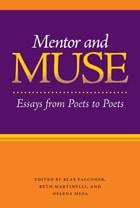
Mentor and Muse
Essays from Poets to PoetsEdited by Blas Falconer, Beth Martinelli, and Helena Mesa
Southern Illinois University Press, 2010
In Mentor and Muse, a collection of twenty-nine insightful essays by some of today’s leading poetic minds, editors Blas Falconer, Beth Martinelli, and Helena Mesa have brought together an illuminating anthology that draws upon both established and emerging poets to create a one-of-a-kind resource and unlock the secrets of writing and revising poetry.
Gathered here are numerous experts eager to share their wisdom with other writers. Each author examines in detail a particular poetic element, shedding new light on the endless possibilities of poetic forms. Addressed within are such topics as the fluid possibilities of imagery in poetry; the duality of myth and the personal, and the power of one to unlock the other; the surprising versatility of traditional poetic forms; and the pleasure of collaboration with other poets. Also explored in depth are the formative roles of cultural identity and expectations, and their effect on composition; advice on how to develop one’s personal poetic style and approach; the importance of setting in reading and meaning; and the value of indirection in the lyric poem. Challenges to conventional concepts of beauty are examined through Shakespeare’s sonnets, and the ghost of Longfellow is called upon to guide students through the rewards and roadblocks of writing popular poetry. Poetic persona is demystified through Newton’s law of gravity, while the countless permutations of punctuation are revealed with analysis of e. e. cummings and W. S. Merwin.
The essays include the full text of the poems discussed, and detailed, relevant writing exercises that allow students the opportunity to directly implement the strategies they have learned. While many advanced topics such as authenticity, discordant music, and prosody are covered, this highly readable volume is as user-friendly as it is informative. Offering a variety of aesthetics and approaches to tackling the issues of composition, Mentor and Muse takes poets beyond the simple stages of poetic terms and strategies. These authorsinvite students to explore more advanced concepts, enabling them to draw on the traditions of the past while at the same time forging their own creative paths into the future.
Chosen as one of the "Best Books for Writers" by Poets & Writers magazine
Mentoring A-Z
Julie Todaro
American Library Association, 2015
Mentoring and Managing Students in the Academic Library
Michelle Reale
American Library Association, 2013
Mentoring in the Library
Building for the FutureMarta K. American Library Association
American Library Association, 2011
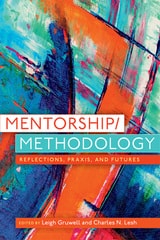
Mentorship/Methodology
Reflections, Praxis, and FuturesLeigh Gruwell
Utah State University Press, 2024
The contributors consider how methodology informs mentorship, how mentorship activates methodology, and how to locate the future of the field in these moments of intersection. Mentorship, through the research and relationships it nourishes, creates the future of writing studies—or, conversely, reproduces the past. At the juncture where this happens, the contributors inquire, Where have current arrangements of mentorship/methodology taken writing studies? Where do these points of intersection exist in performance and practice, in theory, in research? What images of the field do they produce? How can scholars better articulate and write about these moments or spaces in which mentorship and methodology collide in productive disciplinary work?
By making the “slash” more visible, Mentorship/Methodology provides significant opportunities to support and cultivate diverse ways of knowing and being in rhetoric and composition, both locally and globally. The volume will appeal to students and scholars of rhetoric, composition, and technical and professional communication, as well as readers interested in conversations about mentorship and methodology.
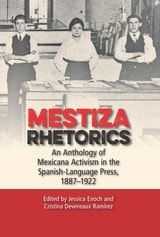
Mestiza Rhetorics
An Anthology of Mexicana Activism in the Spanish-Language Press, 1887-1922Edited by Jessica Enoch and Cristina Devereaux Ramirez
Southern Illinois University Press, 2019
Mestiza Rhetorics is the first anthology dedicated to mexicana rhetors and provides unmatched access to mexicana rhetorics. This collection puts forward the work of mexicana newspaperwomen in Spanish and English, provides evidence of their participation in political and educational debates at the turn of the twentieth century, and demonstrates how the Spanish-language press operated as a rhetorical space for mexicanas.
Metabolizing Capital
Writing, Information, and the Biophysical EnvironmentChristian J. Pulver
Utah State University Press, 2020
The rise of the global cloud and the internet-of-things have ushered in a new stage of the internet that marks a transition from the celebrated user-generated content of Web 2.0 to the data-driven networks of Web 3.0. As social media networks have expanded, so has the amount of writing and communication we do online. This has created several valuable sub-layers of data and metadata about consumer-citizens that corporations and governments now routinely collect, store, and monetize. This frenzy to collect more data is contributing to several problematic social and environmental concerns as flows of information and capital dangerously accelerate how energy and matter move through ecosystems at every scale.
This book explores the planetary consequences of Web 3.0 and the vital role that writing and data production play in accelerating capital circulation, from concerns raised by the growing energy demands of the information industries, to growing streams of electronic waste, to the growing socioeconomic tensions arising as a result of information monopolies.
A posthuman, Marxist analysis of digital culture and writing, Metabolizing Capital contributes to and challenges current understandings of rhetorical agency and actor networks. Combining scholarship from writing studies, rhetoric, and composition with research in metabolic ecology, information theory, media studies, cognitive psychology, history, and new materialism, this book should be of interest to scholars in writing studies as well as others who study digital culture, ecological literacies, the history of writing and information, big data, and environmental concerns related to electronics and the information industries.
Metadata
Jian Qin
American Library Association, 2022
This benchmark text is back in a new edition thoroughly updated to incorporate developments and changes in metadata and related domains. Zeng and Qin provide a solid grounding in the variety and interrelationships among different metadata types, offering a comprehensive look at the metadata schemas that exist in the world of library and information science and beyond. Readers will gain knowledge and an understanding of key topics such as
- the fundamentals of metadata, including principles of metadata, structures of metadata vocabularies, and metadata descriptions;
- metadata building blocks, from modeling to defining properties, from designing application profiles to implementing value vocabularies, and from specification generating to schema encoding, illustrated with new examples;
- best practices for metadata as linked data, the new functionality brought by implementing the linked data principles, and the importance of knowledge organization systems;
- resource metadata services, quality measurement, and interoperability approaches;
- research data management concepts like the FAIR principles, metadata publishing on the web and the recommendations by the W3C in 2017, related Open Science metadata standards such as Data Catalog Vocabulary (DCAT) version 2, and metadata-enabled reproducibility and replicability of research data;
- standards used in libraries, archives, museums, and other information institutions, plus existing metadata standards’ new versions, such as the EAD 3, LIDO 1.1, MODS 3.7, DC Terms 2020 release coordinating its ISO 15396-2:2019, and Schema.org’s update in responding to the pandemic; and
- newer, trending forces that are impacting the metadata domain, including entity management, semantic enrichment for the existing metadata, mashup culture such as enhanced Wikimedia contents, knowledge graphs and related processes, semantic annotations and analysis for unstructured data, and supporting digital humanities (DH) through smart data.
A supplementary website provides additional resources, including examples, exercises, main takeaways, and editable files for educators and trainers.
Metadata
Marcia Lei Zeng
American Library Association, 2016
Metadata
Marcia Lei Zeng
American Library Association, 2008
Metadata Fundamentals for All Librarians
Priscilla Caplan
American Library Association, 2003
Metadata Fundamentals for All Librarians
Priscilla Caplan
American Library Association, 2003
Metadata for Digital Collections
Steven Jack Miller
American Library Association, 2022
Since it was first published, LIS students and professionals everywhere have relied on Miller’s authoritative manual for clear instruction on the real-world practice of metadata design and creation. Now the author has given his text a top to bottom overhaul to bring it fully up to date, making it even easier for readers to acquire the knowledge and skills they need, whether they use the book on the job or in a classroom. By following this book’s guidance, with its inclusion of numerous practical examples that clarify common application issues and challenges, readers will
- learn about the concept of metadata and its functions for digital collections, why it’s essential to approach metadata specifically as data for machine processing, and how metadata can work in the rapidly developing Linked Data environment;
- know how to create high-quality resource descriptions using widely shared metadata standards, vocabularies, and elements commonly needed for digital collections;
- become thoroughly familiarized with Dublin Core (DC) through exploration of DCMI Metadata Terms, CONTENTdm best practices, and DC as Linked Data;
- discover what Linked Data is, how it is expressed in the Resource Description Framework (RDF), and how it works in relation to specific semantic models (typically called “ontologies”) such as BIBFRAME, comprised of properties and classes with “domain” and “range” specifications;
- get to know the MODS and VRA Core metadata schemes, along with recent developments related to their use in a Linked Data setting;
- understand the nuts and bolts of designing and documenting a metadata scheme; and
- gain knowledge of vital metadata interoperability and quality issues, including how to identify and clean inconsistent, missing, and messy metadata using innovative tools such as OpenRefine.