Results by title
1415 books match the query 'Medical' and 111 start with m

Medical Malpractice
Duncan Yaggy and Patricia Hodgson, editors
Duke University Press, 1987

Medical Misinformation in Early Modern Germany
Christopher Hutchinson
University of Delaware Press, 2026
Medical Misinformation in Early Modern Germany examines how doctors, writers, and printers in sixteenth-century Germany responded to the rapid expansion of print and its implications for medical knowledge. The spread of printed texts generated widespread suspicion about print’s reliability as a conduit of information and led writers to reflect on questions of audience, vernacularity, and medical authority in their responses to disease. The book investigates literary texts alongside popular vernacular medical pamphlets on the major epidemic diseases of the period––plague, syphilis, and the English sweating sickness––to reveal a widespread concern with the impact of printed texts on public health. During the 1529 outbreak of the English sweating sickness, this concern culminated in writers’ use of a “rhetoric of virality,” explicitly comparing the circulation of texts to the spread of disease, as they confronted the parallel contagions of disease and information.
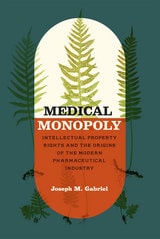
Medical Monopoly
Intellectual Property Rights and the Origins of the Modern Pharmaceutical IndustryJoseph M. Gabriel
University of Chicago Press, 2014
Drawing on a wealth of previously unused archival material, Medical Monopoly combines legal, medical, and business history to offer a sweeping new interpretation of the origins of the complex and often troubling relationship between the pharmaceutical industry and medical practice today. Joseph M. Gabriel provides the first detailed history of patent and trademark law as it relates to the nineteenth-century pharmaceutical industry as well as a unique interpretation of medical ethics, therapeutic reform, and the efforts to regulate the market in pharmaceuticals before World War I. His book will be of interest not only to historians of medicine and science and intellectual property scholars but also to anyone following contemporary debates about the pharmaceutical industry, the patenting of scientific discoveries, and the role of advertising in the marketplace.
Medical Necessity
Health Care Access and the Politics of Decision MakingDaniel Skinner
University of Minnesota Press, 2019
How the politics of “medical necessity” complicates American health care
The definition of medical necessity has morphed over the years, from a singular physician’s determination to a complex and dynamic political contest involving patients, medical companies, insurance companies, and government agencies. In this book, Daniel Skinner constructs a comprehensive understanding of the politics of defining this concept, arguing that sustained political engagement with medical necessity is essential to developing a health care system that meets basic public health objectives.
From medical marijuana to mental health to reproductive politics, the concept of medical necessity underscores many of the most divisive and contentious debates in American health care. Skinner’s close reading of medical necessity’s production illuminates the divides between perceptions of medical need as well as how the gatekeeper concept of medical necessity tends to frame medical objectives. He questions the wisdom of continuing to use medical necessity when thinking critically about vexing health care challenges, exploring the possibility that contracts, rights, and technology may resolve the contentious politics of medical necessity.
Skinner ultimately contends that a major shift is needed, one in which health care administrators, doctors, and patients admit that medical necessity is, at its base, a contestable political concept.
Medical Professionalism in the New Information Age
Edited and with an Introduction by David J. Rothman and David Blumenthal
Rutgers University Press, 2011

Medical Protestants
The Eclectics in American Medicine, 1825-1939John S. Haller Jr.
Southern Illinois University Press, 1994
John S. Haller,Jr., provides the first modern history of the Eclectic school of American sectarian medicine.
The Eclectic school (sometimes called the "American School") flourished in the mid-nineteenth century when the art and science of medicine was undergoing a profound crisis of faith. At the heart of the crisis was a disillusionment with the traditional therapeutics of the day and an intense questioning of the principles and philosophy upon which medicine had been built. Many American physicians and their patients felt that medicine had lost the ability to cure. The Eclectics surmounted the crisis by forging a therapeutics based on herbal remedies and an empirical approach to disease, a system independent of the influence of European practices.
Although rejected by the Regulars (adherents of mainstream medicine), the Eclectics imitated their magisterial manner, establishing two dozen colleges and more than sixty-five journals to proclaim the wisdom of their theory. Central to the story of Eclecticism is that of the Eclectic Medical Institute of Cincinnati, the "mother institute" of reform medical colleges. Organized in 1845, the school was to exist for ninety-four years before closing in 1939.
Throughout much of their history, the Eclectic medical schools provided an avenue into the medical profession for men and women who lacked the financial and educational opportunities the Regular schools required, siding with Professor Martyn Paine of the Medical Department of New York University, who, in 1846, had accused the newly formed American Medical Association of playing aristocratic politics behind a masquerade of curriculum reform. Eventually, though, they grudgingly followed the lead of the Regulars by changing their curriculum and tightening admission standards.
By the late nineteenth century, the Eclectics found themselves in the backwaters of modern medicine. Unable to break away from their botanic bias and ill-equipped to support the implications of germ theory, the financial costs of salaried faculty and staff, and the research implications of laboratory science, the Eclectics were pushed aside by the rush of modern academic medicine.
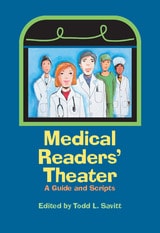
Medical Readers' Theater
A Guide and ScriptsTodd L. Savitt
University of Iowa Press, 2002

Medical Research for Hire
The Political Economy of Pharmaceutical Clinical TrialsFisher, Jill A
Rutgers University Press, 2008
According to Jill A. Fisher, this major change in the way medical research is performed is the outcome of two problems in U.S. health care: decreasing revenue for physicians and decreasing access to treatment for patients. As physicians report diminishing income due to restrictive relationships with insurers, increasing malpractice insurance premiums, and inflated overhead costs to operate private practices, they are attracted to pharmaceutical contract research for its lucrative return. Clinical trials also provide limited medical access to individuals who have no or inadequate health insurance because they offer "free" doctors' visits, diagnostic tests, and medications to participants. Focusing on the professional roles of those involved, as well as key research practices, Fisher assesses the risks and advantages for physicians and patients alike when pharmaceutical drug studies are used as an alternative to standard medical care.
A volume in the Critical Issues in Health and Medicine series, edited by Rima D. Apple and Janet Golden

Medical Technics
Don Ihde
University of Minnesota Press, 2019
A personal account of the aging body and advanced technologies by a preeminent philosopher of technology
Medical Technics is a rigorous examination of how medical progress has modified our worlds and contributed to a virtual revolution in longevity. Don Ihde offers a unique autobiographical tour of medical events experienced in a decade, beginning in his 70s. Ihde offers experiential and postphenomenological analyses of technologies such as sonography and microsurgery, and ultimately asks what it means to increasingly become a cyborg.
Forerunners: Ideas FirstShort books of thought-in-process scholarship, where intense analysis, questioning, and speculation take the lead

Medicare Reform
Issues and AnswersEdited by Andrew J. Rettenmaier and Thomas R. Saving
University of Chicago Press, 1999
Medicare Reform—the first volume in a new series sponsored by the George Bush School of Government and Public Policy at Texas A&M University—tackles the current Medicare predicament head-on, delving into the fundamental issues surrounding the reorganization of the system: whether to allocate Medicare's growing financial load to current workers in the form of higher taxes, shift the onus to future generations, or shortchange both the expectations and care of present recipients by substantially cutting benefits. This volume assembles a group of the most highly respected analysts of health issues to consider the economic forces impacting the surging health care market.
Written for the general reader and offering innovative ideas for policy revision along with critical new data on health care economics, this comprehensive volume provides a timely and thoughtful deliberation on the precarious future of Medicare.
"Because, as Richard Weaver once said, 'ideas have consequences,' this book is important. It will not end the debate on Medicare, but it will begin it."—Phil Gramm, from the foreword

Medicare
Intentions, Effects, and Politics, Volume 26Mark A. Peterson, ed.
Duke University Press, 0
A complete understanding of the particular and peculiar structure of Medicare can be gained only by considering the ideas, politics, and institutions of the 1960s that shaped it. With this historical perspective, the articles in this collection can move beyond partisan arguments and politically motivated reform proposals. Instead, they outline educated guidelines for improving Medicare and debunk commonly held but false assumptions about the program. In "How Not to Think about Medicare" the field’s most noted scholar, Theodore Marmor, exposes four such misconceptions, including the program’s seeming inability to control costs and ward off what some call a fiscal tsunami—the aging of the baby boomers. Other contributions address frequently overlooked functions of Medicare. While the program is known for its universal health coverage for the elderly and the disabled, for instance, Medicare also serves a crucial role in overseeing hospital performance and furthering health education. This special issue concludes with a discussion of Marmor’s recently revised classic book, The Politics of Medicare, by five leading specialists who interpret the present Medicare program in light of its original construct and current political influences.
Contributors. Michael Gusmano, Jacob Hacker, Nancy M. Kane, Stephen A. Magnus, Theodore Marmor, Jonathan Oberlander, Eric M. Patashnik, Mark A. Peterson, Mark J. Schlesinger, Carolyn Tuohy, Bruce Vladeck, Julian Zelizer
Medicating Race
Heart Disease and Durable Preoccupations with DifferenceAnne Pollock
Duke University Press, 2012

Medication in Maternity
Infant Exposure and Maternal InformationYvonne Brackbill, Karen McManus, and Lynn Woodward
University of Michigan Press, 1985

Medicine and American Growth, 1800–1860
James H. Cassedy
University of Wisconsin Press, 1986
“A work of great breadth, originality, and distinction. Rarely do we see such a successful marriage between historical demography and the history of medicine. The interconnections between population increase, migration and immigration on the one hand, and disease and the development of medicine on the other in antebellum America are brilliantly presented.”—Irvine Loudon, Bulletin of the History of Medicine
Medicine and Health in Africa
Multidisciplinary PerspectivesPaula Viterbo
Michigan State University Press, 2011

Medicine and Nation Building in the Americas, 1890-1940
Jose Amador
Vanderbilt University Press, 2015
Drawing on sources in Cuba, Puerto Rico, Brazil, and the United States, Amador shows that initiatives launched in colonial settings laid the foundation for the rise of public health programs in the hemisphere and transformed debates about the formation of national culture. Writers rethought theories of environmental and racial danger, while Cuban reformers invoked the yellow fever campaign to exclude nonwhite immigrants. Puerto Rican peasants flooded hookworm treatment stations, and Brazilian sanitarians embraced regionalist and imperialist ideologies. Together, these groups illustrated that public health campaigns developed in the shadow of empire propelled new conflicts and conversations about achieving modernity and progress in the tropics.
This book is a recipient of the annual Norman L. and Roselea J. Goldberg Prize for the best project in the area of medicine.

Medicine and Western Civilization
Edited by David J Rothman, Steven Marcus, and Stephanie A. Kiceluk
Rutgers University Press, 1995

Medicine and the Management of Living
Taming the Last Great BeastWilliam Ray Arney and Bernard J. Bergen
University of Chicago Press, 1984
Medicine and the Management of Living questions how it has been possible for the patient to change from a silenced specimen observed in the clinic to a person whose subjective experience of illness is important to medical practice and discourse. Arney and Bergen ask, What incited the demand that medicine take the whole person, including the patient's presentation of his or her illness, into consideration? And in whose terms are patients speaking about themselves? The authors argue that the inclusion of patients' experiences in medical discourse that has come about since the 1950s is not so much a result of a "patient rebellion" as an activity preciptated by the medical establishment itself. Drawing inspiration from the work of Michel Foucault, Arney and Bergen examine the structure of medical power, contending that new social technologies like support groups make the patient's subjectivity available for medical evaluation, judgment, and manipulation.
Throughout this sensitively written discussion, the authors vivify the issues they raise with excerpts from many sources—the writings of a poet dying of cancer, the comments of doctors pondering their own fatal illnesses, and excerpts from popular magazines, medical journals, and sociological studies. They examine the changing role of the medical profession through history, using a modern advertising image and woodcuts from Vesalius's Renaissance anatomy text to show the symbolic portrayal of health and medicine. Their wide-ranging concerns lead the reader through such topics as teenage pregnancy; the historical treatment of medical anomalies like hermaphrodites and the "elephant man" (John Merrick); and literary representations of illness in Sartre, Chekhov, and Brian Clark's recent Broadway drama, "Whose Life Is It Anyway?"
In a provocative yet thoughtful way, Medicine and the Management of Living points the way for a radical reassessment of medical power and the medical establishment.

Medicine and the Saints
Science, Islam, and the Colonial Encounter in Morocco, 1877-1956By Ellen J. Amster
University of Texas Press, 2013
The colonial encounter between France and Morocco took place not only in the political realm but also in the realm of medicine. Because the body politic and the physical body are intimately linked, French efforts to colonize Morocco took place in and through the body. Starting from this original premise, Medicine and the Saints traces a history of colonial embodiment in Morocco through a series of medical encounters between the Islamic sultanate of Morocco and the Republic of France from 1877 to 1956.
Drawing on a wealth of primary sources in both French and Arabic, Ellen Amster investigates the positivist ambitions of French colonial doctors, sociologists, philologists, and historians; the social history of the encounters and transformations occasioned by French medical interventions; and the ways in which Moroccan nationalists ultimately appropriated a French model of modernity to invent the independent nation-state. Each chapter of the book addresses a different problem in the history of medicine: international espionage and a doctor’s murder; disease and revolt in Moroccan cities; a battle for authority between doctors and Muslim midwives; and the search for national identity in the welfare state. This research reveals how Moroccans ingested and digested French science and used it to create a nationalist movement and Islamist politics, and to understand disease and health. In the colonial encounter, the Muslim body became a seat of subjectivity, the place from which individuals contested and redefined the political.
Medicine at Michigan
A History of the University of Michigan Medical School at the BicentennialDea H. Boster and Joel D. Howell
University of Michigan Press, 2017

Medicine by Design
The Architect and the Modern Hospital, 1893–1943Annmarie Adams
University of Minnesota Press, 2008
In the history of medicine, hospitals are usually seen as passive reflections of advances in medical knowledge and technology. In Medicine by Design, Annmarie Adams challenges these assumptions, examining how hospital design influenced the development of twentieth-century medicine and demonstrating the importance of these specialized buildings in the history of architecture.
At the center of this work is Montreal’s landmark Royal Victoria Hospital, built in 1893. Drawing on a wide range of visual and textual sources, Adams uses the “Royal Vic”—along with other hospitals built or modified over the next fifty years—to explore critical issues in architecture and medicine: the role of gender and class in both fields, the transformation of patients into consumers, the introduction of new medical concepts and technologies, and the use of domestic architecture and regionally inspired imagery to soften the jarring impact of high-tech medicine.
Identifying the roles played by architects in medical history and those played by patients, doctors, nurses, and other medical professionals in the design of hospitals, Adams also links architectural spaces to everyday hospital activities, from meal preparation to the ways in which patients entered the hospital and awaited treatment.
Methodologically and conceptually innovative, Medicine by Design makes a significant contribution to the histories of both architectural and medical practices in the twentieth century.
Annmarie Adams is William C. Macdonald Professor of Architecture at McGill University and the author of Architecture in the Family Way: Doctors, Houses, and Women, 1870–1900 and coauthor of Designing Women: Gender and the Architectural Profession.

Medicine in Mexico
From Aztec Herbs to BetatronsBy Gordon Schendel
University of Texas Press, 1968
A witch doctor casting an evil spell in a steaming jungle village; a young medical-school graduate cleaning a machete wound in a rat-infested thatched hut; a world-renowned scientist doing research in Mexico City—all were part of the mid-twentieth century medical scene in Mexico, a country of great cultural, socioeconomic, and geographical contrasts.
Gordon Schendel, in collaboration with Dr. José Alvarez Amézquita and Dr. Miguel E. Bustamante, relates the history of medicine and public health and welfare in Mexico. This absorbing story begins with a great indigenous culture; continues with Spanish Colonial rule, the unproductive first century of independence from Spain, and the years of revolution; then concentrates on the modern nation.
The Aztec civilization evidenced a knowledge of pharmacology and the fundamentals of health far in advance of contemporary European societies. And almost one hundred years before the Pilgrims landed on Plymouth Rock, New Spain boasted a comprehensive "Public Health Administration" and a hospital system that served all classes. However, throughout Mexico's three centuries as a Spanish colony and its first century of independence, millions of its citizens suffered abysmal poverty. Thus when the Republic of Mexico entered its post-Revolutionary era, the majority of its citizens were plagued by superstition, illiteracy, malnutrition, and the other "diseases of the poor."
The principal part of this story tells how Mexico attacked these problems, and how in a few short years it became a leader and a model for all Latin America in the fields of medicine and public health and welfare. The book is based on Mr. Schendel's research and observations and on his many interviews with doctors and govemment officials. It will be of interest to the medical profession and to concerned laymen of all nationalities, for it illustrates how a dynamic nation met challenges that all countries of the world, developed and underdeveloped, must face.
Medicine over Mind
Mental Health Practice in the Biomedical EraDena T. Smith
Rutgers University Press, 2019

Medicine, Health Care, & Ethics
Catholic VoicesJohn F. Morris
Catholic University of America Press, 2007

Medicine, Law, and the State in Imperial Russia
Elisa M. Becker
Central European University Press, 2011
Medicine, Religion, and Health
Where Science and Spirituality MeetHarold G Koenig
Templeton Press, 2008
Medicine, Religion, and Health: Where Science and Spirituality Meet will be the first title published in the new Templeton Science and Religion Series, in which scientists from a wide range of fields distill their experience and knowledge into brief tours of their respective specialties. In this, the series' maiden volume, Dr. Harold G. Koenig, provides an overview of the relationship between health care and religion that manages to be comprehensive yet concise, factual yet inspirational, and technical yet easily accessible to nonspecialists and general readers.
Medicine’s Labyrinth
The Challenges of Our Treatment-Saturated LivesRobert Aronowitz
University of Chicago Press, 2027
A physician diagnoses why doctors and patients face so many uncertainties as they navigate a dizzying array of medical treatments and technologies—and lays out a treatment plan for better health care.
Americans now depend on ever more potent drugs, devices, and procedures. While many of these interventions can improve our health and extend our lives, their widespread availability has created a medical landscape where patients make increasingly complex choices about their care.
In Medicine’s Labyrinth, physician historian Robert Aronowitz examines the challenging decisions posed by the widespread use of so many medical interventions. Drawing on medical literature, patient accounts, and historical case studies, he shows how medical progress can erode certainty, transform the illness experience, and deepen dependence on technology. To understand how these challenges have played out over the past century, Aronowitz explores medicine’s attempts to safely resuscitate premature infants, treat prostate cancer, and deal with too many disease diagnoses. He concludes with a call for physicians to pay renewed attention to patients’ lived experiences and to offer clinical judgments grounded in observations rather than algorithms.
Medicine’s Labyrinth is a clear-eyed exploration of how the very successes of modern medicine have made care harder, and why the fragile trust that sustains its institutions, policies, and practices must be rebuilt.
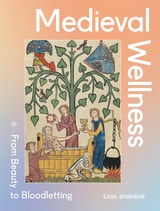
Medieval Wellness
From Beauty to BloodlettingLarisa Grollemond
J. Paul Getty Trust, The, 0
Dispelling myths of a dirty, superstitious Middle Ages, this entertaining volume explores medieval approaches to health and wellness.
Often maligned as an era of darkness and superstition, the Middle Ages in Europe have been stereotyped as lacking standards for basic hygiene, or, at the very least, for having a laughably simplistic approach to self-care and medicine. With wit and expert analysis, medievalist Larisa Grollemond explores everyday practices and beliefs of medieval life. She uncovers a world as nuanced and self-aware as our own while playfully connecting traditions from the Middle Ages to modern wellness culture.
- Challenges misconceptions of medieval Europe with engaging, evidence-based insights into hygiene and healthcare practices.
- Answers popular questions about daily life, including bathing, cosmetics, contraception, and the realities of medieval medical treatments.
- Features over 130 illustrations of illuminated manuscripts, medieval artifacts, and other art works that bring the past vividly to life.
- Connects medieval wellness practices to contemporary self-care trends, offering surprising parallels and fresh perspective.
If you think the Middle Ages were primitive and unsophisticated, this book will change your mind. With Medieval Wellness, you’ll discover a world of care, curiosity, and complexity that will feel familiar to your own.

Medieval and Early Renaissance Medicine
An Introduction to Knowledge and PracticeNancy G. Siraisi
University of Chicago Press, 1990

Memory and Dreams
The Creative Human MindGeorge Christos
Rutgers University Press, 2003
Why do we sleep? Why do we dream? How does the brain turn a collection of new experiences into memories, dreams, and creative thoughts?
After synthesizing much of what is known about the neurobiological basis of memory and dreaming, Memory and Dreams: The Creative Human Mind offers new interpretations of how memories are formed, the nature of creativity, the purpose of dream sleep, and, in its most original section, the causes of SIDS.
Memory is represented in the brain by specific neural firing patterns that share common neurons and connections. Mathematical models therefore suggest that the brain can generate its own set of “spurious memories” by combining various features of stored memories. George Christos suggests that these spurious memories represent the basis for creativity.
The function of dreaming in humans and almost all other mammals is one of the great unsolved biological mysteries. Christos argues that we dream in order to process recently acquired memories, to forget unimportant memories, and to generate more creative states. By organizing our memories, dreaming allows us to be more predisposed for learning the next day.
The last section of the book deals with one of the most puzzling and heartbreaking problems in medical science, SIDS. Christos posits that infants, through dreaming, may trigger fetal breathing pathways and stop breathing without any alarms going off. In other words, SIDS has no physical cause; the cause is in the mind of the infant, who “dreams” it is back in the safety of its mother’s womb—a state in which it does not breathe. Christos asserts that this is the only theory that explains the causes as well as the trigger mechanisms of SIDS and is consistent with all of the known facts. The book concludes with a list of suggested preventative measures derived from this provocative theory.

Mending Broken Soldiers
The Union and Confederate Programs to Supply Artificial LimbsGuy R. Hasegawa
Southern Illinois University Press, 2012
Guy R. Hasegawa presents the first volume to explore the wartime provisions made for amputees in need of artificial limbs—programs that were the forebears of modern governmental efforts to assist in the rehabilitation of wounded service members. Hasegawa offers a comprehensive look at the artificial-limb industry, including detailed descriptions of the ingenious designs employed by manufacturers; illustrations and photographs of period prosthetics; accounts of the rapid advancement of medical technology during the Civil War; and in-depth examinations of the companies that manufactured limbs for soldiers and bid for contracts, including at least one still in existence today. An intriguing account of innovation, determination, humanitarianism, and the devastating toll of battle, Mending Broken Soldiers provides a fascinating glimpse into groundbreaking military health programs during the most tumultuous years in American history.
Menopause
A Biocultural PerspectiveSievert, Lynnette Leidy
Rutgers University Press, 2006
Menopause is a biological reality for all women in their forties and fifties. Yet the way we think about the cessation of menstruation is influenced by a variety of factors. Cultural and technological influences combine with biology to transform this universal phenomenon into an experience that varies considerably between cultures and individuals. In this concise book, Lynnette Leidy Sievert draws on her own case studies from Puebla, Mexico, and western Massachusetts, as well as on comparative data from other studies in places such as Slovenia, Paraguay, and Hawaii, to explore the different ways that women experience menopause around the world. Sievert suggests that attempts by medical professionals to define the “normal” occurrence of menopause, including its typical onset and symptoms, may not be realistic when considering how lifestyle, nutrition, and workload can contribute to diverging realities. She explores how women feel about hysterectomies, chemotherapy, and other medical procedures and treatments that stop menstruation prematurely. She also considers recent advances in technology, including post-menopausal birth, which have turned what was previously an unavoidable end of fertility into something that can be postponed.
A unique comparative look at women’s experiences, this text brings new perspectives to the mainstream literature on the subject and invites readers to consider compelling questions about menopause, its meanings, and its future.

Mental Health Disorders in Adolescents
A Guide for Parents, Teachers, and ProfessionalsHazen, Eric P
Rutgers University Press, 2010
Additionally, Eric P. Hazen, Mark A. Goldstein, and Myrna Chandler Goldstein have compiled two practical appendices-one provides a list of resources, organizations, books, websites, and phone numbers for further information and support. The other serves as a "treatment organizer" to help parents know what school and medical data to bring to a psychiatric evaluation and teach them how to keep track of important discussions related to their child's treatment.
By recognizing the early symptoms of a psychiatric disorder, adults may be able to save a teen's life. Mental Health Disorders in Adolescents offers real options to anyone searching for ways to help at-risk teens.

Merchants of Medicines
The Commerce and Coercion of Health in Britain’s Long Eighteenth CenturyZachary Dorner
University of Chicago Press, 2020
In Merchants of Medicines, Zachary Dorner follows the earliest industrial pharmaceuticals from their manufacture in the United Kingdom, across trade routes, and to the edges of empire, telling a story of what medicines were, what they did, and what they meant. He brings to life business, medical, and government records to evoke a vibrant early modern world of London laboratories, Caribbean estates, South Asian factories, New England timber camps, and ships at sea. In these settings, medicines were produced, distributed, and consumed in new ways to help confront challenges of distance, labor, and authority in colonial territories. Merchants of Medicines offers a new history of economic and medical development across early America, Britain, and South Asia, revealing the unsettlingly close ties among medicine, finance, warfare, and slavery that changed people’s expectations of their health and their bodies.

Merger Games
The Medical College of Pennsylvania, Hahnemann University, and the Rise and Fall of the Allegheny Healthcare SystemJudith P. Swazey
Temple University Press, 2011
With deepening financial problems, Allegheny Heath, Education and Research Foundation filed for bankruptcy in 1998—in the midst of its landmark merger of The Medical College of Pennsylvania and Hahnemann University. What resulted was another dire event in an escalating disaster. As civil and criminal investigations probed Allegheny's collapse, the survival of the medical school and other health sciences university schools, and the operation of the hospitals hung in the balance. Fortunately, a savior arrived in the form of Drexel University who used this opportunity to create its own medical school.
Merger Games is Judith Swazey's gripping account of this historic transaction. Based on extraordinarily detailed first-hand research and continuous inside access to the developments, this book clearly delineates who the players were and what this merger means for the future of medical education and institutional healthcare.
Merger Games is a definitive history of one of the most important academic medicine mergers in Philadelphia and the country, which happened at a time when medical care was becoming commodified in almost every state.

Mergers of Teaching Hospitals in Boston, New York, and Northern California
John A. Kastor
University of Michigan Press, 2003
If a teaching hospital loses funding, what is the next option?
Mergers of Teaching Hospitals in Boston, New York, and Northern California investigates the recent mergers of six of the nation's most respected teaching hospitals. The author explains the reasons why these institutions decided to change their governance and the factors that have allowed two of them to continue to operate while forcing the third to dissolve after only 23 months of operation.
The case studies contained within this book rely on an impressive amount of research. Notably, instead of citing only published articles and books, the author includes information from numerous, extensive personal interviews with key participants in the various mergers. With this research the author not only presents to the reader a picture of why these mergers came about, but also investigates how the organizations have fared since joining together. The mergers are analyzed and compared in order to identify various methods of merger formation as well as ways in which other newly formed hospitals might accomplish a variety of important goals.
Offering a spectacular account of some of the mergers that occurred in the health care field at the close of the twentieth century, these stories provide insight into academia's relationship with teaching hospitals and the challenges involved in bringing prestigious and powerful medical institutions together. The institutions discussed are Partners, the corporation which includes the Massachusetts General Hospital and the Brigham and Women's Hospital, New York-Presbyterian Hospital, the union of the New York and Presbyterian hospitals in New York City, and the UCSF Stanford, the merged teaching hospitals of the University of California, San Francisco and Stanford. This book will particularly appeal to professionals and academics interested in medicine, business, and organizational studies.
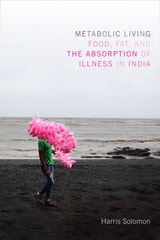
Metabolic Living
Food, Fat, and the Absorption of Illness in IndiaHarris Solomon
Duke University Press, 2016
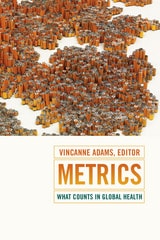
Metrics
What Counts in Global HealthVincanne Adams, editor
Duke University Press, 2016

Mexican Americans and Health
¡Sana! ¡Sana!Adela de la Torre and Antonia Estrada
University of Arizona Press, 2001
- how values such as machismo, familismo, and marianismo influence care-seeking decisions and treatment of illness;
- how factors such as cultural values, socioeconomic status, peer pressure, and family concerns can contribute to substance abuse;
- how cultural attitudes toward sex can heighten the risk of AIDS—and how approaches to AIDS prevention and education need to reflect core cultural values such as familismo, respeto, and confianza. The book also addresses concerns of Mexican Americans regarding the health care system. These include not only access to care and to health insurance but also the shortage of bilingual and bicultural health care professionals. This coverage stresses not only the importance of linguistic competency but also the need to understand folklore illnesses, herbal remedies, and spiritual practices that can delay the treatment of illness and either complement or compromise treatment. Of all the issues that face the contemporary Mexican American community, none is as important to its very survival as health and health care. This timely book gives readers a broad understanding of these complex issues and points the way toward a healthier future for all people of Mexican origin. Mexican Americans and Health and Chicano Popular Culture are the first volumes in the series The Mexican American Experience, a cluster of modular texts designed to provide greater flexibility in undergraduate education. Each book deals with a single topic concerning the Mexican American population. Instructors can create a semester-length course from any combination of volumes, or may choose to use one or two volumes to complement other texts.

Mexican Americans and Health
¡Sana! ¡Sana!Adela de la Torre and Antonio Estrada
University of Arizona Press, 2015
Given recent developments in health care and policy and a steadily increasing population of people of Mexican origin in the United States, a comprehensive look at Mexican American health has never been more necessary. Adela de la Torre and Antonio Estrada first accomplished such an overview with Mexican Americans and Health in 2001, and they have since continued to revise and expand their initial work. With a multitude of additions and renovations, Mexican Americans and Health, 2nd Edition provides a timely and accessible description of current topics in Latino health.
De la Torre and Estrada once again present a broad and nuanced understanding of recent issues involving Mexican American health and well-being, this time with the addition of discussions on:
* the new U.S. Human Development Index to contextualize the health, education, and income status of Mexican Americans relative to other population groups,
* emerging diseases, such as diabetes and obesity,
* recent health-care reforms under the Obama administration,
* substance abuse, sexual risk, and psychological distress among HIV-positive individuals in the gay/bisexual community,
* and predictions of future trends for the next decade.
This new volume has been updated throughout to reflect the many developments in health care since its first edition. Mexican Americans and Health, 2nd Edition continues to present data on a large number of health issues that are important and relevant to the Mexican American population, while describing the social contexts in which they are occurring. Its comprehensive and interdisciplinary approach brings originality and focus to a dynamic literature.

Microbial Resolution
Visualization and Security in the War against Emerging MicrobesGloria Chan-Sook Kim
University of Minnesota Press, 2024
An interdisciplinary study charting the war against microbial futures leads to a new theory of contemporary vision and visuality
In 1989, a group of U.S. government scientists met to discuss some surprising findings: new diseases were appearing around the world, and viruses that they thought long vanquished were resurfacing. Their appearance heralded a future perpetually threatened by unforeseeable biological risks, sparking a new concept of disease: the “emerging microbe.” With the Cold War nearing its end, American scientists and security experts turned to confront this new “enemy,” redirecting national security against its risky horizons. In order to be fought, emerging microbes first needed to be made perceptible; but how could something immaterial, unknowable, and ever mutating be coaxed into visibility, knowability, and operability?
Microbial Resolution charts the U.S.-led war on the emerging microbe to show how their uncertain futures were transformed into objects of global science and security. Moving beyond familiar accounts that link scientific knowledge production to optical practices of visualizing the invisible, Gloria Chan-Sook Kim develops a theory of “microbial resolution” to analyze the complex problematic that arises when dealing with these entities: what can be seen when there is nothing to see? Through a syncretic analysis of data mining, animal-tracking technologies, media networks, computer-modeled futures, and global ecologies and infrastructures, she shows how a visual impasse—the impossibility of seeing microbial futures—forms the basis for new modes of perceiving, knowing, and governing in the present.
Timely and thought provoking, Microbial Resolution opens up the rich paradoxes, irreconcilabilities, and failures inherent in this project and demonstrates how these tensions profoundly animate twenty-first-century epistemologies, aesthetics, affects, and ecologies.

Midwife to the Queen of France
Diverse ObservationsLouise Bourgeois
Iter Press, 2017

Midwifery and Childbirth in America
Judith Rooks
Temple University Press, 1999
The author vividly describes the history of struggle among health care providers over the meaning and handling of the birth process. The medical model and the midwifery model continue to collide today, the former focusing on pathology and monitoring the patient for it, the latter focusing on birth as a normal, healthy process.
The education and professional training of those who care for women during pregnancy, childbirth, and the important postpartum period reflects these divisions. Obstetrics, family physicians, midwives, nurses, and others play roles in providing the necessary care. In focusing on midwives, Rooks deals fairly and sensitively between certified nurse-midwives and direct-entry midwives, most of whom lack formal educational preparation in midwifery.
This book describes clearly and with documented scientific evidence the specific benefits of the midwifery approach to the care of pregnant women and their families. In clear language accessible to the lay reader, Rooks summarizes the research on the unintended effects of obstetrical interventions, such as episiotomies, epidurals, C-sections, and continuous electronic fetal heart monitoring, and the effectiveness and important benefits of an approach that focuses on the positive potential of childbearing, as contrasted with a narrow focus of potential for pathology. While she acknowledges the importance of access to medical care, extensive research shows the advantages of the midwifery approach. Much that passes for "routine" obstetric care in the United States has been found to be unnecessary, ineffective, or even harmful when applied to women with normal pregnancies.
The arguments over the control of childbirth are set in the context of recent changes in health care, including the current transition to managed care; the impact of the women's movement and movements for natural childbirth, home birth, and breastfeeding; and women's fear of and concern about the pain associated with labor. Rooks also explains the influence of the reports and recommendations of prestigious scientific and health-policy commissions and of federal initiatives and programs on the care provided to pregnant women in this country. She contrasts U.S. practices with those of comparable industrialized countries like the European states, Canada, Australia, New Zealand, and Japan.
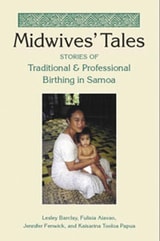
Midwives' Tales
Stories of Traditional and Professional Birthing in SamoaLesley Barclay
Vanderbilt University Press, 2005
The overall picture of changing birthing practices is complex and sometimes tinged with ironies. As the introduction says, "These Samoan nurses and midwives did not immediately attempt to mediate new and old ways of birthing after the colonial leadership of their profession left. They themselves became cultural agents for change as they continued the role of 'colonizing' their own birth tradition and taught the fa'atosaga [Samoan for midwife] Western techniques, at the same time trying to provide a professional midwife for all women. Paradoxically they often chose a social midwife for their own births and supported or at least condoned the social midwives close to them. . . . Kaisarina, while working as the leading professional midwife in the country, and working almost totally in hospital practice herself, simultaneously assisted her mother-in-law with her social practice of midwifery. Vipulo's story shows how a professional midwife preferred to have her mother, a social midwife, deliver her at home."
A particular objective of the authors is to encourage a reconception of maternity care in countries where professional services are rare and not available to all women. The book challenges common assumptions, still held in many postcolonial countries, that a simple migration of Western-style, hospital-focused care is necessarily always an achievable or desirable goal. It also demonstrates the considerable progress that one group has made in rethinking and developing a model of maternity care that works within their society and culture. As these midwives' stories suggest, solutions to some of the problems caused by gaps in the kinds of resources that Westerners take for granted can be found in partnerships and cultural wisdom that already exist in Samoa and, by extension, other developing countries.

Migrants Who Care
West Africans Working and Building Lives in U.S. Health CareFumilayo Showers
Rutgers University Press, 2023
This book reveals the global, political, social, and economic factors that have facilitated the entry of West African women and men into the health care labor force (home and institutional care for older adults and individuals with physical and intellectual disabilities; and skilled nursing). It highlights these immigrants’ role as labor brokers who tap into their local ethnic and immigrant communities to channel co-ethnics to meet this labor demand. It illustrates how West African care workers understand their work across various occupational settings and segments in the health care industry. This book reveals the transformative processes migrants undergo as they become produced, repackaged, and deployed as health care workers after migration.
Ultimately, this book tells the very real and human story of an immigrant group surmounting tremendous obstacles to carve out a labor market niche in health care, providing some of the most essential and intimate aspects of care labor to the most vulnerable members of society.
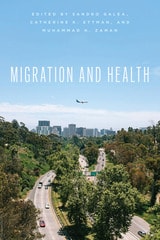
Migration and Health
Edited by Sandro Galea, Catherine K. Ettman, and Muhammad H. Zaman
University of Chicago Press, 2022
International migrants compose more than three percent of the world’s population, and internal migrants—those migrating within countries—are more than triple that number. Population migration has long been, and remains today, one of the central demographic shifts shaping the world around us. The world’s history—and its health—is shaped and colored by stories of migration patterns, the policies and political events that drive these movements, and narratives of individual migrants.
Migration and Health offers the most expansive framework to date for understanding and reckoning with human migration’s implications for public health and its determinants. It interrogates this complex relationship by considering not only the welfare of migrants, but also that of the source, destination, and ensuing-generation populations. The result is an elevated, interdisciplinary resource for understanding what is known—and the considerable territory of what is not known—at an intersection that promises to grow in importance and influence as the century unfolds.
Missing Words
The Family Handbook on Adult Hearing LossKay Thomsett
Gallaudet University Press, 1993
Mistreated
The Political Consequences of the Fight against AIDS in LesothoNora Kenworthy
Vanderbilt University Press, 2017
In Lesotho, which has the world's second highest HIV prevalence, HIV treatment has had unintentional but pervasive political costs, distancing citizens from the government, fostering distrust of health programs, and disrupting the social contract. Based on ethnographic observation between 2008 and 2014, this book chillingly anticipates the political violence and instability that swept through Lesotho in 2014.
This book is a recipient of the Norman L. and Roselea J. Goldberg Prize from Vanderbilt University Press for the best book in the area of medicine.
Mixed Medicines
Health and Culture in French Colonial CambodiaSokhieng Au
University of Chicago Press, 2011
During the first half of the twentieth century, representatives of the French colonial health services actively strove to expand the practice of Western medicine in the frontier colony of Cambodia. But as the French physicians ventured beyond their colonial enclaves, they found themselves negotiating with the plurality of Cambodian cultural practices relating to health and disease. These negotiations were marked by some success, a great deal of misunderstanding, and much failure.
Bringing together colorful historical vignettes, social and anthropological theory, and quantitative analyses, Mixed Medicines examines these interactions between the Khmer, Cham, and Vietnamese of Cambodia and the French, documenting the differences in their understandings of medicine and revealing the unexpected transformations that occurred during this period—for both the French and the indigenous population.
Mobilizing Mutations
Human Genetics in the Age of Patient AdvocacyDaniel Navon
University of Chicago Press, 2019
Drawing on a wealth of fieldwork and historical material, Navon presents a sociological account of the ways genetic mutations have been mobilized and transformed in the sixty years since it became possible to see abnormal human genomes, providing a new vista onto the myriad ways contemporary genetic testing can transform people’s lives.
Taking us inside these shifting worlds of research and advocacy over the last half century, Navon reveals the ways in which knowledge about genetic mutations can redefine what it means to be ill, different, and ultimately, human.