Results by title
3258 books match the query 'Performing Arts' and 184 start with m
Maurice Tourneur
Weaver of DreamsChristine Leteux, Foreword by Robert Byrne
University of Wisconsin Press, 2026
In 1914, an unknown French filmmaker arrived in New York; within four years, Maurice Tourneur (1876–1961) would become one of America’s most acclaimed directors. In this masterful biography, Christine Leteux shows how intimately connected Tourneur’s life was to major events of the twentieth century as well as to the profound transformations in movie making. A master of directing silent films, he quickly managed the transition to sound. His last major work was created for Continental Films, the German-owned firm that controlled the French film industry during the Nazi Occupation. His son, Jacques, followed in his footsteps, also becoming an acclaimed director.
Drawing heavily on previously unpublished archival documents, Leteux reinvigorates film history and demonstrates that we know far less about this era of filmmaking than we often assume. She reveals not only how Tourneur jumped from France to the United States and back again but also how he shifted from one company to another, moving quickly up the ladder to bigger productions and ever larger studios. Tourneur’s drive, insight, technical proficiency, skill with actors, ability to create new forms of storytelling, and fame on both sides of the Atlantic make it all the more surprising that he is not better known today—an oversight that has now been corrected thanks to Leteux’s impressively detailed research and nuanced storytelling.
Max Ophuls in the Hollywood Studios
Bacher, Lutz
Rutgers University Press, 1996
Max Ophuls, who is considered one of the greatest film directors of all time, has long been seen as an “auteur”––the artist in complete control of his work. Lutz Bacher’s examination of his American career gives us a unique perspective on the workings of the Hollywood system and the struggle of a visionary to function within it. He thus establishes clear connections between the production contexts of Ophuls' American films and their idiosyncratic style.
Drawing on documents in many archives and on interviews with more than sixty of Ophuls' contemporaries, Bacher traces the European director's struggle to find a niche in the U.S. film industry. He describes how Ophuls ran the gamut from ghost writing to substitute directing, to a debilitating association with Preston Sturges and Howard Hughes, to making four films––Letter from an Unknown Woman and Caught among them––in thirty months, and then returning to Europe with a runaway production that was to have starred Greta Garbo. Throughout, Bacher demonstrates that Ophuls' bending of conventional Hollywood methods to his own will through compromise and subversion allowed him to achieve a style that was both uniquely American and a point of departure for his later work. A rare synthesis of production history, stylistic analysis, and biography, this book is essential reading for serious film scholars and fans of the director’s work.
Max Reinhardt
From Bourgeois Theater to Metropolitan CulturePeter W. Marx, translated from the German by Robert E. Goodwin
Northwestern University Press, 2024
At the same time, Reinhardt soon longed for an international range: guest performances throughout Europe and to the US soon made him into a global star – and even a brand. He represents a metropolitan culture that roots in the late nineteenth century but comes to an end when Fasicsm in Europe ended any hopes for an international culture. As a Jew, Reinhardt himself had to flee the Nazis but when he eventually arrived in the US, he could not follow up with his earlier successes. Marx provides a broad panorama of Reinhardt's work, portraying not only his work method and some of his best known productions, but also the cultural conditions of his visionary enterprise.
Maximum Movies—Pulp Fictions
Film Culture and the Worlds of Samuel Fuller, Mickey Spillane, and Jim ThompsonStanfield, Peter
Rutgers University Press, 2011
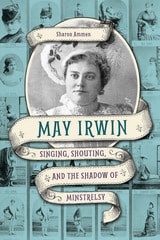
May Irwin
Singing, Shouting, and the Shadow of MinstrelsySharon Ammen
University of Illinois Press, 2017
Sharon Ammen's in-depth study traces Irwin's hurly-burly life. Irwin gained fame when, layering aspects of minstrelsy over ragtime, she popularized a racist "Negro song" genre. Ammen examines this forgotten music, the society it both reflected and entertained, and the ways white and black audiences received Irwin's performances. She also delves into Irwin's hands-on management of her image and career, revealing how Irwin carefully built a public persona as a nurturing housewife whose maternal skills and performing acumen reinforced one another. Irwin's act, soaked in racist song and humor, built a fortune she never relinquished. Yet her career's legacy led to a posthumous obscurity as the nation that once adored her evolved and changed.
Mean Girl Feminism
How White Feminists Gaslight, Gatekeep, and GirlbossKim Hong Nguyen
University of Illinois Press, 2024
Mean girl feminism encourages girls and women to be sassy, sarcastic, and ironic as feminist performance. Yet it coopts its affect, form, and content from racial oppression and protest while aiming meanness toward people in marginalized groups.
Kim Hong Nguyen’s feminist media study examines four types of white mean girl feminism prominent in North American popular culture: the bitch, the mean girl, the power couple, and the global mother. White feminists mime the anger, disempowerment, and resistance felt by people of color and other marginalized groups. Their performance allows them to pursue and claim a special place within established power structures, present as intellectually superior, substitute nonpolitical playacting for a politics of solidarity and community, and position themselves as better, more enlightened masters than patriarchy. But, as Nguyen shows, the racialized meanness found across pop culture opens possibilities for building an intersectional feminist politics that rejects performative civility in favor of turning anger into liberation.
Meaning in Motion
New Cultural Studies of DanceJane C. Desmond, ed.
Duke University Press, 1997
Writing from a broad range of perspectives, contributors from disciplines as varied as art history and anthropology, dance history and political science, philosophy and women’s studies chart the questions and challenges that mark this site. How does dance enact or rework social categories of identity? How do meanings change as dance styles cross borders of race, nationality, or class? How do we talk about materiality and motion, sensation and expressivity, kinesthetics and ideology? The authors engage these issues in a variety of contexts: from popular social dances to the experimentation of the avant-garde; from nineteenth-century ballet and contemporary Afro-Brazilian Carnival dance to hip hop, the dance hall, and film; from the nationalist politics of folk dances to the feminist philosophies of modern dance. Giving definition to a new field of study, Meaning in Motion broadens the scope of dance analysis and extends to cultural studies new ways of approaching matters of embodiment, identity, and representation.
Contributors. Ann Cooper Albright, Evan Alderson, Norman Bryson, Cynthia Cohen Bull, Ann Daly, Brenda Dixon Gottschild, Susan Foster, Mark Franko, Marianne Goldberg, Amy Koritz, Susan Kozel, Susan Manning, Randy Martin, Angela McRobbie, Kate Ramsey, Anna Scott, Janet Wolff
Meaninglessness
Time, Rhythm, and the Undead in Postcolonial CinemaVlad Dima
Michigan State University Press, 2023

Mechademia 3
Limits of the HumanFrenchy Lunning
University of Minnesota Press, 2008
Limits of the Human—the third volume in the Mechademia series—maps the terrain of posthumanity using manga and anime as guides and signposts to understand how to think about humanity’s new potentialities and limits. Through a wide range of texts—the folklore-inspired monsters that populate Mizuki Shigeru’s manga; Japan’s Gothic Lolita subculture; Tezuka Osamu’s original cyborg hero, Atom, and his manga version of Fritz Lang’s Metropolis (along with Ôtomo Katsuhiro’s 2001 anime film adaptation); the robot anime, Gundam; and the notion of the uncanny in Ghost in the Shell 2: Innocence, among others—the essays in this volume reject simple human/nonhuman dichotomies and instead encourage a provocative rethinking of the definitions of humanity along entirely unexpected frontiers.
Contributors: William L. Benzon, Lawrence Bird, Christopher Bolton, Steven T. Brown, Joshua Paul Dale, Michael Dylan Foster, Crispin Freeman, Marc Hairston, Paul Jackson, Thomas LaMarre, Antonia Levi, Margherita Long, Laura Miller, Hajime Nakatani, Susan Napier, Natsume Fusanosuke, Sharalyn Orbaugh, Ôtsuka Eiji, Adèle-Elise Prévost and MUSEbasement; Teri Silvio, Takayuki Tatsumi, Mark C. Taylor, Theresa Winge, Cary Wolfe, Wendy Siuyi Wong, and Yomota Inuhiko.

Mechademia 5
FanthropologiesFrenchy Lunning
University of Minnesota Press, 2010
Media Crossroads
Intersections of Space and Identity in Screen CulturesPaula J. Massood, Angel Daniel Matos, and Pamela Robertson Wojcik, editors
Duke University Press, 2021
Contributors. Amy Corbin, Desirée J. Garcia, Joshua Glick, Noelle Griffis, Malini Guha, Ina Rae Hark, Peter C. Kunze, Paula J. Massood, Angel Daniel Matos, Nicole Erin Morse, Elizabeth Patton, Matthew Thomas Payne, Merrill Schleier, Jacqueline Sheean, Sarah Louise Smyth, Erica Stein, Kirsten Moana Thompson, John Vanderhoef, Pamela Robertson Wojcik
Media Heterotopias
Digital Effects and Material Labor in Global Film ProductionJean Hye Chung
Duke University Press, 2018
Media Laboratories
Late Modernist Authorship in South AmericaSarah Ann Wells
Northwestern University Press, 2017
Media Laboratories explores a pivotal time for South American literature of the 1930s and ’40s. Cinema, radio, and the typewriter, once seen as promising catalysts for new kinds of writing, began to be challenged by authors, workers, and the public. What happens when media no longer seem novel and potentially democratic but rather consolidated and dominant? Moving among authors from Brazil, Argentina, and Uruguay, and among the genres of fiction, the essay, popular journalism, and experimental little magazines, Sarah Ann Wells shows how writers on the periphery of global modernity were fashioning alternative approaches to these media. Analyzing authors such as Clarice Lispector, Jorge Luis Borges, and Felisberto Hernández, along with their lesser-known contemporaries, Media Laboratories casts a wide net: from spectators of Hollywood and Soviet montage films, to inventors of imaginary media, to proletarian typists who embodied the machine-human encounters of the period. The text navigates contemporary scholarly and popular debates about the relationship of literature to technological innovation, media archaeology, sound studies, populism, and global modernisms. Ultimately, Wells underscores a question that remains relevant: what possibilities emerge when the enthusiasm for new media has been replaced by anxiety over their potentially pernicious effects in a globalizing, yet vastly unequal, world?
Media Theory in Japan
Marc Steinberg and Alexander Zahlten, editors
Duke University Press, 2017
Media and the Affective Life of Slavery
Allison Page
University of Minnesota Press, 2022
How media shapes our actions and feelings about race
Amid fervent conversations about antiracism and police violence, Media and the Affective Life of Slavery delivers vital new ideas about how our feelings about race are governed and normalized by our media landscape. Allison Page examines U.S. media from the 1960s to today, analyzing how media culture instructs viewers to act and feel in accordance with new racial norms created for an era supposedly defined by an end to legal racism.
From the classic television miniseries Roots to the edutainment video game Mission 2: Flight to Freedom and the popular website slaveryfootprint.org, Media and the Affective Life of Slavery provides an in-depth look at the capitalist and cultural artifacts that teach the U.S. public about slavery. Page theorizes media not only as a system of representation but also as a technology of citizenship and subjectivity, wherein race is seen as a problem to be solved. Ultimately, she argues that visual culture works through emotion, a powerful lever for shaping and managing racialized subjectivity.
Media and the Affective Life of Slavery delivers compelling, provocative material and includes a wealth of archival research into such realms as news, entertainment, television, curricula, video games, and digital apps, providing new and innovative scholarship where none currently exists.
Mediating Alzheimer's
Cognition and PersonhoodScott Selberg
University of Minnesota Press, 2022
An exploration of the representational culture of Alzheimer’s disease and how media technologies shape our ideas of cognition and aging
With no known cause or cure despite a century of research, Alzheimer’s disease is a true medical mystery. In Mediating Alzheimer’s, Scott Selberg examines the nature of this enduring national health crisis by looking at the disease’s relationship to media and representation. He shows how collective investments in different kinds of media have historically shaped how we understand, treat, and live with this disease.
Selberg demonstrates how the cognitive abilities that Alzheimer’s threatens—memory, for example—are integrated into the operations of representational technologies, from Polaroid photographs to Post-its to digital artificial intelligence. Focusing on a wide variety of media technologies, such as neuroimaging, art therapy, virtual reality, and social media, he shows how these cognitively oriented media ultimately help define personhood for people with Alzheimer’s. Media have changed the practices of successful aging in the United States, and Selberg takes us deep into how technologies like digital brain-training and online care networks shape ideas of cognition and healthy aging.
Packed with startlingly fresh insights, Mediating Alzheimer’s contributes to debates around bioethics, the labor of caregiving, and a national economy increasingly invested in communication and digital media. Probing the very technologies that promise to save and understand our brains, it gives us new ways of understanding Alzheimer’s disease and aging in America.
Mediating the Uprising
Narratives of Gender and Marriage in Syrian Television DramaRebecca Joubin
Rutgers University Press, 2020
While for some screenwriters a return to pre-2011 life would be welcome after so much bloodshed, others advocated profound cultural and social transformation, instead. They employed marriage and gender metaphors in the stories they wrote to engage in political critique, even at the risk of creating marketing difficulties for the shows or they created escapist stories such as transnational adaptations and Old Damascus tales. Serving as heritage preservation, Mediating the Uprising underscores that television drama creators in Syria have many ways of engaging in protest, with gender and marriage at the heart of the polemic.

Medical Clowning
The Healing PerformanceAmnon Raviv
Seagull Books, 2016
Medical Clowning is the first guide to this phenomenon, summing up decades of research, education, and practice to give readers a comprehensive look into this innovative field. Amnon Raviv analyzes the performance of medical clowns, looking at research and case studies, and goes on to propose a training and evaluation model, including hands-on exercises to train experienced clowns for work in hospitals.
Medium Cool
Music Videos from Soundies to CellphonesRoger Beebe and Jason Middleton, eds.
Duke University Press, 2007
The essays take on a range of topics, including questions of authenticity, the tension between high-art influences and mass-cultural appeal, the prehistory of music video, and the production and dissemination of music videos outside the United States. Among the thirteen essays are a consideration of how the rapper Jay-Z uses music video as the primary site for performing, solidifying, and discarding his various personas; an examination of the recent emergence of indigenous music video production in Papua New Guinea; and an analysis of the cultural issues being negotiated within Finland’s developing music video industry. Contributors explore precursors to contemporary music videos, including 1950s music television programs such as American Bandstand, Elvis’s internationally broadcast 1973 Aloha from Hawaii concert, and different types of short musical films that could be viewed in “musical jukeboxes” of the 1940s and 1960s. Whether theorizing music video in connection to postmodernism or rethinking the relation between sound and the visual image, the essays in Medium Cool reveal music video as rich terrain for further scholarly investigation.
Contributors. Roger Beebe, Norma Coates, Kay Dickinson, Cynthia Fuchs, Philip Hayward, Amy Herzog, Antti-Ville Kärjä, Melissa McCartney, Jason Middleton, Lisa Parks, Kip Pegley, Maureen Turim, Carol Vernallis, Warren Zanes
Mel Gibson's Bible
Religion, Popular Culture, and "The Passion of the Christ"Edited by Timothy K. Beal and Tod Linafelt
University of Chicago Press, 2005
In this volume, biblical scholars Timothy K. Beal and Tod Linafelt—along with an esteemed group of contributors—offer a provocative range of views on The Passion of the Christ. Their book is organized in three parts. The first analyzes the film in terms of its religious foundations, including the Gospels and nonbiblical religious texts: What are the film's literary sources and how does it use them? In what ways does the medium of film require a radically different way of representing gospel narrative? The second group of essays focuses on the ethical and theological implications of the film's presentation of the Christian gospel: What do we make of its representations of female sexuality? What are the implications of focusing on the Passion in terms of atonement rather than social justice? Finally, the third section explores the film as a pop cultural phenomenon: How has the film worked to create a sense of insider status for some and alienated so many others? What can we learn about the religious dimensions of contemporary mass culture from the film's reception?
Whether one is inspired or appalled by The Passion of the Christ, there can be no question that it is a defining moment in the cultural afterlife of the Bible. This volume tries to make sense of that moment and will prove to be a touchstone for adherents and detractors of the film alike.
Melancholy Drift
Marking Time in Chinese CinemaJean Ma
Hong Kong University Press, 2010
Melodrama as Provocateur
Linda Williams. Edited by Christine Gledhill, Laura Horak, and Elisabeth R. Anker
Duke University Press, 2026
Melodrama
An Aesthetics of ImpossibilityJonathan Goldberg
Duke University Press, 2016
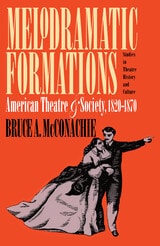
Melodramatic Formations
American Theatre and Society, 1820-1870Bruce A. Mcconachie
University of Iowa Press, 1992
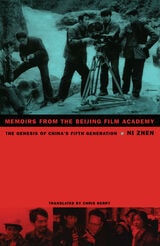
Memoirs from the Beijing Film Academy
The Genesis of China's Fifth GenerationZhen Ni
Duke University Press, 2002
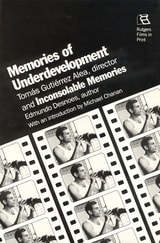
Memories Of Underdevelopment
Chanan, Michael
Rutgers University Press, 1990
This double volume includes the complete continuity script of Memories, as well as the complete novel, Inconsolable Memories, upon which the film is based. An interview with Alea is reproduced here, as well as documentation of the political controversy that surrounded the film in this country. Michael Chanan's introduction places the film in the context of Cuban political and cultural history. The volume also includes a biographical sketch of Alea, a chronology of the Cuban Revolution, reviews, commentary, a filmography, and a bibliography.Michael Chanan lives in England, where he teaches and writes on film. He is the author of The Cuban Image: Cinema and Cultural Politics in Cuba.
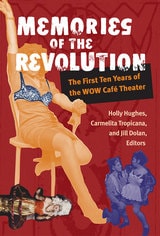
Memories of the Revolution
The First Ten Years of the WOW Café TheaterHolly Hughes, Carmelita Tropicana, and Jill Dolan, Editors
University of Michigan Press, 2015
Memory, Meaning, and Resistance
Reflecting on Oral History and Women at the MarginsFran Leeper Buss
University of Michigan Press, 2017
Memory, Transitional Justice, and Theatre in Postdictatorship Argentina
Noe Montez
Southern Illinois University Press, 2018
Montez explores how the sociohistorical phenomenon of the Teatroxlaidentidad—an annual showcase staged with the support of Argentina’s Grandmothers of the Plaza de Mayo—acted as a vehicle for drawing attention to the hundreds of children kidnapped from their families during the dictatorship and looks at why the memory narratives regarding the Malvinas Islands (also known as the Falklands) range from ideological appropriations of the islands, to absurdist commentaries about the failed war that signaled the dictatorship’s end, to the islands’ heavily contested status today.
Memory, Transitional Justice, and Theatre in Postdictatorship Argentina explores the vibrant role of theatrical engagement in postdictatorship Argentina, analyzes plays by artists long neglected in English-language articles and books, and explores the practicalities of staging performances in Latin America.
Memory-Theater and Postmodern Drama
Jeanette R. Malkin
University of Michigan Press, 1999

Men, War and Film
The Calling Blighty Films of World War IISteve Hawley
Intellect Books, 2025
The Calling Blighty series of films produced by the Combined Kinematograph Service around the end of World War II were one-reel films in which soldiers of the “Forgotten Army” gave short spoken messages to the camera as a means of connecting the front line and the home front. Shown in local cinemas, these were the first films in which men spoke openly in their regional accents, and they hold profound meaning for remembrance, documentary representation, and the ecology of film in wartime. Of the four hundred films made on the Far Eastern Front, only sixty-four survive. Until now, however, these films have barely been researched, despite being a valuable source of social history. This book expands the history of Calling Blighty, placing it in a broader context for contemporary audiences.
Menander and the Birth of Domestic Drama
Mitch Brown
University of Wisconsin Press, 2024
The design of the Greek stage was such that the interiors of houses were almost never shown, which posed difficulties for a playwright interested in staging the domestic lives of ordinary people. Here, Mitch Brown dissects how Menander responded to this challenge. As Brown demonstrates, Menander successfully conjured offstage action and even characters in the audiences’ imaginations; these offstage universes, Brown argues, are fundamental to understanding Menander’s dramaturgy and its reception in later centuries. Menander’s offstage methods and the new type of play (domestic drama) that he inaugurated directly influenced Western theater into the early modern period—and the impact of his innovations can still be seen indirectly today.
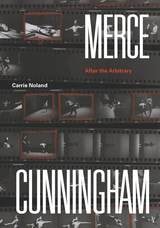
Merce Cunningham
After the ArbitraryCarrie Noland
University of Chicago Press, 2019
Examining a rich and previously unseen archive that includes photographs, film footage, and unpublished writing by Cunningham, Noland counters prior understandings of Cunningham’s influential embrace of the unintended, demonstrating that Cunningham in fact set limits on the role chance played in his dances. Drawing on Cunningham’s written and performed work, Noland reveals that Cunningham introduced variables before the chance procedure was applied and later shaped and modified the chance results. Chapters explore his relation not only to Cage, but also Marcel Duchamp, Robert Rauschenberg, James Joyce, and Bill T. Jones. Ultimately, Noland shows that Cunningham approached movement as more than “movement in itself,” and that his work enacted archetypal human dramas. This remarkable book will forever change our appreciation of the choreographer’s work and legacy.
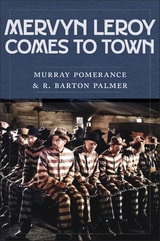
Mervyn LeRoy Comes to Town
Murray Pomerance
Rutgers University Press, 2025
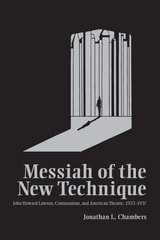
Messiah of the New Technique
John Howard Lawson, Communism, and American Theatre, 1923-1937Jonathan L. Chambers
Southern Illinois University Press, 2006
Messiah of the New Technique: John Howard Lawson, Communism, and American Theatre, 1923–1937 is a critical and political biography and a cultural and social history that focuses on Lawson’s career in the theatre. Using a materialist methodology, Jonathan L. Chambers emphasizes the evolution and interplay of the playwright’s artistic vision and political ideology, considering his art as both a documentation of this evolution and a product of the socio-political and cultural matrix in which he was immersed.
Spanning the playwright’s career, the volume details Lawson’s early indoctrination in and commitment to the avant-garde, his use and development of various nonrealistic playwriting techniques, his subtle though unfocused attacks on bourgeois society, and the varied critical responses he received. Chambers addresses Lawson’s involvement with the New Playwrights’ Theatre and his participation in the protests surrounding the case of Nicola Sacco and Bartolomeo Vanzetti, which stimulated his growing commitment to left-wing politics and radical causes.
Chambers also analyzes the social and cultural factors that shaped Lawson’s growing interest in revolutionary politics, his tutelage in Marxism under Edmund Wilson, and his tenure as president of the Screen Writers Guild. He also covers the final phase of Lawson’s playwriting career, which reveals the playwright’s internal struggle. That struggle, suggests Chambers, pitted Lawson’s view of aesthetics against his political ideology and is reflected in his scripts and theoretical writings.
Messiah of the New Technique provides a wealth of new material about both the playwright and the period, offering a critical synopsis of the artist’s career, addressing his often vehement rebuttals to his critics, and summarizing both his political activism and his creative and critical endeavors in the last forty years of his life.
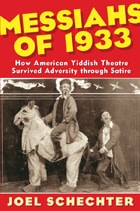
Messiahs of 1933
How American Yiddish Theatre Survived Adversity through SatireJoel Schechter
Temple University Press, 2008
Joel Schechter has rediscovered the funny and often politically-charged plays of the American Yiddish theatre of the 1930s. In Messiahs of 1933 he celebrates their satire, their radical imagination, and their commitment to social change. He introduces readers to the once-famous writers and actors—Moishe Nadir, David Pinski, Yosl Cutler, and others—who brought into artistic form their visions of peace, social justice, and satire for all.
Messiahs of 1933 greatly enlarges our understanding of Yiddish theatre and culture in the United States. It examines the innovative stage performances created by the Artef collective, the Modicut puppeteers, and the Yiddish Unit of the Federal Theatre Project. And it introduces to contemporary readers some of the most popular theatre actors of the 30s, including Leo Fuchs, Menasha Skulnik, and Yetta Zwerling. Throughout, it includes relevant photographs and contemporary comic strips, along with the first English-language publication of excerpts from the featured plays.
Metafilm
Materialist Rhetoric and Reflexive CinemaChristopher Carter
The Ohio State University Press, 2018
Ultimately, Metafilm reframes materialism as a multimodal composing-in-action, or reflexive materialism, focusing on movies that dramatize their entanglement in economic and historical trauma while provoking forms of resistance during and after viewing. Carter contends that even as we recognize the division of social power in the films, we must also recognize how the concept is subversive and eludes control. In looking at the interplay between the films’ content and their production, circulation, and reception, Carter explores how the films persuade us to identify with onscreen worlds before probing our expectations—validating some, rejecting others, and sometimes proposing new ways of watching altogether.
Metaphysical Media
The Occult Experience in Popular CultureEmily D. Edwards
Southern Illinois University Press, 2005
Metaphysical Media focuses on the blurred definitions of topics associated with the occult as they are presented in popular culture to show moving-image media as devices that help structure an understanding of the supernatural world. Edwards examines what media treatment of supernatural subjects and the very characteristics of the media themselves reveal about the persistence of the occult. She maintains that popular art has always had a close association with the paranormal or supernatural— sometimes in illustration of an ideology, sometimes in ridicule of it, and sometimes as invocation itself.
Beginning with an overview of the role of the media in contemporary society and in its use of the occult, Metaphysical Media looks at the properties of media technology that extend human senses beyond biological boundaries. Edwards then discusses specific media treatment of topics related to the occult, including witchcraft, atavism, reincarnation, out-of-body experiences, and lycanthropy. She outlines the interplay of media and folklore regarding taboos about the handling of the dead and investigates media stories about creatures that cross the boundaries between human, beast, and god.
Method Acting and Its Discontents
On American Psycho-DramaShonni Enelow
Northwestern University Press, 2015
Method Acting and Its Discontents: On American Psycho-Drama provides a new understanding of a crucial chapter in American theater history. Enelow’s consideration of the broader cultural climate of the late 1950s and early 1960s, specifically the debates within psychology and psychoanalysis, the period’s racial and sexual politics, and the rise of mass media, gives us a nuanced, complex picture of Lee Strasberg and the Actors Studio and contemporaneous works of drama. Combining cultural analysis, dramaturgical criticism, and performance theory, Enelow shows how Method acting’s contradictions reveal powerful tensions inside mid-century notions of individual and collective identity.

Methods and Practice of Elizabethan Swordplay
Craig Turner and Tony Soper. Foreword by Joseph Papp
Southern Illinois University Press, 1990
Featuring period drawings and prints of swordplay, this book examines and compares three Elizabethan fencing manuals written in English before 1600: Giacomo Di Grassi’s His True Arte of Defense (1594), Vincentio Saviolo’s His Practice in Two Bookes (1595), and George Silver’s Paradoxes of Defence and Bref Instructions upon My Paradoxes of Defence (1599).
More than a technical manual on swordplay, this book explores the influence of a new form of violence introduced into Elizabethan culture by the invention of the rapier. The authors examine the rapier’s influence on the various social classes, the clash between the traditional English fencing masters and those embracing the new style, the growing concern with unregulated dueling, and the frequent references to rapier play in the works of Shakespeare and his contemporaries.
As producer Joseph Papp notes in his foreword, this is a book that "makes a difference in performance."
Metro Movies
Cinematic Urbanism in Post-Mao ChinaHarry H. Kuoshu
Southern Illinois University Press, 2010
Metro Movies: Cinematic Urbanism in Post-Mao China takes readers on a comprehensive tour of the urbanization of Chinese cinema. Focusing primarily on movies from the end of the twentieth century, it is the first single-authored work to explore the relationship between the changes in Chinese society—caused in part by the advent of postsocialism, the growth of cities, and globalization—and the transformation of Chinese cinema. Author Harry H. Kuoshu examines such themes as displacement, cinematic representation, youth subculture, the private emotional lives of emerging urbanites, raw urban realism, and the allegorical contrast of the city and the countryside to illustrate the artistic richness and cultural diversity of this cinematic genre.
Kuoshu discusses the work of director Huang Jianxin, whose films follow and critique China’s changing urban political culture. He dedicates a chapter to filmmakers who followed Huang and attempted to redefine the concept of art films to regain the local audience. These directors address Chinese moviegoers’ disappointment with the international adoption of Chinese art films, their lack of interest in conventional Chinese films, and their fascination with emerging audio-video media. A considerable amount of attention is given to films of the 1990s, which focus on the social changes surfacing in China, from the trend of hooliganism and the Beijing rock scene to the arrival of an urban pop culture lifestyle driven by expansionist commerce and materialism. Kuoshu also explores recent films that confront the seedier aspects of city life, as well as films that demonstrate how urbanization has touched every fiber of Chinese living.
Metro Movies illustrates how cinematic urbanism is no longer a genre indicator but is instead an era indicator, revealing the dominance of metropolitan living on modern Chinese culture. It gives new insight into contemporary Chinese politics and culture and provides readers with a better understanding of China’s urban cinema. This book will be an excellent addition to college film courses and will fascinate any reader with an interest in film studies or Chinese culture.
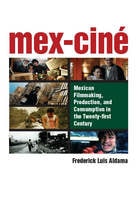
Mex-Ciné
Mexican Filmmaking, Production, and Consumption in the Twenty-first CenturyFrederick Luis Aldama
University of Michigan Press, 2013

Mexican Cinema in the Digital Age
Marvin D'Lugo
University of Texas Press, 0
Tracing the integration of digital technologies in film production and distribution that empowered a generation of filmmakers and expanded the global market for Mexican films.
Digital filmmaking and distribution have transformed the movies from what gets made and how to who gets to experience it. But while this has been a global evolution, local cultural forces have also played a decisive role. Mexico is a case in point. In Mexican Cinema in the Digital Age, Marvin D’Lugo traces the dramatic impact of technological innovation on one country’s film industry and aesthetics, revealing profound interactions between art and nation in an era when cultural products know no borders.
Through close analysis of more than twenty movies made this century, D’Lugo shows how technological advances fed the creative energies of Mexican filmmakers. In particular, the agility of the mobile digital camera contributed to a new audiovisual style in Mexico, which achieved global commercial success in the pre-streaming age. Since then, the rise of streaming has encouraged filmmakers to create works that are understood as distinctively Mexican yet marketable to global audiences. As a result, ordinary Mexicans increasingly see their own society through the eyes of outsiders. D’Lugo argues that the consequence has been a novel political subjectivity, as today’s cinema promotes a sense of Mexican cultural affiliation shorn of old nationalist tropes.
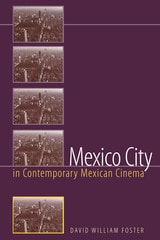
Mexico City in Contemporary Mexican Cinema
By David William Foster
University of Texas Press, 2002
Just as Mexican national life has come to center on the sprawling, dynamic, almost indefinable metropolis of Mexico City, so recent Mexican cinema has focused on the city not merely as a setting for films but almost as a protagonist in its own right, whose conditions both create meaning for and receive meaning from the human lives lived in its midst. Through close readings of fourteen recent critically acclaimed films, this book watches Mexican cinema in this process of producing cultural meaning through its creation, enaction, and interpretation of the idea of Mexico City.
David William Foster analyzes how Mexican filmmakers have used Mexico City as a vehicle for exploring such issues as crime, living space, street life, youth culture, political and police corruption, safety hazards, gender roles, and ethnic and social identities. The book is divided into three sections. "Politics of the City" examines the films Rojo amanecer,Novia que te vea,Frida, naturaleza viva, and Sexo, pudor y lágrimas. "Human Geographies" looks at El Callejón de los Milagros,Mecánica nacional,El castillo de la pureza,Todo el poder, and Lolo. "Mapping Gender" discusses Danzón,De noche vienes,Esmeralda,La tarea,Lola, and Entre Pancho Villa y una mujer desnuda.
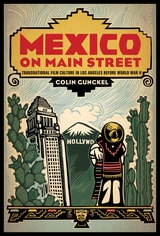
Mexico on Main Street
Transnational Film Culture in Los Angeles before World War IIGunckel, Colin
Rutgers University Press, 2015
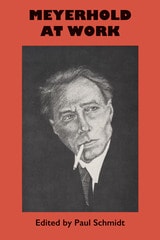
Meyerhold at Work
Edited by Paul Schmidt; translations by Paul Schmidt, Ilya Levin, and Vern McGee
University of Texas Press, 1980
“Not a mirror but a magnifying glass”—such, in the poet Mayakovsky’s words, was the theater of Vsevolod Meyerhold. The first to insist on the primacy of the director’s role, indeed the first to conceive of it as a role, this passionately dedicated Russian director tore down the fourth wall and forced the actors and audience together into one inescapable community of experience.
Yet Meyerhold recorded few of his theories in writing, and the intensity and brilliance of his work must be recaptured through the actors and artists who helped create the performances. Focusing on Meyerhold’s postrevolutionary career, Paul Schmidt has assembled in this book journals, letters, reminiscences, and, of special interest, actual rehearsal notes that build a fascinating, intimate picture of Meyerhold as a theorist and as a man.
Included are Meyerhold’s frantic notes to his teacher, friend, and bête noire Stanislavsky; detailed descriptions of how he trained his actors in “biomechanics”; and memories by such students as Eisenstein and such friends as Pasternak and Ehrenburg. One chapter deals with Meyerhold’s never-realized conception of Boris Godunov, while another describes his direction of Camille, which starred Zinaida Raikh, his wife, and which played its 725th and last performance on the day Stalin’s government liquidated Meyerhold’s theater. Paul Schmidt’s introduction and headnotes enhance our understanding of Meyerhold as a pioneer of modern theater.
Michael Bay
Lutz Koepnick
University of Illinois Press, 2018
Michael Haneke
Peter Brunette
University of Illinois Press, 2010
Michael Haneke
The Intermedial VoidChristopher Rowe
Northwestern University Press, 2017
Michael Moore and the Rhetoric of Documentary
Edited by Thomas W. Benson and Brian J. Snee
Southern Illinois University Press, 2015
Not afraid to tackle provocative topics in American culture, from gun violence and labor policies to terrorism and health care, Michael Moore has earned both applause and invective in his career as a documentarian. In such polarizing films as Bowling for Columbine, Fahrenheit 9/11, and Sicko, Moore has established a unique voice of radical nostalgia for progressivism, and in doing so has become one of the most recognized documentary filmmakers of all time.
In the first in-depth study of Moore’s feature-length documentary films, editors Thomas W. Benson and Brian J. Snee have gathered leading rhetoric scholars to examine the production, rhetorical appeals, and audience reception of these films. Contributors critique the films primarily as modes of public argument and political art. Each essay is devoted to one of Moore’s films and traces in detail how each film invites specific audience responses.
Michael Moore and the Rhetoric of Documentary reveals not only the art, the argument, and the emotional appeals of Moore’s documentaries but also how these films have revolutionized the genre of documentary filmmaking.