Results by title
4127 books match the query 'Science' and 197 start with m
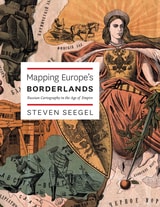
Mapping Europe's Borderlands
Russian Cartography in the Age of EmpireSteven Seegel
University of Chicago Press, 2012
Mapping It Out
Expository Cartography for the Humanities and Social SciencesMark Monmonier
University of Chicago Press, 1993
In his acclaimed How to Lie with Maps, Mark Monmonier showed how maps can distort facts. In Mapping it Out: Expository Cartography for the Humanities and Social Sciences, he shows authors and scholars how they can use expository cartography—the visual, two-dimensional organization of information—to heighten the impact of their books and articles.
This concise, practical book is an introduction to the fundamental principles of graphic logic and design, from the basics of scale to the complex mapping of movement or change. Monmonier helps writers and researchers decide when maps are most useful and what formats work best in a wide range of subject areas, from literary criticism to sociology. He demonstrates, for example, various techniques for representing changes and patterns; different typefaces and how they can either clarify or confuse information; and the effectiveness of less traditional map forms, such as visibility base maps, frame-rectangle symbols, and complementary scatterplot designs for conveying complex spatial relationships.
There is also a wealth of practical information on map compilation, cartobibliographies, copyright and permissions, facsimile reproduction, and the evaluation of source materials. Appendixes discuss the benefits and limitations of electronic graphics and pen-and-ink drafting, and how to work with a cartographic illustrator.
Clearly written, and filled with real-world examples, Mapping it Out demystifies mapmaking for anyone writing in the humanities and social sciences.
"A useful guide to a subject most people probably take too much for granted. It shows how map makers translate abstract data into eye-catching cartograms, as they are called. It combats cartographic illiteracy. It fights cartophobia. It may even teach you to find your way."—Christopher Lehmann-Haupt, The New York Times
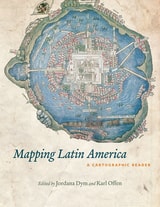
Mapping Latin America
A Cartographic ReaderEdited by Jordana Dym and Karl Offen
University of Chicago Press, 2011
For many, a map is nothing more than a tool used to determine the location or distribution of something—a country, a city, or a natural resource. But maps reveal much more: to really read a map means to examine what it shows and what it doesn’t, and to ask who made it, why, and for whom. The contributors to this new volume ask these sorts of questions about maps of Latin America, and in doing so illuminate the ways cartography has helped to shape this region from the Rio Grande to Patagonia.
In Mapping Latin America,Jordana Dym and Karl Offen bring together scholars from a wide range of disciplines to examine and interpret more than five centuries of Latin American maps.Individual chapters take on maps of every size and scale and from a wide variety of mapmakers—from the hand-drawn maps of Native Americans, to those by famed explorers such as Alexander von Humboldt, to those produced in today’s newspapers and magazines for the general public. The maps collected here, and the interpretations that accompany them, provide an excellent source to help readers better understand how Latin American countries, regions, provinces, and municipalities came to be defined, measured, organized, occupied, settled, disputed, and understood—that is, how they came to have specific meanings to specific people at specific moments in time.
The first book to deal with the broad sweep of mapping activities across Latin America, this lavishly illustrated volume will be required reading for students and scholars of geography and Latin American history, and anyone interested in understanding the significance of maps in human cultures and societies.
Mapping Michel Serres
Niran Abbas, Editor
University of Michigan Press, 2005
---Robert Harrison, Stanford University [blurb from review pending permission]
The work of Michel Serres---including the books Hermes, The Parasite, The Natural Contract, Genesis, The Troubadour of Knowledge, and Conversations on Science, Culture, and Time---has stimulated readers for years, as it challenges the boundaries of science, literature, culture, language, and epistemology. The essays in Mapping Michel Serres, written by the leading interpreters of his work, offer perspectives from a range of disciplinary positions, including literature, language studies, and cultural theory. Contributors include Maria Assad, Hanjo Berressem, Stephen Clucas, Steven Connor, Andrew Gibson, René Girard, Paul Harris, Marcel Hénaff, William Johnsen, William Paulson, Marjorie Perloff, Philipp Schweighauser, Isabella Winkler, and Julian Yates.
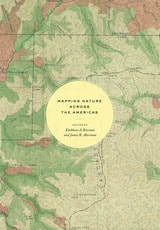
Mapping Nature across the Americas
Edited by Kathleen A. Brosnan & James R. Akerman
University of Chicago Press, 2021
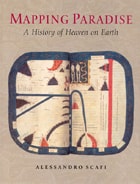
Mapping Paradise
A History of Heaven on EarthAlessandro Scafi
University of Chicago Press, 2006
Mapping Paradise is a history of the cartography of paradise that journeys from the beginning of Christianity to the present day. Instead of dismissing the medieval belief in a paradise on earth as a picturesque legend and the cartography of paradise as an example of the period’s many superstitions, Alessandro Scafi explores the intellectual conditions that made the medieval mapping of paradise possible. The challenge for mapmakers, Scafi argues, was to make visible a place that was geographically inaccessible and yet real, remote in time and yet still the scene of an essential episode of the history of salvation. Mapping Paradise also accounts for the transformations, in both theological doctrine and cartographical practice, that brought about the decline of the belief in a terrestrial paradise and the emergence of the new historical and regional mapping of the Garden of Eden that began at the time of the Reformation and still continues today.
The first book to show how paradise has been expressed in cartographic form throughout two millennia, Mapping Paradise reveals how the most deeply reflective thoughts about the ultimate destiny of all human life have been molded and remolded, generation by generation.
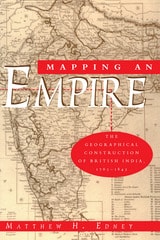
Mapping an Empire
The Geographical Construction of British India, 1765-1843Matthew H. Edney
University of Chicago Press, 1997
"There is much to be praised in this book. It is an excellent history of how India came to be painted red in the nineteenth century. But more importantly, Mapping an Empire sets a new standard for books that examine a fundamental problem in the history of European imperialism."—D. Graham Burnett, Times Literary Supplement
"Mapping an Empire is undoubtedly a major contribution to the rapidly growing literature on science and empire, and a work which deserves to stimulate a great deal of fresh thinking and informed research."—David Arnold, Journal of Imperial and Commonwealth History
"This case study offers broadly applicable insights into the relationship between ideology, technology and politics. . . . Carefully read, this is a tale of irony about wishful thinking and the limits of knowledge."—Publishers Weekly
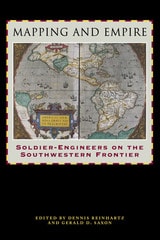
Mapping and Empire
Soldier-Engineers on the Southwestern FrontierEdited by Dennis Reinhartz and Gerald D. Saxon
University of Texas Press, 2005
From the sixteenth through the mid-nineteenth centuries, Spain, then Mexico, and finally the United States took ownership of the land from the Gulf Coast of Texas and Mexico to the Pacific Coast of Alta and Baja California—today's American Southwest. Each country faced the challenge of holding on to territory that was poorly known and sparsely settled, and each responded by sending out military mapping expeditions to set boundaries and chart topographical features. All three countries recognized that turning terra incognita into clearly delineated political units was a key step in empire building, as vital to their national interest as the activities of the missionaries, civilian officials, settlers, and adventurers who followed in the footsteps of the soldier-engineers.
With essays by eight leading historians, this book offers the most current and comprehensive overview of the processes by which Spanish, Mexican, and U.S. soldier-engineers mapped the southwestern frontier, as well as the local and even geopolitical consequences of their mapping. Three essays focus on Spanish efforts to map the Gulf and Pacific Coasts, to chart the inland Southwest, and to define and defend its boundaries against English, French, Russian, and American incursions. Subsequent essays investigate the role that mapping played both in Mexico's attempts to maintain control of its northern territory and in the United States' push to expand its political boundary to the Pacific Ocean. The concluding essay draws connections between mapping in the Southwest and the geopolitical history of the Americas and Europe.
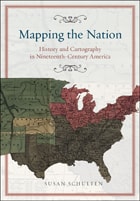
Mapping the Nation
History and Cartography in Nineteenth-Century AmericaSusan Schulten
University of Chicago Press, 2012
In the nineteenth century, Americans began to use maps in radically new ways. For the first time, medical men mapped diseases to understand and prevent epidemics, natural scientists mapped climate and rainfall to uncover weather patterns, educators mapped the past to foster national loyalty among students, and Northerners mapped slavery to assess the power of the South. After the Civil War, federal agencies embraced statistical and thematic mapping in order to profile the ethnic, racial, economic, moral, and physical attributes of a reunified nation. By the end of the century, Congress had authorized a national archive of maps, an explicit recognition that old maps were not relics to be discarded but unique records of the nation’s past.
All of these experiments involved the realization that maps were not just illustrations of data, but visual tools that were uniquely equipped to convey complex ideas and information. In Mapping the Nation, Susan Schulten charts how maps of epidemic disease, slavery, census statistics, the environment, and the past demonstrated the analytical potential of cartography, and in the process transformed the very meaning of a map.
Today, statistical and thematic maps are so ubiquitous that we take for granted that data will be arranged cartographically. Whether for urban planning, public health, marketing, or political strategy, maps have become everyday tools of social organization, governance, and economics. The world we inhabit—saturated with maps and graphic information—grew out of this sea change in spatial thought and representation in the nineteenth century, when Americans learned to see themselves and their nation in new dimensions.
Maps and Civilization
Cartography in Culture and Society, Third EditionNorman J. W. Thrower
University of Chicago Press, 2008
The third edition of Maps and Civilization incorporates numerous revisions, features new material throughout the book, and includes a new alphabetized bibliography.
Praise for previous editions of Maps and Civilization:
“A marvelous compendium of map lore. Anyone truly interested in the development of cartography will want to have his or her own copy to annotate, underline, and index for handy referencing.”—L. M. Sebert, Geomatica
Maps and Politics
Jeremy Black
University of Chicago Press, 1997

Maps in Tudor England
P. D. A. Harvey
University of Chicago Press, 1993
In Maps in Tudor England, P. D. A. Harvey traces this revolution of production, understanding, and use of maps in England from 1485 to 1603. By the mid-sixteenth century, mapmapers had begun to draw maps to a consistent scale, reproducing the results of measured survey. By the end of the century, maps drawn to scale and showing features by conventional signs were commonly used throughout England.
In this survey Harvey focuses on maps of small areas, up to the size of a county, exploring their impact on the political and social life of England in the spheres of the military, government, towns, landed estates, buildings, and the law. Richly illustrated with thirty color and fifty black and white reproductions of rare maps, his account is an informative and accessible introduction to this revolutionary period in the history of cartography, as well as a unique visual history of Tudor England.
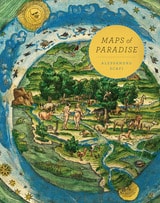
Maps of Paradise
Alessandro Scafi
University of Chicago Press, 2013
Maps of Paradise charts the diverse ways in which scholars and mapmakers from the eighth to the twenty-first century rose to the challenge of identifying the location of paradise on a map, despite the certain knowledge that it was beyond human reach. Over one hundred illustrations celebrate this history of a paradox: the mapping of the unmappable. It is also a mirror to the universal dream of perfection and happiness, and the yearning to discover heaven on earth.
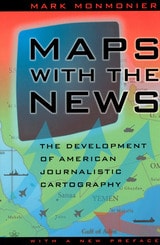
Maps with the News
The Development of American Journalistic CartographyMark Monmonier
University of Chicago Press, 1989
"A most welcome and thorough investigation of a neglected aspect of both the history of cartography and modern cartographic practice."—Mapline
"A well-written, scholarly treatment of journalistic cartography. . . . It is well researched, thoroughly indexed and referenced . . . amply illustrated."—Judith A. Tyner, Imago Mundi
"There is little doubt that Maps with the News should be part of the training and on the desks of all those concerned with producing maps for mass consumption, and also on the bookshelves of all journalists, graphic artists, historians of cartography, and geographic educators."—W. G. V. Balchin, Geographical Journal
"A definitive work on journalistic cartography."—Virginia Chipperfield, Society of University Cartographers Bulletin
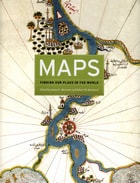
Maps
Finding Our Place in the WorldEdited by James R. Akerman and Robert W. Karrow Jr.
University of Chicago Press, 2007
The book begins by examining the use of maps for wayfinding, revealing that even maps as common and widely used as these are the product of historical circumstances and cultural differences. The second chapter considers maps whose makers employed the smallest of scales to envision the broadest of human stages—the world, the heavens, even the act of creation itself. The next chapter looks at maps that are, literally, at the opposite end of the scale from cosmological and world maps—maps that represent specific parts of the world and provide a close-up view of areas in which their makers lived, worked, and moved.
Having shown how maps help us get around and make sense of our greater and lesser worlds, Maps then turns to the ways in which certain maps can be linked to particular events in history, exploring how they have helped Americans, for instance, to understand their past, cope with current events, and plan their national future. The fifth chapter considers maps that represent data from scientific instruments, population censuses, and historical records. These maps illustrate, for example, how diseases spread, what the ocean floor looks like, and how the weather is tracked and predicted. Next comes a turn to the imaginary, featuring maps that depict entire fictional worlds, from Hell to Utopia and from Middle Earth to the fantasy game World of Warcraft. The final chapter traces the origins of map consumption throughout history and ponders the impact of cartography on modern society.
A companion volume to the most ambitious exhibition on the history of maps ever mounted in North America, Maps will challenge readers to stretch conventional thought about what constitutes a map and how many different ways we can understand graphically the environment in which we live. Collectors, historians, mapmakers and users, and anyone who has ever “gotten lost” in the lines and symbols of a map will find much to love and learn from in this book.

Maria Martin's World
Art and Science, Faith and Family in Audubon’s AmericaDebra J. Lindsay
University of Alabama Press, 2018
Maria Martin (1796–1863) was an evangelical Lutheran from Charleston, South Carolina, who became an accomplished painter within months of meeting John James Audubon. Martin met Audubon through her brother-in-law, Reverend John Bachman, who befriended Audubon while passing through Charleston on route to Florida where he expected to find new avian species. Martin was an amateur artist, but by the time Audubon left, she had familiarized herself with his style of drawing. Six months after their initial meeting, her background botanicals were deemed good enough to embellish Audubon’s exquisite bird paintings.
Martin’s botanicals and insects appeared in volumes two and four of The Birds of America (1830–1838). She painted snakes for John Edwards Holbrook’s North American Herpetology (1842) and assisted in drafting the descriptive taxonomies prepared by John Bachman—who later became her husband in 1848 following the death of her older sister—for The Viviparous Quadrupeds of North America (1846–1854). Until now, her contributions have been unknown to all but the most astute students of natural history and art history and a close circle of family and friends.
Maria Martin’s World is a heavily illustrated volume examining how Maria Martin learned to paint aesthetically beautiful botanicals with exacting accuracy. Drawing on deep research into archival documents and family-held artifacts, Debra Lindsay brings Maria Martin out from behind the curtain of obscurity and disinformation that has previously shrouded her and places her centrally in her own time and milieu. In the telling of Maria Martin’s story, Lindsay also uncovers many nuances of the behavior and actions of the two prominent men in her life that readers interested in Audubon and Bachman will find noteworthy.
Martin was a gifted artist recognized for having contributed beautiful paintings to a natural history. But beyond the natural world this is a biography of an evangelical Lutheran steeped in the faith of her German ancestors and raised to respect the patriarchal norms of her time. Maria Martin pursued her scientific and artistic interests only when they did not conflict with her religious and familial responsibilities.
Marine Macroecology
Edited by Jon D. Witman and Kaustuv Roy
University of Chicago Press, 2009
Pioneered in the late 1980s, the concept of macroecology—a framework for studying ecological communities with a focus on patterns and processes—revolutionized the field. Although this approach has been applied mainly to terrestrial ecosystems, there is increasing interest in quantifying macroecological patterns in the sea and understanding the processes that generate them. Taking stock of the current work in the field and advocating a research agenda for the decades ahead, Marine Macroecology draws together insights and approaches from a diverse group of scientists to show how marine ecology can benefit from the adoption of macroecological approaches.
Divided into three parts, Marine Macroecology first provides an overview of marine diversity patterns and offers case studies of specific habitats and taxonomic groups. In the second part, contributors focus on process-based explanations for marine ecological patterns. The third part presents new approaches to understanding processes driving the macroecolgical patterns in the sea. Uniting unique insights from different perspectives with the common goal of identifying and understanding large-scale biodiversity patterns, Marine Macroecology will inspire the next wave of marine ecologists to approach their research from a macroecological perspective.
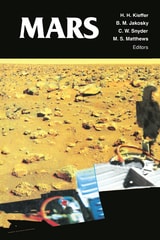
Mars
Edited by H. H. Kieffer, B. M. Jakosky, C. W. Snyder, and M. S. Matthews
University of Arizona Press, 1992
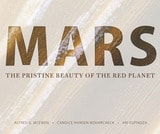
Mars
The Pristine Beauty of the Red PlanetAlfred S. McEwen, Candice Hansen-Koharcheck, and Ari Espinoza
University of Arizona Press, 2017
Mars enthusiasts will appreciate these perfect snapshots of our current understanding of Mars, with soon-to-be classic pictures that have come to define our vision of the Red Planet. These images and their interpretations will be held as a yardstick for future exploration as we learn more about the surface and geologic processes of the fourth planet from the Sun.
With tantalizing and artistic glimpses at actively eroding slopes, impact craters, strange polar landscapes, avalanches, and even spectacular descent pictures of probes like the Phoenix Lander and the Mars Science Laboratory, we see what researchers are seeing.
Through vivid and beautiful images, this book underscores the need for such a camera on future orbiters, especially as more landing missions are planned. Mars: The Pristine Beauty of the Red Planet provides a stunning keepsake of one of humanity’s greatest accomplishments in space travel.

Martin Lister and his Remarkable Daughters
The Art of Science in the Seventeenth CenturyAnna Marie Roos
Bodleian Library Publishing, 2018
Susanna and Anna portrayed the shells of this collection not only as curious and beautiful objects, but also as specimens of natural history, rendering them with sensitivity and keen scientific empiricism. Beautiful in their own right, their illustrations and engravings reveal the early techniques behind scientific illustration and offer fascinating insight into the often hidden role of women in the scientific revolution.
Masking Inequality with Good Intentions
Systemic Bias, Counterspies, and Discourse Acquisition in STEM EducationHeather M. Falconer
University Press of Colorado, 2023
In Masking Inequality with Good Intentions, Heather M. Falconer examines the impact of systemic bias on disciplinary discourse acquisition and identity development by asking “How do the norms and expectations of higher education and STEM, specifically, impact the development of scientific identity and discursive skill?” and “What role do societal markers like race and gender play in the negotiation of identity in STEM learning environments?”
Drawing on the experiences and writings of six students from historically underrepresented backgrounds in STEM, each participating in an undergraduate research program, Falconer discusses how programmatic and pedagogical choices can work to either further marginalize students and disrupt their writing and identity development as scientists or create counterspaces—spaces where students can thrive and push back against dominant, oppressive forces. Practical applications for pedagogy, curriculum, and program design are included.
Mastering Iron
The Struggle to Modernize an American Industry, 1800-1868Anne Kelly Knowles
University of Chicago Press, 2012
Mastering the Niger
James MacQueen's African Geography and the Struggle over Atlantic SlaveryDavid Lambert
University of Chicago Press, 2013
Masters of All They Surveyed
Exploration, Geography, and a British El DoradoD. Graham Burnett
University of Chicago Press, 2000
In answering these questions, D. Graham Burnett brings to light the work of several such explorers, particularly Sir Robert H. Schomburgk, the man who claimed to be the first to reach the site of Ralegh's El Dorado. Commissioned by the Royal Geographical Society and later by the British Crown, Schomburgk explored and mapped regions in modern Brazil, Venezuela, and Guyana, always in close contact with Amerindian communities. Drawing heavily on the maps, reports, and letters that Schomburgk sent back to England, and especially on the luxuriant images of survey landmarks in his Twelve Views in the Interior of Guiana (reproduced in color in this book), Burnett shows how a vast network of traverse surveys, illustrations, and travel narratives not only laid out the official boundaries of British Guiana but also marked out a symbolic landscape that fired the British imperial imagination.
Engagingly written and beautifully illustrated, Masters of All They Surveyed will interest anyone who wants to understand the histories of colonialism and science.
Masters of Theory
Cambridge and the Rise of Mathematical PhysicsAndrew Warwick
University of Chicago Press, 2003
When Isaac Newton published the Principia three centuries ago, only a few scholars were capable of understanding his conceptually demanding work. Yet this esoteric knowledge quickly became accessible in the nineteenth and early twentieth centuries when Britain produced many leading mathematical physicists. In this book, Andrew Warwick shows how the education of these "masters of theory" led them to transform our understanding of everything from the flight of a boomerang to the structure of the universe.
Warwick focuses on Cambridge University, where many of the best physicists trained. He begins by tracing the dramatic changes in undergraduate education there since the eighteenth century, especially the gradual emergence of the private tutor as the most important teacher of mathematics. Next he explores the material culture of mathematics instruction, showing how the humble pen and paper so crucial to this study transformed everything from classroom teaching to final examinations. Balancing their intense intellectual work with strenuous physical exercise, the students themselves—known as the "Wranglers"—helped foster the competitive spirit that drove them in the classroom and informed the Victorian ideal of a manly student. Finally, by investigating several historical "cases," such as the reception of Albert Einstein's special and general theories of relativity, Warwick shows how the production, transmission, and reception of new knowledge was profoundly shaped by the skills taught to Cambridge undergraduates.
Drawing on a wealth of new archival evidence and illustrations, Masters of Theory examines the origins of a cultural tradition within which the complex world of theoretical physics was made commonplace.
Masters of Uncertainty
Weather Forecasters and the Quest for Ground TruthPhaedra Daipha
University of Chicago Press, 2015
In Masters of Uncertainty, Phaedra Daipha develops a new conceptual framework for the process of decision making, after spending years immersed in the life of a northeastern office of the National Weather Service. Arguing that predicting the weather will always be more craft than science, Daipha shows how forecasters have made a virtue of the unpredictability of the weather. Impressive data infrastructures and powerful computer models are still only a substitute for the real thing outside, and so forecasters also enlist improvisational collage techniques and an omnivorous appetite for information to create a locally meaningful forecast on their computer screens. Intent on capturing decision making in action, Daipha takes the reader through engrossing firsthand accounts of several forecasting episodes (hits and misses) and offers a rare fly-on-the-wall insight into the process and challenges of producing meteorological predictions come rain or come shine. Combining rich detail with lucid argument, Masters of Uncertainty advances a theory of decision making that foregrounds the pragmatic and situated nature of expert cognition and casts into new light how we make decisions in the digital age.
Materials and Expertise in Early Modern Europe
Between Market and LaboratoryEdited by Ursula Klein and E. C. Spary
University of Chicago Press, 2010
It is often assumed that natural philosophy was the forerunner of early modern natural sciences. But where did these sciences’ systematic observation and experimentation get their starts? In Materials and Expertise in Early Modern Europe, the laboratories, workshops, and marketplaces emerge as arenas where hands-on experience united with higher learning. In an age when chemistry, mineralogy, geology, and botany intersected with mining, metallurgy, pharmacy, and gardening, materials were objects that crossed disciplines.
Here, the contributors tell the stories of metals, clay, gunpowder, pigments, and foods, and thereby demonstrate the innovative practices of technical experts, the development of the consumer market, and the formation of the observational and experimental sciences in the early modern period. Materials and Expertise in Early Modern Europe showcases a broad variety of forms of knowledge, from ineffable bodily skills and technical competence to articulated know-how and connoisseurship, from methods of measuring, data gathering, and classification to analytical and theoretical knowledge. By exploring the hybrid expertise involved in the making, consumption, and promotion of various materials, and the fluid boundaries they traversed, the book offers an original perspective on important issues in the history of science, medicine, and technology.
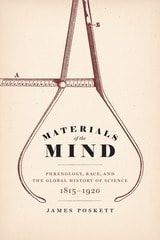
Materials of the Mind
Phrenology, Race, and the Global History of Science, 1815-1920James Poskett
University of Chicago Press, 2019
Phrenology was the most popular mental science of the Victorian age. From American senators to Indian social reformers, this new mental science found supporters around the globe. Materials of the Mind tells the story of how phrenology changed the world—and how the world changed phrenology.
This is a story of skulls from the Arctic, plaster casts from Haiti, books from Bengal, and letters from the Pacific. Drawing on far-flung museum and archival collections, and addressing sources in six different languages, Materials of the Mind is an impressively innovative account of science in the nineteenth century as part of global history. It shows how the circulation of material culture underpinned the emergence of a new materialist philosophy of the mind, while also demonstrating how a global approach to history can help us reassess issues such as race, technology, and politics today.

Maternal Effects in Mammals
Edited by Dario Maestripieri and Jill M. Mateo
University of Chicago Press, 2009
Evolutionary maternal effects occur whenever a mother’s phenotypic traits directly affect her offspring’s phenotype, independent of the offspring’s genotype. Some of the phenotypic traits that result in maternal effects have a genetic basis, whereas others are environmentally determined. For example, the size of a litter produced by a mammalian mother—a trait with a strong genetic basis—can affect the growth rate of her offspring, while a mother’s dominance rank—an environmentally determined trait—can affect the dominance rank of her offspring.
The first volume published on the subject in more than a decade, Maternal Effects in Mammals reflects advances in genomic, ecological, and behavioral research, as well new understandings of the evolutionary interplay between mothers and their offspring. Dario Maestripieri and Jill M. Mateo bring together a learned group of contributors to synthesize the vast literature on a range of species, highlight evolutionary processes that were previously overlooked, and propose new avenues of research. Maternal Effects in Mammals will serve as the most comprehensive compendium on and stimulus for interdisciplinary treatments of mammalian maternal effects.
Mathematical Models of Social Evolution
A Guide for the PerplexedRichard McElreath and Robert Boyd
University of Chicago Press, 2007
Over the last several decades, mathematical models have become central to the study of social evolution, both in biology and the social sciences. But students in these disciplines often seriously lack the tools to understand them. A primer on behavioral modeling that includes both mathematics and evolutionary theory, Mathematical Models of Social Evolution aims to make the student and professional researcher in biology and the social sciences fully conversant in the language of the field.
Teaching biological concepts from which models can be developed, Richard McElreath and Robert Boyd introduce readers to many of the typical mathematical tools that are used to analyze evolutionary models and end each chapter with a set of problems that draw upon these techniques. Mathematical Models of Social Evolution equips behaviorists and evolutionary biologists with the mathematical knowledge to truly understand the models on which their research depends. Ultimately, McElreath and Boyd’s goal is to impart the fundamental concepts that underlie modern biological understandings of the evolution of behavior so that readers will be able to more fully appreciate journal articles and scientific literature, and start building models of their own.
Mathematical Physics
Robert Geroch
University of Chicago Press, 1984

Mathematical Quantum Physics for Engineers and Technologists
FundamentalsAlireza Baghai-Wadji
The Institution of Engineering and Technology, 2023

Mathematical Quantum Physics for Engineers and Technologists
Fundamentals, Volume 1Alireza Baghai-Wadji
The Institution of Engineering and Technology, 2023

Mathematical Quantum Physics for Engineers and Technologists
Governing equations, Volume 2Alireza Baghai-Wadji
The Institution of Engineering and Technology, 2024
Mathematics and Religion
Our Languages of Sign and SymbolJavier Leach
Templeton Press, 2010
Mathematics and Religion: Our Languages of Sign and Symbol is the sixth title published in the Templeton Science and Religion Series, in which scientists from a wide range of fields distill their experience and knowledge into brief tours of their respective specialties. In this volume, Javier Leach, a mathematician and Jesuit priest, leads a fascinating study of the historical development of mathematical language and its influence on the evolution of metaphysical and theological languages.
Leach traces three historical moments of change in this evolution: the introduction of the deductive method in Greece, the use of mathematics as a language of science in modern times, and the formalization of mathematical languages in the nineteenth and twentieth centuries. As he unfolds this fascinating history, Leach notes the striking differences and interrelations between the two languages of science and religion. Until now there has been little reflection on these similarities and differences, or about how both languages can complement and enrich each other.

Mathematics and the Unexpected
Ivar Ekeland
University of Chicago Press, 1988
"In this brief, elegant treatise, assessable to anyone who likes to think, Ivar Ekelund explains some philosophical implications of recent mathematics. He examines randomness, the geometry involved in making predictions, and why general trends are easy to project (it will snow in January) but particulars are practically impossible (it will snow from 2 p.m. to 5 p.m. on the 21st)."—Village Voice
Mathematics, Science, and Postclassical Theory
Barbara Herrnstein Smith and Arkady Plotnitsky, eds.
Duke University Press, 1997
In a substantive introductory essay, the editors explain the notion of "postclassical theory" and discuss the significance of ideas such as emergence and undecidability in current work in and on science and mathematics. Other essays include a witty examination of the relations among mathematical thinking, writing, and the technologies of virtual reality; an essay that reconstructs the conceptual practices that led to a crucial mathematical discovery—or construction—in the 19th century; a discussion of the implications of Bohr’s complementarity principle for classical ideas of reality; an examination of scientific laboratories as "hybrid" communities of humans and nonhumans; an analysis of metaphors of control, purpose, and necessity in contemporary biology; an exploration of truth and lies, and the play of words and numbers in Shakespeare, Frege, Wittgenstein, and Beckett; and a final chapter on recent engagements, or nonengagements, between rationalist/realist philosophy of science and contemporary science studies.
Contributors. Malcolm Ashmore, Michel Callon, Owen Flanagan, John Law, Susan Oyama, Andrew Pickering, Arkady Plotnitsky, Brian Rotman, Barbara Herrnstein Smith, John Vignaux Smyth, E. Roy Weintraub
Matters of Care
Speculative Ethics in More than Human WorldsMaría Puig de la Bellacasa
University of Minnesota Press, 2017
To care can feel good, or it can feel bad. It can do good, it can oppress. But what is care? A moral obligation? A burden? A joy? Is it only human? In Matters of Care, María Puig de la Bellacasa presents a powerful challenge to conventional notions of care, exploring its significance as an ethical and political obligation for thinking in the more than human worlds of technoscience and naturecultures.
Matters of Care contests the view that care is something only humans do, and argues for extending to non-humans the consideration of agencies and communities that make the living web of care by considering how care circulates in the natural world. The first of the book’s two parts, “Knowledge Politics,” defines the motivations for expanding the ethico-political meanings of care, focusing on discussions in science and technology that engage with sociotechnical assemblages and objects as lively, politically charged “things.” The second part, “Speculative Ethics in Antiecological Times,” considers everyday ecologies of sustaining and perpetuating life for their potential to transform our entrenched relations to natural worlds as “resources.”
From the ethics and politics of care to experiential research on care to feminist science and technology studies, Matters of Care is a singular contribution to an emerging interdisciplinary debate that expands agency beyond the human to ask how our understandings of care must shift if we broaden the world.
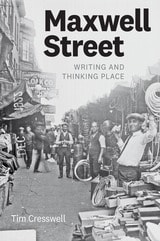
Maxwell Street
Writing and Thinking PlaceTim Cresswell
University of Chicago Press, 2019
In Maxwell Street, Cresswell advocates approaching the study of place as an “assemblage” of things, meanings, and practices. He models this innovative approach through a montage format that exposes the different types of texts—primary, secondary, and photographic sources—that have attempted to capture the essence of the area. Cresswell studies his historical sources just as he explores the different elements of Maxwell Street—exposing them layer by layer. Brilliantly interweaving words and images, Maxwell Street sheds light on a historic Chicago neighborhood and offers a new model for how to write about place that will interest anyone in the fields of geography, urban studies, or cultural history.
Maxwell on the Electromagnetic Field
A Guided StudyThomas K. Simpson
Rutgers University Press, 1997
This volume reproduces major portions of the text of Maxwell's classic papers on concepts that are key to both modern physics and the modern world. Through Simpson's engaginbg commentaries and notes and Anne Farrell's illustrations, readers with limited knowledge of math or physics as well as scientists and historians of science will be able to follow the emergence of Maxwell's ideas and to appreciate the magnitude of his achievement. This book includes a long biographical introduction that explores the personal, historical, and scientific context of Maxwell's book.
Meaning
Michael Polanyi and Harry Prosch
University of Chicago Press, 1977
Establishing that science is an inherently normative form of knowledge and that society gives meaning to science instead of being given the "truth" by science, Polanyi contends here that the foundation of meaning is the creative imagination. Largely through metaphorical expression in poetry, art, myth, and religion, the imagination is used to synthesize the otherwise chaotic and disparate elements of life. To Polanyi these integrations stand with those of science as equally valid modes of knowledge. He hopes this view of the foundation of meaning will restore validity to the traditional ideas that were undercut by modern science. Polanyi also outlines the general conditions of a free society that encourage varied approaches to truth, and includes an illuminating discussion of how to restore, to modern minds, the possibility for the acceptance of religion.
Meaningful Technologies
How Digital Metaphors Change the Way We Think and LiveEric Chown and Fernando Nascimento
Lever Press, 2022
As smartphones mediate more of our activities, they are changing our relationship with meaning. To a teenager, for example a “conversation” is just as likely to refer to an exchange of text messages as it is a face-to-face discussion. Meanwhile, Facebook has redefined what friendship means, Snapchat what a memory means, etc. The kinds of changes smartphones bring are happening at rapid pace: TikTok reached a billion users in just over three years, whereas it took the telephone 75 years to reach a tenth of that number of people. Meaningful Technologies: How Digital Metaphors Change the Way We Think and Live by Eric Chown and Fernando Nascimento offers systematic reconsideration of the ways in which digital technologies impact our lives both individually and collectively.
Metaphors aren’t just a clever way to describe technology, they are also changing the way we think. When we click on a picture of a shopping cart it connects a complex set of technologies to represent a simple idea that we’re all familiar with. A heart icon under a photo is understood as an easy way to express appreciation. We aren’t required to understand how technology works, just how we interact with it. The ambiguity of metaphors, and the complexity of technology can also hide important realities about what is being described. “The cloud,” for example, actually consists of very real data centers, which consume huge amounts of natural resources to keep running. Meanwhile, pressing that heart icon on a photo is a signal to the artificial intelligences running in your app that you want to see more things like that photo and that it should adjust what it knows about you accordingly.
There is a constant feedback loop between us and the digital technologies we use. We are constantly using them and they are changing us through their usage. Meaningful Technologies focuses on this loop from the perspectives of hermeneutic philosophy and cognitive science. Through the former, the authors examine meaning and how it changes over time. Through the latter, they gain understanding of how this feedback loop impacts individuals, especially in terms of learning and attention. Chown and Nascimento argue that, on the one hand, apps have a kind of agency never before possible in a technology, but also that, armed with a critical framework for examining such apps, we can regain some of our own agency. This book will appeal to scholars of digital media digital and computational studies, and those interested in issues related to ethical impacts of digital technologies.
Measurement Science for Modern Physics
Masatoshi Kajita
The Institution of Engineering and Technology, 2026

Measuring the Cosmos
How Scientists Discovered the Dimensions of the UniverseDavid H. Clark and Matthew D.H. Clark
Rutgers University Press, 2004
Humans have always viewed the heavens with wonder and awe. The skies have inspired reflection on the vastness of space, the wonder of creation, and humankind’s role in the universe. In just over one hundred years, science has moved from almost total ignorance about the actual distances to the stars and earth’s place in the galaxy to our present knowledge about the enormous size, mass, and age of the universe. We are reaching the limits of observation, and therefore the limits of human understanding. Beyond lies only our imagination, seeded by the theories of physics. In Measuring the Cosmos, science writers David and Matthew Clark tell the stories of both the well-known and the unsung heroes who played key roles in these discoveries. These true accounts reveal ambitions, conflicts, failures, as well as successes, as the astonishing scale and age of the universe were finally established. Few areas of scientific research have witnessed such drama in the form of ego clashes, priority claims, or failed (or even falsified) theories as that resulting from attempts to measure the universe. Besides giving credit where long overdue, Measuring the Cosmos explains the science behind these achievements in accessible language sure to appeal to astronomers, science buffs, and historians.
Measuring the New World
Enlightenment Science and South AmericaNeil Safier
University of Chicago Press, 2008
Measuring the Universe
Cosmic Dimensions from Aristarchus to HalleyAlbert Van Helden
University of Chicago Press, 1986
"Van Helden's authoritative treatment is concise and informative; he refers to numerous sources of information, draws on the discoveries of modern scholarship, and presents the first book-length treatment of this exceedingly important branch of science."—Edward Harrison, American Journal of Physics
"Van Helden writes well, with a flair for clear explanation. I warmly recommend this book."—Colin A. Ronan, Journal of the British Astronomical Association
Mechanical Vibration, 5th Edition, Solutions Manual
Theory and ApplicationHaym Benaroya
Rutgers University Press, 2022
Mechanical Vibration
Theory and ApplicationHaym Benaroya
Rutgers University Press, 2022
Mechanical Vibration: Theory and Application presents comprehensive coverage of the fundamental principles of mechanical vibration, including the theory of vibration, as well as discussions and examples of the applications of these principles to practical engineering problems. The book also addresses the effects of uncertainties in vibration analysis and design and develops passive and active methods for the control of vibration. Many example problems with solutions are provided. These examples as well as compelling case studies and stories of real-world applications of mechanical vibration have been carefully chosen and presented to help the reader gain a thorough understanding of the subject.
Media Hot and Cold
Nicole Starosielski
Duke University Press, 2021

Media Reform and the Climate Emergency
Rethinking Communication in the Struggle for a Sustainable FutureDavid J. Park
University of Michigan Press, 2021
Award-winning author David J. Park argues that the battle against global warming is also a fight for media reform. With his new book Media Reform and the Climate Emergency: Rethinking Communication in the Struggle for a Sustainable Future, he critically examines how advertising, the digital infrastructure, and journalism advance the climate emergency and lays out a path of reform to help create a more sustainable world. The production and consumption of goods and services within consumer societies lead to unsustainable greenhouse gas emissions, and Park finds that much of mass communication is either dependent upon or closely tied to the success of this social organization. As a result, he suggests successful environmental movements creatively dismantle or reform institutional infrastructures that extend the planetary global warming crisis and the unsustainable consumption of nature.
Communication policies and industries are part of these infrastructures. Advertising evolved to propel a new consumer society that would encourage the over-consumption of goods and services with harmful and unsustainable production processes. Our digital infrastructure is largely premised upon the surveillance of online consumer habits and preferences, with the goal to create individualized messages to more effectively persuade people to increase their consumption habits. Much of commercial journalism resists the drastic and immediate regulatory changes necessary to address the worst aspects of this crisis. This is because so many of the needed changes challenge the media’s source of income, their libertarian philosophy, and the general status quo, which is preferred by elites. Bound to foster conversations among scholars, activists, politicians, and those who work in the communication industries, this book rethinks mass communication and highlights how immediate reform is needed in the struggle for a sustainable planet.