Results by title
28167 books match the query 'History' and 1583 start with m
Middle English Dictionary
S.4Robert E. Lewis, Editor-in-Chief
University of Michigan Press, 1987
Middle English Dictionary
S.5Robert E. Lewis, Editor-in-Chief
University of Michigan Press, 1987
Middle English Dictionary
S.6Robert E. Lewis, Editor-in-Chief
University of Michigan Press, 1988
Middle English Dictionary
S.7Robert E. Lewis, Editor-in-Chief
University of Michigan Press, 1988
Middle English Dictionary
S.8Robert E. Lewis, Editor-in-Chief
University of Michigan Press, 1988
Middle English Dictionary
S.9Robert E. Lewis, Editor-in-Chief
University of Michigan Press, 1988
Middle English Dictionary
T.1Robert E. Lewis, Editor-in-Chief
University of Michigan Press, 1993
Middle English Dictionary
T.10Robert E. Lewis, Editor-in-Chief
University of Michigan Press, 1997
The Middle English Dictionary is a monumental scholarly endeavor that began more than fifty years ago and is expected to be completed in the late-1990s. The task of the editors compiling the dictionary is to document the English language from just after the Norman Conquest up to the introduction of the printing press at the end of the 1400s. With that innovation the language became more or less standardized, but during the Middle Ages the language was evolving under the stress of events and social change, particularly as French culture was absorbed into the language. These were truly the formative years of the English language, and they present major challenges to lexicographers.
Published volumes include all fascicles from A.1 through T.10, plus the Plan and Bibliography.
Middle English Dictionary
T.2Robert E. Lewis, Editor-in-Chief
University of Michigan Press, 1993
Middle English Dictionary
T.3Robert E. Lewis, Editor-in-Chief
University of Michigan Press, 1994
Middle English Dictionary
T.4Robert E. Lewis, Editor-in-Chief
University of Michigan Press, 1994
Middle English Dictionary
T.5Robert E. Lewis, Editor-in-Chief
University of Michigan Press, 1995
Middle English Dictionary
T.6Robert E. Lewis, Editor-in-Chief
University of Michigan Press, 1995
Middle English Dictionary
T.7Robert E. Lewis, Editor-in-Chief
University of Michigan Press, 1996
The Middle English Dictionary is a monumental scholarly endeavor that began more than fifty years ago and is expected to be completed in the late-1990s. The task of the editors compiling the dictionary is to document the English language from just after the Norman Conquest up to the introduction of the printing press at the end of the 1400s. With that innovation the language became more or less standardized, but during the Middle Ages the language was evolving under the stress of events and social change, particularly as French culture was absorbed into the language. These were truly the formative years of the English language, and they present major challenges to lexicographers.
Published volumes include all fascicles from A.1 through T.10, plus the Plan and Bibliography.
Middle English Dictionary
T.8Robert E. Lewis, Editor-in-Chief
University of Michigan Press, 1996
The Middle English Dictionary is a monumental scholarly endeavor that began more than fifty years ago and is expected to be completed in the late-1990s. The task of the editors compiling the dictionary is to document the English language from just after the Norman Conquest up to the introduction of the printing press at the end of the 1400s. With that innovation the language became more or less standardized, but during the Middle Ages the language was evolving under the stress of events and social change, particularly as French culture was absorbed into the language. These were truly the formative years of the English language, and they present major challenges to lexicographers.
Published volumes include all fascicles from A.1 through T.10, plus the Plan and Bibliography.
Middle English Dictionary
T.9Robert E. Lewis, Editor-in-Chief
University of Michigan Press, 1997
The Middle English Dictionary is a monumental scholarly endeavor that began more than fifty years ago and is expected to be completed in the late-1990s. The task of the editors compiling the dictionary is to document the English language from just after the Norman Conquest up to the introduction of the printing press at the end of the 1400s. With that innovation the language became more or less standardized, but during the Middle Ages the language was evolving under the stress of events and social change, particularly as French culture was absorbed into the language. These were truly the formative years of the English language, and they present major challenges to lexicographers.
Published volumes include all fascicles from A.1 through T.10, plus the Plan and Bibliography.
Middle English Dictionary
U.1Robert E. Lewis, Editor-in-Chief
University of Michigan Press, 1997
The Middle English Dictionary is a monumental scholarly endeavor that began more than fifty years ago and is expected to be completed in 2001. The task of the editors compiling the dictionary is to document the English language from just after the Norman Conquest up to the introduction of the printing press at the end of the 1400s. With that innovation the language became more or less standardized, but during the Middle Ages the language was evolving under the stress of events and social change, particularly as French culture was absorbed into the language. These were truly the formative years of the English language, and they present major challenges to lexicographers.
Fascicles U.1, U.2, and U.3 are the most recent additions to this ongoing undertaking. Published volumes include all fascicles from A.1 through U.3, plus the Plan and Bibliography.
Middle English Dictionary
U.2Robert E. Lewis, Editor-in-Chief
University of Michigan Press, 1998
The Middle English Dictionary is a monumental scholarly endeavor that began more than fifty years ago and is expected to be completed in 2001. The task of the editors compiling the dictionary is to document the English language from just after the Norman Conquest up to the introduction of the printing press at the end of the 1400s. With that innovation the language became more or less standardized, but during the Middle Ages the language was evolving under the stress of events and social change, particularly as French culture was absorbed into the language. These were truly the formative years of the English language, and they present major challenges to lexicographers.
Fascicles U.1, U.2, and U.3 are the most recent additions to this ongoing undertaking. Published volumes include all fascicles from A.1 through U.3, plus the Plan and Bibliography.
Middle English Dictionary
U.3Robert E. Lewis, Editor-in-Chief
University of Michigan Press, 1998
The Middle English Dictionary is a monumental scholarly endeavor that began more than fifty years ago and is expected to be completed in 2001. The task of the editors compiling the dictionary is to document the English language from just after the Norman Conquest up to the introduction of the printing press at the end of the 1400s. With that innovation the language became more or less standardized, but during the Middle Ages the language was evolving under the stress of events and social change, particularly as French culture was absorbed into the language. These were truly the formative years of the English language, and they present major challenges to lexicographers.
Fascicles U.1, U.2, and U.3 are the most recent additions to this ongoing undertaking. Published volumes include all fascicles from A.1 through U.3, plus the Plan and Bibliography.
Middle English Dictionary
U.4Robert E. Lewis, Editor-in-Chief
University of Michigan Press, 1998
Middle English Dictionary
VRobert E. Lewis, Editor-in-Chief
University of Michigan Press, 1999
The Middle English Dictionary, a monumental scholarly endeavor that began more than fifty years ago, is scheduled to be completed in 2001. The task of the editors compiling the dictionary is to document the English language from just after the Norman Conquest to the introduction of the printing press at the end of the 1400s. With that innovation the language became more or less standardized, but during the Middle Ages the language was evolving under the stress of events and social change, particularly as French culture was absorbed into the language. These were truly the formative years of the English language, and they present major challenges to lexicographers.
Fascicles V.1, W.1, and W.2 are the most recent additions to this ongoing undertaking. Published volumes include all fascicles from A.1 through U.3, plus the Plan and Bibliography.
Middle English Dictionary
W.1Robert E. Lewis, Editor-in-Chief
University of Michigan Press, 1999
The Middle English Dictionary, a monumental scholarly endeavor that began more than fifty years ago, is scheduled to be completed in 2001. The task of the editors compiling the dictionary is to document the English language from just after the Norman Conquest to the introduction of the printing press at the end of the 1400s. With that innovation the language became more or less standardized, but during the Middle Ages the language was evolving under the stress of events and social change, particularly as French culture was absorbed into the language. These were truly the formative years of the English language, and they present major challenges to lexicographers.
Fascicles V.1, W.1, and W.2 are the most recent additions to this ongoing undertaking. Published volumes include all fascicles from A.1 through U.3, plus the Plan and Bibliography.
Middle English Dictionary
W.2Robert E. Lewis, Editor-in-Chief
University of Michigan Press, 1999
The Middle English Dictionary, a monumental scholarly endeavor that began more than fifty years ago, is scheduled to be completed in 2001. The task of the editors compiling the dictionary is to document the English language from just after the Norman Conquest to the introduction of the printing press at the end of the 1400s. With that innovation the language became more or less standardized, but during the Middle Ages the language was evolving under the stress of events and social change, particularly as French culture was absorbed into the language. These were truly the formative years of the English language, and they present major challenges to lexicographers.
Fascicles V.1, W.1, and W.2 are the most recent additions to this ongoing undertaking. Published volumes include all fascicles from A.1 through U.3, plus the Plan and Bibliography.
Middle English Dictionary
W.3Robert E. Lewis, Editor-in-Chief
University of Michigan Press, 2000
Middle English Dictionary
W.4Robert E. Lewis, Editor-in-Chief
University of Michigan Press, 2000
TheMiddle English Dictionary, a monumental scholarly endeavor that began more than fifty years ago, is completed with the publication of these remaining fascicles. The task of the editors compiling the dictionary is to document the English language from just after the Norman Conquest up to the introduction of the printing press at the end of the 1400s. With that innovation the language became more or less standardized, but during the Middle Ages the language was evolving under the stress of events and social change, particularly as French culture was absorbed into the language. These were truly the formative years of the English language, and they present major challenges to lexicographers.
Middle English Dictionary
W.5Robert E. Lewis, Editor-in-Chief
University of Michigan Press, 2000
TheMiddle English Dictionary, a monumental scholarly endeavor that began more than fifty years ago, is completed with the publication of these remaining fascicles. The task of the editors compiling the dictionary is to document theE nglish language from just after the Norman Conquest up to the introduction of the printing press at the end of the 1400s. With that innovation the language became more or less standardized, but during the Middle Ages the language was evolving under the stress of events and social change, particularly as French culture was absorbed into the language. These were truly the formative years of the English language, and they present major challenges to lexicographers.
Middle English Dictionary
W.6Robert E. Lewis, Editor-in-Chief
University of Michigan Press, 2000
TheMiddle English Dictionary, a monumental scholarly endeavor that began more than fifty years ago, is completed with the publication of these remaining fascicles. The task of the editors compiling the dictionary is to document theE nglish language from just after the Norman Conquest up to the introduction of the printing press at the end of the 1400s. With that innovation the language became more or less standardized, but during the Middle Ages the language was evolving under the stress of events and social change, particularly as French culture was absorbed into the language. These were truly the formative years of the English language, and they present major challenges to lexicographers.
Fascicle X/Y/Z is the final addition to this incredible undertaking. Published volumes include all fascicles from A.1 through X/Y/Z, plus the Plan and Bibliography.
Middle English Dictionary
W.7Robert E. Lewis, Editor-in-Chief
University of Michigan Press, 2001
TheMiddle English Dictionary, a monumental scholarly endeavor that began more than fifty years ago, is completed with the publication of these remaining fascicles. The task of the editors compiling the dictionary is to document theE nglish language from just after the Norman Conquest up to the introduction of the printing press at the end of the 1400s. With that innovation the language became more or less standardized, but during the Middle Ages the language was evolving under the stress of events and social change, particularly as French culture was absorbed into the language. These were truly the formative years of the English language, and they present major challenges to lexicographers.
Fascicle X/Y/Z is the final addition to this incredible undertaking. Published volumes include all fascicles from A.1 through X/Y/Z, plus the Plan and Bibliography.
Middle English Dictionary
W.8Robert E. Lewis, Editor-in-Chief
University of Michigan Press, 2001
TheMiddle English Dictionary, a monumental scholarly endeavor that began more than fifty years ago, is completed with the publication of these remaining fascicles. The task of the editors compiling the dictionary is to document theE nglish language from just after the Norman Conquest up to the introduction of the printing press at the end of the 1400s. With that innovation the language became more or less standardized, but during the Middle Ages the language was evolving under the stress of events and social change, particularly as French culture was absorbed into the language. These were truly the formative years of the English language, and they present major challenges to lexicographers.
Fascicle X/Y/Z is the final addition to this incredible undertaking. Published volumes include all fascicles from A.1 through X/Y/Z, plus the Plan and Bibliography.
Middle English Dictionary
X/Y/ZRobert E. Lewis, Editor-in-Chief
University of Michigan Press, 2001
TheMiddle English Dictionary, a monumental scholarly endeavor that began more than fifty years ago, is completed with the publication of these remaining fascicles. The task of the editors compiling the dictionary is to document theE nglish language from just after the Norman Conquest up to the introduction of the printing press at the end of the 1400s. With that innovation the language became more or less standardized, but during the Middle Ages the language was evolving under the stress of events and social change, particularly as French culture was absorbed into the language. These were truly the formative years of the English language, and they present major challenges to lexicographers.
Fascicles W.9 and X/Y/Z will be the final additions to this incredible undertaking. Published volumes include all fascicles from A.1 through W.8, plus the Plan and Bibliography.

Middle Mississippi Exploitation of Animal Populations
Bruce D. Smith
University of Michigan Press, 1975
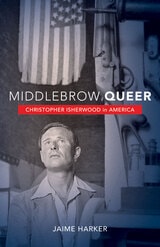
Middlebrow Queer
Christopher Isherwood in AmericaJaime Harker
University of Minnesota Press, 2013
How could one write about gay life for the mainstream public in Cold War America? Many midcentury gay American writers, hampered by external and internal censors, never managed to do it. But Christopher Isherwood did, and what makes his accomplishment more remarkable is that while he was negotiating his identity as a gay writer, he was reinventing himself as an American one. Jaime Harker shows that Isherwood refashioned himself as an American writer following his emigration from England by immersing himself in the gay reading, writing, and publishing communities in Cold War America.
Drawing extensively on Isherwood’s archives, including manuscript drafts and unpublished correspondence with readers, publishers, and other writers, Middlebrow Queer demonstrates how Isherwood mainstreamed gay content for heterosexual readers in his postwar novels while also covertly writing for gay audiences and encouraging a symbiotic relationship between writer and reader. The result—in such novels as The World in the Evening, Down There on a Visit, A Single Man, and A Meeting by the River—was a complex, layered form of writing that Harker calls “middlebrow camp,” a mode that extended the boundaries of both gay and middlebrow fiction.
Weaving together biography, history, and literary criticism, Middlebrow Queer traces the continuous evolution of Isherwood’s simultaneously queer and American postwar authorial identity. In doing so, the book illuminates many aspects of Cold War America’s gay print cultures, from gay protest novels to “out” pulp fiction.
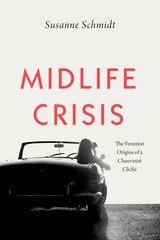
Midlife Crisis
The Feminist Origins of a Chauvinist ClichéSusanne Schmidt
University of Chicago Press, 2020
The first book-length history of this controversial concept, Susanne Schmidt’s Midlife Crisis recounts the surprising origin story of the midlife debate and traces its movement from popular culture into academia. Schmidt’s engaging narrative telling of the feminist construction—and ensuing antifeminist backlash—of the midlife crisis illuminates a lost legacy of feminist thought, shedding important new light on the history of gender and American social science in the 1970s and beyond.

Midnight Assassin
A Murder in America's HeartlandPatricia L. Bryan
University of Iowa Press, 2007
On the night of December 1,1900, Iowa farmer John Hossack was attacked and killed while he slept at home beside his wife, Margaret. On April 11, 1901, after five days of testimony before an all-male jury, Margaret Hossack was found guilty of his murder and sentenced to life in prison. One year later, she was released on bail to await a retrial; jurors at this second trial could not reach a decision, and she was freed. She died August 25, 1916, leaving the mystery of her husband's death unsolved.
The Hossack tragedy is a compelling one and the issues surrounding their domestic problems are still relevant today, Margaret's composure and stoicism, developed during years of spousal abuse, were seen as evidence of unfeminine behavior, while John Hossack--known to be a cruel and dangerous man--was hailed as a respectable husband and father.
Midnight Assassin also introduces us to Susan Glaspell, a journalist who reported on the Hossack murder for the Des Moines Daily, who used these events as the basis for her classic short story, " A Jury of Her Peers", and the famous play Trifles.
Based on almost a decade of research, Midnight Assassin is a riveting story of loneliness, fear, and suffering in the rural Midwest.
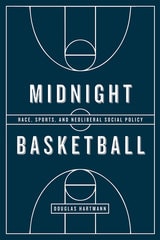
Midnight Basketball
Race, Sports, and Neoliberal Social PolicyDouglas Hartmann
University of Chicago Press, 2016
Organized in the 1980s and ’90s by dozens of American cities, late-night basketball leagues were designed for social intervention, risk reduction, and crime prevention targeted at African American youth and young men. In Midnight Basketball, Hartmann traces the history of the program and the policy transformations of the period, while exploring the racial ideologies, cultural tensions, and institutional realities that shaped the entire field of sports-based social policy. Drawing on extensive fieldwork, the book also brings to life the actual, on-the-ground practices of midnight basketball programs and the young men that the programs intended to serve. In the process, Midnight Basketball offers a more grounded and nuanced understanding of the intricate ways sports, race, and risk intersect and interact in urban America.
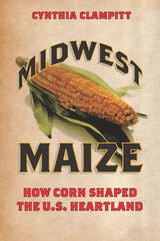
Midwest Maize
How Corn Shaped the U.S. HeartlandCynthia Clampitt
University of Illinois Press, 2015

Midwestern Food
A Chef’s Guide to the Surprising History of a Great American Cuisine, with More Than 100 Tasty RecipesPaul Fehribach
University of Chicago Press, 2023
Celebrated chef Paul Fehribach has made his name serving up some of the most thoughtful and authentic regional southern cooking—not in the South, but in Chicago at Big Jones. But over the last several years, he has been looking to his Indiana roots in the kitchen, while digging deep into the archives to document and record the history and changing foodways of the Midwest.
Fehribach is as painstaking with his historical research as he is with his culinary execution. In Midwestern Food, he focuses not only on the past and present of Midwestern foodways but on the diverse cultural migrations from the Ohio River Valley north- and westward that have informed them. Drawing on a range of little-explored sources, he traces the influence of several heritages, especially German, and debunks many culinary myths along the way.
The book is also full of Fehribach’s delicious recipes informed by history and family alike, such as his grandfather's favorite watermelon rind pickles; sorghum-pecan sticky rolls; Detroit-style coney sauce; Duck and manoomin hotdish; pawpaw chiffon pie; strawberry pretzel gelatin salad (!); and he breaks the code to the most famous Midwestern pizza and BBQ styles you can easily reproduce at home. But it is more than just a cookbook, weaving together historical analysis and personal memoir with profiles of the chefs, purveyors, and farmers who make up the food networks of the region.
The result is a mouth-watering and surprising Midwestern feast from farm to plate. Flyover this!

Midwestern Landscape Architecture
Edited by William H. Tishler
University of Illinois Press, 2000
The pioneers of landscape architecture in the Midwest are responsible for creating some of the most recognizable parks, cemeteries, recreation areas, and other public gathering places in the region. Midwestern Landscape Architecture includes essays on Adolph Strauch, who introduced a new concept of visually integrated landscape treatment in Cincinnati's Spring Grove Cemetery; William Le Baron Jenney, designer of Chicago's diverse West Parks; and Jens Jensen, who created the American Garden in Union Park in Chicago (a celebration of native flora) and founder of The Clearing, a unique school of the arts and humanities in Wisconsin. Other major figures include Frederick Law Olmsted Sr., co-designer of New York's Central Park, whose work in the Midwest included the layout of the 1893 World's Columbian Exposition, and Ossian Cole Simonds, who helped reconcile the formal approach of the City Beautiful movement with the naturalism of the Prairie School in urban park design.
This volume also details the contributions of crusaders for ecological awareness and an appreciation of the region's natural heritage. These include horticultural writer Wilhelm Miller, who spread the ideals of the Prairie style, and Genevieve Gillette, a landscape architect and conservationist whose preservation efforts led to the establishment of numerous Michigan state parks and wilderness areas.
Midwestern Landscape Architecture fosters a better understanding of how landscape design took shape in the Midwest and how the land itself inspired new solutions to enhance its understated beauty. Despite Olmsted's assessment of the Illinois prairie as "one of the most tiresome landscapes that I ever met with," the Midwest has amassed an important legacy of landscape design that continues to influence how people interact with their environment in the heartland.

Midwife to the Queen of France
Diverse ObservationsLouise Bourgeois
Iter Press, 2017
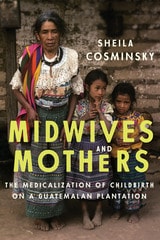
Midwives and Mothers
The Medicalization of Childbirth on a Guatemalan PlantationBy Sheila Cosminsky
University of Texas Press, 2016
The World Health Organization is currently promoting a policy of replacing traditional or lay midwives in countries around the world. As part of an effort to record the knowledge of local midwives before it is lost, Midwives and Mothers explores birth, illness, death, and survival on a Guatemalan sugar and coffee plantation, or finca, through the lives of two local midwives, Doña Maria and her daughter Doña Siriaca, and the women they have served over a forty-year period.
By comparing the practices and beliefs of the mother and daughter, Sheila Cosminsky shows the dynamics of the medicalization process and the contestation between the midwives and biomedical personnel, as the latter try to impose their system as the authoritative one. She discusses how the midwives syncretize, integrate, or reject elements from Mayan, Spanish, and biomedical systems. The midwives’ story becomes a lens for understanding the impact of medicalization on people’s lives and the ways in which women’s bodies have become contested terrain between traditional and contemporary medical practices. Cosminsky also makes recommendations for how ethno-obstetric and biomedical systems may be accommodated, articulated, or integrated. Finally, she places the changes in the birthing system in the larger context of changes in the plantation system, including the elimination of coffee growing, which has made women, traditionally the primary harvesters of coffee beans, more economically dependent on men.
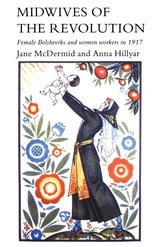
Midwives of the Revolution
Female Bolsheviks and Women Workers in 1917Jane McDermid
Ohio University Press, 1999
The Bolshevik seizure of power in 1917 and the ensuing communist regime have often been portrayed as a man’s revolution, with women as bystanders or even victims. Midwives of the Revolution examines the powerful contribution made by women to the overthrow of tsarism in 1917 and their importance in the formative years of communism in Russia.
Focusing on the masses as well as the high-ranking intelligentsia, Midwives of the Revolution is the first sustained analysis of female involvement in the revolutionary era of Russian history. The authors investigate the role of Bolshevik women and the various forms their participation took. Drawing on the experiences of representative individuals, the authors discuss the important relationship between Bolshevik women and the workers in the turbulent months of 1917.
The authors demonstrate that women were an integral part of the revolutionary process and challenge assumptions that they served merely to ignite an essentially masculine revolt. By placing women center stage, without exaggerating their roles, this study enriches our understanding of a momentous event in twentieth-century history.
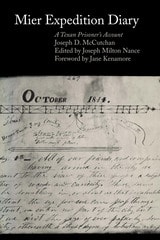
Mier Expedition Diary
A Texan Prisoner's AccountJoseph D. McCutchan
University of Texas Press, 1979
Few episodes in Texas history have excited more popular interest than the Mier Expedition of 1842. Nineteen-year-old Joseph D. McCutchan was among the 300 Texans who, without the cover of the Lone Star flag, launched their own disastrous invasion across the Rio Grande.
McCutchan's diary provides a vivid account of his experience—the Texans' quick dispatch by Mexican troops at the town of Mier, the hardships of a forced march to Mexico City, over twenty months of imprisonment, and the journey back home after release. Although there are other firsthand accounts of the Mier Expedition, McCutchan was the only diarist who followed the Tampico route to Mexico City. His account documents a different experience than that of the main body of prisoners who marched to the national capital by way of Monterrey, Saltillo, and Agua Nueva.
Among the last of the prisoners to be freed, McCutchan covers in his journal the whole period of confinement from December 26, 1842, to the final release on September 16, 1844.
The McCutchan diary is set apart from other Mier accounts not only by the new information it provides, but also by Joseph Milton Nance's superb editing. Nance is an acknowledged authority on the hostilities between Texas and Mexico during the era of the Texas Republic. He has transcribed, edited, and annotated the diary with characteristic scholarship and painstaking attention to detail.
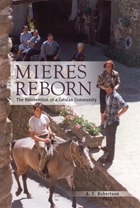
Mieres Reborn
The Reinvention of a Catalan CommunityA. F. Robertson
University of Alabama Press, 2012
Mieres Reborn reveals how patient observation and an analysis of one small community have much to tell us about human progress more generally.
Not long ago Mieres, a village in the eastern foothills of the Pyrenees, seemed destined to die. As in countless thousands of rural communities around the world, young people in Mieres over the years have moved to the towns and cities, leaving behind abandoned fields and meadows, derelict houses, and their aging and disconsolate parents and grandparents.
Close observation of this social microcosm over two decades reveals the capacity of ordinary people in a locality to reinvent themselves, reconstruct relationships with the wider world, and confront new threats to their collective survival. A. F. Robertson describes how the determination that Mieres should survive is most evident in a vigorous round of fiestas, fairs, and other public events in which natives, exiles, and newcomers work to create a lively sense of belonging. Since the 1980s, Mieres has been enlivened by a reverse flow of migrants from the cities, new settlers who have brought an infusion of youth to the community, devised new livelihoods, revitalized the village school, energized the native ”Mierencs,” and provided the impetus for a rediscovery of historical roots and political identity.
The regeneration of life in the countryside, in part a reaction to urban expansion and decay, is a global phenomenon of increasing political, economic, and social significance.

Mies van der Rohe
A Critical Biography, New and Revised EditionFranz Schulze and Edward Windhorst
University of Chicago Press, 2012

Mighty by Sacrifice
The Destruction of an American Bomber Squadron, August 29, 1944James L. Noles Sr. and James L. Noles Jr.
University of Alabama Press, 2009
On August 29, 1944, the 15th U.S. Army Air Force unleashed 500 bombers against oil and rail targets throughout central Europe. It dispatched the 20th Squadron of the 2nd Bombardment Group on what they regarded as an easy assignment: attack the Privoser Oil Refinery and associated railroad yards at Moravska Ostrava, Czechoslovakia. This "milk run" deteriorated into the bloodiest day in the 2nd Bombardment Group's history: not a single one of the 20th Squadron's B-17 Flying Fortress bombers returned from the mission. Forty airmen were killed, another 46 spent the rest of the war as POWs, and only four, with the aid of the OSS and anti-German partisans, and sympathetic Czech civilians managed to evade capture.
The ninety airmen on the mission to Moravska Ostrava provide a remarkable personal window into the Allies' Combined Bomber Offensive at its height during WWII. In a microcosm, their stories encapsulate how the U.S. Army Air Forces built, trained, and employed one of the mightiest war machines ever seen. Their stories also illustrate, however, the terrible cost in lives demanded by that same machine.
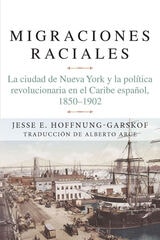
Migraciones raciales
La ciudad de Nueva York y la política revolucionaria en el Caribe hispánicoJesse Hoffnung-Garskof
Michigan Publishing Services, 2019
A fines del siglo XIX, un grupo pequeño de cubanos y puertorriqueños de ascendencia africana se instaló en las viviendas segregadas de la ciudad de Nueva York. En una sociedad de instrucción y recreo que fundaron en Greenwich Village, estos primeros neoyorquinos afrolatinos aprendieron a ser poetas, periodistas y revolucionarios. Al mismo tiempo, estos individuos—liderados por Rafael Serra, tabaquero, escritor y político; Sotero Figueroa, tipógrafo y editor; y Gertrudis Heredia, una de las primeras mujeres afrodescendientes que estudió en la Clínica de Partos de la Universidad de La Habana--construyeron una red política y articularon un ideal de nacionalismo revolucionario centrado en los proyectos de justicia racial y social. Sus esfuerzos tuvieron una profunda influencia en los escritos del poeta y diplomático José Martí sobre raza y en su apuesta por el liderazgo entre los exiliados cubanos. Desde Nueva York, este grupo también luchó en años posteriores por crear espacios para la participación política negra en la República de Cuba.
En Migraciones raciales, Jesse Hoffnung-Garskof presenta un vívido retrato de estos migrantes revolucionarios quienes habían sido, en gran parte, olvidados, entretejiendo sus experiencias de “migrar siendo negros,” sus relaciones con líderes afro-americanos en la lucha por la igualdad racial en Estados Unidos, y su participación en el desarrollo de los movimientos políticos nacionalistas antillanos. Destacando el papel fundamental de los neoyorquinos afrolatinos en la historia de la política revolucionaria del caribe hispánico, Hoffnung-Garskof ofrece una nueva interpretación del movimiento separatista y de su idea de que Cuba podría convertirse en una nación sin divisiones raciales.
Un modelo de investigación transnacional y comparativa, Migraciones raciales revela las complejidades de las formaciones raciales dentro de las comunidades migrantes y el poder de pequeños grupos de inmigrantes para transformar sus sociedades de origen.
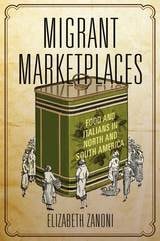
Migrant Marketplaces
Food and Italians in North and South AmericaElizabeth Zanoni
University of Illinois Press, 2018
Elizabeth Zanoni provides a cutting-edge comparative look at Italian people and products on the move between 1880 and 1940. Concentrating on foodstuffs—a trade dominated by Italian entrepreneurs in New York and Buenos Aires—Zanoni reveals how consumption of these increasingly global imports affected consumer habits and identities and sparked changing and competing connections between gender, nationality, and ethnicity. Women in particular—by tradition tasked with buying and preparing food—had complex interactions that influenced both global trade and their community economies. Zanoni conveys the complicated and often fraught values and meanings that surrounded food, meals, and shopping.
A groundbreaking interdisciplinary study, Migrant Marketplaces offers a new perspective on the linkages between migration and trade that helped define globalization in the late nineteenth and early twentieth centuries.
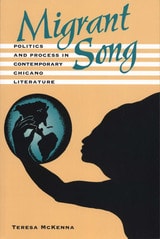
Migrant Song
Politics and Process in Contemporary Chicano LiteratureBy Teresa McKenna
University of Texas Press, 1996
Migration and continuity have shaped both the Chicano people and their oral and written literature. In this pathfinding study of Chicano literature, Teresa McKenna specifically explores how these works arise out of social, political, and psychological conflict and how the development of Chicano literature is inextricably embedded in this fact.
McKenna begins by appraising the evolution of Chicano literature from oral forms—including the important role of the corrido in the development of Chicano poetry. In subsequent chapters she examines the works of Richard Rodriguez and Rolando Hinojosa. She also devotes a chapter to the development of the Chicana voice in Chicano literature. Her epilogue considers the parallel development of Chicano literary theory and discusses some possible directions for research.
In McKenna's own words, "I believe that the future of this literature, as that of all literatures by people of color in the United States, rests largely on its being effectively introduced into the curricula at all levels, as well as its entrance into the critical consciousness of literary theory." This book will be an important step in that process.
Migrants and Migration in Modern North America
Cross-Border Lives, Labor Markets, and PoliticsDirk Hoerder and Nora Faires, eds.
Duke University Press, 2011
Contributors. Jaime R. Aguila. Rodolfo Casillas-R., Nora Faires, Maria Cristina Garcia, Delia Gonzáles de Reufels, Brian Gratton, Susan E. Gray, James N. Gregory, John Mason Hart, Dirk Hoerder, Dan Killoren, Sarah-Jane (Saje) Mathieu, Catherine O’Donnell, Kerry Preibisch, Lara Putnam, Bruno Ramirez, Angelika Sauer, Melanie Shell-Weiss, Yukari Takai, Omar S. Valerio-Jiménez, Carlos G. Vélez-Ibáñez
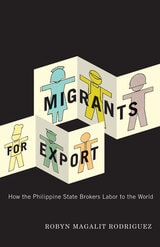
Migrants for Export
How the Philippine State Brokers Labor to the WorldRobyn Magalit Rodriguez
University of Minnesota Press, 2010