Results by title
28167 books match the query 'History' and 1583 start with m
Mining America
The Industry and the Environment, 1800-1980Duane A. Smith
University Press of Colorado, 1994
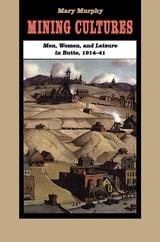
Mining Cultures
Men, Women, and Leisure in Butte, 1914-41Mary Murphy
University of Illinois Press, 1997
Butte, Montana, long deserved its reputation as a wide-open town. Mining Cultures shows how the fabled Montana city evolved from a male-dominated mining enclave to a community in which men and women participated on a more equal basis as leisure patterns changed and consumer culture grew. Mary Murphy looks at how women worked and spent their leisure time in a city dominated by the quintessential example of "men's work": mining. Bringing Butte to life, she adds in-depth research on church weeklies, high school yearbooks, holiday rituals, movie plots, and news of local fashion to archival material and interviews.
A richly illustrated jaunt through western history, Mining Cultures is the never-told chronicle of how women transformed the richest hill on earth.
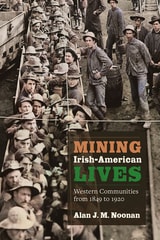
Mining Irish-American Lives
Western Communities from 1849 to 1920Alan J. M. Noonan
University Press of Colorado, 2022
Historian Alan J. M. Noonan uses a range of previously overlooked sources, including collections of emigrant letters, hospital logbooks, private detective reports, and internment records, to tell the stories of Irish men and women who emigrated to mining towns to search for opportunity. Noonan details the periods, the places, and the experiences over multiple generations in the late nineteenth and early twentieth centuries. He carefully examines their encounters with nativists, other ethnic groups, and mining companies to highlight the contested emergence of a hyphenated Irish-American identity.
Unearthing personal details along with the histories of different communities, the book investigates Irish immigrants and Irish-Americans through the prism of their own experiences, significantly enriching the history of the period.
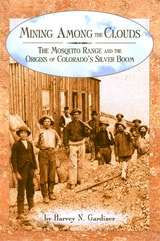
Mining among the Clouds
The Mosquito Range and the Origins of Colorado's Silver BoomHarvey N. Gardiner
University Press of Colorado, 2002
Mining in World History
Martin Lynch
Reaktion Books, 2004
Mining in the Museum
Mineral Technology on Display in American HistoryEric C. Nystrom
University of Massachusetts Press, 2027
Examining 150 years of mining and mineral technology exhibits at the Smithsonian
Buried deep underground or cut into remote landscapes, mines are often dirty, dark, and dangerous places, located far from the everyday urban spaces that most Americans call home. Yet mining is foundational to the making of the United States, supplying the raw materials that built its infrastructure, powered its industries, and shaped its scientific institutions, even as the work itself has remained physically removed, technically complex, and culturally overlooked. Mining in the Museum reveals how Americans have encountered this vital industry not at the distant mine face, but in museum galleries. Tracing more than 150 years of mining and mineral technology exhibits at the Smithsonian Institution in Washington, DC, Eric C. Nystrom shows how curators transformed ore, instruments, models, and machinery into stories about progress, innovation, and national development, and how those interpretive choices shaped what the nation remembers—and forgets—about mining.
Using mining collections as a lens into institutional change, Nystrom offers a new history of the Smithsonian and its United States National Museum, examining how curators, administrators, and policymakers debated what museums were for, which kinds of knowledge they should produce, and what objects deserved display. He follows the shifting fortunes of mineral and mining exhibits across world’s fairs, scientific surveys, and changing exhibition philosophies, showing how display strategies evolved alongside professional science and public education. As mining’s place in the national imagination changed, so too did its presence in the federal museum, moving from a central scientific and technological showcase to a subject increasingly preserved by regional and local institutions closer to mining communities themselves. Grounded in extensive archival research, Mining in the Museum illuminates the evolving relationship among technology, public history, and the politics of display, demonstrating how museums help define which industries, and which kinds of work, become part of the American story.
Mining the Borderlands
Industry, Capital, and the Emergence of Engineers in the Southwest Territories, 1855-1910Sarah E. M. Grossman
University of Nevada Press, 2018
At the dawn of the twentieth century, the US-Mexico border was home to some of the largest and most technologically advanced industrial copper mines. This despite being geographically, culturally, and financially far-removed from traditional urban centers of power. Mining the Borderlands argues that this was only possible because of the emergence of mining engineers—a distinct technocratic class of professionals who connected capital, labor, and expertise.
Mining engineers moved easily between remote mining camps and the upscale parlors of east coast investors. Working as labor managers and technical experts, they were involved in the daily negotiations, which brought private US capital to the southwestern border. The success of the massive capital-intensive mining ventures in the region depended on their ability to construct different networks, serving as intermediaries to groups that rarely coincided.
Grossman argues that this didn’t just lead to bigger and more efficient mines, but served as part of the ongoing project of American territorial and economic expansion. By integrating the history of technical expertise into the history of the transnational mining industry, this in-depth look at borderlands mining explains how American economic hegemony was established in a border region peripheral to the federal governments of both Washington, D.C. and Mexico City.

Ministers of Reform
The Progressives' Achievement in American Civilization, 1889-1920Robert M. Crunden
University of Illinois Press, 1982

Ministry to the Sick and Dying in the Late Medieval Church
Thomas M. Izbicki
Catholic University of America Press, 2023
Minneapolis Madams
The Lost History of Prostitution on the RiverfrontPenny A. Petersen
University of Minnesota Press, 2013
Sex, money, and politics—no, it’s not a thriller novel. Minneapolis Madams is the surprising and riveting account of the Minneapolis red-light district and the powerful madams who ran it. Penny Petersen brings to life this nearly forgotten chapter of Minneapolis history, tracing the story of how these “houses of ill fame” rose to prominence in the late nineteenth century and then were finally shut down in the early twentieth century.
In their heyday Minneapolis brothels were not only open for business but constituted a substantial economic and political force in the city. Women of independent means, madams built custom bordellos to suit their tastes and exerted influence over leading figures and politicians. Petersen digs deep into city archives, period newspapers, and other primary sources to illuminate the Minneapolis sex trade and its opponents, bringing into focus the ideologies and economic concerns that shaped the lives of prostitutes, the men who used their services, and the social-purity reformers who sought to eradicate their trade altogether. Usually written off as deviants, madams were actually crucial components of a larger system of social control and regulation. These entrepreneurial women bought real estate, hired well-known architects and interior decorators to design their bordellos, and played an important part in the politics of the developing city.
Petersen argues that we cannot understand Minneapolis unless we can grasp the scope and significance of its sex trade. She also provides intriguing glimpses into racial interactions within the vice economy, investigating an African American madam who possibly married into one of the city’s most prestigious families. Fascinating and rigorously researched, Minneapolis Madams is a true detective story and a key resource for anyone interested in the history of women, sexuality, and urban life in Minneapolis.
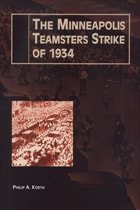
Minneapolis Teamsters Strike of 1934
Philip Korth
Michigan State University Press, 1995
The 1934 Minneapolis Teamsters Strike proved to be a pivotal event in twentieth-century American labor history. The Minneapolis Teamsters challenged the muscle of big business, as well as the authority of local, state, and federal government, and in the process they changed the very nature of labor relations in the United States. In The Minneapolis Teamsters Strike of 1934, Philip Korth's description of events surrounding this landmark labor action are filtered through the recollections of the people who were there. Korth blends historical record with the words of actual participants to draw a thorough and compelling portrait of a labor strike and its consequences. Philip Korth's study illustrates the organizational strategies that made the Minneapolis strike a success, as well as how opposition and public perception defined emerging labor relations practices and public policy. At the same time, the author provides an in-depth examination of the conflict through interviews with witnesses and participants in this pivotal event in labor history.

Minnesota Green
The Highs and Lows of Cannabis in the North CountryTanner Berris
University of Minnesota Press, 2027
The socially fraught and surprisingly colorful history of cannabis in Minnesota
In a sweeping narrative, Minnesota Green presents the previously untold story of cannabis and its long and complex history of criminalization, activism, and legislative contention. Seamlessly blending historical research, political analysis, and lived experience, activist and industry insider Tanner Berris traces the highs and lows of the plant’s presence in a state often held up as a beacon of progressive policymaking. Trekking across this fraught history, Berris documents how nineteenth-century hemp cultivation coincided with the federal dispossession of Indigenous lands, how, by the 1930s, moral panic turned cannabis from a common crop into a criminal threat, and how the “Hemp for Victory” campaign during World War II temporarily lifted a federal ban before the postwar decades gave way to renewed policing and punishment.
Paying close attention to school-based antidrug curricula, racialized rhetoric, patient testimonies, eradication campaigns, and widespread propaganda, Berris uncovers the prohibitionist roots of the “marijuana menace” and how reformers worked to reclaim the plant’s maligned reputation throughout the twentieth century. The fight for medical cannabis during the AIDS crisis, the revival of industrial hemp, and Minnesota’s embrace of low-dose hemp-derived products—all are pivotal points in the state’s reshaping of both public opinion and regulatory imagination.
At its core, this story is about Minnesotans: farmers experimenting with commercial hemp, activists staging legalization protests, policymakers wrestling with public caution, entrepreneurs and tribal leaders navigating a complex regulatory landscape, and local communities confronting the unjust racial and social consequences of punitive—and often violently policed—prohibition. At once a regional history and civic memoir, Minnesota Green vividly documents how a once-criminalized plant reemerged as a symbol of renewal and self-determination in Minnesota.
Retail e-book files for this title are screen-reader friendly with images accompanied by short alt text and/or extended descriptions.
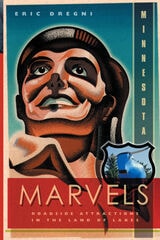
Minnesota Marvels
Roadside Attractions in the Land of LakesEric Dregni
University of Minnesota Press, 2001
Only in Minnesota can you snap a Polaroid of a fifty-five-foot-tall grinning green man with a size seventy-eight shoe or marvel at the spunk of a Swede who dedicated his life to spinning a gigantic ball of twine. The world’s largest hockey stick, as well as the biggest pelican, prairie chicken, turkey, fish, otter, fox, and loon also make Minnesota their home. Where else can you ponder the mysterious "miracle meat" of Spam in a museum dedicated to pork products or have your head examined by the phrenology machines at the Museum of Questionable Medical Devices?
Minnesota Marvels is a tour of the inspired, bizarre, brilliant, scandalous, and funny sites around the state. Look up in wonder at the several Paul Bunyan statues, including the original (Bemidji), the tallest (Akeley), and the largest talking version (Brainerd). Ease on down the road to visit the first home of the heel-tapping native of Grand Rapids, Judy Garland, or walk the "main street" of Sauk Centre immortalized by native son Sinclair Lewis. See the birthplaces of Charles Lindbergh, the Mayo brothers, the Greyhound bus, the snowmobile, and the ice-cream sandwich.
Minnesota is also the home of such attractions as the Minneapolis Sculpture Garden and the world’s largest aerial lift bridge in Duluth, and architectural wonders such as Frank Lloyd Wright’s modernist gas station in Cloquet and Frank Gehry’s arresting Weisman Art Museum. Stunning mansions with histories of ghost sightings, the hangouts and lairs of infamous gangsters, and old-fashioned breweries dot the state.
Conveniently organized by town name and illustrated throughout, Minnesota Marvels is the perfect light-hearted guide for entertaining road trips all over the state.
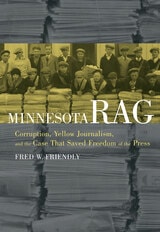
Minnesota Rag
Corruption, Yellow Journalism, and the Case That Saved Freedom of the PressFred W. Friendly
University of Minnesota Press, 2003
The fascinating behind-the-scenes story of this landmark First Amendment case
Minnesota Rag takes the reader on an exhilarating tour of the seamy underside of a dark period in Minnesota’s past, one rife with crooked public officials, vengeful gangsters, and yellow journalists. Featuring notorious characters such as Jay M. Near, racist and antilabor publisher of Minneapolis’s Saturday Press, pioneering newsman Fred W. Friendly weaves the tale of a court case that molded our understanding of freedom of the press and set a precedent for the publication of the Pentagon Papers.

Minnesota's Geologist
The Life of Newton Horace WinchellSue Leaf
University of Minnesota Press, 2026
Winner of the 2021 Minnesota Book Award for Minnesota Nonfiction
The story of the scientist who first mapped Minnesota’s geology, set against the backdrop of early scientific inquiry in the state
At twenty, Newton Horace Winchell declared, “I know nothing about rocks.” At twenty-five, he decided to make them his life’s work. As a young geologist tasked with heading the Minnesota Geological and Natural History Survey, Winchell (1839–1914) charted the prehistory of the region, its era of inland seas, its volcanic activity, and its several ice ages—laying the foundation for the monumental five-volume Geology of Minnesota. Tracing Winchell’s remarkable path from impoverished fifteen-year-old schoolteacher to a leading light of an emerging scientific field, Minnesota’s Geologist also recreates the heady early days of scientific inquiry in Minnesota, a time when one man’s determination and passion for learning could unlock the secrets of the state’s distant past and present landscape.
Traveling by horse and cart, by sailboat and birchbark canoe, Winchell and his group surveyed rock outcrops, river valleys, basalt formations on Lake Superior, and the vast Red River Valley. He studied petrology at the Sorbonne in Paris, bringing cutting-edge knowledge to bear on the volcanic rocks of the Arrowhead region. As a founder of the American Geological Society and founding editor of American Geologist, the first journal for professional geologists, Winchell was the driving force behind scientific endeavor in early state history, serving as mentor to many young scientists and presiding over a household—the Winchell House, located on the University of Minnesota’s present-day mall—that was a nexus of intellectual ferment. His life story, told here for the first time, draws an intimate picture of this influential scientist, set against a backdrop of Minnesota’s geological complexity and splendor.

Minnesota's Geologist
The Life of Newton Horton WinchellSue Leaf
University of Minnesota Press, 2020

Minnesota
A History of the StateTheodore C. Blegen
University of Minnesota Press, 2004
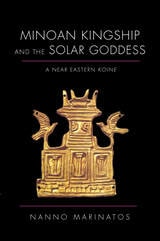
Minoan Kingship and the Solar Goddess
A Near Eastern KoineNanno Marinatos
University of Illinois Press, 2010
Ancient Minoan culture has been typically viewed as an ancestor of classical Greek civilization, but this book shows that Minoan Crete was on the periphery of a powerfully dynamic cultural interchange with its neighbors. Rather than viewing Crete as the autochthonous ancestor of Greece's glory, Nanno Marinatos considers ancient Crete in the context of its powerful competitors to the east and south.
Analyzing the symbols of the Minoan theocratic system and their similarities to those of Syria, Anatolia, and Egypt, Marinatos unlocks many Minoan visual riddles and establishes what she calls a "cultural koine," or standard set of cultural assumptions, that circulated throughout the Near East and the eastern Mediterranean at the time Minoan civilization reached its peak. With more than one hundred and fifty illustrations, Minoan Kingship and the Solar Goddess delivers a comprehensive reading of Minoan art as a system of thought.
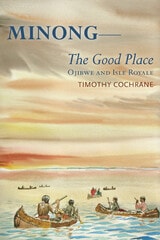
Minong
The Good Place Ojibwe and Isle RoyaleTimothy Cochrane
Michigan State University Press, 2009
Minong (the Ojibwe name for Isle Royale) is the search for the history of the Ojibwe people's relationship with this unique island in the midst of Lake Superior. Cochrane uses a variety of sources: Ojibwe oral narratives, recently rediscovered Jesuit records and diaries, reports of the Hudson's Bay post at Fort William, newspaper accounts, and numerous records from archives in the United States and Canada, to understand this relationship to a place. What emerges is a richly detailed account of Ojibwe activities on Minong—and their slow waning in the latter third of the nineteenth century.
Piece by piece, Cochrane has assembled a narrative of a people, an island, and a way of life that transcends borders, governments, documentation, and tidy categories. His account reveals an authentic 'history': the missing details, contradictions, deviations from the conventions of historical narrative—the living entity at the intersection of documentation by those long dead and the narratives of those still living in the area. Significantly, it also documents how non-natives symbolically and legally appropriated Isle Royale by presenting it to fellow non-natives as an island that was uninhabited and unused.

Minor China
Method, Materialisms, and the AestheticHentyle Yapp
Duke University Press, 2021
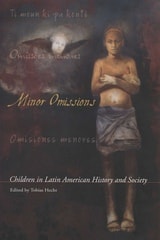
Minor Omissions
Children in Latin American History and SocietyEdited by Tobias Hecht
University of Wisconsin Press, 2002
Latin American history—the stuff of wars, elections, conquests, inventions, colonization, and all those other events and processes attributed to adults—has also been lived and partially forged by children. Taking a fresh look at Latin American and Caribbean society over the course of more than half a millennium, this book explores how the omission of children from the region's historiography may in fact be no small matter.
Children currently make up one-third of the population of Latin America and the Caribbean, and over the centuries they have worked, played, worshipped, committed crimes, and fought and suffered in wars. Regarded as more promising converts to the Christian faith than adults, children were vital in European efforts to invent loyal subjects during the colonial era. In the contemporary economies of Latin America and the Caribbean—where 23 percent of people live on a dollar per day or less—the labor of children may spell the difference between survival and starvation for millions of households.
Minor Omissions brings together scholars of history, anthropology, religion, and art history as well as a talented young author who has lived in the streets of a Brazilian city since the age of nine. The book closes with the prophetic dystopian tale "The Children's Rebellion" by the noted Uruguayan writer Cristina Peri Rossi.
Minor Salvage
The Korean War and Korean American Life WritingsStephen Hong Sohn
University of Michigan Press, 2022
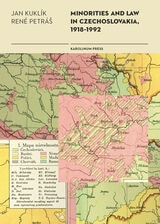
Minorities and Law in Czechoslovakia
Jan Kuklík and René Petráš
Karolinum Press, 2017
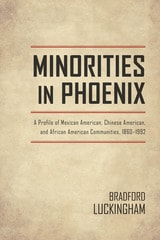
Minorities in Phoenix
A Profile of Mexican American, Chinese American, and African American Communities, 1860-1992Bradford Luckingham
University of Arizona Press, 1994
Settled in the mid-nineteenth century by Anglo and Mexican pioneers, Phoenix emerged as an Anglo-dominated society that presented formidable obstacles to minorities seeking access to jobs, education, housing, and public services. It was not until World War II and the subsequent economic boom and civil rights era that opportunities began to open up. Drawing on a variety of sources, from newspaper files to statistical data to oral accounts, Luckingham profiles the general history of each community, revealing the problems it has faced and the progress it has made. His overview of the public life of these three ethnic groups shows not only how they survived, but how they contributed to the evolution of one of America's fastest-growing cities.
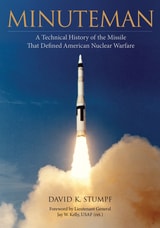
Minuteman
A Technical History of the Missile That Defined American Nuclear WarfareDavid K. Stumpf
University of Arkansas Press, 2021
Minuteman offers a fascinating look at the technological breakthroughs necessary to field this weapon system that has served as a powerful component of the strategic nuclear triad for more than half a century. With exacting detail, Stumpf examines the construction of launch and launch control facilities; innovations in solid propellant, lightweight inertial guidance systems, and lightweight reentry vehicle development; and key flight tests and operational flight programs—all while situating the Minuteman program in the context of world events. In doing so, the author reveals how the historic missile has adapted to changing defense strategies—from counterforce to mutually assured destruction to sufficiency.
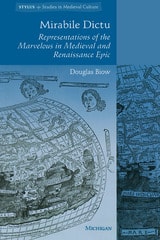
Mirabile Dictu
Representations of the Marvelous in Medieval and Renaissance EpicDouglas Biow
University of Michigan Press, 1996
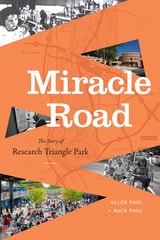
Miracle Road
The Story of Research Triangle ParkAllen Paul and Mack Paul
Duke University Press, 2026
Research Triangle Park in North Carolina (RTP) emerged under the unique circumstances of a poor Southern state that needed to find a way to offset the declining industries of tobacco, furniture, and textiles in the 1950s. Through the sustained commitment of nearby universities, business leaders, and local and state officials, state leaders established the largest science and research park in the United States in an area that was nothing but “possums and pines.” Miracle Road tells this story through the eyes of those at the center of it, like the local black leaders who convinced white officials to desegregate public schools with the justification that it would make the area more appealing to tech companies, or how a chance meeting between the governor and a Danish executive led to North Carolina becoming an epicenter for weight loss drugmakers decades later. Allen Paul and Mack Paul organize the story around major periods in RTP’s growth, showing how RTP came to define the region and the state by the 1990s as well as the major setbacks it encountered in the early 2000s. Breaking down the strategies that led to RTP’s success, like creating new institutions in targeted tech areas to spur activity and factoring quality of life into the regional planning of the area, Miracle Road demonstrates how the story of Research Triangle Park is a fascinating and important case study of urban development in the twenty-first century.
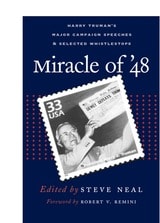
Miracle of '48
Edited by Steve Neal. Foreword by Robert V. Remini
Southern Illinois University Press, 2003
Miracle of ’48: Harry Truman’s Major Campaign Speeches and Selected Whistle-stopsis the first published collection of the public addresses Harry Truman made as he crisscrossed the United States from New York City to Los Angeles to Independence, Missouri in 1948. Edited by veteran political journalist Steve Neal, and complemented by a foreword from presidential historian Robert V. Remini, this volume captures the infectious spirit and determination of Truman’s message to the American people.
In an era when policy issues were paramount and televised debates were a thing of the future, Truman boldly stated his case directly to the American people, and they responded. “Senator Barkley and I will win this election and make these Republicans like it,” he declared in his acceptance speech at the Democratic National Convention in Philadelphia. “Don’t you forget that. We will do that because they are wrong and we are right.”
From the start of his “non-political” western tour in Crestline, Ohio, through his victory celebration in his hometown of Independence, the plainspoken Truman waged the good fight against all odds, never mixing his words or apologizing for his aggressively honest tactics. In blaming the GOP for a decline in farm prices, he alleged that the 80th Congress had “stuck a pitchfork in the farmer’s backs.” Truman is now regarded as among our greatest presidents and the populist message of his ’48 campaign is still as compelling and relevant today as it was over half a century ago.
“The political history of the United States reveals many unusual developments,” General Dwight D. Eisenhower wrote Truman after the 1948 election, “but certainly at no point does it record a greater accomplishment than yours, that can be traced so clearly to the stark courage and fighting heart of one man.”

Miracles & Prophecies in Nineteenth-Century France
SELMAN, THOMAS K
Rutgers University Press, 1983
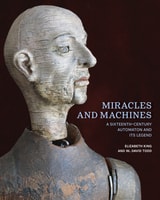
Miracles and Machines
A Sixteenth-Century Automaton and Its LegendElizabeth King
J. Paul Getty Trust, The, 0
This volume tells the singular story of an uncanny, rare object at the cusp of art and science: a 450-year-old automaton known as “the monk.” The walking, gesticulating figure of a friar, in the collection of the Smithsonian Institution’s National Museum of American History, is among the earliest extant ancestors of the self-propelled robot. According to legend connected to the court of Philip II of Spain, the monk represents a portrait of Diego de Alcalá, a humble Franciscan lay brother whose holy corpse was said to be agent to the miraculous cure of Spain’s crown prince as he lay dying in 1562.
In tracking the origins of the monk and its legend, the authors visited archives, libraries, and museums across the United States and Europe, probing the paradox of a mechanical object performing an apparently spiritual act. They identified seven kindred automata from the same period, which, they argue, form a paradigmatic class of walking “prime movers,” unprecedented in their combination of visual and functional realism. While most of the literature on automata focuses on the Enlightenment, this enthralling narrative journeys back to the late Renaissance, when clockwork machinery was entirely new, foretelling the evolution of artificial life to come.
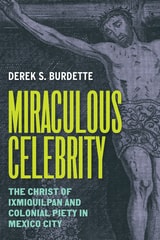
Miraculous Celebrity
The Christ of Ixmiquilpan and Colonial Piety in Mexico CityDerek S. Burdette
University of Texas Press, 2025
A study of the Christ of Ixmiquilpan, a historically beloved religious icon from sixteenth-century Mexico, and its evolving cultural importance.
The life-sized crucifix known as the Christ of Ixmiquilpan (also the Señor de Santa Teresa) was one of the most important artworks in colonial Mexico. The statue began as an ordinary devotional image, but in 1621 devotees witnessed it undergo a miraculous renovation that gave it a supernatural beauty. Over the next two and half centuries, its perceived power increased until it was surpassed in importance only by the Virgin of Guadalupe. Despite its historical significance, the Christ of Ixmiquilpan’s history has yet to be fully told.
Derek Burdette brings the miraculous crucifix out of the shadows and explores its instrumental role in shaping the devotional culture of New Spain. Following the arc of the statue’s life, he chronicles the story of the statue’s creation, miraculous renovation, and subsequent veneration at the heart of Mexico City. He also reveals how colonial politics were woven into the statue’s life from the very start. Reconstructing the history of a key artwork, Miraculous Celebrity sheds new light on the intersection of art, faith, and politics in the Spanish colonial world.
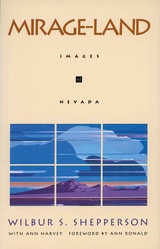
Mirage-Land
Images of NevadaWilbur S. Shepperson
University of Nevada Press, 1996

Mirage
Florida and the Vanishing Water of the Eastern U.S.Cynthia Barnett
University of Michigan Press, 2007
“Never before has the case been more compellingly made that America’s dependence on a free and abundant water supply has become an illusion. Cynthia Barnett does it by telling us the stories of the amazing personalities behind our water wars, the stunning contradictions that allow the wettest state to have the most watered lawns, and the thorough research that makes her conclusions inescapable. Barnett has established herself as one of Florida’s best journalists and Mirage is a must-read for anyone who cares about the future of the state.”
—Mary Ellen Klas, Capital Bureau Chief, Miami Herald
“Mirage is the finest general study to date of the freshwater-supply crisis in Florida. Well-meaning villains abound in Cynthia Barnett’s story, but so too do heroes, such as Arthur R. Marshall Jr., Nathaniel Reed, and Marjorie Harris Carr. The author’s research is as thorough as her prose is graceful. Drinking water is the new oil. Get used to it.”
—Michael Gannon, Distinguished Professor of history, University of Florida, and author of Florida: A Short History
“With lively prose and a journalist’s eye for a good story, Cynthia Barnett offers a sobering account of water scarcity problems facing Florida—one of our wettest states—and the rest of the East Coast. Drawing on lessons learned from the American West, Mirage uses the lens of cultural attitudes about water use and misuse to plead for reform. Sure to engage and fascinate as it informs.”
—Robert Glennon, Morris K. Udall Professor of Law and Public Policy, University of Arizona, and author of Water Follies: Groundwater Pumping and the Fate of America’s Fresh Waters
Part investigative journalism, part environmental history, Mirage reveals how the eastern half of the nation—historically so wet that early settlers predicted it would never even need irrigation—has squandered so much of its abundant freshwater that it now faces shortages and conflicts once unique to the arid West.
Florida’s parched swamps and supersized residential developments set the stage in the first book to call attention to the steady disappearance of freshwater in the American East, from water-diversion threats in the Great Lakes to tapped-out freshwater aquifers along the Atlantic seaboard.
Told through a colorful cast of characters including Walt Disney, Jeb Bush and Texas oilman Boone Pickens, Mirage ferries the reader through the key water-supply issues facing America and the globe: water wars, the politics of development, inequities in the price of water, the bottled-water industry, privatization, and new-water-supply schemes.
From its calamitous opening scene of a sinkhole swallowing a house in Florida to its concluding meditation on the relationship between water and the American character, Mirage is a compelling and timely portrait of the use and abuse of freshwater in an era of rapidly vanishing natural resources.
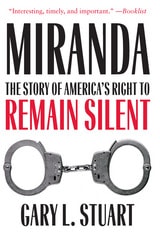
Miranda
The Story of America’s Right to Remain SilentGary L. Stuart
University of Arizona Press, 2004
Ernesto Miranda was an uneducated Hispanic man arrested in 1963 in connection with a series of sexual assaults, to which he confessed within hours. He was convicted not on the strength of eyewitness testimony or physical evidence but almost entirely because he had incriminated himself without knowing it—and without knowing that he didn’t have to. Miranda’s lawyers, John P. Frank and John F. Flynn, were among the most prominent in the state, and their work soon focused the entire country on the issue of their client’s rights. A 1966 Supreme Court decision held that Miranda’s rights had been violated and resulted in the now-famous "Miranda warnings."
Stuart personally knows many of the figures involved in Miranda, and here he unravels its complex history, revealing how the defense attorneys created the argument brought before the Court and analyzing the competing societal interests involved in the case. He considers Miranda's aftermath—not only the test cases and ongoing political and legal debate but also what happened to Ernesto Miranda. He then updates the story to the Supreme Court’s 2000 Dickerson decision upholding Miranda and considers its implications for cases in the wake of 9/11 and the rights of suspected terrorists. Interviews with 24 individuals directly concerned with the decision—lawyers, judges, and police officers, as well as suspects, scholars, and ordinary citizens—offer observations on the case’s impact on law enforcement and on the rights of the accused.
Ten years after the decision in the case that bears his name, Ernesto Miranda was murdered in a knife fight at a Phoenix bar, and his suspected killer was "Mirandized" before confessing to the crime. Miranda: The Story of America’s Right to Remain Silent considers the legacy of that case and its fate in the twenty-first century as we face new challenges in the criminal justice system.
Mirror Affect
Seeing Self, Observing Others in Contemporary ArtCristina Albu
University of Minnesota Press, 2016
For decades, contemporary artworks with reflective properties have stimulated public forms of spectatorship. According to Cristina Albu, these artworks, which can include elements such as mirrors, live video feedback, or sensors, draw attention to affective interdependence and mechanisms of social control.
In Mirror Affect, Albu provides a historical account of mirroring processes in contemporary art and offers insight into the phenomenological and sociopolitical concerns that have inspired artists to stage processes of affective, perceptual, and behavioral mirroring between art viewers. Beginning with the 1960s, Albu charts the rise of interpersonal modes of art spectatorship. She reveals contemporary artists’ strategic use of reflective and responsive interfaces to instill doubt in visual representation and appeal to active scrutiny of the changing social dynamics. She suggests that the mirroring processes envisioned by contemporary artists such as Joan Jonas, Dan Graham, Lynn Hershman Leeson, Olafur Eliasson, and Rafael Lozano-Hemmer trigger visual disjunctions to upset narcissistic inclinations. They invite viewers to see themselves in relation to others and to ponder their role within complex social systems.
From sculpture and performance to art and technology projects, video art, and installation art, Mirror Affect analyzes forms of interpersonal spectatorship, revising and expanding current historiographies of participatory art.
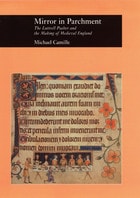
Mirror in Parchment
The Luttrell Psalter and the Making of Medieval EnglandMichael Camille
University of Chicago Press, 1998
The richly illuminated Luttrell Psalter was created for the English nobleman Sir Geoffrey Luttrell (1276-1345). Inexpensive mechanical illustration has since disseminated the book's images to a much wider audience; hence the Psalter's representations of manorial life have come to profoundly shape our modern idea of what medieval English people, high and low, looked like at work and at play. Alongside such supposedly truthful representations, the Psalter presents myriad images of fantastic monsters and beasts. These patently false images have largely been disparaged or ignored by modern historians and art historians alike, for they challenge the credibility of those pictures in the Luttrell Psalter that we wish to see as real.
In the conviction that medieval images were not generally intended to reflect daily life but rather to shape a new reality, Michael Camille analyzes the Psalter's famous pictures as representations of the world, imagined and real, of its original patron. Addressed are late medieval chivalric ideals, physical sites of power, and the boundaries of Sir Geoffrey's imagined community, wherein agricultural laborers and fabulous monsters play a similar ideological role. The Luttrell Psalter thus emerges as a complex social document of the world as its patron hoped and feared it might be.
Mirror of the Indies
A History of Dutch Colonial LiteratureRob Nieuwenhuys
University of Massachusetts Press, 1982

Mirror, Mirror
Reflections on Philly Style, Finding My Voice, and Social JusticeElizabeth Wellington
Temple University Press, 2027
For award-winning fashion writer Elizabeth Wellington, style was initially less about labels and more about how she styled her looks. She knew what looked good and that what she wore was an essential form of self-expression. Mirror, Mirror collects thirty-six of Wellington’s columns for the Philadelphia Inquirer, where she has written about fashion, politics, and pop culture since 2002. Each chapter includes an opening essay defining the era and how Wellington fit into it along with a “Fashion Fast Forward” that reflects how both she and society have evolved.
Wellington started covering fashion when the industry was on the cusp of social and sartorial change. As trends evolved, so too did Wellington, who found her place as she defined Philadelphia’s style scene. She profiles local doyennes Joan Shepp and Toby Lerner and writes about finding the perfect jeans. Wellington also intertwines optics and social justice in columns about First Lady style, the power of the hoodie, and the impact of the CROWN Act, which protects against discrimination based on hair.
Writing thoughtfully about fashion with nostalgia and passion, Wellington covers retail, Fashion Week runways, and the changing political landscape. Mirror, Mirror showcases Wellington’s flair in her work as she writes about style and herself.
Misbehaving Science
Controversy and the Development of Behavior GeneticsAaron Panofsky
University of Chicago Press, 2014
In Misbehaving Science, Aaron Panofsky traces the field of behavior genetics back to its origins in the 1950s, telling the story through close looks at five major controversies. In the process, Panofsky argues that persistent, ungovernable controversy in behavior genetics is due to the broken hierarchies within the field. All authority and scientific norms are questioned, while the absence of unanimously accepted methods and theories leaves a foundationless field, where disorder is ongoing. Critics charge behavior geneticists with political motivations; champions say they merely follow the data where they lead. But Panofsky shows how pragmatic coping with repeated controversies drives their scientific actions. Ironically, behavior geneticists’ struggles for scientific authority and efforts to deal with the threats to their legitimacy and autonomy have made controversy inevitable—and in some ways essential—to the study of behavior genetics.
Miscellaneous Studies in Mexican Prehistory
Michael W. Spence, Jeffrey R. Parsons, and Mary H. Parsons
University of Michigan Press, 1972
Miscellaneous Studies in Typology and Classification
Anta M. White, Lewis R. Binford and Mark L. Papworth
University of Michigan Press, 1963
Misplacing Ogden, Utah
Race, Class, Immigration, and the Construction of Urban ReputationsPepper Glass
University of Utah Press, 2020
Ogden, a working-class city with a history of racial and immigrant diversity, has long held a reputation among Utahns as a “sin city” in the middle of an entrenched religious culture. Glass blends ethnographic research with historical accounts, census reports, and other secondary sources to provide insight into Ogden’s reputation, past and present. Capturing residents’ perceptions of an entire city, as opposed to only some of its neighborhoods, and exploring the regional contexts shaping these views, is rare among urban researchers. Glass’s unique approach suggests we can better confront urban problems by rethinking assumptions about place and promoting interventions that break down boundaries.

Misreading Jane Eyre
A Postformalist ParadigmJerome Beaty
The Ohio State University Press, 1900
Miss Cutler and the Case of the Resurrected Horse
Social Work and the Story of Poverty in America, Australia, and BritainMark Peel
University of Chicago Press, 2011
Social workers produced thousands of case files about the poor during the interwar years. Analyzing almost two thousand such case files and traveling from Boston, Minneapolis, and Portland to London and Melbourne, Miss Cutler and the Case of the Resurrected Horse is a pioneering comparative study that examines how these stories of poverty were narrated and reshaped by ethnic diversity, economic crisis, and war.
Miss Stephen's Apprenticeship
How Virginia Stephen Became Virginia WoolfRosalind Brackenbury
University of Iowa Press, 2018
During the years leading up to her marriage with Leonard Woolf in 1912, the year in which she finished The Voyage Out and sent it to be published by her cousin at Duckworth’s, the future Virginia Woolf was teaching herself how to be a writer. While her brothers were sent first to private schools, then to Cambridge to be educated, Virginia Stephen and her sister Vanessa were informally educated at home. With this background, how did she know she was a writer? What were her struggles? How did she teach herself? What made Miss Stephen into the author Virginia Woolf?
Miss Stephen’s Apprenticeship explores these questions, delving into Virginia Woolf ’s letters and diaries, seeking to understand how she covered the distance from the wistful “I only wish I could write,” to the almost casual statement, “the novels are finished.” These days, the trajectory of a writer very often starts with studying for an MFA. In Woolf ’s case, however, it’s instructive to ask: How did a great writer, who had no formal education, invent for herself the framework she needed for a writing life? How did she know what she had to learn? How did she make her own way?
Novelist Rosalind Brackenbury explores these questions and others, and in the process reveals what Virginia Woolf can give to young writers today.
Missing Mila, Finding Family
An International Adoption in the Shadow of the Salvadoran Civil WarBy Margaret E. Ward
University of Texas Press, 2011
In the spring of 1983, a North American couple who were hoping to adopt a child internationally received word that if they acted quickly, they could become the parents of a boy in an orphanage in Honduras. Layers of red tape dissolved as the American Embassy there smoothed the way for the adoption. Within a few weeks, Margaret Ward and Thomas de Witt were the parents of a toddler they named Nelson—an adorable boy whose prior life seemed as mysterious as the fact that government officials in two countries had inexplicably expedited his adoption.
In Missing Mila, Finding Family, Margaret Ward tells the poignant and compelling story of this international adoption and the astonishing revelations that emerged when Nelson's birth family finally relocated him in 1997. After recounting their early years together, during which she and Tom welcomed the birth of a second son, Derek, and created a family with both boys, Ward vividly recalls the upheaval that occurred when members of Nelson's birth family contacted them and sought a reunion with the boy they knew as Roberto. She describes how their sense of family expanded to include Nelson's Central American relatives, who helped her piece together the lives of her son's birth parents and their clandestine activities as guerrillas in El Salvador's civil war. In particular, Ward develops an internal dialogue with Nelson's deceased mother Mila, an elusive figure whose life and motivations she tries to understand.

Missing Stories
Leslie Kelen
Utah State University Press, 2000
Utah's ethnic diversity is often overlooked. In a society sometimes presumed to be homogeneous, there is a danger that the varied experiences of its members will be lost to history. Missing Stories, available here for the first time in paperback, effectively counters such misconceptions and explores the rich history of ethnic and minority groups in the state. Several representatives from each of eight such groups tell in their own voices stories of themselves, their families, and their communities. The groups represented are Utes, African-Americans, Jews, Chinese, Italians, Japanese, Greeks, and Hispanics. In a preface to each section of oral history interviews, a respected historian of the community introduces background and heritage, setting the context for the personal recollections that follow. Also included are striking photographs by Kent Miles and George Janecek that capture much of the personality and character of the interviewees.
These oral histories recount migrations to new homes in Utah or adjustment to white settlement of traditional homelands in the state. They bring to light the struggles of individuals and families to survive and the formation and maintenance of communities in frequently adverse conditions, whether on reservations or farms, in small towns or large cities. The histories are enriched by accounts of challenges met and overcome and enlivened by stories of events and persons who sometimes achieved legendary status within and outside the groups. Missing Stories reveals the many ways that ethnic and minority groups have contributed to Utah's history and fills in missing pieces necessary to a complete portrayal of the state's society and culture.
Mission Accomplished
On Founding Constitutional Adjudication in Central EuropeRadoslav Procházka
Central European University Press, 2002
Mission Unaccomplished
American War Films in the Twenty-First CenturyAlan Nadel
University of Texas Press, 2025
An analysis of how post-9/11 war movies changed from following soldiers on specific missions to chronicling war as a day-to-day occupation.
In 2003, the United States began a war in Iraq without a mission. Instead of fighting to restore peace—the traditional objective of warfare—servicemembers faced the grim reality that there was no goal. Lacking even certainty as to who was the enemy, soldiers discovered that their task was simply to survive.
Mission Unaccomplished explores how Hollywood grasped the experience of Iraq from the perspective of US soldiers, reinventing the war film in the process. Historically, films such as Saving Private Ryan valorized the goals of war by chronicling missions that unambiguously contribute to the defeat of the enemy and the restoration of peace. But in The Hurt Locker, American Sniper, Green Zone, and other recent dramas, soldiers just try to outlast the chaos. Dramatizing the aimlessness of the war, events occur in random order, and soldiers have no sense of how their actions contribute to victory or peace. Looking to recent WWII movies such as Dunkirk and Hacksaw Ridge, which use this same cinematic vocabulary to position soldiering as merely a deadly job to be endured, Alan Nadel argues that the disillusionment of Iraq has influenced cinema broadly, inspiring a newly critical war film genre.

Mission Underway
The History of the Popular Culture Association/American Culture Association and the Popular Culture Movement 1967–2001Edited, Revised, and Updated by Ray B. Browne
University of Wisconsin Press, 2002