Results by title
28167 books match the query 'History' and 1583 start with m
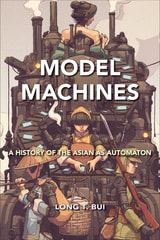
Model Machines
A History of the Asian as AutomatonLong T. Bui
Temple University Press, 2022
In the contemporary Western imagination, Asian people are frequently described as automatons, which disavows their humanity. In Model Machines, Long Bui investigates what he calls Asian roboticism or the ways Asians embody the machine and are given robotic characteristics.
Bui offers the first historical overview of the overlapping racialization of Asians and Asian Americans through their conflation with the robot-machine nexus. He puts forth the concept of the “model machine myth,” which holds specific queries about personhood, citizenship, labor, and rights in the transnational making of Asian/America.
The case studies in Model Machines chart the representation of Chinese laborers, Japanese soldiers, Asian sex workers, and other examples to show how Asians are reimagined to be model machines as a product of globalization, racism, and colonialism. Moreover, it offers examples of how artists and everyday people resisted that stereotype to consider different ways of being human. Starting from the early nineteenth century, the book ends in the present with the new millennium, where the resurgence of China presages the “rise of the machines” and all the doomsday scenarios this might spell for global humanity at large.
Modeling Nature
Sharon E. Kingsland
University of Chicago Press, 1995
Models of Resistance for a Democracy in Crisis
Geoff Eley
Disobedience Press, 2026
Models of Resistance for a Democracy in Crisis features three historians who examine how political opposition, anti-racist struggle, and artistic intervention serve as vital blueprints for safeguarding our precarious democracy.
Geoff Eley deconstructs Trump-era politics by identifying a dual crisis: the withering of democratic practices and a pervasive cynicism toward government. By analyzing how Germans of the 1930s might have resisted fascism, he reveals the specific forms of opposition needed to uphold democratic accountability today.
Jamon Jordan traces a lineage of anti-racist protest, from the rebellions of the enslaved to the legal and moral defiance of the abolitionist movement. By weaving public tactics, such as demonstrations and boycotts, with the enduring labor of building Black-led institutions and preserving cultural traditions, Jordan reveals a comprehensive framework for contemporary activists.
Megan Flattley examines how artworks challenge repressive regimes. These creative interventions bear witness to traumatic and unjust conditions, use cultural institutions as cover for political action, and stage provocations in public spaces to reveal latent violence and advocate for social change.

Models of Value
Eighteenth-Century Political Economy and the NovelJames Thompson
Duke University Press, 1996
In this account, political economy and the novel clearly arise as solutions to a crisis in the notion of value. Exploring the ways in which these different genres responded to the crisis—political economy by reconceptualizing wealth as capital, and the novel by refiguring intrinsic or human worth in the form of courtship narratives—Thompson rereads several literary works, including Defoe’s Roxana, Fielding’s Tom Jones, and Burney’s Cecilia, along with influential contemporary economic texts. Models of Value also traces the discursive consequences of this bifurcation of value, and reveals how history and theory participate in the very novelistic and economic processes they describe. In doing so, the book bridges the opposition between the interests of Marxism and feminism, and the distinctions which, newly made in the eighteenth century, continue to inform our discourse today.
An important reformulation of the literary and cultural production of the eighteenth century, Models of Value will attract students of the novel, political economy, and of literary history and theory.
Moderate Modernity
The Newspaper Tempo and the Transformation of Weimar DemocracyJochen Hung
University of Michigan Press, 2023
The newspaper’s idea of a modern, democratic Germany was undermined by the political and economic crises that hit Germany at the beginning of the 1930s. The way the newspaper described German democracy changed under these pressures. Flappers, American fridges, and modern music—the things that Tempo had once marshalled as representatives of a German future—were now rejected by the newspaper as emblems of a bygone age. The changes in Tempo’s vision of Germany’s future show that descriptions of Weimar politics as a standoff between upright democrats and rabid extremists do not do justice to the historical complexity of the period. Rather, we need to accept the Nazis as a lethal product of a German democracy itself. The history of Tempo teaches us how liberal democracies can create and nurture their own worst enemies.
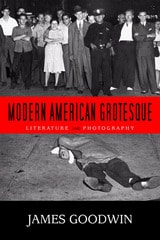
Modern American Grotesque
Literature and PhotographyJames Goodwin
The Ohio State University Press, 2009
Modern American Queer History
Allida Black
Temple University Press, 2001
Whether the subject is an individual life story, a community study, or an aspect of public policy, these essays illuminate the ways in which individuals in various locales understood the nature of their desires and the possibilities of resisting dominant views of normality and deviance. Theoretically informed, but accessible, the essays shed light too on the difficulties of writing history when documentary evidence is sparse or "coded." Taken together these essays suggest that while some individuals and social networks might never emerge from the shadows, the persistent exploration of the past for their traces is an integral part of the on-going struggle for queer rights.
Modern American Religion, Volume 1
The Irony of It All, 1893-1919Martin E. Marty
University of Chicago Press, 1986
"Marty writes with the highest standards of scholarship and with his customary stylistic grace. No series of books is likely to tell us as much about the religious condition of our own time as "Modern American Religion."—Robert L. Spaeth, Minneapolis Star Tribune
"The wealth of material and depth of insight are beyond reproach. This book will clearly stand as an important meteorological guide to the storm front of modernity as it swept Americans into the twentieth century."—Belden C. Lane, Review of Religions
"Whatever one thinks about Marty's theological or philosophical position as a historian, the charm of his friendly circumspective approach to American religious history is irresistible."—John E. Wilson, Theological Studies
"Marty attempts to impose historical order on the divergent ways a century of Americans have themselves tried to find order in their worlds. . . . [He] meets the challenge deftly. . . . It is a book relevant to our time. . . . Engages the heart and mind jointly."—Andy Solomon, Houston Post
Modern American Religion, Volume 2
The Noise of Conflict, 1919-1941Martin E. Marty
University of Chicago Press, 1991
"He tells the story [of the 1920s and 1930s] with a verve seldom equaled and manages to condense in one volume the results of dozens of specialized monographs. . . . [It] bears the usual hallmarks of a Marty book: a smoothly flowing narrative, passages studded with suggestive insight inviting further research, and apt quotations that capture the gist of complicated issues. . . . [A] splendid book. . . . Deserves a wide readership and undoubtedly will receive it." —James H. Moorhead, Chicago Sunday Tribune
"There is simply no better source, certainly none so engaging, for the interactions of religion and the larger culture in the interwar period." —Robert Booth Fowler, Journal of American History
"[This book is] not merely a history of American religion, but what might better be called a religious history" —David M. Kennedy, New York Times Book Review
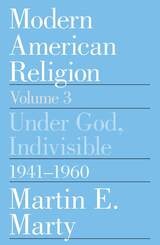
Modern American Religion, Volume 3
Under God, Indivisible, 1941-1960Martin E. Marty
University of Chicago Press, 1996
Under God, Indivisible, 1941-1960 is the first book to systematically address religion and the roles it played in shaping the social and political life of mid-century America. A work of exceptional clarity and historical depth, it will interest general readers as well as historians of American and church history.
"The series will become a standard account of the nation's variegated religious culture during the current century. The four volumes, the fruition of decades of research, may rank as much honored Marty's most significant contribution to U.S. studies."—Richard N. Ostling, Time
"When America needs some advice or commentary on the state of modern theology, the person it turns to is Martin Marty."—Publishers Weekly
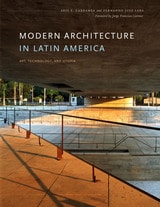
Modern Architecture in Latin America
Art, Technology, and UtopiaBy Luis E. Carranza and Fernando Luiz Lara; foreword by Jorge Francisco Liernur
University of Texas Press, 2015
Designed as a survey and focused on key examples and movements arranged chronologically from 1903 to 2003, this is the first comprehensive history of modern architecture in Latin America in any language.
Runner-up, University Co-op Robert W. Hamilton Book Award, 2015
Modern Architecture in Latin America: Art, Technology, and Utopia is an introductory text on the issues, polemics, and works that represent the complex processes of political, economic, and cultural modernization in the twentieth century. The number and types of projects varied greatly from country to country, but, as a whole, the region produced a significant body of architecture that has never before been presented in a single volume in any language. Modern Architecture in Latin America is the first comprehensive history of this important production.
Designed as a survey and focused on key examples/paradigms arranged chronologically from 1903 to 2003, this volume covers a myriad of countries; historical, social, and political conditions; and projects/developments that range from small houses to urban plans to architectural movements. The book is structured so that it can be read in a variety of ways—as a historically developed narrative of modern architecture in Latin America, as a country-specific chronology, or as a treatment of traditions centered on issues of art, technology, or utopia. This structure allows readers to see the development of multiple and parallel branches/historical strands of architecture and, at times, their interconnections across countries. The authors provide a critical evaluation of the movements presented in relationship to their overall goals and architectural transformations.
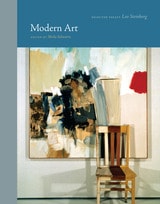
Modern Art
Selected EssaysLeo Steinberg
University of Chicago Press, 2023
Leo Steinberg was one of the most original art historians of the twentieth century, known for taking interpretive risks that challenged the profession by overturning reigning orthodoxies. In essays and lectures ranging from old masters to modern art, he combined scholarly erudition with eloquent prose that illuminated his subject and a credo that privileged the visual evidence of the image over the literature written about it. His writings, sometimes provocative and controversial, remain vital and influential reading. Steinberg’s perceptions evolved from long, hard looking at his objects of study. Almost everything he wrote included passages of formal analysis that were always put into the service of interpretation.
Following the series publication on Pablo Picasso, this volume focuses on other modern artists, including Cézanne, Monet, Matisse, Max Ernst, Jasper Johns, Robert Rauschenberg, Roy Lichtenstein, Hans Haacke, and Jeff Koons. Included are seven unpublished lectures and essays, Steinberg’s landmark essay “Encounters with Rauschenberg,” a survey of twentieth-century sculpture, and an examination of the role of authorial predilections in critical writing. The final chapter presents a collection of Steinberg’s humorous pieces, witty forays penned for his own amusement.
Modern Art is the fifth and final volume in a series that presents Steinberg’s writings, selected and edited by his longtime associate Sheila Schwartz.
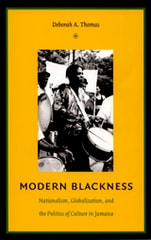
Modern Blackness
Nationalism, Globalization, and the Politics of Culture in JamaicaDeborah A. Thomas
Duke University Press, 2004
Thomas combines historical research with fieldwork she conducted in Jamaica between 1993 and 2003. Drawing on her research in a rural hillside community just outside Kingston, she looks at how Jamaicans interpreted and reproduced or transformed on the local level nationalist policies and popular ideologies about progress. With detailed descriptions of daily life in Jamaica set against a backdrop of postcolonial nation-building and neoliberal globalization, Modern Blackness is an important examination of the competing identities that mobilize Jamaicans locally and represent them internationally.
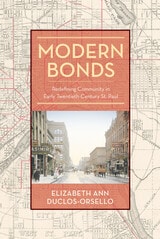
Modern Bonds
Redefining Community in Early Twentieth-Century St. PaulElizabeth Ann Duclos-Orsello
University of Massachusetts Press, 2018
What does community mean, exactly? In this interdisciplinary study, Elizabeth Ann Duclos-Orsello takes seriously the concept of community as an object of historical analysis.
Focusing on St. Paul, Minnesota, from 1900 to 1920, Modern Bonds explores the diverse ways that its people renegotiated private and public affiliations during a period of modernization. The book examines a wide range of subjects and materials, including photographs from an African American family, fictional depictions of middle-class women, built environments that created enclaves of immigrants, and public festivals designed to unite all citizens. As Duclos-Orsello demonstrates, it was in this period that a complex set of activities, policies, and practices led to new understandings of community that continue to shape life today.
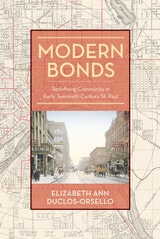
Modern Bonds
Redefining Community in Early Twentieth-Century St. PaulElizabeth Ann Duclos-Orsello
University of Massachusetts Press, 2018
What does community mean, exactly? In this interdisciplinary study, Elizabeth Ann Duclos-Orsello takes seriously the concept of community as an object of historical analysis.
Focusing on St. Paul, Minnesota, from 1900 to 1920, Modern Bonds explores the diverse ways that its people renegotiated private and public affiliations during a period of modernization. The book examines a wide range of subjects and materials, including photographs from an African American family, fictional depictions of middle-class women, built environments that created enclaves of immigrants, and public festivals designed to unite all citizens. As Duclos-Orsello demonstrates, it was in this period that a complex set of activities, policies, and practices led to new understandings of community that continue to shape life today.
Modern China and Opium
A ReaderAlan Baumler, Editor
University of Michigan Press, 2001
Modern China, 1840–1972
An Introduction to Sources and Research AidsAndrew J. Nathan
University of Michigan Press, 1973
Modern China-Myanmar Relations
Dilemmas of Mutual DependenceDavid I. Steinberg and Hongwei Fan
National University of Singapore Press, 2012
Modern Chinese Counter-Enlightenment
Affect, Reason, and the Transcultural LexiconPeng Hsiao-yen
Hong Kong University Press, 2023
In Modern Chinese Counter-Enlightenment, Peng Hsiao-yen argues that a trend of Counter-Enlightenment had grown from the late Qing to the May Fourth era in the 1910s to the 1920s and continued to the 1940s. She demonstrates how Counter-Enlightenment was manifested with case studies such as Lu Xun’s writings in the late 1900s, the Aesthetic Education movement from the 1910s to 1920s, and the Science and Lifeview debate in the 1920s. During the period, the life philosophy movement, highlighting the epistemic debate on affect and reason, is connected with its counterparts in Germany, France, and Japan. The movement had a widespread and long-term impact on Chinese philosophy and literature. Using the transcultural lexicon as methodology, this book traces how the German term Lebensanschauung (life view), a key concept in Rudolf Eucken’s life philosophy, constituted a global tide of Counter-Enlightenment that influenced the thought of leading Chinese intellectuals in the Republican era. Peng contends that Chinese intellectuals’ transcultural connections with others in the philosophical pursuit of knowledge triggered China’s self-transformation. She successfully reconstructs the missing link in the Chinese theater of the worldwide dialectic of Enlightenment and Counter-Enlightenment.
Modern Chinese Literary and Cultural Studies in the Age of Theory
Reimagining a FieldRey Chow, ed.
Duke University Press, 2000
One of the volume’s provocative suggestions is that the old model of area studies—an offshoot of U.S. Cold War strategy that found its anchorage in higher education—is no longer feasible for the diverse and multifaceted experiences that are articulated under the rubric of “Chineseness.” As Rey Chow argues in her introduction, the notion of a monolithic Chineseness bound ultimately to mainland China is, in itself, highly problematic because it recognizes neither the material realities of ethnic minorities within China nor those of populations in places such as Tibet, Taiwan, and post–British Hong Kong. Above all, this book demonstrates that, as the terms of a chauvinistic sinocentrism become obsolete, the critical use of theory—particularly by younger China scholars whose enthusiasm for critical theory coincides with changes in China’s political economy in recent years—will enable the emergence of fresh connections and insights that may have been at odds with previous interpretive convention.
Originally published as a special issue of the journal boundary 2, this collection includes two new essays and an afterword by Paul Bové that places its arguments in the context of contemporary cultural politics. It will have far-reaching implications for the study of modern China and will be of interest to scholars of theory and culture in general.
Contributors. Stanley K. Abe, Ien Ang, Chris Berry, Paul Bové, Sung-cheng Yvonne Chang, Rey Chow, Dorothy Ko, Charles Laughlin, Leung Ping-kwan, Kwai-cheung Lo, Christopher Lupke, David Der-wei Wang, Michelle Yeh

Modern Cows and Bovine Transformations
The Remaking of India's Cattle, 1790-1950David Arnold
University of Chicago Press, 0
Examines how India’s cattle underwent profound changes during the years of British colonial rule.
Drawing on extensive, untapped archives, Modern Cowsand Bovine Transformations illustrates the radical remaking of India’s cattle against the backdrop of colonial policies, environmental change, and anticolonial politics. Historian David Arnold examines the history of cows in India from 1790 to 1950, focusing on science, technology, and medicine to provide a secular account of imperial animal husbandry.
Doing justice to the wide variety of Indian cattle breeds, Arnold unpacks “bovine technology” and its subaltern linkages, covering topics such as the role of cattle in agriculture and the military; haulage and transport; breeding strategies; bacteriology and nutrition science, and India’s milk revolution. He also examines the dispersal of Indian cattle around the globe and the role that colonial policies played in spreading knowledge of Indian cattle breeds and facilitating their export. Finally, he addresses the “cattle crisis” brought on by famines, droughts, and disease, and disputes between colonial rulers and Hindu nationalists. He concludes with the impact of World War II and Partition on bovine populations, illustrating the consequences for independent India’s attempts to restore the milk supply and rebuild cattle breeds while also respecting the Hindu cow protection agenda. In the end, Arnold argues, the history of cattle in India provides us with a new way of understanding the power of the colonial state, its ambitions to transform India, its appropriation of the Indian subcontinent’s resources, and the myriad contradictions of its policies.
Modern Czech Theatre
Reflector and Conscience of a NationJarka M. Burian
University of Iowa Press, 2000
The story of Czech theatre in the twentieth century involves generations of mesmerizing players and memorable productions. Beyond these artistic considerations, however, lies a larger story: a theatre that has resonated with the intense concerns of its audiences acquires a significance and a force beyond anything created by striking individual talents or random stage hits. Amid the variety of performances during the past hundred years, that basic and provocative reality has been repeatedly demonstrated, as Jarka Burian reveals in his extraordinary history of the dramatic world of Czech theatre.
Following a brief historical background, Burian provides a chronological series of perspectives and observations on the evolving nature of Czech theatre productions during this century in relation to their similarly evolving social and political contexts. Once Czechoslovak independence was achieved in 1918, a repeated interplay of theatre with political realities became the norm, sometimes stifling the creative urge but often producing even greater artistry. When playwright Václav Havel became president in 1990, this was but the latest and most celebrated example of the vital engagement between stage and society that has been a repeated condition of Czech theatre for the past two hundred years. In Jarka Burian's skillful hands, Modern Czech Theatre becomes an extremely important touchstone for understanding the history of modern theatre within western culture.
Modern French Jewish Thought
Writings on Religion and PoliticsEdited by Sarah Hammerschlag
Brandeis University Press, 2018
Modern Housing for America
Policy Struggles in the New Deal EraGail Radford
University of Chicago Press, 1996
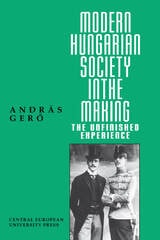
Modern Hungarian Society in the Making
András Gero
Central European University Press, 1995
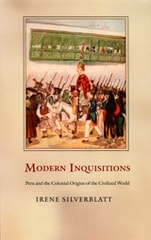
Modern Inquisitions
Peru and the Colonial Origins of the Civilized WorldIrene Silverblatt
Duke University Press, 2004
Drawing on extensive research in Peruvian and Spanish archives, Silverblatt uses church records, evangelizing sermons, and missionary guides to explore how the emerging modern world was built, experienced, and understood by colonists, native peoples, and Inquisition officials: Early missionaries preached about world history and about the races and nations that inhabited the globe; Inquisitors, able bureaucrats, defined who was a legitimate Spaniard as they executed heretics for “reasons of state”; the “stained blood” of Indians, blacks, and descendants of Jews and Moors was said to cause their deficient character; and native Peruvians began to call themselves Indian.
In dialogue with Arendt and other theorists of modernity, Silverblatt shows that the modern world’s underside is tied to its origins in colonialism and to its capacity to rationalize violence. Modern Inquisitions forces the reader to confront the idea that the Inquisition was not only a product of the modern world of the sixteenth and seventeenth centuries, but party to the creation of the civilized world we know today.
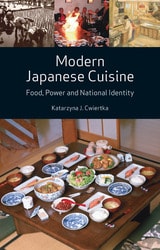
Modern Japanese Cuisine
Food, Power and National IdentityKatarzyna J. Cwiertka
Reaktion Books, 2015
Katarzyna J. Cwiertka demonstrates that key shifts in the Japanese diet were, in many cases, a consequence of modern imperialism. Exploring reforms in military catering and home cooking, wartime food management and the rise of urban gastronomy, Cwiertka shows how Japan’s numerous regional cuisines were eventually replaced by a set of foods and practices with which the majority of Japanese today ardently identify.
The result of over a decade of research, Modern Japanese Cuisine is a fascinating look at the historical roots of some of the world’s best cooking and will provide appetizing reading for scholars of Japanese culture and foodies alike.
Modern Japanese Literary Studies
Seth Jacobowitz and Jonathan E. Abel, Editors
University of Michigan Press, 2026
Modern Jungles
A Hmong Refugee's Childhood Story of SurvivalPao Lor
Wisconsin Historical Society Press, 2023
Born in a small farming village, Pao was destined to be a Hmong clan leader, wedding negotiator, or shaman. But the course of his life changed dramatically in the 1970s, when the Hmong faced persecution for their role in helping US forces fighting communism in the region. After more than two years in Thai refugee camps, Pao and his surviving family members boarded the belly of an “iron eagle” bound for the United States, where he pictured a new life of comfort and happiness. Instead, Pao found himself navigating a frightening and unfamiliar world, adjusting to a string of new schools and living situations while struggling to fulfill the hopes his parents had once held for his future. Now in Modern Jungles, Pao Lor shares his inspiring coming-of-age tale about perseverance, grit, and hope.
Included are discussion questions for use by book clubs, in classrooms, or around the dinner table.
Modern Jungles
A Hmong Refugee’s Childhood Story of SurvivalPao Lor
Wisconsin Historical Society Press, 2021
Born in a small farming village, Pao was destined to be a Hmong clan leader, wedding negotiator, or shaman. But the course of his life changed dramatically in the 1970s, when the Hmong faced persecution for their role in helping US forces fighting communism in the region. After more than two years in Thai refugee camps, Pao and his surviving family members boarded the belly of an “iron eagle” bound for the United States, where he pictured a new life of comfort and happiness. Instead, Pao found himself navigating a frightening and unfamiliar world, adjusting to a string of new schools and living situations while struggling to fulfill the hopes his parents had once held for his future. Now in Modern Jungles, Pao Lor shares his inspiring coming-of-age tale about perseverance, grit, and hope.
Included are discussion questions for use by book clubs, in classrooms, or around the dinner table.
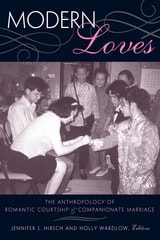
Modern Loves
The Anthropology of Romantic Courtship and Companionate MarriageJennifer S. Hirsch and Holly Wardlow, Editors
University of Michigan Press, 2006
In this first comparative ethnographic look at the global transformation toward marital ideals characterized by emotional intimacy, companionship, and mutual choice—discussed here as "companionate marriage"—Modern Loves asks how this shift is occurring and explores the factors that promote and hinder it, just who is pushing for these more companionate relationships, and what advantages men and women see in modern love. The contributors analyze the intricate negotiations surrounding love, marriage, and sex in Mexico, India, Papua New Guinea, Brazil, Pakistan, Nigeria, Singapore, and Hong Kong and among Latino youth in East Los Angeles. Modern Loves presents the new global approach to kinship studies, examining both the microlevel practices that constitute and bind relationships and the macrolevel forces that shape the landscape of love.
Jennifer S. Hirsch is Associate Professor in the Department of Sociomedical Sciences, Mailman School of Public Health, Columbia University. Holly Wardlow is Assistant Professor of Anthropology at the University of Toronto.
"What‘s love got to do with it? Hirsch and Wardlow answer this question by demonstrating the relevance—indeed, centrality—of the ideologies and practices surrounding romantic love and companionate marriage to the study of social transformation more broadly. The essays compiled in this volume explore the material, structural, and demographic underpinnings of the global shift in marital ideals while also tracing some of the sources of this marital shift in mass media, missionization, and the spread of individualism. The contributors of the chapters provide ethnographically rich examples of the ways in which people living in different societies interpret and act upon these global forces and images in sometimes overlapping and sometimes varying ways. This volume is an important and thoughtful contribution to the study of emotion, gender, kinship, and social change." —Laura M. Ahearn, Department of Anthropology, Rutgers University
"With its rich descriptions of the nuances in romantic love and its lucid analysis of the political economy of conjugal relations, this book will be widely read and loved by anthropologists as well as the concerned public."
—Yunxiang Yan, Department of Anthropology, UCLA
"Modern Loves offers an overview of current scholarship on love in the context of sexual relationships cross-culturally, and provides a view of the complexity of varied aspects of emotion, social structure, and social change in contemporary sexual relationships. It clearly makes the case for a political economic understanding of the emergence of ideologies of love, marriage, and courtship as part of expanding global economies."
—Linda-Anne Rebhun, Department of Anthropology, Yale University
Modern Mexican Culture
Critical FoundationsEdited by Stuart A. Day
University of Arizona Press, 2017
Modern Mexican Culture offers an enriching and deep investigation of key ideas and events in Mexico through an examination of art and history. Experts in Mexican cultural and literary studies cover the 1968 Tlatelolco student massacre, the figure of the charro (cowboy), the construct of the postrevolutionary teacher, the class-correlated construct of gente decente, a borderlands response to the rhetoric of dominance, and the “democratic transition” in late twentieth-century Mexico. Each essay is a rich reading experience, providing teachers and students alike with a deep and well-contextualized sense of Mexican life, culture, and politics.
Each chapter provides a historical grounding of its topic, followed by a multifaceted analysis through various artistic representations that provide a more complex view of Mexico. Chapters are accompanied by lists of readily available murals, political cartoons, plays, pamphlets, posters, films, poems, novels, and other cultural products. Modern Mexican Culture demonstrates the power of art and artists to question, explain, and influence the world around us.
Contributors:
Rafael Acosta Morales
Jacqueline E. Bixler
Marta Caminero-Santangelo
Debra A. Castillo
Christopher Conway
David S. Dalton
Stuart A. Day
Emily Hind
Robert McKee Irwin
Ryan Long
Dana A. Meredith
Magalí Rabasa
Luis Alberto Rodríguez Cortés
Fernando Fabio Sánchez
Ignacio M. Sánchez Prado
Analisa Taylor
Oswaldo Zavala
Modern Middle Eastern Jewish Thought
Writings on Identity, Politics, and Culture, 1893–1958Edited by Moshe Behar and Zvi Ben-Dor Benite
Brandeis University Press, 2013
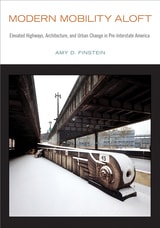
Modern Mobility Aloft
Elevated Highways, Architecture, and Urban Change in Pre-Interstate AmericaAmy D. Finstein
Temple University Press, 2020
In the first half of the twentieth century, urban elevated highways were much more than utilitarian infrastructure, lifting traffic above the streets; they were statements of civic pride, asserting boldly modern visions for a city’s architecture, economy, and transportation network. Yet three of the most ambitious projects, launched in Chicago, New York, and Boston in the spirit of utopian models by architects such as Le Corbusier and Hugh Ferriss, ultimately fell short of their ideals.
Modern Mobility Aloft is the first study to focus on pre-Interstate urban elevated highways within American architectural and urban history. Amy Finstein traces the idealistic roots of these superstructures, their contrasting realities once built, their impacts on successive development patterns, and the recent challenges they have posed to contemporary urban designers.
Filled with more than 100 historic photographs and illustrations of beaux arts and art deco architecture, Modern Mobility Aloft provides a critical understanding of urban landscapes, transportation, and technological change as cities moved into the modern era.
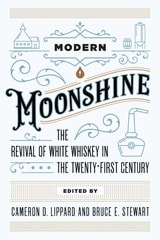
Modern Moonshine
The Revival of White Whiskey in the Twenty-First CenturyCameron D. Lippard
West Virginia University Press, 2019
The craft of making moonshine—an unaged white whiskey, often made and consumed outside legal parameters—nearly went extinct in the late twentieth century as law enforcement cracked down on illicit producers, and cheaper, lawful alcohol became readily available. Yet the twenty-first century has witnessed a resurgence of artisanal distilling, as both connoisseurs and those reconnecting with their heritage have created a vibrant new culture of moonshine. While not limited to Appalachia, moonshine is often entwined with the region in popular understandings.
The first interdisciplinary examination of the legal moonshine industry, Modern Moonshine probes the causes and impact of the so-called moonshine revival. What does the moonshine revival tell us about our national culture? How does it shape the image of Appalachia and rural America? Focusing mostly on southern Appalachia, the book’s eleven essays chronicle such popular figures as Popcorn Sutton and explore how and why distillers promote their product as “traditional” and “authentic.” This edited collection draws from scholars across the disciplines of anthropology, history, geography, and sociology to make sense of the legal, social, and historical shifts behind contemporary production and consumption of moonshine, and offers a fresh perspective on an enduring topic of Appalachian myth and reality.

Modern Motherhood
An American HistoryVandenberg-Daves, Jodi
Rutgers University Press, 2014
Modern Motherhood travels through redefinitions of motherhood over time, as mothers encountered a growing cadre of medical and psychological experts, increased their labor force participation, gained the right to vote, agitated for more resources to perform their maternal duties, and demonstrated their vast resourcefulness in providing for and nurturing their families. Navigating rigid gender role prescriptions and a crescendo of mother-blame by the middle of the twentieth century, mothers continued to innovate new ways to combine labor force participation and domestic responsibilities. By the 1960s, they were poised to challenge male expertise, in areas ranging from welfare and abortion rights to childbirth practices and the confinement of women to maternal roles. In the twenty-first century, Americans continue to struggle with maternal contradictions, as we pit an idealized role for mothers in children’s development against the social and economic realities of privatized caregiving, a paltry public policy structure, and mothers’ extensive employment outside the home.
Building on decades of scholarship and spanning a wide range of topics, Vandenberg-Daves tells an inclusive tale of African American, Native American, Asian American, working class, rural, and other hitherto ignored families, exploring sources ranging from sermons, medical advice, diaries and letters to the speeches of impassioned maternal activists. Chapter topics include: inventing a new role for mothers; contradictions of moral motherhood; medicalizing the maternal body; science, expertise, and advice to mothers; uplifting and controlling mothers; modern reproduction; mothers’ resilience and adaptation; the middle-class wife and mother; mother power and mother angst; and mothers’ changing lives and continuous caregiving. While the discussion has been part of all eras of American history, the discussion of the meaning of modern motherhood is far from over.
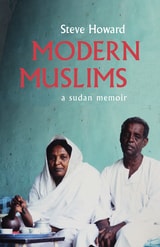
Modern Muslims
A Sudan MemoirSteve Howard
Ohio University Press, 2016
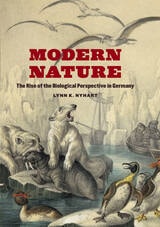
Modern Nature
The Rise of the Biological Perspective in GermanyLynn K. Nyhart
University of Chicago Press, 2009
In Modern Nature,Lynn K. Nyhart traces the emergence of a “biological perspective” in late nineteenth-century Germany that emphasized the dynamic relationships among organisms, and between organisms and their environment. Examining this approach to nature in light of Germany’s fraught urbanization and industrialization, as well the opportunities presented by new and reforming institutions, she argues that rapid social change drew attention to the role of social relationships and physical environments in rendering a society—and nature—whole, functional, and healthy.
This quintessentially modern view of nature, Nyhart shows, stood in stark contrast to the standard naturalist’s orientation toward classification. While this new biological perspective would eventually grow into the academic discipline of ecology, Modern Nature locates its roots outside the universities, in a vibrant realm of populist natural history inhabited by taxidermists and zookeepers, schoolteachers and museum reformers, amateur enthusiasts and nature protectionists.
Probing the populist beginnings of animal ecology in Germany, Nyhart unites the history of popular natural history with that of elite science in a new way. In doing so, she brings to light a major orientation in late nineteenth-century biology that has long been eclipsed by Darwinism.
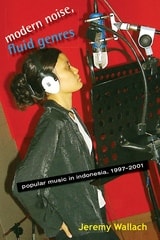
Modern Noise, Fluid Genres
Popular Music in Indonesia, 1997–2001Jeremy Wallach
University of Wisconsin Press, 2008
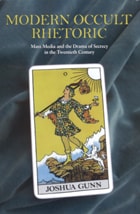
Modern Occult Rhetoric
Mass Media and the Drama of Secrecy in the Twentieth CenturyJoshua Gunn
University of Alabama Press, 2005
Uncovering how secrecy, symbolism, and hidden meanings shape modern culture and communication.
The occult has traditionally been understood as the study of secrets of the practice of mysticism or magic. This book broadens our understanding of the occult by treating it as a rhetorical phenomenon tied to language and symbols and more central to American culture than is commonly assumed.
Joshua Gunn approaches the occult as an idiom, examining the ways in which acts of textual criticism and interpretation are occultic in nature, as evident in practices as diverse as academic scholarship, Freemasonry, and television production. Gunn probes, for instance, the ways in which jargon employed by various social and professional groups creates barriers and fosters secrecy. From the theory wars of cultural studies to the Satanic Panic that swept the national mass media in the late 1980s and early 1990s, Gunn shows how the paradox of a hidden, buried, or secret meaning that cannot be expressed in language appears time and time again in Western culture.
These recurrent patterns, Gunn argues, arise from a generalized, popular anxiety about language and its limitations. Ultimately, Modern Occult Rhetoric demonstrates the indissoluble relationship between language, secrecy, and publicity, and the centrality of suspicion in our daily lives.
Modern Oceans, Ancient Sites
Archaeology and Marine Conservation on San Miguel Island, CaliforniaTodd J Braje
University of Utah Press, 2010
Modern Peru
A New HistoryPaulo Drinot and Alberto Vergara, editors
Duke University Press, 2025
Contributors. Eduardo Dargent, Paulo Drinot, Cynthia McClintock, José Luis Rénique, Natalia Sobrevilla Perea, Alberto Vergara, Charles Walker
Modern Trends in Islam
H. A. R. Gibb
University of Chicago Press, 1974
Based on a series of lectures delivered at the University of Chicago 1945, Modern Trends in Islam analyzes the evolving religious beliefs of practicing Muslims during the author’s own time. It was one of the first texts in English to treat Islam not as an unchanging set of beliefs and practices but as a dynamic religion whose meaning is continually redefined by its adherents. In six chapters, this concise book covers Islam’s confrontation with Western Modernism in the first half of the twentieth century in realms of law, society, and religious thought. In doing so, these essays anticipate many of the tensions between progressivism and fundamentalism that have characterized Islamic life, thought, and politics over the last seventy years.
Modernism - Dada - Postmodernism
Richard Sheppard
Northwestern University Press, 1999
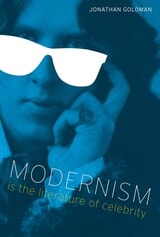
Modernism Is the Literature of Celebrity
By Jonathan Goldman
University of Texas Press, 2011
The phenomenon of celebrity burst upon the world scene about a century ago, as movies and modern media brought exceptional, larger-than-life personalities before the masses. During the same era, modernist authors were creating works that defined high culture in our society and set aesthetics apart from the middle- and low-brow culture in which celebrity supposedly resides. To challenge this ingrained dichotomy between modernism and celebrity, Jonathan Goldman offers a provocative new reading of early twentieth-century culture and the formal experiments that constitute modernist literature's unmistakable legacy. He argues that the literary innovations of the modernists are indeed best understood as a participant in the popular phenomenon of celebrity.
Presenting a persuasive argument as well as a chronicle of modernism's and celebrity's shared history, Modernism Is the Literature of Celebrity begins by unraveling the uncanny syncretism between Oscar Wilde's writings and his public life. Goldman explains that Wilde, in shaping his instantly identifiable public image, provided a model for both literary and celebrity cultures in the decades that followed. In subsequent chapters, Goldman traces this lineage through two luminaries of the modernist canon, James Joyce and Gertrude Stein, before turning to the cinema of mega-star Charlie Chaplin. He investigates how celebrity and modernism intertwine in the work of two less obvious modernist subjects, Jean Rhys and John Dos Passos. Turning previous criticism on its head, Goldman demonstrates that the authorial self-fashioning particular to modernism and generated by modernist technique helps create celebrity as we now know it.
Modernism and Colonialism
British and Irish Literature, 1899–1939Richard Begam and Michael Valdez Moses, eds.
Duke University Press, 2007
Ranging over poetry, fiction, and criticism, the essays provide fresh appraisals of Joseph Conrad, T. S. Eliot, Ezra Pound, Virginia Woolf, D. H. Lawrence, Wyndham Lewis, E. M. Forster, W. B. Yeats, James Joyce, Elizabeth Bowen, Hugh MacDiarmid, and Evelyn Waugh, as well as Robert Louis Stevenson and H. Rider Haggard. The essays that bookend the collection connect the modernists to their Victorian precursors, to postwar literary critics, and to postcolonial poets. The rest treat major works written or published between 1899 and 1939, the boom years of literary modernism and the period during which the British empire reached its greatest geographic expanse. Among the essays are explorations of how primitivism figured in the fiction of Lawrence and Lewis; how, in Ulysses, Joyce used modernist techniques toward anticolonial ends; and how British imperialism inspired Conrad, Woolf, and Eliot to seek new aesthetic forms appropriate to the sense of dislocation they associated with empire.
Contributors. Nicholas Allen, Rita Barnard, Richard Begam, Nicholas Daly, Maria DiBattista, Ian Duncan, Jed Esty, Andrzej Gąsiorek, Declan Kiberd, Brian May, Michael Valdez Moses, Jahan Ramazani, Vincent Sherry
Modernism and the Women’s Popular Romance in Britain, 1885–1925
Martin Hipsky
Ohio University Press, 2011
Today’s mass-market romances have their precursors in late Victorian popular novels written by and for women. In Modernism and the Women’s Popular Romance Martin Hipsky scrutinizes some of the best-selling British fiction from the period 1885 to 1925, the era when romances, especially those by British women, were sold and read more widely than ever before or since.
Recent scholarship has explored the desires and anxieties addressed by both “low modern” and “high modernist” British culture in the decades straddling the turn of the twentieth century. In keeping with these new studies, Hipsky offers a nuanced portrait of an important phenomenon in the history of modern fiction. He puts popular romances by Mrs. Humphry Ward, Marie Corelli, the Baroness Orczy, Florence Barclay, Elinor Glyn, Victoria Cross, Ethel Dell, and E. M. Hull into direct relationship with the fiction of Virginia Woolf, Katherine Mansfield, James Joyce, and D. H. Lawrence, among other modernist greats.
Modernism at Mid-Century
The Architecture of the United States Air Force AcademyEdited by Robert Bruegmann
University of Chicago Press, 1994
The contributors to this volume (Jory Johnson, Robert Nauman, Sheri Olson, James Russell, and Kristen Schaffer) and editor Robert Bruegmann chronicle the complex history of the planning, design, and construction of the Air Force Academy. As the most conspicuous commission of the American military at the height of the Cold War, the design of the Academy generated intense popular interest and was a lightning rod for conflicting values in postwar society. The design, by architects Skidmore, Owings & Merrill, has been hailed as the final triumph of the International Style and as a monument to military bureaucracy.
Modernism in Relation
KCS Paniker’s Written PicturesRebecca M. Brown
J. Paul Getty Trust, The, 0
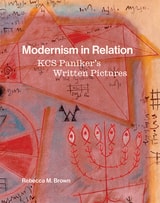
This innovative book reimagines modernism through the illegible scribbles and vibrant colors of southern Indian artist KCS Paniker.
KCS Paniker (1911–1977) is a canonical figure in India’s twentieth-century modernism. He was principal of the Madras School of Art and founder of one of the world’s longest-standing artists’ communities. Yet, even within India, he remains a marginal figure, positioned at the periphery of a dominant art world centered in the north. Paniker’s best-known body of work, the Words and Symbols series (1963–77), calls on us to reconsider how knowledge is produced and disseminated in a postcolonial, decolonizing world. These “written pictures”—paintings filled with symbols, tables, equations, and illegible scribbles—invite decoding, only to undermine the pursuit of wholeness or stable meaning.
Paniker famously called Paul Klee his “guru.” In this book, art historian Rebecca M. Brown explores what that might mean, moving beyond tracing influence and derivation to embrace a fuller sense of artistic relation across geography and time. Featuring over 100 stunning illustrations, Modernism in Relation explores the dynamic, twisting currents of modernism, tracing how Paniker navigated its waters on his own terms—abandoning prescriptions for what modern art should be or what Indian modernism should look like. The book reveals a maker seeking new creative languages, challenging ways of knowing, and exploring the unpredictable, ever-changing nature of relation.
Modernism
An Anthology of Sources and DocumentsEdited by Vassiliki Kolocotroni, Jane Goldman, and Olga Taxidou
University of Chicago Press, 1998
By favoring short extracts over lengthier originals, the editors cover a remarkable range and variety of modernist thinking. Included are not just the familiar high modernist landmarks such as Gustave Flaubert, Ezra Pound, and James Joyce, but also a diverse representation from the sciences, politics, philosophy, and the arts, including Charles Darwin, Thorstein Veblen, W. E. B. Du Bois, Isadora Duncan, John Reed, Adolf Hitler, and Sergei Eisenstein. Another welcome feature is a substantial selection of hard-to-find manifestos from the many modernist movements, among them futurism, cubism, Dada, surrealism, and anarchism.