Results by title
28167 books match the query 'History' and 1583 start with m

Mr. President
A Life of Benjamin HarrisonRay E. Boomhower
Indiana Historical Society Press, 2018
Mrs. Abraham Lincoln
A Study of Her Personality and Her Influence on LincolnW.A. Evans, Foreword by Jason Emerson
Southern Illinois University Press, 1932
First published in 1932, this was the first thoroughly researched biography of Mary Lincoln ever written, and it remains the most balanced and complete work on this controversial First Lady. Author W. A. Evans challenges the disparaging views of Mary Lincoln that were generally accepted at the time, offering a comprehensive and informed look at a woman whose physical and mental health problems have often been misconstrued or overlooked by other biographers. Evans conducted extensive research, interviewing Mrs. Lincoln’s family members, seeking advice and assistance from numerous Lincoln scholars and historians, scouring thousands of pages of contemporary newspapers and primary resources, reviewing correspondence Mary wrote during her stay at Bellevue Place sanitarium, and consulting with several medical experts. The result of all this research is an objective and detailed portrait of Mrs. Lincoln and her influence on her husband that still has a great deal of historical value for readers today.
A new foreword by Jason Emerson, author of The Madness of Mary Lincoln, provides biographical information on Evans and background on the origins of the book and its reception and influence. Finally back in print, this classic biography is essential reading for all with an interest in the Lincoln family.
Mrs. Goodfellow
The Story of America's First Cooking SchoolBecky Libourel Diamond
Westholme Publishing, 2012
Recovering the Life and Influence of the “Mother of American Cooking,” the Woman Who Changed the Way We Learn How to Prepare Meals
In Philadelphia during the first decades of the nineteenth century, a widow, Mrs. Elizabeth Goodfellow, ran a popular bakery and sweet shop. In addition to catering to Philadelphia’s wealthy families and a reputation of having the finest desserts and sweet dishes in the young country, her business stood out from every other establishment in another way: she ran a small school to learn the art of cooking, the first of its kind in America. Despite her fame—references to her cooking as a benchmark abound in the literature of the period—we know very little about who she was. Since she did not keep a journal and never published any of her recipes, we have to rely on her students, most notably Eliza Leslie, who fortunately recorded many of Goodfellow’s creations and techniques. Goodfellow is known to have made the first lemon meringue pie and for popularizing regional foods, such as Indian (corn) meal. Her students also recall that Mrs. Goodfellow stressed using simple wholesome ingredients that were locally grown, presaging modern culinary fashion.
By assembling the many parts of this puzzle from old recipe books, advertisements, letters, diaries, genealogical records, and other primary sources, researcher and writer Becky Diamond has been able to provide a more complete portrait of this influential figure in cooking history. Mrs. Goodfellow: The Story of America’s First Cooking School begins with what we know about Elizabeth Goodfellow—where she was born, her husbands, her children, where her shop was located. We then travel back in time to discover the kinds of foods that would have been available to Goodfellow and how she may have used them. The book next turns to the rise of both commercial eating establishements and books of recipes. From here, the author explains the rapid expansion of cooking schools, such as the New York Cooking Academy and the Boston Cooking School, made famous through its association with Fannie Farmer, and ends with a discussion of the role of celebrity chefs. Thoroughly researched and including a range of authentic recipes, Mrs. Goodfellow is a delicious exploration of the life and legacy of one of America’s most influential cooks.

Mrs. Shipley's Ghost
The Right to Travel and Terrorist WatchlistsJeffrey Kahn
University of Michigan Press, 2014
Today, when a single person can turn an airplane into a guided missile, no one objects to rigorous security before flying. But can the state simply declare some people too dangerous to travel, ever and anywhere? Does the Constitution protect a fundamental right to travel? Should the mode of travel (car, plane, or boat) or itinerary (domestic or international) make a constitutional difference? This book explores the legal and policy questions raised by government travel restrictions, from passports and rubber stamps to computerized terrorist watchlists.
In tracing the history and scope of U.S. travel regulations, Jeffrey Kahn begins with the fascinating story of Mrs. Ruth Shipley, a federal employee who almost single-handedly controlled access to passports during the Cold War. Kahn questions how far national security policies should go and whether the government should be able to declare some individuals simply too dangerous to travel. An expert on constitutional law, Kahn argues that U.S. citizens’ freedom to leave the country and return is a fundamental right, protected by the Constitution.
Much Maligned Monsters
A History of European Reactions to Indian ArtPartha Mitter
University of Chicago Press, 1992
Much Matter in a Penny Paper
Early Yoruba Print Culture in Lagos, 1910–1930Karin Barber
Ohio University Press, 2026
A groundbreaking study of Yoruba-language print culture in colonial Lagos
Much Matter in a Penny Paper offers the first in-depth exploration of the emergence of an African-language print culture in early twentieth-century Lagos, Nigeria. Focusing on the 1910s and 1920s—a period of rapid experimentation and innovation—Karin Barber examines the rise of Yoruba-language newspapers and the vibrant civic sphere they helped create.
The 1910s was notable for an upsurge of local Yoruba-language history books, and during the 1920s entrepreneurial editors and writers launched five Yoruba-language weeklies in quick succession. These publications drew in readers beyond the educated elite, expanding public discourse and experimenting with new genres of writing. From moralizing pamphlets and dramatic sketches to serialized narratives voiced by women, Yoruba print producers reimagined oral and written traditions, blending popular songs, anecdotes, and poetic forms into a dynamic new medium.
This book is about not only what was printed but also how and why. It investigates the material practices of print production, the motivations of its creators, and the expectations of its audiences. Drawing on editorials, reader correspondence, and other paratextual commentary, it reveals how Yoruba writers and readers understood the role of print in capturing the present, preserving the past, projecting the wisdom of the day forward for the benefit of future generations, and generating deep Yoruba texts rich in poetic energy.
Through detailed portraits of key figures—editors, pamphleteers, and a mysterious oral historian—Barber traces the interconnections between publications and genres, showing how they formed an active bilingual sphere of communication. The interplay between Yoruba- and English-language media, as well as the creative exploitation of both languages, emerges as a defining feature of this period’s print culture. By treating the Yoruba print archive as a “transcript of emergence,” this study offers new insights into how cultural innovations take shape. It is essential reading for scholars of African history, media studies, sociolinguistics, and print culture.
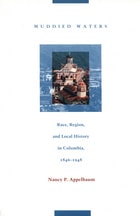
Muddied Waters
Race, Region, and Local History in Colombia, 1846–1948Nancy P. Appelbaum
Duke University Press, 2003
Nineteenth- and twentieth-century Colombian elite intellectuals, Appelbaum contends, mapped race onto their mountainous topography by defining regions in racial terms. They privileged certain places and inhabitants as white and modern and denigrated others as racially inferior and backward. Inhabitants of Riosucio, however, elaborated local narratives about their mestizo and indigenous identities that contested the white mystique of the Coffee Region. Ongoing violent conflicts over land and politics, Appelbaum finds, continue to shape local debates over history and identity. Drawing on archival and published sources complemented by oral history, Muddied Waters vividly illustrates the relationship of mythmaking and racial inequality to regionalism and frontier colonization in postcolonial Latin America.

Mugwumps, Morals and Politics 1884-1920
Gerald W. McFarland
University of Massachusetts Press, 1975
The conventional approach has been to concentrate on only a dozen or so of the best known Mugwumps and to trace their careers no further than 1900. In contrast, McFarland greatly extends the number of individuals whose activities must be considered reflections of the movement, discussing a sample of hundreds of active Mugwumps, and traces their careers well into the twentieth century.
Mugwump orthodoxy is demonstrated by an examination of their largely negative goals in the anti-Blaine bolt of 1884, their narrow political program during the late 1880s, and their politically disastrous loyalty to Grover Cleveland. But their innovative side is also highlighted by a searching analysis of their successes, including their participation in the movement to professionalize such occupations as law, medicine, and higher education, and their contributions to urban, political, and social reform.
Mugwumps
Public Moralists of the Gilded AgeDavid M. Tucker
University of Missouri Press, 1998
A spirited reevaluation of the public moralists who shaped public policy in nineteenth-century America, Mugwumps: Public Moralists of the Gilded Age provides a refreshing look at a group of Americans whose importance to the history of our country has commonly been dismissed.
A public interest group that labeled the generation following the American Civil War as the "Gilded Age," Mugwumps were college-educated individuals who lived the lessons of their moral philosophy—Christian values, republican virtue, and classical liberalism. Tracing Mugwump values back before the term was commonly used, Tucker defines these liberals as benevolent and altruistic, active campaigners against slavery and imperialism, and for sound money, lower tariffs, and civil service reform. The earliest Mugwumps took on the self-assigned task of advocating public principles over private interests.
Evaluations of these public moralists during the 1950s and 1960s, however, did not paint the Mugwumps in so positive a light. Awash in the popular New Deal public policies that advocated positive government intervention and regulation in the economy, these studies dismissed Mugwump liberalism as outdated. More specifically, the reformers were criticized as being self-interested failures.
Tucker obliges readers to look beyond such dismissals to the history and accomplishments of Mugwumps as a whole. Unlike previous historians, Tucker examines the antebellum roots of the Mugwumps and follows their ever-increasing participation in American government throughout the nineteenth century. Tucker portrays Mugwumps not as selfish agents of the middle class but as fascinating practitioners of eighteenth-century public virtue and nineteenth-century social science.
This book forcefully challenges previous studies on the Mugwumps and restores these public moralists to the mainstream of nineteenth-century American history. Their concerns for morality and free-market economics are again fashionable in contemporary politics and deserving of fresh attention from both the general reader and the scholar.
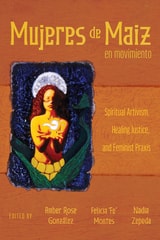
Mujeres de Maiz en Movimiento
Spiritual Artivism, Healing Justice, and Feminist PraxisEdited by Amber Rose González, Felicia ‘Fe’ Montes, and Nadia Zepeda
University of Arizona Press, 2024
MdM’s political-ethical-spiritual commitments, cultural production, and everyday practices are informed by Indigenous and transnational feminist of color artistic, ceremonial, activist, and intellectual legacies. Contributors fuse stories of celebration, love, and spirit-work with an incisive critique of interlocking oppressions, both intimate and structural, encouraging movement toward “a world where many worlds fit.”
The multidisciplinary, intergenerational, and critical-creative nature of the project coupled with the unique subject matter makes the book a must-have for high school and college students, activist-scholars, artists, community organizers, and others invested in social justice and liberation.

Mule South to Tractor South
Mules, Machines, and the Transformation of the Cotton SouthGeorge B. Ellenberg
University of Alabama Press, 2013
The adoption of the mule as the major agricultural resource in the American South and its later displacement by the mechanical tractor.
The author describes the adoption of the mule as the major agricultural resource in the American South and its later displacement by the mechanical tractor. After describing the surprising slowness of southern farmers to realize the superiority of the mule over the horse for agricultural labor, Ellenberg strives to capture the symbiosis that emerged between animal and man to illuminate why and how the mule became a standard feature in Southern folk culture.
Having been slow to adopt the mule, southern farmers were then reluctant to set it aside in favor of the tractor. Ellenberg describes the transformation as the tractor gradually displaced the mule and the role of the U.S. Department of Agriculture in this process.
The work not only becomes a survey of the development of southern agriculture as revealed through an examination of this premier work animal but also follows the emergence of the animal as a cultural icon, as it figures in southern literature, folklore, and music.
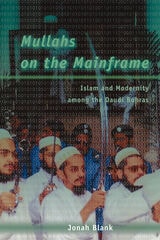
Mullahs on the Mainframe
Islam and Modernity among the Daudi BohrasJonah Blank
University of Chicago Press, 2001
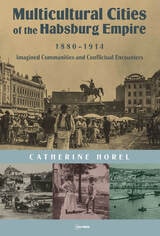
Multicultural Cities of the Habsburg Empire, 1880–1914
Imagined Communities and Conflictual EncountersCatherine Horel
Central European University Press, 2023
Catherine Horel has undertaken a comparative analysis of the societal, ethnic, and cultural diversity in the last decades of the Habsburg Monarchy as represented in twelve cities: Arad, Bratislava, Brno, Chernivtsi, Lviv, Oradea, Rijeka, Sarajevo, Subotica, Timișoara, Trieste, and Zagreb. By purposely selecting these cities, the author aims to counter the disproportionate attention that the largest cities in the empire receive.
With a focus on the aspects of everyday life faced by the city inhabitants (associations, schools, economy, and municipal politics) the book avoids any idealization of the monarchy as a paradise of peaceful multiculturalism, and also avoids exaggerating conflicts. The author claims that the world of the Habsburg cities was a dynamic space where many models coexisted and created vitality, emulation, and conflict. Modernization brought about the dissolution of old structures, but also mobility, the progress of education, the explosion of associative life, and constantly growing cultural offerings.
Multicultural Politics
Racism, Ethnicity, and Muslims in BritainTariq Modood
University of Minnesota Press, 2005
Multiple Exposures
Chronicles of the Radiation AgeCatherine Caufield
University of Chicago Press, 1990
the history behind the safety standards limiting the effects of high energy
radiation on human beings. . . . Provides an immense amount of information
in a very readable form."—W. Alan Runciman, Prometheus
"From fallout and radon to radioactive smoke detectors and dental X-rays,
Caufield traces the proliferation of the uses of radiation in medicine,
industry and the military, and in generating energy. An intelligent,
non-alarmist history."—Publishers Weekly
Multiples in Pre-Modern Art
Edited by Walter Cupperi
Diaphanes, 2014
Multiples in Pre-Modern Art looks at the production and reception of replicas and multiples before the nineteenth century. A wide variety of media are considered, including metal, marble, terra cotta, textiles, plaster, porcelain, canvas, wood, and wax. Through a series of questions—What happens if a copy purposely points not to an original but to another copy? What does it matter that some serially made multiples are not identical?—many of the works are reappraised as significant art forms in their own right.
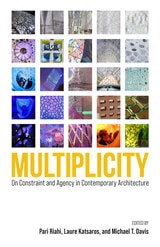
Multiplicity
On Constraint and Agency in Contemporary ArchitectureEdited by Pari Riahi, Laure Katsaros, and Michael T. Davis
University of Massachusetts Press, 2024
Today, the field of architecture faces a reckoning. While there is no longer consensus on what defines an architectural work, theorists, historians, and practitioners are grappling with urgent issues—among them the impact of climate change, the dynamics of power and race in relation with the built environment, and the technological, practical, and ethical dimensions of architecture. As established practices, academic objectives, and professional expectations come under scrutiny, architecture is in search of new definitions, identities, and voices.
Inspired by Italo Calvino’s memos about literature in the twenty-first century, this volume—the second in a series— situates architecture within a broad framework, exploring its complex interactions with environmental, cultural, political, social, artistic, and technological forces. The editors’ objective is to spur conversation across the boundaries that divide architecture’s theorists and historians from practitioners. In addition to the editors, the contributors include Sanford Kwinter, Aleksandra Jaeschke, Jennifer Mack, Rahul Mehrotra, Charles Waldheim, Kristi Cheramie, Jesse Reiser, Julian Harake, Jenny E. Sabin, Charles Davis, Esra Akcan, and David Karmon.

Multipolarity
The Promise of DisharmonyEdited by Peter W. Schulze
Campus Verlag, 2018
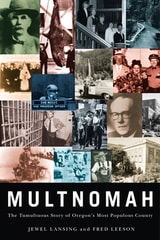
Multnomah
The Tumultuous Story of Oregon's Most Populous CountyJewel Lansing and Fred Leeson
Oregon State University Press, 2012
Covering people and events from 1854 to the present day, this definitive history of Multnomah County provides compelling details about public works triumphs and political scandals.
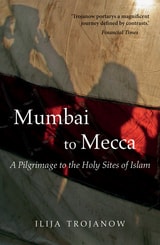
Mumbai To Mecca
A Pilgrimage to the Holy Sites of IslamIlija Trojanow
Haus Publishing, 2017
This book presents Ilija Trojanow’s journey from Mumbai to Mecca in the tradition of the rihla, one of the oldest genres of classical Arabic literature, describing the Hajj, the pilgrimage to the holy sites of Islam. Every Muslim, regardless of geographical location, is implored by tradition to undertake the Hajj at least once in their life if they are able. Trojanow, with the help of his friends, donned the ihram, the traditional garb of the pilgrim, and joined the hundreds of thousands of Muslims who each year go on the Hajj. Over the course of a mere three weeks he experienced a tradition dating back over a thousand years. This personal and enlightening account will provide insights not only for Muslims who have yet to embark on the Hajj, but for those who have already made the journey and want to see a different perspective on it. Mumbai to Mecca also presents a unique glimpse into this pivotal tradition for those non-Muslims who remain barred from the most holy Muslim sites.
the pilgrimage to the holy sites of Islam, through the eyes of a Westener, but with the heart of a Muslim.
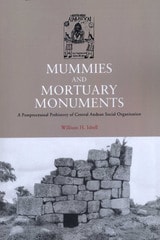
Mummies and Mortuary Monuments
A Postprocessual Prehistory of Central Andean Social OrganizationBy William H. Isbell
University of Texas Press, 1997
Since prehistoric times, Andean societies have been organized around the ayllu, a grouping of real or ceremonial kinspeople who share labor, resources, and ritual obligations. Many Andean scholars believe that the ayllu is as ancient as Andean culture itself, possibly dating back as far as 6000 B.C., and that it arose to alleviate the hardships of farming in the mountainous Andean environment.
In this boldly revisionist book, however, William Isbell persuasively argues that the ayllu developed during the latter half of the Early Intermediate Period (around A.D. 200) as a means of resistance to the process of state formation. Drawing on archaeological evidence, as well as records of Inca life taken from the chroniclers, Isbell asserts that prehistoric ayllus were organized around the veneration of deceased ancestors, whose mummified bodies were housed in open sepulchers, or challups, where they could be visited by descendants seeking approval and favors. By charting the temporal and spatial distribution of chullpa ruins, Isbell offers a convincing new explanation of where, when, and why the ayllu developed.
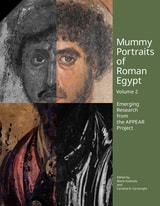
Mummy Portraits of Roman Egypt, Volume 2
Emerging Research from the APPEAR ProjectMarie Svoboda
J. Paul Getty Trust, The, 2026
Nearly a thousand funerary portraits from Roman Egypt, once interred with mummified remains, survive in museums around the world. These fascinating paintings offer the unparalleled opportunity for viewers to come face-to-face with people who lived and died some two thousand years ago.
The international collaboration known as APPEAR (Ancient Panel Paintings: Examination, Analysis, and Research) was launched in 2013 to promote the study of these objects and gather research findings in a shared database. This second volume of Mummy Portraits of Roman Egypt compiles seventeen scholarly papers from the APPEAR conference hosted in October 2022 at the Allard Pierson Museum, Amsterdam. Conservators, scientists, and curators presented new research on topics such as technical imaging; nondestructive analytical techniques; provenance and collecting; treatment histories; connoisseurship and forgeries; comparisons of works across institutions; and scientific studies of woods, pigments, coatings, binders, and supports. This volume will be a valuable resource to conservators, scientists, curators, and collectors.
The free online edition of this open-access publication is available at getty.edu/publications/mummy-portraits-2/ and includes zoomable illustrations and graphs. Also available are free PDF and EPUB downloads of the book.
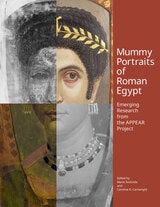
Mummy Portraits of Roman Egypt
Emerging Research from the APPEAR ProjectMarie Svoboda
J. Paul Getty Trust, The, 2020
Once interred with mummified remains, nearly a thousand funerary portraits from Roman Egypt survive today in museums around the world, bringing viewers face-to-face with people who lived two thousand years ago. Until recently, few of these paintings had undergone in-depth study to determine by whom they were made and how.
An international collaboration known as APPEAR (Ancient Panel Paintings: Examination, Analysis, and Research) was launched in 2013 to promote the study of these objects and to gather scientific and historical findings into a shared database. The first phase of the project was marked with a two-day conference at the Getty Villa. Conservators, scientists, and curators presented new research on topics such as provenance and collecting, comparisons of works across institutions, and scientific studies of pigments, binders, and supports. The papers and posters from the conference are collected in this publication, which offers the most up-to-date information available about these fascinating remnants of the ancient world.
The free online edition of this open-access publication is available at www.getty.edu/publications/mummyportraits/ and includes zoomable illustrations and graphs. Also available are free PDF, EPUB, and Kindle/MOBI downloads of the book.
Muncie, India(na)
Middletown and Asian AmericaHimanee Gupta-Carlson
University of Illinois Press, 2018

Murder Scenes
Normality, Deviance, and Criminal Violence in Weimar BerlinSace Elder
University of Michigan Press, 2010
---Kenneth Ledford, Case Western Reserve University

Murder She Wrote
A Study of Agatha Christie's Detective FictionPatricia D. Maida
University of Wisconsin Press, 1982
This book explores the inter-relationships between Agatha Christie and her works to seek the wholeness in the Christie experience. The authors perceive an integration in personal experience and moral and aesthetic values between the woman and her art.

Murder Town, USA
Homicide, Structural Violence, and Activism in WilmingtonYasser Arafat Payne
Rutgers University Press, 2023
Far too many poor Black communities struggle with gun violence and homicide. The result has been the unnatural contortion of Black families and the inter-generational perpetuation of social chaos and untimely death. Young people are repeatedly ripped away from life by violence, while many men are locked away in prisons. In neighborhoods like those of Wilmington, Delaware, residents routinely face the pressures of violence, death, and incarceration. Murder Town, USA is thus a timely ethnography with an innovative structure: the authors helped organize fifteen residents formerly involved with the streets and/or the criminal justice system to document the relationship between structural opportunity and experiences with violence in Wilmington's Eastside and Southbridge neighborhoods.
Earlier scholars offered rich cultural analysis of violence in low-income Black communities, and yet this literature has mostly conceptualized violence through frameworks of personal responsibility or individual accountability. And even if acknowledging the pressure of structural inequality, most earlier researchers describe violence as the ultimate result of some moral failing, a propensity for crime, and the notion of helplessness. Instead, in Murder Town USA, Payne, Hitchens, and Chamber, along with their collaborative team of street ethnographers, instead offer a radical re-conceptualization of violence in low-income Black communities by describing the penchant for violence and involvement in crime overall to be a logical, "resilient" response to the perverse context of structural inequality.
Murder Was Not a Crime
Homicide and Power in the Roman RepublicBy Judy E. Gaughan
University of Texas Press, 2009
Embarking on a unique study of Roman criminal law, Judy Gaughan has developed a novel understanding of the nature of social and political power dynamics in republican government. Revealing the significant relationship between political power and attitudes toward homicide in the Roman republic, Murder Was Not a Crime describes a legal system through which families (rather than the government) were given the power to mete out punishment for murder.
With implications that could modify the most fundamental beliefs about the Roman republic, Gaughan's research maintains that Roman criminal law did not contain a specific enactment against murder, although it had done so prior to the overthrow of the monarchy. While kings felt an imperative to hold monopoly over the power to kill, Gaughan argues, the republic phase ushered in a form of decentralized government that did not see itself as vulnerable to challenge by an act of murder. And the power possessed by individual families ensured that the government would not attain the responsibility for punishing homicidal violence.
Drawing on surviving Roman laws and literary sources, Murder Was Not a Crime also explores the dictator Sulla's "murder law," arguing that it lacked any government concept of murder and was instead simply a collection of earlier statutes repressing poisoning, arson, and the carrying of weapons. Reinterpreting a spectrum of scenarios, Gaughan makes new distinctions between the paternal head of household and his power over life and death, versus the power of consuls and praetors to command and kill.
Murder and the Death Penalty in Massachusetts
Alan Rogers
University of Massachusetts Press, 2008
For more than 300 years Massachusetts executed men and women convicted of murder, but with a sharp eye on “due proceeding” and against the backdrop of popular ambivalence about the death penalty's morality, cruelty, efficacy, and constitutionality. In this authoritative book, Alan Rogers offers a comprehensive account of how the efforts of reformers and abolitionists and the Supreme Judicial Court's commitment to the rule of law ultimately converged to end the death penalty in Massachusetts.
In the seventeenth century, Governor John Winthrop and the Massachusetts General Court understood murder to be a sin and a threat to the colony's well-being, but the Puritans also drastically reduced the crimes for which death was the prescribed penalty and expanded a capital defendant's rights. Following the Revolution, Americans denounced the death penalty as “British and brutish” and the state's Supreme Judicial Court embraced its role as protector of the rights extended to all men by the Massachusetts Constitution. In the 1830s popular opposition nearly stopped the machinery of death and a vote in the Massachusetts House fell just short of abolishing capital punishment.
A post–Civil War effort extending civil rights to all men also stimulated significant changes in criminal procedure. A “monster petition” begging the governor to spare the life of a murderer convicted on slight circumstantial evidence and the grim prospect of executing nine Chinese men found guilty of murder fueled a passionate debate about the death penalty in the decade before World War I.
The trials and executions of Sacco and Vanzetti focused unwanted international and national attention on Massachusetts. This was a turning point. Sara Ehrmann took charge of the newly formed Massachusetts Council Against the Death Penalty, relentlessly lobbied the legislature, and convinced a string of governors not to sign death warrants. In the 1970s the focus shifted to the courts, and eventually, in 1980, the Supreme Judicial Court abolished the death penalty on the grounds that it violated the Massachusetts Constitution.
Murder by Accident
Medieval Theater, Modern Media, Critical IntentionsJody Enders
University of Chicago Press, 2009
Over fifty years ago, it became unfashionable—even forbidden—for students of literature to talk about an author’s intentions for a given work. In Murder by Accident, Jody Enders boldly resurrects the long-disgraced concept of intentionality, especially as it relates to the theater.
Drawing on four fascinating medieval events in which a theatrical performance precipitated deadly consequences, Enders contends that the marginalization of intention in critical discourse is a mirror for the marginalization—and misunderstanding—of theater. Murder by Accident revisits the legal, moral, ethical, and aesthetic limits of the living arts of the past, pairing them with examples from the present, whether they be reality television, snuff films, the “accidental” live broadcast of a suicide on a Los Angeles freeway, or an actor who jokingly fired a stage revolver at his temple, causing his eventual death. This book will force scholars and students to rethink their assumptions about theory, intention, and performance, both past and present.
Murder in Canton
A Judge Dee MysteryRobert van Gulik
University of Chicago Press, 1966
Murder in Canton takes place in the year 680, as Judge Dee, recently promoted to lord chief justice, is sent incognito to Canton to investigate the disappearance of a court censor. With the help of his trusted lieutenants Chiao Tai and Tao Gan, and that of a clever blind girl who collects crickets, Dee solves a complex puzzle of political intrigue and murder through the three separate subplots "the vanished censor," "the Smaragdine dancer," and "the Golden Bell."
Murder in New Orleans
The Creation of Jim Crow PolicingJeffrey S. Adler
University of Chicago Press, 2019
New Orleans in the 1920s and 1930s was a deadly place. In 1925, the city’s homicide rate was six times that of New York City and twelve times that of Boston. Jeffrey S. Adler has explored every homicide recorded in New Orleans between 1925 and 1940—over two thousand in all—scouring police and autopsy reports, old interviews, and crumbling newspapers. More than simply quantifying these cases, Adler places them in larger contexts—legal, political, cultural, and demographic—and emerges with a tale of racism, urban violence, and vicious policing that has startling relevance for today.
Murder in New Orleans shows that whites were convicted of homicide at far higher rates than blacks leading up to the mid-1920s. But by the end of the following decade, this pattern had reversed completely, despite an overall drop in municipal crime rates. The injustice of this sharp rise in arrests was compounded by increasingly brutal treatment of black subjects by the New Orleans police department. Adler explores other counterintuitive trends in violence, particularly how murder soared during the flush times of the Roaring Twenties, how it plummeted during the Great Depression, and how the vicious response to African American crime occurred even as such violence plunged in frequency—revealing that the city’s cycle of racial policing and punishment was connected less to actual patterns of wrongdoing than to the national enshrinement of Jim Crow. Rather than some hyperviolent outlier, this Louisiana city was a harbinger of the endemic racism at the center of today’s criminal justice state. Murder in New Orleans lays bare how decades-old crimes, and the racially motivated cruelty of the official response, have baleful resonance in the age of Black Lives Matter.
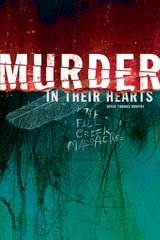
Murder in Their Hearts
The Fall Creek MassacreDavid Thomas Murphy
Indiana Historical Society Press, 2010
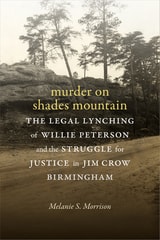
Murder on Shades Mountain
The Legal Lynching of Willie Peterson and the Struggle for Justice in Jim Crow BirminghamMelanie S. Morrison
Duke University Press, 2018
In Murder on Shades Mountain Melanie S. Morrison tells the gripping and tragic story of the attack and its aftermath—events that shook Birmingham to its core. Having first heard the story from her father—who dated Nell's youngest sister when he was a teenager—Morrison scoured the historical archives and documented the black-led campaigns that sought to overturn Peterson's unjust conviction, spearheaded by the NAACP and the Communist Party. The travesty of justice suffered by Peterson reveals how the judicial system could function as a lynch mob in the Jim Crow South. Murder on Shades Mountain also sheds new light on the struggle for justice in Depression-era Birmingham. This riveting narrative is a testament to the courageous predecessors of present-day movements that demand an end to racial profiling, police brutality, and the criminalization of black men.

Murder on the Largo
Henry Coleman and New Mexico's Last FrontierEleanor Williams
University of North Texas Press, 2024
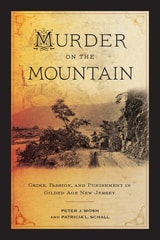
Murder on the Mountain
Crime, Passion, and Punishment in Gilded Age New JerseyPeter J. Wosh
Rutgers University Press, 2022
Was Margaret the calculating murderess and adulteress portrayed by the press? Or was she a battered wife pushed to the edge? Or was she, as she claimed to the end, innocent? Murder on the Mountain considers all sides of this fascinating and mysterious true crime story. In turn, it examines why this murder trial became front-page news, as it resonated with public discussions about capital punishment, mental health, anti-immigrant sentiment, domestic violence, and women’s independence. This is a gripping and thought-provoking study of a murder that shocked the nation.
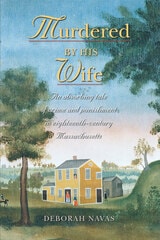
Murdered by His Wife
Deborah Navas
University of Massachusetts Press, 1999
In March 1778, Joshua Spooner, a wealthy gentleman farmer in Brookfield, Massachusetts, was beaten to death and his body stuffed down a well. Four people were hanged for the crime: two British soldiers, a young Continental soldier, and Spooner's wife, Bathsheba, who was charged with instigating the murder. She was thirty-two years old and five months pregnant when executed. Newspapers described the case as “the most extraordinary crime ever perpetrated in New England.”
Murdered by His Wife provides a vivid reconstruction of this dramatic but little-known episode. Beautiful, intelligent, high-spirited, and witty, Bathsheba was the mother of three young children and in her own words felt “an utter aversion” for her husband, who was known to be an abusive drunk.
A year before the murder, she took in and nursed a sixteen-year-old Continental soldier who was returning from a year's enlistment under George Washington. The two became lovers and conceived a child. Divorces were all but impossible for women at that time and adulteresses were stripped to the waist and publicly whipped. Bathsheba's pregnancy occasioned a series of desperate plots to murder her husband, finally brought to fruition with the aid of two British deserters from General Burgoyne's defeated army.
The plots, the crime, the trial, and the aftermath are presented against a backdrop of revolutionary turmoil in Massachusetts. As the daughter of the state's most prominent and despised Loyalist, Bathsheba bore the brunt of the political, cultural, and gender prejudices of her day. When she sought a stay of execution to deliver her baby, the Massachusetts Council rejected her petition and she was promptly hanged before a crowd of 5,000 spectators.
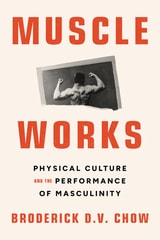
Muscle Works
Physical Culture and the Performance of MasculinityBroderick D. V. Chow
Northwestern University Press, 2024
This book recounts the story of fitness culture from its beginnings as spectacles of strongmen, weightlifters, acrobats, and wrestlers to its legitimization in the twentieth-century in the form of competitive sports and health and wellness practices. Broderick D. V. Chow shows how these modes of display contribute to the construction and deconstruction of definitions of masculinity.
Attending to its theatrical origins, Chow argues for a more nuanced understanding of fitness culture, one informed by the legacies of self-described Strongest Man in the World Eugen Sandow and the history of fakery in strongman performance; the philosophy of weightlifter George Hackenschmidt and the performances of martial artist Bruce Lee; and the intersections of fatigue, resistance training, and whiteness. Muscle Works: Physical Culture and the Performance of Masculinity moves beyond the gym and across the archive, working out techniques, poses, and performances to consider how, as gendered subjects, we inhabit and make worlds through our bodies.
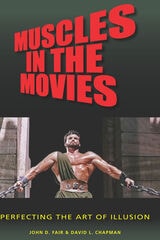
Muscles in the Movies
Perfecting the Art of IllusionJohn D. Fair
University of Missouri Press, 2020
Museum Diplomacy
Transnational Public History and the U.S. Department of StateRichard J. W. Harker
University of Massachusetts Press, 2020
As more historic sites and museums seek to surmount social, cultural, and economic barriers between themselves and their communities in their exhibitions and programming, the Museums Connect program provides important lessons on how to overcome entrenched hierarchies of power in public history.
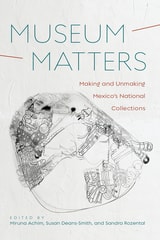
Museum Matters
Making and Unmaking Mexico’s National CollectionsEdited by Miruna Achim, Susan Deans-Smith, Sandra Rozental
University of Arizona Press, 2021
Museum Matters traces the emergence, consolidation, and dispersal of this national museum complex by telling the stories of its objects. Objects that have been separated over time are brought back together in this book in order to shed light on the interactions and processes that have forged things into symbols of science, aesthetics, and politics. The contributors to this volume illuminate how collections came into being or ceased to exist over time, or how objects moved in and out of collections and museum spaces. They explore what it means to move things physically and spatially, as well as conceptually and symbolically.
Museum Matters unravels the concept of the national museum. By unmaking the spaces, frameworks, and structures that form the complicated landscape of national museums, this volume brings a new way to understand the storage, displays, and claims about the Mexican nation’s collections today.
Contributors
Miruna Achim, Christina Bueno, Laura Cházaro, Susan Deans-Smith, Frida Gorbach, Haydeé López Hernández, Carlos Mondragón, Bertina Olmedo Vera, Sandra Rozental, Mario Rufer

Museum Pieces
Collectors and CollectionNeil Harris
University of Chicago Press, 0
An eminent historian assembles a career-long group of essays about art collecting and the leadership, strategies, and shifting cultural power of American art museums as they have emerged over the past 150 years.
Museums and their cultural power, and the vagaries of collecting in the United States have fascinated University of Chicago historian Neil Harris for more than sixty years. In this collection of eighteen lively essays from across his distinguished career, Harris addresses period rooms, visitor research, museum education, museum branding and merchandising, and the persistent influence of individual collectors and patrons such as J. Pierpont Morgan, among other important topics. Harris’s geographical range is broad, too, with considerations of museums in Boston, New York, Washington, D.C., Toledo, Chicago, Denver, and elsewhere.
Harris remains one of a very small number of art-minded scholars whose work on museums, taste, and collecting not only can be read by other historians of the United States but can be read with real profit. In a rich and reflective introduction, Harris connects his deep interest in recurring subjects to both his own intellectual biography and broader trends in American scholarship.
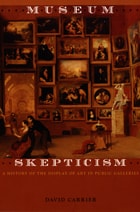
Museum Skepticism
A History of the Display of Art in Public GalleriesDavid Carrier
Duke University Press, 2006
Carrier illuminates the public role of art museums by describing the ways they influence how art is seen: through their architecture, their collections, the narratives they offer museum visitors. He insists that an understanding of the art museum must take into account the roles of collectors, curators, and museum architects. Toward that end, he offers a series of case studies, showing how particular museums and their collections evolved. Among those who figure prominently are Baron Dominique Vivant Denon, the first director of the Louvre; Bernard Berenson, whose connoisseurship helped Isabella Stewart Gardner found her museum in Boston; Ernest Fenollosa, who assembled much of the Asian art collection now in the Museum of Fine Arts, Boston; Albert Barnes, the distinguished collector of modernist painting; and Richard Meier, architect of the J. Paul Getty Center in Los Angeles. Carrier’s learned consideration of what the art museum is and has been provides the basis for understanding the radical transformation of its public role now under way.
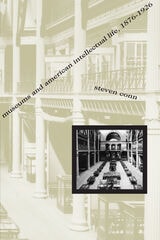
Museums and American Intellectual Life, 1876-1926
Steven Conn
University of Chicago Press, 1998
"Conn is an enthusiastic advocate for his subject, an appealing thinker, an imaginative researcher, a scholar at ease with theory and with empirical evidence." —Ann Fabian, Reviews in American History
"Steven Conn's masterly study of late-nineteenth century American museums transports the reader to a strange and wonderful intellectual universe. . . . At the end of the day, Conn reminds us, objects still have the power to fascinate, attract, evoke, and, in the right context, explain." —Christopher Clarke-Hazlett, Journal of American History
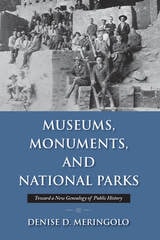
Museums, Monuments, and National Parks
Toward a New Genealogy of Public HistoryDenise D. Meringolo
University of Massachusetts Press, 2012
All of these developments included interpretive activities that shaped public understanding of the past. Yet it was not until the emergence of the education-oriented National Park Service history program in the 1920s and 1930s that public history found an institutional home that grounded professional practice simultaneously in the values of the emerging discipline and in government service. Even thereafter, tensions between administrators in Washington and practitioners on the ground at National Parks, monuments, and museums continued to define and redefine the scope and substance of the field. The process of definition persists to this day, according to Meringolo, as public historians establish a growing presence in major universities throughout the United States and abroad.
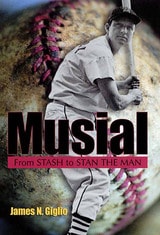
Musial
From Stash to Stan the ManJames N. Giglio
University of Missouri Press, 2001
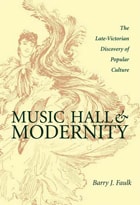
Music Hall and Modernity
The Late-Victorian Discovery of Popular CultureBarry J. Faulk
Ohio University Press, 2004
The late-Victorian discovery of the music hall by English intellectuals marks a crucial moment in the history of popular culture. Music Hall and Modernity demonstrates how such pioneering cultural critics as Arthur Symons and Elizabeth Robins Pennell used the music hall to secure and promote their professional identity as guardians of taste and national welfare. These social arbiters were, at the same time, devotees of the spontaneous culture of “the people.”
In examining fiction from Walter Besant, Hall Caine, and Henry Nevinson, performance criticism from William Archer and Max Beerbohm, and late-Victorian controversies over philanthropy and moral reform, scholar Barry Faulk argues that discourse on music-hall entertainment helped consolidate the identity and tastes of an emergent professional class. Critics and writers legitimized and cleaned up the music hall, at the same time allowing issues of class, respect, and empowerment to be negotiated.
Music Hall and Modernity offers a complex view of the new middle-class, middlebrow mass culture of late-Victorian London and contributes to a body of scholarship on nineteenth-century urbanism. The book will also interest scholars concerned with the emergence of a professional managerial class and the genealogy of cultural studies.
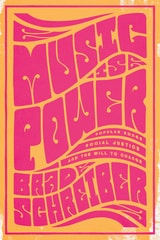
Music Is Power
Popular Songs, Social Justice, and the Will to ChangeBrad Schreiber
Rutgers University Press, 2024
Honorable Mention, Graphis 2021 Design Annual Competition
Popular music has long been a powerful force for social change. Protest songs have served as anthems regarding war, racism, sexism, ecological destruction, and so many other crucial issues.
Music Is Power takes us on a guided tour through the past one hundred years of politically conscious music, from Pete Seeger and Woody Guthrie to Green Day and NWA. Covering a wide variety of genres, including reggae, country, metal, psychedelia, rap, punk, folk, and soul, Brad Schreiber demonstrates how musicians can take a variety of approaches— angry rallying cries, mournful elegies to the victims of injustice, or even humorous mockeries of authority—to fight for a fairer world. While shining a spotlight on Phil Ochs, Gil Scott-Heron, the Dead Kennedys and other seminal, politicized artists, he also gives readers a new appreciation of classic acts such as Lesley Gore, James Brown, and Black Sabbath, who overcame limitations in their industry to create politically potent music
Music Is Power tells fascinating stories about the origins and the impact of dozens of world-changing songs, while revealing political context and the personal challenges of legendary artists from Bob Dylan to Bob Marley.
Supplemental material (Artist and Title List): https://d3tto5i5w9ogdd.cloudfront.net/wp-content/uploads/2020/07/24001955/Music_Is_Power_Supplementary_Artist_Title_List.doc

Music Making and Civic Imagination
A Holistic PhilosophyDave Camlin
Intellect Books, 2025
Music Making and Civic Imagination makes a powerful case for the potential of music to aid in human flourishing. Dave Camlin, a musician and educator, lays out a holistic philosophy of music, acknowledging the complex web of meaning that spreads across its many complementary dimensions. As a performance of ethical human values of love, reciprocity, and justice, the making of music, Camlin shows, can help facilitate ethical human connection and be a resource for both imagining and inhabiting the kind of world we might wish to live in.
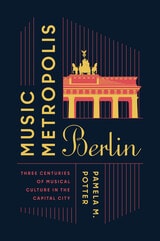
Music Metropolis Berlin
Three Centuries of Musical Culture in the Capital CityPamela M. Potter
University of Chicago Press, 0
Tracing the development of Berlin as a center of music from the eighteenth century to the present, examining how its music survived despite its turbulent history.
Berlin is a music-lover’s paradise, offering up everything from operas to raves. Yet unlike Vienna, Leipzig, or even Nashville, Berlin does not immediately come to mind as a city of music. Instead, its turbulent history evokes images of industry, commerce, militarism, destruction, division, and resurrection. Over the past three centuries, Berlin was the capital of a kingdom, an empire, a republic, and a dictatorship; it was ravaged by war and occupied by foreign powers; and its division and reunification made it a powerful symbol of the Cold War. Through all these highs and lows, the music played on. Music Metropolis Berlin is the first full-length exploration of how Berlin became a city of music against all odds.
Unlike the other European music centers that stake their reputations on the fame of composers like Bach or Beethoven, Berlin is known for its ensembles, artists, theaters, organizers, intellectuals, and media stars. This is because Berlin took a very different, and almost accidental, route to becoming a city of music. Hampered for centuries by rulers who were more focused on military and industrial expansion than on cultural prestige, Berlin’s musical life prospered thanks to the ambitions of entrepreneurs and politicians who saw the value in serving the ever-changing music public in an expanding urban landscape. By focusing on Berlin as a rapidly developing global capital, Music Metropolis Berlin looks beyond the music, its creators, and its institutions to reveal how political, economic, and social forces fueled the creation of the Berlin metropolis and continue to nurture a vibrant and diverse musical life.