Results by title
5159 books match the query 'Biography' and 312 start with m
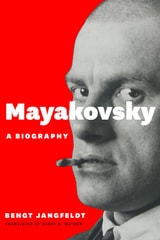
Mayakovsky
A BiographyBengt Jangfeldt
University of Chicago Press, 2014
With Mayakovsky, Bengt Jangfeldt offers the first comprehensive biography of Mayakovsky, revealing a troubled man who was more dreamer than revolutionary, more political romantic than hardened Communist. Jangfeldt sets Mayakovsky’s life and works against the dramatic turbulence of his times, from the aesthetic innovations of the pre-revolutionary avant-garde to the rigidity of Socialist Realism and the destruction of World War I to the violence—and hope—of the Russian Revolution, through the tightening grip of Stalinist terror and the growing disillusion with Russian communism that eventually led the poet to take his life.
Through it all is threaded Mayakovsky’s celebrated love affair with Lili Brik and the moving relationship with Lili’s husband, Osip, along with a brilliant depiction of the larger circle of writers and artists around Mayakovsky, including Maxim Gorky, Viktor Shklovsky, Alexander Rodchenko, and Roman Jakobson. The result is a literary life viewed in the round, enabling us to understand the personal and historical furies that drove Mayakovsky and generated his still-startling poetry.
Illustrated throughout with rare images of key characters and locations, Mayakovsky is a major step in the revitalization of a crucial figure of the twentieth-century avant-garde.

Mayan Drifter
Chicano Poet in the Lowlands of AmericaJuan Herrera
Temple University Press, 1997
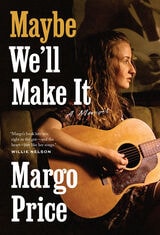
Maybe We'll Make It
A MemoirMargo Price
University of Texas Press, 2022
An October 2022 IndieNext pick
”[An] engaging and beautifully narrated quest for personal fulfillment and musical recognition...This is a fast-paced tale in which music and love always take center stage...A truly gifted musician, Price writes about her journey with refreshing candor.”—Kirkus, starred review
”Brutally honest…a vivid and poignant memoir.”—The Guardian
Country music star Margo Price shares the story of her struggle to make it in an industry that preys on its ingenues while trying to move on from devastating personal tragedies.
When Margo Price was nineteen years old, she dropped out of college and moved to Nashville to become a musician. She busked on the street, played open mics, and even threw out her TV so that she would do nothing but write songs. She met Jeremy Ivey, a fellow musician who would become her closest collaborator and her husband. But after working on their craft for more than a decade, Price and Ivey had no label, no band, and plenty of heartache.
Maybe We’ll Make It is a memoir of loss, motherhood, and the search for artistic freedom in the midst of the agony experienced by so many aspiring musicians: bad gigs and long tours, rejection and sexual harassment, too much drinking and barely enough money to live on. Price, though, refused to break, and turned her lowest moments into the classic country songs that eventually comprised the debut album that launched her career. In the authentic voice hailed by Pitchfork for tackling "Steinbeck-sized issues with no-bullshit humility," Price shares the stories that became songs, and the small acts of love and camaraderie it takes to survive in a music industry that is often unkind to women. Now an award-winning artist with a global fanbase, Price tells a love story of music, collaboration, and the struggle to build a career while trying to maintain her singular voice and style.
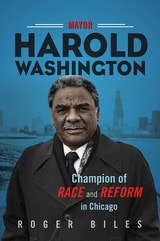
Mayor Harold Washington
Champion of Race and Reform in ChicagoRoger Biles
University of Illinois Press, 2020
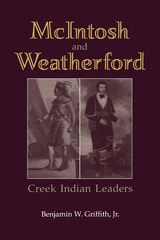
McIntosh and Weatherford
Creek Indian LeadersBenjamin W. Griffith
University of Alabama Press, 1998
The human story behind the Creek War and the coming of Indian Removal.
About the time of the American Revolutionary war, when the Creek Indians owned land that is today approximately the lower two-thirds of Alabama and of Georgia west of the Oconee River, two sons were born to Indian mothers and Scots fathers in obscure towns in the territory of the Creek Nation. Both sons were named William, and both were to become leaders of their mothers’ people.
The two remarkable men lived during a period of war and turbulence along the frontier in Alabama and Georgia. More often the subjects of folk tale and legend than serious historical inquiry, McIntosh and Weatherford fought on opposing sides in the Creek War of 1813-1814. McIntosh allied himself with Andrew Jackson and the friendly Lower Creeks, while Weatherford joined with the hostile Red Stick and was the leader of a band of Upper Creeks in the massacre at Fort Mims. McIntosh, who was given the rank of brigadier general for his military feats, was involved in the machinations that led to the ceding of Creek lands to Georgia. As a result, he died in disgrace at the hands of his fellow Creeks. Weatherford, once hated and feared, died a planter and local hero in Alabama near the site of Fort Mims.

Me, Governor?
My Life in the Rough-and-Tumble World of New Jersey PoliticsRichard J. Codey
Rutgers University Press, 2011
Meaning Of A Disability
The Lived Experience of ParalysisAlbert Robillard
Temple University Press, 1999
With his loss of speech, Robillard was forced to communicate through a lip-reading system developed by his wife and student assistants. Restricted by this form of communication and his paralysis, he soon learned the frustrations of making his meaning known. Hospital nurses wrongly anticipated his words. Those who translated for him inevitably distorted his meaning. Most of all, the casual pace of conversational give-and-take was disrupted. Old friends would leave before Robillard could provide the expected interactional response.
Finding himself isolated due to his lack of both mobility and vocalization, Robillard threw himself into his academic work and began to develop settings and methods where he could satisfactorily interact with others. A researcher and writer experienced in describing the bodily and verbal methods used to coordinate and construct the most ordinary of social forms, Robillard joins in this book both his years of sociological training and his time with illness to talk with moving and illuminating analysis about a broad range of matters. Moving gracefully from examinations of narratives about disability and illness, the stigmatizing things that healthcare providers unwittingly say to their patients, and communication problems in the intensive care unit, to more personal reflections on anger, isolation, and stories of tragedy, Robillard also discusses disability in the workplace and such seemingly simple topics as computers and vacations. Meaning of a Disability is the personal story of a highly trained observer forced to confront simultaneously the limits of the disabled person's social world and the unspoken assumptions about meaningful interaction -- as he struggles with the daily difficulties of maintaining his identity.
Meaning of a Disability will interest a wide audience, including healthcare professionals, disabled people, and caretakers as well as academics studying ethnomethodology, health and illness, conversation, symbolic interaction, storytelling, and most aspects of lived experience.
Measuring the Flow of Time
The Works of James A. Ford, 1935-1941James A. Ford, edited by R. Lee Lyman and Michael J. O'Brien
University of Alabama Press, 1999
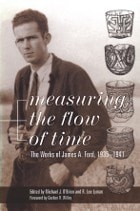
This collection of Ford's works focuses on the development of ceramic chronology—a key tool in Americanist archaeology.
Meatless Days
Sara Suleri Goodyear
University of Chicago Press, 1989
"Nine autobiographical tales that move easily back and forth among Pakistan, Britain, and the United States. . . . She forays lightly into Pakistani history, and deeply
into the history of her family and friends. . . . The Suleri women at home in Pakistan make this book sing."—Daniel Wolfe, New York Times Book Review
"A jewel of insight and beauty. . . . Suleri's voice has the same authority when she speaks about Pakistani politics as it does in her literary interludes."—Rone Tempest, Los Angeles Times Book Review
"The author has a gift for rendering her family with a few, deft strokes, turning them out as whole and complete as eggs."—Anita Desai, Washington Post Book World
"Meatless Days takes the reader through a Third World that will surprise and confound him even as it records the author's similar perplexities while coming to terms with the West. Those voyages Suleri narrates in great strings of words and images so rich that they left this reader . . . hungering for more."—Ron Grossman, Chicago Tribune
"Dazzling. . . . Suleri is a postcolonial Proust to Rushdie's phantasmagorical Pynchon."—Henry Louise Gates, Jr., Voice Literary Supplement
Medal Winners
How the Vietnam War Launched Nobel CareersBy Raymond S. Greenberg
University of Texas Press, 2020
As the ground war in Vietnam escalated in the late 1960s, the US government leveraged the so-called doctor draft to secure adequate numbers of medical personnel in the armed forces. Among newly minted physicians’ few alternatives to military service was the Clinical Associate Training Program at the National Institutes of Health. Though only a small percentage of applicants were accepted, the elite program launched an unprecedented number of remarkable scientific careers that would revolutionize medicine at the end of the twentieth century.
Medal Winners recounts this overlooked chapter and unforeseen byproduct of the Vietnam War through the lives of four former NIH clinical associates who would go on to become Nobel laureates. Raymond S. Greenberg traces their stories from their pre-NIH years and apprenticeships through their subsequent Nobel Prize–winning work, which transformed treatment of heart disease, cancer, and other diseases. Greenberg shows how the Vietnam draft unintentionally ushered in a golden era of research by bringing talented young physicians under the tutelage of leading scientists and offers a lesson in what it may take to replicate such a towering center of scientific innovation as the NIH in the 1960s and 1970s.
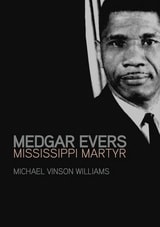
Medgar Evers
Mississippi MartyrMichael Vinson Williams
University of Arkansas Press, 2011

Media Marathon
A Twentieth-Century MemoirErik Barnouw
Duke University Press, 1996
Born in Holland in 1908 and an immigrant to the United States at the age of eleven, Barnouw spent his early working years in an astounding array of occupations—actor and stage manager, lyricist, translator, director, producer, teacher, and union official. This varied background, described here in rich detail, informs his writings about the world in which he moved, specifically regarding the shifting channels of twentieth-century mass communication. Telling his story through a series of personal profiles of the famous, the infamous, and the little known but powerfully influential, Barnouw recounts the events that took him from the vaudeville stage to the Library of Congress, where he became the first chief of its newly formed Motion Picture, Broadcasting, and Recording Sound Division. Thornton Wilder, Pearl S. Buck, Joshua Logan, Dwight Eisenhower, Lynn Fontanne, Tallulah Bankhead, and Akira Iwasaki—these are among the featured characters in the drama of American media, rendered here in striking close-ups.
From The Hague to retirement in Vermont, with stops in India, Japan, and Russia, Barnouw’s remarkable story gives readers the chance to relive crucial chapters of modern media history—and to relive them with one of that history’s masters as an incomparable guide. A book for those interested in the “mass media,” its evolution, and role in society, Media Marathon will appeal to students, scholars, and general readers alike.
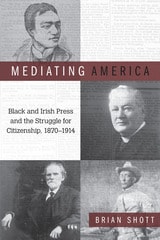
Mediating America
Black and Irish Press and the Struggle for Citizenship, 1870-1914Brian Shott
Temple University Press, 2019
Until recently, print media was the dominant force in American culture. The power of the paper was especially true in minority communities. African Americans and European immigrants vigorously embraced the print newsweekly as a forum to move public opinion, cohere group identity, and establish American belonging.
Mediating America explores the life and work of T. Thomas Fortune and J. Samuel Stemons as well as Rev. Peter C. Yorke and Patrick Ford—respectively two African American and two Irish American editor/activists in the late nineteenth and early twentieth centuries. Historian Brian Shott shows how each of these “race men” (the parlance of the time) understood and advocated for his group’s interests through their newspapers. Yet the author also explains how the newspaper medium itself—through illustrations, cartoons, and photographs; advertisements and page layout; and more—could constrain editors’ efforts to guide debates over race, religion, and citizenship during a tumultuous time of social unrest and imperial expansion.
Black and Irish journalists used newspapers to recover and reinvigorate racial identities. As Shott proves, minority print culture was a powerful force in defining American nationhood.
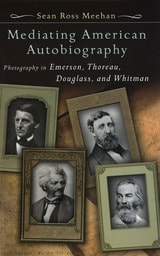
Mediating American Autobiography
Photography in Emerson, Thoreau, Douglass, and WhitmanSean Ross Meehan
University of Missouri Press, 2008
The emergence of photography in the mid-nineteenth century transformed ideas about how the self and nature could be pictured. Although the autobiographical potential of photography seems self-evident today, Sean Meehan takes us back to the birth of the medium when some of America’s preeminent authors began to think about photography’s implications for the representation of identity and the nature of autobiographical writing.
Both photography and autobiography involve a tension between disclosing and concealing their means of production: a chemical process for one, the writing process for the other. Meehan examines how four major authors—Ralph Waldo Emerson, Henry David Thoreau, Frederick Douglass, and Walt Whitman—were well aware of this tension and explored it in their work. By examining the implications of early photography in their writings, he shows how each engaged the new visual medium, how photography mediated their conceptions of self-representation, and how their appropriation of photographic thinking created a new kind of autobiography.
Examining the metonymic nature of photography, Meehan explores how the new medium influenced conceptions of visual and verbal representation. He intertwines these four writers’ reflections on photography—in Emerson’s Representative Men, Thoreau’s journals, Douglass’s narratives of slavery, and Whitman’s Specimen Days—with theories of photography as expounded by its inventors and observers, from Louis Daguerre and William Talbot in Europe to Oliver Wendell Holmes and Marcus Root in America.
As the first book to focus on the emergence of this new visual medium during the American Renaissance, Mediating American Autobiography shows us what photography means for American literature in general and for the genre most closely linked to it in particular. Because the engagement of these writers with photography has been neglected in previous scholarship, Meehan’s work provocatively bridges the study of two media and illuminates an important aspect of American thought and culture at the dawn of the technological era.
Medical Lives and Scientific Medicine at Michigan, 1891-1969
Joel D. Howell, Editor
University of Michigan Press, 1993
Medicine Stories
Essays for RadicalsAurora Levins Morales
Duke University Press, 2019
Medicine Trail
The Life and Lessons of Gladys TantaquidgeonMelissa Jayne Fawcett
University of Arizona Press, 2000
Contrary to the fictional account of James Fenimore Cooper, the Mohegan/Mohican nation did not vanish with the death of Chief Uncas more than three hundred years ago. In the remarkable life story of one of its most beloved matriarchs—100-year-old medicine woman Gladys Tantaquidgeon—Medicine Trail tells of the Mohegans' survival into this century.
Blending autobiography and history, with traditional knowledge and ways of life, Medicine Trail presents a collage of events in Tantaquidgeon's life. We see her childhood spent learning Mohegan ceremonies and healing methods at the hands of her tribal grandmothers, and her Ivy League education and career in the white male-dominated field of anthropology. We also witness her travels to other Indian communities, acting as both an ambassador of her own tribe and an employee of the federal government's Bureau of Indian Affairs. Finally we see Tantaquidgeon's return to her beloved Mohegan Hill, where she cofounded America's oldest Indian-run museum, carrying on her life's commitment to good medicine and the cultural continuance and renewal of all Indian nations.
Written in the Mohegan oral tradition, this book offers a unique insider's understanding of Mohegan and other Native American cultures while discussing the major policies and trends that have affected people throughout Indian Country in the twentieth century. A significant departure from traditional anthropological "as told to" American Indian autobiography, Medicine Trail represents a major contribution to anthropology, history, theology, women's studies, and Native American studies.
Meet Me with Your Black Drawers On
My Life in MusicBy Jeannie Cheatham
University of Texas Press, 2006
Jeannie Cheatham is a living legend in jazz and blues. A pianist, singer, songwriter, and co-leader of the Sweet Baby Blues Band, she has played and sung with many of the greats in blues and jazz—T-Bone Walker, Dinah Washington, Cab Callaway, Joe Williams, Al Hibbler, Odetta, and Jimmy Witherspoon. Cheatham toured with Big Mama Thornton off and on for ten years and was featured with Thornton and Sippie Wallace in the award-winning PBS documentary Three Generations of the Blues. Her music, which has garnered national and international acclaim, has been described as unrestrained, exuberant, soulful, rollicking, wicked, virtuous, wild, and truthful. Cheatham's signature song, "Meet Me with Your Black Drawers On" is a staple in jazz and blues clubs across America and in Europe, Africa, and Japan.
In this delightfully frank autobiography, Jeannie Cheatham recalls a life that has been as exuberant, virtuous, wild, and truthful as her music. She begins in Akron, Ohio, where she grew up in a vibrant multiethnic neighborhood surrounded by a family of strong women. From those roots, she launched a musical career that took her from the Midwest to California, doing time along the way everywhere from a jail cell in Dayton, Ohio, where she was innocently caught in a police raid, to the University of Wisconsin-Madison—where she and Jimmy Cheatham taught music. Cheatham writes of a life spent fighting racism and sexism, of rage and resolve, misery and miracles, betrayals and triumphs, of faith almost lost in dark places, but mysteriously regained in a flash of light. Cheatham's autobiography is also the story of her fifty-years-and-counting love affair and musical collaboration with her husband and band partner, Jimmy Cheatham.
Melville Biography
An Inside NarrativeHershel Parker
Northwestern University Press, 2013
Melville Biography: An Inside Narrative is Hershel Parker’s history of the writing of Melville biographies, enriched by a lifetime of intimate working partnerships with great Melville scholars of different generations and by the author’s experience of successive phases of literary criticism. Throughout this bold book, Hershel Parker champions archival-based biography and the all-but-lost art of embodying such scholarship in literary criticism. First is a mesmerizing autobiographical account of what went into creating the award-winning and comprehensive Herman Melville: A Biography. Then Parker traces six decades of the “unholy war” waged against biographical scholarship, in which critics repeatedly imposed the theory of organic unity on Melville’s disrupted life—not just on his writings—while truncating his body of work and ignoring his study of art and aesthetics. In this connection, Parker celebrates discoveries made by “divine amateurs,” before throwing open his workshop to challenge ambitious readers with research projects. This is a book for Melville fans and Parker fans, as well as for readers, writers, and would-be writers of biography.
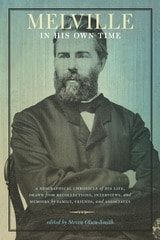
Melville in His Own Time
A Biographical Chronicle of His Life, Drawn from Recollection, Interviews, and Memoirs by Family, Friends, and AssociatesSteven Olsen-Smith
University of Iowa Press, 2015
Melville’s mastery of the English language and heterodox views made him a source of both controversy and fascination to western readers, until his increasing commitment to artistry and contempt for artificial conventions led him to write Moby-Dick (1851) and its successor Pierre (1852). Although the former is considered his masterwork today, the books offended mid-nineteenth-century cultural sensibilities and alienated Melville from the American literary marketplace. The resulting eclipse of his popular reputation was deepened by his voluntary withdrawal from society, so that obituaries written after his death in 1891 frequently expressed surprise that he hadn’t died long before.
With most of his personal papers and letters lost or destroyed, his library of marked and annotated books dispersed, and first-hand accounts of him scattered, brief, and frequently conflicting, Melville’s place in American literary scholarship illustrates the importance of accurately edited documents and the value of new information to our understanding of his life and thought. As a chronologically organized collection of surviving testimonials about the author, Melville in His Own Time continues the tradition of documentary research well-exemplified over the past half-century by the work of Jay Leyda, Merton M. Sealts, and Hershel Parker. Combining recently discovered evidence with new transcriptions of long-known but rarely consulted testimony, this collection offers the most up-to-date and correct record of commentary on Melville by individuals who knew him.
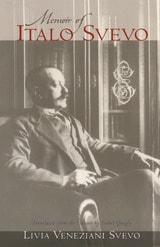
Memoir of Italo Svevo
Livia Veneziani Svevo
Northwestern University Press, 2001
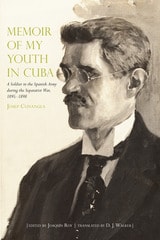
Memoir of My Youth in Cuba
A Soldier in the Spanish Army during the Separatist War, 1895–1898Dolores J. Walker
University of Alabama Press, 2017
A historically significant memoir offering a firsthand perspective on life, identity, and cultural transformation in nineteenth-century Cuba.
Memoir of My Youth in Cuba: A Soldier in the Spanish Army during the Separatist War, 1895–1898 is a translation of the memoir Memorias de mi juventud en Cuba: Un soldado del ejército español en la guerra separatista (1895–1898) by Josep Conangla. The English edition is based on the Spanish version edited by Joaquín Roy, who found the memoir and was given access to the Conangla family archives. Conangla’s memoir, now available in English, is an important addition to the accounts of Spanish and Cuban soldiers who served in Cuba’s second War of Independence.
Spaniard Josep Conangla was conscripted at the age of twenty and sent to Cuba. In the course of his time there, he reaffirmed his pacifism and support of Cuban independence. The young man was a believer who unfailingly connected his view of events to the Christian humanitarianism on which he prided himself. Conangla’s advanced education and the influence of well-placed friends facilitated his assignment to safe bureaucratic positions during the war, ensuring that he would not see combat. From his privileged position, he was a keen observer of his surroundings. He described some of the decisions he made—which at times put him at odds with the military bureaucracy he served—along with what he saw as the consequences of General Valeriano Weyler’s decree mandating the reconcentración, an early version of concentration camps. What Conangla saw fueled his revulsion at the collusion of the Spanish state and its state-sponsored religion in that policy. “Red Mass,” published six years after the War of Independence and included in his memoir, is a vivid expression in verse of his abhorrence.
Conangla’s recollections of the contacts between Spaniards and Cubans in the areas to which he was assigned reveal his ability to forge friendships even with Creole opponents of the insurrection. As an aspiring poet and writer, Conangla included material on fellow writers, Cuban and Spanish, who managed to meet and exchange ideas despite their circumstances. His accounts of the Spanish defeat, the scene in Havana around the end of the war, along with his return to Spain, are stirring.
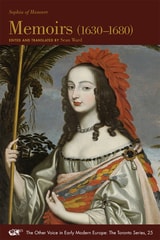
Memoirs (1630-1680)
Sophia of Hanover
Iter Press, 2013

Memoirs and Reflections
Evgeny Kissin
University Press of New England, 2018
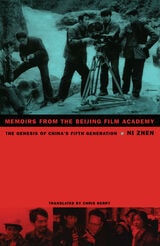
Memoirs from the Beijing Film Academy
The Genesis of China's Fifth GenerationZhen Ni
Duke University Press, 2002
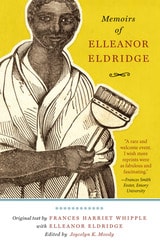
Memoirs of Elleanor Eldridge
Frances H. Whipple
West Virginia University Press, 2013
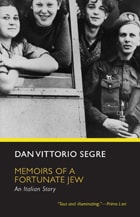
Memoirs of a Fortunate Jew
An Italian StoryDan Vittorio Segre
University of Chicago Press, 2008
“Taut and illuminating . . . memorable . . . written with the humility of he who confesses himself and with the honesty of he who bore witness.”—Primo Levi
“The writing of memoirs is a difficult art that Dan Segre fully possesses. Under his pen, history and psychology merge in one captivating narrative which illuminates the turmoils, fears and triumphs of his generation.”—Elie Wiesel
“Beautifully written. . . . [A] labyrinthine, spell-binding autobiography, full of passionate tenderness.”—New York Review of Books
“An unusually attractive book—attractive in its irony, its energy and its moral insight. Mr. Segre had some rich material to work with, and he has done it justice.”—New York Times
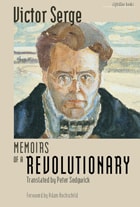
Memoirs of a Revolutionary
Victor Serge
University of Iowa Press, 2002

Memoirs of an Early Arab Feminist
The Life and Activism of Anbara Salam KhalidiAnbara Salam Khalidi
Pluto Press, 2013
Memoirs of an Early Arab Feminist is the first English translation of the memoirs of Anbara Salam Khalidi, the iconic Arab feminist. At a time when women are playing a leading role in the Arab Spring, this book brings to life an earlier period of social turmoil and women's activism through one remarkable life.
Anbara Salam was born in 1897 to a notable Sunni Muslim family of Beirut. She grew up in 'Greater Syria', in which unhindered travel between Beirut, Jerusalem and Damascus was possible, and wrote a series of newspaper articles calling on women to fight for their rights within the Ottoman Empire. In 1927 she caused a public scandal by removing her veil during a lecture at the American University of Beirut.
Later she translated Homer and Virgil into Arabic and fled from Jerusalem to Beirut following the establishment of Israel in 1948. She died in Beirut in 1986. These memoirs have long been acclaimed by Middle East historians as an essential resource for the social history of Beirut and the larger Arab world in the 19th and 20th centuries.

Memoirs of an Indo Woman
Twentieth Century Life in the East Indies and AbroadMarguérite Schenkhuizen
Ohio University Press, 1993
The memoirs of Marguérite Schenkhuizen provide an overview of practically the whole of the twentieth century as experienced by persons of mixed Dutch and Indonesian ancestry who lived in the former Dutch East Indies. The memoirs provide vignettes of Indonesian life, both rural and urban, as seen through the eyes of the author first as a girl, then as a wife separated from her husband during the Japanese occupation, finally as an immigrant to the United States after World War II.
This self-portrait gives glimpses of the life of Indos from inside their society, glimpses that are valuable for their descendents as well as for outsiders. Written with humor and a positive town, Schenkhuizen’s story sets aside the myth that Indos were denied access to the upper layers of Dutch colonial society or were otherwise disadvantaged. Instead, her life story provides an authentic view of a vital Indo culture and experience that has been unavailable to the general reader of English.
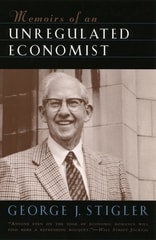
Memoirs of an Unregulated Economist
George J. Stigler
University of Chicago Press, 2003
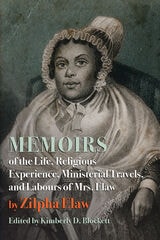
Memoirs of the Life, Religious Experience, Ministerial Travels, and Labours of Mrs. Elaw
Zilpha Elaw
West Virginia University Press, 2021
As a young Black orphan indentured to a Quaker family in Bristol, Pennsylvania, Zilpha Elaw (c. 1793–1873) decided to join the upstart Methodists in 1808. She preached her first sermon a decade later, ignoring her husband and the many church leaders, clergy, and laity who tried to silence her. Elaw’s memoir chronicles the first twenty years of her forty-year itinerant ministry during massive Protestant revivalism in the United States and England.
Elaw preached from Maine to Virginia, attracting multiracial and multidenominational audiences that included powerful men, wealthy White women, poor families, and enslaved communities. She moved from Bristol to Burlington, New Jersey, then to Nantucket, Massachusetts, and finally, in 1840, to London’s East End. In England, Elaw’s celebrity expanded, and at least twice she drew crowds so large they caused human stampedes and multiple injuries.
Blockett’s introduction and extensive annotations draw on newly unearthed information about the entirety of Elaw’s evangelism to provide context for this remarkable story of an antebellum Black woman’s personal and professional mobility.
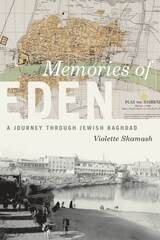
Memories of Eden
A Journey Through Jewish BaghdadViolette Shamash
Northwestern University Press, 2010
According to legend, the Garden of Eden was located in Iraq, and for millennia, Jews resided peacefully in metropolitan Baghdad. Memories of Eden: A Journey Through Jewish Baghdad reconstructs the last years of the oldest Jewish Diaspora community in the world through the recollections of Violette Shamash, a Jewish woman who was born in Baghdad in 1912, sent to her daughter Mira Rocca and son-in-law, the British journalist Tony Rocca. The result is a deeply textured memoir—an intimate portrait of an individual life, yet revealing of the complex dynamics of the Middle East in the twentieth century.
Toward the end of her long life, Violette Shamash began writing letters, notes, and essays and sending them to the Roccas. The resulting book begins near the end of Ottoman rule and runs through the British Mandate, the emergence of an independent Iraq, and the start of dictatorial government. Shamash clearly loved the world in which she grew up but is altogether honest in her depiction of the transformation of attitudes toward Baghdad’s Jewish population. Shamash’s world is finally shattered by the Farhud, the name given to the massacre of hundreds of Iraqi Jews over three days in 1941. An event that has received very slight historical coverage, the Farhud is further described and placed in context in a concluding essay by Tony Rocca.
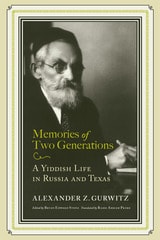
Memories of Two Generations
A Yiddish Life in Russia and TexasAlexander Z. Gurwitz, Edited and Introduced by Bryan Edward Stone
University of Alabama Press, 2022
The 1935 autobiography of Alexander Ziskind Gurwitz, an Orthodox Jew whose lively recounting of his life in Tsarist Russia and his immigration to San Antonio, Texas, in 1910 captures turbulent changes in early twentieth-century Jewish history
In 1910, at the age of fifty-one, Alexander Ziskind Gurwitz made the bold decision to emigrate with his wife and four children from southeastern Ukraine in Tsarist Russia to begin a new life in Texas. In 1935, in his seventies, Gurwitz composed a retrospective autobiography, Memories of Two Generations, that recounts his personal story both of the rich history of the lost Jewish world of Eastern Europe and of the rambunctious development of frontier Jewish communities in the United States.
In both Europe and America, Gurwitz inhabited an almost exclusively Jewish world. As a boy, he studied in traditional yeshivas and earned a living as a Hebrew language teacher and kosher butcher. Widely travelled, Gurwitz recalls with wit and insight daily life in European shtetls, providing perceptive and informative comments about Jewish religion, history, politics, and social customs. Among the book’s most notable features is his first-hand, insider’s account of the yearly Jewish holiday cycle as it was observed in the nineteenth century, described as he experienced it as a child.
Gurwitz’s account of his arrival in Texas forms a cornerstone record of the Galveston Immigration Movement; this memoir represents the only complete narrative of that migration from an immigrant’s point of view. Gurwitz’s descriptions about the development of a thriving Orthodox community in San Antonio provide an important and unique primary source about a facet of American Jewish life that is not widely known.
Gurwitz wrote his memoir in his preferred Yiddish, and this translation into English by Rabbi Amram Prero captures the lyrical style of the original. Scholar and author Bryan Edward Stone’s special introduction and illuminating footnotes round out a superb edition that offers much to experts and general readers alike.
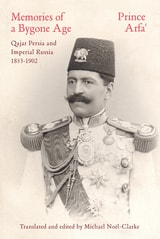
Memories of a Bygone Age
Qajar Persia and Imperial Russia 1853-1902Prince Arfa
Gingko, 2016
Prince Arfa writes with arresting wit about the deadly intrigues of the Qajar court. Lamentingly, but resolutely, he chronicles the decline of Iran from a once great empire to an almost bankrupt, lawless state, in which social unrest is channelled and exploited by the clergy. He describes the complex interactions between Iran and Europe, including an account of Naser-od-Din Shah’s profligate visits to Britain and France; the splendor and eccentricities of the doomed Tsar Nicholas II’s court; the Tsar’s omen-laden coronation; and his own favor with the Tsarina, who would grant him concessions on matters of vital importance to his country. The result is a memoir of extraordinary political intrigue.

Memories of a Gay Catholic Boyhood
Coming of Age in the SixtiesJohn D'Emilio
Duke University Press, 2022
Memories of a Gay Catholic Boyhood is D’Emilio’s coming-of-age story in which he takes readers from his working-class Bronx neighborhood to an elite Jesuit high school in Manhattan to Columbia University and the political and social upheavals of the late 1960s. He shares his personal experiences of growing up in a conservative, tight-knit, multigenerational family, how he went from considering entering the priesthood to losing his faith and coming to terms with his same-sex desires. Throughout, D’Emilio outlines his complicated relationship with his family while showing how his passion for activism influenced his decision to use research, writing, and teaching to build a strong LGBTQ movement.
This is not just John D’Emilio’s personal story; it opens a window into how the conformist baby boom decade of the 1950s transformed into the tumultuous years of radical social movements and widespread protest during the 1960s. It is the story of what happens when different cultures and values collide and the tensions and possibilities for personal discovery and growth that emerge. Intimate and honest, D’Emilio’s story will resonate with anyone who has had to chart their own path in a world they did not expect to find.
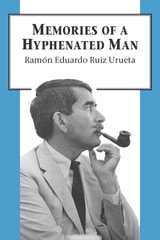
Memories of a Hyphenated Man
Ramón Eduardo Ruiz Urueta
University of Arizona Press, 2003
Historian, author, and intellectual, Ruiz has established himself through such books as Triumphs and Tragedy: A History of the Mexican People and Cuba: The Making of a Revolution, and in 1998 he was awarded the National Humanities Medal by President Clinton. Now he turns his pen on his own life to offer a personal look at what it really means to be American by birth but Mexican by culture.
Little has been written by or about persons of Mexican origin who have achieved the academic stature of Ruiz, and his memoir provides insights not found in the more common biographies of labor leaders and civil rights activists. His early life straddled the social worlds of his parent's Mexico and semi-rural America, where his father's success as an entrepreneur and property owner set his family's experiences apart from those of most other Mexican Americans at the time. His parents reinforced in their children an identity as mexicanos, and that connection with his ancestral roots was for Ruiz a lifejacket in the days of acute bigotry in America.
In making an early, self-conscious commitment to a life of the mind, Ruiz became aware of his unique nature, and while not immune to prejudice he was able to make a name for himself in several endeavors. As a student, he attended college when few Mexican Americans were given that opportunity, and he was one of the first of his generation to earn a Ph.D. As an Army Air Force officer during World War II, he served as a pilot in the Pacific theatre. And as an intellectual, he navigated the currents of the historical profession and charted new directions in Latin American research through his prolific writing.
Ruiz's career teaching took him to Mexico, Massachusetts, Texas, Oregon—often as the lone "Mexican professor," and ultimately back to his native California. While teaching at Smith, he exulted in being "free to interpret Spanish American life and culture to my heart's content," and at the University of California, San Diego, he saw the era of campus racial barrier give way to the birth of affirmative action. While at UCSD, he taught hundreds of Chicanos and trained one of the largest groups of Chicano Ph.D's.
Memories of a Hyphenated Man is the story of a unique individual who, while shaped by his upbringing and drawing on deep cultural roots, steadfastly followed his own compass in life. It tells of a singular man who beat the odds as it poignantly addresses the ambiguities associated with race, class, citizenship, and nationality for Mexicans and Mexican Americans.
Memory Fever
Ray Gonzalez
University of Arizona Press, 1999
Through 29 storylike essays, Gonzalez takes readers into the heart of the desert and the soul of a developing poet. He introduces us to the people who shaped his life. We learn of his father's difficulties with running a pool hall and of his grandmother's steadfast religious faith. We meet sinister Texas Rangers, hallucinatory poets, illegal aliens, and racist high school jocks. His vivid recollections embrace lizard hunts and rattlesnake dreams, rock music and menudo making—all in stories that convey the pains and joys of growing up on the border. As Gonzalez leads us through his desert of hope and vision, we come to recognize the humor and sadness that permeate this special place.
Memory of Trees
A Daughter’s Story of a Family FarmGayla Marty
University of Minnesota Press, 2013
Memory of Trees is a multigenerational story of Gayla Marty’s family farm near Rush City, Minnesota. Cleared from woodlands by her great-grandfather Jacob in the 1880s, the farm passed to her father, Gordon, and his brother, Gaylon. Hewing to a conservative Swedish Baptist faith, the two brothers worked the farm, raising their families in side-by-side houses.
As the years go by, the families grow—and slowly grow apart. Uncle Gaylon, more doctrinaire in his faith, rails against the permissiveness of Gayla’s parents. Financial tensions arise as well when the farm economy weakens and none of the children is willing or able to take over. Gayla is encouraged to leave for college, international travel, and city life, but the farm remains essential to her sense of self, even after the family decides to sell the land.
When Gaylon has an accident on a tractor, Gayla becomes driven to reconnect with him and to find out why she and her uncle—once so close but now estranged—were the only two members of the family who had resisted selling the land. Guided by vivid images of the farm’s many beautiful trees, she pores over sacred and classical works as well as layers of her own memory to understand the forces that have transformed the American landscape and culture in the last half of the twentieth century. Beneath the belief in land as a giver of life and blessing, she discovers a powerful anxiety born of human uprootedness and loss. Movingly written, Memory of Trees will resonate for many with attachments to small towns or farms, whether they continue to work the land or, like so many, have left for a different life.
Memory, Meaning, and Resistance
Reflecting on Oral History and Women at the MarginsFran Leeper Buss
University of Michigan Press, 2017
Memory, Oblivion, and Jewish Culture in Latin America
Edited by Marjorie Agosín
University of Texas Press, 2005
Latin America has been a refuge for Jews fleeing persecution from 1492, when Sepharad Jews were expelled from Spain, until well into the twentieth century, when European Jews sought sanctuary there from the horrors of the Nazi Holocaust. Vibrant Jewish communities have deep roots in countries such as Argentina, Mexico, Guatemala, and Chile—though members of these communities have at times experienced the pain of being "the other," ostracized by Christian society and even tortured by military governments. While commonalities of religion and culture link these communities across time and national boundaries, the Jewish experience in Latin America is irreducible to a single perspective. Only a multitude of voices can express it.
This anthology gathers fifteen essays by historians, creative writers, artists, literary scholars, anthropologists, and social scientists who collectively tell the story of Jewish life in Latin America. Some of the pieces are personal tales of exile and survival; some explore Jewish humor and its role in amalgamating histories of past and present; and others look at serious episodes of political persecution and military dictatorship. As a whole, these challenging essays ask what Jewish identity is in Latin America and how it changes throughout history. They leave us to ponder the tantalizing question: Does being Jewish in the Americas speak to a transitory history or a more permanent one?
Memory
A Fourth MemoirWallace Fowlie
Duke University Press, 1990
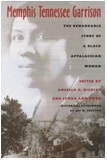
Memphis Tennessee Garrison
The Remarkable Story of a Black Appalachian WomanAncella R. Bickley
Ohio University Press, 2001
As a black Appalachian woman, Memphis Tennessee Garrison belonged to a demographic category triply ignored by historians.
The daughter of former slaves, she moved to McDowell County, West Virginia, at an early age and died at ninety-eight in Huntington. The coalfields of McDowell County were among the richest seams in the nation. As Garrison makes clear, the backbone of the early mining work force—those who laid the railroad tracks, manned the coke ovens, and dug the coal—were black miners. These miners and their families created communities that became the centers of the struggle for unions, better education, and expanded civil rights. Memphis Tennessee Garrison, an innovative teacher, administrative worker at U.S. Steel, and vice president of the National Board of the NAACP at the height of the civil rights struggle (1963-66), was involved with all of these struggles.
In many ways, this oral history, based on interview transcripts, is the untold and multidimensional story of African American life in West Virginia, as seen through the eyes of a remarkable woman. She portrays a courageous people who organize to improve their working conditions, send their children to school and then to college, own land, and support a wide range of cultural and political activities.
Men I Hate
A Memoir in EssaysLynette D'Amico
The Ohio State University Press, 2026
Can a lesbian who loves a trans man still call herself a lesbian? Against the backdrop of a traditional Sicilian American upbringing, Lynette D’Amico identified as a lesbian despite the expectation that her future hinged on the man she married. As a teenager, she fled her St. Louis home in the dark of night to escape her fate. No boys allowed, until one day D’Amico’s life was completely upended when her lover and spouse of twenty years—P. Carl, the acclaimed author of Becoming a Man: The Story of a Transition—told her he was a man.
Seemingly overnight, D’Amico no longer recognized her spouse in photos of past vacations or of the couple celebrating their legal gay marriage. In Men I Hate, she asks: What happens when the people we are closest to change? As D’Amico tries to engage more deeply with the man she is married to, she looks at all the men—historical figures, politicians, men in her family—in search of clear dividing lines between good men and bad, between the men she loves and the men she hates. These lines dissolve as she writes her way toward an understanding of the words marriage,husband, and home—and how we reconcile who we are with who we become.
Men I've Never Been
Michael Sadowski
University of Wisconsin Press, 2021
Through wrenching tragedy and tense, life-threatening challenges, Sadowski learns to find love, purpose, and healthy self-regard. In coming to understand his identity and his place within his family, he meditates on the power of real human connection and comes to grasp the damage of his troubled upbringing and the traumas caused by toxic masculinity. By turns comic and tragic, this nuanced memoir uncovers the false selves we create to get along in the world and the price we pay to maintain them.
Men Met Along the Trail
Adventures in ArchaeologyNeil M Judd
University of Utah Press, 2009
Written at the request of young associates who felt Judd’s lifetime of experiences in the field could be both instructive and amusing, Men Met Along the Trail provides a glimpse of archaeology when it was an emerging field of study, evolving from simple curio collecting to technologically advanced radiocarbon dating and pollen analysis. Featuring more than thirty original photographs and a new foreword by Don D. Fowler, this book is entertaining and informative, offering readers a vibrant and colorful picture of the adventures to be found in early Southwestern archaeology.
Men Who Made a New Physics
Physicists and the Quantum TheoryBarbara Lovett Cline
University of Chicago Press, 1987
Men at the Center
Redemptive Governance under Louis IXWilliam Chester Jordan
Central European University Press, 2012
Taking Professor Natalie Zemon Davis’ fascinating biographical studies of three Women on the Margins in the seventeenth century as an inspiration, the author of this book offers three portraits of men who were at the very center of governance in thirteenth-century France, men who strove in the shadow of King Louis IX (Saint Louis) to impose a redemptive regime on the realm. Professor Jordan treats them as individuals, but in a sense they are also types: Robert of Sorbon, a churchman; Etienne Boileau, a bourgeois; and Simon de Nesle, an aristocrat. Robert was the founder of the Sorbonne; Boileau was the prévôt or royal administrator of Paris; and Simon was twice co-regent of the kingdom. Thinking about them and their relations with Louis IX opens up a new and altogether sobering vista for exploring the nature of the king’s rule and the impact of his rule on his subjects.
Men of No Reputation
Robert Boatright, the Buckfoot Gang, and the Fleecing of Middle AmericaKimberly Harper
University of Arkansas Press, 2024
Winner, 2025 Missouri Conference on History Book Award
Swindler. Murderer. Scoundrel.
Robert Boatright was one of Middle America’s greatest confidence men. Although little remembered today, his story provides a rare glimpse into America’s criminal past. Working in concert with a local bank and an influential Democratic boss, “this dean of modern confidence men” and his colorful confederacy of con men known as the Buckfoot Gang seemed untouchable. A series of missteps, however, led to a string of court cases across the country that brought Boatright’s own criminal enterprise to an end. And yet, the con continued: Boatright’s successor, John C. Mabray, and his cronies, many of whom had been in the Buckfoot Gang, preyed upon victims across North America in one of the largest midwestern criminal syndicates in history before they were brought to heel.
Like the works of Sinclair Lewis, Boatright’s story exposes a rift in the wholesome midwestern stereotype and furthers our understanding of nineteenth- and twentieth-century American society.
Mendings
Megan Sweeney
Duke University Press, 2023