Results by title
4413 books match the query 'Anthropology' and 260 start with m
Metaculture
How Culture Moves through the WorldGreg Urban
University of Minnesota Press, 2001
It is one thing to comprehend how culture makes its way through the world in those cases where something old is reproduced in the same physical shape-where, for example, a song is sung or a story retold. It is another thing altogether, as Greg Urban demonstrates, to think about cultural motion when something new is created-a new song or a new story. And this, the creating of new culture, is the overarching value of the contemporary world, as well as the guiding principle of the capitalist entrepreneur.
From the Declaration of Independence to the movie Babe, from the Amazon River to the film studio, from microscopic studies of the words making up myths and books to the large-scale forces of conquest, conversion, and globalization that drive history, Urban follows the clues to a startling revelation: "metaculture" makes the modern, entrepreneurial form of culture possible. In Urban’s work we see how metaculture, in its relationship to newness, explains the peculiar shape of modern society and its institutions, from the prevalence of taste and choice to the processes of the public sphere, to the centrality of persuasion and hegemony within the nation.
Metamorphosis in Russian Modernism
Peter I. Barta
Central European University Press, 2000
Metapersons
Transcendence and LifeJoão Pina-Cabral
HAU, 2026
Metapersons begins from a simple yet striking observation: across the world, people live in the company of divinities, ancestors, spirits, sacred mountains, or enlivened statues. They pray with intensity, sense the presence of ghosts, and experience forms of coexistence with beings beyond the human. Drawing on fieldwork in Portugal, China, Mozambique, and Brazil, João Pina-Cabral shows how humans continually move beyond their embodied condition through lived relations with such entities.
Revisiting classic anthropological debates—from Durkheim and Mauss on prayer and the sacred to later critiques of religion—this book argues that a “new anthropological synthesis” has emerged in recent decades: one that understands transcendence as a fundamental feature of life itself. In this light, familiar categories such as “superstition” require reconsideration in new terms. Pina-Cabral develops a scalar model of life’s plurality, seeing personhood as the dynamic source of transcendence.
Engaging with contemporary debates across the life sciences, social sciences, and philosophy, Metapersons offers a groundbreaking, person-centered perspective on transcendence, animism, and spirituality. It challenges disciplinary boundaries while providing an innovative framework for rethinking prayer, religion, and the very conditions of human coexistence with the more-than-human world.
Metaphysical Community
The Interplay of the Senses and the IntellectBy Greg Urban
University of Texas Press, 1996
Winner, Senior Book Prize, American Ethnological Society
Starting with the post-structuralist idea that truth systems are lodged in discourse, and that discourse varies from society to society, Greg Urban seeks to discover the nature and extent of that variation. His journey to an Amerindian society in which dreams are more prominent than everyday aspects of the sensible world leads him to radically reformulate one of the main problematics of Western thought: the relationship between our sensations of the world and the understandings we form of them.
Metaphysical Community proposes that this dichotomy comes from the interplay between two sides of discourse-its intelligible side as a carrier of meanings, and its sensible side as thing-in-the-world that must be replicated. This insight leads to the heart of the book-the exploration of the uneasy tension that binds experience and understanding, phenomena and noumena.
Urban challenges basic assumptions that underlie social and cultural anthropology and much of the social sciences and humanities. His provocative insights will be of interest to all those concerned with anthropology, cultural studies, literary criticism, the sociology and politics of culture, and philosophy.

Method and Perspective in Anthropology
Papers in Honor of Wilson D. WallisRobert F. Spencer
University of Minnesota Press, 1954
Method and Perspective in Anthropology was first published in 1954. Minnesota Archive Editions uses digital technology to make long-unavailable books once again accessible, and are published unaltered from the original University of Minnesota Press editions.
The boundaries and goals of anthropology are changing and expanding as scholars recognize and pursue wider opportunities for achieving an understanding of the cultural development of man. The range of interests of the discipline as shown in this book embodies such varied fields as archaeology, human geography, linguistics, and the organization of society. With the broadening and deepening of these concerns, those working and studying in the various areas of anthropology have sought more concise methods and more adequate techniques with which to meet increasingly complex problems.
This volume of papers, published in honor of a scholar who has himself devoted much effort to the refinement of anthropological methods, represents a long step forward toward the solution of some of the problems of methodology. The contributors are outstanding scholars in cultural anthropology, ethnology, and related fields.
The first twelve papers, by as many different authors, present discussions of specific aspects of ethnography, cultural anthropology, prehistory, linguistics, ethnogeography, and sociology. The final paper, by Alfred L. Kroeber, provides a critical summary of the preceding papers. All twelve of the writers answer, in their own way, the questions of how they derive their data, and how they establish their theoretical frame of reference.
The contributors are, in addition to Professor Kroeber, Melville J. Herskovits, Sister M. Inez Hilger, Elizabeth Colson, David G. Mandelbaum, Allan R. Holmberg, Robert F. Spencer, Ralph Linton, Erwin H. Ackerknecht, Lloyd A. Wilford, Joseph H. Greenberg, Omer C. Stewart, and Raymond V. Bowers.
Methods That Matter
Integrating Mixed Methods for More Effective Social Science ResearchEdited by M. Cameron Hay
University of Chicago Press, 2016
Historically, the largest division between social science methods has been that between quantitative and qualitative measures. For people trained in psychology or sociology, the bias has been toward the former, using surveys and experiments that yield readily comparable numerical results. For people trained in anthropology, it has been toward the latter, using ethnographic observations and interviews that offer richer nuances of meaning but are difficult to compare across societies. Discussing their own endeavors to combine the quantitative with the qualitative, the authors invite readers into a conversation about the best designs and practices of mixed methodologies to stimulate creative ideas and find new pathways of insight. The result is an engaging exploration of a promising new approach to the social sciences.
Metrics
What Counts in Global HealthVincanne Adams, editor
Duke University Press, 2016

Mexican Americans in a Dallas Barrio
Shirley Achor
University of Arizona Press, 1978
Mexican-Origin Foods, Foodways, and Social Movements
Decolonial PerspectivesDevon Peña
University of Arkansas Press, 2017
This collection of new essays offers groundbreaking perspectives on the ways that food and foodways serve as an element of decolonization in Mexican-origin communities.
The writers here take us from multigenerational acequia farmers, who trace their ancestry to Indigenous families in place well before the Oñate Entrada of 1598, to tomorrow’s transborder travelers who will be negotiating entry into the United States. Throughout, we witness the shifting mosaic of Mexican-origin foods and foodways in the fields, gardens, and kitchen tables from Chiapas to Alaska.
Global food systems are also considered from a critical agroecological perspective, including the ways colonialism affects native biocultural diversity, ecosystem resilience, and equality across species, human groups, and generations.
Mexican-Origin Foods, Foodways, and Social Movements is a major contribution to the understanding of the ways that Mexican-origin peoples have resisted and transformed food systems. It will animate scholarship on global food studies for years to come.
Mexico in Space
From la Raza Cósmica to the Space RaceAnne W. Johnson
University of Arizona Press, 2026
From Aztec sun stones to satellite launches, from muralist visions to dark sky parks, Mexico’s engagement with outer space is fundamental to its identity. Mexico in Space offers a groundbreaking look at how the country has navigated the tensions between technological dependence and sovereign dreams.
Anthropologist Anne W. Johnson reveals Mexico’s unique relationship with outer space, describing Indigenous knowledge, nationalist projects, artistic visions, and community practices. Through rich ethnographic detail and historical insight, Johnson challenges the notion that space is for everyone and shows whose voices truly shape the world’s cosmic futures. Johnson introduces us to satellite engineers, community astronomers, space generation youth, and artists imagining Mars, each crafting alternative cosmic futures.
As space exploration increasingly becomes the domain of billionaires and superpowers, this book offers a compelling counternarrative, demonstrating how Mexican cosmic engagements suggest more just, inclusive ways of inhabiting Earth and beyond and providing vital lessons for reimagining humanity’s place in the cosmos.
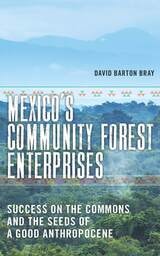
Mexico’s Community Forest Enterprises
Success on the Commons and the Seeds of a Good AnthropoceneDavid Barton Bray
University of Arizona Press, 2020
Mexico presents a unique case in which much of the nation’s forests were placed as commons in the hands of communities, who, with state support and their own entrepreneurial vigor, created community forest enterprises (CFEs). David Barton Bray, who has spent more than thirty years engaged with and researching Mexican community forestry, shows that this reform has transformed forest management in that country at a scale and level of maturity unmatched anywhere else in the world.
For decades Mexico has been conducting a de facto large-scale experiment in the design of a national social-ecological system (SES) focused on community forests. What happens when you give subsistence communities rights over forests, as well as training, organizational support, equipment, and financial capital? Do the communities destroy the forest in the name of economic development, or do they manage them sustainably, generating current income while maintaining intergenerational value as a resource for their children? Bray shares the scientific and social evidence that can now begin to answer these questions. This is an invaluable resource for students, researchers, and the interested public on the future of global forest resilience and the possibilities for a good Anthropocene.
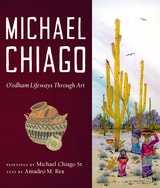
Michael Chiago
O’odham Lifeways Through ArtPaintings by Michael Chiago Sr. Text by Amadeo M. Rea
University of Arizona Press, 2022
A wide array of Chiago’s paintings are represented in this book, illustrating past and present Akimel O’odham and Tohono O’odham culture. The paintings show the lives and traditions of O’odham people from both the artist’s parents’ and grandparents’ generations and today. The paintings demonstrate the colonial Spanish, Mexican, and Anglo-American influences on O’odham culture throughout the decades, and the text explains how wells and windmills, schools, border walls, and nonnative crops have brought about significant change in O’odham life. The paintings and text in this book beautifully depict a variety of O’odham lifeways, including the striking Sonoran Desert environment of O’odham country, gathering local foods and cooking meals, shrines, ceremonies, dances, and more.
By combining Chiago’s paintings of his lived experiences with Rea’s ethnographic work, this book offers a full, colorful, and powerful picture of O’odham heritage, culture, and language, creating a teaching reference for future generations.
Microfinance and Its Discontents
Women in Debt in BangladeshLamia Karim
University of Minnesota Press, 2010
In 2006 the Grameen Bank of Bangladesh won the Nobel Peace Prize for its innovative microfinancing operations. This path-breaking study of gender, grassroots globalization, and neoliberalism in Bangladesh looks critically at the Grameen Bank and three of the leading NGOs in the country. Amid euphoria over the benefits of microfinance, Lamia Karim offers a timely and sobering perspective on the practical, and possibly detrimental, realities for poor women inducted into microfinance operations.
In a series of ethnographic cases, Karim shows how NGOs use social codes of honor and shame to shape the conduct of women and to further an agenda of capitalist expansion. These unwritten policies subordinate poor women to multiple levels of debt that often lead to increased violence at the household and community levels, thereby weakening women’s ability to resist the onslaught of market forces.
A compelling critique of the relationship between powerful NGOs and the financially strapped women beholden to them for capital, this book cautions us to be vigilant about the social realities within which women and loans circulate—realities that often have adverse effects on the lives of the very women these operations are meant to help.
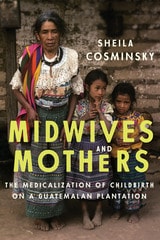
Midwives and Mothers
The Medicalization of Childbirth on a Guatemalan PlantationBy Sheila Cosminsky
University of Texas Press, 2016
The World Health Organization is currently promoting a policy of replacing traditional or lay midwives in countries around the world. As part of an effort to record the knowledge of local midwives before it is lost, Midwives and Mothers explores birth, illness, death, and survival on a Guatemalan sugar and coffee plantation, or finca, through the lives of two local midwives, Doña Maria and her daughter Doña Siriaca, and the women they have served over a forty-year period.
By comparing the practices and beliefs of the mother and daughter, Sheila Cosminsky shows the dynamics of the medicalization process and the contestation between the midwives and biomedical personnel, as the latter try to impose their system as the authoritative one. She discusses how the midwives syncretize, integrate, or reject elements from Mayan, Spanish, and biomedical systems. The midwives’ story becomes a lens for understanding the impact of medicalization on people’s lives and the ways in which women’s bodies have become contested terrain between traditional and contemporary medical practices. Cosminsky also makes recommendations for how ethno-obstetric and biomedical systems may be accommodated, articulated, or integrated. Finally, she places the changes in the birthing system in the larger context of changes in the plantation system, including the elimination of coffee growing, which has made women, traditionally the primary harvesters of coffee beans, more economically dependent on men.
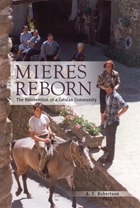
Mieres Reborn
The Reinvention of a Catalan CommunityA. F. Robertson
University of Alabama Press, 2012
Mieres Reborn reveals how patient observation and an analysis of one small community have much to tell us about human progress more generally.
Not long ago Mieres, a village in the eastern foothills of the Pyrenees, seemed destined to die. As in countless thousands of rural communities around the world, young people in Mieres over the years have moved to the towns and cities, leaving behind abandoned fields and meadows, derelict houses, and their aging and disconsolate parents and grandparents.
Close observation of this social microcosm over two decades reveals the capacity of ordinary people in a locality to reinvent themselves, reconstruct relationships with the wider world, and confront new threats to their collective survival. A. F. Robertson describes how the determination that Mieres should survive is most evident in a vigorous round of fiestas, fairs, and other public events in which natives, exiles, and newcomers work to create a lively sense of belonging. Since the 1980s, Mieres has been enlivened by a reverse flow of migrants from the cities, new settlers who have brought an infusion of youth to the community, devised new livelihoods, revitalized the village school, energized the native ”Mierencs,” and provided the impetus for a rediscovery of historical roots and political identity.
The regeneration of life in the countryside, in part a reaction to urban expansion and decay, is a global phenomenon of increasing political, economic, and social significance.
Migrant Deaths in the Arizona Desert
La vida no vale nadaEdited by Raquel Rubio-Goldsmith, Celestino Fernández, Jessie K. Finch, and Araceli Masterson-Algar
University of Arizona Press, 2016
Migrant Deaths in the Arizona Desert addresses the tragic results of government policies on immigration. The contributors consist of a multidisciplinary group who are dedicated to the thousands of men, women, and children who have lost their lives while crossing the desert in search of a better life. Each chapter in this important new volume seeks answers to migrant deaths, speaking to the complexity of this tragedy via a range of community and scholarly approaches.
The activists, artists, and scholars included in this volume confront migrant deaths and disappearances in the U.S.-Mexico borderlands as they reflect on the startling realities of death, migration, and public policy. Chapters touch on immigration and how it is studied, community responses to crisis, government policy, definitions of citizenship, and the role of the arts and human expression in response to state violence. Collectively the contributions throw a spotlight on the multivocal, transdisciplinary efforts to address the historical silence surrounding this human tragedy.
Despite numerous changes in the migration processes and growing attention to the problem, many people who attempt border crossings continue to disappear and die. This book offers a timely exploration of the ways that residents, scholars, activists, and artists are responding to this humanitarian crisis on their doorstep.

Migrant Sites
America, Place, and Diaspora LiteraturesDalia Kandiyoti
Dartmouth College Press, 2009
Migrants and City-Making
Dispossession, Displacement, and Urban RegenerationAyse Caglar and Nina Glick Schiller
Duke University Press, 2018
Migration and Mortality
Social Death, Dispossession, and Survival in the AmericasEdited by Jamie Longazel and Miranda Cady Hallett
Temple University Press, 2021
Death threatens migrants physically during perilous border crossings between Central and North America, but many also experience legal, social, and economic mortality. Rooted in histories of colonialism and conquest, exclusionary policies and practices deliberately take aim at racialized, dispossessed people in transit. Once in the new land, migrants endure a web of systems across every facet of their world—work, home, healthcare, culture, justice—that strips them of their personhood, denies them resources, and creates additional obstacles that deprive them of their ability to live fully.
As laws and policies create ripe conditions for the further extraction of money, resources, and labor power from the dispossessed, the contributors to this vibrant anthology, Migration and Mortality, examine restrictive immigration policies and the broader capitalist systems of exploitation and inequality while highlighting the power of migrants’ collective resistance and resilience.
The case studies in this timely collection explore border deaths, detention economies, asylum seeking, as well as the public health and mental health of migrants. Ultimately, these examples of oppression and survival contribute to understanding broader movements for life and justice in the Americas.
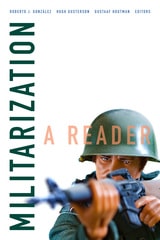
Militarization
A ReaderRoberto J. González, Hugh Gusterson, and Gustaaf Houtman, editors
Duke University Press, 2019
In collaboration with Catherine Besteman, Andrew Bickford, Catherine Lutz, Katherine T. McCaffrey, Austin Miller, David H. Price, David Vine
Militarized Global Apartheid
Catherine Besteman
Duke University Press, 2021
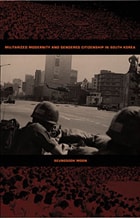
Militarized Modernity and Gendered Citizenship in South Korea
Seungsook Moon
Duke University Press, 2005
Moon situates militarized modernity in the historical context of colonialism and nationalism in the twentieth century. She follows the course of militarized modernity in South Korea from its development in the early 1960s through its peak in the 1970s and its decline after rule by military dictatorship ceased in 1987. She highlights the crucial role of the Cold War in South Korea’s militarization and the continuities in the disciplinary tactics used by the Japanese colonial rulers and the postcolonial military regimes. Moon reveals how, in the years since 1987, various social movements—particularly the women’s and labor movements—began the still-ongoing process of revitalizing South Korean civil society and forging citizenship as a new form of membership in the democratizing nation.

Millennial Countdown in New Guinea, Volume 47
Pamela J. Stewart and Andrew Strathern, eds.
Duke University Press, 0
The articles collected here represent a rich ethnographic record of events leading up to the new millennium, exploring "end times" versus "new world" notions among New Guinea societies. Unlike other published collections on New Guinea, this special issue of Ethnohistory focuses on the entire island, with essays on both Irian Jaya and Papua New Guinea. It makes a distinguished contribution to a classic theme in anthropology and the history of religion.
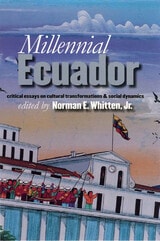
Millennial Ecuador
Critical Essays Cultural TransformationsNorman E Whitten
University of Iowa Press, 2003
Millions of Gifts for the Gods
The Feather Distribution ProjectJonathan Reyman
University Press of Colorado, 2025
Grounded in Sol Tax’s concept of “action anthropology,” the project facilitated community-driven decision-making rather than imposing external solutions. This collaborative approach enabled Indigenous communities to maintain cultural practices that have persisted for over a millennium, dating back to the Ancestral Pueblo people and the Mogollon and Sinagua tribes, who viewed birds as sacred beings that helped humans emerge from the underworld. Yet the project’s impact extended far beyond cultural preservation. Over three decades, it distributed approximately 14.5 million feathers, valued at $20 million, to the Southwest Pueblos and other Indigenous Americans at no cost to them. Through partnerships with turkey hunters, zoos, bird clubs, the National Wild Turkey Federation, and dozens of volunteers, the initiative reduced illegal bird smuggling from Latin America, alleviated pressure on threatened bird populations, and eliminated harmful plucking practices.
Millions of Gifts for the Gods is an extended case study in applied anthropology, demonstrating how sustained collaboration between anthropologists and Indigenous communities can effectively address complex cultural, legal, and environmental challenges while preserving sacred traditions. This unique project is of special interest to anthropologists working in the American Southwest, as well as students and scholars of archaeology, ethnography, and ethnohistory.
Mimbres Archaeology of the Upper Gila, New Mexico
Stephen H. Lekson
University of Arizona Press, 1990
Miniature Crafts and Their Makers
Palm Weaving in a Mexican TownKatrin Flechsig
University of Arizona Press, 2004
Minima Ethnographica
Intersubjectivity and the Anthropological ProjectMichael Jackson
University of Chicago Press, 1998
Written in the style of Theodor Adorno's Minima Moralia, Jackson's work shows how general ideas are always anchored in particular social events and critical concerns. Emphasizing the intersubjective encounter over objective descriptions of the whole historical and contemporary situation of a given people, he illustrates the power and originality of existential anthropology through a series of vignettes from his fieldwork in Sierra Leone and Australia. An award-winning poet, novelist, and anthropologist, Jackson offers a timely critique of conventions that dull our sense of the links between academic study and lived experience.

Mining Encounters
Extractive Industries in an Overheated WorldEdited by Thomas Hylland Eriksen and Robert J. Pijpers
Pluto Press, 2018
Mining Encounters paints a broad picture, looking at resource extraction in numerous locations at different stages of development—covering coal, natural gas, gold, and cement mining in North, West, and South Africa, as well as in India, Kazakhstan, and Australia. The chapters answer key questions: How does mining transform the physical landscape? What are the value systems underlying the world’s mining industries? And how does the process of extracting resources determine which stakeholders become dominant and which marginalized?
Uncovering the tensions, negotiations, and disparities among different actors in the extractive industries, Mining Encounters will make a vital contribution to policy debates moving forward.
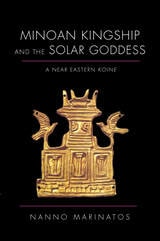
Minoan Kingship and the Solar Goddess
A Near Eastern KoineNanno Marinatos
University of Illinois Press, 2010
Ancient Minoan culture has been typically viewed as an ancestor of classical Greek civilization, but this book shows that Minoan Crete was on the periphery of a powerfully dynamic cultural interchange with its neighbors. Rather than viewing Crete as the autochthonous ancestor of Greece's glory, Nanno Marinatos considers ancient Crete in the context of its powerful competitors to the east and south.
Analyzing the symbols of the Minoan theocratic system and their similarities to those of Syria, Anatolia, and Egypt, Marinatos unlocks many Minoan visual riddles and establishes what she calls a "cultural koine," or standard set of cultural assumptions, that circulated throughout the Near East and the eastern Mediterranean at the time Minoan civilization reached its peak. With more than one hundred and fifty illustrations, Minoan Kingship and the Solar Goddess delivers a comprehensive reading of Minoan art as a system of thought.
Minoritarian Liberalism
A Travesti Life in a Brazilian FavelaMoisés Lino e Silva
University of Chicago Press, 2022
Normative liberalism has promoted the freedom of privileged subjects, those entitled to rights—usually white, adult, heteronormative, and bourgeois—at the expense of marginalized groups, such as Black people, children, LGBTQ people, and slum dwellers. In this visceral ethnography of Rocinha, the largest favela in Rio de Janeiro, Brazil, Moisés Lino e Silva explores what happens when liberalism is challenged by people whose lives are impaired by normative understandings of liberty. He calls such marginalized visions of freedom “minoritarian liberalism,” a concept that stands in for overlapping, alternative modes of freedom—be they queer, favela, or peasant.
Lino e Silva introduces readers to a broad collective of favela residents, most intimately accompanying Natasha Kellem, a charismatic self-declared travesti (a term used in Latin America to indicate a specific form of female gender construction opposite to the sex assigned at birth). While many of those the author meets consider themselves “queer,” others are treated as “abnormal” simply because they live in favelas. Through these interconnected experiences, Lino e Silva not only pushes at the boundaries of anthropological inquiry, but also offers ethnographic evidence of non-normative routes to freedom for those seeking liberties against the backdrop of capitalist exploitation, transphobia, racism, and other patterns of domination.
Misery and Company
Sympathy in Everyday LifeCandace Clark
University of Chicago Press, 1997
"Clark's . . . research methods [are] inventive and her glimpses of U.S. life revealing. . . . And you have to love a social scientist so respectful of Miss Manners."—Clifford Orwin, Toronto Globe and Mail
"Clark offers a thought-provoking and quite interesting etiquette of sympathy according to which we ought to act in order to preserve the sympathy credits we can call on in time of need."—Virginia Quarterly Review
Missing
Youth, Citizenship, and Empire after 9/11Sunaina Marr Maira
Duke University Press, 2009
Bringing grounded ethnographic analysis to the critique of U.S. empire, Maira teases out the ways that imperial power affects the everyday lives of young immigrants in the United States. She illuminates the paradoxes of national belonging, exclusion, alienation, and political expression facing a generation of Muslim youth coming of age at this particular moment. She also sheds new light on larger questions about civil rights, globalization, and U.S. foreign policy. Maira demonstrates that a particular subjectivity, the “imperial feeling” of the present historical moment, is linked not just to issues of war and terrorism but also to migration and work, popular culture and global media, family and belonging.
Mission of Change in Southwest Alaska
Conversations with Father René Astruc and Paul Dixon on Their Work with Yup’ik PeopleEdited by Ann Fienup-Riordan
University of Alaska Press, 2012
Mission of Change is an oral history describing various types of change—political, social, cultural, and religious—as seen through the eyes of Father Astruc and Paul Dixon, non-Natives who dedicated their lives to working with the Yup’ik people. Their stories are framed by the an analytic history of regional changes, together with current anthropological theory on the nature of cultural change and the formation of cultural identity. The book presents a subtle and emotionally moving account of the region and the roles of two men, both of whom view issues from a Catholic perspective yet are closely attuned to and involved with changes in the Yup’ik community.
Mississippian Towns and Sacred Spaces
Searching for an Architectural GrammarEdited by R. Barry Lewis and Charles Stout
University of Alabama Press, 1998
Archaeologists and architects draw upon theoretical perspectives from their fields to provide valuable insights into the structure, development, and meaning of prehistoric communities.
Architecture is the most visible physical manifestation of human culture. The built environment envelops our lives and projects our distinctive regional and ethnic identities to the world around us. Archaeology and architecture find common theoretical ground in their perspectives of the homes, spaces, and communities that people create for themselves. Although archaeologists and architects may ask different questions and apply different methods, the results are the same—a deeper understanding of what it means to be human.
In this volume, prominent archaeologists examine the architectural design spaces of Mississippian towns and mound centers of the eastern United States. The diverse Mississippian societies, which existed between A.D. 900 and 1700, created some of the largest and most complex Native American archaeological sites in the United States. The dominant architectural feature shared by these communities was one or more large plazas, each of which was often flanked by buildings set on platform mounds. The authors describe the major dimensions of an architectural grammar, centered on the design of the plaza and mound complex that was shared by different societies across the Mississippian world. They then explore these shared architectural features as physical representations or metaphors for Mississippian world views and culture.
Mistrust
An Ethnographic TheoryMatthew Carey
HAU, 2017
While mistrust can quickly ruin relationships and even dissolve extensive social ties, Carey shows that it might have other values. Drawing on fieldwork in Morocco’s High Atlas Mountains as well as comparative material from regions stretching from Eastern Europe to Melanesia, he examines the impact of mistrust on practices of conversation and communication, friendship and society, and politics and cooperation. In doing so, he demonstrates that trust is not the only basis for organizing human society and cooperating with others. The result is a provocative but enlightening work that makes us rethink social issues such as suspicion, doubt, and uncertainty.

Mitra-Varuna
An Essay on Two Indo-European Representations of SovereigntyGeorges Dumézil
HAU, 2023
Georges Dumézil’s fascination with the myths and histories of India, Rome, Scandinavia, and the Celts yielded an idea that became his most influential scholarly legacy: the tripartite hypothesis, which divides Indo-European societal functions into three classes: the sacred sovereign, the warrior, and the producer. Mitra-Varuna, originally published in 1940, concentrates on the first function, that of sovereignty. Dumézil identifies two types of rulers, the first judicial and worldly, the second divine and supernatural. These figures, both priestly, are oppositional but complementary. The title nods to these roles, referring to the gods Mitra, a rational mediator, and Varuna, an awesome religious figure.
Stuart Elden’s critical edition, based on the 1988 English translation by Derek Coltman, identifies variations between the first and second French editions and completes—and in places corrects—Dumézil’s references. The editor’s detailed introduction situates Mitra-Varuna within Dumézil’s career, outlines how his treatment of its themes developed over time, and relates the book to the political controversy around his ideas. Two new appendices contain passages that did not appear in the second French edition.
Mixed Messages
Cultural and Genetic Inheritance in the Constitution of Human SocietyRobert A. Paul
University of Chicago Press, 2015
Examining a wide array of cultures, Paul reveals how the inherent tensions between these two modes of transmission generate many of the features of human society, such as marriage rules, initiation rituals, gender asymmetry, and sexual symbolism. Exploring differences in the requirements, range, and agendas of genetic and symbolic reproduction, he shows that a properly conceived dual inheritance model does a better job of accounting for the distinctive character of actual human societies than either evolutionary or socio-cultural construction theories can do alone. Ultimately this book offers a powerful call for a synthesis of the traditions inspired by Darwin, Durkheim, and Freud—one that is critically necessary if we are to advance our understanding of human social life.
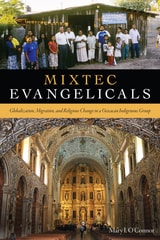
Mixtec Evangelicals
Globalization, Migration, and Religious Change in a Oaxacan Indigenous GroupMary I. O'Connor
University Press of Colorado, 2016
Mixtec Evangelicals is a comparative ethnography of four Mixtec communities in Oaxaca, detailing the process by which economic migration and religious conversion combine to change the social and cultural makeup of predominantly folk-Catholic communities. The book describes the effects on the home communities of the Mixtecs who travel to northern Mexico and the United States in search of wage labor and return having converted from their rural Catholic roots to Evangelical Protestant religions.
O’Connor identifies globalization as the root cause of this process. She demonstrates the ways that neoliberal policies have forced Mixtecs to migrate and how migration provides the contexts for conversion. Converts challenge the set of customs governing their Mixtec villages by refusing to participate in the Catholic ceremonies and social gatherings that are at the center of traditional village life. The home communities have responded in a number of ways—ranging from expulsion of converts to partial acceptance and adjustments within the village—depending on the circumstances of conversion and number of converts returning.
Presenting data and case studies resulting from O’Connor’s ethnographic field research in Oaxaca and various migrant settlements in Mexico and the United States, Mixtec Evangelicals explores this phenomenon of globalization and observes how ancient communities are changed by their own emissaries to the outside world. Students and scholars of anthropology, Latin American studies, and religion will find much in this book to inform their understanding of globalization, modernity, indigeneity, and religious change.
Mixtec Transnational Identity
Laura Velasco Ortiz
University of Arizona Press, 2005
Mobile Museums
Collections in CirculationEdited by Felix Driver, Mark Nesbitt, and Caroline Cornish
University College London, 2021
How did the process of the circulation re-examine, inform, and unsettle common assumptions about the way museum collections have evolved over time and space? Mobile Museums presents an argument for the importance of circulation in the study of museum collections, both past and present. It brings together a diverse array of international scholars and curators from a variety of disciplines to consider the mobility of collections, especially in the context of Indigenous community engagement. By foregrounding the question of circulation, the book represents a paradigm shift in the understanding of the history and future uses of museum collections. Taking on a global perspective and addressing a variety of types of collection, including the botanical, ethnographic, economic, and archaeological, the book helps us to understand why the mobility of museum collections was a fundamental aspect of their history—and why it continues to matter today.
Mobile Secrets
Youth, Intimacy, and the Politics of Pretense in MozambiqueJulie Soleil Archambault
University of Chicago Press, 2017
With Mobile Secrets, Julie Soleil Archambault offers a complete rethinking of how we understand uncertainty, truth, and ignorance by revealing how better access to information may in fact be anything but desirable. By engaging with young adults in a Mozambique suburb, Archambault shows how, in their efforts to create fulfilling lives, young men and women rely on mobile communication not only to mitigate everyday uncertainty but also to juggle the demands of intimacy by courting, producing, and sustaining uncertainty. In their hands, the phone has become a necessary tool in a wider arsenal of pretense—a means of creating the open-endedness on which harmonious social relations depend in postwar postsocialist Mozambique. As Mobile Secrets shows, Mozambicans have harnessed the technology not only to acquire information but also to subvert regimes of truth and preserve public secrets, allowing everyone to feign ignorance about the workings of the postwar intimate economy.
Mobility of Imagination
A companion guide to international cultural cooperationDragan Klaic
Central European University Press, 2006
Mobilizing India
Women, Music, and Migration between India and TrinidadTejaswini Niranjana
Duke University Press, 2006
Niranjana draws on nineteenth-century travel narratives, anthropological and historical studies of Trinidad, Hindi film music, and the lyrics, performance, and reception of chutney-soca and calypso songs to argue that perceptions of Indian female sexuality in Trinidad have long been central to the formation and disruption of dominant narratives of nationhood, modernity, and normative sexuality in India. She illuminates debates in India about “the woman question” as they played out in the early-twentieth-century campaign against indentured servitude in the tropics. In so doing, she reveals India’s disavowal of the indentured woman—viewed as morally depraved by her forced labor in Trinidad—as central to its own anticolonial struggle. Turning to the present, Niranjana looks to Trinidad’s most dynamic site of cultural negotiation: popular music. She describes how contested ideas of Indian femininity are staged by contemporary Trinidadian musicians—male and female, of both Indian and African descent—in genres ranging from new hybrids like chutney-soca to the older but still vibrant music of Afro-Caribbean calypso.
Mobilizing Romani Ethnicity
Romani Political Activism in Argentina, Colombia and SpainAnna Mirga-Kruszelnicka
Central European University Press, 2022
The Roma issue is generally treated as a European matter. Indeed, the Roma are the largest European minority—their presence outside of Europe is a result of various waves of migration over the past four hundred years. Likewise, the stereotypes associated with the Roma—the problematized, stigmatized status of a “Gypsy” as well as the historical and contemporary manifestations of antigypsyism—are also of European origin. This book claims, however, that the perception of Roma being strictly a European issue is flawed, and that re-connecting the Roma issue globally represents an important learning experience and an added value.
The book offers a critical exploration of Romani political activism in Colombia and Argentina, and compares it to that in Spain, narrated from the intimate perspective of Romani actors themselves. By outlining parallel lineages of Romani activism in three countries and on two continents, the author arrives at broad conclusions regarding the nature of ethnic mobilization. Mirga-Kruszelnicka proposes a new synergetic conceptualization of this multidirectional concept as an interplay between political opportunities, mobilizing structures, and frames of identity.
Contributing to the vivid debate about the relationship between the researcher and the researched, the book also includes an original discussion of the positionality of scholars of Romani background.
Mockeries and Metamorphoses of an Aztec God
Tezcatlipoca, "Lord of the Smoking Mirror"Guilhem Olivier
University Press of Colorado, 2003
An enigmatic and melodramatic figure, the Lord of the Smoking Mirror was both drunken seducer and mutilated transgressor and although he severely punished those who violated pre-Columbian moral codes, he also received mortal confessions. A patron deity to kings and warriors as well as a protector of slaves, Tezcatlipoca often clashed in epic confrontations with his "enemy brother" Quetzalcoatl, the famed Feathered Serpent. Yet these powers of Mesoamerican mythology collaborated to create the world, and their common attributes hint at a dual character.
In a sophisticated, systematic tour through the sources and problems related to Tezcatlipoca's protean powers and shifting meanings, Olivier guides readers through the symbolic names of this great god, from his representation on skins and stones to his relationship to ritual knives and other deities.
Drawing upon iconographic material, chronicles written in Spanish and in Nahuatl, and the rich contributions of ethnography, Mockeries and Metamorphoses of an Aztec God - like the mirror of Tezcatlipoca in which the fates of mortals were reflected - reveals an important but obscured portion of the cosmology of pre-Columbian Mexico.
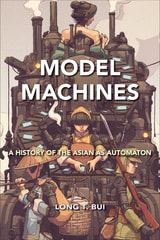
Model Machines
A History of the Asian as AutomatonLong T. Bui
Temple University Press, 2022
In the contemporary Western imagination, Asian people are frequently described as automatons, which disavows their humanity. In Model Machines, Long Bui investigates what he calls Asian roboticism or the ways Asians embody the machine and are given robotic characteristics.
Bui offers the first historical overview of the overlapping racialization of Asians and Asian Americans through their conflation with the robot-machine nexus. He puts forth the concept of the “model machine myth,” which holds specific queries about personhood, citizenship, labor, and rights in the transnational making of Asian/America.
The case studies in Model Machines chart the representation of Chinese laborers, Japanese soldiers, Asian sex workers, and other examples to show how Asians are reimagined to be model machines as a product of globalization, racism, and colonialism. Moreover, it offers examples of how artists and everyday people resisted that stereotype to consider different ways of being human. Starting from the early nineteenth century, the book ends in the present with the new millennium, where the resurgence of China presages the “rise of the machines” and all the doomsday scenarios this might spell for global humanity at large.
Modern Blackness
Nationalism, Globalization, and the Politics of Culture in JamaicaDeborah A. Thomas
Duke University Press, 2004
Thomas combines historical research with fieldwork she conducted in Jamaica between 1993 and 2003. Drawing on her research in a rural hillside community just outside Kingston, she looks at how Jamaicans interpreted and reproduced or transformed on the local level nationalist policies and popular ideologies about progress. With detailed descriptions of daily life in Jamaica set against a backdrop of postcolonial nation-building and neoliberal globalization, Modern Blackness is an important examination of the competing identities that mobilize Jamaicans locally and represent them internationally.
Modern Hungarian Society in the Making
András Gero
Central European University Press, 1995
Modern Loves
The Anthropology of Romantic Courtship and Companionate MarriageJennifer S. Hirsch and Holly Wardlow, Editors
University of Michigan Press, 2006
In this first comparative ethnographic look at the global transformation toward marital ideals characterized by emotional intimacy, companionship, and mutual choice—discussed here as "companionate marriage"—Modern Loves asks how this shift is occurring and explores the factors that promote and hinder it, just who is pushing for these more companionate relationships, and what advantages men and women see in modern love. The contributors analyze the intricate negotiations surrounding love, marriage, and sex in Mexico, India, Papua New Guinea, Brazil, Pakistan, Nigeria, Singapore, and Hong Kong and among Latino youth in East Los Angeles. Modern Loves presents the new global approach to kinship studies, examining both the microlevel practices that constitute and bind relationships and the macrolevel forces that shape the landscape of love.
Jennifer S. Hirsch is Associate Professor in the Department of Sociomedical Sciences, Mailman School of Public Health, Columbia University. Holly Wardlow is Assistant Professor of Anthropology at the University of Toronto.
"What‘s love got to do with it? Hirsch and Wardlow answer this question by demonstrating the relevance—indeed, centrality—of the ideologies and practices surrounding romantic love and companionate marriage to the study of social transformation more broadly. The essays compiled in this volume explore the material, structural, and demographic underpinnings of the global shift in marital ideals while also tracing some of the sources of this marital shift in mass media, missionization, and the spread of individualism. The contributors of the chapters provide ethnographically rich examples of the ways in which people living in different societies interpret and act upon these global forces and images in sometimes overlapping and sometimes varying ways. This volume is an important and thoughtful contribution to the study of emotion, gender, kinship, and social change." —Laura M. Ahearn, Department of Anthropology, Rutgers University
"With its rich descriptions of the nuances in romantic love and its lucid analysis of the political economy of conjugal relations, this book will be widely read and loved by anthropologists as well as the concerned public."
—Yunxiang Yan, Department of Anthropology, UCLA
"Modern Loves offers an overview of current scholarship on love in the context of sexual relationships cross-culturally, and provides a view of the complexity of varied aspects of emotion, social structure, and social change in contemporary sexual relationships. It clearly makes the case for a political economic understanding of the emergence of ideologies of love, marriage, and courtship as part of expanding global economies."
—Linda-Anne Rebhun, Department of Anthropology, Yale University