Results by title
1947 books match the query 'Music' and 195 start with m
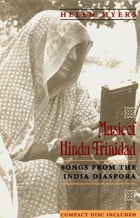
Music of Hindu Trinidad
Songs from the India DiasporaHelen Myers
University of Chicago Press, 1998
Myers details the musical repertory of Felicity, which is based largely on north Indian genres including the traditional Bhojpuri folk songs and drumming styles brought by the first indentured laborers in 1845. In her engaging exploration of the fate of Indian classical music and new popular styles such as Hindi calypso, soca, and chutney, she even finds herself at the ancestral home of Trinidadian V. S. Naipaul in India. Copiously illustrated and accompanied by a compact disk, Music of Hindu Trinidad is a model ethnographic study.

Music of the First Nations
Tradition and Innovation in Native North AmericaEdited by Tara Browner
University of Illinois Press, 2009
This unique anthology presents a wide variety of approaches to an ethnomusicology of Inuit and Native North American musical expression. Contributors include Native and non-Native scholars who provide erudite and illuminating perspectives on aboriginal culture, incorporating both traditional practices and contemporary musical influences. Gathering scholarship on a realm of intense interest but little previous publication, this collection promises to revitalize the study of Native music in North America, an area of ethnomusicology that stands to benefit greatly from these scholars' cooperative, community-oriented methods.
Contributors are T. Christopher Aplin, Tara Browner, Paula Conlon, David E. Draper, Elaine Keillor, Lucy Lafferty, Franziska von Rosen, David Samuels, Laurel Sercombe, and Judith Vander.
Music of the Wide Lane
Poems by Sharron Hass; translated by Marcela Sulak
University of Texas Press, 2025
A translated volume containing masterworks by an award-winning poet.
Sharron Hass’s award-winning poetry is distinctive for its ability to capture ephemeral moments in time, and Music of the Wide Lane evokes epic figures from Greek philosophy, the Hebrew Bible, and poetry. Her inspirations include Sophocles, Aristotle, the medieval Iberian Hebrew poet Yehuda Halevi, Emily Dickinson, and Wallace Stevens. Hass masterfully alters time and expression, lending an impression of perpetual change, as the past, present, and future intermingle.
Music of the Wide Lane explores homoerotic relationships, tense mother–daughter bonds, and the concept of light as a metaphor for truth and goodness. This remarkable fifth collection of Hass’s work includes an extended elegy for a dying father, two major poems from her previous work, and invites readers to expand their understanding of and appreciation for Hebrew-language poetry.
Music on the Move
Danielle Fosler-Lussier
University of Michigan Press, 2020
Music's Monisms
Disarticulating ModernismDaniel Albright
University of Chicago Press, 2021
Daniel Albright was one of the preeminent scholars of musical and literary modernism, leaving behind a rich body of work before his untimely passing. In Music’s Monisms, he shows how musical and literary phenomena alike can be fruitfully investigated through the lens of monism, a philosophical conviction that does away with the binary structures we use to make sense of reality. Albright shows that despite music’s many binaries—diatonic vs. chromatic, major vs. minor, tonal vs. atonal—there is always a larger system at work that aims to reconcile tension and resolve conflict.
Albright identifies a “radical monism” in the work of modernist poets such as T. S. Eliot and musical works by Wagner, Debussy, Britten, Schoenberg, and Stravinsky. Radical monism insists on the interchangeability, even the sameness, of the basic dichotomies that govern our thinking and modes of organizing the universe. Through a series of close readings of musical and literary works, Albright advances powerful philosophical arguments that not only shed light on these specific figures but also on aesthetic experience in general. Music’s Monisms is a revelatory work by one of modernist studies’ most distinguished figures.
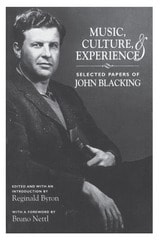
Music, Culture, and Experience
Selected Papers of John BlackingJohn Blacking
University of Chicago Press, 1995
This volume brings together in one convenient source eight of Blacking's most important theoretical papers along with an extensive introduction by the editor. Drawing heavily on his fieldwork among the Venda people of South Africa, these essays reveal his most important theoretical themes such as the innateness of musical ability, the properties of music as a symbolic or quasi-linguistic system, the complex relation between music and social institutions, and the relation between scientific musical analysis and cultural understanding.
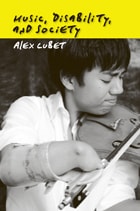
Music, Disability, and Society
Authored by Alex Lubet
Temple University Press, 2010
Musical talent in Western culture is regarded as an extraordinary combination of technical proficiency and interpretative sensitivity. In Music, Disability, and Society, Alex Lubet challenges the rigid view of technical skill and writes about music in relation to disability studies. He addresses the ways in which people with disabilities are denied the opportunity to participate in music.
Elaborating on the theory of "social confluence," Lubet provides a variety of encounters between disability and music to observe radical transformations of identity. Considering hand-injured and one-handed pianists; the impairments of jazz luminaries Django Reinhardt, Horace Parlan, and "Little" Jimmy Scott; and the "Blind Orchestra" of Cairo, he shows how the cultural world of classical music contrasts sharply with that of jazz and how musicality itself is regarded a disability in some religious contexts. Music, Disability, and Society also explains how language difference can become a disability for Asian students in American schools of music, limiting their education and careers.
Lubet offers pungent criticism of the biases in music education and the music profession, going so far as to say that culture disables some performers by adhering to rigid notions of what a musician must look like, how music must be played, who may play it, and what (if any) is the legitimate place of music in society. In Music, Disability, and Society, he convincingly argues that where music is concerned, disability is a matter of culture, not physical impairment.
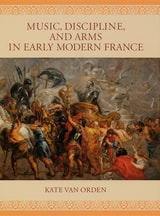
Music, Discipline, and Arms in Early Modern France
Kate van Orden
University of Chicago Press, 2005
The great pressure on French noblemen to take up the life of the warrior gave rise to bellicose art forms such as sword dances and equestrian ballets. Far from being construed as effeminizing, such combinations of music and the martial arts were at once refined and masculine-a perfect way to display military prowess. The incursion of music into riding schools and infantry drills contributed materially to disciplinary order, enabling the larger and more effective armies of the seventeenth century. This book is a history of the development of these musical spheres and how they brought forth new cultural priorities of civility, military discipline, and political harmony. Music, Discipline, and Arms in Early Modern France effectively illustrates the seminal role music played in mediating between the cultural spheres of letters and arms.

Music, Image, and Gesture, Volume 104
Bryan Gilliam , ed.
Duke University Press, 0
Contributors. Annegret Fauser, Bryan Gilliam, Linda Hutcheon, Michael Hutcheon, Kim H. Kowalke, Neil Lerner, Tamara Levitz, Elizabeth Paley
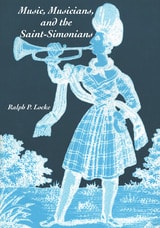
Music, Musicians, and the Saint-Simonians
Ralph P. Locke
University of Chicago Press, 1986
The disciples of Claude Henri de Rouvroy, comte de Saint-Simon, believed that increased industrial production would play a crucial role in improving the condition of the working masses and in shifting power from the aristocratic "drones" to the enterprising men of talent then rising in the French middle class. As a powerful means of winning support for their views, music became an integral part of the Saint-Simonians' writings and ceremonial activities.
Among the musicians Locke discusses are Berlioz, Liszt, and Mendelssohn, whose tangential association with the Saint-Simonians reveals new aspects of their social and aesthetic views. Other musicians became the Saint-Simonians' faithful followers, among them Jules Vinçard, Dominique Tajan-Rogé, and particularly Félicien David, the movement's principal composer. Many of these composers' works, reconstructed by Locke from authentic sources, are printed here, including the "Premier Chant des industriels," written at Saint-Simon's request by Rouget de Lisle, composer of the "Marseillaise."
Music, Race, and Nation
Musica Tropical in ColombiaPeter Wade
University of Chicago Press, 2000
Wade's fresh look at the way music transforms and is transformed by ideologies of race, nation, sexuality, tradition, and modernity is the first book-length study of Colombian popular music.

Music, Research, and Activism
Prospects and Projects in Northern EuropeEdited by Kim Ramstedt, Susanna Välimäki, Sini Mononen, and Kaj Ahlsved
Intellect Books, 2025
Can music research drive social and ecological change? Music, Research, and Activism: Prospects and Projects in Northern Europe argues that it can—and must. This bold collection studies the emerging activist turn in music studies, where researchers and artists engage directly in public debates and cultural movements.
By questioning systemic inequalities in the music industry and exploring the role of music education in an era of climate crisis, the contributors to this volume reflect on how their work can serve eco-social justice. Drawing on their diverse experiences as educators, critics, DJs, producers, and community organizers, they offer a compelling vision of music research as an agent of transformation.
Rooted in the independent research network Suoni, this volume speaks to music scholars and students eager to rethink the role of music in shaping a more equitable world. Engaging and accessible, it challenges us to ask: What does social responsibility look like in music research today?
Music, Sound, and Architecture in Islam
Edited by Michael Frishkopf and Federico Spinetti
University of Texas Press, 2018
Tracing the connections between music making and built space in both historical and contemporary times, Music, Sound, and Architecture in Islam brings together domains of intellectual reflection that have rarely been in dialogue to promote a greater understanding of the centrality of sound production in constructed environments in Muslim religious and cultural expression.
Representing the fields of ethnomusicology, anthropology, art history, architecture, history of architecture, religious studies, and Islamic studies, the volume’s contributors consider sonic performances ranging from poetry recitation to art, folk, popular, and ritual musics—as well as religious expressions that are not usually labeled as “music” from an Islamic perspective—in relation to monumental, vernacular, ephemeral, and landscape architectures; interior design; decoration and furniture; urban planning; and geography. Underscoring the intimate relationship between traditional Muslim sonic performances, such as the recitation of the Qur’an or devotional songs, and conventional Muslim architectural spaces, from mosques and Sufi shrines to historic aristocratic villas, gardens, and gymnasiums, the book reveals Islam as an ideal site for investigating the relationship between sound and architecture, which in turn proves to be an innovative and significant angle from which to explore Muslim cultures.
Music, Sound, and Technology in America
A Documentary History of Early Phonograph, Cinema, and RadioTimothy D. Taylor, Mark Katz, and Tony Grajeda, eds.
Duke University Press, 2012

Music, Style, and Aging
Growing Old Disgracefully?Andy Bennett
Temple University Press, 2013
For many aging followers of rock, punk, and other contemporary popular genres, music is ingrained in their identities. Its meaning is highly personal and intertwined with the individual's biographical development. Bennett studies these fans and how they have changed over time--through fashions, hairstyles, body modification, career paths, political orientations, and perceptions of and by the next generation.
The significance of popular music for these fans is no longer tied exclusively to their youth. Bennett illustrates how the music? that "mattered" to most people in their youth continues to play an important role in their adult lives--a role that goes well beyond nostalgia.
Music, Theater, and Cultural Transfer
Paris, 1830-1914Edited by Annegret Fauser and Mark Everist
University of Chicago Press, 2009
Opera and musical theater dominated French culture in the 1800s, and the influential stage music that emerged from this period helped make Paris, as Walter Benjamin put it, the “capital of the nineteenth century.” The fullest account available of this artistic ferment and its international impact, Music, Theater, and Cultural Transfer explores the diverse institutions that shaped Parisian music and extended its influence across Europe, the Americas, and Australia.
The contributors to this volume, who work in fields ranging from literature to theater to musicology, focus on the city’s musical theater scene as a whole rather than on individual theaters or repertories. Their broad range enables their collective examination of the ways in which all aspects of performance and reception were affected by the transfer of works, performers, and management models from one environment to another. By focusing on this interplay between institutions and individuals, the authors illuminate the tension between institutional conventions and artistic creation during the heady period when Parisian stage music reached its zenith.

Music, ritual, and Falasha history
Kay Kaufman. Shelemay
Michigan State University Press, 1989
Music, the Arts, and Ideas
Patterns and Predictions in Twentieth-Century CultureLeonard B. Meyer
University of Chicago Press, 1994
Music/City
American Festivals and Placemaking in Austin, Nashville, and NewportJonathan R. Wynn
University of Chicago Press, 2015
Wynn tracks the history of festivals in Newport, Nashville, and Austin, taking readers on-site to consider different festival agendas and styles of organization. It’s all here: from the musician looking to build her career to the mayor who wants to exploit a local cultural scene, from a resident’s frustration over corporate branding of his city to the music executive hoping to sell records. Music/City offers a sharp perspective on cities and cultural institutions in action and analyzes how governments mobilize massive organizational resources to become promotional machines. Wynn’s analysis culminates with an impassioned argument for temporary events, claiming that when done right, temporary occasions like festivals can serve as responsive, flexible, and adaptable products attuned to local places and communities.
Music
A View from Delft. Selected EssaysEdward T. Cone
University of Chicago Press, 1989
"This selection of [Cone's] writings includes all the most incandescent and influential articles. We should have had such a book long ago."—Joseph Kerman, University of California at Berkeley
Winner of the ASCAP-Deems Taylor Award for 1990
Musica Duorum
Romano Eustachio
University of Chicago Press, 1975
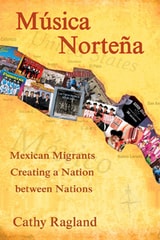
Musica Nortena
Mexican Americans Creating a Nation Between NationsCathy Ragland
Temple University Press, 2009
Música norteña, a musical genre with its roots in the folk ballad traditions of northern Mexico and the Texas-Mexican border region, has become a hugely popular musical style in the U.S., particularly among Mexican immigrants. Featuring evocative songs about undocumented border-crossers, drug traffickers, and the plight of immigrant workers, música norteña has become the music of a "nation between nations." Música Norteña is the first definitive history of this transnational music that has found enormous commercial success in norteamérica.
Cathy Ragland, an ethnomusicologist and former music critic, serves up the fascinating fifty-year story of música norteña, enlivened by interviews with important musicians and her own first-hand observations of live musical performances. Beyond calling our attention to musical influences, ragland shows readers the social and economic forces at work behind the music. By comparing música norteña with other popular musical forms, including conjunto tejano, she helps us understand and appreciate the musical ties that bind the Mexican diaspora.
Musical Design in Sophoclean Theater
William C. Scott
Dartmouth College Press, 2000
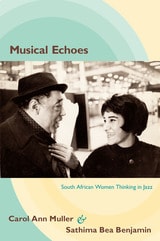
Musical Echoes
South African Women Thinking in JazzCarol Ann Muller and Sathima Bea Benjamin
Duke University Press, 2011
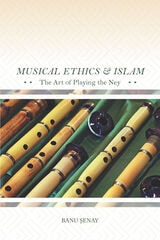
Musical Ethics and Islam
The Art of Playing the NeyBanu Senay
University of Illinois Press, 2020
Banu Şenay documents the years-long training required to become a neyzen—a player of the ney. The process holds a transformative power that invites students to create a new way of living that involves alternative relationships with the self and others, changing perceptions of the city, and a dedication to craftsmanship. Şenay visits reed harvesters and travels from studios to workshops to explore the practical processes of teaching and learning. She also becomes an apprentice ney-player herself, exploring the desire for spirituality that encourages apprentices and masters alike to pursue ney music and its scaffolding of Islamic ethics and belief.
Musical Improvisation
Art, Education, and SocietyEdited by Gabriel Solis and Bruno Nettl
University of Illinois Press, 2008
Contributors are Stephen Blum, Patricia Shehan Campbell, Sabine M. Feisst, Lawrence Gushee, Robert S. Hatten, William Kinderman, Natalie Kononenko, Robert Levin, Charlotte Mattax Moersch, Ingrid Monson, John P. Murphy, Bruno Nettl, A. Jihad Racy, Anne K. Rasmussen, Stephen Slawek, Gabriel Solis, Nicholas Temperley, John Toenjes, and Thomas Turino.
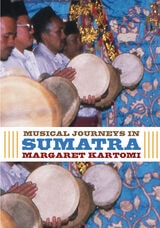
Musical Journeys in Sumatra
Margaret Kartomi
University of Illinois Press, 2012
Although Sumatra is the sixth largest island in the world and home to an estimated 44 million Indonesians, its musical arts and cultures have not been the subject of a book-length study until now. Documenting and explaining the ethnographic, cultural, and historical contexts of Sumatra's performing arts, Musical Journeys in Sumatra also traces the changes in their style, content, and reception from the early 1970s onward.
Having dedicated almost forty years of scholarship to exploring the rich and varied music of Sumatran provinces, Margaret Kartomi provides a fascinating ethnographic record of vanishing musical genres, traditions, and practices that have become deeply compromised by the pressures of urbanization, rural poverty, and government policy. This deeply informed collection showcases the complex diversity of Indonesian music and includes field observations from six different provinces: Aceh, North Sumatra, Riau, West Sumatra, South Sumatra, and Bangka-Belitung. Featuring photographs and original drawings from Kartomi's field observations of instruments and performances, Musical Journeys in Sumatra provides a comprehensive musical introduction to this neglected, very large island, with its hundreds of ethno-linguistic-musical groups.
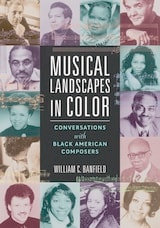
Musical Landscapes in Color
Conversations with Black American ComposersWilliam C. Banfield
University of Illinois Press, 2023
Composers featured: Michael Abels, H. Leslie Adams, Lettie Beckon Alston, Thomas J. Anderson, Dwight Andrews, Regina Harris Baiocchi, David Baker, William C. Banfield, Ysaye Maria Barnwell, Billy Childs, Noel DaCosta, Anthony Davis, George Duke, Leslie Dunner, Donal Fox, Adolphus Hailstork, Jester Hairston, Herbie Hancock, Jonathan Holland, Anthony Kelley, Wendell Logan, Bobby McFerrin, Dorothy Rudd Moore, Jeffrey Mumford, Gary Powell Nash, Stephen Newby, Coleridge-Taylor Perkinson, Michael Powell, Patrice Rushen, George Russell, Kevin Scott, Evelyn Simpson-Curenton, Hale Smith, Billy Taylor, Frederick C. Tillis, George Walker, James Kimo Williams, Julius Williams, Tony Williams, Olly Wilson, and Michael Woods
Musical Migration and Imperial New York
Early Cold War ScenesBrigid Cohen
University of Chicago Press, 2022
From the urban street level of music clubs and arts institutions to the world-making routes of global migration and exchange, this book redraws the map of experimental art to reveal the imperial dynamics and citizenship struggles that continue to shape music in the United States.
Beginning with the material conditions of power that structured the cityscape of New York in the early Cold War years, Brigid Cohen looks at a wide range of artistic practices (concert music, electronic music, jazz, performance art) and actors (Edgard Varèse, Charles Mingus, Yoko Ono, and Fluxus founder George Maciunas) as they experimented with new modes of creativity. Cohen links them with other migrant creators vital to the city’s postwar culture boom, creators whose stories have seldom been told (Halim El-Dabh, Michiko Toyama, Vladimir Ussachevsky). She also gives sustained and serious treatment to the work of Yoko Ono, something long overdue in music scholarship. Musical Migration and Imperial New York is indispensable reading, offering a new understanding of global avant-gardes and American experimental music as well as the contrasting feelings of belonging and exclusion on which they were built.
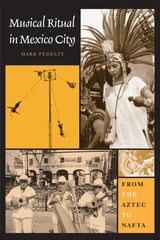
Musical Ritual in Mexico City
From the Aztec to NAFTABy Mark Pedelty
University of Texas Press, 2004
On the Zócalo, the main square of Mexico City, Mexico's entire musical history is performed every day. "Mexica" percussionists drum and dance to the music of Aztec rituals on the open plaza. Inside the Metropolitan Cathedral, choristers sing colonial villancicos. Outside the National Palace, the Mexican army marching band plays the "Himno Nacional," a vestige of the nineteenth century. And all around the square, people listen to the contemporary sounds of pop, rock, and música grupera. In all, some seven centuries of music maintain a living presence in the modern city.
This book offers an up-to-date, comprehensive history and ethnography of musical rituals in the world's largest city. Mark Pedelty details the dominant musical rites of the Aztec, colonial, national, revolutionary, modern, and contemporary eras, analyzing the role that musical ritual played in governance, resistance, and social change. His approach is twofold. Historical chapters describe the rituals and their functions, while ethnographic chapters explore how these musical forms continue to resonate in contemporary Mexican society. As a whole, the book provides a living record of cultural continuity, change, and vitality.
Musical Vitalities
Ventures in a Biotic Aesthetics of MusicHolly Watkins
University of Chicago Press, 2018
Redefining music as “the art of possibly animate things,” Musical Vitalities charts a new path for music studies that blends musicological methods with perspectives drawn from the life sciences. In opposition to humanist approaches that insist on a separation between culture and nature—approaches that appear increasingly untenable in an era defined by human-generated climate change—Musical Vitalities treats music as one example of the cultural practices and biotic arts of the animal kingdom rather than as a phenomenon categorically distinct from nonhuman forms of sonic expression. The book challenges the human exceptionalism that has allowed musicologists to overlook music’s structural resemblances to the songs of nonhuman species, the intricacies of music’s physiological impact on listeners, and the many analogues between music’s formal processes and those of the dynamic natural world. Through close readings of Austro-German music and aesthetic writings that suggest wide-ranging analogies between music and nature, Musical Vitalities seeks to both rekindle the critical potential of nineteenth-century music and rejoin the humans at the center of the humanities with the nonhumans whose evolutionary endowments and planetary fates they share.
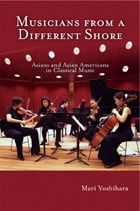
Musicians from a Different Shore
Asians and Asian Americans in Classical MusicMari Yoshihara
Temple University Press, 2008
Musicians of Asian descent enjoy unprecedented prominence in concert halls, conservatories, and classical music performance competitions. In the first book on the subject, Mari Yoshihara looks into the reasons for this phenomenon, starting with her own experience of learning to play piano in Japan at the age of three. Yoshihara shows how a confluence of culture, politics and commerce after the war made classical music a staple in middle-class households, established Yamaha as the world's largest producer of pianos and gave the Suzuki method of music training an international clientele. Soon, talented musicians from Japan, China and South Korea were flocking to the United States to study and establish careers, and Asian American families were enrolling toddlers in music classes.
Against this historical backdrop, Yoshihara interviews Asian and Asian American musicians, such as Cho-Liang Lin, Margaret Leng Tan, Kent Nagano, who have taken various routes into classical music careers. They offer their views about the connections of race and culture and discuss whether the music is really as universal as many claim it to be. Their personal histories and Yoshihara's observations present a snapshot of today's dynamic and revived classical music scene.
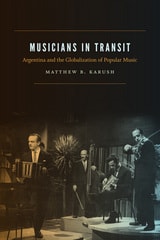
Musicians in Transit
Argentina and the Globalization of Popular MusicMatthew B. Karush
Duke University Press, 2017
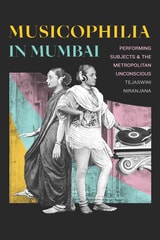
Musicophilia in Mumbai
Performing Subjects and the Metropolitan UnconsciousTejaswini Niranjana
Duke University Press, 2020

Musique anodine--Album italiano
Gioachino Rossini
University of Chicago Press, 1996
During the last years of his life, Rossini gathered his numerous vocal and piano pieces into fourteen unpublished albums, which he called Pèchès de vieillesse ("sins of my old age"). In 1857 he presented Musique anodine, a Prélude and six songs, to his wife Olimpe, in gratitude for her care during his long illness. This was the thirteenth album in the series. The first was Album italiano, a dozen pieces for one, two, or four voices with piano. Among the best known of these pieces is "La regata veneziana," three canzonettas for mezzo-soprano in Venetian dialect, in which the heroine encourages her racing gondolier. Another song, "Le gittane," has never before been published with its Italian text.
Based on the composer's own manuscripts, this critical edition restores Rossini's expressively precise musical notation. Appendixes contain earlier versions of six songs, some with different texts from the final versions.
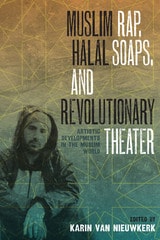
Muslim Rap, Halal Soaps, and Revolutionary Theater
Artistic Developments in the Muslim WorldEdited by Karin van Nieuwkerk
University of Texas Press, 2011
From "green" pop and "clean" cinema to halal songs, Islamic soaps, Muslim rap, Islamist fantasy serials, and Suficized music, the performing arts have become popular and potent avenues for Islamic piety movements, politically engaged Islamists, Islamic states, and moderate believers to propagate their religio-ethical beliefs. Muslim Rap, Halal Soaps, and Revolutionary Theater is the first book that explores this vital intersection between artistic production and Islamic discourse in the Muslim world.
The contributors to this volume investigate the historical and structural conditions that impede or facilitate the emergence of a "post-Islamist" cultural sphere. They discuss the development of religious sensibilities among audiences, which increasingly include the well-to-do and the educated young, as well as the emergence of a local and global religious market. At the heart of these essays is an examination of the intersection between cultural politics, performing art, and religion, addressing such questions as where, how, and why pop culture and performing arts have been turned into a religious mission, and whether it is possible to develop a new Islamic aesthetic that is balanced with religious sensibilities. As we read about young Muslims and their quest for a "cool Islam" in music, their struggle to quell their stigmatized status, or the collision of morals and the marketplace in the arts, a vivid, varied new perspective on Muslim culture emerges.
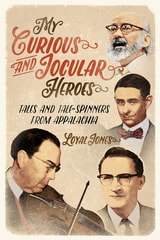
My Curious and Jocular Heroes
Tales and Tale-Spinners from AppalachiaLoyal Jones
University of Illinois Press, 2017
We stopped, and we heard the biggest racket you ever heard up in the house.
“What’s the matter, son?”
“Why, Maw and Paw are up there fightin’.”
“Who is your Paw, son?”
“Well, that’s what they are fightin’ over.”
Brimming with ballads, stories, riddles, tall tales, and great good humor, My Curious and Jocular Heroes pays homage to four people who guided and inspired Loyal Jones’s own study of Appalachian culture. His sharp-eyed portraits introduce a new generation to Bascom Lunsford, the pioneer behind the “memory collections” of song and story at Columbia University and the Library of Congress; the Sorbonne-educated collector and performer Josiah H. Combs; Cratis D. Williams, the legendary father of Appalachian studies; and the folklorist and master storyteller Leonard W. Roberts. Throughout, Jones highlights the tales, songs, jokes, and other collected nuggets that define the breadth of each man’s research and repertoire.
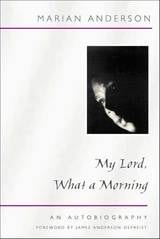
My Lord, What a Morning
An AutobiographyMarian Anderson
University of Illinois Press, 2002
My Lord, What a Morning is a gentle and engrossing memoir, abounding with the tender and inspiring stories of Marian Anderson's life in her own modest words. From her humble but proud beginnings in south Philadelphia to international vocal renown, the legendary contralto writes of triumph and adversity, of being grounded in faith and surrounded by family, and of the music that shaped her career.
Anderson published My Lord, What a Morning in 1956 on the heels of her groundbreaking role as the first African American to perform at the Metropolitan Opera. In it are bittersweet reminiscences of a working-class childhood, from her first job scrubbing the neighbors' steps to the sorrow and upheaval of her father's untimely death. Here are the stories of a young girl with prodigious talent and her warm remembrances of the teachers, managers, friends, accompanists, and fans who worked to foster it. In addition, she provides a veritable travelogue of her concerts across the globe and rare glimpses at the personal life of a woman more concerned with family than celebrity.
With eleven photographs and a touching new foreword by Anderson's nephew, famed conductor and poet James DePreist, this edition of My Lord, What a Morning revives the classic portrait of a musical legend who was resilient in the bullying face of bigotry and gracious in the unfaltering glow of fame.
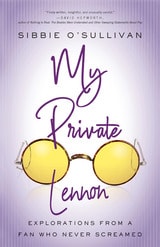
My Private Lennon
Explorations from a Fan Who Never ScreamedSibbie O'Sullivan
The Ohio State University Press, 2020
My Private Lennon charts the author’s realization that the Beatles, especially John Lennon, were a crucial force in her development. A radical departure from other books written by Beatles fans, My Private Lennon invites its readers to consider subjects not usually found in works about Lennon and the band, such as the constraints of memory, the male body, grief, the female breast, race, cultural issues, and the importance of privacy in our over-mediated world. In pieces that engage cultural issues and historical contexts, My Private Lennon creates a witty and provocative intimacy with readers who value the power of art to change one’s life and who love John Lennon and the Beatles.
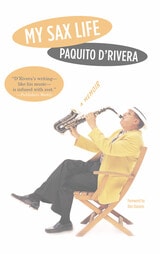
My Sax Life
A MemoirPaquito D'Rivera
Northwestern University Press, 2008
Winner of 2005 Grammy Award for Best Instrumental Composition
Winner of 2005 National Medal of Arts
My Sax Life is the award-winning memoir of famed Cuban musician Paquito D'Rivera. A best-selling artist with more than thirty solo albums to his credit, D'Rivera has performed at the White House and the Blue Note, and with orchestras, jazz ensembles, and chamber groups around the world. Propelled by jazz-fueled high spirits, D'Rivera's story soars and spins from memory to memory in a collage of his remarkable life. D'Rivera recalls his early nightclub appearances as a child, performing with clowns and exotic dancers, as well as his search for artistic freedom in communist Cuba and his hungry explorations of world music after his defection. Opinionated but always good-humored, My Sax Life is a fascinating statement on art and the artist's life.

My Song is My Own
100 Women's SongsKathy Henderson
Pluto Press, 1979
With full sheet music for every song, and accompanying lyrics, this is perfect for singers as well as readers. Each section is introduced with a a brief thematic history, showing how the music has developed over time.
From ballads to industrial songs written for the mine and factory, from folk revivals to children's songs for the street and playground, this book reveals the hidden culture and history of women for us today.
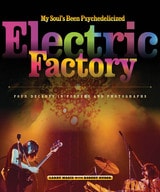
My Soul's Been Psychedelicized
Electric Factory: Four Decades in Posters and PhotographsLarry Magid
Temple University Press, 2011
On February 2, 1968, the Electric Factory, Philadelphia's first major venue for the era's new music, opened with a show featuring the Chambers Brothers. Performing their neosoul and gospel sounds in a warm and inviting venue, they declared, "My soul's been psychedelicized!"-a feeling that the Factory's cofounder, Larry Magid, has been experiencing ever since.
In My Soul's Been Psychedelicized, Magid presents a spectacular photographic history of the bands and solo acts that have performed at the Electric Factory and at other venues in Factory-produced concerts over the past four decades. The book includes concert posters, photographs, and promotional items featuring both rising stars and established performers, such as Pink Floyd, Jimi Hendrix, Bob Dylan, Bruce Springsteen, Bette Midler, Elvis Presley, Tina Turner, Pearl Jam and many, many more.
The images—candid and celebratory—create a one-of-a-kind history of rock and roll, from the wild 1960s to the Live Aid concert in 1985 and the closing of the Philadelphia Spectrum in 2009. Magid's vivid recollections constitute a who's who of pop music and culture. As one of the great concert producers, he shares his unique perspective on the business, talking about how it has changed and how lasting careers have been carefully developed.
For anyone who has ever attended a concert at the Electric Factory—or for anyone who missed a show—My Soul's Been Psychedelicized will bring back great memories of the music and the musicians.

My Voice Is My Weapon
Music, Nationalism, and the Poetics of Palestinian ResistanceDavid A. McDonald
Duke University Press, 2013

Mysterious Mozart
Philippe Sollers, Translated and with an Introduction by Armine Kotin Mortimer
University of Illinois Press, 2010
Both a beguiling portrait of the artist and an idiosyncratic self-portrait of the author, Mysterious Mozart is Philippe Sollers's alternately oblique and searingly direct interpretation of Wolfgang Amadeus Mozart's oeuvre and lasting mystique, audaciously reformulated for the postmodern age.
With a mix of slang, abstractions, quotations, first- and third-person narratives, and blunt opinion, French writer and critic Philippe Sollers taps into Mozart's playful correspondence and the lesser-known pieces of his enormous repertoire to analyze the popularity and public perceptions of his music. Detailing Mozart's drive to continue producing masterpieces even when saddled with debt and riddled with illness and anxiety, Sollers powerfully and meticulously analyzes Mozart's seven last great operas using a psychoanalytical approach to the characters' relationships.
As Sollers explores themes of constancy, prodigy, freedom, and religion, he offers up bits of his own history, revealing his affinity for the creative geniuses of the eighteenth century and a yearning to bring that era's utopian freedom to life in contemporary times. What emerges is an inimitable portrait of a man and a musician whose greatest gift is a quirky companionability, a warm and mysterious appeal that distinguishes Mozart from other great composers and is brilliantly echoed by Sollers's artful tangle of narrative.
music from behind a stone wall
Steven Rood
Omnidawn, 2024
The poems in Steven Rood’s newest collection take on a musical sensibility as they flow from the poet’s sixty years as a classical guitarist who remains preoccupied with the tonalities of daily life. Each poem in music from behind a stone wall comes together to build a multi-layered symphony that reveals the delights and travails of family life and moments of intimate connection with animals and plants. At the core of the book are poems considering the overwhelming task of trying to communicate the essence of musical experience via the written word. This is a book of grief and joy sung with lyric acuity, vivid images, and formal variation.