Results by title
3027 books match the query 'Sociology' and 178 start with m
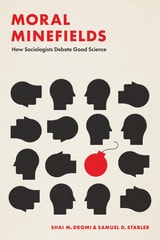
Moral Minefields
How Sociologists Debate Good ScienceShai M. Dromi and Samuel D. Stabler
University of Chicago Press, 2023
Few academic disciplines are as contentious as sociology. Sociologists routinely turn on their peers with fierce criticisms not only of their empirical rigor and theoretical clarity but of their character as well. Yet despite the controversy, scholars manage to engage in thorny debates without being censured. How?
In Moral Minefields, Shai M. Dromi and Samuel D. Stabler consider five recent controversial topics in sociology—race and genetics, secularization theory, methodological nationalism, the culture of poverty, and parenting practices—to reveal how moral debates affect the field. Sociologists, they show, tend to respond to moral criticism of scholarly work in one of three ways. While some accept and endorse the criticism, others work out new ways to address these topics that can transcend the criticism, while still others build on the debates to form new, more morally acceptable research.
Moral Minefields addresses one of the most prominent questions in contemporary sociological theory: how can sociology contribute to the development of a virtuous society? Rather than suggesting that sociologists adopt a clear paradigm that can guide their research toward neatly defined moral aims, Dromi and Stabler argue that sociologists already largely possess and employ the repertoires to address questions of moral virtue in their research. The conversation thus is moved away from attempts to theorize the moral goods sociologists should support and toward questions about how sociologists manage the plurality of moral positions that present themselves in their studies. Moral diversity within sociology, they show, fosters disciplinary progress.
More Peoples of Las Vegas
One City, Many FacesJerry L Simich
University of Nevada Press, 2010
The remarkable economic growth of Las Vegas between 1980 and 2007 created a population boom and a major increase in the ethnic and religious diversity of the city. Today, over 21 percent of the city’s population is foreign born, and over 30 percent speak a language other than English at home. The local court system offers interpreters in 82 languages, and in 2005/2006, for example, more than 11,000 people, originating from 138 countries, were naturalized there as American citizens.More Peoples of Las Vegas extends the survey of this city’s cosmopolitan population begun in The Peoples of Las Vegas (University of Nevada Press, 2005). As in the previous book, this volume includes well-established groups like the Irish and Germans, and recently arrived groups like the Ethiopians and Guatemalans. Essays describe the history of each group in Las Vegas and the roles they play in the life and economy of the city. The essays also explore the influence of modern telecommunications and accessible air travel, showing how these factors allow newcomers to create transnational identities and maintain ties with families and culture back home. They also examine the role of local institutions—including clubs, religious organizations, shops, restaurants, and newspapers and other media—in helping immigrants maintain their ethnic and religious identities and in disseminating national and even regional cultures of origin.More Peoples of Las Vegas adds to our awareness of the rich and varied ethnic and religious character of Las Vegans. In a broader context, it offers thoughtful perspectives on the impact of globalization on a major American city and on the realities of immigrant life in the twenty-first century.
More Than Black
Multiracial Identity & New Racial OrderG. Reginald Daniel
Temple University Press, 2001
Tracing the centuries-long evolution of Eurocentrism, a concept geared to protecting white racial purity and social privilege, Daniel shows how race has been constructed and regulated in the United States. The so-called one-drop rule (i.e., hypodescent) obligated individuals to identify as black or white, in effect erasing mixed-race individuals from the social landscape. For most of our history, many mixed-race individuals of African American descent have attempted to acquire the socioeconomic benefits of being white by forming separate enclaves or "passing." By the 1990s, however, interracial marriages became increasingly common, and multiracial individuals became increasingly political, demanding institutional changes that would recognize the reality of multiple racial backgrounds and challenging white racial privilege.
More Than Black? regards the crumbling of the old racial order as an opportunity for substantially more than an improvement in U.S. race relations; it offers no less than a radical transformation of the nation's racial consciousness and the practice of democracy.
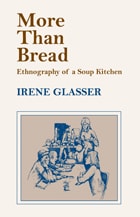
More Than Bread
Ethnography of a Soup KitchenIrene Glasser
University of Alabama Press, 2010
A powerful ethnographic portrait of hunger, dignity, and community in America.
In More than Bread: Ethnography of a Soup Kitchen, sociologist Irene Glasser presents a compelling and deeply human exploration of poverty, hunger, and community through the lens of an American soup kitchen. Drawing on immersive ethnographic research, Glasser moves beyond stereotypes and statistics to examine the daily experiences of individuals who depend on emergency food assistance, as well as the volunteers and staff who work to meet their needs.
Through firsthand observations and personal narratives, the book reveals the complex social relationships, challenges, and acts of resilience that unfold within this vital community institution. Glasser explores how issues such as homelessness, unemployment, inequality, mental health, and social isolation intersect in the lives of those seeking assistance, while also highlighting the dignity and humanity of people often overlooked in public discussions of poverty.
More than Bread invites readers to consider broader questions about social responsibility, public policy, and the effectiveness of charitable responses to human need. A valuable resource for understanding the realities of food insecurity in America, this book offers an informative and compassionate perspective on one of society's most pressing challenges. It is an essential read for students, scholars, social workers, policymakers, nonprofit professionals, and anyone interested in poverty, homelessness, and social justice.
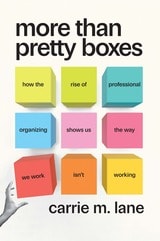
More Than Pretty Boxes
How the Rise of Professional Organizing Shows Us the Way We Work Isn’t WorkingCarrie M. Lane
University of Chicago Press, 2024
For a widely dreaded, often mundane task, organizing one’s possessions has taken a surprising hold on our cultural imagination. Today, those with the means can hire professionals to help sort and declutter their homes. In More Than Pretty Boxes, Carrie M. Lane introduces us to this world of professional organizers and offers new insight into the domains of work and home, which are forever entangled—especially for women.
The female-dominated organizing profession didn’t have a name until the 1980s, but it is now the subject of countless reality shows, podcasts, and magazines. Lane draws on interviews with organizers, including many of the field’s founders, to trace the profession’s history and uncover its enduring appeal to those seeking meaningful, flexible, self-directed work. Taking readers behind the scenes of real-life organizing sessions, More Than Pretty Boxes details the strategies organizers use to help people part with their belongings, and it also explores the intimate, empathetic relationships that can form between clients and organizers.
But perhaps most importantly, More Than Pretty Boxes helps us think through an interconnected set of questions around neoliberal work arrangements, overconsumption, emotional connection, and the deeply gendered nature of paid and unpaid work. Ultimately, Lane situates organizing at the center of contemporary conversations around how work isn’t working anymore and makes a case for organizing’s radical potential to push back against the overwhelming demands of work and the home, too often placed on women’s shoulders. Organizers aren’t the sole answer to this crisis, but their work can help us better understand both the nature of the problem and the sorts of solace, support, and solutions that might help ease it.
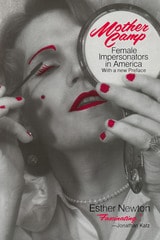
Mother Camp
Female Impersonators in AmericaEsther Newton
University of Chicago Press, 1979
"Newton's fascinating book shows how study of the extraordinary can brilliantly illuminate the ordinary—that social-sexual division of personality, appearance, and activity we usually take for granted."—Jonathan Katz, author of Gay American History
"A trenchant statement of the social force and arbitrary nature of gender roles."—Martin S. Weinberg, Contemporary Sociology

Mothering Without A Compass
White Mother’s Love, Black Son’s CourageBecky Thompson
University of Minnesota Press, 2000
A lively meditation on creating a multiracial family.
In 1997, Becky Thompson began parenting nine-year-old Adrian at the request of his mother, and her life changed forever. Mothering without a Compass is the moving story of her first year as the white lesbian "sudden-mother" of an African American boy. From the everyday yet sometimes overwhelming tasks of finding Adrian a school and debating the significance of action figures, to unexpected discussions about who pays whom at the sperm bank, to the more complicated matters of racism, sexuality, nontraditional families, open adoption, love, and loss, Thompson gives us an absorbing and often humorous account of her attempt at antiracist, multicultural parenting.
Mothering without a Compass highlights a range of issues and experiences: Thompson’s desire to be a good mother while holding on to her sense of self; her growing, detailed knowledge of the ways in which racism affects people’s feelings about themselves and the world around them; her increasing appreciation of the inner life of a child; her realization that mothering forces her to confront her own vulnerabilities and past losses. The book opens with Adrian’s arrival and ends with a visit from Adrian’s biological mother, during which she and Thompson search for ways to respect each other as parents across racial, religious, and cultural divides.Mothering without a Compass relates a lesbian parent’s struggle to help her child grow up and describes the complexities facing children who have more than one family. This candid, personal story shows that it is through everyday life that questions about race, class, gender, and sexuality are often played out. It is a necessary book for all parents-for anyone concerned with the challenge of raising justice-minded children in a complicated world.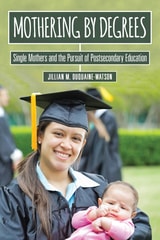
Mothering by Degrees
Single Mothers and the Pursuit of Postsecondary EducationDuquaine-Watson, Jillian M.
Rutgers University Press, 2017
In Mothering by Degrees, Jillian Duquaine-Watson shows how single mothers pursuing college degrees must navigate a difficult course as they attempt to reconcile their identities as single moms, college students, and in many cases, employees. They also negotiate a balance between what they think a good mother should be, and what society is telling them, and how that affects their choices to go to college, and whether to stay in college or not.
The first book length study to focus on the lives and experiences of single mothers who are college students, Mothering by Degrees points out how these women are influenced by dominant American ideologies of motherhood, and the institutional parameters of the schools they attend, and argues for increased attention to the specific ways in which the choices, challenges, and opportunities available to mothers are shaped within their specific environments, as well as the ways in which mothers help shape those environments...
Mothering from the Field
The Impact of Motherhood on Site-Based ResearchEdited by Bahiyyah Miallah Muhammad and Mélanie-Angela Neuilly
Rutgers University Press, 2019
Mothering from the Field offers both a mosaic of perspectives from current women scientists’ experiences of conducting field research across a variety of sub-disciplines while raising children, and an analytical framework to understand how we can redefine methodological and theoretical contributions based on mothers’ experiences in order not just to promote healthier, more inclusive, nurturing, and supportive environments in physical, life, and social sciences, but also to revolutionize how we conceptualize research.

Mothering in the Time of Coronavirus
Amy Lutz, Sujung (Crystal) Lee, and Baurzhan Bokayev
University of Massachusetts Press, 2025
When stay-at-home orders during the COVID-19 pandemic erased the division between home and school, many parents in the United States were suddenly expected to become their children’s teachers. Despite this new arrangement, older gender norms largely remained in place, and these extra child rearing responsibilities fell disproportionately on mothers. Mothering in the Time of Coronavirus explores how they juggled working, supervising at-home learning, and protecting their children’s emotional and physical health during the outbreak.
Focusing on both remote and essential workers in central New York, Amy Lutz, Sujung (Crystal) Lee, and Baurzhan Bokayev argue that the pandemic transformed an already intensive style of contemporary American child rearing, in which mothers are expected to be constantly available to meet their children’s needs even when they are working outside the home, into extremely intensive mothering. The authors investigate the consequences of this shift, and how it is influenced by issues such as class and race. They also bring attention to how and why current public policies are not conducive to the de-intensification of motherhood. Locating their study within larger intersections of gender, family, and education, they contend that to fully appreciate the broader social consequences of COVID-19, we must understand the experiences of mothers.
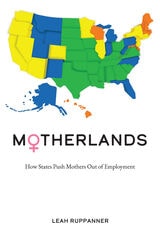
Motherlands
How States Push Mothers Out of EmploymentLeah Ruppanner
Temple University Press, 2020
In the absence of federal legislation, each state in the United States has its own policies regarding family leave, job protection for women and childcare. No wonder working mothers encounter such a significant disparity when it comes to childcare resources in America! Whereas conservative states like Nebraska offer affordable, readily available, and high quality childcare, progressive states that advocate for women’s economic and political power, like California, have expensive childcare, shorter school days, and mothers who are more likely to work part-time or drop out of the labor market altogether to be available for their children.
In Motherlands, Leah Ruppanner cogently argues that states should look to each other to fill their policy voids. She provides suggestions and solutions for policy makers interested in supporting working families. Whether a woman lives in a state with stronger childcare or gender empowerment regimes, at stake is mothers’ financial dependence on their partners.
Ruppanner advocates for reducing the institutional barriers mothers face when re-entering the workforce. As a result, women would have greater autonomy in making employment decisions following childbirth.
Mountains of Injustice
Social and Environmental Justice in AppalachiaMichele Morrone
Ohio University Press, 2011
Research in environmental justice reveals that low-income and minority neighborhoods in our nation’s cities are often the preferred sites for landfills, power plants, and polluting factories. Those who live in these sacrifice zones are forced to shoulder the burden of harmful environmental effects so that others can prosper. Mountains of Injustice broadens the discussion from the city to the country by focusing on the legacy of disproportionate environmental health impacts on communities in the Appalachian region, where the costs of cheap energy and cheap goods are actually quite high.
Through compelling stories and interviews with people who are fighting for environmental justice, Mountains of Injustice contributes to the ongoing debate over how to equitably distribute the long-term environmental costs and consequences of economic development.
Contributors:
Laura Allen, Brian Black, Geoffrey L. Buckley, Donald Edward Davis, Wren Kruse, Nancy Irwin Maxwell, Chad Montrie, Michele Morrone, Kathryn Newfont, John Nolt, Jedediah S. Purdy, and Stephen J. Scanlan.
Movements in Times of Democratic Transition
Bert Klandermans
Temple University Press, 2015
The editors and contributors to Movements in Times of Democratic Transition examine in comparative detail how social movements act within the context of the democratic transitions they have been fighting for, and how they are affected by the changes they helped bring about. Offering insights into the nature of how social movements decline, radicalize, revitalize, or spark new cycles of activism, Movements in Times of Democratic Transition provides a comprehensive analysis of these key questions of mobilization research.
Contributors include: Paul Almeida, Christopher J. Colvin, Stephen Ellis, Grzegorz Ekiert, Grzegorz Forys, Krzysztof Gorlach, Camila Penna, Sebastián Pereyra, Steven Robbins, Ton Salman, Mate Szabo, Ineke van Kessel, Michal Wenzel, and the editors.
Moving Boarders
Skateboarding and the Changing Landscape of Urban Youth SportsMatthew Atencio
University of Arkansas Press, 2018
This excellent treatise on the contemporary youth sports scene examines how modern families embrace skateboarding and the role commerce plays in this unexpected new parent culture, and highlights how private corporations, community leaders, parks and recreation departments, and nonprofits like the Tony Hawk Foundation have united to energize skate parks—like soccer fields before them—as platforms for community engagement and the creation of social and economic capital.
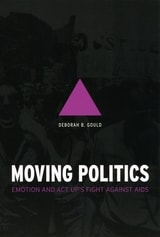
Moving Politics
Emotion and ACT UP's Fight against AIDSDeborah B. Gould
University of Chicago Press, 2009
In the late 1980s, after a decade spent engaged in more routine interest-group politics, thousands of lesbians and gay men responded to the AIDS crisis by defiantly and dramatically taking to the streets. But by the early 1990s, the organization they founded, ACT UP, was no more—even as the AIDS epidemic raged on. Weaving together interviews with activists, extensive research, and reflections on the author’s time as a member of the organization, Moving Politics is the first book to chronicle the rise and fall of ACT UP, highlighting a key factor in its trajectory: emotion.
Surprisingly overlooked by many scholars of social movements, emotion, Gould argues, plays a fundamental role in political activism. From anger to hope, pride to shame, and solidarity to despair, feelings played a significant part in ACT UP’s provocative style of protest, which included raucous demonstrations, die-ins, and other kinds of street theater. Detailing the movement’s public triumphs and private setbacks, Moving Politics is the definitive account of ACT UP’s origin, development, and decline as well as a searching look at the role of emotion in contentious politics.
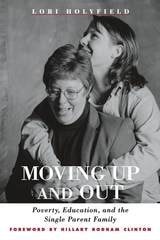
Moving Up And Out
Poverty, Education & Single Parent FamilyLori Holyfield, foreword by Hillary Rodham Clinton
Temple University Press, 2001

Mule South to Tractor South
Mules, Machines, and the Transformation of the Cotton SouthGeorge B. Ellenberg
University of Alabama Press, 2013
The adoption of the mule as the major agricultural resource in the American South and its later displacement by the mechanical tractor.
The author describes the adoption of the mule as the major agricultural resource in the American South and its later displacement by the mechanical tractor. After describing the surprising slowness of southern farmers to realize the superiority of the mule over the horse for agricultural labor, Ellenberg strives to capture the symbiosis that emerged between animal and man to illuminate why and how the mule became a standard feature in Southern folk culture.
Having been slow to adopt the mule, southern farmers were then reluctant to set it aside in favor of the tractor. Ellenberg describes the transformation as the tractor gradually displaced the mule and the role of the U.S. Department of Agriculture in this process.
The work not only becomes a survey of the development of southern agriculture as revealed through an examination of this premier work animal but also follows the emergence of the animal as a cultural icon, as it figures in southern literature, folklore, and music.
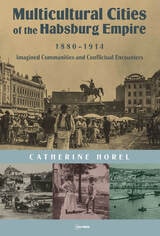
Multicultural Cities of the Habsburg Empire, 1880–1914
Imagined Communities and Conflictual EncountersCatherine Horel
Central European University Press, 2023
Catherine Horel has undertaken a comparative analysis of the societal, ethnic, and cultural diversity in the last decades of the Habsburg Monarchy as represented in twelve cities: Arad, Bratislava, Brno, Chernivtsi, Lviv, Oradea, Rijeka, Sarajevo, Subotica, Timișoara, Trieste, and Zagreb. By purposely selecting these cities, the author aims to counter the disproportionate attention that the largest cities in the empire receive.
With a focus on the aspects of everyday life faced by the city inhabitants (associations, schools, economy, and municipal politics) the book avoids any idealization of the monarchy as a paradise of peaceful multiculturalism, and also avoids exaggerating conflicts. The author claims that the world of the Habsburg cities was a dynamic space where many models coexisted and created vitality, emulation, and conflict. Modernization brought about the dissolution of old structures, but also mobility, the progress of education, the explosion of associative life, and constantly growing cultural offerings.

Multiple Paths of Midlife Development
Edited by Margie E. Lachman and Jacquelyn Boone James
University of Chicago Press, 1997
Much of the past work on midlife has been limited by its use of cross-sectional data, its focus on clinical populations, and the analysis of only one target group. Using a diverse set of longitudinal data, this volume provides a broader perspective by examining the similarities and differences in the midlife experience as a function of gender, social class, and birth cohort.
Of interest to scholars as well as to those interested in the midlife period for clinical or personal reasons, this volume informs us of the enormous potential and promise amid the gains and losses of the middle years.
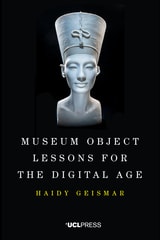
Museum Object Lessons for the Digital Age
Haidy Geismar
University College London, 2018
Museum Object Lessons for the Digital Age urges readers to question their assumptions through four wide-ranging chapters, each focused on a single object—a box, a pen, an effigy, and a cloak. The book begins with an introduction exploring the legacies of older forms of media and earlier museum practices of collection and then offers a critical analysis of contending theories of knowledge production in museums as it relates to digital projects. From there, Haidy Geismar guides readers in lively, accessible prose through a range of objects, from ethnographic and decorative arts collections, bespoke digital experiments, and even the Google Art Project, revealing what these objects can tell us about both the past and the future of digital collection and display.
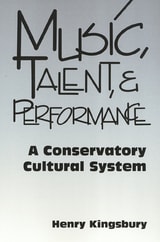
Music Talent & Performance
Conservatory Cultural SystemHenry Kingsbury
Temple University Press, 2001
Author Henry Kingbury, a conservatory-trained pianist and music educator turned anthropologist forgoes the traditional ethnomusicologist approach of looking at a non-Western musical culture to focus on the "field" of an American conservatory. The result is a penetrating look at the distinction between teaching music and the nurturing of musicality. Kingsbury offers an innovative anthropological analysis of the western notion of "talent" and its cultural character, noting that many non-western societies have no such concept. Furthermore, he examines various contexts in which music is produced, experienced, and evaluated. His discussion includes the dynamics of orchestra rehearsals in the conservatory, "master class" lessons with a distinguished performer-pedagogue, the ritual characteristics of solo recitals, and an interpretive analysis of stage fright.
Ultimately, Kingsbury argues that music "is highly shifting and indeterminate in meaning," a concept that has important implications for all interpreters of culture and for the artists themselves.
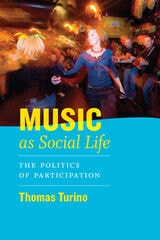
Music as Social Life
The Politics of ParticipationThomas Turino
University of Chicago Press, 2008
Turino begins by developing tools to think about the special properties of music and dance that make them fundamental resources for connecting with our own lives, our communities, and the environment. These concepts are then put into practice as he analyzes various musical examples among indigenous Peruvians, rural and urban Zimbabweans, and American old-time musicians and dancers. To examine the divergent ways that music can fuel social and political movements, Turino looks at its use by the Nazi Party and by the American civil rights movement. Wide-ranging, accessible to anyone with an interest in music’s role in society, and accompanied by a compact disc, Music as Social Life is an illuminating initiation into the power of music.

Music, Style, and Aging
Growing Old Disgracefully?Andy Bennett
Temple University Press, 2013
For many aging followers of rock, punk, and other contemporary popular genres, music is ingrained in their identities. Its meaning is highly personal and intertwined with the individual's biographical development. Bennett studies these fans and how they have changed over time--through fashions, hairstyles, body modification, career paths, political orientations, and perceptions of and by the next generation.
The significance of popular music for these fans is no longer tied exclusively to their youth. Bennett illustrates how the music? that "mattered" to most people in their youth continues to play an important role in their adult lives--a role that goes well beyond nostalgia.
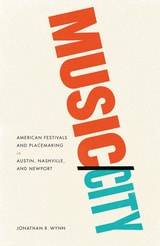
Music/City
American Festivals and Placemaking in Austin, Nashville, and NewportJonathan R. Wynn
University of Chicago Press, 2015
Wynn tracks the history of festivals in Newport, Nashville, and Austin, taking readers on-site to consider different festival agendas and styles of organization. It’s all here: from the musician looking to build her career to the mayor who wants to exploit a local cultural scene, from a resident’s frustration over corporate branding of his city to the music executive hoping to sell records. Music/City offers a sharp perspective on cities and cultural institutions in action and analyzes how governments mobilize massive organizational resources to become promotional machines. Wynn’s analysis culminates with an impassioned argument for temporary events, claiming that when done right, temporary occasions like festivals can serve as responsive, flexible, and adaptable products attuned to local places and communities.
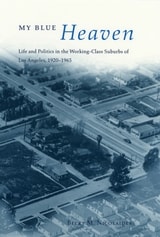
My Blue Heaven
Life and Politics in the Working-Class Suburbs of Los Angeles, 1920-1965Becky M. Nicolaides
University of Chicago Press, 2002
As Becky M. Nicolaides shows in My Blue Heaven, this ethic of self-reliance and homeownership formed the core of South Gate's identity. With post-World War II economic prosperity, the community's emphasis shifted from building homes to protecting them as residents tried to maintain their standard of living against outside threats—including the growing civil rights movement—through grassroots conservative politics based on an ideal of white homeowner rights. As the citizens of South Gate struggled to defend their segregated American Dream of suburban community, they fanned the flames of racial inequality that erupted in the 1965 Watts riots.
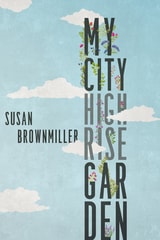
My City Highrise Garden
Kleit,Micah
Rutgers University Press, 2017
She reports the catastrophes: losing daytime access during building-wide renovations; assaults from a mockingbird during his mating season. And the joys: a peach tree fruited for fifteen years; the windswept birches lasted for twenty-five. Butterflies and bees pay annual visits. She pampers a buddleia, a honeysuckle, roses, hydrangeas, and more. Her adventures celebrate the tenacity of nature, inviting readers to marvel at her garden’s resilience, and her own.
Enhanced by over thirty color photographs, this passionate account of green life in a gritty, urban environment will appeal to readers and gardeners wherever they dwell.
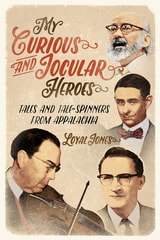
My Curious and Jocular Heroes
Tales and Tale-Spinners from AppalachiaLoyal Jones
University of Illinois Press, 2017
We stopped, and we heard the biggest racket you ever heard up in the house.
“What’s the matter, son?”
“Why, Maw and Paw are up there fightin’.”
“Who is your Paw, son?”
“Well, that’s what they are fightin’ over.”
Brimming with ballads, stories, riddles, tall tales, and great good humor, My Curious and Jocular Heroes pays homage to four people who guided and inspired Loyal Jones’s own study of Appalachian culture. His sharp-eyed portraits introduce a new generation to Bascom Lunsford, the pioneer behind the “memory collections” of song and story at Columbia University and the Library of Congress; the Sorbonne-educated collector and performer Josiah H. Combs; Cratis D. Williams, the legendary father of Appalachian studies; and the folklorist and master storyteller Leonard W. Roberts. Throughout, Jones highlights the tales, songs, jokes, and other collected nuggets that define the breadth of each man’s research and repertoire.
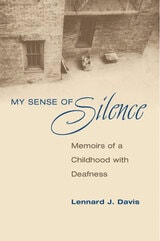
My Sense of Silence
Memoirs of a Childhood with DeafnessLennard J. Davis
University of Illinois Press, 1999
Selected as an "Editors Choice" by the Chicago Tribune
Lennard J. Davis grew up as the hearing child of deaf parents. In this candid, affecting, and often funny memoir, he recalls the joys and confusions of this special world, especially his complex and sometimes difficult relationships with his working-class Jewish immigrant parents. Gracefully slipping through memory, regret, longing, and redemption, My Sense of Silence is an eloquent remembrance of human ties and human failings.