Results by title
22279 books match the query 'Social Science' and 1258 start with m
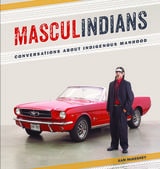
Masculindians
Conversations about Indigenous ManhoodSam McKegney
Michigan State University Press, 2014
Contributors: Taiaiake Alfred, Kim Anderson, Joanne Arnott, Joseph Boyden, Alison Calder, Warren Cariou, Jessica Danforth, Louise Halfe, Tomson Highway, Daniel Heath Justice, Janice C. Hill Kanonhsyonni, Lee Maracle, Neal McLeod, Daniel David Moses, Gregory Scofield, Thomas Kimeksum Thrasher, and Richard Van Camp.
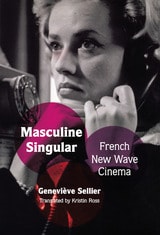
Masculine Singular
French New Wave CinemaGeneviève Sellier
Duke University Press, 2008
Sellier draws on sociological surveys, box office data, and popular magazines of the period, as well as analyses of specific New Wave films. She examines the development of the New Wave movement, its sociocultural and economic context, and the popular and critical reception of such well-known films as Jules et Jim and Hiroshima mon amour. In light of the filmmakers’ focus on gender relations, Sellier reflects on the careers of New Wave’s iconic female stars, including Jeanne Moreau and Brigitte Bardot. Sellier’s thorough exploration of early New Wave cinema culminates in her contention that its principal legacy—the triumph of a certain kind of cinephilic discourse and of an “auteur theory” recognizing the director as artist—came at a steep price: creativity was reduced to a formalist game, and affirmation of New Wave cinema’s modernity was accompanied by an association of creativity with masculinity.
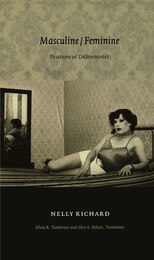
Masculine/Feminine
Practices of Difference(s)Nelly Richard
Duke University Press, 2004
Richard helped to organize the 1987 International Conference on Latin American Women’s Literature in Santiago, one of the most significant literary events to take place under the Pinochet dictatorship. Published in Chile in 1993, Masculine/Feminine develops some of the key issues brought to the fore during that landmark meeting. Richard theorizes why the feminist movement has been crucial not only to the liberation of women but also to understanding the ways in which power operated under the military regime in Chile. In one of her most widely praised essays, she explores the figure of the transvestite, artistic imagery of which exploded during the Chilean dictatorship. She examines the politics and the aesthetics of this phenomenon, particularly against the background of prostitution and shantytown poverty, and she argues that gay culture works to break down the social demarcations and rigid structures of city life. Masculine/Feminine makes available, for the first time in English, one of Latin America’s most significant works of feminist theory.
Masculinist Impulses
Toomer, Hurston, Black Writing, and ModernityNathan Grant
University of Missouri Press, 2004
Grant’s book provides close readings of Jean Toomer (Cane and Natalie Mann) and Zora Neale Hurston (Moses, Man of the Mountain, Seraph of the Suwanee, and Their Eyes Were Watching God), for whom the American South was a crucial locus of the African American experience. Toomer and Hurston were virtually alone among the Harlem Renaissance writers of prose who returned to the South for their literary materials. That return, however, allowed their rediscovery of key black masculine values and charted the northern route of those values in the twentieth century to their compromise and destruction.
Grant then moves on to three more recent writers—John Edgar Wideman, Gloria Naylor, and Toni Morrison—who expanded upon and transformed the themes of Toomer and Hurston. Like Toomer and Hurston, these later authors recognized the need for the political union of black men and women in the effort to realize the goals of equity and justice.
Masculinist Impulses discusses nineteenth- and twentieth-century black masculinity as both a feature and a casualty of modernism. Scholars and students of African American literature will find Grant’s nuanced and creative readings of these key literary texts invaluable.
Masculinity Besieged?
Issues of Modernity and Male Subjectivity in Chinese Literature of the Late Twentieth CenturyXueping Zhong
Duke University Press, 2000
Before the 1990s onslaught of popular culture decentered the role of intellectuals within the nation, they had come to embody Chinese masculinity during the previous decade. The focus on masculinity in literature had become unprecedented in scale and the desire for “real men” began to permeate Chinese popular culture, making icons out of Rambo and Takakura Ken. Stories by Zhang Xianliang and Liu Heng portraying male anxiety about masculine sexuality are employed by Zhong to show how “marginal” males negotiate their sexual identities in relation to both women and the state. Looking at writers popular among not only the well-educated but also the working and middle classes, she discusses works by Han Shaogong, Yu Hua, and Wang Shuo and examines instances of self-loathing male voices, particularly as they are articulated in Mo Yan’s well-known work Red Sorghum. In her last chapter Zhong examines “roots literature,” which speaks of the desire to create strong men as a part of the effort to create a geopolitically strong Chinese nation. In an afterword, Zhong situates her study in the context of the 1990s.
This book will be welcomed by scholars of Chinese cultural studies, as well as in literary and gender studies.
Masculinity and Femininity
Their Psychological Dimensions, Correlates, and AntecedentsBy Janet T. Spence and Robert L. Helmreich
University of Texas Press, 1978
Many societies assign sharply distinguished roles to men and women. Personality differences, as well as physical differences, between men and women are used to justify these different sex roles, and women are seen as more emotionally and interpersonally sensitive than men, while men are said to be more competent, achievement oriented, and assertive than women. A widely held view is that not only do men and women differ but that possession of "masculine" characteristics precludes possession of "feminine" characteristics. This bipolar conception has led to the definition of masculinity and femininity as opposites. Acceptance of this idea has caused social scientists and laypersons to consider men and women who possess cross-sex personality characteristics as less emotionally healthy and socially adjusted than those with sex-appropriate traits. Previous research by the authors and others, done almost exclusively with college students, has shown, however, that masculinity and femininity do not relate negatively to each other, thus supporting a dualistic rather than a bipolar conception of these two psychological dimensions.
Spence and Helmreich present data showing that the dualistic conception holds for a large number of groups, varying widely in age, geographical location, socioeconomic status, and patterns of interest, whose psychological masculinity and femininity were measured with an objective instrument, the Personality Attributes Questionnaire, devised by the authors. Many individuals are shown to be appropriately sex-typed; that is, men tend to be high in masculinity and low in femininity and women the reverse. However, a substantial number of men and women are androgynous—high in both masculine and feminine characteristics—while some are not high in either. Importantly, the authors find that androgynous individuals display more self-esteem, social competence, and achievement orientation than individuals who are strong in either masculinity or femininity or are not strong in either.
One of the major contributions of the work is the development of a new, multifaceted measure of achievement motivation (the Work and Family Orientation Questionnaire), which can be used successfully to predict behavior in both males and females and is related to masculinity and femininity in both sexes.
In addition to investigating the correlates of masculinity and femininity, the authors attempt to isolate parental factors that contribute to the development of these characteristics and achievement motivation. The book includes analyses of data from students on their perception of their parents, which enable the authors to examine the influence of parental masculinity and femininity and parental behaviors and child-rearing attitudes on the development of masculinity and femininity and achievement motivation characteristics in their children. The important implications of these findings for theories of sex roles, personality development, and achievement motivation are examined.
Masculinity in Transition
K. Allison Hammer
University of Minnesota Press, 2023
Locating the roots of toxic masculinity and finding its displacement in unruly culture
Masculinity in Transition analyzes shifting relationships to masculinity in canonical works of twentieth-century literature and film, as well as in twenty-first-century media, performance, and transgender poetics. Focusing on “toxic masculinity,” which has assumed new valence since 2016, K. Allison Hammer traces its roots to a complex set of ideologies embedded in the histories of settler colonialism, racial capitalism, and political fraternity, and finds that while toxic strains of masculinity are mainly associated with straight, white men, trans and queer masculinities can be implicated in these systems of power.
Hammer argues, however, that these malignant forms of masculinity are not fixed and can be displaced by “unruly alliances”—texts and relationships that reject the nationalisms and gender politics of white male hegemony and perform an urgently needed reimagining of what it means to be masculine. Locating these unruly alliances in the writings, performances, and films of butch lesbians, gay men, cisgender femmes, and trans and nonbinary individuals, Masculinity in Transition works through an archive of works of performance art, trans poetics, Western films and streaming media, global creative responses to HIV/AIDS, and working-class and “white trash” fictions about labor and unionization.
Masculinity in Transition moves the study of masculinity away from an overriding preoccupation with cisnormativity, whiteness, and heteronormativity, and toward a wider and more generative range of embodiments, identifications, and ideologies. Hammer’s bold rethinking of masculinity and its potentially toxic effects lays bare the underlying fragility of normative masculinity.
Retail e-book files for this title are screen-reader friendly with images accompanied by short alt text and/or extended descriptions.
Masculinity, Motherhood, and Mockery
Psychoanalyzing Culture and the Iatmul Naven Rite in New GuineaEric Kline Silverman
University of Michigan Press, 2001
Throughout this work, Eric Silverman details the dialogics of mothering and manhood throughout Eastern Iatmul culture, including in his analysis cosmology and myth; food- and childraising; architecture and canoes; ethnophysiology and sexuality; shame and hygiene; marriage and kinship; and perhaps most significantly, a ceremonial locus classicus in anthropology: the famous Iatmul naven rite. This book provides the first sustained examination of naven since Bateson, presenting new data and interpretations that are based entirely on original, first-hand ethnographic research.
The sustained engagement with anthropological and psychoanalytic theory coupled with a refreshing examination of a famous and still-enigmatic ritual is sure to make multiple contributions to pressing debates in contemporary anthropology and social theory.
Eric Silverman is Associate Professor of Anthropology, DePauw University.
Mashed Up
Music, Technology, and the Rise of Configurable CultureAram Sinnreich
University of Massachusetts Press, 2010
From ancient times to the present day, writers and thinkers have remarked on the unique power of music to evoke emotions, signal identity, and bond or divide entire societies, all without the benefit of literal representation. Even if we can't say precisely what our favorite melody means, we know very well what kind of effect it has on us, and on our friends and neighbors.
According to Aram Sinnreich, this power helps to explain why music has so often been regulated in societies around the globe and throughout history. Institutional authorities ranging from dynastic China's “Office to Harmonize Sounds” to today's copyright collecting societies like BMI and ASCAP leverage the rule of law and the power of the market to make sure that some musical forms and practices are allowed and others are prohibited.
Yet, despite the efforts of these powerful regulators, musical cultures consistently devise new and innovative ways to work around institutional regulations. These workarounds often generate new styles and traditions in turn, with effects far beyond the cultural sphere.
Mashed Up chronicles the rise of “configurability,” an emerging musical and cultural moment rooted in today's global, networked communications infrastructure. Based on interviews with dozens of prominent DJs, attorneys, and music industry executives, the book argues that today's battles over sampling, file sharing, and the marketability of new styles such as “mash-ups” and “techno” presage social change on a far broader scale.
Specifically, the book suggests the emergence of a new ethic of configurable collectivism; an economic reunion of labor; a renegotiation of the line between public and private; a shift from linear to recursive logic; and a new “DJ consciousness,” in which the margins are becoming the new mainstream. Whether these changes are sudden or gradual, violent or peaceful, will depend on whether we heed the lessons of configurability, or continue to police and punish the growing ranks of the mashed up.

Mask Off
Masculinity RedefinedJJ Bola
Pluto Press, 2019
From Blurred Lines to gang signs, how does society cause toxic masculinity? How do we define masculinity today? Dominating the world around us, seen in deadly gun violence, higher male suicide rates, and the incels on Reddit, masculinity is perceived to be “toxic,” “fragile,” and “in crisis.” What does that mean for society, and how can we understand it?
In Mask Off, JJ Bola exposes masculinity as a performance that men are socially conditioned into. Using examples of non-Western cultural traditions, music, and sport, he shines light on historical narratives around manhood, debunking popular myths along the way. He explores how LGBTQ men, men of color, and male refugees experience masculinity in diverse ways, revealing its fluidity, how it's strengthened and weakened by different political contexts, such as the patriarchy or the far-right, and perceived differently by those around them. Chapters include:
*Real men: Myths of masculinity
*What’s love got to do with it? Love, sex and consent
*This is a man’s world: The politics of masculinity, the masculinity of politics
*If I were a boy: Gender equality and feminism
*Slamdunk at the funk: masculinity and sport
At the heart of love and sex, the political stage, competitive sports, gang culture, and mental health issues, lies masculinity: Mask Off is an urgent call to unravel masculinity and redefine it. "What do our own perceptions of masculinity and the wider cultural norms around it mean for young boys growing up into manhood? What do they mean for young men and older men grappling with a society that encourages them to hold on to the anger that destroys the lives of women as well as the lives of many men?" Those questions and more offer food for thought for every man.

Masked Gods
Navaho and Pueblo CeremonialismFrank Waters
Ohio University Press, 1950
Masked Gods is a vast book, a challenging and profoundly original account of the history, legends, and ceremonialism of the Navajo and Pueblo Indians of the Southwest. Following a brief but vivid history of the two tribes through the centuries of conquest, the book turns inward to the meaning of Native American legends and ritual—Navajo songs, Pueblo dances, Zuni kachina ceremonies. Enduring still, these rituals and ceremonies express a view of life, of man’s place in the creation, which is compared with Taoism and Buddhism—and with the aggressive individualism of the Western world.

Masking And Power
Carnival And Popular Culture In The CaribbeanGerard Aching
University of Minnesota Press, 2002
An ambitious reassessment of the political uses of masking.
Does the mask reveal more than it conceals? What, this book asks, becomes visible and invisible in the masking practiced in Caribbean cultures-not only in the familiar milieu of the carnival but in political language, social conduct, and cultural expressions that mimic, misrepresent, and mislead? Focusing on masking as a socially significant practice in Caribbean cultures, Gerard Aching’s analysis articulates masking, mimicry, and misrecognition as a means of describing and interrogating strategies of visibility and invisibility in Cuba, Trinidad and Tobago, Martinique, and beyond.
Masking and Power uses ethnographic fieldwork, psychoanalysis, and close literary readings to examine encounters between cultural insiders as these locals mask themselves and one another either to counter the social invisibility imposed on them or to maintain their socioeconomic privileges. Aching exposes the ways in which strategies of masking and mimicry, once employed to negotiate subjectivities within colonial regimes, have been appropriated for state purposes and have become, with the arrival of self-government in the islands, the means by which certain privileged locals make a show of national and cultural unity even as they engage in the privatization of popular culture and its public performances.
Masks, Misinformation, and Making Do
Appalachian Health-Care Workers and the COVID-19 PandemicWendy Welch
Ohio University Press, 2023

Mass Deception
Moral Panic and the U.S. War on IraqScott A. Bonn
Rutgers University Press, 2010
Mass Deception argues that the George W. Bush administration manufactured public support for the war on Iraq. Scott A. Bonn introduces a unique, integrated, and interdisciplinary theory called "critical communication" to explain how and why political elites and the news media periodically create public panics that benefit both parties. Using quantitative analysis of public opinion polls and presidential rhetoric pre- and post-9/11 in the news media, Bonn applies the moral panic concept to the Iraq war. He critiques the war and occupation of Iraq as violations of domestic and international law. Finally, Mass Deception connects propaganda and distortion efforts by the Bush administration to more general theories of elite deviance and state crime.
Mass Media and Free Trade
NAFTA and the Cultural IndustriesEdited by Emile G. McAnany and Kenton T. Wilkinson
University of Texas Press, 1997
As United States television programs, movies, music, and other cultural products make their way around the globe, a vigorous debate over "cultural imperialism" is growing in many countries. This book brings together experts in economics, sociology, anthropology, the humanities, and communications to explore what effects the North American Free Trade Agreement will have on the flow of cultural products among Mexico, the United States, and Canada.
After an overview of free trade and the cultural industries, the book covers the following topics: dominance and resistance, cultural trade and identity in relation to Mexico and to French Canada, and intellectual property rights. Based on present trends, the contributors predict that there will be a steadily increasing flow of cultural products from the United States to its neighbors.
This book grew out of a 1994 conference that brought together leaders of the cultural industries, policy makers, and scholars. It represents state-of-the-art thinking about the global influence of U.S. cultural industries.
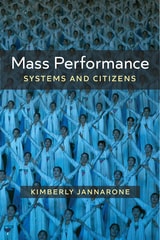
Mass Performance
Systems and CitizensKimberly Jannarone
University of Michigan Press, 2025
Although not a comprehensive study of such events, Jannarone’s analysis of the selected mass performance systems yields new theoretical perspectives on these phenomena, a central focus of her study being how political leaders find ways to create a physically coordinated mass body politic, even during times of hardship and war. By interpreting and historicizing mass assemblies of bodies, this study analyzes the choreographies and organizations that brought thousands of people together as an ensemble and kept them together in meaning-making motion.

Massachusetts Treasures
A Guide to Marvelous, Must-See MuseumsChuck D'Imperio
University of Massachusetts Press, 2018
Well known for its world-renowned art museums—from the Clark Art Institute in Williamstown to the Museum of Fine Arts in Boston—Massachusetts is also home to numerous institutions with more eclectic collections and, oftentimes, lower profiles. These include Mansfield's National Black Doll Museum of History and Culture, Watertown's Plumbing Museum, and Granville's Noble and Cooley Center for Historic Preservation.
In Massachusetts Treasures, Chuck D'Imperio explores more than forty museums scattered throughout the Bay State, from Cape Cod to the Berkshires. Many—but not all—might be considered “offbeat,” and each and every one is enchanting. Through personal visits and interviews with founders and directors, D'Imperio offers an inside glimpse into some of the Commonwealth's most unique museums, providing a valuable guide for road warriors and history buffs discovering Massachusetts either for the first or the tenth time.
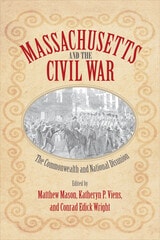
Massachusetts and the Civil War
The Commonwealth and National DisunionMatthew Mason
University of Massachusetts Press, 2015
All states are not created equal, at least not when it comes to their influence on American history. That assumption underlies Massachusetts and the Civil War. The volume's ten essays coalesce around the national significance of Massachusetts through the Civil War era, the ways in which the commonwealth reflected and even modeled the Union's precarious but real wartime unification, and the Bay State's postwar return to the schisms that predated the war. Rather than attempting to summarize every aspect of the state's contribution to the wartime Union, the collection focuses on what was distinctive about its influence during the great crisis of national unity.
In the first section, “The Opposition to Slavery,” essays by John Stauffer, Dean Grodzins, Peter Wirzbicki, and Richard S. Newman demonstrate the central role Massachusetts played in the rise of both the antislavery movement and abolitionism. They show how slavery's foes united, planned, and understood their cause, and how they envisioned a postwar nation free of servitude. In the second section, “The War Years,” Matthew Mason, Carol Bundy, and Ronald J. Zboray and Mary Saracino Zboray investigate how the exigencies of war unified the commonwealth across party lines and over the distance between home and the front. In the final section, “Reconciliation,” Sarah J. Purcell, Amy Morsman, and Kanisorn Wongsrichanalai probe postwar efforts to recover from the war's profound disruptions.
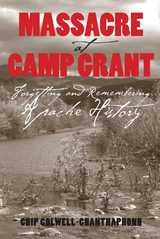
Massacre at Camp Grant
Forgetting and Remembering Apache HistoryChip Colwell-Chanthaphonh
University of Arizona Press, 2007
On April 30, 1871, an unlikely group of Anglo-Americans, Mexican Americans, and Tohono O’odham Indians massacred more than a hundred Apache men, women, and children who had surrendered to the U.S. Army at Camp Grant, near Tucson, Arizona. Thirty or more Apache children were stolen and either kept in Tucson homes or sold into slavery in Mexico. Planned and perpetrated by some of the most prominent men in Arizona’s territorial era, this organized slaughter has become a kind of “phantom history” lurking beneath the Southwest’s official history, strangely present and absent at the same time.
Seeking to uncover the mislaid past, this powerful book begins by listening to those voices in the historical record that have long been silenced and disregarded. Massacre at Camp Grant fashions a multivocal narrative, interweaving the documentary record, Apache narratives, historical texts, and ethnographic research to provide new insights into the atrocity. Thus drawing from a range of sources, it demonstrates the ways in which painful histories continue to live on in the collective memories of the communities in which they occurred.
Chip Colwell-Chanthaphonh begins with the premise that every account of the past is suffused with cultural, historical, and political characteristics. By paying attention to all of these aspects of a contested event, he provides a nuanced interpretation of the cultural forces behind the massacre, illuminates how history becomes an instrument of politics, and contemplates why we must study events we might prefer to forget.

Massacre on the Gila
An Account of the Last Major Battle Between American Indians, with Reflections on the Origin of WarClifton B. Kroeber
University of Arizona Press, 1986
"Rarely do the skills of historians and anthropologists mesh so admirably." —Western Historical Quarterly
"Kroeber and Fontana are meticulous professionals. Their study of this neglected slice of Southwestern history deserves applause." —Evan S. Connell, Los Angeles Times Book Review
"A rich feast for the curious and theorist alike." —Pacific Historical Review
"Kroeber and Fontana describe a little-known event, provide an effective analysis of the cultures of Indian groups in southwestern Arizona, and attempt to understand the broader causes of warfare. The result is an interesting and provocative study." —Journal of American History
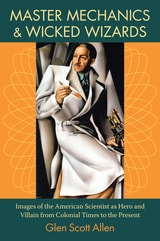
Master Mechanics and Wicked Wizards
Images of the American Scientist as Hero and Villain from Colonial Times to the PresentGlen Scott Allen
University of Massachusetts Press, 2009
From the earliest depictions of Benjamin Franklin and his kite experiment to 21st-century renderings of mad scientists, representations of American scientists in the popular media reveal a great deal about our cultural hopes and fears. In an entertaining and insightful survey of popular media over three hundred years of American history—religious tracts, political cartoons, literature, theater, advertising, art, comic books, radio, music, television, and film—Glen Scott Allen examines the stereotypes assigned to scientists for what they tell us about America's pride in its technological achievements as well as our prejudices about certain “suspect” kinds of scientific investigation.
Working in the tradition of cultural studies, Allen offers an analysis that is historically comprehensive and critically specific. Integrating both “high” literature and “low” comedy, he delves into the assumptions about scientists—good, bad, and mad—that have been shaped by and have in turn shaped American cultural forces. Throughout the book, his focus is on why certain kinds of scientists have been lionized as American heroes, while others have been demonized as anti-American villains.
Allen demonstrates that there is a continuous thread running from the seminal mad scientists of Hawthorne's nineteenth-century fiction to modern megalomaniacs like Dr. Strangelove; that marketing was as important to the reputation of the great independent inventors as technological prowess was; and that cultural prejudices which can be traced all the way back to Puritan ideology are at work in modern scientific controversies over cloning and evolution.
The periods and movements examined are remarkably far-ranging: the literature and philosophy of the Romantics; the technology fairs and utopian fiction of the nineteenth century; political movements of the 1930s and 1940s; the science fiction boom of the 1950s; the space and arms races of the 1960s and 1970s; the resurgence of pseudo-sciences in the 1980s and 1990s. This book will be of interest not just to teachers and students of cultural studies and the history of science and technology but to anyone interested in American culture and how it shapes our experience and defines our horizons.
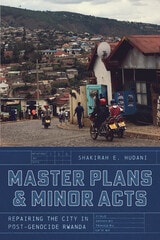
Master Plans and Minor Acts
Repairing the City in Post-Genocide RwandaShakirah E. Hudani
University of Chicago Press, 2024
Master Plans and Minor Acts examines a “material politics of repair” in post-genocide Rwanda, where in a country saturated with deep historical memory, spatial master planning aims to drastically redesign urban spaces. How is the post-conflict city reconstituted through the work of such planning, and with what effects for material repair and social conciliation?
Through extended ethnographic and qualitative research in Rwanda in the decades after the genocide of 1994, this book questions how repair after conflict is realized amidst large-scale urban transformation. Bridging African studies, urban studies, and human geography in its scope, this work ties Rwanda’s transformation to contexts of urban change in other post-conflict spaces, bringing to the fore critical questions about the ethics of planning in such complex geographies.
Master and Disciple
The Cultural Foundations of Moroccan AuthoritarianismAbdellah Hammoudi
University of Chicago Press, 1997
Building on the work of Foucault, Hammoudi argues that at the heart of Moroccan culture lies a paradigm of authority that juxtaposes absolute authority against absolute submission. Rooted in Islamic mysticism, this paradigm can be observed in the drama of mystic initiation, with its fundamental dialectic between Master and Disciple; in conflict with other cultural forms, and reelaborated in colonial and postcolonial circumstances, it informs all major aspects of Moroccan personal, political, and gender relations. Its influence is so pervasive and so firmly embedded that it ultimately legitimizes the authoritarian structure of power. Hammoudi contends that as long as the Master-Disciple dialectic remains the dominant paradigm of power relations, male authoritarianism will prevail as the dominant political form.
"Connecting political domination to gift exchange, ritual initiation, social loyalty, and gender reversals, Master and Disciple is nothing less than a thoroughgoing revision of our understanding of authoritarian rule in Morocco and in the Arab world in general."—Clifford Geertz, Institute for Advanced Study
Masters of Uncertainty
Weather Forecasters and the Quest for Ground TruthPhaedra Daipha
University of Chicago Press, 2015
In Masters of Uncertainty, Phaedra Daipha develops a new conceptual framework for the process of decision making, after spending years immersed in the life of a northeastern office of the National Weather Service. Arguing that predicting the weather will always be more craft than science, Daipha shows how forecasters have made a virtue of the unpredictability of the weather. Impressive data infrastructures and powerful computer models are still only a substitute for the real thing outside, and so forecasters also enlist improvisational collage techniques and an omnivorous appetite for information to create a locally meaningful forecast on their computer screens. Intent on capturing decision making in action, Daipha takes the reader through engrossing firsthand accounts of several forecasting episodes (hits and misses) and offers a rare fly-on-the-wall insight into the process and challenges of producing meteorological predictions come rain or come shine. Combining rich detail with lucid argument, Masters of Uncertainty advances a theory of decision making that foregrounds the pragmatic and situated nature of expert cognition and casts into new light how we make decisions in the digital age.

Masters of the Sabar
Wolof Griot Percussionists of SenegalPatricia Tang
Temple University Press, 2006
Mastery of Non-Mastery in the Age of Meltdown
Michael Taussig
University of Chicago Press, 2020
Taussig seeks to move us away from the manipulation of nature and reorient us to different metaphors and sources of inspiration to develop a new ethical stance toward the world. His ultimate goal is to undo his readers’ sense of control and engender what he calls “mastery of non-mastery.” This unique book developed out of Taussig’s work with peasant agriculture and his artistic practice, which brings performance art together with aspects of ritual. Through immersive meditations on Walter Benjamin, D. H. Lawrence, Emerson, Bataille, and Proust, Taussig grapples with the possibility of collapse and with the responsibility we bear for it.
Mastodons to Mississippians
Adventures in Nashville's Deep PastAaron Deter-Wolf
Vanderbilt University Press, 2021
Was Nashville once home to a giant race of humans?
No, but in 1845, you could have paid a quarter to see the remains of one who allegedly lived here before The Flood. That summer, Middle Tennessee well diggers had unearthed the skeleton of an American mastodon. Before it went on display, it was modified and augmented with wooden “bones” to make it look more like a human being and passed off as an antediluvian giant. Then, like so many Nashvillians, after a little success here, it went on tour and disappeared from history.
But this fake history of a race of Pre-Nashville Giants isn’t the only bad history of what, and who, was here before Nashville. Sources written for schoolchildren and the public lead us to believe that the first Euro-Americans arrived in Nashville to find a pristine landscape inhabited only by the buffalo and boundless nature, entirely untouched by human hands. Instead, the roots of our city extend some 14,000 years before Illinois lieutenant-governor-turned-fur-trader Timothy Demonbreun set foot at Sulphur Dell.
During the period between about AD 1000 and 1425, a thriving Native American culture known to archaeologists as the Middle Cumberland Mississippian lived along the Cumberland River and its tributaries in today’s Davidson County. Earthen mounds built to hold the houses or burials of the upper class overlooked both banks of the Cumberland near what is now downtown Nashville. Surrounding densely packed village areas including family homes, cemeteries, and public spaces stretched for several miles through Shelby Bottoms, and the McFerrin Park, Bicentennial Mall, and Germantown neighborhoods. Other villages were scattered across the Nashville landscape, including in the modern neighborhoods of Richland, Sylvan Park, Lipscomb, Duncan Wood, Centennial Park, Belle Meade, White Bridge, and Cherokee Park.
This book is the first public-facing effort by legitimate archaeologists to articulate the history of what happened here before Nashville happened.
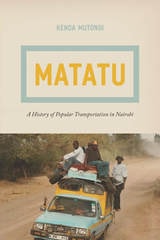
Matatu
A History of Popular Transportation in NairobiKenda Mutongi
University of Chicago Press, 2017
As Mutongi shows, matatus offer a window onto the socioeconomic and political conditions of late-twentieth-century Africa. In their diversity of idiosyncratic designs, they reflect multiple and divergent aspects of Kenyan life—including, for example, rapid urbanization, organized crime, entrepreneurship, social insecurity, the transition to democracy, and popular culture—at once embodying Kenya’s staggering social problems as well as the bright promises of its future. Offering a shining model of interdisciplinary analysis, Mutongi mixes historical, ethnographic, literary, linguistic, and economic approaches to tell the story of the matatu and explore the entrepreneurial aesthetics of the postcolonial world.

Matchmaking in the Archive
19 Conversations with the Dead and 3 Encounters with GhostsE.G. Crichton
Rutgers University Press, 2023
Working with the archives of the Gay Lesbian Bisexual Transgender Historical Society, artist E.G. Crichton decided to do something to bridge this generation gap. She selected 19 innovative LGBTQ artists, writers, and musicians, then paired each of them with a deceased person whose personal artifacts are part of the archive.
Including 25 pages of vivid images, Matchmaking in the Archive documents this monumental creative project and adds essays by Jonathan D. Katz, Michelle Tea, and Chris Vargas, who describe their own unique encounters with the ghosts of LGBTQ history. Together, they make the archive come alive in remarkably intimate ways.
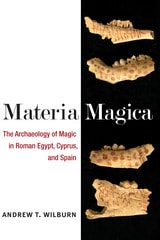
Materia Magica
The Archaeology of Magic in Roman Egypt, Cyprus, and SpainAndrew T. Wilburn
University of Michigan Press, 2015
This exciting new study draws on objects excavated or discovered in the late nineteenth or early twentieth century at three Mediterranean sites. Through the three case studies, Materia Magica identifies specific forms of magic that may be otherwise unknown. It isolates the practitioners of magic and examines whether magic could be used as a form of countercultural resistance. Andrew T. Wilburn discovers magic in the objects of ancient daily life, suggesting that individuals frequently turned to magic, particularly in crises. Local forms of magic may have differed, and Wilburn proposes that the only way we can find small-town sorcerers is through careful examination of the archaeological evidence.
Studying the remains of spells enacted by practitioners, Wilburn's work unites the analysis of the words written on artifacts and the physical form of these objects. He situates these items within their contexts, to study how and why they were used. Materia Magica approaches magic as a material endeavor, in which spoken spells, ritual actions, and physical objects all played vital roles in the performance of a rite.
Materia Magica develops a new method for identifying and interpreting the material remains of magical practice by assessing artifacts within their archaeological contexts. Wilburn suggests that excavations undertaken in recent centuries can yield important lessons about the past, and he articulates the ways in which we can approach problematic data.
Materia Medica
Black Women, White Doctors, and Spectacular GynecologyNicole N. Ivy
Duke University Press, 2026
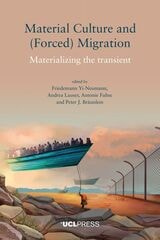
Material Culture and (Forced) Migration
Materializing the TransientEdited by Friedemann Yi-Neumann, Andrea Lauser, Antonie Fuhse, and Peter J. Bräunlein
University College London, 2022
Material Culture and (Forced) Migration argues that materiality is a fundamental dimension of migration. People take things with them, or they lose, find, and engage things along the way. Movements themselves are framed by objects such as borders, passports, tents, camp infrastructures, boats, and mobile phones. This volume brings together chapters on a broad range of movements—from forced migration and displacement to retirement migration. What ties the chapters together is their perspective of material culture.
Centering on four interconnected themes—temporality and materiality, methods of object-based migration research, the affective capacities of objects, and the engagement of things in place-making practices—the volume provides a material culture perspective for migration scholars around the globe, from a wide range of disciplines. The chapters’ focus on everyday objects and practices will appeal to all those interested in the tangible experiences of migration.
Material Cultures
Why Some Things MatterEdited by Daniel Miller
University of Chicago Press, 1997
The diversity of the essays is mediated by their common commitment to ethnography with a material focus. Rather than examine objects as mirages of media or language, Material Cultures emphasizes how the study of objects not only contributes to an understanding of artifacts but is also an effective means for studying social values and contradictions.
Material Meanings
Elizabeth Chilton
University of Utah Press, 1999
Material Meanings focuses on the social context in which things are produced and in which they are given meaning.
With firm roots in antiquarianism, archaeology began as the study and collection of things. Even today objects take center stage in many areas of archaeological inquiry. But the past few decades have seen a proliferation of the ways anthropological archaeologist analyze raw materials, tools, techniques, finished products, and discarded objects.
Material Meanings examines current approaches to material culture in the archaeological record from three perspective: ethnoarchaeology and technological traditions, material science, and theoretical approaches to materiality. The focus of this book is not on artifacts themselves but on the social context in which things are produced and in which they are given meaning, the technical choices of an artifact producer within a larger technical system, and their interpretation by modern researchers.
The chapters represent a broad range of theoretical perspectives, methods, and data sets. Several chapters consider methodological issues in reconstructing technical systems. Most contributions, however, apply this understanding to larger questions of social identity and ethnicity, emphasizing historical context or models of cultural process.

Material Media-Making in the Digital Age
Daniel Binns
Intellect Books, 2024
Today’s world offers no shortage of media for us to consume, and the ever-expanding array of available media has changed the way scholars think about its production and reception. Missing from these conversations about new media, however, is the maker—the one with the power to produce media from their own pocket.
In Material Media-Making in the Digital Age, Daniel Binns looks at the current media landscape in order to understand his own media practice. The result is a personal journey through media theory, history, and technology, furnished with practical lessons on the digital form for teachers, students, professionals, and enthusiasts. A refreshing combination of theory and practice written in a personal, engaging style, this book will enable readers to understand how a personal creative practice might unlock deeper thinking about media and its place in the world.
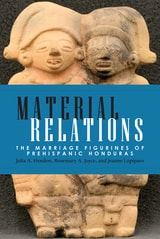
Material Relations
The Marriage Figurines of Prehispanic HondurasJulia A. Hendon
University Press of Colorado, 2014
They examine the production, use, and disposal of marriage figurines from six sites—Campo Dos, Cerro Palenque, Copán, Currusté, Tenampua, and Travesia—and explore their role in rituals and ceremonies, as well as in the forming of social bonds and the celebration of relationships among communities. They find evidence of historical traditions reproduced over generations through material media in social relations among individuals, families, and communities, as well as social differences within this network of connected yet independent settlements.
Material Relations provides a new and dynamic understanding of how social houses functioned via networks of production and reciprocal exchange of material objects and will be of interest to Mesoamerican archaeologists, anthropologists, and art historians.

Materialist Feminism, Volume 93
Toril Moi and Janice Radway, editors
Duke University Press, 0
Materiality
Daniel Miller, ed.
Duke University Press, 2005
Considering topics as diverse as theology, technology, finance, and art, the contributors—most of whom are anthropologists—examine the many different ways in which materiality has been understood and the consequences of these differences. Their case studies show that the latest forms of financial trading instruments can be compared with the oldest ideals of ancient Egypt, that the promise of software can be compared with an age-old desire for an unmediated relationship to divinity. Whether focusing on the theology of Islamic banking, Australian Aboriginal art, derivatives trading in Japan, or textiles that respond directly to their environment, each essay adds depth and nuance to the project that Materiality advances: a profound acknowledgment and rethinking of one of the basic properties of being human.
Contributors. Matthew Engelke, Webb Keane, Susanne Küchler, Bill Maurer, Lynn Meskell, Daniel Miller, Hirokazu Miyazaki, Fred Myers, Christopher Pinney, Michael Rowlands, Nigel Thrift
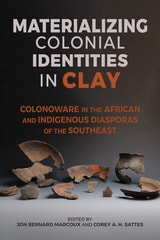
Materializing Colonial Identities in Clay
Colonoware in the African and Indigenous Diasporas of the SoutheastEdited by Jon Bernard Marcoux and Corey A. H. Sattes
University of Alabama Press, 2024
An interdisciplinary excavation of colonoware as a material archive of African, Indigenous, and colonial entanglements across the early American South.
In Materializing Colonial Identities in Clay, Jon Bernard Marcoux, Corey A. H. Sattes, and contributors examine colonoware to explore the active roles that African Americans and Indigenous people played in constructing southern colonial culture and part of their shared history with Europeans.
Colonoware was most likely produced by African and Indigenous potters and used by all colonial groups for cooking, serving, and storing food. It formed the foundation of colonial foodways in many settlements across the southeastern United States. Even so, compared with other ceramics from this period, less has been understood about its production and use because of the lack of documentation. This collection of essays fills this gap with valuable, recent archaeological data from which much may be surmised about the interaction among Europeans, Indigenous, and Africans, especially within the contexts of the African and Indigenous slave trade and plantation systems.
The chapters represent the full range of colonoware research: from the beginning to the end of its production, from urban to rural contexts, and from its intraregional variation in the Lowcountry to the broad patterns of colonialism across the early American Southeast. The book summarizes current approaches in colonoware research and how these may bridge the gaps between broader colonial American studies, Indigenous studies, and African Diaspora studies.
A concluding discussion contextualizes the chapters through the perspectives of intersectionality and Black feminist theory, drawing attention to the gendered and racialized meanings embodied in colonoware, and considering how colonialism and slavery have shaped these cultural dimensions and archaeologists’ study of them.
Materializing Democracy
Toward a Revitalized Cultural PoliticsRuss Castronovo and Dana D. Nelson, eds.
Duke University Press, 2002
Covering topics ranging from rights discourse to Native American performance, from identity politics to gay marriage, and from rituals of public mourning to the Clinton-Lewinsky affair, the contributors seek to understand the practices, ideas, and material conditions that enable or foreclose democracy’s possibilities. Through readings of subjects as diverse as Will Rogers, Alexis de Tocqueville, slave narratives, interactions along the Texas-Mexico border, and liberal arts education, the contributors also explore ways of making democracy available for analysis. Materializing Democracy suggests that attention to disparate narratives is integral to the development of more complex, vibrant versions of democracy.
Contributors. Lauren Berlant, Wendy Brown, Chris Castiglia, Russ Castronovo, Joan Dayan, Wai Chee Dimock, Lisa Duggan, Richard R. Flores, Kevin Gaines, Jeffrey C. Goldfarb, Michael Moon, Dana D. Nelson, Christopher Newfield, Donald E. Pease
Materializing Identities in Socialist and Post-Socialist Cities
Edited by Jaroslav Ira and Jirí Janác
Karolinum Press, 2017
Materializing Imaginaries in Senegal
Modern African Literature and Global 1968Fatoumata Seck
Duke University Press, 2026
Materializing Ritual Practices
Lisa M. Johnson
University Press of Colorado, 2021
Ritual action produces sequences of creation, destruction, and transformation, which involve a variety of materials that are active and agential. The materialities of ritual may persist at temporal scales long beyond the lives of humans or be as ephemeral as spoken words, music, and scents. In this book, archaeologists and ethnographers, including specialists in narrative, music, and ritual practice, explore the rhythms and materiality of rituals that accompany everyday actions, like the construction of houses, healing practices, and religious festivals, and that paced commemoration of rulers, ancestor veneration, and relations with spiritual beings in the past.
Connecting the kinds of observed material discursive practices that ethnographers witness to the sedimented practices from which archaeologists infer similar practices in the past, Materializing Ritual Practices addresses how specific materialities encourage repetition in ritual actions and, in other circumstances, resist changes to ritual sequences. The volume will be of interest to cultural anthropologists, archaeologists, and linguists with interests in Central America, ritual, materiality, and time.
Contributors: M. Charlotte Arnauld, Giovani Balam Caamal, Isaac Barrientos, Cedric Becquey, Johann Begel, Valeria Bellomia, Juan Carillo Gonzalez, Maire Chosson, Julien Hiquet, Katrina Kosyk, Olivier Le Guen, Maria Luisa Vasquez de Agredos Pascual, Alessandro Lupo, Philippe Nondedeo, Julie Patrois, Russel Sheptak, Valentina Vapnarsky, Francisca Zalaquett Rock

Maternal Body and Voice in Toni Morrison, Bobbie Ann Mason, and Lee Smith
Paula Gallant Eckard
University of Missouri Press, 2002
Maternal Justice
Miriam Van Waters and the Female Reform TraditionEstelle B. Freedman
University of Chicago Press, 1996
Estelle B. Freedman draws from Van Waters's diaries, letters, and personal papers to recreate her complex personal life, unveiling the disparity between Van Waters's public persona and her agonized private soul. With the power and elegance of a novel, Maternal Justice illuminates this historical context, casting light on the social welfare tradition, on women's history, on the American feminist movement, and on the history of sexuality.
"Maternal Justice is as much a work of history as it is biography, bringing to life not only a remarkable woman but also the complex political and social milieu within which she worked and lived."—Kelleher Jewett, The Nation
"This sympathetic biography reclaims Van Waters for history."—Publishers Weekly
"The Van Waters legacy, as Freedman gracefully presents, is that she cared about the lives of women behind bars. It is a strikingly unfashionable sentiment today."—Jane Meredith Adams, San Francisco Chronicle Book Review, Editor's Recommended Selection
"This finely crafted biography is both an engrossing read and a richly complicated account of a reformer whose work . . . bridged the eras of voluntarist charitable activism and professional social service."—Sherri Broder, Women's Review of Books
"This is a sympathetic, highly personal biography, revealing of both the author's responses to her subject's life and, in considerable detail, Van Waters's family traumas, illnesses, and love affairs."—Elizabeth Israels Perry, Journal of American History
Mathematical Models of Social Evolution
A Guide for the PerplexedRichard McElreath and Robert Boyd
University of Chicago Press, 2007
Over the last several decades, mathematical models have become central to the study of social evolution, both in biology and the social sciences. But students in these disciplines often seriously lack the tools to understand them. A primer on behavioral modeling that includes both mathematics and evolutionary theory, Mathematical Models of Social Evolution aims to make the student and professional researcher in biology and the social sciences fully conversant in the language of the field.
Teaching biological concepts from which models can be developed, Richard McElreath and Robert Boyd introduce readers to many of the typical mathematical tools that are used to analyze evolutionary models and end each chapter with a set of problems that draw upon these techniques. Mathematical Models of Social Evolution equips behaviorists and evolutionary biologists with the mathematical knowledge to truly understand the models on which their research depends. Ultimately, McElreath and Boyd’s goal is to impart the fundamental concepts that underlie modern biological understandings of the evolution of behavior so that readers will be able to more fully appreciate journal articles and scientific literature, and start building models of their own.
Matinee Melodrama
Playing with Formula in the Sound SerialHiggins, Scott
Rutgers University Press, 2016
Matinee Melodrama is the first book about the adventure serial as a distinct artform, one that uniquely encouraged audience participation and imaginative play. Media scholar Scott Higgins proposes that the serial’s incoherent plotting and reliance on formula, far from being faults, should be understood as some of its most appealing attributes, helping to spawn an active fan culture. Further, he suggests these serials laid the groundwork not only for modern-day cinematic blockbusters like Star Wars and Raiders of the Lost Ark, but also for all kinds of interactive media that combine spectacle, storytelling, and play.
As it identifies key elements of the serial form—from stock characters to cliffhangers—Matinee Melodrama delves deeply into questions about the nature of suspense, the aesthetics of action, and the potentials of formulaic narrative. Yet it also provides readers with a loving look at everything from Zorro’s Fighting Legion to Daredevils of the Red Circle, conveying exactly why these films continue to thrill and enthrall their fans.
Matters of Choice
Puerto Rican Women's Struggle for Reproductive FreedomLopez, Iris
Rutgers University Press, 2008
In Matters of Choice, Iris Lopez presents a comprehensive analysis of the dichotomous views that have portrayed sterilization either as part of a coercive program of population control or as a means of voluntary, even liberating, fertility control by individual women. Drawing upon her twenty-five years of research on sterilized Puerto Rican women from five different families in Brooklyn, Lopez untangles the interplay between how women make fertility decisions and their social, economic, cultural, and historical constraints. Weaving together the voices of these women, she covers the history of sterilization and eugenics, societal pressures to have fewer children, a lack of adequate health care, patterns of gender inequality, and misinformation provided by doctors and family members.
Lopez makes a stirring case for a model of reproductive freedom, taking readers beyond victim/agent debates to consider a broader definition of reproductive rights within a feminist anthropological context.
Matters of Gravity
Special Effects and Supermen in the 20th CenturyScott Bukatman
Duke University Press, 2003
Considering theme parks, cyberspace, cinematic special effects, superhero comics, and musical films, Matters of Gravity highlights phenomena that make technology spectacular, permit unfettered flights of fantasy, and free us momentarily from the weight of gravity and history, of past and present. Bukatman delves into the dynamic ways pop culture imagines that apotheosis of modernity: the urban metropolis. He points to two genres, musical films and superhero comics, that turn the city into a unique site of transformative power. Leaping in single bounds from lively descriptions to sharp theoretical insights, Matters of Gravity is a deft, exhilarating celebration of the liberatory effects of popular culture.