Results by title
1116 books match the query 'Africa' and 30 start with n
Nachituti's Gift
Economy, Society, and Environment in Central AfricaDavid M. Gordon
University of Wisconsin Press, 2006
Nachituti’s Gift challenges conventional theories of economic development with a compelling comparative case study of inland fisheries in Zambia and Congo from pre- to postcolonial times. Neoclassical development models conjure a simple, abstract progression from wealth held in people to money or commodities; instead, Gordon argues, primary social networks and oral charters like “Nachituti’s Gift” remained decisive long after the rise of intensive trade and market activities. Interweaving oral traditions, songs, and interviews as well as extensive archival research, Gordon’s lively tale is at once a subtle analysis of economic and social transformations, an insightful exercise in environmental history, and a revealing study of comparative politics.
“A powerful portrayal of the complexity, fluidity, and subtlety of Lake Mweru fishers’ production strategies . . . . Natchituti’s Gift adds nuance and evidence to some of the most important and sophisticated conversations going on in African studies today.”—Kirk Arden Hoppe, International Journal of African Historical Studies
“A lively and intelligent book, which offers a solid contribution to ongoing debates about the interplay of the politics of environment, history and economy.”—Joost Fontein, Africa
“Well researched and referenced . . . . [Natchituti’s Gift] will be of interest to those in a wide variety of disciplines including anthropology, African Studies, history, geography, and environmental studies.”—Heidi G. Frontani, H-SAfrica
Naked Agency
Genital Cursing and Biopolitics in AfricaNaminata Diabate
Duke University Press, 2020

Namibia Under South African Rule
Mobility and Containment, 1915–46Patricia Hayes
Ohio University Press, 1998
The peoples of Namibia have been on the move throughout history. The South Africans in 1915 took over from the Germans in trying to fit Namibia into a colonial landscape. This book is about the clashes and stresses which resulted from the first three decades of South African colonial rule.
Namibia under South African Rule is a major contribution to Namibian historiography, exploring, in particular, many new themes in twentieth-century Namibian history. Here is exciting new work from a host of scholars and writers on a heretofore under-researched subject.
Namibia’s Liberation Struggle
The Two-Edged SwordColin Leys
Ohio University Press, 1994
It took twenty-three years of armed struggle before Namibia could gain its independence from South Africa in March 1990. Swapo’s victory was remarkable in the face of an overwhelmingly superior enemy. How this came about, and at what cost, is the subject of this outstanding study that is based on unpublished documents and extensive interviews with a large range of the key activists in the struggle.
The story that emerges is one of endurance and heroism in face of atrocious brutality on the part of the colonialists. But it reveals that it was also one of painful compromises imposed by the conditions of the struggle and the subordination of internal democracy within the liberation movement to the single goal of military and diplomatic victory.
The study will be of keen interest to everyone concerned with southern Africa. Students of armed liberation struggle generally will find much to challenge received wisdom. The sheer human interest of the interviews makes the book attractive to a wide readership.
Naming Colonialism
History and Collective Memory in the Congo, 1870–1960Osumaka Likaka
University of Wisconsin Press, 2009
Methodologically innovative, Naming Colonialism advances a new approach that shows how a cultural process—the naming of Europeans—can provide a point of entry into economic and social histories. Drawing on archival documents and oral interviews, Likaka encounters and analyzes a welter of coded fragments. The vivid epithets Congolese gave to rubber company agents—“the home burner,” “Leopard,” “Beat, beat,” “The hippopotamus-hide whip”—clearly conveyed the violence that underpinned colonial extractive economies. Other names were subtler, hinting at derogatory meaning by way of riddles, metaphors, or symbols to which the Europeans were oblivious. Africans thus emerge from this study as autonomous actors whose capacity to observe, categorize, and evaluate reverses our usual optic, providing a critical window on Central African colonialism in its local and regional dimensions.
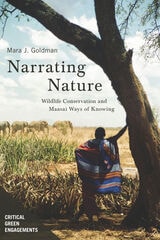
Narrating Nature
Wildlife Conservation and Maasai Ways of KnowingMara J. Goldman
University of Arizona Press, 2020
This book employs different storytelling practices, including a traditional Maasai oral meeting—the enkiguena—to decenter conventional scientific ways of communicating about, knowing, and managing nature. Author Mara J. Goldman draws on more than two decades of deep ethnographic and ecological engagements in the semi-arid rangelands of East Africa—in landscapes inhabited by pastoral and agropastoral Maasai people and heavily utilized by wildlife. These iconic landscapes have continuously been subjected to boundary drawing practices by outsiders, separating out places for people (villages) from places for nature (protected areas). Narrating Nature follows the resulting boundary crossings that regularly occur—of people, wildlife, and knowledge—to expose them not as transgressions but as opportunities to complicate the categories themselves and create ontological openings for knowing and being with nature otherwise.
Narrating Nature opens up dialogue that counters traditional conservation narratives by providing space for local Maasai inhabitants to share their ways of knowing and being with nature. It moves beyond standard community conservation narratives that see local people as beneficiaries or contributors to conservation, to demonstrate how they are essential knowledgeable members of the conservation landscape itself.
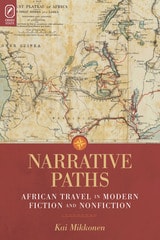
Narrative Paths
African Travel in Modern Fiction and NonfictionKai Mikkonen
The Ohio State University Press, 2015
Narrative Paths contributes to debates in narratology and rhetorical narrative theory about the fiction–nonfiction distinction. With chapters on a wide range of modernist authors—from Pierre Loti, André Gide, Michel Leiris, and Georges Simenon to Blaise Cendrars, Louis-Ferdinand Céline, Joseph Conrad, Graham Greene, Evelyn Waugh, and Isak Dinesen (Karen Blixen)—Mikkonen’s study also contributes to postcolonial approaches to these authors, examining issues of representation, narrative voice, and authority in narratives about colonial Africa.
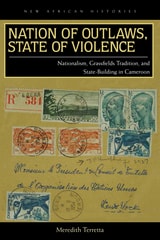
Nation of Outlaws, State of Violence
Nationalism, Grassfields Tradition, and State Building in CameroonMeredith Terretta
Ohio University Press, 2014
Nation of Outlaws, State of Violence is the first extensive history of Cameroonian nationalism to consider the global and local influences that shaped the movement within the French and British Cameroons and beyond. Drawing on the archives of the United Nations, France, Great Britain, Ghana, and Cameroon, as well as oral sources, Nation of Outlaws, State of Violence chronicles the spread of the Union des populations du Cameroun (UPC) nationalist movement from the late 1940s into the first postcolonial decade. It shows how, in the French and British Cameroon territories administered as UN Trusteeships after the Second World War, notions of international human rights, the promise of Third World independence, Pan-African federation, and national citizenship blended with local political and spiritual practices that resurfaced as the period of European rule came to a close. After French and British administrators banned the party in the mid-1950s, UPC nationalists adopted violence as a revolutionary strategy. In the 1960s, the nationalist vision disintegrated. The postcolonial regime labeled UPC nationalists “outlaws” and rounded them up for imprisonment or execution as the state shifted to single-party rule in 1966.
Nation of Outlaws, State of Violence traces the connection between local and transregional politics in the age of Africa’s decolonization and the early decades of the Cold War. Rather than stop at official independence as most conventional histories of African nationalist movements do, this book considers postindependence events as crucial to the history of Cameroonian nationalism and to an understanding of the postcolonial government that came to power on 1 January 1960. While the history of the UPC is a story that ends with the party’s failure to gain access to political power with independence, it is also a story of the postcolonial state’s failure to become a nation.
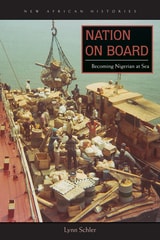
Nation on Board
Becoming Nigerian at SeaLynn Schler
Ohio University Press, 2016
In the 1940s, British shipping companies began the large-scale recruitment of African seamen in Lagos. On colonial ships, Nigerian sailors performed menial tasks for low wages and endured discrimination as cheap labor, while countering hardships by nurturing social connections across the black diaspora. Poor employment conditions stirred these seamen to identify with the nationalist sentiment burgeoning in postwar Nigeria, while their travels broadened and invigorated their cultural identities.
Working for the Nigerian National Shipping Line, they encountered new forms of injustice and exploitation. When mismanagement, a lack of technical expertise, and pillaging by elites led to the NNSL’s collapse in the early 1990s, seamen found themselves without prospects. Their disillusionment became a broader critique of corruption in postcolonial Nigeria.
In Nation on Board: Becoming Nigerian at Sea, Lynn Schler traces the fate of these seamen in the transition from colonialism to independence. In so doing, she renews the case for labor history as a lens for understanding decolonization, and brings a vital transnational perspective to her subject. By placing the working-class experience at the fore, she complicates the dominant view of the decolonization process in Nigeria and elsewhere.
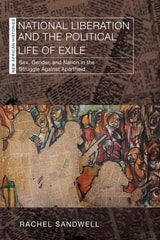
National Liberation and the Political Life of Exile
Sex, Gender, and Nation in the Struggle Against ApartheidRachel Sandwell
Ohio University Press, 2025
The first book-length study to reveal how women in exile shaped South Africa’s antiapartheid movement
This groundbreaking book explores the often-overlooked role of women in South Africa’s liberation movements, particularly within the African National Congress during its years in exile from 1960 to 1990. It examines how transformations in gender roles—though contested—were central to imagining a postapartheid South Africa.
Through an analysis of women’s diplomatic work and their advocacy for policies on sexual education, birth control, family life, and childcare, Rachel Sandwell challenges traditional narratives that have ignored or minimized women’s contributions. She highlights how South African women played a crucial role in connecting exiles to left-wing international organizations like the Women’s International Democratic Federation, positioning women as key figures in global anticolonial politics.
The book also explores how gender transformation was at the heart of the exiled antiapartheid movement’s vision for a free South Africa. Women fought for recognition beyond the role of “mothers of the nation,” sparking internal debates over revolutionary morality, the compatibility of motherhood with military service, and responses to sexual and domestic violence within the movement. These struggles mirrored broader ideological conflicts over nation building, belonging, and political identity as the African National Congress sought legitimacy as a government-in-exile.
Ultimately, National Liberation and the Political Life of Exile asks how we write histories of revolutionary movements—especially those that, despite their transformative ambitions, did not fully realize their goals. A vital contribution to feminist history, anticolonial studies, and the history of global liberation struggles, this book reshapes our understanding of gender and politics in the antiapartheid movement.
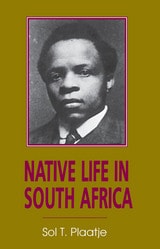
Native Life In South Africa
Before and Since the European War and the Boer RebellionSol T. Plaatje
Ohio University Press, 1991
First published in 1916 and one of South Africa’s great political books, Native Life in South Africa was first and foremost a response to the Native’s Land Act of 1913, and was written by one of the most gifted and influential writers and journalists of his generation. Sol T. Plaatje provides an account of the origins of this crucially important piece of legislation and a devastating description of its immediate effects.
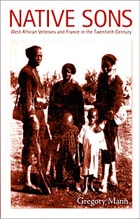
Native Sons
West African Veterans and France in the Twentieth CenturyGregory Mann
Duke University Press, 2006
Focusing on the period between World War I and 1968, Mann draws on archival research and extensive interviews with surviving Malian veterans of French wars to explore the experiences of the African soldiers. He describes the effects their long absences and infrequent homecomings had on these men and their communities, he considers the veterans’ status within contemporary Malian society, and he examines their efforts to claim recognition and pensions from France. Mann contends that Mali is as much a postslavery society as it is a postcolonial one, and that specific ideas about reciprocity, mutual obligation, and uneven exchange that had developed during the era of slavery remain influential today, informing Malians’ conviction that France owes them a “blood debt” for the military service of African soldiers in French wars.
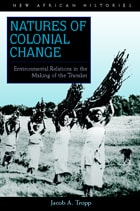
Natures of Colonial Change
Environmental Relations in the Making of the TranskeiJacob A. Tropp
Ohio University Press, 2006
In this groundbreaking study, Jacob A. Tropp explores the interconnections between negotiations over the environment and an emerging colonial relationship in a particular South African context—the Transkei—subsequently the largest of the notorious “homelands” under apartheid.
In the late nineteenth century, South Africa’s Cape Colony completed its incorporation of the area beyond the Kei River, known as the Transkei, and began transforming the region into a labor reserve. It simultaneously restructured popular access to local forests, reserving those resources for the benefit of the white settler economy. This placed new constraints on local Africans in accessing resources for agriculture, livestock management, hunting, building materials, fuel, medicine, and ritual practices.
Drawing from a diverse array of oral and written sources, Tropp reveals how bargaining over resources—between and among colonial officials, chiefs and headmen, and local African men and women—was interwoven with major changes in local political authority, gendered economic relations, and cultural practices as well as with intense struggles over the very meaning and scope of colonial rule itself.
Natures of Colonial Change sheds new light on the colonial era in the Transkei by looking at significant yet neglected dimensions of this history: how both “colonizing” and “colonized” groups negotiated environmental access and how such negotiations helped shape the broader making and meaning of life in the new colonial order.

Navigating the African Diaspora
The Anthropology of InvisibilityDonald Martin Carter
University of Minnesota Press, 2010
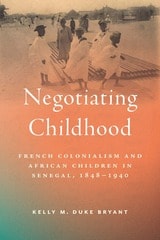
Negotiating Childhood
French Colonialism and African Children in Senegal, 1848–1940Kelly M. Duke Bryant
University of Massachusetts Press, 2026
A groundbreaking study of the meaning of childhood in French colonial Senegal
Negotiating Childhood explores how colonial child protection policies and African children’s responses to them produced new ways of defining, measuring, documenting, and experiencing childhood in the French colony of Senegal from 1848 to 1940. In this groundbreaking book, Kelly M. Duke Bryant takes the scholarship in new directions, offering to a literature dominated by studies of British colonies in the twentieth century a study of childhood in a French colony from the immediate post-emancipation period through the 1930s. This focus allows her to complicate the generally accepted timeline of child protection in colonial Africa and question other assumptions about children’s history on the continent.
This deeply researched work uses a wide range of sources to examine children’s experiences in spaces where they encountered French discipline and surveillance, such as wardship courts, public streets, schools, juvenile reformatories, and vaccine clinics. The book shows not only how these spaces re-ordered African childhood, but also how children themselves shaped and limited French efforts to impose order, especially when the state depended on African children’s cooperation to make good on rhetoric about child “protection.” It also charts the rise of documentation in children’s lives, as colonial representatives recorded names, ages, and other details about the African children with whom they interacted. Tracing the “documented” child back to the early colonial period, Negotiating Childhood historicizes the emergence of identity documentation—so crucial to our contemporary world—and questions the naturalness of the very idea of the “child.”
Negotiating Power and Privilege
Career Igbo Women in Contemporary NigeriaPhilomina E. Okeke-Ihejirika
Ohio University Press, 2004
Neoliberal Apartheid
Palestine/Israel and South Africa after 1994Andy Clarno
University of Chicago Press, 2017
After a decade of research in the Johannesburg and Jerusalem regions, Andy Clarno presents here a detailed ethnographic study of the precariousness of the poor in Alexandra township, the dynamics of colonization and enclosure in Bethlehem, the growth of fortress suburbs and private security in Johannesburg, and the regime of security coordination between the Israeli military and the Palestinian Authority in the West Bank. The first comparative study of the changes in these two areas since the early 1990s, the book addresses the limitations of liberation in South Africa, highlights the impact of neoliberal restructuring in Palestine, and argues that a new form of neoliberal apartheid has emerged in both contexts.
New African Cinema
Orlando, Valérie K
Rutgers University Press, 2017
Orlando illuminates the diverse themes evident in the works of filmmakers such as Ousmane Sembène’s Ceddo (Senegal, 1977), Sarah Maldoror’s Sambizanga (Angola, 1972), Assia Djebar’s La Nouba des femmes de Mont Chenoua (The Circle of women of Mount Chenoua, Algeria, 1978), Zézé Gamboa’s The Hero (Angola, 2004) and Abderrahmane Sissako’s Timbuktu (Mauritania, 2014), among others. Orlando also considers the influence of major African film schools and their traditions, as well as European and American influences on the marketing and distribution of African film. For those familiar with the polemics of African film, or new to them, Orlando offers a cogent analytical approach that is engaging.

New World Orderings
China and the Global SouthLisa Rofel and Carlos Rojas, editors
Duke University Press, 2022
Contributors. Andrea Bachner, Luciano Damián Bolinaga, Nellie Chu, Rachel Cypher, Mingwei Huang, T. Tu Huynh, Yu-lin Lee, Ng Kim Chew, Lisa Rofel, Carlos Rojas, Shuang Shen, Derek Sheridan, Nicolai Volland
Nkrumah & the Chiefs
The Politics of Chieftaincy in Ghana, 1951–1960Richard Rathbone
Ohio University Press, 1999
Kwame Nkrumah, who won independence for Ghana in 1957, was the first African statesman to achieve world recognition. Nkrumah and his movement also brought about the end of independent chieftaincy—one of the most fundamental changes in the history of Ghana.
Kwame Nkrumah’s Convention Peoples’ Party was committed not only to the rapid termination of British colonial rule but also to the elimination of chiefly power. This book is an account of Kwame Nkrumah and his government’s long struggle to wrest administrative control of the Ghanaian countryside from the chiefs. Based largely upon previously unstudied documentation in Ghana, this study charts the government’s frustrated attempts to democratize local government and the long and bitter campaigns mounted by many southern chiefs to resist their political marginalization.
Between 1951 and the creation of the First Republic in 1960, Ghanaian governments sought to discard the chiefly principle in local government, then to weaken chieftaincy by attrition and eventually, by altering the legal basis of chieftaincy, to incorporate and control a considerably altered chieftaincy. The book demonstrates that chieftaincy was consciously and systematically reconstructed in the decade of the 1950s with implications which can still be felt in modern Ghana.
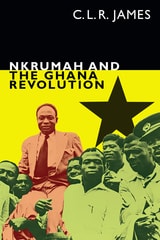
Nkrumah and the Ghana Revolution
C. L. R. James
Duke University Press, 2022
No Condition Is Permanent
The Social Dynamics of Agrarian Change in Sub-Saharan AfricaSara S. Berry
University of Wisconsin Press, 1993
“No condition is permanent,” a popular West African slogan, expresses Sara S. Berry’s theme: the obstacles to African agrarian development never stay the same. Her book explores the complex way African economy and society are tied to issues of land and labor, offering a comparative study of agrarian change in four rural economies in sub-Saharan Africa, including two that experienced long periods of expanding peasant production for export (southern Ghana and southwestern Nigeria), a settler economy (central Kenya), and a rural labor reserve (northeastern Zambia).
The resources available to African farmers have changed dramatically over the course of the twentieth century. Berry asserts that the ways resources are acquired and used are shaped not only by the incorporation of a rural area into colonial (later national) and global political economies, but also by conflicts over culture, power, and property within and beyond rural communities. By tracing the various debates over rights to resources and their effects on agricultural production and farmers’ uses of income, Berry presents agrarian change as a series of on-going processes rather than a set of discrete “successes” and “failures.”
No Condition Is Permanent enriches the discussion of agrarian development by showing how multidisciplinary studies of local agrarian history can constructively contribute to development policy. The book is a contribution both to African agrarian history and to debates over the role of agriculture in Africa’s recent economic crises.
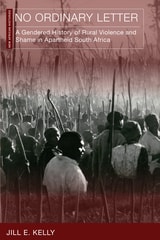
No Ordinary Letter
A Gendered History of Rural Violence and Shame in Apartheid South AfricaJill E. Kelly
Ohio University Press, 0
No Ordinary Letter reconstructs the intellectual world of rural South African women who, in 1959, mounted determined campaigns across Natal to resist the expanding policies of apartheid. Challenging Bantu Authorities, detrimental agricultural schemes, restrictions on movement, and the extension of pass laws to women, these organizers drew on knowledge rooted in the lived experience of farmwork, household management, and community governance. The book shows how women assessed their political circumstances and crafted strategies—some peaceful, some destructive—to make themselves heard in a system structured to ignore them.
Foregrounding women as thinkers as well as activists, No Ordinary Letter reveals how rural organizers theorized their positions under apartheid law and within patriarchal households and communities. Their repertoire of political understanding encompassed the daily violence of apartheid, local cultures of honor that enabled them to shame others into action, and finely honed skills for navigating the authority of elders, in-laws, and traditional leaders. When the Camperdown Native Commissioner asked why a group had destroyed government property, they replied, “We were really writing a letter to the authorities which they could read. If we had written an ordinary letter, you would not have replied.” Their explanation captures how an underlying logic of violence became a vehicle for extraordinary political communication.
At the same time, the book underscores the profound constraints shaping women’s choices: poverty, state repression, and the multiple patriarchies embedded within both the apartheid state and African communities. These overlapping systems meant that the immediate enforcers of apartheid policy were often African men with their own stakes in patriarchal arrangements. No Ordinary Letter offers a groundbreaking account of how rural women understood, navigated, and contested these entangled structures of power, providing a fresh view on political thought and resistance in apartheid South Africa.
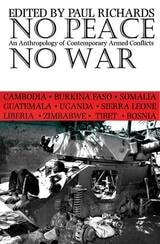
No Peace, No War
An Anthropology of Contemporary Armed ConflictsPaul Richards
Ohio University Press, 2004
A rash of small wars erupted after the Cold War ended in Africa, the Balkans, and other parts of the former communist world. The wars were in “inter-zones,” the spaces left where weak states had withdrawn or collapsed. Consequently the debate over what constitutes war has returned to basics. No Peace, No War departs from the usual analysis that considers the new wars mindless mass actions to offer the paradoxical idea that to understand war one must deny war special status. Rather than leave war to the security specialists, these writers attempt to grasp its character as one among many aspects of social reality.
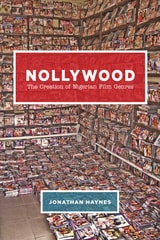
Nollywood
The Creation of Nigerian Film GenresJonathan Haynes
University of Chicago Press, 2016
Haynes describes the major Nigerian film genres and how they relate to Nigerian society—its values, desires, anxieties, and social tensions—as the country and its movies have developed together over the turbulent past two decades. As he shows, Nollywood is a form of popular culture; it produces a flood of stories, repeating the ones that mean the most to its broad audience. He interprets these generic stories and the cast of mythic figures within them: the long-suffering wives, the business tricksters, the Bible-wielding pastors, the kings in their traditional regalia, the glamorous young professionals, the emigrants stranded in New York or London, and all the rest. Based on more than twenty years of research, Haynes’s survey of Nollywood’s history and genres is unprecedented in scope, while his book also vividly describes landmark films, leading directors, and the complex character of this major branch of world cinema.
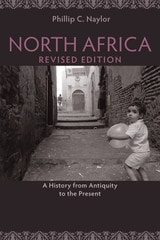
North Africa, Revised Edition
A History from Antiquity to the PresentBy Phillip C. Naylor
University of Texas Press, 2014
North Africa has been a vital crossroads throughout history, serving as a connection between Africa, Asia, and Europe. Paradoxically, however, the region's historical significance has been chronically underestimated. In a book that may lead scholars to reimagine the concept of Western civilization, incorporating the role North African peoples played in shaping "the West," Phillip Naylor describes a locale whose transcultural heritage serves as a crucial hinge, politically, economically, and socially.
Ideal for novices and specialists alike, North Africa begins with an acknowledgment that defining this area has presented challenges throughout history. Naylor's survey encompasses the Paleolithic period and early Egyptian cultures, leading readers through the pharonic dynasties, the conflicts with Rome and Carthage, the rise of Islam, the growth of the Ottoman Empire, European incursions, and the postcolonial prospects for Egypt, Libya, Tunisia, Algeria, Morocco, and Western Sahara.
Emphasizing the importance of encounters and interactions among civilizations, North Africa maps a prominent future for scholarship about this pivotal region.
Now with a new afterword that surveys the “North African Spring” uprisings that roiled the region from 2011 to 2013, this is the most comprehensive history of North Africa to date, with accessible, in-depth chapters covering the pre-Islamic period through colonization and independence.
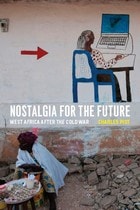
Nostalgia for the Future
West Africa after the Cold WarCharles Piot
University of Chicago Press, 2010
Since the end of the cold war, Africa has seen a dramatic rise in new political and religious phenomena, including an eviscerated privatized state, neoliberal NGOs, Pentecostalism, a resurgence in accusations of witchcraft, a culture of scamming and fraud, and, in some countries, a nearly universal wish to emigrate. Drawing on fieldwork in Togo, Charles Piot suggests that a new biopolitics after state sovereignty is remaking the face of one of the world’s poorest regions.
In a country where playing the U.S. Department of State’s green card lottery is a national pastime and the preponderance of cybercafés and Western Union branches signals a widespread desire to connect to the rest of the world, Nostalgia for the Future makes clear that the cultural and political terrain that underlies postcolonial theory has shifted. In order to map out this new terrain, Piot enters into critical dialogue with a host of important theorists, including Agamben, Hardt and Negri, Deleuze, and Mbembe. The result is a deft interweaving of rich observations of Togolese life with profound insights into the new, globalized world in which that life takes place.
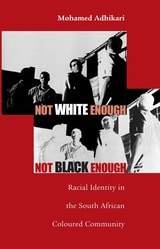
Not White Enough, Not Black Enough
Racial Identity in the South African Coloured CommunityMohamed Adhikari
Ohio University Press, 2005
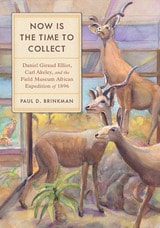
Now Is the Time to Collect
Daniel Giraud Elliot, Carl Akeley, and the Field Museum African Expedition of 1896Paul D. Brinkman
University of Alabama Press, 2024
The rediscovery of a curator’s lost journal illuminates the astonishing African journey that formed the basis of the Chicago Field Museum’s famed collections
“Now” Is the Time to Collect tells the fascinating story of the Chicago Field Museum of Natural History’s zoological expedition to Africa in 1896, the source of many of the museum’s foundational collections and an astounding episode in nineteenth-century science. After the well-publicized extinction of the dodo and Carolina parakeet and the collapse of the American bison population, late nineteenth-century naturalists expected many more vulnerable species to die out with spread of Western-style industrialization. This triggered a race to collect rare species of animals expected soon to be lost forever.
Established in 1893, Chicago’s ambitious Field Museum aimed to become a global center of study. Zoologist Daniel Giraud Elliot persuaded museum patrons to fund an immediate expedition to British Somaliland (contemporary Somalia). There, his team hunted and killed hundreds of animals for the growing collection. On the trip was groundbreaking taxonomist Carl Akeley. Back in Chicago, Akeley created captivating lifelike dioramas of rare animal groups that enhanced the museum’s fame and remain popular to this day.
Enriched with illuminated passages from Elliot’s journal, only recently rediscovered, “Now” Is the Time to Collect is the first book of its kind by an American museum and a case study in what author Paul D. Brinkman calls “salvage zoology”—the practice of aggressively collecting rare animal specimens for preservation just prior to the birth of the modern conservation movement. It is a riveting account of the expedition, the travelers’ experiences in Somalia during its colonial period, and the astonishing origins of one of Chicago’s classic museum experiences.
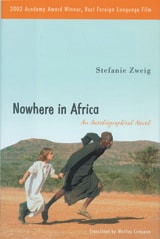
Nowhere in Africa
An Autobiographical NovelStefanie Zweig, Translated by Marlies Comjean
University of Wisconsin Press, 2007
Visit the Web site for the film at www.nowhereinafrica.com