Results by title
1566 books match the query 'Christianity' and 19 start with n
Nation and World, Church and God
The Legacy of Garry WillsEdited by Kenneth L. Vaux and Melanie Baffes
Northwestern University Press, 2014
Garry Wills is the polymathic public intellectual bemoaned as missing from American letters. A professor emeritus at Northwestern University, he has built upon his early studies in classics and patristics, while bringing his considerable intellect to bear on American culture, politics, and religion, notably through provocative articles and books on wars, past and present presidents, and the Catholic Church Wills has distinguished himself in the crowded field of Civil War history; fearlessly taken on the legacies of Richard Nixon and Ronald Reagan, among other presidents; and offered a critical voice in many fraught ethical discussions, especially in the areas of war and peace.
Nation and World, Church and God gathers original critical reflections by leading writers and scholars on Garry Wills’s life work. Organized around the themes of “Classics,” “Civil War,” “War and Peace,” and “Theology, Church, and the Arts,” the book reflects the cultural acumen, fine-grained political analysis, ethical candor, and theological wisdom of one of America’s most prolific writers.
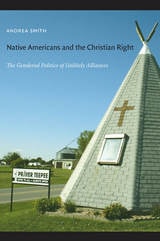
Native Americans and the Christian Right
The Gendered Politics of Unlikely AlliancesAndrea Smith
Duke University Press, 2008
Smith draws on archival research, interviews, and her own participation in Native struggles and Christian Right conferences and events. She considers American Indian activism within the Promise Keepers and new Charismatic movements. She also explores specific opportunities for building unlikely alliances. For instance, while evangelicals’ understanding of the relationship between the Bible and the state may lead to reactionary positions on issues including homosexuality, civil rights, and abortion, it also supports a relatively progressive position on prison reform. In terms of evangelical and Native American feminisms, she reveals antiviolence organizing to be a galvanizing force within both communities, discusses theories of coalition politics among both evangelical and indigenous women, and considers Native women’s visions of sovereignty and nationhood. Smith concludes with a reflection on the implications of her research for the field of Native American studies.
Native Evangelism in Central Mexico
By Hugo G. Nutini and Jean F. Nutini
University of Texas Press, 2014
Evangelical Christianity is Mexico’s fastest-growing religious movement, with about ten million adherents today. Most belong to Protestant denominations introduced from the United States (e.g., Jehovah’s Witnesses, Seventh-day Adventists), but perhaps as many as 800,000 are members of homegrown, “native” evangelical sects. These native Mexican sects share much with the American denominations of which they are spinoffs. For instance, they are Trinitarian, Anabaptist, and Millenarian; they emphasize a personal relationship with God, totally rejecting intermediation by saints; and they insist that they are the only true Christians. Beyond that, each native sect has its distinctive characteristics.
This book focuses on two sharply contrastive native evangelical sects in Central Mexico: Amistad y Vida (Friendship and Life) and La Luz del Mundo (The Light of the World). The former, founded in 1982, now has perhaps 120,000 adherents nationwide. It is nonhierarchical, extremely egalitarian, and has no dogmatic directives. It is a cheerful religion that emphasizes charity, community service, and personal kindness as the path to salvation. It attracts new members, mainly from the urban middle class, through personal example rather than proselytizing. La Luz del Mundo, founded in 1926, now has about 350,000 members in Mexico and perhaps one million in the hemisphere. It is hierarchically organized and demands total devotion to the sect’s founder and his son, who are seen as direct links to Jesus on Earth. It is a proselytizing sect that recruits mainly among the urban poor by providing economic benefits within the congregations, but does no community service as such.
Based on ten years of fieldwork (1996–2006) and contextualized by nearly fifty years of anthropological study in the region, Native Evangelism in Central Mexico presents the first ethnography of Mexico’s native evangelical congregations.
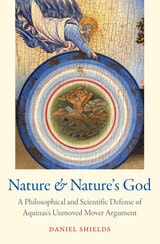
Nature and Nature's God
A Philosophical and Scientific Defense of Aquinas' Unmoved Mover ArgumentDaniel Shields
Catholic University of America Press, 2023
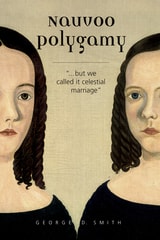
Nauvoo Polygamy
"…but we called it celestial marriage"George D. Smith
Signature Books, 2011
“Nauvoo Polygamy is s a thorough investigation of sexual politics in the City of the Saints, the 1840s Mormon headquarters in the U.S. State of Illinois. Written with precision, clarity, and ease, it is a major contribution to Mormon history, groundbreaking in identifying the other polygamists who followed the lead of their prophet, Joseph Smith, in taking multiple partners.” —Klaus J. Hansen, Professor Emeritus of History, Queen’s University, Ontario
“If for no other reason, the inclusion of chapter 6 makes this book worth its price. The chapter quotes liberally from those like Elizabeth Ann Whitney and Bathsheba Smith who accepted polygamy rather easily, those like Jane Richards who accepted it only reluctantly, and those like Patty Sessions who found plural marriage almost unbearable. A bonus is chapter 9 which provides a concise historical overview of polygamous societies in Reformation Europe, touches on similar societies in America, and offers an extended discussion of Orson Pratt’s 1852 defense of plural marriage.” —Thomas G. Alexander, Professor Emeritus of History, Brigham Young University
“George Smith shows how many of the prophet’s followers embraced plural marriage during a period when the LDS Church was emphatically denying the practice … [and he tells this in] a lucid writing style.” —Daniel Walker Howe, Pulitzer Prize winning author of What Hath God Wrought: The Transformation of America, 1815-1848.
“An extremely important contribution to the history of polygamy … that allows us to see how Joseph Smith’s marriages fit into the context of his daily life.” —Todd M. Compton, author of In Sacred loneliness: The Plural Wives of Joseph Smith
Negotiating Marian Apparitions
The Politics of Religion in Transcarpathian UkraineAgnieszka Halemba
Central European University Press, 2015
Negotiating the Disabled Body
Representations of Disability in Early Christian TextsAnna Rebecca Solevåg
SBL Press, 2018
An intersectional study of New Testament and noncanonical literature
Anna Rebecca Solevåg explores how nonnormative bodies are presented in early Christian literature through the lens of disability studies. In a number of case studies, Solevåg shows how early Christians struggled to come to terms with issues relating to body, health, and dis/ability in the gospel stories, apocryphal narratives, Pauline letters, and patristic expositions. Solevåg uses the concepts of narrative prosthesis, gaze and stare, stigma, monster theory, and crip theory to examine early Christian material to reveal the multiple, polyphonous, contradictory ways in which nonnormative bodies appear.
Features:
- Case studies that reveal a variety of understandings, attitudes, medical frameworks, and taxonomies for how disabled bodies were interpreted
- A methodology that uses disability as an analytical tool that contributes insights about cultural categories, ideas of otherness, and social groups’ access to or lack of power
- An intersectional perspective drawing on feminist, gender, queer, race, class, and postcolonial studies
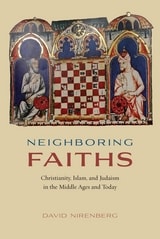
Neighboring Faiths
Christianity, Islam, and Judaism in the Middle Ages and TodayDavid Nirenberg
University of Chicago Press, 2014
There have been countless scripture-based studies of the three “religions of the book,” but Nirenberg goes beyond those to pay close attention to how the three religious neighbors loved, tolerated, massacred, and expelled each other—all in the name of God—in periods and places both long ago and far away. Nirenberg argues that the three religions need to be studied in terms of how each affected the development of the others over time, their proximity of religious and philosophical thought as well as their overlapping geographies, and how the three “neighbors” define—and continue to define—themselves and their place in terms of one another. From dangerous attractions leading to interfaith marriage; to interreligious conflicts leading to segregation, violence, and sometimes extermination; to strategies for bridging the interfaith gap through language, vocabulary, and poetry, Nirenberg aims to understand the intertwined past of the three faiths as a way for their heirs to produce the future—together.
Neither Nature nor Grace
Aquinas, Barth, and Garrigou-Lagrance on the Epistemic Use of God's EffectsT. Adam Van Wart
Catholic University of America Press, 2021

New Considerations of the Doctrinal Differences Between Catholics and Protestants
A Defense of My Symbolism Against the Objections of Ferdinad Christian Baur in TübingenJohann Adam Möhler
Catholic University of America Press, 2027
New Documents Illustrating Early Christianity 11A
Texts from EphesusJames R. Harrison
SBL Press, 2024
New Documents Illustrating Early Christianity 11B
Essays on EphesusJames R. Harrison
SBL Press, 2025
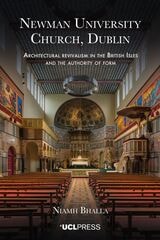
Newman University Church, Dublin
Architectural Revivalism in the British Isles and the Authority of FormNiamh Bhalla
University College London, 2024
Newman University Church, Dublin charts the first ever analysis of University Church’s significance within the history of Victorian revivalist architecture. Author Niamh Bhalla explores the relationship between the church’s context as the first Catholic university in Ireland and the ambiguity of its “early Christian” style, providing an effective lens to understand the architectural revivalism of the nineteenth century, particularly basilican and Byzantine revivalist architectures in the British Isles.
Newman, Canon Law and Development
Quarrying Granite Rocks with RazorsDavid P. Long
Catholic University of America Press, 2024
Nicholas of Cusa's <i>On Learned Ignorance</i>
A Commentary on <i>De docta ignorantia</i>Karsten Harries
Catholic University of America Press, 2024
Nihil Obstat
Religion, Politics, and Social Change in East-Central Europe and RussiaSabrina P. Ramet
Duke University Press, 1998
Based on interview research in Germany, Austria, Slovenia, Croatia, Bosnia, Serbia, and Macedonia, and on materials published in German, Italian, Serbo-Croatian, Polish, Czech, Slovak, Russian, and English, Ramet paints a clear picture of the political and religious fragility of former communist states, which are experiencing some aspects of freedom and choice for the first time. With its comprehensive discussion of the largest religious institutions in the area, especially the Catholic and Orthodox Churches, and its extensive survey of nontraditional religious associations that have become active in the region since 1989, this study makes a distinct contribution to growing discussions about the rise of fundamentalism and the inner dilemmas of modernity. With its depth of information and thoughtful exploration of cultural traditions, Nihil Obstat uniquely presents the ramifications and complexities of European religion in a postcommunist world.
Nixon's First Cover-up
The Religious Life of a Quaker PresidentH. Larry Ingle
University of Missouri Press, 2015
Nonnus of Nisibis, Commentary on the Gospel of Saint John
Robert W. Thomson
SBL Press, 2014
A new English translation of the first text translated from Arabic to Armenian for research and classroom use
Robert W. Thomson translates this ninth-century commentary defending the miaphysite theological position of the Armenian church against the chalcedonian position of the Greek Byzantine church. Nonnus’s exegesis of the gospel falls in the context of trends in Eastern Christian biblical exposition, primarily the Syrian tradition. Therefore, Thomson emphasizes the parallels in Syriac commentaries on the book of John, noting also earlier Greek writers whose works were influential in Syria. This book is essential reading for anyone interested in the Armenian church and church history.
Features:
- Introductory material on the text’s history, manuscript traditions, and theological importance
- Translation of the Armenian text and commentary
- Bibliography covering the Armenian, Greek, Syriac, and Arabic texts as well as secondary sources
Not by Reason Alone
Religion, History, and Identity in Early Modern Political ThoughtJoshua Mitchell
University of Chicago Press, 1993
This erudite and ambitious work crosses disciplinary boundaries to expose unsuspected connections between political theory, religion, and history. In doing so, it offers a view of modern political thought undistorted by conventional distinctions between the ancient and the modern, and between the religious and the political.
"Original. . . . A delight to read a political philosopher who takes the theologies of Hobbes and Locke seriously." —J. M. Porter, Canadian Journal of History
"Mitchell's argument both illuminates and fascinates. . . . An arresting, even stunning, contribution to our study of modern political thought."—William R. Stevenson, Jr., Christian Scholar's Review