78 books match the query 'Developmental' and 2 start with n
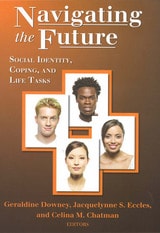
cover of Navigating the Future: Social Identity, Coping, and Life Tasks

Navigating the Future

Social Identity, Coping, and Life Tasks

Geraldine Downey

Russell Sage Foundation, 2005

Psychologists now understand that identity is not fixed, but fluid and highly dependent on environment. In times of stress, conflict, or change, people often adapt by presenting themselves in different ways and emphasizing different social affiliations. With changing demographics creating more complex social groupings, it is important to understand the costs and benefits of the way social groups are categorized, and the way individuals understand, cope with, and employ their varied social identities. Navigating the Future, edited by Geraldine Downey, Jacquelynne Eccles, and Celina Chatman, answers that call with a wealth of empirical data and expert analysis. Navigating the Future focuses on the roles that social identities play in stressful, challenging, and transitional situations. Jason Lawrence, Jennifer Crocker, and Carol Dweck show how the prospect of being negatively stereotyped can affect the educational success of girls and African Americans, making them more cynical about school and less likely to seek help. The authors argue that these issues can be mitigated by challenging these students educationally, expressing optimism in their abilities, and emphasizing that intelligence is not fixed, but can be developed. The book also looks at the ways in which people employ social identity to their advantage. J. Nicole Shelton and her co-authors use extensive research on adolescents and college students to argue that individuals with strong, positive connections to their ethnic group exhibit greater well-being and are better able to cope with the negative impact of discrimination. Navigating the Future also discusses how the importance and value of social identity depends on context. LaRue Allen, Yael Bat-Chava, J. Lawrence Aber, and Edward Seidman find that the emotional benefit of racial pride for black adolescents is higher in predominantly black neighborhoods than in racially mixed environments. Because most people identify with more than one group, they must grapple with varied social identities, using them to make connections with others, overcome adversity, and understand themselves. Navigating the Future brings together leading researchers in social psychology to understand the complexities of identity in a diverse social world.
[more]
cover of Not Under My Roof: Parents, Teens, and the Culture of Sex

Not Under My Roof

Parents, Teens, and the Culture of Sex

Amy T. Schalet

University of Chicago Press, 2011

Winner of the Healthy Teen Network’s Carol Mendez Cassell Award for Excellence in Sexuality Education and the American Sociological Association's Children and Youth Section's 2012 Distinguished Scholarly Research Award

For American parents, teenage sex is something to be feared and forbidden: most would never consider allowing their children to have sex at home, and sex is a frequent source of family conflict. In the Netherlands, where teenage pregnancies are far less frequent than in the United States, parents aim above all for family cohesiveness, often permitting young couples to sleep together and providing them with contraceptives. Drawing on extensive interviews with parents and teens, Not Under My Roof offers an unprecedented, intimate account of the different ways that girls and boys in both countries negotiate love, lust, and growing up.

Tracing the roots of the parents’ divergent attitudes, Amy T. Schalet reveals how they grow out of their respective conceptions of the self, relationships, gender, autonomy, and authority. She provides a probing analysis of the way family culture shapes not just sex but also alcohol consumption and parent-teen relationships. Avoiding caricatures of permissive Europeans and puritanical Americans, Schalet shows that the Dutch require self-control from teens and parents, while Americans guide their children toward autonomous adulthood at the expense of the family bond.

[more]