Results by title
5448 books match the query 'History and criticism' and 117 start with n
NARRATIVE CAUSALITIES
Emma Kafalenos
The Ohio State University Press, 2006
NEW WOMAN AND THE EMPIRE
Iveta Jusová
The Ohio State University Press, 2005

NOVEL PROFESSIONS
INTERESTED DISINTEREST AND THE MAKING OF THE VICTORIAN NOVELJennifer Ruth
The Ohio State University Press, 2006

Nabokov's Canon
From "Onegin" to "Ada"Marijeta Bozovic
Northwestern University Press, 2016

Nadia Boulanger and Her World
Edited by Jeanice Brooks
University of Chicago Press, 2020
Composer, performer, conductor, impresario, and charismatic and inspirational teacher, Boulanger engaged in a vast array of activities in a variety of media, from private composition lessons and lecture-recitals to radio broadcasts, recordings, and public performances. But how to define and account for Boulanger’s impact on the music world is still unclear. Nadia Boulanger and Her World takes us from a time in the late nineteenth century, when many careers in music were almost entirely closed to women, to the moment in the late twentieth century when those careers were becoming a reality. Contributors consider Boulanger’s work in the worlds of composition, musical analysis, and pedagogy and explore the geographies of transatlantic and international exchange and disruption within which her career unfolded. Ultimately, this volume takes its title as a topic for exploration—asking what worlds Boulanger belonged to, and in what sense we can consider any of them to be “hers.”
Nancy Drew and Company
Culture, Gender, and Girls’ SeriesEdited by Sherrie A. Inness
University of Wisconsin Press, 1997

Napoleonic Friendship
Military Fraternity, Intimacy, and Sexuality in Nineteenth-Century FranceBrian Joseph Martin
University of New Hampshire Press, 2011
Winner of the Laurence Wylie Prize in French Cultural Studies
One of the first books on “Gays in the Military” published following the historic repeal of “Don't Ask Don't Tell” in 2011, Napoleonic Friendship examines the history of male intimacy in the French military, from Napoleon to the First World War. Echoing the historical record of gay soldiers in the United States, Napoleonic Friendship is the first book-length study on the origin of queer soldiers in modern France. Based on extensive archival research in France, the book traces the development of affectionate friendships in the French Army from 1789 to 1916.
Following the French Revolution, radical military reforms created conditions for new physical and emotional intimacy between soldiers, establishing a model of fraternal affection during the Revolutionary and Napoleonic Wars that would persist amid the ravages of the Franco-Prussian War and World War I. Through readings of Napoleonic military memoirs (and other non-fiction archival material) and French military fiction (from Hugo and Balzac to Zola and Proust), Martin examines a broad range of emotional and erotic relationships, from combat buddies to soldier lovers. He argues that the French Revolution's emphasis on military fraternity evolved into an unprecedented sense of camaraderie in the armies of Napoleon. For many soldiers, the hardships of combat led to intimate friendships. For some, the homosociality of military life inspired mutual affection, lifelong commitment, and homoerotic desire.
Narrating Demons, Transformative Texts
Rereading Genius in Mid-Century Modern Fictional MemoirDaniel T. O’Hara
The Ohio State University Press, 2012
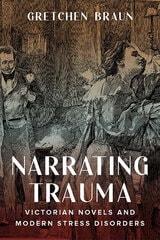
Narrating Trauma
Victorian Novels and Modern Stress DisordersGretchen Braun
The Ohio State University Press, 2022
Narrating the Past
Fiction and Historiography in Postwar SpainDavid K. Herzberger
Duke University Press, 1995
The narrative and rhetorical strategies of historical discourse figure in both the fiction and historiography of postwar Spain. Herzberger analyzes these strategies, identifying the structures and vocabularies they use to frame the past and endow it with particular meanings. He shows how Francoist historians sought to affirm the historical necessity of Franco by linking the regime to a heroic and Christian past, while several types of postwar fiction—such as social realism, the novel of memory, and postmodern novels—created a voice of opposition to this practice. Focusing on the concept of writing history that these opposing strategies convey, Herzberger discloses the layering of truth and meaning that lies at the heart of postwar Spanish narrative from the early 1940s to the fall of Franco. His study clearly reveals how the novel in postwar Spain became a crucial form of dissent from the past as it was conceived and used by the State.
Making a decisive intervention in the debate about the ways in which narration determines both the meaning and truth of history and fiction, Narrating the Past will be of special interest to students and scholars of the politics, history, and literature of twentieth-century Spain.
Narrative Bonds
Multiple Narrators in the Victorian NovelAlexandra Valint
The Ohio State University Press, 2021
Narrative Innovation and Incoherence
Ideology in Defoe, Goldsmith, Austen, Eliot, and HemingwayMichael M. Boardman
Duke University Press, 1992
Urgent innovations, in this account, can only be understood as unique, individual responses to crises in belief. Taking as a point of departure French theorist Althusser's conviction that ideology is intelligible only through structure, Boardman searches for an explanation of both form and ideology not in Marxist concepts of base and superstructure but in the particular structure of an individual artist's writing career. Narrative ideology here becomes more complex than is generally assumed.
Theoretically informed yet avoiding essentializing explanations of narrative invention, Narrative Innovation and Incoherence offers unexpected insights into the multifaceted relations between form and belief. It will encourage serious students of the novel to reexamine the importance of poetics as a mediating factor in the means of production.
Narrative Middles
Navigating the Nineteenth-Century NovelEdited by Caroline Levine and Mario Ortiz-Robles
The Ohio State University Press, 2011
Narrative theorists have lavished attention on beginnings and endings, but they have too often neglected the middle of narratives. In this groundbreaking collection of essays, Narrative Middles: Navigating the Nineteenth-Century British Novel, nine literary scholars offer innovative approaches to the study of the underrepresented middle of the vast, bulky nineteenth-century multiplot novel. Combining rigorous formal analysis with established sociohistorical methods, these essays seek to account for the various ways in which the novel gave shape to British culture’s powerful obsession with middles. The capacious middle of the nineteenth-century novel provides ample room for intricately woven plots and the development of complex character systems, but it also becomes a medium for capturing, consecrating, and cultivating the middle class and its middling, middlebrow tastes as well as its mediating global role in empire. Narrative Middles explores these fascinating conjunctions in new readings of novels by Jane Austen, William Makepeace Thackeray, Anne Brontë, George Eliot, Charles Dickens, Wilkie Collins, Henry James, and William Morris. Contributors: Amanda Claybaugh, Suzanne Daly, Amanpal Garcha, Amy King, Caroline Levine, Mario Ortiz-Robles, Kent Puckett, Hilary Schor, and Alex Woloch.
Narrative Mourning
Death and Its Relics in the Eighteenth-Century British NovelKathleen M. Oliver
Bucknell University Press, 2020
Published by Bucknell University Press. Distributed worldwide by Rutgers University Press.
Narrative Paths
African Travel in Modern Fiction and NonfictionKai Mikkonen
The Ohio State University Press, 2015
Narrative Paths contributes to debates in narratology and rhetorical narrative theory about the fiction–nonfiction distinction. With chapters on a wide range of modernist authors—from Pierre Loti, André Gide, Michel Leiris, and Georges Simenon to Blaise Cendrars, Louis-Ferdinand Céline, Joseph Conrad, Graham Greene, Evelyn Waugh, and Isak Dinesen (Karen Blixen)—Mikkonen’s study also contributes to postcolonial approaches to these authors, examining issues of representation, narrative voice, and authority in narratives about colonial Africa.
Narrative Podcasting in an Age of Obsession
Neil Verma
University of Michigan Press, 2024
Narrative Podcasting in an Age of Obsession is the first book to look back on this prodigious body of material and attempt to make sense of it from a structural, historical, and analytic point of view. Focusing on more than 350 podcasts and other audio works released between Serial and the COVID pandemic, the book explores why so many of these podcasts seem “obsessed with obsession,” why they focus not only on informing listeners but also dramatizing the labor that goes into it, and why fiction podcasts work so hard to prove they are a brand new form, even as they revive features of radio from decades gone by. This work also examines the industry's reckoning with its own implication in systemic racism, misogyny, and other forms of discrimination. Employing innovative new critical techniques for close listening—including pitch tracking software and spectrograms—Narrative Podcasting in an Age of Obsession makes a major contribution to podcast studies and media studies more broadly.
Narrative Prosthesis
Disability and the Dependencies of DiscourseDavid T. Mitchell and Sharon L. Snyder
University of Michigan Press, 2001
Narrative, Race, and Ethnicity in the United States
Edited by James J. Donahue, Jennifer Ann Ho, and Shaun Morgan
The Ohio State University Press, 2017
Recognizing that racial/ethnic issues and tensions are often contextualized geographically, this volume focuses on narratives associated with various racial and ethnic communities in the United States. By engaging with new developments in narrative theory and critical race studies, this volume demonstrates the vitality of using the tools of narratology and critical race theory together to understand how race influences narrative and how narratology illuminates a reading of race in ethnic American literature.
Narratives of Greater Mexico
Essays on Chicano Literary History, Genre, and BordersBy Héctor Calderón
University of Texas Press, 2005
Once relegated to the borders of literature—neither Mexican nor truly American—Chicana/o writers have always been in the vanguard of change, articulating the multicultural ethnicities, shifting identities, border realities, and even postmodern anxieties and hostilities that already characterize the twenty-first century. Indeed, it is Chicana/o writers' very in-between-ness that makes them authentic spokespersons for an America that is becoming increasingly Mexican/Latin American and for a Mexico that is ever more Americanized.
In this pioneering study, Héctor Calderón looks at seven Chicana and Chicano writers whose narratives constitute what he terms an American Mexican literature. Drawing on the concept of "Greater Mexican" culture first articulated by Américo Paredes, Calderón explores how the works of Paredes, Rudolfo Anaya, Tomás Rivera, Oscar Zeta Acosta, Cherríe Moraga, Rolando Hinojosa, and Sandra Cisneros derive from Mexican literary traditions and genres that reach all the way back to the colonial era. His readings cover a wide span of time (1892-2001), from the invention of the Spanish Southwest in the nineteenth century to the América Mexicana that is currently emerging on both sides of the border. In addition to his own readings of the works, Calderón also includes the writers' perspectives on their place in American/Mexican literature through excerpts from their personal papers and interviews, correspondence, and e-mail exchanges he conducted with most of them.
Narratology and Ideology
Negotiating Context, Form, and Theory in Postcolonial NarrativesDivya Dwivedi
The Ohio State University Press, 2018
The thirteen essays in Narratology and Ideology offer compelling readings of individual novels, with a focus upon South Asian literature, that provide a cumulative case study on the value of postcolonial narratology. The essays show not only how narrative theory can be productively applied in service of postcolonial criticism but also how such attention to postcolonial fictions can challenge and refine our theoretical understanding of narrative.

Natchiq Grows Up
The Story of an Alaska Ringed Seal Pup and Her Changing HomeDonna D.W. Hauser
University of Alaska Press, 2023
Beginning in the 1980s, scientists started traveling to northwest Alaska to research the lives of ringed seals, bringing Labrador retrievers who could sniff out seals and their snow cave homes (called lairs) on the sea ice. Decades later, scientists partnered with the Iñupiaq people of
Qikiktaġruk (Kotzebue) to learn more about ringed seals. They relied on a combination of Indigenous Knowledge and scientific techniques to capture and apply tags to understand the movements and behavior of ringed seals.
But the Arctic homes of ringed seals are changing, and the long history of ringed seal science in the Kotzebue Sound proved to be just the beginning of long and cooperative relationships melding science and Indigenous knowledge. During 2018 and 2019, with unprecedented sea ice conditions, Qikiktagrumiut Elders and scientists returned to the ice to measure changes in the habitat available for ringed seal pups in the region.
National Identities and Post-Americanist Narratives
Donald E. Pease
Duke University Press, 1994
This volume, originally published as a special issue of bounrary 2, focuses on the process of assembling and dismantling the American national narrative(s), sketching its inception and demolition. The contributors examine various cultural, political, and historical sources--colonial literature, mass movements, epidemics of disease, mass spectacle, transnational corporations, super-weapons, popular magazines, literary texts--out of which this narrative was constructed, and propose different understandings of nationality and identity following in its wake.
Contributors. Jonathan Arac, Lauren Berlant, Robert J. Corber, Elizabeth Freeman, Kathryn V. Lingberg, Jack Matthews, Alan Nadel, Patrick O'Donnell, Daniel O'Hara, Donald E. Pease, Ross Posnock, John Carlos Rowe, Rob Wilson
Nationalism, Colonialism, and Literature
Terry Eagleton
University of Minnesota Press, 1990
The three essays constituting this volume were originally published as individual pamphlets by the Field Day Theatre Company, in Derry, Northern Ireland. Each deals with the question of nationalism and the role of cultural production as a force in understanding and analyzing the aftermath of colonization. The authors’ diverse perspectives are demonstrated by the essays’ respective titles: Eagleton, Nationalism: Irony and Commitment; Jameson, Modernism and Imperialism; and Said, Yeats and Decolonization. The essays have implication beyond their immediate topics, bearing upon questions of feminism, decolonization, and modernism to illuminate problems that belong to other groups and regions.
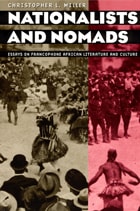
Nationalists and Nomads
Essays on Francophone African Literature and CultureChristopher L. Miller
University of Chicago Press, 1999
Miller ranges from the beginnings of francophone African literature—which he traces not to the 1930s Negritude movement but to the largely unknown, virulently radical writings of Africans in Paris in the 1920s—to the evolving relations between African literature and nationalism in the 1980s and 1990s. Throughout he aims to offset the contemporary emphasis on the postcolonial at the expense of the colonial, arguing that both are equally complex, with powerful ambiguities. Arguing against blanket advocacy of any one model (such as nationalism or hybridity) to explain these ambiguities, Miller instead seeks a form of thought that can read and recognize the realities of both identity and difference.
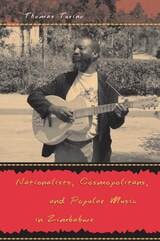
Nationalists, Cosmopolitans, and Popular Music in Zimbabwe
Thomas Turino
University of Chicago Press, 2000
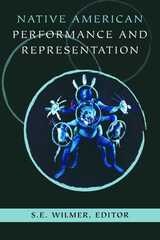
Native American Performance and Representation
Edited by S. E. Wilmer
University of Arizona Press, 2009
This volume examines Native performance using a variety of lenses, such as feminism, literary and film theory, and postcolonial discourse. Through the many unique voices of the contributors, major themes are explored, such as indigenous self-representations in performance, representations by nonindigenous people, cultural authenticity in performance and representation, and cross-fertilization between cultures. Authors introduce important, though sometimes controversial, issues as they consider the effects of miscegenation on traditional customs, racial discrimination, Native women’s position in a multicultural society, and the relationship between authenticity and hybridity in Native performance.
An important addition to the new and growing field of Native performance, Wilmer’s book cuts across disciplines and areas of study in a way no other book in the field does. It will appeal not only to those interested in Native American studies but also to those concerned with women’s and gender studies, literary and film studies, and cultural studies.
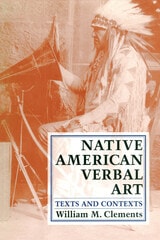
Native American Verbal Art
Texts and ContextsWilliam M. Clements
University of Arizona Press, 1996
He examines in depth Henry Timberlake’s 1765 translation of a Cherokee war song that was probably the first printed English rendering of a Native American "poem." He discusses early-nineteenth-century textualizers and translators who saw in Native American verbal art a literature manqué that they could transform into a fully realized literature, with particular attention to the work of Henry Rowe Schoolcraft, an Indian agent and pioneer field collector who developed this approach to its fullest. He discusses the "scientific" textualizers of the late nineteenth century who viewed Native American discourse as a data source for historical, ethnographic, and linguistic information, and he examines the work of Natalie Curtis, whose field research among the Hopis helped to launch a wave of interest in Native Americans and their verbal art that continues to the present.
In addition, Clements addresses theoretical issues in the textualization, translation, and anthologizing of American Indian oral expression. In many cases the past records of Native American expression represent all we have left of an entire verbal heritage; in most cases they are all that we have of a particular heritage at a particular point in history. Covering a broad range of materials and their historical contexts, Native American Verbal Art identifies the agendas that have informed these records and helps the reader to determine what remains useful in them. It will be a welcome addition to the fields of Native American studies and folklore.
Native Intelligence
Aesthetics, Politics, and Postcolonial LiteratureDeepika Bahri
University of Minnesota Press, 2003
A compelling reclamation of the place of aesthetics in postcolonial literature
Literature though it may be, postcolonial literature is studied and understood largely—and often solely—in social and political terms. In neglecting its aesthetic dimension, as this book forcefully demonstrates, we are overlooking not only an essential aspect of this literature but even a critical perspective on its sociopolitical function and value. In Native Intelligence, Deepika Bahri focuses on postcolonial literature’s formal and aesthetic negotiations with sociopolitical concerns.
How, Bahri asks, do aesthetic considerations contest the social function of postcolonial literature? In answering, her book takes on two tasks: First, it identifies the burden of representation borne by postcolonial literature through its progressive politicization. Second, it draws on Frankfurt School critical theory to reclaim a place for aesthetics in literary representation by closely engaging works of Rohinton Mistry, Salman Rushdie, and Arundhati Roy. Throughout, Bahri shows how attention to the aesthetic innovations and utopian impulses of postcolonial works uncovers their complex and uneven relationship to ideology, reanimating their potential to make novel contributions to the larger project of social liberation.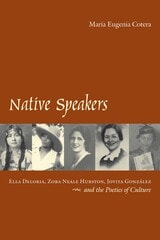
Native Speakers
Ella Deloria, Zora Neale Hurston, Jovita Gonzalez, and the Poetics of CultureBy María Eugenia Cotera
University of Texas Press, 2008
Gloria Anzaldua Book Prize, National Women's Studies Association, 2009
In the early twentieth century, three women of color helped shape a new world of ethnographic discovery. Ella Cara Deloria, a Sioux woman from South Dakota, Zora Neale Hurston, an African American woman from Florida, and Jovita González, a Mexican American woman from the Texas borderlands, achieved renown in the fields of folklore studies, anthropology, and ethnolinguistics during the 1920s and 1930s. While all three collaborated with leading male intellectuals in these disciplines to produce innovative ethnographic accounts of their own communities, they also turned away from ethnographic meaning making at key points in their careers and explored the realm of storytelling through vivid mixed-genre novels centered on the lives of women.
In this book, Cotera offers an intellectual history situated in the "borderlands" between conventional accounts of anthropology, women's history, and African American, Mexican American and Native American intellectual genealogies. At its core is also a meditation on what it means to draw three women—from disparate though nevertheless interconnected histories of marginalization—into conversation with one another. Can such a conversation reveal a shared history that has been erased due to institutional racism, sexism, and simple neglect? Is there a mode of comparative reading that can explore their points of connection even as it remains attentive to their differences? These are the questions at the core of this book, which offers not only a corrective history centered on the lives of women of color intellectuals, but also a methodology for comparative analysis shaped by their visions of the world.
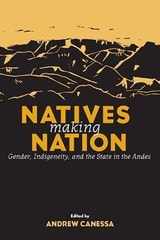
Natives Making Nation
Gender, Indigeneity, and the State in the AndesAndrew Canessa
University of Arizona Press, 2005
This volume looks at how metropolitan ideas of nation employed by politicians, the media and education are produced, reproduced, and contested by people of the rural Andes—people who have long been regarded as ethnically and racially distinct from more culturally European urban citizens. Yet these peripheral “natives” are shown to be actively engaged with the idea of the nation in their own communities, forcing us to re-think the ways in which indigeneity is defined by its marginality.
The contributors examine the ways in which numerous identities—racial, generational, ethnic, regional, national, gender, and sexual—are both mutually informing and contradictory among subaltern Andean people who are more likely now to claim an allegiance to a nation than ever before. Although indians are less often confronted with crude assimilationist policies, they continue to face racism and discrimination as they struggle to assert an identity that is more than a mere refraction of the dominant culture. Yet despite the language of multiculturalism employed even in constitutional reform, any assertion of indian identity is likely to be resisted. By exploring topics as varied as nation-building in the 1930s or the chuqila dance, these authors expose a paradox in the relation between indians and the nation: that the nation can be claimed as a source of power and distinct identity while simultaneously making some types of national imaginings unattainable.
Whether dancing together or simply talking to one another, the people described in these essays are shown creating identity through processes that are inherently social and interactive. To sing, to eat, to weave . . . In the performance of these simple acts, bodies move in particular spaces and contexts and do so within certain understandings of gender, race and nation. Through its presentation of this rich variety of ethnographic and historical contexts, Natives Making Nation provides a finely nuanced view of contemporary Andean life.
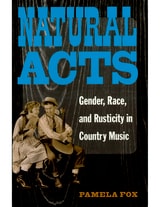
Natural Acts
Gender, Race, and Rusticity in Country MusicPamela Fox
University of Michigan Press, 2009
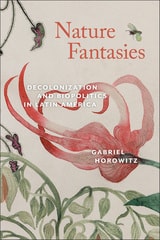
Nature Fantasies
Decolonization and Biopolitics in Latin AmericaGabriel Horowitz
Bucknell University Press, 2024
In this original study, Gabriel Horowitz examines the work of select nineteenth- and twentieth-century Latin American writers through the lens of contemporary theoretical debates about nature, postcoloniality, and national identity. In the work of José Martí, Gertrudis Gómez de Avellaneda, Jorge Luis Borges, Augusto Roa Bastos, Cesar Aira, and others, he traces historical constructions of nature in regional intellectual traditions and texts as they inform political culture on the broader global stage. By investigating national literary discourses from Cuba, Argentina, and Paraguay, he identifies a common narrative thread that imagines the utopian wilderness of the New World as a symbolic site of independence from Spain. In these texts, Horowitz argues, an expressed desire to return to the nation’s foundational nature contributed to a movement away from political and social engagement and toward a “biopolitical state,” in which nature, traditionally seen as pre-political, conversely becomes its center.
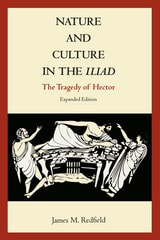
Nature and Culture in the Iliad
The Tragedy of HectorJames M. Redfield
Duke University Press, 1994

Nature's Kindred Spirits
Aldo Leopold, Joseph Wood Krutch, Edward Abbey, Annie Dillard, and Gary SnyderJames I. McClintock
University of Wisconsin Press, 1994
In Nature's Kindred Spirits James McClintock shows how their mystical experiences with the wild led to dramatic conversions in their thinking and behavior. By embracing the ecstasy of nature, they reject modern alienation and spiritual confusion.
From Aldo Leopold, America’s most important conservationist and author of the classic A Sand County Almanac, to Pulitzer Prize winners Annie Dillard and Gary Snyder and defenders of the desert Joseph Wood Krutch and Edward Abbey, these writers share a common vision that harkens back to Henry David Thoreau and John Muir. To nineteenth-century Romantic ideals, they add the authority of modern ecological science. Collectively they have elevated nature’s importance in American culture, shaping the growth of the environmental movement and influencing American environmental policies.
Widely admired among educated readers but relatively neglected by the literary establishment, these writers unite the experiential with the metaphysical, the ordinary with the sacred, the personal with the public, and the natural with the social. Using ecology as a touchstone, McClintock further draws connections among science, politics, religion, and philosophy to create an enlightening overview of the work of these “kindred spirits.”
Navigating CHamoru Poetry
Indigeneity, Aesthetics, and DecolonizationCraig Santos Perez
University of Arizona Press, 2021
This book shows that CHamoru poetry has been an inspiring and empowering act of protest, resistance, and testimony in the decolonization, demilitarization, and environmental justice movements of Guåhan. Perez roots his intersectional cultural and literary analyses within the fields of CHamoru studies, Pacific Islands studies, Native American studies, and decolonial studies, using his research to assert that new CHamoru literature has been—and continues to be—a crucial vessel for expressing the continuities and resilience of CHamoru identities. This book is a vital contribution that introduces local, national, and international readers and scholars to contemporary CHamoru poetry and poetics.
Ne me quitte pas
A Song by Jacques Brel and Interpreted by Nina Simone and OthersMaya Angela Smith
Duke University Press, 2025

Near Black
White-to-Black Passing in American CultureBaz Dreisinger
University of Massachusetts Press, 2008
In the United States, the notion of racial “passing” is usually associated with blacks and other minorities who seek to present themselves as part of the white majority. Yet as Baz Dreisinger demonstrates in this fascinating study, another form of this phenomenon also occurs, if less frequently, in American culture: cases in which legally white individuals are imagined, by themselves or by others, as passing for black.
In Near Black, Dreisinger explores the oft-ignored history of what she calls “reverse racial passing” by looking at a broad spectrum of short stories, novels, films, autobiographies, and pop-culture discourse that depict whites passing for black. The protagonists of these narratives, she shows, span centuries and cross contexts, from slavery to civil rights, jazz to rock to hip-hop. Tracing their role from the 1830s to the present day, Dreisinger argues that central to the enterprise of reverse passing are ideas about proximity. Because “blackness,” so to speak, is imagined as transmittable, proximity to blackness is invested with the power to turn whites black: those who are literally “near black” become metaphorically “near black.”
While this concept first arose during Reconstruction in the context of white anxieties about miscegenation, it was revised by later white passers for whom proximity to blackness became an authenticating badge. As Dreisinger shows, some white-to-black passers pass via self-identification. Jazz musician Mezz Mezzrow, for example, claimed that living among blacks and playing jazz had literally darkened his skin. Others are taken for black by a given community for a period of time. This was the experience of Jewish critic Waldo Frank during his travels with Jean Toomer, as well as that of disc jockey Hoss Allen, master of R&B slang at Nashville's famed WLAC radio. For journalists John Howard Griffin and Grace Halsell, passing was a deliberate and fleeting experiment, while for Mark Twain's fictional white slave in Pudd'nhead Wilson, it is a near-permanent and accidental occurrence.
Whether understood as a function of proximity or behavior, skin color or cultural heritage, self-definition or the perception of others, what all these variants of “reverse passing” demonstrate, according to Dreisinger, is that the lines defining racial identity in American culture are not only blurred but subject to change.
Neatness Counts
Essays on the Writer’s DeskKevin Kopelson Kopelson
University of Minnesota Press, 2006

Necessary American Fictions
Popular Literature of the 1950sWilliam Darby
University of Wisconsin Press, 1987
William Darby gives us a comprehensive and (mostly) sympathetic reading of over fifty novels and a few movies from the 1950s. He examines titles such as Mandingo, The Invisible Man, I the Jury, Catcher in the Rye, Battle Cry, The Caine Mutiny, The Revolt of Mamie Stover, The Manchurian Candidate, Hawaii, The Bramble Bush, Peyton Place, Ten North Frederick, A Stone for Danny Fisher, The Bad Seed, Not as a Stranger, The Blackboard Jungle, From Here to Eternity, and Compulsion.
Necessary Nonsense
Aesthetics, History, Neurology, PsychologyIrving Massey
The Ohio State University Press, 2018
In Necessary Nonsense, Massey explores a range of literary and philosophical subjects, from Immanuel Kant to Lewis Carroll—parsing the ways in which nonsense permeates their writing and dialectics—including an exploration of the inability of those who suffer from Asperger's syndrome to distinguish between metaphor and nonsense, and an investigation of the neural signature of the nonsense words and phrases that occur during the transition from waking to sleep. Massey argues that while nonsense may be the “archenemy of reason,” it is also tied to the intrinsic nature of reason; the two, simply put, cannot exist without each other. Through a stunning array of exploratory topics, Massey concludes that we all live under a canopy of nonsense.
Negative Liberties
Morrison, Pynchon, and the Problem of Liberal IdeologyCyrus R. K. Patell
Duke University Press, 2001
Pynchon and Morrison reveal the official narrative of individualism as encompassing a complex structure of contradiction held in abeyance. This narrative imagines that the goals of the individual are not at odds with the goals of the family or society and in fact obscures the existence of an unholy truce between individual liberty and forms of oppression. By bringing these two fiction writers into a discourse dominated by Ralph Waldo Emerson, Isaiah Berlin, John Rawls, George Kateb, Robert Bellah, and Michael Sandel, Patell unmasks the ways in which contemporary U.S. culture has not fully shed the oppressive patterns of reasoning handed down by the slaveholding culture from which American individualism emerged.
With its interdisciplinary approach, Negative Liberties will appeal to students and scholars of American literature, culture, sociology, and politics.

Negative Poetics
Edward Jayne
University of Iowa Press, 1992
Negotiating Difference
Race, Gender, and the Politics of PositionalityMichael Awkward
University of Chicago Press, 1995
From Spike Lee's She's Gotta Have It to Michael Jackson's physical transmutations, from Toni Morrison's Song of Solomon to August Wilson's Fences, from male scholars' investments in feminism to white scholars' in black texts—Awkward explores cultural moments that challenge the exclusive critical authority of race and gender. In each instance he confronts the question: What do artists, scholars, and others concerned with representations of Afro-American life make of the view that gender, race, and sexuality circumscribe their own and others' lives and narratives? Throughout he demonstrates the perils and merits of the sort of "boundary crossing" this book ultimately makes: a black male feminism.
In pursuing a black male feminist criticism, Awkward's study acknowledges the complexities of interpretation in an age when a variety of powerful discourses have proliferated on the subject of racial, gendered, and sexual difference; at the same time, it identifies this proliferation as an opportunity to negotiate seemingly fixed cultural and critical positions.

Negotiating a Perilous Empowerment
Appalachian Women’s LiteraciesErica Abrams Locklear
Ohio University Press, 2011
In many parts of Appalachia, family ties run deep, constituting an important part of an individual’s sense of self. In some cases, when Appalachian learners seek new forms of knowledge, those family ties can be challenged by the accusation that they have gotten above their raisings, a charge that can have a lasting impact on family and community acceptance. Those who advocate literacy sometimes ignore an important fact — although empowering, newly acquired literacies can create identity conflicts for learners, especially Appalachian women. In Negotiating a Perilous Empowerment, Erica Abrams Locklear explores these literacy-initiated conflicts, analyzing how authors from the region portray them in their fiction and creative nonfiction.
Abrams Locklear blends literacy studies with literary criticism to analyze the central female characters in the works of Harriette Simpson Arnow, Linda Scott DeRosier, Denise Giardina, and Lee Smith. She shows how these authors deftly overturn stereotypes of an illiterate Appalachia by creating highly literate characters, women who not only cherish the power of words but also push the boundaries of what literacy means.
Negotiating a Perilous Empowerment includes in-depth interviews with Linda Scott DeRosier and Lee Smith, making this an insightful study of an important literary genre.
Negotiating the Disabled Body
Representations of Disability in Early Christian TextsAnna Rebecca Solevåg
SBL Press, 2018
An intersectional study of New Testament and noncanonical literature
Anna Rebecca Solevåg explores how nonnormative bodies are presented in early Christian literature through the lens of disability studies. In a number of case studies, Solevåg shows how early Christians struggled to come to terms with issues relating to body, health, and dis/ability in the gospel stories, apocryphal narratives, Pauline letters, and patristic expositions. Solevåg uses the concepts of narrative prosthesis, gaze and stare, stigma, monster theory, and crip theory to examine early Christian material to reveal the multiple, polyphonous, contradictory ways in which nonnormative bodies appear.
Features:
- Case studies that reveal a variety of understandings, attitudes, medical frameworks, and taxonomies for how disabled bodies were interpreted
- A methodology that uses disability as an analytical tool that contributes insights about cultural categories, ideas of otherness, and social groups’ access to or lack of power
- An intersectional perspective drawing on feminist, gender, queer, race, class, and postcolonial studies

Negritude Women
T. Denean Sharpley-Whiting
University of Minnesota Press, 2002
Rediscovers the crucial role that women played in the influential Negritude movement.
The Negritude movement, which signaled the awakening of a pan-African consciousness among black French intellectuals, has been understood almost exclusively in terms of the contributions of its male founders: Aimé Césaire, Léopold Sédar Senghor, and Léon G. Damas. This masculine genealogy has completely overshadowed the central role played by French-speaking black women in its creation and evolution. In Negritude Women, T. Denean Sharpley-Whiting offers a long-overdue corrective, revealing the contributions made by the women who were not merely integral to the success of the movement, but often in its vanguard.
Through such disparate tactics as Lacascade’s use of Creole expressions in her French prose writings, the literary salon and journal founded by the Martinique-born Nardal sisters, and Roussy-Césaire’s revolutionary blend of surrealism and Negritude in the pages of Tropiques, the journal she founded with her husband, these four remarkable women made vital contributions. In exploring their influence on the development of themes central to Negritude-black humanism, the affirmation of black peoples and their cultures, and the rehabilitation of Africa-Sharpley-Whiting provides the movement’s first genuinely inclusive history.
Neocolonial Fictions of the Global Cold War
Steven Belletto and Joseph Keith
University of Iowa Press, 2019
Neodomestic American Fiction
Kristin J. Jacobson
The Ohio State University Press, 2010
Neoliberal Bonds
Undoing Memory in Chilean Art and LiteratureFernando A. Blanco
The Ohio State University Press, 2015
Neoliberal Bonds vehemently criticizes how Chile’s transition governments, through a series of political and legal maneuvers, created the state’s official memory narratives. Blanco argues that the state, the media, academia, and the neoliberal market colluded to colonize and mediatize the “memory scene.” In contrast to these official narratives, Neoliberal Bonds analyzes alternative memory accounts within the visual arts and literature that push back against the state, its institutions, and its economic allies. These alternative memory narratives highlight the ontological fracture of the new neoliberal subjects; they also bring into sharp relief the urgent need for democratization that still poses a challenge to Chile a quarter century after its “transition to democracy” began.
Neoliberalism and Contemporary American Literature
Edited by Liam Kennedy and Stephen Shapiro
Dartmouth College Press, 2019