Results by title
8113 books match the query 'Literary Criticism' and 191 start with n
NARRATIVE CAUSALITIES
Emma Kafalenos
The Ohio State University Press, 2006
NEW WOMAN AND THE EMPIRE
Iveta Jusová
The Ohio State University Press, 2005

NOMADIC VOICES
CONRAD AND THE SUBJECT OF NARRATIVEBruce Henricksen
University of Illinois Press, 1992
successful study exploring the uncanny features of Conrad's art that respond,
and lend depth, to the concerns of theorists such as Bakhtin and Lyotard."
-- Suresh Raval, University of Arizona

NOVEL PROFESSIONS
INTERESTED DISINTEREST AND THE MAKING OF THE VICTORIAN NOVELJennifer Ruth
The Ohio State University Press, 2006
Nabokov Upside Down
Edited by Brian Boyd and Marijeta Bozovic
Northwestern University Press, 2017
Nabokov Upside Down brings together essays that explicitly diverge from conventional topics and points of reference when interpreting a writer whose influence on contemporary literature is unrivaled. Scholars from around the world here read Nabokov in terms of bodies rather than minds, belly-laughs rather than erudite wit, servants rather than master-artists, or Asian rather than Western perspectives. The first part of the volume is dedicated to surveys of Nabokov’s oeuvre that transform some long-held assumptions concerning the nature of and significance of his work.
Often thought of as among the most cerebral of artists, Nabokov comes across in these essays as profoundly aware of the physical world, as evidenced by his masterly representation of physical movement, his bawdy humor, and his attention to gustatory pleasure, among other aspects of his writing. The volume’s second half focuses on individual works or phases in Nabokov’s career, noting connections among them as well as to other fields of inquiry beyond literature. Engaged in conversation with each other and, in his editorial comments, with Brian Boyd, the essays in this volume show Nabokov scholarship continuing to renew itself.
Nabokov and Indeterminacy
The Case of The Real Life of Sebastian KnightPriscilla Meyer
Northwestern University Press, 2018
In Nabokov and Indeterminacy, Priscilla Meyer shows how Vladimir Nabokov’s early novel The Real Life of Sebastian Knight illuminates his later work. Meyer first focuses on Sebastian Knight, exploring how Nabokov associates his characters with systems of subtextual references to Russian, British, and American literary and philosophical works. She then turns to Lolita and Pale Fire, applying these insights to show that these later novels clearly differentiate the characters through subtextual references, and that Sebastian Knight’s construction models that of Pale Fire.
Meyer argues that the dialogue Nabokov constructs among subtexts explores his central concern: the continued existence of the spirit beyond bodily death. She suggests that because Nabokov’s art was a quest for an unattainable knowledge of the otherworldly, knowledge which can never be conclusive, Nabokov’s novels are never closed in plot, theme, or resolution—they take as their hidden theme the unfinalizability that Bakhtin says characterizes all novels.
The conclusions of Nabokov's novels demand a rereading, and each rereading yields a different novel. The reader can never get back to the same beginning, never attain a conclusion, and instead becomes an adept of Nabokov’s quest. Meyer emphasizes that, unlike much postmodern fiction, the contradictions created by Nabokov’s multiple paths do not imply that existence is constructed arbitrarily of pre-existing fragments, but rather that these fragments lead to an ever-deepening approach to the unknowable.
Nabokov's "Invitation to a Beheading"
A Critical CompanionJulian Connolly
Northwestern University Press, 1997

Nabokov's Canon
From "Onegin" to "Ada"Marijeta Bozovic
Northwestern University Press, 2016
Nabokov's Fifth Arc
Nabokov and Others on His Life's WorkEdited by J. E. Rivers and Charles Nicol
University of Texas Press, 1982
In his autobiography Speak, Memory, Vladimir Nabokov compared his life to a spiral, in which “twirl follows twirl, and every synthesis is the thesis of the next series.” The first four arcs of the spiral of Nabokov’s life—his youth in Russia, voluntary exile in Europe, two decades spent in the United States, and the final years of his life in Switzerland—are now followed by a fifth arc, his continuing life in literary history, which this volume both explores and symbolizes.
This is the first collection of essays to examine all five arcs of Nabokov’s creative life through close analyses of representative works. The essays cast new light on works both famous and neglected and place these works against the backgrounds of Nabokov’s career as a whole and modern literature in general. Nabokov analyzes his own artistry in his “Postscript to the Russian Edition of Lolita,” presented here in its first English translation, and in his little-known “Notes to Ada by Vivian Darkbloom,” published now for the first time in America and keyed to the standard U.S. editions of the novel. In addition to a defense of his father’s work by Dmitri Nabokov and a portrait-interview by Alfred Appel, Jr., the volume presents a vast spectrum of critical analyses covering all Nabokov’s major novels and several important short stories. The highly original structure of the book and the fresh and often startling revelations of the essays dramatize as never before the unity and richness of Nabokov’s unique literary achievement.
Nahua Horizons
Writing, Persuasion, and Futurities in Colonial MexicoEzekiel G. Stear
University of Arizona Press, 2025
Nahua Horizons: Writing, Persuasion, and Futurities in Colonial Mexico investigates how Nahuas conceptualized their futures in the early colonial period. Scholar Ezekiel G. Stear delves deeply into canonical texts such as the Florentine Codex and the Crónica mexicayotl as well as understudied texts such as the Lienzo de Quauhquechollan, the Tira de Tepechpan, and the Anales de Juan Bautista. The study does more than describe how Nahuas conceived of their own futures: it also shows their specific plans for moving into the coming years.
The book examines how Nahua writers in Central Mexico and other Mesoamerican voices in colonial Spanish America played an active, decisive role in shaping culture, using writing to persuade their communities to mold their own destinies, even amid colonial upheaval. This work opens up new directions for research and teaching, shifting inquiry from how Nahuas preserved cultural continuity to how they envisioned their roles as pathfinders toward times to come.
Nahua Horizons challenges the notion that the Spanish erased Nahua culture. The book emphasizes the ways people kept sovereignty over the futures they envisioned for themselves and their communities. Stear’s bold new approach follows the paths that Nahuas forged ahead into unknown times.
Nakagami, Japan
Buraku and the Writing of EthnicityAnne McKnight
University of Minnesota Press, 2010
In Nakagami, Japan, Anne McKnight shows how the writer’s exploration of buraku led to a unique blend of fiction and ethnography—which amounted to nothing less than a reimagining of modern Japanese literature. McKnight develops a parallax view of Nakagami’s achievement, allowing us to see him much as he saw himself, as a writer whose accomplishments traversed both buraku literary arts and high literary culture in Japan.
As she considers the ways in which Nakagami and other twentieth-century writers used ethnography to shape Japanese literature, McKnight reveals how ideas about language also imagined a transfigured relation to mainstream culture and politics. Her analysis of the resulting “rhetorical activism” lays bare Nakagami’s unique blending of literature and ethnography within the context of twentieth-century ideas about race, ethnicity, and citizenship—in Japan, but also on an international scale.
Naked Before God
Uncovering the Body in Anglo-Saxon EnglandBENJAMIN C. WITHERS
West Virginia University Press, 2003
At different times and in different places, the human form has been regarded in different ways. The Ancient Greeks thought it was the most admirable subject for art, whereas early Christians often viewed it as lascivious in our post-lapsarian state. With illustrations taken from manuscripts, statuary and literary, this is a fascinating collection of essays with much that will be new to scholars and general readers alike.
Naked Lunch @ 50
Anniversary EssaysEdited by Oliver Harris and Ian MacFadyen
Southern Illinois University Press, 2009
Naked Lunch was banned, castigated, and recognized as a work of genius on its first publication in 1959, and fifty years later it has lost nothing of its power to astonish, shock, and inspire. A lacerating satire, an exorcism of demons, a grotesque cabinet of horrors, it is the Black Book of the Beat Generation, the forerunner of the psychedelic counterculture, and a progenitor of postmodernism and the digital age. A work of excoriating laughter, linguistic derangement, and transcendent beauty, it remains both influential and inimitable.
This is the first book devoted in its entirety to William Burroughs’ masterpiece, bringing together an international array of scholars, artists, musicians, and academics from many fields to explore the origins, writing, reception, and complex meanings of Naked Lunch. Tracking the legendary book from Texas and Mexico to New York, Tangier, and Paris, Naked Lunch@50 significantly advances our understanding and appreciation of this most elusive and uncanny of texts.
Contributors:
Contributors:
Keith Albarn
Eric Andersen
Gail-Nina Anderson
Théophile Aries
Jed Birmingham
Shaun de Waal
Richard Doyle
Loren Glass
Oliver Harris
Kurt Hemmer
Allen Hibbard
Rob Holton
Andrew Hussey
Rob Johnson
Jean-Jacques Lebel
Ian MacFadyen
Polina Mackay
Jonas Mekas
Barry Miles
R. B. Morris
Timothy S. Murphy
Jurgen Ploog
Davis Schneiderman
Jennie Skerl
DJ Spooky
Philip Taaffe
Names Of History
On the Poetics of KnowledgeJacques Ranciere
University of Minnesota Press, 1994
Nancy Drew and Company
Culture, Gender, and Girls’ SeriesEdited by Sherrie A. Inness
University of Wisconsin Press, 1997

Napoleonic Friendship
Military Fraternity, Intimacy, and Sexuality in Nineteenth-Century FranceBrian Joseph Martin
University of New Hampshire Press, 2011
Winner of the Laurence Wylie Prize in French Cultural Studies
One of the first books on “Gays in the Military” published following the historic repeal of “Don't Ask Don't Tell” in 2011, Napoleonic Friendship examines the history of male intimacy in the French military, from Napoleon to the First World War. Echoing the historical record of gay soldiers in the United States, Napoleonic Friendship is the first book-length study on the origin of queer soldiers in modern France. Based on extensive archival research in France, the book traces the development of affectionate friendships in the French Army from 1789 to 1916.
Following the French Revolution, radical military reforms created conditions for new physical and emotional intimacy between soldiers, establishing a model of fraternal affection during the Revolutionary and Napoleonic Wars that would persist amid the ravages of the Franco-Prussian War and World War I. Through readings of Napoleonic military memoirs (and other non-fiction archival material) and French military fiction (from Hugo and Balzac to Zola and Proust), Martin examines a broad range of emotional and erotic relationships, from combat buddies to soldier lovers. He argues that the French Revolution's emphasis on military fraternity evolved into an unprecedented sense of camaraderie in the armies of Napoleon. For many soldiers, the hardships of combat led to intimate friendships. For some, the homosociality of military life inspired mutual affection, lifelong commitment, and homoerotic desire.
Narrating Demons, Transformative Texts
Rereading Genius in Mid-Century Modern Fictional MemoirDaniel T. O’Hara
The Ohio State University Press, 2012
Narrating Infertility in Spain
Catherine Bourland Ross
Bucknell University Press, 2026
The drop in Spanish birth rates in 1998 to their lowest level of 1.1 births per woman was accompanied by a boom in publishing about motherhood. New narrative forms, ranging from blogs to diaries to comics, expressed women’s experiences, including ambivalence about motherhood in the face of societal pressures. Narrating Infertility in Spain, the first study of infertility in post-2008 female-authored texts, analyzes discussions of adoption, assisted reproduction, egg and sperm donation, and the decision not to have children due to economic or social instability. By examining the work of writers and vocal activists Silvia Nanclares, Raquel Sánchez-Silva, Samanta Villar, Laura Freixas, and Diana López Varela, Ross situates infertility in Spain within the cultural context of the Great Recession, while considering it as a business, a crisis, a stigma, and a class issue, and offering broader understandings of contemporary fertility challenges in Spain and beyond.
Published by Bucknell University Press. Distributed worldwide by Rutgers University Press.
Narrating Space / Spatializing Narrative
Where Narrative Theory and Geography MeetMarie-Laure Ryan, Kenneth Foote, and Maoz Azaryahu
The Ohio State University Press, 2016
Space intersects with narrative in two principal ways: ‘‘Narrating space’’ considers space as an object of representation, while ‘‘spatializing narrative’’ approaches space as the environment in which narrative is physically deployed. The inscription of narrative in real space is illustrated by such forms as technology-supported locative narratives, street names, and historical/heritage site and museum displays. While narratologists are best equipped to deal with the narration of space, geographers can make significant contributions to narratology by drawing attention to the spatialization of narrative. By bringing these two approaches together—and thereby building a bridge between narratology and geography—Narrating Space / Spatializing Narrative yields both a deepened understanding of human spatial experience and greater insight into narrative theory and poetic forms.
Narrating Trauma
Victorian Novels and Modern Stress DisordersGretchen Braun
The Ohio State University Press, 2022
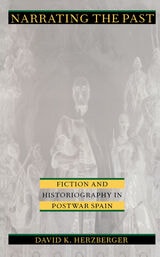
Narrating the Past
Fiction and Historiography in Postwar SpainDavid K. Herzberger
Duke University Press, 1995
The narrative and rhetorical strategies of historical discourse figure in both the fiction and historiography of postwar Spain. Herzberger analyzes these strategies, identifying the structures and vocabularies they use to frame the past and endow it with particular meanings. He shows how Francoist historians sought to affirm the historical necessity of Franco by linking the regime to a heroic and Christian past, while several types of postwar fiction—such as social realism, the novel of memory, and postmodern novels—created a voice of opposition to this practice. Focusing on the concept of writing history that these opposing strategies convey, Herzberger discloses the layering of truth and meaning that lies at the heart of postwar Spanish narrative from the early 1940s to the fall of Franco. His study clearly reveals how the novel in postwar Spain became a crucial form of dissent from the past as it was conceived and used by the State.
Making a decisive intervention in the debate about the ways in which narration determines both the meaning and truth of history and fiction, Narrating the Past will be of special interest to students and scholars of the politics, history, and literature of twentieth-century Spain.
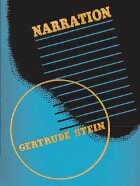
Narration
Four LecturesGertrude Stein
University of Chicago Press, 2010
Newly famous in the wake of the publication of her groundbreaking Autobiography of Alice B. Toklas, Gertrude Stein delivered her Narration lectures to packed audiences at the University of Chicago in 1935. Stein had not been back to her home country since departing for France in 1903, and her remarks reflect on the changes in American culture after thirty years abroad.
In Stein’s trademark experimental prose, Narration reveals the legendary writer’s thoughts about the energy and mobility of the American people, the effect of modernism on literary form, the nature of history and its recording, and the inventiveness of the English language—in particular, its American variant. Stein also discusses her ambivalence toward her own literary fame as well as the destabilizing effect that notoriety had on her daily life. Restored to print for a new generation of readers to discover, these vital lectures will delight students and scholars of modernism and twentieth-century literature.
“Narration is a treasure waiting to be rediscovered and to be pirated by jolly marauders of sparkling texts.”—Catharine Stimpson, NYU
Narrative Bonds
Multiple Narrators in the Victorian NovelAlexandra Valint
The Ohio State University Press, 2021
Narrative Co-Construction
Author-Audience Interactions and Their ContextsEdited by Malcah Effron, Margarida McMurry, and Virginia Pignagnoli
The Ohio State University Press, 2026
Advances a new, inclusive, and varied framework for understanding narrative as a product of interplay between authors, audiences, and texts.
In centering the interplay between authors and audiences as the foundation for the narrative act, the innovative and varied collection Narrative Co-Construction makes a resounding argument for the importance of making space for attending to world-building both within the world of the story and out in the world of the audience. Drawing from a range of theoretical orientations, contributors advance a framework that allows multiple points of entry to a given story and welcomes intersectional approaches, both in terms of the embodied identities of its critics and in terms of the theoretical tools they use to identify the methodologies currently active within narrative theory.
Analyzing texts by Jane Austen, André Gide, Mark Z. Danielewski, Ruth Ozeki, Ocean Vuong, and others, as well as interviews and digital (epi)texts, contributors put co-construction in dialogue with digital media studies, empirical studies, cognitive theories, literary history, literary geography, narrative criminology, and more. This inclusive approach puts different viewpoints, identities, and intellectual allegiances in conversation and asserts the value of making context and intersectionality explicit when examining narrative. By highlighting the author-audience collaboration at the heart of narrative vitality, Narrative Co-Construction deepens our understanding of narrative’s world-building power and celebrates how fictions engage readers.
Contributors:
Helen H. Davis, Malcah Effron, Erika Gotfredson, Lindsay Holmgren, Isabell Klaiber, Margaret Love, Margarida McMurry, Rae Muhlstock, Virginia Pignagnoli, Lois Presser, Alexander Scherr, Siim Sorokin, Martha Swift, Anna Torvaldsen, Katherine Weese
Narrative Consciousness
Structure and Perception in the Fiction of Kafka, Beckett, and Robbe-GrilletBy George H. Szanto
University of Texas Press, 1972
Comparatively little critical attention has been devoted to narrative technique in modern fiction, and formal analysis of the work of Kafka, Beckett, and Robbe-Grillet in particular has for the most part been limited to short studies in journals, many of these in languages other than English. The criticism written in English has dealt primarily with theme with metaphysics and myth and ignored structure and style.
Yet it is structure and style that offer the reader a way into the often bewildering and disturbing fictional worlds these three writers present. The problem confronting writers since the middle of the nineteenth century has been how to cope artistically with an increasingly alienating and mechanized world. As George Szanto sees it, Kafka, Beckett and Robbe-Grillet conclude, by the example of their fictions, that the writer's province is no longer this impossible environment. Instead, the writer must work within the only knowledge available to any one person: the knowledge attained through perceptions. The proper study for a storyteller is thus the search for the unique details, the describable perceptions a person chooses from the outside world and brings into their mind, which in the end define their nature. The shape of the story is determined by the narrating consciousness, that single character through whose awareness the details are filtered. Thus, in a very special sense, the tale and the telling are one.
Szanto's meticulous and thoughtful study of the major fiction of Kafka, Beckett, and Robbe-Grillet searches out these details and examines the manner in which each author, through the minds of his characters, has selected and ordered them. His structural approach not only leads the reader directly into the works under scrutiny, but also provides an understanding of the workings of the art itself.
In the appendices, the author surveys the different ways in which criticism has treated these three writers. His extensive bibliography provides a valuable research tool.
Narrative Discourse
Authors and Narrators in Literature, Film, and ArtPatrick Colm Hogan
The Ohio State University Press, 2013
Narrative Innovation and Incoherence
Ideology in Defoe, Goldsmith, Austen, Eliot, and HemingwayMichael M. Boardman
Duke University Press, 1992
Urgent innovations, in this account, can only be understood as unique, individual responses to crises in belief. Taking as a point of departure French theorist Althusser's conviction that ideology is intelligible only through structure, Boardman searches for an explanation of both form and ideology not in Marxist concepts of base and superstructure but in the particular structure of an individual artist's writing career. Narrative ideology here becomes more complex than is generally assumed.
Theoretically informed yet avoiding essentializing explanations of narrative invention, Narrative Innovation and Incoherence offers unexpected insights into the multifaceted relations between form and belief. It will encourage serious students of the novel to reexamine the importance of poetics as a mediating factor in the means of production.

Narrative Interplay in the Digital Era
Generative AI, Alternate Reality Games, and the Future of Interactive PedagogyEdited by Andrew Klobucar
Intellect Books, 2025
In Narrative Interplay in the Digital Era, leading scholars and artists explore how digital narratives, alternate reality games, and AI-driven storytelling reshape how we create, experience, and teach interactive fiction. This collection moves beyond traditional analysis and examines the social and artistic dimensions of interactivity, highlighting how narratives unfold dynamically through player engagement and machine collaboration.
Organized into three sections—alternate realities, digital interactive fiction, and the politics of gaming—this book reveals the evolving role of play and interactivity in contemporary education, creative expression, and online culture. Contributors offer insights from inside the creative process, centering the perspectives of game designers and artists to shed light on how interactive stories emerge at the intersection of technology and human imagination.
A practical resource for researchers in game studies, electronic literature, and digital storytelling, this collection also speaks to educators and creators eager to explore how AI and interactivity are redefining the future of narrative.
Narrative Middles
Navigating the Nineteenth-Century NovelEdited by Caroline Levine and Mario Ortiz-Robles
The Ohio State University Press, 2011
Narrative theorists have lavished attention on beginnings and endings, but they have too often neglected the middle of narratives. In this groundbreaking collection of essays, Narrative Middles: Navigating the Nineteenth-Century British Novel, nine literary scholars offer innovative approaches to the study of the underrepresented middle of the vast, bulky nineteenth-century multiplot novel. Combining rigorous formal analysis with established sociohistorical methods, these essays seek to account for the various ways in which the novel gave shape to British culture’s powerful obsession with middles. The capacious middle of the nineteenth-century novel provides ample room for intricately woven plots and the development of complex character systems, but it also becomes a medium for capturing, consecrating, and cultivating the middle class and its middling, middlebrow tastes as well as its mediating global role in empire. Narrative Middles explores these fascinating conjunctions in new readings of novels by Jane Austen, William Makepeace Thackeray, Anne Brontë, George Eliot, Charles Dickens, Wilkie Collins, Henry James, and William Morris. Contributors: Amanda Claybaugh, Suzanne Daly, Amanpal Garcha, Amy King, Caroline Levine, Mario Ortiz-Robles, Kent Puckett, Hilary Schor, and Alex Woloch.
Narrative Mourning
Death and Its Relics in the Eighteenth-Century British NovelKathleen M. Oliver
Bucknell University Press, 2020
Published by Bucknell University Press. Distributed worldwide by Rutgers University Press.
Narrative Paths
African Travel in Modern Fiction and NonfictionKai Mikkonen
The Ohio State University Press, 2015
Narrative Paths contributes to debates in narratology and rhetorical narrative theory about the fiction–nonfiction distinction. With chapters on a wide range of modernist authors—from Pierre Loti, André Gide, Michel Leiris, and Georges Simenon to Blaise Cendrars, Louis-Ferdinand Céline, Joseph Conrad, Graham Greene, Evelyn Waugh, and Isak Dinesen (Karen Blixen)—Mikkonen’s study also contributes to postcolonial approaches to these authors, examining issues of representation, narrative voice, and authority in narratives about colonial Africa.
Narrative Policy Analysis
Theory and PracticeEmery Roe
Duke University Press, 1994
Assuming no prior knowledge of literary theory, Roe introduces the theoretical concepts and terminology from literary analysis through an examination of the budget crises of national governments. With a focus on several particularly intractable issues in the areas of the environment, science, and technology, he then develops the methodology of narrative policy analysis by showing how conflicting policy "stories" often tell a more policy-relevant meta-narrative. He shows the advantage of this approach to reading and analyzing stories by examining the ways in which the views of participants unfold and are told in representative case studies involving the California Medfly crisis, toxic irrigation in the San Joaquin Valley, global warming, animal rights, the controversy over the burial remains of Native Americans, and Third World development strategies.
Presenting a bold innovation in the interdisciplinary methodology of the policy sciences, Narrative Policy Analysis brings the social sciences and humanities together to better address real-world problems of public policy—particularly those issues characterized by extreme uncertainty, complexity, and polarization—which, if not more effectively managed now, will plague us well into the next century.
Narrative Prosthesis
Disability and the Dependencies of DiscourseDavid T. Mitchell and Sharon L. Snyder
University of Michigan Press, 2001
Narrative Sequence in Contemporary Narratology
Edited by Raphaël Baroni and Françoise Revaz
The Ohio State University Press, 2016
This volume, edited by Raphaël Baroni and Françoise Revaz, includes contributions from some of the most influential scholars in narrative studies: Alain Boillat, Peter Hühn, Emma Kafalenos, Franco Passalacqua, James Phelan, Federico Pianzola, John Pier, Gerald Prince, Brian Richardson, Marie-Laure Ryan, Eyal Segal, and Michael Toolan. Essays range in focus from musical narrativity and rhetorical narrative theory to comic strips and re-examinations of classical and postclassical narratology. All of the essays contribute fresh understandings of foundational concepts in the field of narratology.
Narrative Structures and the Language of the Self
Matthew Clark
The Ohio State University Press, 2010
Narrative Structures and the Language of the Self by Matthew Clark offers a new way of thinking about the interrelation of character and plot. Clark investigates the characters brought together in a narrative, considering them not as random collections but as structured sets that correspond to various manifestations of the self. The shape and structure of these sets can be thought of as narrative geometry, and various geometries imply various theories of the self. Part One, “Philosophical Fables of the Self,” examines narratives such as The Talented Mr. Ripley,A Farewell to Arms,A Separate Peace, and The Master of Ballantrae in order to show successively more complex versions of the self as modeled by Descartes, Hegel, Freud, and Mead. Part Two, “The Case of the Subject,” uses Case Grammar to extend the discussion to additional roles of the self in narratives such as The Waves,The Great Gatsby,Fifth Business, and Howards End as examples of the self as experiencer, the self as observer, the instrumental self, and the locative self. The book ends with an extended analysis of the subject in Hartley’s The Go-Between. Throughout, the discussion is concerned with practical analysis of specific narratives and with the development of an understanding of the self that moves beyond the simple dichotomy of the self and the other, the subject and the object.
Narrative Theory Unbound
Queer and Feminist InterventionsEdited by Robyn Warhol and Susan S. Lanser
The Ohio State University Press, 2015
Through twenty-one essays prefaced by a cogent history of the field, Narrative Theory Unbound offers new perspectives on narrative discourse and its constituent elements; on intersectional approaches that recognize race, religion, and national culture as integral to understanding sexuality and gender; on queer temporalities; on cognitive research; and on lifewriting in graphic, print, and digital constellations. Exploring genres ranging from reality TV to fairy tales to classical fiction, contributors explore the thorny, contested relationships between feminist and queer theory, on the one hand, and between feminist/queer theory and contemporary narratologies, on the other. Rather than aiming for cohesiveness or conclusiveness, the collection stages open-ended debates designed to unbind the assumptions that have kept gender and sexuality on the periphery of narrative theory.
Narrative Theory
Core Concepts and Critical DebatesDavid Herman, James Phelan, Peter J. Rabinowitz, Brian Richardson, and Robyn Warhol
The Ohio State University Press, 2012
Narrative Theory: Core Concepts and Critical Debates addresses two frequently asked questions about narrative studies: “what is narrative theory?” and “how do different approaches to narrative relate to each other?” In engaging with these questions, the book demonstrates the diversity and vitality of the field and promotes a broader dialogue about its assumptions, methods, and purposes.
Narrative in the Anthropocene
Erin James
The Ohio State University Press, 2022
Narrative, Race, and Ethnicity in the United States
Edited by James J. Donahue, Jennifer Ann Ho, and Shaun Morgan
The Ohio State University Press, 2017
Recognizing that racial/ethnic issues and tensions are often contextualized geographically, this volume focuses on narratives associated with various racial and ethnic communities in the United States. By engaging with new developments in narrative theory and critical race studies, this volume demonstrates the vitality of using the tools of narratology and critical race theory together to understand how race influences narrative and how narratology illuminates a reading of race in ethnic American literature.
Narrative, Violence, and the Law
The Essays of Robert CoverMartha Minow, Michael Ryan, and Austin Sarat, Editors
University of Michigan Press, 1993
"Bob Cover was and remains the dominant voice of his generation among legal scholars. These essays, each one magnificent in itself, are, when taken together, even more important. The wisdom they impart is forever." --Guido Calabresi, Dean and Sterling Professor of Law, Yale University "Robert Cover drew his sources for the authority of law--for its violence, but also for its paideic potential--from the structuring stories that spark our communal imaginations. Literally until the day of his untimely death, his irreplaceably restless spirit was binding itself with the pages of the Midrash, of The Brothers Karamazov, of Billy Budd, Sailor. It is for us now to work also with these--Bob Cover's stories."--Richard Weisberg, Benjamin N. Cardozo Law School, Yeshiva University "The writings of Robert Cover were usually provocative, sometimes exasperating, but always relevant. In his last years, he concentrated on Jewish sources as well as mystical and Messianic thought. This collection of his articles is a thesaurus of some of his finest writings."--Robert F. Drinan, S.J., Georgetown University Law Center. The late Robert Cover was Professor of Law, Yale Law School.
Narratives Unsettled
Digression in Robert Walser, Thomas Bernhard, and Adalbert StifterSamuel Frederick
Northwestern University Press, 2012
Frederick's readings of the narrative experiments, utopian moments, and obsessions with the trivial in works by Walser, Bernhard, and Stifter point to new ways of approaching the ostensibly antinarrative as a productive element of narrativity. As a work that explores the often neglected crossroads of German studies and postclassical narratology, Narratives Unsettled will be of great interest to scholars in both of these fields, as well as to those working on literature and theory in general.

Narratives of Debt
Peter Szendy, special issue editor
Duke University Press, 2020
Contributors. Arjun Appadurai, Anthony Bogues, Emmanuel Bouju, Silvia Federici, Mikkel Krause Frantzen, Raphaelle Guidée, Odette Lienau, Catherine Malabou, Vincent Message, Laura Odello, Peter Szendy, Frederik Tygstrup
Narratives of Greater Mexico
Essays on Chicano Literary History, Genre, and BordersBy Héctor Calderón
University of Texas Press, 2005
Once relegated to the borders of literature—neither Mexican nor truly American—Chicana/o writers have always been in the vanguard of change, articulating the multicultural ethnicities, shifting identities, border realities, and even postmodern anxieties and hostilities that already characterize the twenty-first century. Indeed, it is Chicana/o writers' very in-between-ness that makes them authentic spokespersons for an America that is becoming increasingly Mexican/Latin American and for a Mexico that is ever more Americanized.
In this pioneering study, Héctor Calderón looks at seven Chicana and Chicano writers whose narratives constitute what he terms an American Mexican literature. Drawing on the concept of "Greater Mexican" culture first articulated by Américo Paredes, Calderón explores how the works of Paredes, Rudolfo Anaya, Tomás Rivera, Oscar Zeta Acosta, Cherríe Moraga, Rolando Hinojosa, and Sandra Cisneros derive from Mexican literary traditions and genres that reach all the way back to the colonial era. His readings cover a wide span of time (1892-2001), from the invention of the Spanish Southwest in the nineteenth century to the América Mexicana that is currently emerging on both sides of the border. In addition to his own readings of the works, Calderón also includes the writers' perspectives on their place in American/Mexican literature through excerpts from their personal papers and interviews, correspondence, and e-mail exchanges he conducted with most of them.

Narratives of the American West
Literature and HistoryRichard W. Etulain
University of Nevada Press, 2027
Narratives of the American West: Literature and History brings together Richard W. Etulain’s most resonant work—along with newly written essays—to reveal how history and storytelling have continually shaped each other in the making of the West. Part historiographical memoir, part wide‑ranging critical survey, the collection moves from Etulain’s Basque upbringing in eastern Washington to his lifetime of teaching, editing, and writing, showing how personal experience and intellectual inquiry converge on the page.
In the tradition of Elliott West’s The Essential West, Etulain maps the field’s major interpretive turns, from Frederick Jackson Turner to Earl Pomeroy to West’s“Greater Reconstruction,” and demonstrates how literary craft and historical method inform each other. Along the way, he demythologizes the stories of iconic figures, such as Billy the Kid, Calamity Jane, Chief Joseph, and Sacagawea, tracing how cultural memory evolves across novels, films, and archives.
Featuring new essays on Wallace Stegner and Elliott West, alongside revised classics on western myths, genres, regions, and peoples, this accessible yet rigorous volume invites readers to embrace narratives that are complex and morally engaged. Essential for scholars, students, and curious general readers alike, Narratives of the American West is a compelling guide to how the West has been written and remembered—and why those stories still matter.
Narratology and Ideology
Negotiating Context, Form, and Theory in Postcolonial NarrativesDivya Dwivedi
The Ohio State University Press, 2018
The thirteen essays in Narratology and Ideology offer compelling readings of individual novels, with a focus upon South Asian literature, that provide a cumulative case study on the value of postcolonial narratology. The essays show not only how narrative theory can be productively applied in service of postcolonial criticism but also how such attention to postcolonial fictions can challenge and refine our theoretical understanding of narrative.
Nathanael West
An Interpretive StudyJames F. Light
Northwestern University Press, 1971
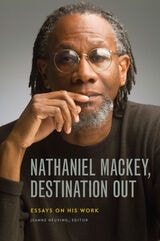
Nathaniel Mackey, Destination Out
Essays on His WorkJeanne Heuving
University of Iowa Press, 2021
This collection is organized through broad topics in order to provide entrances into his challenging work: myth, literature, and seriality; music, performance, and collaboration; syncretism, synopsis, and what-saying. It engages Mackey’s spiritual and esoteric disposition along with his attention to what Amiri Baraka called the “enraged sociologies” of Black music. In his manifesto “Destination Out,” Mackey describes his work as “wanting to bid all givens goodbye” and as “centrifugal.” It is also centripetal, manifesting a reflexive interiority that creates itself through recurring forms.
Contributors: Maria Damon, Joseph Donahue, Rachel Blau DuPlessis, Norman Finkelstein, Luke Harley, Paul Jaussen, Adalaide Morris, Fred Moten, Peter O’Leary, Anthony Reed
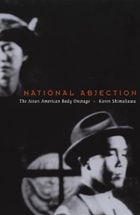
National Abjection
The Asian American Body OnstageKaren Shimakawa
Duke University Press, 2002
Shimakawa looks at the origins of Asian American theater, particularly through the memories of some of its pioneers. Her examination of the emergence of Asian American theater companies illuminates their strategies for countering the stereotypes of Asian Americans and the lack of visibility of Asian American performers within the theater world. She shows how some plays—Wakako Yamauchi’s 12-1-A, Frank Chin’s Chickencoop Chinaman, and The Year of the Dragon—have both directly and indirectly addressed the displacement of Asian Americans. She analyzes works attempting to negate the process of abjection—such as the 1988 Broadway production of M. Butterfly as well as Miss Saigon, a mainstream production that enacted the process of cultural displacement both onstage and off. Finally, Shimakawa considers Asian Americanness in the context of globalization by meditating on the work of Ping Chong, particularly his East-West Quartet.
National Consciousness and Literary Cosmopolitics
Postcolonial Literature in a Global MomentWeihsin Gui
The Ohio State University Press, 2013
National Identities and Post-Americanist Narratives
Donald E. Pease
Duke University Press, 1994
This volume, originally published as a special issue of bounrary 2, focuses on the process of assembling and dismantling the American national narrative(s), sketching its inception and demolition. The contributors examine various cultural, political, and historical sources--colonial literature, mass movements, epidemics of disease, mass spectacle, transnational corporations, super-weapons, popular magazines, literary texts--out of which this narrative was constructed, and propose different understandings of nationality and identity following in its wake.
Contributors. Jonathan Arac, Lauren Berlant, Robert J. Corber, Elizabeth Freeman, Kathryn V. Lingberg, Jack Matthews, Alan Nadel, Patrick O'Donnell, Daniel O'Hara, Donald E. Pease, Ross Posnock, John Carlos Rowe, Rob Wilson