Results by title
166 books match the query 'Native American' and 7 start with n
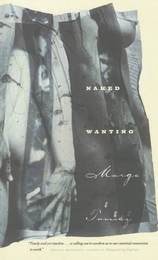
Naked Wanting
Margo Tamez
University of Arizona Press, 2003
Margo Tamez’s voice is that of the cicada and the cricket, the raven and the crane. In this volume of poetry, she shows us that the earth is an erotic current linking all beings, a vibrant network of birth, death, and rebirth. A sacred intertwining from which we as humans have become disconnected. Tamez shares the perspective of other creatures in images that remind us of Nature's beauty and fragility. An invocation of birds: “Sudden hum / wings touching / wings in swift turn / hush / a fast red out of the flux.” An appreciation for the delicacy of insects, for spiderwebs “like a hundred needle-thin tubes of blown glass.”
Here too are reflections on childbirth and children—and on miscarriage, when damage inflicted on the environment by herbicides comes back to haunt all of us in our skin and bones, our very wombs. Warning of “the chemical cocktail seeping into the air ducts,” she brings the voice of someone who has experienced firsthand what happens when our land and water are compromised. For Tamez, earth, food, and family are the essentials of life, and we ignore them at our own peril. “If a person / does not admit the peril . . . that becomes a dangerous / form of existence.”
Written with the wisdom of one who knows and loves the land, her lyrical meditations speak to the naked wanting in us all.
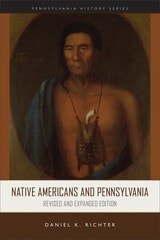
Native Americans and Pennsylvania
Daniel K. Richter
Temple University Press, 2026
Engagingly written, deeply researched, and thoroughly revised to reflect the most recent interdisciplinary scholarship, this new edition of Native Americans and Pennsylvania focuses on Indigenous actors, voices, and landscapes, while tracing interconnections among local, continental, and global trends.
The story begins thousands of years before there was such a thing as “Pennsylvania.” William Penn did not paint his colony on a blank canvas. Colonists adapted ancient patterns of trade and cultural interaction created by the ancestors of Lenape, Conestoga, and Haudenosaunee peoples and convinced themselves they had made them their own. In the process, Pennsylvanians developed moral justifications for the expropriation of Indigenous land, pernicious doctrines about racial superiority, and brutal mechanisms of vigilante violence that profoundly influenced later United States government policies.
Those policies kept Pennsylvania in the foreground of national Native American issues long after the Commonwealth expelled the majority of its Indigenous population to far-flung diasporic homes: forced cultural assimilation at off-reservation boarding schools in the nineteenth century, cultural revitalization and political activism in the twentieth, and struggles with cultural institutions over the repatriation of human remains and controversies over who has the right to claim Indigenous identity in the twenty-first.
In the series Pennsylvania History
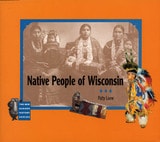
Native People of Wisconsin
Patty Loew
Wisconsin Historical Society Press, 2003
The revised edition ofPatty Loew'sNative People of Wisconsin is now available, ISBN 9780870207488.Native People of Wisconsin, the fifth text in the New Badger History series for upper elementary and middle school students, focuses on the Indian Nations in the state: the Menominee, Ho-Chunk, Ojibwe, Oneida, Mohican Nation, Stockbridge-Munsee Band, and the Brothertown Indians. Patty Loew has followed the same structure she used in Indian Nations of Wisconsin, her book for general audiences, in which she provided chapters on Early History and European Arrivals, then devoted the remaining chapters to each of the Indian Nations in Wisconsin today.
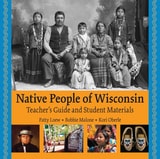
Native People of Wisconsin, Rev. TG and Student Materials
Patty Loew
Wisconsin Historical Society Press, 2016
An essential title for the upper elementary classroom, Native People of Wisconsin fills the need for accurate and authentic teaching materials about Wisconsin’s Indian Nations. Based on her research for her award-winning title for adults, Indian Nations of Wisconsin: Histories of Endurance and Survival, author Patty Loew has tailored this book specifically for young readers.
Native People of Wisconsin tells the stories of the twelve Native Nations in Wisconsin, including the history of the First People in Wisconsin and the impact of European arrivals on Native culture. Young readers will become familiar with the unique cultural traditions, tribal history, and life today for each nation.
Complete with maps, illustrations, and a detailed glossary of terms, this highly anticipated new edition includes two new chapters on the Brothertown Indian Nation and Urban Indians, as well as updates on each tribe’s current history and new profiles of outstanding young people from every nation.
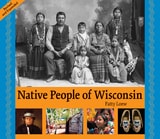
Native People of Wisconsin, Revised Edition
Patty Loew
Wisconsin Historical Society Press, 2015
"So many of the children in this classroom are Ho-Chunk, and it brings history alive to them and makes it clear to the rest of us too that this isn't just...Natives riding on horseback. There are still Natives in our society today, and we're working together and living side by side. So we need to learn about their ways as well." --Amy Laundrie, former Lake Delton Elementary School fourth grade teacher
An essential title for the upper elementary classroom, "Native People of Wisconsin" fills the need for accurate and authentic teaching materials about Wisconsin's Indian Nations. Based on her research for her award-winning title for adults, "Indian Nations of Wisconsin: Histories of Endurance and Survival," author Patty Loew has tailored this book specifically for young readers.
"Native People of Wisconsin" tells the stories of the twelve Native Nations in Wisconsin, including the Native people's incredible resilience despite rapid change and the impact of European arrivals on Native culture. Young readers will become familiar with the unique cultural traditions, tribal history, and life today for each nation.
Complete with maps, illustrations, and a detailed glossary of terms, this highly anticipated new edition includes two new chapters on the Brothertown Indian Nation and urban Indians, as well as updates on each tribe's current history and new profiles of outstanding young people from every nation.

Native Voices
Indigenous American Poetry, Craft, and ConversationsEdited by CMarie Fuhrman and Dean Rader
Tupelo Press, 2019
In this groundbreaking anthology of Indigenous poetry and prose, Native poems, stories, and essays are informed with a knowledge of both what has been lost and what is being restored. It offers a diverse collection of stories told by Indigenous writers about themselves, their histories, and their present. It is a celebration of culture and the possibilities of language.
Featuring forty-four poets, including Ishmael Hope, Bojan Louis, Ruby Murray, Simon Ortiz, Leslie Marmon Silko, Luci Tapahonso, Joy Harjo, dg okpik, Sherwin Bitsui, Heid E. Erdrich, Layli Long Soldier, and Orlando White.
Original influence essays by Diane Glancy on Lorca, Chrystos on Audre Lorde, Louise Erdrich on Elizabeth Bishop, LeAnne Howe on W. D. Snodgrass, Allison Hedge Coke on Delmore Schwartz, Suzanne Rancourt on Ai, and M. L. Smoker on Richard Hugo, among others.
And, a selection of resonant work chosen from previous generations of Native artists.
“There really is no better anthology out there that collects indigenous poets publishing from 1960 to the present.” — Dean Rader, co-editor
New Perspectives on the Origins of Americanist Archaeology
Edited by David L. Browman and Stephen Williams
University of Alabama Press, 2002
In this landmark book, experienced scholars take a retrospective look at the developing routes that have brought American archaeologists into the 21st century.
In 1996, the Society for American Archaeology's Committee on the History of Archaeology established a biennial symposium
named after Gordon R. Willey, one of the fathers of American archaeology, to focus on the history of the discipline. This volume grew out of the
second symposium, presented at the 1998 meeting of the Society for American Archaeology.
Interest in the intellectual history of the field is certainly nothing new—the first such volume appeared in 1856—but previously, focus has been on individuals and their theories and methods, or on various government agencies that supported, developed, or mandated
excavations in North America. This volume, however, focuses on the roots of Americanist archaeology, including its pre-1915 European connections, and on some of the earliest work by women archaeologists, which has been largely overlooked.
Full of valuable insights for archaeologists and anthropologists—both professional and amateur—into the history and
development of Americanist archaeology, New Perspectives will also inspire and serve as a model for future research.
David Browman is Professor of Anthropology and Chair of the Interdisciplinary Program in Archaeology at Washington University. Stephen Williams is Professor Emeritus of Anthropology at Harvard University.