Results by title
2018 books match the query 'Political aspects' and 49 start with n
Naked Agency
Genital Cursing and Biopolitics in AfricaNaminata Diabate
Duke University Press, 2020
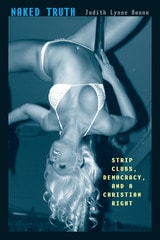
Naked Truth
Strip Clubs, Democracy, and a Christian RightBy Judith Lynne Hanna
University of Texas Press, 2012
Across America, strip clubs have come under attack by a politically aggressive segment of the Christian Right. Using plausible-sounding but factually untrue arguments about the harmful effects of strip clubs on their communities, the Christian Right has stoked public outrage and incited local and state governments to impose onerous restrictions on the clubs with the intent of dismantling the exotic dance industry. But an even larger agenda is at work, according to Judith Lynne Hanna. In Naked Truth, she builds a convincing case that the attack on exotic dance is part of the activist Christian Right’s “grand design” to supplant constitutional democracy in America with a Bible-based theocracy.
Hanna takes readers onstage, backstage, and into the community and courts to reveal the conflicts, charges, and realities that are playing out at the intersection of erotic fantasy, religion, politics, and law. She explains why exotic dance is a legitimate form of artistic communication and debunks the many myths and untruths that the Christian Right uses to fight strip clubs. Hanna also demonstrates that while the fight happens at the local level, it is part of a national campaign to regulate sexuality and punish those who do not adhere to Scripture-based moral values. Ultimately, she argues, the naked truth is that the separation of church and state is under siege and our civil liberties—free speech, women’s rights, and free enterprise—are at stake.

Narrative Landmines
Rumors, Islamist Extremism, and the Struggle for Strategic InfluenceBernardi, Daniel Leonard
Rutgers University Press, 2012
Islamic extremism is the dominant security concern of many contemporary governments, spanning the industrialized West to the developing world. Narrative Landmines explores how rumors fit into and extend narrative systems and ideologies, particularly in the context of terrorism, counter-terrorism, and extremist insurgencies. Its concern is to foster a more sophisticated understanding of how oral and digital cultures work alongside economic, diplomatic, and cultural factors that influence the struggles between states and non-state actors in the proverbial battle of hearts and minds. Beyond face-to-face communication, the authors also address the role of new and social media in the creation and spread of rumors.
As narrative forms, rumors are suitable to a wide range of political expression, from citizens, insurgents, and governments alike, and in places as distinct as Singapore, Iraq, and Indonesia—the case studies presented for analysis. The authors make a compelling argument for understanding rumors in these contexts as “narrative IEDs,” low-cost, low-tech weapons that can successfully counter such elaborate and expansive government initiatives as outreach campaigns or strategic communication efforts. While not exactly the same as the advanced technological systems or Improvised Explosive Devices to which they are metaphorically related, narrative IEDs nevertheless operate as weapons that can aid the extremist cause.
Nation, Language, Islam
Tatarstan's Sovereignty MovementHelen M. Faller
Central European University Press, 2011
National Identity
Anthony D. Smith
University of Nevada Press, 1993
National Rhetorics in the Syrian Immigration Crisis
Victims, Frauds, and FloodsClarke Rountree
Michigan State University Press, 2019

Nationalism and the Economy
Explorations into a Neglected RelationshipStefan Berger
Central European University Press, 2019
Naturalization
A Queer Genealogy of US Citizenship, Race, and SexualitySiobhan B. Somerville
Duke University Press, 2026
Naturalizing Inequality
Water, Race, and Biopolitics in South AfricaMichela Marcatelli
University of Arizona Press, 2021
Michela Marcatelli unravels this inequality paradox through an ethnography of water in a rural region of the country. The Waterberg Plateau is a space where agriculture, conservation, and extraction coexist and intersect. Marcatelli examines the connections between neoliberalism, race, and the environment by showing that racialized property relations around water and land are still recognized and protected by the post-apartheid state to sustain green growth. She argues that the government depicts growth as the best, if not only, solution to inequality. While white landowners maintain access to water, however, black ex-farmworkers are dispossessed once again of this essential-to-life resource.
If the promise of growth serves to normalize inequality, the call to save nature has the effect of naturalizing it even further.
Navigating Gendered Terrain
Stereotypes and Strategy in Political CampaignsKelly Dittmar
Temple University Press, 2014
Navigating Gendered Terrain addresses how gender is used to shape how campaigns are waged by influencing insider perceptions of and decisions about effective campaign messages, images, and tactics within party and political contexts. Dittmar uses survey information and interviews with candidates, political consultants, and other campaign professionals to reveal how gender-informed advertising, websites, and overall presentation to voters respond to stereotypes and perceptions of female and male candidates.
She closes her book by offering a feminist interpretation of women as candidates and explaining how the unintended outcomes of political campaigns reinforce prevailing ideas about gender and candidacy.
Nazi Psychoanalysis V1
Volume I: Only Psychoanalysis Won the WarLaurence A. Rickels
University of Minnesota Press, 2002
A revolutionary new approach to the place of Nazi ideology in twentieth-century thought
Psychoanalysis was a symptom of everything the Nazis reviled: an intellectual assault on Kultur largely perpetrated by Jews. It was also, as this remarkable work shows, an inescapable symptom of modernity, practiced, transformed, and perpetuated by and within the Nazi regime. A sweeping, magisterial work by one of the most incisive and interesting scholars of modern philosophy, theory, and culture, Nazi Psychoanalysis studies the breadth of this phenomenon in order to clarify and deepen our understanding not only of psychoanalysis but of the twentieth century.
Tracing the intersections of psychoanalysis and Nazism, Laurence A. Rickels discovers startling conjunctions and continuities in writers as diverse as Adler and Adorno, Kafka and Goethe, Lacan, H. Rider Haggard, and Heidegger, and in works as different as Der Golem, Civilization and Its Discontents, Frankenstein, Faust, and Brave New World. In a richly allusive style, he writes of psychoanalysis in multifarious incarnations, of the concept and actual history of "insurance," of propaganda in theory and practice, of psychological warfare, Walt Disney, and the Frankfurt School debates—a dizzying tour of the twentieth century that helps us see how the "corridor wars" that arise in the course of theoretical, clinical, social, political, and cultural attempts to describe the human psyche are related to the world wars of the century in an intimate and infinitely complicated manner. Though some have used its appropriation by the Nazis to brand psychoanalysis with the political odium of fascism, Rickels instead finds an uncanny convergence—one that suggests far-reaching possibilities for both psychoanalysis and psychoanalytic criticism. His work, with its enormous intellectual and historical span, makes a persuasive argument that no element of modernity—not psychoanalysis any more than Marxism or deconstruction, cultural revolutions or technological advances-can be adequately understood without a thorough consideration of its Nazi component.
Nazi Psychoanalysis V2
Volume II: Crypto-FetishismLaurence A. Rickels
University of Minnesota Press, 2002
A revolutionary new approach to the place of Nazi ideology in twentieth-century thought
Psychoanalysis was a symptom of everything the Nazis reviled: an intellectual assault on Kultur largely perpetrated by Jews. It was also, as this remarkable work shows, an inescapable symptom of modernity, practiced, transformed, and perpetuated by and within the Nazi regime. A sweeping, magisterial work by one of the most incisive and interesting scholars of modern philosophy, theory, and culture, Nazi Psychoanalysis studies the breadth of this phenomenon in order to clarify and deepen our understanding not only of psychoanalysis but of the twentieth century.
Tracing the intersections of psychoanalysis and Nazism, Laurence A. Rickels discovers startling conjunctions and continuities in writers as diverse as Adler and Adorno, Kafka and Goethe, Lacan, H. Rider Haggard, and Heidegger; and in works as different as Der Golem, Civilization and Its Discontents,Frankenstein, Faust, and Brave New World. In a richly allusive style, he writes of psychoanalysis in multifarious incarnations, of the concept and actual history of "insurance," of propaganda in theory and practice, of psychological warfare, Walt Disney, and the Frankfurt School debates—a dizzying tour of the twentieth century that helps us see how the "corridor wars" that arise in the course of theoretical, clinical, social, political, and cultural attempts to describe the human psyche are related to the world wars of the century in an intimate and infinitely complicated manner. Though some have used its appropriation by the Nazis to brand psychoanalysis with the political odium of fascism, Rickels instead finds an uncanny convergence—one that suggests far-reaching possibilities for both psychoanalysis and psychoanalytic criticism. His work, with its enormous intellectual and historical span, makes a persuasive argument that no element of modernity—not psychoanalysis any more than Marxism or deconstruction, cultural revolutions or technological advances—can be adequately understood without a thorough consideration of its Nazi component.
Nazi Psychoanalysis V3
Volume III: Psy FiLaurence A. Rickels
University of Minnesota Press, 2002
A revolutionary new approach to the place of Nazi ideology in twentieth-century thought
Psychoanalysis was a symptom of everything the Nazis reviled: an intellectual assault on Kultur largely perpetrated by Jews. It was also, as this remarkable work shows, an inescapable symptom of modernity, practiced, transformed, and perpetuated by and within the Nazi regime. A sweeping, magisterial work by one of the most incisive and interesting scholars of modern philosophy, theory, and culture, Nazi Psychoanalysis studies the breadth of this phenomenon in order to clarify and deepen our understanding not only of psychoanalysis but of the twentieth century.
Tracing the intersections of psychoanalysis and Nazism, Laurence A. Rickels discovers startling conjunctions and continuities in writers as diverse as Adler and Adorno, Kafka and Goethe, Lacan, H. Rider Haggard, and Heidegger; and in works as different as Der Golem, Civilization and Its Discontents, Frankenstein, Faust, and Brave New World. In a richly allusive style, he writes of psychoanalysis in multifarious incarnations, of the concept and actual history of "insurance," of propaganda in theory and practice, of psychological warfare, Walt Disney, and the Frankfurt School debates—a dizzying tour of the twentieth century that helps us see how the "corridor wars" that arise in the course of theoretical, clinical, social, political, and cultural attempts to describe the human psyche are related to the world wars of the century in an intimate and infinitely complicated manner. Though some have used its appropriation by the Nazis to brand psychoanalysis with the political odium of fascism, Rickels instead finds an uncanny convergence-one that suggests far-reaching possibilities for both psychoanalysis and psychoanalytic criticism. His work, with its enormous intellectual and historical span, makes a persuasive argument that no element of modernity—not psychoanalysis any more than Marxism or deconstruction, cultural revolutions or technological advances—can be adequately understood without a thorough consideration of its Nazi component.
Nearest East
American Millenialism and Mission to the Middle EastAuthored by Hans-Lukas Kieser
Temple University Press, 2012
Long before oil interests shaped American interaction with the Middle East, the U.S. had a strong influence on the late Ottoman and post-Ottoman region. Covering the period from approximately 1800 to the 1970s, Hans-Lukas Kieser’s compelling Nearest East tells the story of this intimate, identity-building relationship between the U.S. and the Near East.
Kieser chronicles how American missionaries worked to implement their belief in Biblical millennialism, enlightened modernity, and a modern Zion-Israel. Millennialism was part of an American identity that constituted itself religiously in the interaction with and the representation of the “cradle of Zion.” As such, "going Near East" was—at least to American evangelical Protestants—in some ways more important than colonizing the American West. However, many Ottoman Muslims felt threatened by the American missionaries perceiving their successful institutions as an estranging challenge from the outside.
Measuring the long twisted road from the missionary Zion-builders of the early 19th century to the privileged US-Israeli partnership in the late 20th century, Nearest East looks carefully on both sides of the relationship. Kieser uses a wide range of Ottoman, Turkish, French, German and other sources, unfamiliar to most Anglophone readers, to tell this story that will appeal to historians of all stripes.
Necro Citizenship
Death, Eroticism, and the Public Sphere in the Nineteenth-Century United StatesRuss Castronovo
Duke University Press, 2001
Moving from medical engravings, séances, and clairvoyant communication to Supreme Court decisions, popular literature, and physiological tracts, Necro Citizenship explores how rituals of inclusion and belonging have generated alienation and dispossession. Castronovo contends that citizenship does violence to bodies, especially those of blacks, women, and workers. “Necro ideology,” he argues, supplied citizens with the means to think about slavery, economic powerlessness, or social injustice as eternal questions, beyond the scope of politics or critique. By obsessing on sleepwalkers, drowned women, and other corpses, necro ideology fostered a collective demand for an abstract even antidemocratic sense of freedom. Examining issues involving the occult, white sexuality, ghosts, and suicide in conjunction with readings of Harriet Jacobs, Ralph Waldo Emerson, Frederick Douglass, Nathaniel Hawthorne, and Frances Harper, Necro Citizenship successfully demonstrates why Patrick Henry's “give me liberty or give me death” has resonated so strongly in the American imagination.
Negative Exposures
Knowing What Not to Know in Contemporary ChinaMargaret Hillenbrand
Duke University Press, 2020
Negotiating Difference
Race, Gender, and the Politics of PositionalityMichael Awkward
University of Chicago Press, 1995
From Spike Lee's She's Gotta Have It to Michael Jackson's physical transmutations, from Toni Morrison's Song of Solomon to August Wilson's Fences, from male scholars' investments in feminism to white scholars' in black texts—Awkward explores cultural moments that challenge the exclusive critical authority of race and gender. In each instance he confronts the question: What do artists, scholars, and others concerned with representations of Afro-American life make of the view that gender, race, and sexuality circumscribe their own and others' lives and narratives? Throughout he demonstrates the perils and merits of the sort of "boundary crossing" this book ultimately makes: a black male feminism.
In pursuing a black male feminist criticism, Awkward's study acknowledges the complexities of interpretation in an age when a variety of powerful discourses have proliferated on the subject of racial, gendered, and sexual difference; at the same time, it identifies this proliferation as an opportunity to negotiate seemingly fixed cultural and critical positions.
Negro Soy Yo
Hip Hop and Raced Citizenship in Neoliberal CubaMarc D. Perry
Duke University Press, 2016
Nervous Systems
Art, Systems, and Politics since the 1960sJohanna Gosse and Timothy Stott, editors
Duke University Press, 2021
Contributors. Cristina Albu, Amanda Boetzkes, Brianne Cohen, Kris Cohen, Jaimey Hamilton Faris, Christine Filippone, Johanna Gosse, Francis Halsall, Judith Rodenbeck, Dawna Schuld, Luke Skrebowski, Timothy Stott, John Tyson

Network Culture
Politics for the Information AgeTiziana Terranova
Pluto Press, 2004
New Advances in the Study of Civic Voluntarism
Resources, Engagement, and RecruitmentCasey Klofstad
Temple University Press, 2016
Individuals who are civically active have three things in common: they have the capacity to do so, they want to, and they have been asked to participate. New Advances in the Study of Civic Voluntarism is dedicated to examining the continued influence of these factors—resources, engagement, and recruitment—on civic participation in the twenty-first century.
The contributors to this volume examine recent social, political, technological, and intellectual changes to provide the newest research in the field. Topics range from race and religion to youth in the digital age, to illustrate the continued importance of understanding the role of the everyday citizen in a democratic society.
Contributors include:Molly Andolina, Allison P. Anoll, Leticia Bode, Henry E. Brady, Traci Burch, Barry C. Burden, Andrea Louise Campbell, David E. Campbell, Sara Chatfield, Stephanie Edgerly, Zoltán Fazekas, Lisa García Bedoll, Peter K. Hatemi, John Henderson, Krista Jenkins, Yanna Krupnikov, Adam Seth Levine, Melissa R. Michelson, S. Karthick Ramakrishnan, Dinorah Sánchez Loza, Kay Lehman Schlozman, Dhavan Shah, Sono Shah, Kjerstin Thorson, Sidney Verba, Logan Vidal, Emily Vraga, Chris Wells, JungHwan Yang, and the editor.
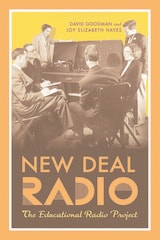
New Deal Radio
The Educational Radio ProjectDavid Goodman
Rutgers University Press, 2022
Contextualizing the different series aired by the Educational Radio Project as part of a unified project about radio and citizenship is crucial to understanding them. New Deal Radio argues that this distinctive government commercial partnership amounted to a critical intervention in US broadcasting and an important chapter in the evolution of public radio in America.
New Materialisms
Ontology, Agency, and PoliticsDiana Coole and Samantha Frost, eds.
Duke University Press, 2010
Coole and Frost argue that contemporary economic, environmental, geopolitical, and technological developments demand new accounts of nature, agency, and social and political relationships; modes of inquiry that privilege consciousness and subjectivity are not adequate to the task. New materialist philosophies are needed to do justice to the complexities of twenty-first-century biopolitics and political economy, because they raise fundamental questions about the place of embodied humans in a material world and the ways that we produce, reproduce, and consume our material environment.
Contributors
Sara Ahmed
Jane Bennett
Rosi Braidotti
Pheng Cheah
Rey Chow
William E. Connolly
Diana Coole
Jason Edwards
Samantha Frost
Elizabeth Grosz
Sonia Kruks
Melissa A. Orlie
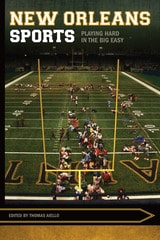
New Orleans Sports
Playing Hard in the Big EasyThomas Aiello
University of Arkansas Press, 2019
Tracing that history from the early nineteenth century to the present, while also surveying the state of the city’s sports historiography, New Orleans Sports places sport in the context of race relations, politics, and civic and business development to expand that historiography—currently dominated by a text that stops at 1900—into the twentieth century, offering a modern examination of sports in the city.
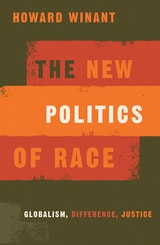
New Politics Of Race
Globalism, Difference, JusticeHoward Winant
University of Minnesota Press, 2004
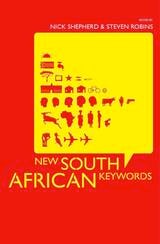
New South African Keywords
Nick Shepherd
Ohio University Press, 2008
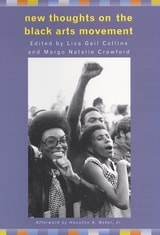
New Thoughts on the Black Arts Movement
Edited by Lisa Gail Collins and Margo Natalie Crawford
Rutgers University Press, 2006
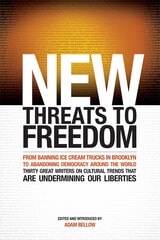
New Threats to Freedom
Adam Bellow
Templeton Press, 2011
New Threats to Freedom
In the twentieth century, free people faced a number of mortal threats,ranging from despotism, fascism,
and communism to the looming menace of global terrorism. While the struggle against some of these overt dangers continues, some insidious new threats seem to have slipped past our intellectual defenses. These often unchallenged threats are quietly eroding our hard-won freedoms and, in some cases, are widely accepted as beneficial.
In New Threats to Freedom, editor and author Adam Bellow has assembled an all-star lineup of innovative thinkers to challenge these insidious new threats. Some leap into already raging debates on issues such as Sharia law in the West, the rise of transnationalism, and the regulatory state. Others turn their attention to less obvious threats, such as the dogma of fairness, the failed promises of the blogosphere, and the triumph of behavioral psychology.
These threats are very real and very urgent, yet this collection avoids projecting an air of doom and gloom. Rather, it provides a blueprint for intellectual resistance so that modern defenders of liberty may better understand their enemies, more effectively fight to preserve the meaning of freedom, and more surely carry its light to a new generation.
What are the new threats to freedom?
when has authority not claimed, when imposing trammels and curbs on liberty, that it does so for a wider good and a greater happiness?” —Christopher Hitchens
“The regulatory state amounts to a regressive tax that penalizes small independent producers and protects
the status quo.” —Max Borders
“Europe tends to favor stability over democracy, America democracy over stability.” —Daniel Hannan
“The value of free expression is perceived to be at odds with goals that were considered ‘more important,’ like inclusiveness, diversity, nondiscrimination, and tolerance.” —Greg Lukianoff
“The masses cannot ultimately be free: only the individual can be.” —Robert D. Kaplan
“That old bugbear of postwar sociology—the mob-self—is now a reality. In a participatory/popularity culture, the freedom to think and act for ourselves becomes harder and harder to achieve.” —Lee Siegel
“As traditional marriage declines, the ranks of single women are growing, and increasingly these women are substituting the security of a husband with the security of the state.” —Jessica Gavora
“Ending the freedom to fail is a mean-spirited attack on the freedom to succeed.” —Michael Goodwin
“The only solution to the new threats to American press freedom lies in organized resistance.” —Katherine Mangu-Ward
“The new behaviorism isn’t interested in protecting people’s freedom to choose; on the contrary, its core principle is the idea that only by allowing an expert elite to limit choice can individuals learn to break their bad habits.” —Christine Rosen
“There’s a world of Travis Bickles out there, and they’re not driving cabs. They’re reading blogs.” —Ron Rosenbaum
“The first amendment ensures not that speech will be fair, but that it will be free. It cannot be both.” —David Mamet
Join the conversation about these issues at www.newthreatstofreedom.com
New World Drama
The Performative Commons in the Atlantic World, 1649-1849Elizabeth Maddock Dillon
Duke University Press, 2014
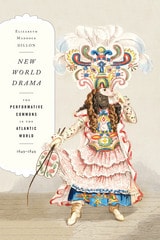
Audiences in London eagerly watched the royal slave, Oroonoko, tortured on stage, while audiences in Charleston and Kingston were forbidden from watching the same scene. Audiences in Kingston and New York City exuberantly participated in the slaying of Richard III on stage, enacting the rise of the "people," and Native American leaders were enjoined to watch actors in blackface "jump Jim Crow." Dillon argues that the theater served as a "performative commons," staging debates over representation in a political world based on popular sovereignty. Her book is a capacious account of performance, aesthetics, and modernity in the eighteenth-century Atlantic world.
Newborn Socialist Things
Materiality in Maoist ChinaLaurence Coderre
Duke University Press, 2021
News That Matters
Television and American OpinionShanto Iyengar and Donald R. Kinder
University of Chicago Press, 1987
"Because of its methodological integrity and richness, News That Matters is likely to be regarded as an impressive, possibliy grounbreaking work."—Neil Postman, New York Times Book Review
News That Matters
Television and American Opinion, Updated EditionShanto Iyengar and Donald R. Kinder
University of Chicago Press, 2010
Almost twenty-five years ago, Shanto Iyengar and Donald R. Kinder first documented a series of sophisticated and innovative experiments that unobtrusively altered the order and emphasis of news stories in selected television broadcasts. Their resulting book News That Matters, now hailed as a classic by scholars of political science and public opinion alike, is here updated for the twenty-first century, with a new preface and epilogue by the authors. Backed by careful analysis of public opinion surveys, the authors show how, despite changing American politics, those issues that receive extended coverage in the national news become more important to viewers, while those that are ignored lose credibility. Moreover, those issues that are prominent in the news stream continue to loom more heavily as criteria for evaluating the president and for choosing between political candidates.
“News That Matters does matter, because it demonstrates conclusively that television newscasts powerfully affect opinion. . . . All that follows, whether it supports, modifies, or challenges their conclusions, will have to begin here.”—The Public Interest

News
The Politics of Illusion, Tenth EditionW. Lance Bennett
University of Chicago Press, 2016
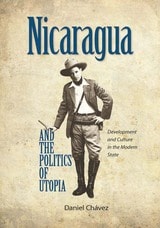
Nicaragua and the Politics of Utopia
Development and Culture in the Modern StateDaniel Chavez
Vanderbilt University Press, 2015
For each era, Chavez reveals the ways Nicaraguan popular culture adapted and interpreted the new political order, shaping, critiquing, or amplifying the regime's message of stability and prosperity for the people. These tactics of interpretation, otherwise known as meaning-making, became all-important for the Nicaraguan people, as they opposed the autocracy of Somocismo, or complemented the Sandinistas, or struggled to find their place in the Neoliberal era. In every case, Chavez shows the reflective nature of cultural production and its pursuit of utopian idealism.
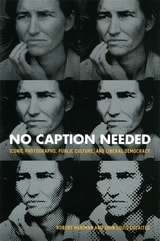
No Caption Needed
Iconic Photographs, Public Culture, and Liberal DemocracyRobert Hariman and John Louis Lucaites
University of Chicago Press, 2007
In No Caption Needed, Robert Hariman and John Louis Lucaites provide the definitive study of the iconic photograph as a dynamic form of public art. Their critical analyses of nine individual icons explore the photographs themselves and their subsequent circulation through an astonishing array of media, including stamps, posters, billboards, editorial cartoons, TV shows, Web pages, tattoos, and more. Iconic images are revealed as models of visual eloquence, signposts for collective memory, means of persuasion across the political spectrum, and a crucial resource for critical reflection.
Arguing against the conventional belief that visual images short-circuit rational deliberation and radical critique, Hariman and Lucaites make a bold case for the value of visual imagery in a liberal-democratic society. No Caption Needed is a compelling demonstration of photojournalism’s vital contribution to public life.

No Dig, No Fly, No Go
How Maps Restrict and ControlMark Monmonier
University of Chicago Press, 2010
Some maps help us find our way; others restrict where we go and what we do. These maps control behavior, regulating activities from flying to fishing, prohibiting students from one part of town from being schooled on the other, and banishing certain individuals and industries to the periphery. This restrictive cartography has boomed in recent decades as governments seek regulate activities as diverse as hiking, building a residence, opening a store, locating a chemical plant, or painting your house anything but regulation colors. It is this aspect of mapping—its power to prohibit—that celebrated geographer Mark Monmonier tackles in No Dig, No Fly, No Go.
Rooted in ancient Egypt’s need to reestablish property boundaries following the annual retreat of the Nile’s floodwaters, restrictive mapping has been indispensable in settling the American West, claiming slices of Antarctica, protecting fragile ocean fisheries, and keeping sex offenders away from playgrounds. But it has also been used for opprobrium: during one of the darkest moments in American history, cartographic exclusion orders helped send thousands of Japanese Americans to remote detention camps. Tracing the power of prohibitive mapping at multiple levels—from regional to international—and multiple dimensions—from property to cyberspace—Monmonier demonstrates how much boundaries influence our experience—from homeownership and voting to taxation and airline travel. A worthy successor to his critically acclaimed How to Lie with Maps, the book is replete with all of the hallmarks of a Monmonier classic, including the wry observations and witty humor.
In the end, Monmonier looks far beyond the lines on the page to observe that mapped boundaries, however persuasive their appearance, are not always as permanent and impermeable as their cartographic lines might suggest. Written for anyone who votes, owns a home, or aspires to be an informed citizen, No Dig, No Fly. No Go will change the way we look at maps forever.
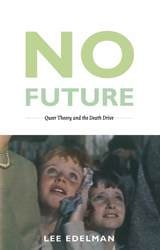
No Future
Queer Theory and the Death DriveLee Edelman
Duke University Press, 2004
Closely engaging with literary texts, Edelman makes a compelling case for imagining Scrooge without Tiny Tim and Silas Marner without little Eppie. Looking to Alfred Hitchcock’s films, he embraces two of the director’s most notorious creations: the sadistic Leonard of North by Northwest, who steps on the hand that holds the couple precariously above the abyss, and the terrifying title figures of The Birds, with their predilection for children. Edelman enlarges the reach of contemporary psychoanalytic theory as he brings it to bear not only on works of literature and film but also on such current political flashpoints as gay marriage and gay parenting. Throwing down the theoretical gauntlet, No Future reimagines queerness with a passion certain to spark an equally impassioned debate among its readers.
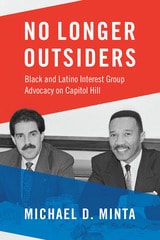
No Longer Outsiders
Black and Latino Interest Group Advocacy on Capitol HillMichael D. Minta
University of Chicago Press, 2021
In No Longer Outsiders, Minta provides a comprehensive account of the effectiveness of minority civil rights organizations and their legislative allies. He finds that the organizations’ legislative priorities are consistent with black and Latino preferences for stronger enforcement of civil rights policy and immigration reform. Although these groups focus mainly on civil rights for blacks and immigration issues for Latinos, their policy agendas extend into other significant areas. Minta concludes with an examination of how diversity in Congress helps groups gain greater influence and policy success despite many limits placed upon them.
No Real Choice
How Culture and Politics Matter for Reproductive AutonomyKatrina Kimport
Rutgers University Press, 2022
Based on candid, in-depth interviews with women who considered but did not obtain an abortion, No Real Choice punctures the myth that American women have full autonomy over their reproductive choices. Focusing on the experiences of a predominantly Black and low-income group of women, sociologist Katrina Kimport finds that structural, cultural, and experiential factors can make choosing abortion impossible–especially for those who experience racism and class discrimination. From these conversations, we see the obstacles to “choice” these women face, such as bans on public insurance coverage of abortion and rampant antiabortion claims that abortion is harmful. Kimport's interviews reveal that even as activists fight to preserve Roe v. Wade, class and racial disparities have already curtailed many women’s freedom of choice.
No Real Choice analyzes both the structural obstacles to abortion and the cultural ideologies that try to persuade women not to choose abortion. Told with care and sensitivity, No Real Choice gives voice to women whose experiences are often overlooked in debates on abortion, illustrating how real reproductive choice is denied, for whom, and at what cost.

No Tea, No Shade
New Writings in Black Queer StudiesE. Patrick Johnson, editor
Duke University Press, 2016
Non-literary Fiction
Art of the Americas under NeoliberalismEsther Gabara
University of Chicago Press, 2022
With Non-literary Fiction, Esther Gabara examines how contemporary art produced across the Americas has reacted to the rising tide of neoliberal regimes, focusing on the crucial role of fiction in daily politics. Gabara argues that these fictions depart from familiar literary narrative structures and emerge in the new mediums and practices that have revolutionized contemporary art. Each chapter details how fiction is created through visual art forms—in performance and body art, posters, mail art, found objects, and installations. For Gabara, these fictions comprise a type of art that asks viewers to collaborate in the creation of the work and helps them to withstand the brutal restrictions imposed by dominant neoliberal regimes.
During repressive regimes of the 1960s and 1970s and free trade agreements of the 1990s, artists and critics consistently said no to economic privatization, political deregulation, and reactionary social logic as they rejected inherited notions of visual, literary, and political representation. Through close analyses of artworks and writings by leading figures of these two generations, including Indigenous thinkers, Gabara shows how negation allows for the creation of fiction outside textual forms of literature.
Nonhuman Witnessing
War, Data, and Ecology after the End of the WorldMichael Richardson
Duke University Press, 2024
Nonsense on Stilts
How to Tell Science from BunkMassimo Pigliucci
University of Chicago Press, 2010
Recent polls suggest that fewer than 40 percent of Americans believe in Darwin’s theory of evolution, despite it being one of science’s best-established findings. More and more parents are refusing to vaccinate their children for fear it causes autism, though this link can been consistently disproved. And about 40 percent of Americans believe that the threat of global warming is exaggerated, despite near consensus in the scientific community that manmade climate change is real.
Why do people believe bunk? And what causes them to embrace such pseudoscientific beliefs and practices? Noted skeptic Massimo Pigliucci sets out to separate the fact from the fantasy in this entertaining exploration of the nature of science, the borderlands of fringe science, and—borrowing a famous phrase from philosopher Jeremy Bentham—the nonsense on stilts. Presenting case studies on a number of controversial topics, Pigliucci cuts through the ambiguity surrounding science to look more closely at how science is conducted, how it is disseminated, how it is interpreted, and what it means to our society. The result is in many ways a “taxonomy of bunk” that explores the intersection of science and culture at large.
No one—not the public intellectuals in the culture wars between defenders and detractors of science nor the believers of pseudoscience themselves—is spared Pigliucci’s incisive analysis. In the end, Nonsense on Stilts is a timely reminder of the need to maintain a line between expertise and assumption. Broad in scope and implication, it is also ultimately a captivating guide for the intelligent citizen who wishes to make up her own mind while navigating the perilous debates that will affect the future of our planet.
Normative Theories of the Media
Journalism in Democratic SocietiesClifford G. Christians, Theodore Glasser, Denis McQuail, Kaarle Nordenstreng, Ro
University of Illinois Press, 2008
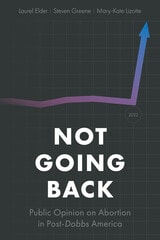
Not Going Back
Public Opinion on Abortion in Post-Dobbs AmericaLaurel Elder, Steven Greene, and Mary-Kate Lizotte
Temple University Press, 2026
Despite intense political debate, attitudes on abortion were remarkably stable for decades. However, after the 2022 Dobbs decision, Americans’ opinions began to change. Not Going Back explores the shifts in public opinion on this hot-button issue from the landmark passing of Roe v. Wade in 1973 through the 2024 election and into 2025.
The authors ask, “What role do Americans want their government to play in protecting, regulating, or restricting abortion access?” and, “How will changing attitudes on abortion reshape American politics?” They offer cohesive, theoretically grounded explanations for both the continuity and the change in Americans’ attitudes on this contentious topic. Using national data, they take a deep dive into the personal experiences and social forces behind these changes.
Not Going Back ends with an examination of the consequences of these changes for election outcomes. While there has been a striking reversal in the prioritization of abortion as an issue among Democrats and Republicans, the full impact of this shift in thinking will be influenced by future policies, court decisions, and party reactions.
Not Here, Not Now, Not That!
Protest over Art and Culture in AmericaSteven J. Tepper
University of Chicago Press, 2011
In the late 1990s Angels in America,Tony Kushner’s epic play about homosexuality and AIDS in the Reagan era, toured the country, inspiring protests in a handful of cities while others received it warmly. Why do people fight over some works of art but not others? Not Here, Not Now, Not That! examines a wide range of controversies over films, books, paintings, sculptures, clothing, music, and television in dozens of cities across the country to find out what turns personal offense into public protest.
What Steven J. Tepper discovers is that these protests are always deeply rooted in local concerns. Furthermore, they are essential to the process of working out our differences in a civil society. To explore the local nature of public protests in detail, Tepper analyzes cases in seventy-one cities, including an in-depth look at Atlanta in the late 1990s, finding that debates there over memorials, public artworks, books, and parades served as a way for Atlantans to develop a vision of the future at a time of rapid growth and change.
Eschewing simplistic narratives that reduce public protests to political maneuvering, Not Here, Not Now, Not That! at last provides the social context necessary to fully understand this fascinating phenomenon.
Not in Our Lifetimes
The Future of Black PoliticsMichael C. Dawson
University of Chicago Press, 2011
For all the talk about a new postracial America, the fundamental realities of American racism—and the problems facing black political movements—have not changed. Michael C. Dawson lays out a nuanced analysis of the persistence of racial inequality and structural disadvantages, and the ways that whites and blacks continue to see the same problems—the disastrous response to Katrina being a prime example—through completely different, race-inflected lenses. In fact, argues Dawson, the new era heralded by Barack Obama’s election is more racially complicated, as the widening class gap among African Americans and the hot-button issue of immigration have the potential to create new fissures for conservative and race-based exploitation. Through a thoughtful analysis of the rise of the Tea Party and the largely successful “blackening” of President Obama, Dawson ultimately argues that black politics remains weak—and that achieving the dream of racial and economic equality will require the sort of coalition-building and reaching across racial divides that have always marked successful political movements.
Polemical but astute, passionate but pragmatic, Not in Our Lifetimes forces us to rethink easy assumptions about racial progress—and begin the hard work of creating real, lasting change.
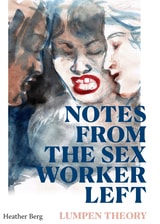
Notes from the Sex Worker Left
Lumpen TheoryHeather Berg
Duke University Press, 2026
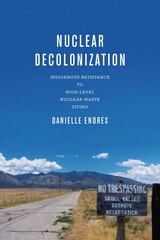
Nuclear Decolonization
Indigenous Resistance to High-Level Nuclear Waste SitingDanielle Endres
The Ohio State University Press, 2023
Honorable Mention, 2024 NCA Public Address Division’s Marie Hochmuth Nichols Award
Honorable Mention, 2025 Association for the Rhetoric of Science, Technology, and Medicine Book Award
While research demonstrates how Indigenous populations have been disproportionately affected by the global nuclear production complex, less attention has been given to tactics that have successfully resisted such projects. Danielle Endres’s Nuclear Decolonization shifts the conversation around nuclear colonialism in important ways, offering an account of how the Western Shoshone, Southern Paiute, and Skull Valley Goshute peoples and nations prevented two high-level nuclear waste sites from being built on their lands.
Using a decolonial approach, Endres highlights two sets of rhetorical tactics—Indigenous Lands rhetorics and national interest rhetorics—used to fight nuclear colonialism. The book reframes nuclear decolonization as fundamentally a struggle for the return of Indigenous lands while also revealing how Native activists selectively move between Indigenous nationhood and US citizenship in order to resist settler decision-making. Working at the intersection of Indigenous antinuclear advocacy, Indigenized environmental justice, and decolonization, Nuclear Decolonization centers Native activism and voices while amplifying the power and resilience of Indigenous peoples and nations.