Results by title
1325 books match the query 'Psychology' and 28 start with n
Narrative Theory and the Cognitive Sciences
Edited by David Herman
CSLI, 2003
National Manhood
Capitalist Citizenship and the Imagined Fraternity of White MenDana D. Nelson
Duke University Press, 1998
Using political, scientific, medical, personal, and literary texts ranging from the Federalist papers to the ethnographic work associated with the Lewis and Clark expedition to the medical lectures of early gynecologists, Nelson explores the referential power of white manhood, how and under what conditions it came to stand for the nation, and how it came to be a fraternal articulation of a representative and civic identity in the United States. In examining early exemplary models of national manhood and by tracing its cultural generalization, National Manhood reveals not only how an impossible ideal has helped to form racist and sexist practices, but also how this ideal has simultaneously privileged and oppressed white men, who, in measuring themselves against it, are able to disavow their part in those oppressions.
Historically broad and theoretically informed, National Manhood reaches across disciplines to engage those studying early national culture, race and gender issues, and American history, literature, and culture.
Nationalism and Sexuality
Middle-Class Morality and Sexual Norms in Modern EuropeGeorge L. Mosse, With a critical introduction by Mary Louise Roberts
University of Wisconsin Press, 2020
Navigating the Future
Social Identity, Coping, and Life TasksGeraldine Downey
Russell Sage Foundation, 2005
Nazi Psychoanalysis V1
Volume I: Only Psychoanalysis Won the WarLaurence A. Rickels
University of Minnesota Press, 2002
A revolutionary new approach to the place of Nazi ideology in twentieth-century thought
Psychoanalysis was a symptom of everything the Nazis reviled: an intellectual assault on Kultur largely perpetrated by Jews. It was also, as this remarkable work shows, an inescapable symptom of modernity, practiced, transformed, and perpetuated by and within the Nazi regime. A sweeping, magisterial work by one of the most incisive and interesting scholars of modern philosophy, theory, and culture, Nazi Psychoanalysis studies the breadth of this phenomenon in order to clarify and deepen our understanding not only of psychoanalysis but of the twentieth century.
Tracing the intersections of psychoanalysis and Nazism, Laurence A. Rickels discovers startling conjunctions and continuities in writers as diverse as Adler and Adorno, Kafka and Goethe, Lacan, H. Rider Haggard, and Heidegger, and in works as different as Der Golem, Civilization and Its Discontents, Frankenstein, Faust, and Brave New World. In a richly allusive style, he writes of psychoanalysis in multifarious incarnations, of the concept and actual history of "insurance," of propaganda in theory and practice, of psychological warfare, Walt Disney, and the Frankfurt School debates—a dizzying tour of the twentieth century that helps us see how the "corridor wars" that arise in the course of theoretical, clinical, social, political, and cultural attempts to describe the human psyche are related to the world wars of the century in an intimate and infinitely complicated manner. Though some have used its appropriation by the Nazis to brand psychoanalysis with the political odium of fascism, Rickels instead finds an uncanny convergence—one that suggests far-reaching possibilities for both psychoanalysis and psychoanalytic criticism. His work, with its enormous intellectual and historical span, makes a persuasive argument that no element of modernity—not psychoanalysis any more than Marxism or deconstruction, cultural revolutions or technological advances-can be adequately understood without a thorough consideration of its Nazi component.
Nazi Psychoanalysis V2
Volume II: Crypto-FetishismLaurence A. Rickels
University of Minnesota Press, 2002
A revolutionary new approach to the place of Nazi ideology in twentieth-century thought
Psychoanalysis was a symptom of everything the Nazis reviled: an intellectual assault on Kultur largely perpetrated by Jews. It was also, as this remarkable work shows, an inescapable symptom of modernity, practiced, transformed, and perpetuated by and within the Nazi regime. A sweeping, magisterial work by one of the most incisive and interesting scholars of modern philosophy, theory, and culture, Nazi Psychoanalysis studies the breadth of this phenomenon in order to clarify and deepen our understanding not only of psychoanalysis but of the twentieth century.
Tracing the intersections of psychoanalysis and Nazism, Laurence A. Rickels discovers startling conjunctions and continuities in writers as diverse as Adler and Adorno, Kafka and Goethe, Lacan, H. Rider Haggard, and Heidegger; and in works as different as Der Golem, Civilization and Its Discontents,Frankenstein, Faust, and Brave New World. In a richly allusive style, he writes of psychoanalysis in multifarious incarnations, of the concept and actual history of "insurance," of propaganda in theory and practice, of psychological warfare, Walt Disney, and the Frankfurt School debates—a dizzying tour of the twentieth century that helps us see how the "corridor wars" that arise in the course of theoretical, clinical, social, political, and cultural attempts to describe the human psyche are related to the world wars of the century in an intimate and infinitely complicated manner. Though some have used its appropriation by the Nazis to brand psychoanalysis with the political odium of fascism, Rickels instead finds an uncanny convergence—one that suggests far-reaching possibilities for both psychoanalysis and psychoanalytic criticism. His work, with its enormous intellectual and historical span, makes a persuasive argument that no element of modernity—not psychoanalysis any more than Marxism or deconstruction, cultural revolutions or technological advances—can be adequately understood without a thorough consideration of its Nazi component.
Nazi Psychoanalysis V3
Volume III: Psy FiLaurence A. Rickels
University of Minnesota Press, 2002
A revolutionary new approach to the place of Nazi ideology in twentieth-century thought
Psychoanalysis was a symptom of everything the Nazis reviled: an intellectual assault on Kultur largely perpetrated by Jews. It was also, as this remarkable work shows, an inescapable symptom of modernity, practiced, transformed, and perpetuated by and within the Nazi regime. A sweeping, magisterial work by one of the most incisive and interesting scholars of modern philosophy, theory, and culture, Nazi Psychoanalysis studies the breadth of this phenomenon in order to clarify and deepen our understanding not only of psychoanalysis but of the twentieth century.
Tracing the intersections of psychoanalysis and Nazism, Laurence A. Rickels discovers startling conjunctions and continuities in writers as diverse as Adler and Adorno, Kafka and Goethe, Lacan, H. Rider Haggard, and Heidegger; and in works as different as Der Golem, Civilization and Its Discontents, Frankenstein, Faust, and Brave New World. In a richly allusive style, he writes of psychoanalysis in multifarious incarnations, of the concept and actual history of "insurance," of propaganda in theory and practice, of psychological warfare, Walt Disney, and the Frankfurt School debates—a dizzying tour of the twentieth century that helps us see how the "corridor wars" that arise in the course of theoretical, clinical, social, political, and cultural attempts to describe the human psyche are related to the world wars of the century in an intimate and infinitely complicated manner. Though some have used its appropriation by the Nazis to brand psychoanalysis with the political odium of fascism, Rickels instead finds an uncanny convergence-one that suggests far-reaching possibilities for both psychoanalysis and psychoanalytic criticism. His work, with its enormous intellectual and historical span, makes a persuasive argument that no element of modernity—not psychoanalysis any more than Marxism or deconstruction, cultural revolutions or technological advances—can be adequately understood without a thorough consideration of its Nazi component.
Necessary Nonsense
Aesthetics, History, Neurology, PsychologyIrving Massey
The Ohio State University Press, 2018
In Necessary Nonsense, Massey explores a range of literary and philosophical subjects, from Immanuel Kant to Lewis Carroll—parsing the ways in which nonsense permeates their writing and dialectics—including an exploration of the inability of those who suffer from Asperger's syndrome to distinguish between metaphor and nonsense, and an investigation of the neural signature of the nonsense words and phrases that occur during the transition from waking to sleep. Massey argues that while nonsense may be the “archenemy of reason,” it is also tied to the intrinsic nature of reason; the two, simply put, cannot exist without each other. Through a stunning array of exploratory topics, Massey concludes that we all live under a canopy of nonsense.
Negotiating Responsibility in the Criminal Justice System
Edited by Jack Kamerman. Foreword by Gilbert Geis
Southern Illinois University Press, 1998
With this collection of essays, Jack Kamerman presents the first sustained examination of one of the underpinnings of the operation of the criminal justice system: the issue of responsibility for actions and, as a consequence, the issue of accountability.
Unique in the breadth of its approach, this volume examines the issue of responsibility from the perspectives of criminal justice professionals, sociologists, philosophers, and public administrators from four countries. Attacking the problem on various levels, the essayists look first at the assumptions made by criminal justice institutions regarding offender responsibility, then turn to the views of offenders on the causes of their own actions and to the consequences of offenders either to accept or deny responsibility.
These scholars also examine the social and psychological circumstances under which people in general accept or deny responsibility for what they do, thus providing the basis for understanding the process of social distance as a major precondition for people to commit atrocities without seeing themselves as responsible. Understanding the circumstances under which people either distance themselves from or embrace responsibility enables criminologists to make grounded recommendations for reordering responsibility in the criminal justice system and, more generally, for restoring a sense of responsibility to organizations, occupations, and society.
Aside from Kamerman, the contributors are William C. Collins, Charles Fethe, Gilbert Geis, Robert J. Kelly, Alison Liebling, Jess Maghan, Mark Harrison Moore, Paul Neurath, John Rakis, William Rentzmann, and José E. Sánchez.
Neo-Burlesque
Striptease as TransformationLynn Sally
Rutgers University Press, 2022
Performance studies scholar and acclaimed burlesque artist Lynn Sally offers an inside look at the history, culture, and philosophy of New York’s neo-burlesque scene. Revealing how twenty-first century neo-burlesque is in constant dialogue with the classic burlesque of the nineteenth and twentieth centuries, she considers how today’s performers use camp to comment on preconceived notions of femininity. She also explores how the striptease performer directs the audience’s gaze, putting on layers of meaning while taking off layers of clothing.
Through detailed profiles of iconic neo-burlesque performers such as Dita Von Teese, Dirty Martini, Julie Atlas Muz, and World Famous *BOB*, this book makes the case for understanding neo-burlesque as a new sexual revolution. Yet it also examines the broader community of “Pro-Am” performers who use neo-burlesque as a liberating vehicle for self-expression. Raising important questions about what feminism looks like, Neo-Burlesque celebrates a revolutionary performing art and participatory culture whose acts have political reverberations, both onstage and off.
Neuroscience, Psychology, and Religion
Illusions, Delusions, and Realities about Human NatureMalcolm Jeeves
Templeton Press, 2009
Neuroscience, Psychology, and Religion is the second title published in the new Templeton Science and Religion Series. In this volume, Malcolm Jeeves and Warren S. Brown provide an overview of the relationship between neuroscience, psychology, and religion that is academically sophisticated, yet accessible to the general reader.
The authors introduce key terms; thoroughly chart the histories of both neuroscience and psychology, with a particular focus on how these disciplines have interfaced religion through the ages; and explore contemporary approaches to both fields, reviewing how current science/religion controversies are playing out today. Throughout, they cover issues like consciousness, morality, concepts of the soul, and theories of mind. Their examination of topics like brain imaging research, evolutionary psychology, and primate studies show how recent advances in these areas can blend harmoniously with religious belief, since they offer much to our understanding of humanity's place in the world. Jeeves and Brown conclude their comprehensive and inclusive survey by providing an interdisciplinary model for shaping the ongoing dialogue.
Sure to be of interest to both academics and curious intellectuals, Neuroscience, Psychology, and Religion addresses important age-old questions and demonstrates how modern scientific techniques can provide a much more nuanced range of potential answers to those questions.

Never Married Women
Barbara Levy Simon
Temple University Press, 1989

Newly Born Woman
Helene Cixous
University of Minnesota Press, 1986
Nietzsche, Psychology, and First Philosophy
Robert B. Pippin
University of Chicago Press, 2010
Friedrich Nietzsche is one of the most elusive thinkers in the philosophical tradition. His highly unusual style and insistence on what remains hidden or unsaid in his writing make pinning him to a particular position tricky. Nonetheless, certain readings of his work have become standard and influential. In this major new interpretation of Nietzsche’s work, Robert B. Pippin challenges various traditional views of Nietzsche, taking him at his word when he says that his writing can best be understood as a kind of psychology.
Pippin traces this idea of Nietzsche as a psychologist to his admiration for the French moralists: La Rochefoucauld, Pascal, Stendhal, and especially Montaigne. In distinction from philosophers, Pippin shows, these writers avoided grand metaphysical theories in favor of reflections on life as lived and experienced. Aligning himself with this project, Nietzsche sought to make psychology “the queen of the sciences” and the “path to the fundamental problems.” Pippin contends that Nietzsche’s singular prose was an essential part of this goal, and so he organizes the book around four of Nietzsche’s most important images and metaphors: that truth could be a woman, that a science could be gay, that God could have died, and that an agent is as much one with his act as lightning is with its flash.
Expanded from a series of lectures Pippin delivered at the Collège de France, Nietzsche, Psychology, and First Philosophy offers a brilliant, novel, and accessible reading of this seminal thinker.
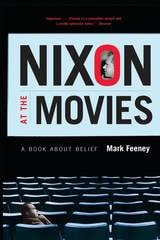
Nixon at the Movies
A Book about BeliefMark Feeney
University of Chicago Press, 2004
Nixon at the Movies takes a new and often revelatory approach to looking at Nixon's career—and Hollywood's. From the obvious (All the President's Men) to the less so (Elvis Presley movies and Nixon's relationship to '60s youth culture) to several onscreen "alternate" Nixons (Fred MacMurray in Double Indemnity, Tony Curtis in The Sweet Smell of Success, Gene Hackman in The Conversation), Feeney sees aspects of Nixon's character, and the nation's, refracted and reimagined in film. Conversely, Feeney argues that Nixon can help us see the movies in a new light, making a strong case for Nixon as the movies' tutelary deity during the early '70s, playing a role in Hollywood's Silver Age comparable to FDR's during its Golden Age.
Stylishly written and bracingly eclectic, Nixon at the Movies draws on biography, politics, cultural history, and film criticism to show just how deeply in the twentieth-century American grain lies the pair of seemingly incongruous nouns in its title. As Nixon once remarked to Garry Wills: "Isn't that a hell of a thing, that the fate of a great country can depend on camera angles?"
No Less a Man
Masculist Art in a Feminist AgeDoug Robinson
University of Wisconsin Press, 1994
No One Really Knows Me
Helping Young Men Find Connection, Love, and PurposeMichael C. Reichert and Gary Barker
University of Chicago Press, 2027
Counters common and harmful myths about manhood today and offers recommendations for what young men really need as they mature.
From the “manosphere” and LooksMaxxers to Proud Boys, it increasingly feels these days like the kids—particularly the boys—are not all right. Social expectations around what masculinity means are in flux, while algorithms push out misogynist content with no regard for its radicalizing effects. In 2023 and again in 2025, a representative survey of 2,000 American men aged 18-23 found that over two-thirds agreed with the statement: “No one really knows me.” This dramatic finding revealed the failure of American boyhood to account for young men’s full humanity and equip them with the skills, relationships, and support needed for success in these modern times.
In No One Really Knows Me, psychologists Michael C. Reichert and Gary Barker seek to uncover the root causes of and solutions to our contemporary crisis of masculinity. Based on single and group interviews and a wealth of survey data, including their own national survey of 2,000 men ages 18 to 45 from a broad range of economic, racial, and social backgrounds, their findings were clear: across the board, men are struggling to build the social networks they desperately need for health and success. Underlying this failure is a set of historic, pernicious myths that continue to dominate boyhood and shape the imaginations of boys in families, schools, and relationships. Reichert and Barker use each chapter to highlight one myth of masculinity, offer data from their own research and practice to debunk it, and then present life-changing, evidence-based alternatives.
Young men today are in quite a different position than they were a generation ago. As he emerges from boyhood on his way to manhood, each young man needs to be grounded in emotionally open connections, deep relationships with people who have his back, and opportunities to engage with purpose. This book shows us how we can provide young men with surer footing for their passage to adulthood.
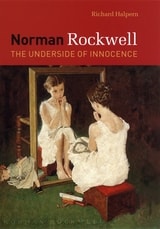
Norman Rockwell
The Underside of InnocenceRichard Halpern
University of Chicago Press, 2006
Norman Rockwell’s scenes of everyday small-town life are among the most indelible images in all of twentieth-century art. While opinions of Rockwell vary from uncritical admiration to sneering contempt, those who love him and those who dismiss him do agree on one thing: his art embodies a distinctively American style of innocence.
In this sure-to-be controversial book, Richard Halpern argues that this sense of innocence arises from our reluctance—and also Rockwell’s—to acknowledge the often disturbing dimensions of his works. Rockwell’s paintings frequently teem with perverse acts of voyeurism and desire but contrive to keep these acts invisible—or rather, hidden in plain sight, available for unacknowledged pleasure but easily denied by the viewer.
Rockwell emerges in this book, then, as a deviously brilliant artist, a remorseless diagnostician of the innocence in which we bathe ourselves, and a continuing, unexpected influence on contemporary artists. Far from a banal painter of the ordinary, Halpern argues, Rockwell is someone we have not yet dared to see for the complex creature he is: a wholesome pervert, a knowing innocent, and a kitschy genius.
Provocative but judicious, witty but deeply informed, Norman Rockwell is a book rich in suggestive propositions and eye-opening details—one that will change forever the way we think about this American icon and his works.

Nostalgic Futures
The Reactionary Fantasies of Speculative Fiction FandomsMax Dosser
Rutgers University Press, 2026
Speculative fiction imagines impossible futures and alternative pasts, alien species and angelic monsters, technological marvels and magical solutions. In recent years, however, many in its fandoms have protested the inclusion of nonwhite, nonmale, and nonheterosexual characters as betrayals of their beloved media for the sake of “wokeness.” Nostalgic Futures: The Reactionary Fantasies of Speculative Fiction Fandoms examines how contemporary fan controversies— particularly those surrounding gender, race, and sexuality in speculative fiction media—intersect with reactionary movements within and beyond fandom. This book explores how the nostalgic fantasies of fans and far-right movements contribute to broader reactionary discourses, shaping not only the past they long for but the future they fear. From the Hugo Awards and PuppyGate to Star Wars’ #NotMyJedi to Mass Effect and The Last of Us boycotts, Nostalgic Futures reveals how speculative fiction fandom has become a site of contestation over our visions of the past, present, and future.
Not Far from Me
Stories of Opioids and OhioEdited by Daniel Skinner and Berkeley FranzForeword by Ted Strickland
The Ohio State University Press, 2019
More and more Americans find themselves in some way touched by the opioid epidemic. But while many have observed the effects of the crisis, Not Far from Me: Stories of Opioids and Ohio is the first book on this public health emergency composed entirely of first-person accounts. The collection unfolds across more than fifty gripping accounts by Ohioans at the center of the national epidemic. Shared through personal stories, poetry, interviews, and photos, these perspectives transcend typical one-dimensional portrayals of the crisis to offer a mosaic of how politics, religion, sports, economics, culture, race, and sexual orientation intersect in and around the epidemic.
Themes of pain and healing, despair and hope are woven throughout accounts of families who have lost loved ones to addiction, stories of survival, and experiences of working on the front lines in communities. In an attempt to give every voice the chance to be heard, Not Far from Me features contributors from across the state as they engage with the pain of opioid abuse and overdose, as well as the hope that personal- and community-level transformation brings. Ultimately, Not Far from Me humanizes the battle against addiction, challenges the stigma surrounding drug users, and unflinchingly faces the reality of the American opioid epidemic.
Not Straight from Germany
Sexual Publics and Sexual Citizenship since Magnus HirschfeldMichael Thomas Taylor, Annette F. Timm, and Rainer Herrn, Editors
University of Michigan Press, 2017
Two visual sourcebooks and catalog essays on an exhibition of contemporary artists’ responses to the Hirschfeld historical materials interrogate the modes of visual representation that Hirschfeld employed by re-imagining the public visibility of his institute from a contemporary perspective. The archival material includes stunning, never-before-published images from Hirschfeld’s institute that challenge many received ideas, while the scholarly and art catalog essays explore collaboration and dialogue as methods of research and activism that resonate beyond the academy to pressing issues of public concern.
Not Under My Roof
Parents, Teens, and the Culture of SexAmy T. Schalet
University of Chicago Press, 2011
Winner of the Healthy Teen Network’s Carol Mendez Cassell Award for Excellence in Sexuality Education and the American Sociological Association's Children and Youth Section's 2012 Distinguished Scholarly Research Award
For American parents, teenage sex is something to be feared and forbidden: most would never consider allowing their children to have sex at home, and sex is a frequent source of family conflict. In the Netherlands, where teenage pregnancies are far less frequent than in the United States, parents aim above all for family cohesiveness, often permitting young couples to sleep together and providing them with contraceptives. Drawing on extensive interviews with parents and teens, Not Under My Roof offers an unprecedented, intimate account of the different ways that girls and boys in both countries negotiate love, lust, and growing up.
Tracing the roots of the parents’ divergent attitudes, Amy T. Schalet reveals how they grow out of their respective conceptions of the self, relationships, gender, autonomy, and authority. She provides a probing analysis of the way family culture shapes not just sex but also alcohol consumption and parent-teen relationships. Avoiding caricatures of permissive Europeans and puritanical Americans, Schalet shows that the Dutch require self-control from teens and parents, while Americans guide their children toward autonomous adulthood at the expense of the family bond.
Notes on the Heart
Affective Issues in the Writing ClassroomSusan H. McLeod
Southern Illinois University Press, 1997
It has long been recognized that affect (that is, the noncognitive aspect of mental activity) plays a large role in writing and in learning to write. According to Susan H. McLeod, however, the model that has been most used for empirical research on the writing process is based on cognitive psychology and does not take into account affective phenomena. Nor does the social constructionist view of the writing process acknowledge the affective realm except in a very general way. To understand the complete picture, McLeod insists, we need to explore how cognitive, affective, and social elements interact as people write.
In this book, McLeod follows a group of students through a semester of writing assignments, tracking the students’ progress and examining the affective elements relevant to their writing. To facilitate future discussion of these phenomena, McLeod also provides suggested definitions for terms in the affective domain.
In a very real sense, this book is the result of a collaboration of three Susans: Susan McLeod, who researched and wrote the book; Sue Hallett, an instructor in Washington State University’s composition program whose classes McLeod observed and who helped provide much of the data; and Susan Parker, a graduate student who observed Hallett’s class and who ran a tutorial connected to that class. To provide a narrative structure, McLeod and her two collaborators have constructed a simulated semester, conflating the year and a half of the study into one semester and creating a class that is a composite drawn from seven classrooms over three semesters.
Although philosophers have had much to say about the affective domain, Notes on the Heart is based for the most part on research from the social sciences. Discussions of pedagogy, while meant to have practical value, are suggestive rather than prescriptive. The goal is to help teachers see their practice in new way.
Teachers will be particularly interested in McLeod’s discussion of teacher affect/effect. This section examines both the issue of the "Pygmalion effect" (students becoming better because the teacher believes they are) and perhaps the more common opposite, the "golem effect" (students becoming less capable because their teachers view them that way).
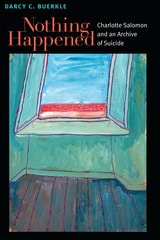
Nothing Happened
Charlotte Salomon and an Archive of SuicideDarcy C. Buerkle
University of Michigan Press, 2013
Charlotte Salomon's (1917-43) fantastical autobiography, Life? or Theater?, consists of 769 sequenced gouache paintings, through which the artist imagined the circumstances of the eight suicides in her family, all but one of them women. But Salomon's focus on suicide was not merely a familial idiosyncrasy. Nothing Happened argues that the social history of early-twentieth-century Germany has elided an important cultural and social phenomenon by not including the story of German Jewish women and suicide. This absence in social history mirrors an even larger gap in the intellectual history of deeply gendered suicide studies that have reproduced the notion of women's suicide as a rarity in history. Nothing Happened is a historiographic intervention that operates in conversation and in tension with contemporary theory about trauma and the reconstruction of emotion in history.
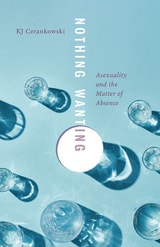
Nothing Wanting
Asexuality and the Matter of AbsenceKJ Cerankowski
University of Minnesota Press, 2025
Advancing asexuality studies in new, queer directions—beyond identity and beyond the human
We’ve all seen the page that states “this page intentionally left blank” or heard an authority figure declare “nothing to see here, folks,” and yet the so-called blank page has writing on it, and folks definitely have something to see. From the entry point of these and other paradoxical declarations of absence, KJ Cerankowski applies the aesthetics of asexuality to theorize silences, nothings, and emptiness. In the process, he explores new ways of making meaning out of the supposedly meaningless.
Throughout this investigation into absences, Cerankowski moves intuitively and idiosyncratically, taking readers along a series of waypoints that include Border, the acclaimed horror film about a customs officer who can smell fear; Jenny Hval’s discomfiting novel Paradise Rot; and disabled artist Finnegan Shannon’s iconic benches. Experimental in form as well as content, Nothing Wanting offers an innovative and mischievous reading experience that plays with structural elements like redaction, erasure, supertext, and repetition. With a deeply anticapitalist, anticolonial motivating ideology, it pushes to the limits of language, subverting commonplace notions of books, knowledge, and what it is to be human.
Moving beyond identity and representation, Nothing Wanting is playful, fascinating, and provocative as it conceives asexuality as additive and expansive rather than lacking. As it reveals the vibrant lifeworlds that hum in silences and thrum in stillnesses, Nothing Wanting pivots from the imposition of wanting nothing to the craving of nothing wanting: satisfied, yet always yearning for more worlds of thriving—for everything and everyone.
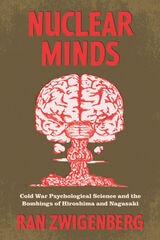
Nuclear Minds
Cold War Psychological Science and the Bombings of Hiroshima and NagasakiRan Zwigenberg
University of Chicago Press, 2023
In 1945, researchers on a mission to Hiroshima with the United States Strategic Bombing Survey canvassed survivors of the nuclear attack. This marked the beginning of global efforts—by psychiatrists, psychologists, and other social scientists—to tackle the complex ways in which human minds were affected by the advent of the nuclear age. A trans-Pacific research network emerged that produced massive amounts of data about the dropping of the bomb and subsequent nuclear tests in and around the Pacific rim.
Ran Zwigenberg traces these efforts and the ways they were interpreted differently across communities of researchers and victims. He explores how the bomb’s psychological impact on survivors was understood before we had the concept of post-traumatic stress disorder. In fact, psychological and psychiatric research on Hiroshima and Nagasaki rarely referred to trauma or similar categories. Instead, institutional and political constraints—most notably the psychological sciences’ entanglement with Cold War science—led researchers to concentrate on short-term damage and somatic reactions or even, in some cases, on denial of victims’ suffering. As a result, very few doctors tried to ameliorate suffering.
But, Zwigenberg argues, it was not only that doctors “failed” to issue the right diagnosis; the victims’ experiences also did not necessarily conform to our contemporary expectations. As he shows, the category of trauma should not be used uncritically in a non-Western context. Consequently, this book sets out, first, to understand the historical, cultural, and scientific constraints in which researchers and victims were acting and, second, to explore how suffering was understood in different cultural contexts before PTSD was a category of analysis.
Number and Time
Reflections Leading Toward a Unification of Depth Psychology and PhysicsMarie-Louise von Franz
Northwestern University Press, 1986
A classic on mind, matter, and the unified world model
C. G. Jung's work in his later years suggested that the seemingly divergent sciences of psychology and modern physics might, in fact, be approaching a unified world model in which the dualism of matter and psyche would be resolved into “one world” or Unus Mundus. Jung believed that the natural integers are the archetypal patterns that regulate the unitary realm of psyche and matter, and that number serves as a special instrument for man's becoming conscious of this unity.
Written in a clear style and replete with illustrations which help make the mathematical ideas visible, Number and Time is a piece of original scholarship which introduces a view of how "mind" connects with "matter" at the most fundamental level.
Nurturing Dads
Fatherhood Initiatives Beyond the WalletWilliam Marsiglio
Russell Sage Foundation, 2012