Results by title
4127 books match the query 'Science' and 88 start with n

NanoCulture
Implications of the New TechnoscienceEdited by N. Katherine Hayles
Intellect Books, 2004
Extraordinary visions of material abundance, unprecedented materials, and powerful engineering capabilities have marked the arrival of nanotechnology, as well as dystopian scenarios of self-replicating devices running amok and causing global catastrophe. Largely a future possibility rather than present actuality, nanotechnology has become a potent cultural signifier.
NanoCulture explores the ways in which nanotechnology interacts with, and itself becomes, a cultural construction. Topics include the co-construction of nanoscience and science fiction; the influence of risk assessment and nanotechnology on the shapes of narratives; intersections between nanoscience as a writing practice and experimental literature at the limits of fabrication; the Alice-in-Wonderland metaphor for nanotechnology; and the effects of mediation on nanotechnology and electronic literature.
NanoCulture is produced in collaboration with the nano art exhibit at the Los Angeles County Museum of Art (December 2003-September 2004), created by an interdisciplinary team led by media artist Victoria Vesna and nanoscientist James Gimzewski. NanoCulture is richly illustrated with images from the nano exhibit, which also provides the basis for an ethnographic analysis of collaborative process and an exploration of changing concepts of museum space.
The dynamic uniting these diverse perspectives is boundary crossing: between art, science, and literature; cultural imaginaries, scientific facts, and technological possibilities; actual. virtual, and hybrid spaces; the science of fictions and the fictions of science; and utopian dreams, material constraints, and dystopian nightmares.
The first book-length study focus on cultural implications of nanotechnology, NanoCulture breaks new ground in showing the importance of the new technoscience to contemporary culture and of culture to the development, interpretation, and future of this technoscience.

Nanoantennas and Plasmonics
Modelling, design and fabricationDouglas H. Werner
The Institution of Engineering and Technology, 2020
Nanoart
The Immateriality of ArtPaul Thomas
Intellect Books, 2013
Nanovision
Engineering the FutureColin Milburn
Duke University Press, 2008
Milburn illuminates the practices of nanotechnology by examining an enormous range of cultural artifacts, including scientific research articles, engineering textbooks, laboratory images, popular science writings, novels, comic books, and blockbuster films. In so doing, he reveals connections between the technologies of visualization that have helped inaugurate nano research, such as the scanning tunneling microscope, and the prescient writings of Robert A. Heinlein, James Blish, and Theodore Sturgeon. He delves into fictive and scientific representations of “gray goo,” the nightmare scenario in which autonomous nanobots rise up in rebellion and wreak havoc on the world. He shows that nanoscience and “splatterpunk” novels share a violent aesthetic of disintegration: the biological body is breached and torn asunder only to be refabricated as an assemblage of self-organizing machines. Whether in high-tech laboratories or science fiction stories, nanovision deconstructs the human subject and galvanizes the invention of a posthuman future.

Narrative Experiments
The Discursive Authority of Science and TechnologyGayle L. Ormiston and Raphael Sassower
University of Minnesota Press, 1989
Narrative Experiments was first published in 1989. Minnesota Archive Editions uses digital technology to make long-unavailable books once again accessible, and are published unaltered from the original University of Minnesota Press editions.
In Narrative Experiments, Gayle Ormiston and Ralph Sassower bring a refreshing perspective to the domains of inquiry we call "science" and "technology," asserting that traditional definitions (like classical idealism and materialism) fail to suggest the rich and complex cultural/linguistic interplay occurring between them. This context is not merely a background, nor is Ormiston and Sassower's just one more interdisciplinary approach to the subject. Instead, their book argues, science, technology, and the humanities developed in concert with one another, and their reciprocity obliterates all traditional disciplinary boundaries.
Ormiston and Sassower build their case by devoting a chapter to each of the four themes emerging from the etymological introduction. First, they look at the role fiction and other literary modes play in developing our attitudes toward science and technology -- how the visions of Bacon, Hobbes, Galileo, Rousseau, Mary Shelley, and Orwell evoke both anxiety and hope. Next, they examine a series of eighteenth-century "fictions" -- the Enlightenment texts of Kant, Rousseau, and Hume -- and the elevated (but ambiguous) status science and technology associated with them. The last two chapters evaluate modes of discursive authority and its dissemination -- classical and modern extralinguistic approaches; the contemporary-linguistic view espoused by Rorty, Quine, and others; and their own avowedly experimental journey through the labyrinths of cultural and linguistic usage.
Narrative in the Anthropocene
Erin James
The Ohio State University Press, 2022
Narratives of Educating for Sustainability in Unsustainable Environments
Jane Haladay
Michigan State University Press, 2017
Nathaniel Southgate Shaler and the Culture of American Science
David N. Livingstone
University of Alabama Press, 1987
An influential American scientist and educator.
Nathaniel Southgate Shaler and the Culture of American Science is the first book-length study of the man who served a Harvard’s Professor of Geology and Paleontology during the Darwinian era. Shaler was a student of Louis Agassiz and went on to a successful, multifaceted career as a geologist, geographer, educator, humanist, and poet. Livingstone employs a thematic approach to chart Shaler’s career against the broader intellectual currents of America’s Gilded Age. After tracing Shaler’s life story from his boyhood in Kentucky through his student years at Harvard, his service with the Geological Survey, and eventually his years as Dean of Harvard’s Lawrence Scientific School, the author examines Shaler’s evolutionary vision and portrays his strategic efforts to reconcile the nineteenth century’s scientific and religious world views.
Livingstone assesses Shaler’s prolific writings, including those on race, which demonstrate a typical concern to provide a “scientific” perspective on the political questions of immigration restriction and eugenic control. IN addition, the book explores his efforts to interweave geography and history, particularly in relation to the American frontier; and his contributions to geology and geomorphology. The portrait of Shaler is completed with a review of his educational thinking and his role in establishing the American Summer School and in furthering scientific and technological education.
Nathaniel Southgate Shaler emerges from Livingstone’s work as a distinctive figure in the development of the new scientific culture, a figure who provides a focal point for assessing the impact of evolutionary naturalism on late-nineteenth-century American thought.
National Parks Forever
Fifty Years of Fighting and a Case for IndependenceJonathan B. Jarvis and T. Destry Jarvis
University of Chicago Press, 2022
The US National Parks, what environmentalist and historian Wallace Stegner called America’s “best idea,” are under siege. Since 1972, partisan political appointees in the Department of the Interior have offered two conflicting views of the National Park Service (NPS): one vision emphasizes preservation and science-based decision-making, and another prioritizes economic benefits and privatization. These politically driven shifts represent a pernicious, existential threat to the very future of our parks.
For the past fifty years, brothers Jonathan B. and T. Destry Jarvis have worked both within and outside NPS as leaders and advocates. National Parks Forever interweaves their two voices to show how our parks must be protected from those who would open them to economic exploitation, while still allowing generations to explore and learn in them. Their history also details how Congress and administration appointees have used budget and staffing cuts to sabotage NPS’s ability to manage the parks and even threatened their existence. Drawing on their experience, Jarvis and Jarvis make a bold and compelling proposal: that it is time for NPS to be removed from the Department of the Interior and made an independent agency, similar to the Smithsonian Institution, giving NPS leaders the ability to manage park resources and plan our parks’ protection, priorities, and future.

National Parks Forever
Fifty Years of Fighting and a Case for IndependenceJonathan B. Jarvis and T. Destry Jarvis
University of Chicago Press, 2022
This is an auto-narrated audiobook edition of this book.
Two leaders of the National Park Service provide a front-row seat to the disastrous impact of partisan politics over the past fifty years—and offer a bold vision for the parks’ future.
The US National Parks, what environmentalist and historian Wallace Stegner called America’s “best idea,” are under siege. Since 1972, partisan political appointees in the Department of the Interior have offered two conflicting views of the National Park Service (NPS): one vision emphasizes preservation and science-based decision-making, and another prioritizes economic benefits and privatization. These politically driven shifts represent a pernicious, existential threat to the very future of our parks.
For the past fifty years, brothers Jonathan B. and T. Destry Jarvis have worked both within and outside NPS as leaders and advocates. National Parks Forever interweaves their two voices to show how our parks must be protected from those who would open them to economic exploitation, while still allowing generations to explore and learn in them. Their history also details how Congress and administration appointees have used budget and staffing cuts to sabotage NPS’s ability to manage the parks and even threatened their existence. Drawing on their experience, Jarvis and Jarvis make a bold and compelling proposal: that it is time for NPS to be removed from the Department of the Interior and made an independent agency, similar to the Smithsonian Institution, giving NPS leaders the ability to manage park resources and plan our parks’ protection, priorities, and future.
Native American DNA
Tribal Belonging and the False Promise of Genetic ScienceKim TallBear
University of Minnesota Press, 2013
Who is a Native American? And who gets to decide? From genealogists searching online for their ancestors to fortune hunters hoping for a slice of casino profits from wealthy tribes, the answers to these seemingly straightforward questions have profound ramifications. The rise of DNA testing has further complicated the issues and raised the stakes.
In Native American DNA, Kim TallBear shows how DNA testing is a powerful—and problematic—scientific process that is useful in determining close biological relatives. But tribal membership is a legal category that has developed in dependence on certain social understandings and historical contexts, a set of concepts that entangles genetic information in a web of family relations, reservation histories, tribal rules, and government regulations. At a larger level, TallBear asserts, the “markers” that are identified and applied to specific groups such as Native American tribes bear the imprints of the cultural, racial, ethnic, national, and even tribal misinterpretations of the humans who study them.
TallBear notes that ideas about racial science, which informed white definitions of tribes in the nineteenth century, are unfortunately being revived in twenty-first-century laboratories. Because today’s science seems so compelling, increasing numbers of Native Americans have begun to believe their own metaphors: “in our blood” is giving way to “in our DNA.” This rhetorical drift, she argues, has significant consequences, and ultimately she shows how Native American claims to land, resources, and sovereignty that have taken generations to ratify may be seriously—and permanently—undermined.
Native Space
Geographic Strategies to Unsettle Settler ColonialismNatchee Blu Barnd
Oregon State University Press, 2017
What are the limits and potentials of indigenous acts of spatial production? Native Space argues that control over the notion of “Indianness” still sits at the center of how space is produced in a neocolonial nation, and shows how non-indigenous communities uniquely deploy Native identities in the direct construction of colonial geographies. In short, “the Indian” serves to create White space in concrete ways. Yet, Native geographies effectively reclaim indigenous identities, assert ongoing relations to the land, and refuse the claims of settler colonialism.
Barnd creatively and persuasively uses original cartographic research and demographic data, a series of interrelated stories set in the Midwestern Plains states of Kansas and Oklahoma, an examination of visual art by contemporary indigenous artists, and discussions of several forms of indigenous activism to support his argument. With its highly original, interdisciplinary approach, Native Space makes a significant contribution to the literature in cultural and critical geography, comparative ethnic studies, indigenous studies, cultural studies, American Studies, and related fields.
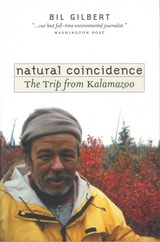
Natural Coincidence
The Trip from KalamazooBil Gilbert
University of Michigan Press, 2004
Natural Coincidence collects some of Bil Gilbert's finest writing, covering a diverse range of subjects that include investigations of the biology of Tasmanian devils, the lives and loves of snapping turtles, and an appreciation of the intelligence of crows. Perfectly suiting this eclectic choice of angles is Gilbert's unique writing style, a blend of unprepossessing erudition, wit, and honesty that has been compared to Aldo Leopold's Sand County Almanac.
The collection opens with a memoir of a childhood Christmas in western Michigan, before Gilbert's fascination with the natural world drew him to more exotic locales like Tasmania, Alaska, Nova Scotia, and Manhattan to write about such topics as the javelina, bigfoot, buffalo, and ringtails.
"More than 50 years ago," writes Gilbert, "without a clear notion about why or where I was going, I set off on a trip from Kalamazoo, Michigan. I am still traveling toward an unknown destination. But along the way, much more for reasons of good luck than thoughtful planning, I have met many wonderful beings and happenings. The essays appearing in Natural Coincidence represent an attempt to describe some of these wonders. I like to think, or at least pretend, that the inspiration for and theme of this book is gratitude."
Natural Communities
Lee R. Dice
University of Michigan Press, 1952
Natural Environments of Arizona
From Desert to MountainsEdited by Peter F. Ffolliott and Owen K. Davis
University of Arizona Press, 2008
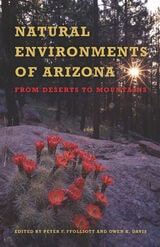
Natural Environments of Arizona bridges the gap between coffee-table volumes and scientific literature, offering a nontechnical, single-volume overview that introduces readers to a myriad of topics and provides pointers toward deeper reading. It’s all here: climate, geology, soil and water resources, an amazing variety of flora and fauna—and of course human impacts on the state’s fragile ecosystems.
These chapters show the extent to which Arizona’s natural environments have changed since Lowe first set the stage for their study. They consider changes in forests and grasslands, the effects of soil erosion, questions about water quality, and the evolving status of rivers and wildlife communities. And while the common thread of environments makes the book a complete introduction to the subject, each chapter stands alone as an authoritative synopsis of its particular topic.
Ranging widely over the impacts of drought, floods, and wildfires, this practical guide clearly shows that nature is more than picturesque landscapes, vegetation, and wildlife. For anyone with a dog-eared copy of Lowe, this book will serve as the new standard on the subject—a valuable tool for resource managers, students, and general readers alike.
Natural Lection
Cultures of EvolutionJonathan Basile
University of Minnesota Press, 2026
A radical deconstructive approach to evolutionary theory
For as long as there has been evolutionary science, thinkers in the natural sciences, social sciences, and humanities have battled over whether evolutionary theory can or should provide insights into human nature and culture. Yet even the dissenters tend to agree that there is, somewhere, a natural foundation of instinctual or genetic inheritance; the debate is only whether and how human culture is an exception from it. Natural Lection complicates this fundamental boundary as it exposes how our scientific knowledge of nature rests on a faulty foundation that must be supplemented by humanist thought.
Jonathan Basile, as part of the emerging movement of biodeconstruction, extends the work of Jacques Derrida into the life sciences as he parses writing on cultural evolution to reveal the contradictions within our opposing notions of genealogically governed nature and networked or viral human culture. Holding this opposition in suspense, Basile proposes a new framework: natural lection, the view of nature not as original material but as the result of a shifting, always provisional act of reading. By paying careful attention to what biologists describe as a superficial layer of metaphor and rhetoric in their writing—but which he sees as an ineluctable textuality shaping the core of their work—Basile traces the political implications of scientific thought to its theoretical fragility, which calls for philosophical and literary modes of reading.
Showing how contemporary approaches to cultural evolution continue to repeat incoherent patterns of thought at least as old as Darwin—if not Aristotle—Natural Lection dismantles assumptions shared by evolutionary biology, cultural studies, and new materialism. By critically analyzing these foundations, Basile pushes back against the neoliberal and far-right weaponization of evolutionary theory, opening a novel terrain of scientific and political possibility.
Retail e-book files for this title are screen-reader friendly.
Natural Missouri
Working with the LandNapier Shelton
University of Missouri Press, 2005
Nature All Around Us
A Guide to Urban EcologyEdited by Beatrix Beisner, Christian Messier, and Luc-Alain Giraldeau
University of Chicago Press, 2012
Nature All Around Us uses the familiar—such as summer Sundays humming with lawn mowers, gray squirrels foraging in planters, and flocks of pigeons—in order to introduce basic ecological concepts. In twenty-five short chapters organized by scale, from the home to the neighborhood to the city at large, it offers a subtle and entertaining education in ecology sure to inspire appreciation and ultimately stewardship of the environment. Various ecological concepts that any urban dweller might encounter are approachably examined, from understanding why a squirrel might act aggressively towards its neighbor to how nutrients and energy contained within a discarded apple core are recycled back into the food chain. Streaming through the work is an introduction to basic ecology, including the dangers of invasive species and the crucial role played by plants and trees in maintaining air quality.
Taken as a whole, Nature All Around Us is an unprecedented field guide to the ecology of the urban environment that invites us to look at our towns, cities, and even our backyards through the eyes of an ecologist. It is an entertaining, educational, and inspiring glimpse into nature in seemingly unnatural settings, a reminder that we don’t have to trek into the wild to see nature—we just have to open our eyes.
Nature Inc.
Environmental Conservation in the Neoliberal AgeEdited by Bram Büscher, Wolfram Dressler, and Robert Fletcher
University of Arizona Press, 2014
As public funding for conservation efforts grows ever scarcer and the private sector is brimming with ideas about how its role—along with its profits— can grow, market forces have found their way into environmental management to a degree unimaginable only a few years ago. Ecotourism, payment for environmental services (PES), and new conservation finance instruments such as species banking, carbon trading, and biodiversity derivatives are only some of the market mechanisms that have sprung into being. This is “Nature™ Inc.”: a fast-growing frontier of networks, activities, knowledge, and regulations that are rapidly changing the relations between people and nature on both global and local scales.
Nature™ Inc. brings together cutting-edge research by respected scholars from around the world to analyze how “neoliberal conservation” is reshaping human–nature relations that have been fashioned over two centuries of capitalist development. Contributors synthesize and add to a growing body of academic literature that cuts across the disciplinary boundaries of geography, sociology, anthropology, political science, and development studies to critically interrogate the increasing emphasis on neoliberal market-based mechanisms in environmental conservation. They all grapple with one overriding question: can capitalist market mechanisms resolve the environmental problems they have helped create?
Nature Journal
L. J. Davenport, with a Foreword by John C. Hall
University of Alabama Press, 2010
Explore Nature. Record Wonder. Keep Your Own Journal.
Nature Journal is an innovative presentation of the best columns and photographs from L. J. Davenport’s popular column in Alabama Heritage magazine. Readers of the magazine have come to relish his artful and often witty descriptions of common species encountered in the Alabama outdoors. But Nature Journal is designed to be much more than a mere collection of entertaining essays; it is also an educational tool—a means of instructing and encouraging readers in the art of keeping a nature journal for themselves.
Each of the 25 chapters is a self-contained lesson in close observation of species morphology, behavior, and habitat; research in the literature; nondestructive capture of the subject by photography or drawing; and written description of the total observed natural phenomenon. At the end of each account, stimulating questions and gentle directives guide the reader into making his or her own observations and recordings.
This book is intended for broad nature-study use in Alabama and throughout the southeast by the general reader and nature enthusiast alike, as well as visitors to museums and outdoor centers, and students of nature and nature writing at the high school and college levels. Beautifully designed to look like a personal journal, it is a perfect gift and treasured keepsake for all lovers of the natural world.
Publication supported in part by Samford University
Nature Remade
Engineering Life, Envisioning WorldsEdited by Luis A. Campos, Michael R. Dietrich, Tiago Saraiva, and Christian C. Young
University of Chicago Press, 2021
Nature's Body
Gender in the Making of Modern ScienceSchiebinger, Londa
Rutgers University Press, 2004
Eighteenth-century natural historians created a peculiar, and peculiarly durable, vision of nature—one that embodied the sexual and racial tensions of that era. When plants were found to reproduce sexually, eighteenth-century botanists ascribed to them passionate relations, polyandrous marriages, and suicidal incest, and accounts of steamy plant sex began to infiltrate the botanical literature of the day. Naturalists also turned their attention to the great apes just becoming known to eighteenth-century Europeans, clothing the females in silk vestments and training them to sip tea with the modest demeanor of English matrons, while imagining the males of the species fully capable of ravishing women.
Written with humor and meticulous detail, Nature’s Body draws on these and other examples to uncover the ways in which assumptions about gender, sex, and race have shaped scientific explanations of nature. Schiebinger offers a rich cultural history of science and a timely and passionate argument that science must be restructured in order to get it right.
Nature's Experts
Science, Politics, and the EnvironmentBocking, Stephen
Rutgers University Press, 2004
"This book by Stephen Bocking is as much about deliberative democracy as it is about science and the environment. Stephen Bocking’s treatment is deep, perceptive, and profoundly wise. He has caught the heart of present and future environmental science, politics, and democratic governance."—C. S. Holling, The Resilience Alliance and emeritus professor, Arthur R. Marshall Jr. Chair in Ecological Sciences at the University of Florida
"If knowledge is power, how should expert advice be deployed by a would-be democratic society? This perennial question is newly illuminated by this timely and wide-ranging review of the role played by science in the making of environmental policy."—William C. Clark, Harvey Brooks Professor of International Science, Public Policy, and Human Development, Harvard University, John F. Kennedy School of Government
It seems self-evident that science plays a central role in environmental affairs. Regulatory agencies, businesses, and public interest groups all draw on scientific research to support their claims. Some critics, however, describe science not as the solution to environmental problems, but as their source. Moreover, the science itself is often controversial, as debates over global warming and environmental health risks have shown.
Nature’s Experts explores the contributions and challenges presented when scientific authority enters the realm of environmental affairs. Stephen Bocking focuses on four major areas of environmental politics: the formation of environmental values and attitudes, management of natural resources such as forests and fish, efforts to address international environmental issues such as climate change, and decisions relating to environmental and health risks. In each area, practical examples and case studies illustrate that science must fulfill two functions if it is to contribute to resolving environmental controversies. First, science must be relevant and credible, and second, it must be democratic, where everyone has access to the information they need to present and defend their views.
Nature's Fabric
Leaves in Science and CultureDavid Lee
University of Chicago Press, 2017
A lush, incredibly informative tribute to the leaf, Nature’s Fabric offers an introduction to the science of leaves, weaving biology and chemistry with the history of the deep connection we feel with all things growing and green. Leaves come in a staggering variety of textures and shapes: they can be smooth or rough, their edges smooth, lobed, or with tiny teeth. They have adapted to their environments in remarkable, often stunningly beautiful ways—from the leaves of carnivorous plants, which have tiny “trigger hairs” that signal the trap to close, to the impressive defense strategies some leaves have evolved to reduce their consumption. (Recent studies suggest, for example, that some plants can detect chewing vibrations and mobilize potent chemical defenses.) In many cases, we’ve learned from the extraordinary adaptations of leaves, such as the invention of new self-cleaning surfaces inspired by the slippery coating found on leaves. But we owe much more to leaves, and Lee also calls our attention back to the fact that that our very lives—and the lives of all on the planet—depend on them. Not only is foliage is the ultimate source of food for every living thing on land, its capacity to cycle carbon dioxide and oxygen can be considered among evolution’s most important achievements—and one that is critical in mitigating global climate change.
Taking readers through major topics like these while not losing sight of the small wonders of nature we see every day—if you’d like to identify a favorite leaf, Lee’s glossary of leaf characteristics means you won’t be left out on a limb—Nature’s Fabric is eminently readable and full of intriguing research, sure to enhance your appreciation for these extraordinary green machines.
Nature's Ghosts
Confronting Extinction from the Age of Jefferson to the Age of EcologyMark V. Barrow, Jr.
University of Chicago Press, 2009
The rapid growth of the American environmental movement in recent decades obscures the fact that long before the first Earth Day and the passage of the Endangered Species Act, naturalists and concerned citizens recognized—and worried about—the problem of human-caused extinction.
As Mark V. Barrow reveals in Nature’s Ghosts, the threat of species loss has haunted Americans since the early days of the republic. From Thomas Jefferson’s day—when the fossil remains of such fantastic lost animals as the mastodon and the woolly mammoth were first reconstructed—through the pioneering conservation efforts of early naturalists like John James Audubon and John Muir, Barrow shows how Americans came to understand that it was not only possible for entire species to die out, but that humans themselves could be responsible for their extinction. With the destruction of the passenger pigeon and the precipitous decline of the bison, professional scientists and wildlife enthusiasts alike began to understand that even very common species were not safe from the juggernaut of modern, industrial society. That realization spawned public education and legislative campaigns that laid the foundation for the modern environmental movement and the preservation of such iconic creatures as the bald eagle, the California condor, and the whooping crane.
A sweeping, beautifully illustrated historical narrative that unites the fascinating stories of endangered animals and the dedicated individuals who have studied and struggled to protect them, Nature’s Ghosts offers an unprecedented view of what we’ve lost—and a stark reminder of the hard work of preservation still ahead.
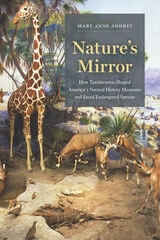
Nature's Mirror
How Taxidermists Shaped America’s Natural History Museums and Saved Endangered SpeciesMary Anne Andrei
University of Chicago Press, 2020
Witnessing firsthand the decimation caused by hide hunters, commercial feather collectors, whalers, big game hunters, and poachers, these museum taxidermists recognized the existential threat to critically endangered species and the urgent need to protect them. The compelling exhibits they created—as well as the scientific field work, popular writing, and lobbying they undertook—established a vital leadership role in the early conservation movement for American museums that persists to this day.
Through their individual research expeditions and collective efforts to arouse demand for environmental protections, this remarkable cohort—including William T. Hornaday, Carl E. Akeley, and several lesser-known colleagues—created our popular understanding of the animal world and its fragile habitats. For generations of museum visitors, they turned the glass of an exhibition case into a window on nature—and a mirror in which to reflect on our responsibility for its conservation.
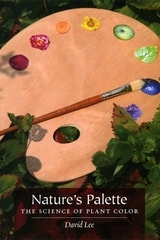
Nature's Palette
The Science of Plant ColorDavid Lee
University of Chicago Press, 2007
Nature’s Palette is the fully ripened fruit of that journey—a highly illustrated, immensely entertaining exploration of the science of plant color. Beginning with potent reminders of how deeply interwoven plant colors are with human life and culture—from the shifting hues that told early humans when fruits and vegetables were edible to the indigo dyes that signified royalty for later generations—Lee moves easily through details of pigments, the evolution of color perception, the nature of light, and dozens of other topics. Through a narrative peppered with anecdotes of a life spent pursuing botanical knowledge around the world, he reveals the profound ways that efforts to understand and exploit plant color have influenced every sphere of human life, from organic chemistry to Renaissance painting to the highly lucrative orchid trade.
Lavishly illustrated and packed with remarkable details sure to delight gardeners and naturalists alike, Nature’s Palette will enchant anyone who’s ever wondered about red roses and blue violets—or green thumbs.
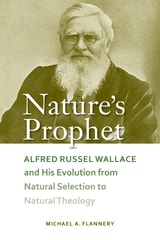
Nature's Prophet
Alfred Russel Wallace and His Evolution from Natural Selection to Natural TheologyMichael A. Flannery
University of Alabama Press, 2018
An astute study of Alfred Russel Wallace’s path to natural theology.
A spiritualist, libertarian socialist, women’s rights advocate, and critic of Victorian social convention, Alfred Russel Wallace was in every sense a rebel who challenged the emergent scientific certainties of Victorian England by arguing for a natural world imbued with purpose and spiritual significance. Nature’s Prophet: Alfred Russel Wallace and His Evolution from Natural Selection to Natural Theology is a critical reassessment of Wallace’s path to natural theology and counters the dismissive narrative that Wallace’s theistic and sociopolitical positions are not to be taken seriously in the history and philosophy of science.
Author Michael A. Flannery provides a cogent and lucid account of a crucial—and often underappreciated—element of Wallace’s evolutionary worldview. As co-discoverer, with Charles Darwin, of the theory of natural selection, Wallace willingly took a backseat to the well-bred, better known scientist. Whereas Darwin held fast to his first published scientific explanations for the development of life on earth, Wallace continued to modify his thinking, refining his argument toward a more controversial metaphysical view which placed him within the highly charged intersection of biology and religion.
Despite considerable research into the naturalist’s life and work, Wallace’s own evolution from natural selection to natural theology has been largely unexplored; yet, as Flannery persuasively shows, it is readily demonstrated in his writings from 1843 until his death in 1913. Nature’s Prophet provides a detailed investigation of Wallace’s ideas, showing how, although he independently discovered the mechanism of natural selection, he at the same time came to hold a very different view of evolution from Darwin.
Ultimately, Flannery shows, Wallace’s reconsideration of the argument for design yields a more nuanced version of creative and purposeful theistic evolution and represents one of the most innovative contributions of its kind in the Victorian and Edwardian eras, profoundly influencing a later generation of scientists and intellectuals.
Natures of Data
A Discussion between Biologists, Artists and Science ScholarsPhilipp Fischer, Gabriele Gramelsberger, Christoph Hoffmann, Hans Hofmann, Hans-Jörg Rheinberger, and Hannes Rickli
Diaphanes, 2020
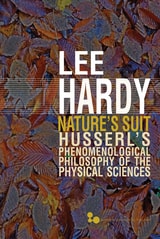
Nature’s Suit
Husserl’s Phenomenological Philosophy of the Physical SciencesLee Hardy
Ohio University Press, 2014
Edmund Husserl, founder of the phenomenological movement, is usually read as an idealist in his metaphysics and an instrumentalist in his philosophy of science. In Nature’s Suit, Lee Hardy argues that both views represent a serious misreading of Husserl’s texts.
Drawing upon the full range of Husserl’s major published works together with material from Husserl’s unpublished manuscripts, Hardy develops a consistent interpretation of Husserl’s conception of logic as a theory of science, his phenomenological account of truth and rationality, his ontology of the physical thing and mathematical objectivity, his account of the process of idealization in the physical sciences, and his approach to the phenomenological clarification and critique of scientific knowledge. Offering a jargon-free explanation of the basic principles of Husserl’s phenomenology, Nature’s Suit provides an excellent introduction to the philosophy of Edmund Husserl as well as a focused examination of his potential contributions to the philosophy of science.
While the majority of research on Husserl’s philosophy of the sciences focuses on the critique of science in his late work, The Crisis of European Sciences, Lee Hardy covers the entire breadth of Husserl’s reflections on science in a systematic fashion, contextualizing Husserl’s phenomenological critique to demonstrate that it is entirely compatible with the theoretical dimensions of contemporary science.
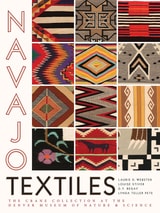
Navajo Textiles
The Crane Collection at the Denver Museum of Nature and ScienceLaurie D. Webster
University Press of Colorado, 2017
Navajo Textiles provides a nuanced account the Navajo weavings in the Crane Collection at the Denver Museum of Nature & Science—one of the largest collections of Navajo textiles in the world. Bringing together the work of anthropologists and indigenous artists, the book explores the Navajo rug trade in the mid-nineteenth century and changes in the Navajo textile market while highlighting the museum’s important, though still relatively unknown, collection of Navajo textiles.
In this unique collaboration among anthropologists, museums, and Navajo weavers, the authors provide a narrative of the acquisition of the Crane Collection and a history of Navajo weaving. Personal reflections and insights from foremost Navajo weavers D. Y. Begay and Lynda Teller Pete are also featured, and more than one hundred stunning full-color photographs of the textiles in the collection are accompanied by technical information about the materials and techniques used in their creation. An introduction by Ann Lane Hedlund documents the growing collaboration between Navajo weavers and museums in Navajo textile research.
The legacy of Navajo weaving is complex and intertwined with the history of the Diné themselves. Navajo Textiles makes the history and practice of Navajo weaving accessible to an audience of scholars and laypeople both within and outside the Diné community.
Neighborhood Technologies
Media and Mathematics of Dynamic NetworksEdited by Tobias Harks and Sebastian Vehlken
Diaphanes, 2015
To answer these and related questions, this volume introduces the concept of “neighborhood technologies” as a model for intermediate, or meso-level, research into the links between local agents and neighborhood relations. Bridging the gap between the sciences and humanities, Tobias Harks and Sebastian Vehlken have assembled a group of contributors who are either natural scientists with an interest in interdisciplinary research or technology-savvy humanists. With insights into computer science, mathematics, sociology, media and cultural studies, theater studies, and architecture, the book will inform new research.
Neither Donkey nor Horse
Medicine in the Struggle over China's ModernitySean Hsiang-lin Lei
University of Chicago Press, 2014
Far from being a remnant of China’s premodern past, Chinese medicine in the twentieth century coevolved with Western medicine and the Nationalist state, undergoing a profound transformation—institutionally, epistemologically, and materially—that resulted in the creation of a modern Chinese medicine. This new medicine was derided as “neither donkey nor horse” because it necessarily betrayed both of the parental traditions and therefore was doomed to fail. Yet this hybrid medicine survived, through self-innovation and negotiation, thus challenging the conception of modernity that rejected the possibility of productive crossbreeding between the modern and the traditional.
By exploring the production of modern Chinese medicine and China’s modernity in tandem, Lei offers both a political history of medicine and a medical history of the Chinese state.
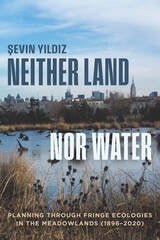
Neither Land nor Water
Planning Through Fringe Ecologies in the Meadowlands (1896–2020)Sevin Yildiz
University of Chicago Press, 2026
An urban and environmental history of the New Jersey Meadowlands, where marsh meets megamall.
The New Jersey Meadowlands, the vast marshes across the Hudson River from New York City, are a mysterious and complex wetland. Both strange and well-known to the millions of people who traverse the northeast corridor every year, this landscape is not well understood despite its familiarity. Seemingly natural and unnatural, human and nonhuman, the Meadowlands has long been shaped by urban development, industry, infrastructure, and countless dreams.
In Neither Land nor Water, Şevin Yıldız offers a close look at the planners, scientists, developers, politicians, industrialists, and others who have engaged with, dreamed about, or damaged this transitional ecology in different ways over the decades. She traces key periods in the area’s rich histories of urban planning and ecological thought, from the dispossession of the Lenape natives, through the dawn of ecological science, and onto both intensive industrial developments and environmental resistance to them. She examines as well how the Meadowlands exposes the inadequacies of today’s approaches to planning in the face of climate change and how they perhaps offer clues to a better future.
Nelumbonaceae to Vitaceae
Water Lotuses to GrapesRobert H. Mohlenbrock
Southern Illinois University Press, 2010
In this fourth and final installment in the Aquatic and Standing Water Plants of the Central Midwest series, veteran botanist Robert H. Mohlenbrock identifies aquatic and wetland plants in eight central Midwestern states, which include Iowa, Illinois, Indiana, Ohio, Kansas, Kentucky (excluding the Cumberland Mountain region), Missouri, and Nebraska.
Nelumbonaceae to Vitaceae: Water Lotuses to Grapes contains 346 highly informative and technically accurate illustrations as well as ecological information, nomenclature, and keys for plants in the aforementioned families, including white water lily, fireweed, smartweed, mild water pepper, hawthorn, and wild strawberry. Mohlenbrock identifies and describes each plant in concise and readable prose and indicates its usual habitats and the states in which it occurs.
As with previous volumes, Mohlenbrock organizes each species into three groups: truly aquatic plants, which spend their entire life with their vegetative parts either completely submerged or floating on the water’s surface; emergents, which are usually rooted under water with their vegetative parts standing above the water’s surface; and wetland plants, which live most or all of their lives out of water.
With Nelumbonaceae to Vitaceae, Mohlenbrock completes the four-volume series organizing and identifying wetland plants in the central Midwest. The botanical series will aid many, from teachers and students to state and federal employees, focused on conservation efforts and mitigation issues.
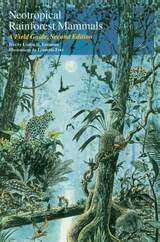
Neotropical Rainforest Mammals
A Field GuideLouise H. Emmons and François Feer
University of Chicago Press, 1997
In this completely revised and updated second edition:
A total of 226 species are treated in full (206 were included in the first edition).
All species accounts retained from the first edition have been updated to include the most recent research.
All 195 maps showing the distribution and geographic range of each species have been revised to reflect the most current information.
Twenty-nine beautiful color plates illustrate more than 220 species (including significant color variants between males and females or adults and young). Seven black-and-white plates contain more than 60 images of individual species, mainly bats.
A compact disc of mammal vocalizations—crucial to identifying nocturnal and otherwise cryptic animals that sometimes may be heard rather than seen—will be available for purchase separately.
Praise for the first edition:
"If you can't go to the Central and South American rain forests to see firsthand their threatened ecosystems, here is the next best thing."—Washington Post Book World
"A large amount of information is presented concisely and in a way that is easy to use."—Choice
"The presentation and wealth of information contained in this field guide is outstanding and will satisfy the needs of both the 'tourist' and 'researcher' traveling to the Neotropics."—Canadian Field-Naturalist
Neotropical Wildlife Use and Conservation
Edited by John G. Robinson and Kent H. Redford
University of Chicago Press, 1991
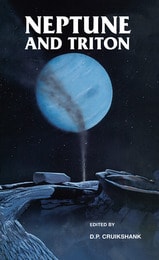
Neptune and Triton
Edited by D. P. Cruikshank
University of Arizona Press, 1995
This latest Space Science Series volume presents the current level of understanding of Neptune, its rings, and its satellites, derived from the data received from the Voyager. The book's chapters are written by the world's leading authorities on various aspects of the Neptune system and are based on papers presented at an international conference held in January 1992. Covering details of Neptune's interior, atmosphere, rings, magnetic fields, and near-space environment—as well as the small satellites and the remarkable moon Triton—this volume is a unique resource for planetary scientists and astronomers requiring a comprehensive analysis of Neptune viewed in the context of our knowledge of the other giant planets. Until another spacecraft is sent to Neptune, Neptune and Triton will stand as the basic reference on the planet.
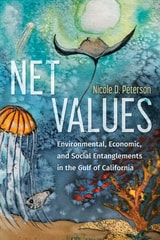
Net Values
Environmental, Economic, and Social Entanglements in the Gulf of CaliforniaNicole D. Peterson
University of Arizona Press, 2025
In Loreto, Baja California Sur, Mexico, artisanal fishing families and staff of Loreto Bay National Park face an array of choices as tourism, environmental concerns, and economic precarity challenge livelihoods and natural resource availability. In Net Values, Nicole D. Peterson offers a critical examination of how the idea of “choice” is understood, and what it means for policies, planning, and programs to ignore the social, political, economic, and cultural contexts surrounding these choices.
Anchored by more than twenty years of research, Peterson provides insight into the fishing community of Loreto and reveals an important role in decision-making that diverges from previous studies. She argues that decisions about fishing, natural resource management, and other aspects of life are influenced by context, values, and expectations in ways that go beyond the typical psychological or cognitive theories of choice. Instead, Net Values highlights the ways that choices are constrained and enabled by values and expectations of cultures, histories, relationships, and experiences, both personal and shared. Peterson answers questions such as “why do the fishermen fish?” or “what is the marine park staff doing?” These decisions and choices are related to the larger implication addressed by this book: that in order to make effective policies around natural resource management and other issues, we must understand how those potential policies interact with the decision processes already underway.
Divided into five chapters, Net Values is rich in ethnographic detail, drawing from real people to inform the narratives, chapters, and theoretical elaboration. Peterson’s interactions with fishers such as Don Javier and his family and friends support the ideas offered around choice, values, and strategies, connecting ideas to real experiences.
Neurobehavioral Anatomy, Third Edition
Christopher M. Filley
University Press of Colorado, 2011
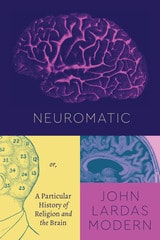
Neuromatic
Or, A Particular History of Religion and the BrainJohn Lardas Modern
University of Chicago Press, 2021
In Neuromatic, religious studies scholar John Lardas Modern offers a sprawling examination of the history of the cognitive revolution and current attempts to locate all that is human in the brain, including spirituality itself. Neuromatic is a wildly original take on the entangled histories of science and religion that lie behind our brain-laden present: from eighteenth-century revivals to the origins of neurology and mystic visions of mental piety in the nineteenth century; from cyberneticians, Scientologists, and parapsychologists in the twentieth century to contemporary claims to have discovered the neural correlates of religion.
What Modern reveals via this grand tour is that our ostensibly secular turn to the brain is bound up at every turn with the religion it discounts, ignores, or actively dismisses. In foregrounding the myths, ritual schemes, and cosmic concerns that have accompanied idealizations of neural networks and inquiries into their structure, Neuromatic takes the reader on a dazzling and disturbing ride through the history of our strange subservience to the brain.
Neurotechnology and the End of Finitude
Michael Haworth
University of Minnesota Press, 2018
A bold philosophical investigation into technology and the limits of the human
A daring, original work of philosophical speculation, Neurotechnology and the End of Finitude mounts a sustained investigation into the possibility that human beings may technologically overcome the transcendental limits of possible experience and envisages what such a transition would look like. Focusing on emergent neurotechnologies, which establish a direct channel of communication between brain and machine, Michael Haworth argues that such technologies intervene at the border between interiority and exteriority, offering the promise of immediacy and the possibility of the mind directly affecting the outside world or even other minds.
Through detailed, targeted readings of Kant, Freud, Heidegger, Croce, Jung, and Derrida, Haworth explores the effect of this transformation on human creativity and our relationships with others. He pursues these questions across four distinct but interrelated spheres: the act of artistic creation and the potential for a technologically enabled coincidence of idea and object; the possibility of humanity achieving the infinite creativity that Kant attributed only to God; the relationship between the psyche and the external world in Freudian psychoanalysis and Jungian analytical psychology; and the viability and impact of techno-telepathic communication.
Addressing readers interested in contemporary continental philosophy and philosophy of technology, media and communications, and science and technology studies, Neurotechnology and the End of Finitude critically envisions a plausible posthuman future.

Neurotechnology
Methods, advances and applicationsVictor Hugo C. de Albuquerque
The Institution of Engineering and Technology, 2020
New Deep Territories
A Story of France’s Exploration of the SeafloorBeatriz Martinez-Rius
University of Chicago Press, 2026
Beneath the surface of the seas and oceans lies a territory as important for human societies as the exposed land and the airspace above them: the seafloor. Our daily life is inextricably linked to the seafloor and its resources, from global telecommunications infrastructure to offshore oil and gas extraction to strategic mineral mining.
By focusing on France, a country with an underwater territory seventeen times larger than its emerged lands, New Deep Territories explains how the seafloor emerged as a territory during the second half of the twentieth century. Beatriz Martinez-Rius traces the evolution of the country’s seafloor exploration and the motivations that fueled it from the aftermath of World War I to the late 1970s. In the early 1960s, the seafloor, instead of colonial territories, came to be seen as a source of natural resources. The French government, corporations such as oil companies, and scientists all imagined future uses of the seafloor, and these ever-evolving aspirations drove the development of technologies, techniques, and scientific fields that built up the submerged territory. Government officers and industrial stakeholders massively invested in technoscientific development to prepare for a future reliant on seafloor resources, including oil, gas, and minerals, well before it was technologically possible, economically feasible, and legally acceptable to extract them. The future they envisioned did not arrive, but their investment resulted in an unprecedented understanding of the ocean’s crust. Today, once again, national governments, international organizations, and private stakeholders are turning their attention to the seafloor.
New Earth Histories
Geo-Cosmologies and the Making of the Modern WorldEdited by Alison Bashford, Emily M. Kern, and Adam Bobbette
University of Chicago Press, 2023
This book brings the history of the geosciences and world cosmologies together, exploring many traditions, including Chinese, Pacific, Islamic, South and Southeast Asian conceptions of the earth’s origin and makeup. Together the chapters ask: How have different ideas about the sacred, animate, and earthly changed modern environmental sciences? How have different world traditions understood human and geological origins? How does the inclusion of multiple cosmologies change the meaning of the Anthropocene and the global climate crisis? By carefully examining these questions, New Earth Histories sets an ambitious agenda for how we think about the earth.
The chapters consider debates about the age and structure of the earth, how humans and earth systems interact, and how empire has been conceived in multiple traditions. The methods the authors deploy are diverse—from cultural history and visual and material studies to ethnography, geography, and Indigenous studies—and the effect is to highlight how earth knowledge emerged from historically specific situations. New Earth Histories provides both a framework for studying science at a global scale and fascinating examples to educate as well as inspire future work. Essential reading for students and scholars of earth science history, environmental humanities, history of science and religion, and science and empire.

New England Weather, New England Climate
Gregory A. Zielinski
University of New Hampshire Press, 2005
Combining a scholarly appreciation of weather systems and events with an ability to transmit their passion to a general audience, Gregory A. Zielinski and Barry D. Keim have written a one-of-a-kind guide to New England weather and climate. Not only are weather patterns in New England more changeable and more extreme than almost anywhere in the country, New England is the ultimate destination of nearly all storm tracks nationwide. Recently, newsworthy items such as global warming, El Niño, and La Niña have significantly impacted our local weather, in both the short and long term. Luckily, the science of meteorology and climatology and their tools of observation and analysis have made great strides in the past few years.
The authors offer an in-depth explanation of the latest theoretical insights into New England's weather along with a flurry of stories and lore about the vagaries of our clime. The book is divided into the seasons as we actually experience them—ski season, mud season, beach and lake season, and foliage season. It includes photos and illustrations: some all too familiar, many hard to believe. Zielinski and Keim succeed in providing an illuminating and entertaining analysis and commentary while whole-heartedly embracing our region's atmospheric peculiarities. This book won't do anything about New England's weather or climate but it will help you understand each of them.
New England Wildlife
Habitat, Natural History, and DistributionRichard M. DeGraaf and Mariko Yamasaki
University Press of New England, 2000

New Jersey Ferns and Fern Allies
Montgomery, James D.
Rutgers University Press, 1993
New Jersey is exceptionally rich in ferns, as three centuries of naturalists have recognized. Both amateur and professional botanists will welcome this new, complete, fully illustrated guide to the state's ferns and fern allies (the lycopods and horsetails). After an introduction to fern classification and nomenclature, the history of fern collecting, and the ecology and distribution of ferns within New Jersey, the authors describe eighty-three species, in thirty genera, and thiry-two hybrid forms (more than any other state). They include a fascinating account of the rare curly-grass fern, Schizaea pusilla, "New Jersy's most famous plant."
For each species, the authors provide a detailed drawing and comments on taxonomy, habitat, chromosome counts, habits of growth, and status as endangered species. Distribution maps show not only where plants have been collected, but also the time period for the most recent date of collectionÐÐa convenient way of showing the plant's spread or depletion. Throughout, the book reflects the latest research by fern experts.
An essential field guide and reference for naturalists, botanists, hikers, gardeners, and conservationists in New Jersey and the mid-Atlantic states.
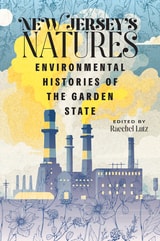
New Jersey's Natures
Environmental Histories of the Garden StateRaechel Lutz
Rutgers University Press, 2026
New Jersey’s Natures takes up the challenge of expanding academic and popular conceptions of New Jersey and its landscapes through the lens of environmental history. Scholars’ essays showcase the ways in which nature is integral to understandings of the state and its past as well as its future. These essays show that New Jersey should no longer solely be known as a place where pollution and suburbanization run amok but rather a place where history happens.
The contributors investigate how nature and history are intertwined within this small but mighty state, covering topics from the colonial period to the present across North, South, and Central Jersey. They investigate natural features like the Delaware River and Bay, the Pinelands, and the unforgettable Jersey Shore. In this book, you will find Indigenous Americans making meaning as settlers threaten their ways of life, Governor William Livingston considering Central Jersey’s features as he fights in the American Revolution, farmers building the state’s industrial agriculture, a foreign diplomat planting an arboretum, squatters in the swampy Meadowlands subverting social and economic norms, activists fighting for parks, forests, and beaches across two centuries, and much more.
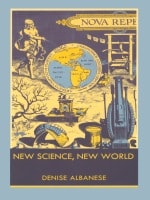
New Science, New World
Denise Albanese
Duke University Press, 1996
Albanese reads the inaugurators of the scientific revolution against the canonical authors of early modern literature, discussing Galileo’s Dialogue on the Two Chief World Systems and Bacon’s New Atlantis as well as Milton’s Paradise Lost and Shakespeare’s The Tempest. She examines how the newness or “novelty” of investigating nature is expressed through representations of the New World, including the native, the feminine, the body, and the heavens. “New” is therefore shown to be a double sign, referring both to the excitement associated with a knowledge oriented away from past practices, and to the oppression and domination typical of the colonialist enterprise. Exploring the connections between the New World and the New Science, and the simultaneously emerging patterns of thought and forms of writing characteristic of modernity, Albanese insists that science is at its inception a form of power-knowledge, and that the modern and postmodern division of “Two Cultures,” the literary and the scientific, has its antecedents in the early modern world.
New Science, New World makes an important contribution to feminist, new historicist, and cultural materialist debates about the extent to which the culture of seventeenth-century England is proto-modern. It will offer scholars and students from a wide range of fields a new critical model for historical practice.