Results by title
862 books match the query 'Social History' and 15 start with n
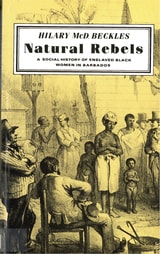
Natural Rebels
A Social History of Enslaved Women in BarbadosHilary McD Beckles
Rutgers University Press, 2012
Beckles details the daily lives of slave women in conditions of extreme exploitation. They suffered from harsh conditions, cruel punishments, malnutrition, disease, high mortality, and fear of abandonment when they were too old to work. He described the various categories and responsibilities of slaves, and the roles of children in the slave economy. Beckles looks at family structures and the complexities of interracial unions. He also shows how female slaves regularly resisted slavery, using both violent and nonviolent means. They never accommodated themselves to the system; as natural rebels, they fought in any way they could for survival.
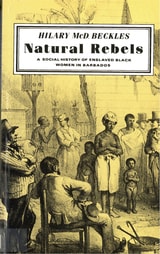
Natural Rebels
A Social History of Enslaved Women in BarbadosBeckles, Hilary
Rutgers University Press, 1990
Beckles details the daily lives of slave women in conditions of extreme exploitation. They suffered from harsh conditions, cruel punishments, malnutrition, disease, high mortality, and fear of abandonment when they were too old to work. He described the various categories and responsibilities of slaves, and the roles of children in the slave economy. Beckles looks at family structures and the complexities of interracial unions. He also shows how female slaves regularly resisted slavery, using both violent and nonviolent means. They never accommodated themselves to the system; as natural rebels, they fought in any way they could for survival.

Nefertiti
The Making of a Global IconSebastian Conrad
University of Chicago Press, 2026
Charts the global resonance of the image of Nefertiti over the past century.
From the moment that the bust of Nefertiti was uncovered after over three thousand years and shown at its first exhibition in Berlin in 1924, it rapidly became an iconic image. Today, the silhouette alone of this powerful ancient Egyptian queen is recognized and admired around the world.
In Nefertiti: The Making of a Global Icon, historian Sebastian Conrad tracks the full story of the world’s embrace and appropriation of this famous visage. Starting with the discovery of the bust and Germany’s claims to its possession, Conrad shows how it became a contested object, tracing Egypt’s efforts to call for its restitution from 1924 to the present. He also canvasses the uses to which Nefertiti’s image has been put and the causes with which it has been associated: for cosmetic ads and beauty clinics; by advocates for European unity; by drag queens and the queer community; by National Socialists; by nationalists in Egypt and Bengal; by Afro-Brazilian communities; and by important Black figures from Elijah Muhammad to Beyoncé. Against a global backdrop, Conrad showcases the stunning object’s fame and the often-controversial issues and debates in which it has been embroiled. He also argues that the story of Nefertiti’s trajectory offers insights into the changing shape of globalization from the era of imperialism to the present.
This accessible, deeply researched book reveals both how much is at stake in the life of objects and how Nefertiti’s arresting likeness continues to challenge us today.
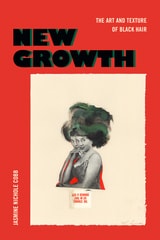
New Growth
The Art and Texture of Black HairJasmine Nichole Cobb
Duke University Press, 2022
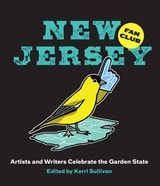
New Jersey Fan Club
Artists and Writers Celebrate the Garden StateKerri Sullivan
Rutgers University Press, 2022
Despite the many jokes and stereotypes about New Jersey and its residents, in reality the state is a wildly diverse place, home to a vast variety of landscapes, cultures, and people. There is no singular New Jersey experience, and the stories that its residents have to share about the state will surprise you.
New Jersey Fan Club: Artists and Writers Celebrate the Garden State is an eclectic anthology featuring personal essays, interviews, and comics from a broad group of established and emerging writers and artists who have something to say about New Jersey. It offers a multifaceted look at the state’s history and significance, told through narrative nonfiction, photographs, and illustrations.
New Jersey Fan Club is edited by Kerri Sullivan, founder of the popular Instagram account Jersey Collective (@jerseycollective), which features weekly takeovers by different New Jerseyans. This book functions the same way: it gives dozens of different contributors the chance to share what New Jersey looks like to them. The book is an exploration of how the same locale can shape people in different ways, and it will inspire readers to look at the Garden State with fresh eyes and appreciate its bounty of beautiful places and vibrant spaces.
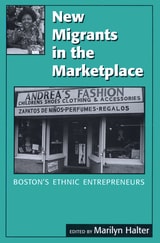
New Migrants in the Marketplace
Boston's Ethnic EntrepreneursMarilyn Halter
University of Massachusetts Press, 2013
Using an ethnographic, comparative approach, New Migrants in the Marketplace: Boston's Ethnic Entrepreneurs examines the economic culture and small business activity of a range of new migrant groups in the Greater Boston Area, including Jews from the former Soviet Union, British West Indians, Greeks, Puerto Ricans, Dominicans, Khmers, and Haitians.
Contributors are Mehdi Bozorgmehr, Claudia Der-Martirosian, Marilyn Halter, Violet Johnson, Peggy Levitt, Ivan Light, Caesar Mavratsas, Georges Sabagh, and Nancy Smith-Hefner. The book includes a photo essay by Steven J. Gold.
New Social Movements
From Ideology to Identityedited by Enrique Laraña, Hank Johnston and Joseph R. Gusfield
Temple University Press, 1994
Cultural changes over the past two decades have led to a proliferation of new social movements in Europe and the United States. New social movements such as ecology, peace, ethnicity, New Age philosophies, alternative medicine, and gender and sexual identity are among those that are emerging to challenge traditional categories in social movement theory. Synthesizing classic and modern perspectives the contributors help to redefine the field of social movements and advance an understanding of them through cross-cultural research, comparison with older movements, and an examination of the dimensions of identity—individual, collective, and melding of the two.
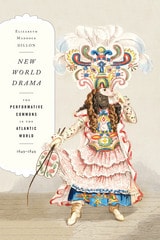
New World Drama
The Performative Commons in the Atlantic World, 1649-1849Elizabeth Maddock Dillon
Duke University Press, 2014
Audiences in London eagerly watched the royal slave, Oroonoko, tortured on stage, while audiences in Charleston and Kingston were forbidden from watching the same scene. Audiences in Kingston and New York City exuberantly participated in the slaying of Richard III on stage, enacting the rise of the "people," and Native American leaders were enjoined to watch actors in blackface "jump Jim Crow." Dillon argues that the theater served as a "performative commons," staging debates over representation in a political world based on popular sovereignty. Her book is a capacious account of performance, aesthetics, and modernity in the eighteenth-century Atlantic world.
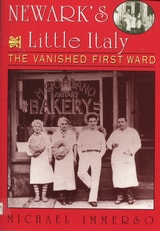
Newark's Little Italy
The Vanished First WardImmerso, Michael
Rutgers University Press, 1997
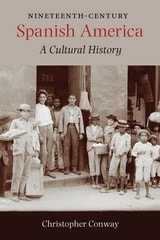
Nineteenth-Century Spanish America
A Cultural HistoryChristopher Conway
Vanderbilt University Press, 2015
The book opens with key themes that will help students and scholars understand the century, such as the civilization and barbarism binary, urbanism, the divide between conservatives and liberals, and transculturation. In the chapters that follow, Conway weaves transnational trends together with brief case studies and compelling snapshots that help us understand the period. How much did books and photographs cost in the nineteenth century? What was the dominant style in painting? What kinds of ballroom dancing were popular? Richly illustrated with striking photographs and lithographs, this is a book that invites the reader to rediscover a past age that is not quite past, still resonating into the present.
Nineteenth-Century Women’s Movements and the Bible
Angela Berlis
SBL Press, 2024
Nineteenth-Century Women’s Movements and the Bible examines politically motivated women’s movements in the nineteenth century, including the legal, cultural, and ecclesiastical contexts of women. Focusing on the period beginning with the French Revolution in 1789 through the end of World War I in 1918, contributors explore the many ways that women’s lives were limited in both the public and domestic spheres. Essays consider the social, political, biblical, and theological factors that resulted in a multinational raising of awareness and emancipation for women in the nineteenth century and the strengthening of their international networks. The contributors include Angela Berlis, Kristin Kobes Du Mez, Ute Gerhard, Christiana de Groot, Arnfriður Guðmundsdóttir, Izaak J. de Hulster, Elisabeth Joris, Christine Lienemann-Perrin, Amanda Russell-Jones, Claudia Setzer, Aud V. Tønnessen, Adriana Valerio, and Royce M. Victor.

No Winners Here Tonight
Race, Politics, and Geography in One of the Country’s Busiest Death Penalty StatesAndrew Welsh-Huggins
Ohio University Press, 2009
Few subjects are as intensely debated in the United States as the death penalty. Some form of capital punishment has existed in America for hundreds of years, yet the justification for carrying out the ultimate sentence is a continuing source of controversy. No Winners Here Tonight explores the history of the death penalty and the question of its fairness through the experience of a single state, Ohio, which, despite its moderate midwestern values, has long had one of the country’s most active death chambers.
In 1958, just four states accounted for half of the forty-eight executions carried out nationwide, each with six: California, Georgia, Ohio, and Texas. By the first decade of the new century, Ohio was second only to Texas in the number of people put to death each year. No Winners Here Tonight looks at this trend and determines that capital punishment has been carried out in an uneven fashion from its earliest days, with outcomes based not on blind justice but on the color of a person’s skin, the whim of a local prosecutor, or the biases of the jury pool in the county in which a crime was committed.
Andrew Welsh-Huggins’s work is the only comprehensive study of the history of the death penalty in Ohio. His analysis concludes that the current law, crafted by lawmakers to punish the worst of the state’s killers, doesn’t come close to its intended purpose and instead varies widely in its implementation. Welsh-Huggins takes on this controversial topic evenhandedly and with respect for the humanity of the accused and the victim alike. This exploration of the law of capital punishment and its application will appeal to students of criminal justice as well as those with an interest in law and public policy.
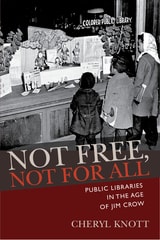
Not Free, Not for All
Public Libraries in the Age of Jim CrowCheryl Knott
University of Massachusetts Press, 2015
Winner of the 2016 Eliza Atkins Gleason Book Award and the 2016 Lillian Smith Book Award
Americans tend to imagine their public libraries as time-honored advocates of equitable access to information for all. Through much of the twentieth century, however, many black Americans were denied access to public libraries or allowed admittance only to separate and smaller buildings and collections. While scholars have examined and continue to uncover the history of school segregation, there has been much less research published on the segregation of public libraries in the Jim Crow South. In fact, much of the writing on public library history has failed to note these racial exclusions.
In Not Free, Not for All, Cheryl Knott traces the establishment, growth, and eventual demise of separate public libraries for African Americans in the South, disrupting the popular image of the American public library as historically welcoming readers from all walks of life. Using institutional records, contemporaneous newspaper and magazine articles, and other primary sources together with scholarly work in the fields of print culture and civil rights history, Knott reconstructs a complex story involving both animosity and cooperation among whites and blacks who valued what libraries had to offer. African American library advocates, staff, and users emerge as the creators of their own separate collections and services with both symbolic and material importance, even as they worked toward dismantling those very institutions during the era of desegregation.
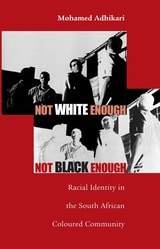
Not White Enough, Not Black Enough
Racial Identity in the South African Coloured CommunityMohamed Adhikari
Ohio University Press, 2005