Results by title
22279 books match the query 'Social Science' and 509 start with n

NEWSPEAK in the 21st Century
David Cromwell and David Edwards
Pluto Press, 2009
Since 2001, Media Lens has encouraged thousands of readers to challenge the filtered and distorted version of the world provided by major newspapers and broadcasters. The media responses, collected in Newspeak, are an exposé of the arrogance and servility to power of our leading journalists and editors, starring Andrew Marr, Alan Rusbridger, Roger Alton, Jon Snow, Jeremy Bowen and even George Monbiot.
Picking up where the highly acclaimed and successful Guardians of Power (2006) left off, Newspeak is packed with forensic media analysis, revealing the lethal bias in "balanced" reporting. Even the "best" UK media -- the Guardian, the Independent, Channel 4 News and the BBC -- turn out to be cheerleaders for government, business and war.
Alongside an A-Z of BBC propaganda and chapters on Iraq and climate change, Newspeak focuses on the demonisation of Iran and Venezuela, the Israel-Palestine conflict, the myth of impartial reporting and the dark art of smearing dissidents.

NURSE-MIDWIFERY
THE BIRTH OF A NEW AMERICAN PROFESSIONLaura E. Ettinger
The Ohio State University Press, 2006
Today, nurse-midwives have assumed a larger role in mainstream health care than before, yet they are still marginalized. As in the past, nurse-midwives’ futures will depend on continuing changes in American attitudes about childbirth, health care, and women professionals as well as on their own ability to adapt to the changes. The history of the profession suggests that nurse-midwives will continue to navigate in difficult waters in a middle space between the mainstream and the margins of medicine and between the nursing profession and midwifery traditions.
Nachituti's Gift
Economy, Society, and Environment in Central AfricaDavid M. Gordon
University of Wisconsin Press, 2006
Nachituti’s Gift challenges conventional theories of economic development with a compelling comparative case study of inland fisheries in Zambia and Congo from pre- to postcolonial times. Neoclassical development models conjure a simple, abstract progression from wealth held in people to money or commodities; instead, Gordon argues, primary social networks and oral charters like “Nachituti’s Gift” remained decisive long after the rise of intensive trade and market activities. Interweaving oral traditions, songs, and interviews as well as extensive archival research, Gordon’s lively tale is at once a subtle analysis of economic and social transformations, an insightful exercise in environmental history, and a revealing study of comparative politics.
“A powerful portrayal of the complexity, fluidity, and subtlety of Lake Mweru fishers’ production strategies . . . . Natchituti’s Gift adds nuance and evidence to some of the most important and sophisticated conversations going on in African studies today.”—Kirk Arden Hoppe, International Journal of African Historical Studies
“A lively and intelligent book, which offers a solid contribution to ongoing debates about the interplay of the politics of environment, history and economy.”—Joost Fontein, Africa
“Well researched and referenced . . . . [Natchituti’s Gift] will be of interest to those in a wide variety of disciplines including anthropology, African Studies, history, geography, and environmental studies.”—Heidi G. Frontani, H-SAfrica

Nagara and Commandery
Origins of the Southeast Asian Urban TraditionsPaul Wheatley
University of Chicago Press, 1983
Nahua Horizons
Writing, Persuasion, and Futurities in Colonial MexicoEzekiel G. Stear
University of Arizona Press, 2025
Nahua Horizons: Writing, Persuasion, and Futurities in Colonial Mexico investigates how Nahuas conceptualized their futures in the early colonial period. Scholar Ezekiel G. Stear delves deeply into canonical texts such as the Florentine Codex and the Crónica mexicayotl as well as understudied texts such as the Lienzo de Quauhquechollan, the Tira de Tepechpan, and the Anales de Juan Bautista. The study does more than describe how Nahuas conceived of their own futures: it also shows their specific plans for moving into the coming years.
The book examines how Nahua writers in Central Mexico and other Mesoamerican voices in colonial Spanish America played an active, decisive role in shaping culture, using writing to persuade their communities to mold their own destinies, even amid colonial upheaval. This work opens up new directions for research and teaching, shifting inquiry from how Nahuas preserved cultural continuity to how they envisioned their roles as pathfinders toward times to come.
Nahua Horizons challenges the notion that the Spanish erased Nahua culture. The book emphasizes the ways people kept sovereignty over the futures they envisioned for themselves and their communities. Stear’s bold new approach follows the paths that Nahuas forged ahead into unknown times.
Nahuat Myth and Social Structure
By James M. Taggart
University of Texas Press, 1997
First published in 1983, Nahuat Myth and Social Structure brings together an important collection of modern-day Aztec Indian folktales and vividly demonstrates how these tales have been shaped by the social structure of the communities in which they are told.

Nahum Goldman
His Missions to the GentileRaphael Patai
University of Alabama Press, 1980
Nahum Goldmann (1895-1982) was a major Zionist figure for the last half-century and the chief architect of the pact pledging West Germany to pay reparations to Israel and to individual Jews for acts committed during the Nazi regime. He was co-founder of the Eschkol Publishing House in Berlin and was co-publisher of the Encyclopedia Judaica, the only major Jewish encyclopedia published in Germany.
Patai’s study is the first to explore this brilliant, often irritating, and enormously successful Jewish politician and diplomat. Goldmann represented no government, yet he effected important international change. The book discusses Goldmann’s involvement with the partition controversy which led to the establishment of Israel, West German reparation payments amounting to over $36 billion, and a series of attempts to meet with Egyptian President Nasser in hopes of bringing peace to the Middle East.
Naked Agency
Genital Cursing and Biopolitics in AfricaNaminata Diabate
Duke University Press, 2020
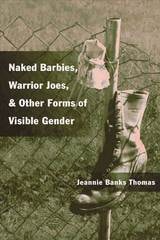
Naked Barbies, Warrior Joes, and Other Forms of Visible Gender
Jeannie Banks Thomas
University of Illinois Press, 2003
Images of females are often emphasized or sexualized, frequently through nudity or partial nudity, whereas those of the male body are not only clothed but also armored in the trappings of action and aggression. Thomas locates these various objects of folk art within a discussion of the post–women's movement discourse on gender.
In addition to the items themselves, Thomas explores the stories and behaviors they generate, including legends of the supernatural about cemetery statues, oral narratives of yard artists and accounts of pranks involving yard art, narratives about children's play with Barbie, Ken, and G.I. Joe, and the electronic folklore (or "e-lore") about Barbie that circulates on the Internet.

Naked Fieldnotes
A Rough Guide to Ethnographic WritingDenielle Elliott
University of Minnesota Press, 2024
Creative and diverse approaches to ethnographic knowledge production and writing
Ethnographic research has long been cloaked in mystery around what fieldwork is really like for researchers, how they collect data, and how it is analyzed within the social sciences. Naked Fieldnotes, a unique compendium of actual fieldnotes from contemporary ethnographic researchers from various modalities and research traditions, unpacks how this research works, its challenges and its possibilities.
The volume pairs fieldnotes based on observations, interviews, drawings, photographs, soundscapes, and other contemporary modes of recording research encounters with short, reflective essays, offering rich examples of how fieldnotes are composed and shaped by research experiences. These essays unlock the experience of conducting qualitative research in the social sciences, providing clear examples of the benefits and difficulties of ethnographic research and how it differs from other forms of writing such as reporting and travelogue. By granting access to these personal archives, Naked Fieldnotes unsettles taboos about the privacy of ethnographic writing and gives scholars a diverse, multimodal approach to conceptualizing and doing ethnographic fieldwork.
Contributors: Courtney Addison, Te Herenga Waka—Victoria U of Wellington; Patricia Alvarez Astacio, Brandeis U; Sareeta Amrute, The New School; Barbara Andersen, Massey U Auckland, New Zealand; Adia Benton, Northwestern U; Letizia Bonanno, U of Kent; Alexandrine Boudreault-Fournier, U of Victoria; Michael Cepek, U of Texas at San Antonio; Michelle Charette, York U; Tomás Criado, Humboldt-U of Berlin; John Dale, George Mason U; Elsa Fan, Webster U; Kelly Fayard, U of Denver; Michele Friedner, U of Chicago; Susan Frohlick, U of British Columbia, Okanagan, Syilx Territory; Angela Garcia, Stanford U; Danielle Gendron, U of British Columbia; Mascha Gugganig, Technical U Munich; Natalia Gutkowski, Hebrew U of Jerusalem; T. S. Harvey, Vanderbilt U; Saida Hodžić, Cornell U; K. G. Hutchins, Oberlin College; Basit Kareem Iqbal, McMaster U; Emma Kowal, Deakin U in Melbourne; Mathangi Krishnamurthy, IIT Madras; Shyam Kunwar; Margaret MacDonald, York U in Toronto; Stephanie McCallum, U Nacional de San Martín and U de San Andrés, Argentina; Diana Ojeda, Cider, U de los Andes in Bogotá, Colombia; Valerie Olson, U of California, Irvine; Patrick Mbullo Owuor, Northwestern U; Stacy Leigh Pigg, Fraser U; Jason Pine, Purchase College, State U of New York; Chiara Pussetti, U of Lisbon; Tom Rice, U of Exeter; Leslie A. Robertson, U of British Columbia, Vancouver; Yana Stainova, McMaster U; Richard Vokes, U of Western Australia; Russell Westhaver, Saint Mary’s U in Nova Scotia; Paul White, U of Nevada, Reno.

Naked Truth
Strip Clubs, Democracy, and a Christian RightBy Judith Lynne Hanna
University of Texas Press, 2012
Across America, strip clubs have come under attack by a politically aggressive segment of the Christian Right. Using plausible-sounding but factually untrue arguments about the harmful effects of strip clubs on their communities, the Christian Right has stoked public outrage and incited local and state governments to impose onerous restrictions on the clubs with the intent of dismantling the exotic dance industry. But an even larger agenda is at work, according to Judith Lynne Hanna. In Naked Truth, she builds a convincing case that the attack on exotic dance is part of the activist Christian Right’s “grand design” to supplant constitutional democracy in America with a Bible-based theocracy.
Hanna takes readers onstage, backstage, and into the community and courts to reveal the conflicts, charges, and realities that are playing out at the intersection of erotic fantasy, religion, politics, and law. She explains why exotic dance is a legitimate form of artistic communication and debunks the many myths and untruths that the Christian Right uses to fight strip clubs. Hanna also demonstrates that while the fight happens at the local level, it is part of a national campaign to regulate sexuality and punish those who do not adhere to Scripture-based moral values. Ultimately, she argues, the naked truth is that the separation of church and state is under siege and our civil liberties—free speech, women’s rights, and free enterprise—are at stake.
Names and Substance in the Australian Subsection System
C. G. von Brandenstein
University of Chicago Press, 1982
Though the author has restricted the results of his research to Aboriginal Australia, his methodological approach is generalizable. Hence this work will be of importance to specialists in many areas.
Namibia's Fisheries
Ecological, Economic, and Social AspectsEdited by Ussif Rashid Sumaila, Stein Ivar Steinshamn, Morten D. Skogen, and Dav
Eburon Academic Publishers, 2004
Namibia’s Liberation Struggle
The Two-Edged SwordColin Leys
Ohio University Press, 1994
It took twenty-three years of armed struggle before Namibia could gain its independence from South Africa in March 1990. Swapo’s victory was remarkable in the face of an overwhelmingly superior enemy. How this came about, and at what cost, is the subject of this outstanding study that is based on unpublished documents and extensive interviews with a large range of the key activists in the struggle.
The story that emerges is one of endurance and heroism in face of atrocious brutality on the part of the colonialists. But it reveals that it was also one of painful compromises imposed by the conditions of the struggle and the subordination of internal democracy within the liberation movement to the single goal of military and diplomatic victory.
The study will be of keen interest to everyone concerned with southern Africa. Students of armed liberation struggle generally will find much to challenge received wisdom. The sheer human interest of the interviews makes the book attractive to a wide readership.
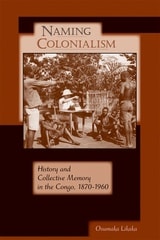
Naming Colonialism
History and Collective Memory in the Congo, 1870–1960Osumaka Likaka
University of Wisconsin Press, 2009
Methodologically innovative, Naming Colonialism advances a new approach that shows how a cultural process—the naming of Europeans—can provide a point of entry into economic and social histories. Drawing on archival documents and oral interviews, Likaka encounters and analyzes a welter of coded fragments. The vivid epithets Congolese gave to rubber company agents—“the home burner,” “Leopard,” “Beat, beat,” “The hippopotamus-hide whip”—clearly conveyed the violence that underpinned colonial extractive economies. Other names were subtler, hinting at derogatory meaning by way of riddles, metaphors, or symbols to which the Europeans were oblivious. Africans thus emerge from this study as autonomous actors whose capacity to observe, categorize, and evaluate reverses our usual optic, providing a critical window on Central African colonialism in its local and regional dimensions.
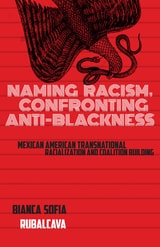
Naming Racism, Confronting Anti-Blackness
Mexican American Transnational Racialization and Coalition BuildingBianca Sofia Rubalcava
Rutgers University Press, 2026
What happens when we move beyond a Black-and-white understanding of racism? This provocative book challenges conventional narratives by exploring how Mexican Americans navigate the US racial hierarchy—not simply as victims of white supremacy but as complex participants in systems of racial oppression. Tracing the construction of race from colonial regimes to the present, author Bianca Sofia Rubalcava argues that non-Black people of color, particularly Mexican Americans, often negotiate their racial position by distancing themselves from Blackness. Through legal history, social movement archives, and survey data, this work reveals how anti-Blackness has persisted across borders and generations, from the pursuit of legal whiteness to enduring family biases around interracial relationships. Ultimately, the book offers a powerful critique of how anti-Black ideologies hinder cross-racial solidarity and perpetuate marginalization. A bold and necessary intervention, this study pushes the Latinx community—and all readers—to confront complicity and reimagine racial justice in more inclusive and transformative ways.
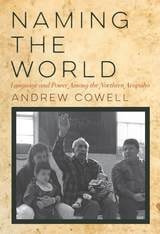
Naming the World
Language and Power Among the Northern ArapahoAndrew Cowell
University of Arizona Press, 2018
As the Arapaho people resist Euro-American assimilation or domination, the Arapaho language and the idea that the language is sacred are key rallying points—but also key points of contestation. Cowell finds that while many at Wind River see the language as crucial for maintaining access to more-than-human power, others primarily view the language in terms of peer-oriented identities as Arapaho, Indian, or non-White. These different views lead to quite different language usage and attitudes in relation to place naming, personal naming, cultural metaphors, new word formation, and the understudied practice of folk etymology.
Cowell presents data from conversations and other natural discourse to show the diversity of everyday speech and attitudes, and he links these data to broader debates at Wind River and globally about the future organization of indigenous societies and the nature of Arapaho and indigenous identity.
Nanovision
Engineering the FutureColin Milburn
Duke University Press, 2008
Milburn illuminates the practices of nanotechnology by examining an enormous range of cultural artifacts, including scientific research articles, engineering textbooks, laboratory images, popular science writings, novels, comic books, and blockbuster films. In so doing, he reveals connections between the technologies of visualization that have helped inaugurate nano research, such as the scanning tunneling microscope, and the prescient writings of Robert A. Heinlein, James Blish, and Theodore Sturgeon. He delves into fictive and scientific representations of “gray goo,” the nightmare scenario in which autonomous nanobots rise up in rebellion and wreak havoc on the world. He shows that nanoscience and “splatterpunk” novels share a violent aesthetic of disintegration: the biological body is breached and torn asunder only to be refabricated as an assemblage of self-organizing machines. Whether in high-tech laboratories or science fiction stories, nanovision deconstructs the human subject and galvanizes the invention of a posthuman future.

Napoleonic Friendship
Military Fraternity, Intimacy, and Sexuality in Nineteenth-Century FranceBrian Joseph Martin
University of New Hampshire Press, 2011
Winner of the Laurence Wylie Prize in French Cultural Studies
One of the first books on “Gays in the Military” published following the historic repeal of “Don't Ask Don't Tell” in 2011, Napoleonic Friendship examines the history of male intimacy in the French military, from Napoleon to the First World War. Echoing the historical record of gay soldiers in the United States, Napoleonic Friendship is the first book-length study on the origin of queer soldiers in modern France. Based on extensive archival research in France, the book traces the development of affectionate friendships in the French Army from 1789 to 1916.
Following the French Revolution, radical military reforms created conditions for new physical and emotional intimacy between soldiers, establishing a model of fraternal affection during the Revolutionary and Napoleonic Wars that would persist amid the ravages of the Franco-Prussian War and World War I. Through readings of Napoleonic military memoirs (and other non-fiction archival material) and French military fiction (from Hugo and Balzac to Zola and Proust), Martin examines a broad range of emotional and erotic relationships, from combat buddies to soldier lovers. He argues that the French Revolution's emphasis on military fraternity evolved into an unprecedented sense of camaraderie in the armies of Napoleon. For many soldiers, the hardships of combat led to intimate friendships. For some, the homosociality of military life inspired mutual affection, lifelong commitment, and homoerotic desire.
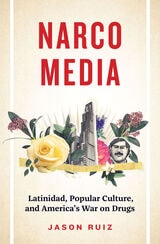
Narcomedia
Latinidad, Popular Culture, and America's War on DrugsJason Ruiz
University of Texas Press, 2023
2024 Honorable Mention — The Victor Villaseñor Best Latino Focused Nonfiction Book Award – English, Empowering Latino Futures’ International Latino Book Awards
Exploring representations of Latinx people from Scarface to Narcos, this book examines how pop culture has framed Latin America as the villain in America’s long and ineffectual War on Drugs.
If there is an enemy in the War on Drugs, it is people of color. That is the lesson of forty years of cultural production in the United States. Popular culture, from Scarface and Miami Vice to Narcos and Better Call Saul, has continually positioned Latinos as an alien people who threaten the US body politic with drugs. Jason Ruiz explores the creation and endurance of this trope, its effects on Latin Americans and Latinx people, and its role in the cultural politics of the War on Drugs.
Even as the focus of drug anxiety has shifted over the years from cocaine to crack and from methamphetamines to opioids, and even as significant strides have been made in representational politics in many areas of pop culture, Latinx people remain an unshakeable fixture in stories narrating the production, distribution, and sale of narcotics. Narcomedia argues that such representations of Latinx people, regardless of the intentions of their creators, are best understood as a cultural front in the War on Drugs. Latinos and Latin Americans are not actually America’s drug problem, yet many Americans think otherwise—and that is in no small part because popular culture has largely refused to imagine the drug trade any other way.
Narrating Infertility in Spain
Catherine Bourland Ross
Bucknell University Press, 2026
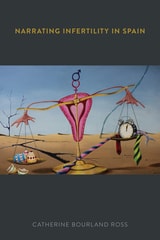
The drop in Spanish birth rates in 1998 to their lowest level of 1.1 births per woman was accompanied by a boom in publishing about motherhood. New narrative forms, ranging from blogs to diaries to comics, expressed women’s experiences, including ambivalence about motherhood in the face of societal pressures. Narrating Infertility in Spain, the first study of infertility in post-2008 female-authored texts, analyzes discussions of adoption, assisted reproduction, egg and sperm donation, and the decision not to have children due to economic or social instability. By examining the work of writers and vocal activists Silvia Nanclares, Raquel Sánchez-Silva, Samanta Villar, Laura Freixas, and Diana López Varela, Ross situates infertility in Spain within the cultural context of the Great Recession, while considering it as a business, a crisis, a stigma, and a class issue, and offering broader understandings of contemporary fertility challenges in Spain and beyond.
Published by Bucknell University Press. Distributed worldwide by Rutgers University Press.
Narrating Love and Violence
Women Contesting Caste, Tribe, and State in Lahaul, IndiaBhattacharya, Himika
Rutgers University Press, 2017
The women in this book tell their stories through love, articulated as rejection, redefinition and reproduction of notions of violence and solidarity. Himika Bhattacharya centers the women’s narratives as a site of knowledge—beyond love and beyond violence. This book shows how women on the margins of tribe and caste know both, love and violence, as agents wishing to re-shape discourses of caste, tribe and community.
Narrating Nature
Wildlife Conservation and Maasai Ways of KnowingMara J. Goldman
University of Arizona Press, 2020
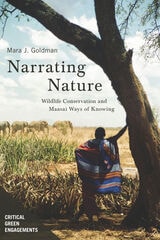
This book employs different storytelling practices, including a traditional Maasai oral meeting—the enkiguena—to decenter conventional scientific ways of communicating about, knowing, and managing nature. Author Mara J. Goldman draws on more than two decades of deep ethnographic and ecological engagements in the semi-arid rangelands of East Africa—in landscapes inhabited by pastoral and agropastoral Maasai people and heavily utilized by wildlife. These iconic landscapes have continuously been subjected to boundary drawing practices by outsiders, separating out places for people (villages) from places for nature (protected areas). Narrating Nature follows the resulting boundary crossings that regularly occur—of people, wildlife, and knowledge—to expose them not as transgressions but as opportunities to complicate the categories themselves and create ontological openings for knowing and being with nature otherwise.
Narrating Nature opens up dialogue that counters traditional conservation narratives by providing space for local Maasai inhabitants to share their ways of knowing and being with nature. It moves beyond standard community conservation narratives that see local people as beneficiaries or contributors to conservation, to demonstrate how they are essential knowledgeable members of the conservation landscape itself.
Narrating Space / Spatializing Narrative
Where Narrative Theory and Geography MeetMarie-Laure Ryan, Kenneth Foote, and Maoz Azaryahu
The Ohio State University Press, 2016
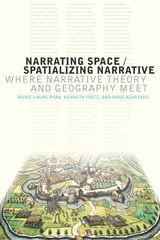
Space intersects with narrative in two principal ways: ‘‘Narrating space’’ considers space as an object of representation, while ‘‘spatializing narrative’’ approaches space as the environment in which narrative is physically deployed. The inscription of narrative in real space is illustrated by such forms as technology-supported locative narratives, street names, and historical/heritage site and museum displays. While narratologists are best equipped to deal with the narration of space, geographers can make significant contributions to narratology by drawing attention to the spatialization of narrative. By bringing these two approaches together—and thereby building a bridge between narratology and geography—Narrating Space / Spatializing Narrative yields both a deepened understanding of human spatial experience and greater insight into narrative theory and poetic forms.

Narrating the City
Mediated Representations of Architecture, Urban Forms and Social LifeEdited by Aysegül Akçay Kavakoglu, Türkan Nihan Haciömeroglu, and Lisa Landrum
Intellect Books, 2020
An analysis of the ways film and media create topographies of cities, architecture, and metropolitan experiences.
Narrating the City examines how film and related visual media offer insights and commentary on the city as both a constructed object and a lived social experience. It brings together filmmakers, architects, digital artists, designers, and media journalists who critically read, reinterpret, and create narratives of the city. Analyzing a variety of international films and placing them in dialogue with video art, photographic narratives, and emerging digital image-based technologies, the authors explore the expanding range of “mediated” narratives of contemporary architecture and urban culture from both a media and a sociological standpoint.
The authors explore how moving-image narratives can create cinematic topographies, presenting familiar cities and modes of seeing in unfamiliar ways. The authors then turn to the new age of digital image making and consumption, revealing new techniques of representation, mediation, and augmentation of sensorial reality for city dwellers. The book’s emphasis on narrative also offers insights into critical societal issues including cultural identity, diversity, memory, and spatial politics, as they are both informed by and represented in various media.

Narrating the Organization
Dramas of Institutional IdentityBarbara Czarniawska
University of Chicago Press, 1997
involved in real-world managing are not always willing to reveal the intricacies of their
everyday muddles. Barbara Czarniawska argues that in order to understand these uncharted
territories, we need to gather local and concrete stories about organizational life and subject
them to abstract and metaphorical interpretation.
Using a narrative approach unique to organizational studies, Czarniawska employs literary
devices to uncover the hidden workings of organizations. She applies cultural metaphors to
public administration in Sweden to demonstrate, for example, how the dynamics of a
screenplay can illuminate the budget disputes of an organization. She shows how the
interpretive description of organizational worlds works as a distinct genre of social analysis,
and her investigations ultimately disclose the paradoxical nature of organizational life: we follow
routines in order to change, and decentralize in order to control. By confronting such
paradoxes, we bring crisis to existing institutions and enable them to change.
Narrative Co-Construction
Author-Audience Interactions and Their ContextsEdited by Malcah Effron, Margarida McMurry, and Virginia Pignagnoli
The Ohio State University Press, 2026
Advances a new, inclusive, and varied framework for understanding narrative as a product of interplay between authors, audiences, and texts.
In centering the interplay between authors and audiences as the foundation for the narrative act, the innovative and varied collection Narrative Co-Construction makes a resounding argument for the importance of making space for attending to world-building both within the world of the story and out in the world of the audience. Drawing from a range of theoretical orientations, contributors advance a framework that allows multiple points of entry to a given story and welcomes intersectional approaches, both in terms of the embodied identities of its critics and in terms of the theoretical tools they use to identify the methodologies currently active within narrative theory.
Analyzing texts by Jane Austen, André Gide, Mark Z. Danielewski, Ruth Ozeki, Ocean Vuong, and others, as well as interviews and digital (epi)texts, contributors put co-construction in dialogue with digital media studies, empirical studies, cognitive theories, literary history, literary geography, narrative criminology, and more. This inclusive approach puts different viewpoints, identities, and intellectual allegiances in conversation and asserts the value of making context and intersectionality explicit when examining narrative. By highlighting the author-audience collaboration at the heart of narrative vitality, Narrative Co-Construction deepens our understanding of narrative’s world-building power and celebrates how fictions engage readers.
Contributors:
Helen H. Davis, Malcah Effron, Erika Gotfredson, Lindsay Holmgren, Isabell Klaiber, Margaret Love, Margarida McMurry, Rae Muhlstock, Virginia Pignagnoli, Lois Presser, Alexander Scherr, Siim Sorokin, Martha Swift, Anna Torvaldsen, Katherine Weese
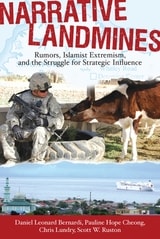
Narrative Landmines
Rumors, Islamist Extremism, and the Struggle for Strategic InfluenceBernardi, Daniel Leonard
Rutgers University Press, 2012
Islamic extremism is the dominant security concern of many contemporary governments, spanning the industrialized West to the developing world. Narrative Landmines explores how rumors fit into and extend narrative systems and ideologies, particularly in the context of terrorism, counter-terrorism, and extremist insurgencies. Its concern is to foster a more sophisticated understanding of how oral and digital cultures work alongside economic, diplomatic, and cultural factors that influence the struggles between states and non-state actors in the proverbial battle of hearts and minds. Beyond face-to-face communication, the authors also address the role of new and social media in the creation and spread of rumors.
As narrative forms, rumors are suitable to a wide range of political expression, from citizens, insurgents, and governments alike, and in places as distinct as Singapore, Iraq, and Indonesia—the case studies presented for analysis. The authors make a compelling argument for understanding rumors in these contexts as “narrative IEDs,” low-cost, low-tech weapons that can successfully counter such elaborate and expansive government initiatives as outreach campaigns or strategic communication efforts. While not exactly the same as the advanced technological systems or Improvised Explosive Devices to which they are metaphorically related, narrative IEDs nevertheless operate as weapons that can aid the extremist cause.
Narrative Podcasting in an Age of Obsession
Neil Verma
University of Michigan Press, 2024
Narrative Podcasting in an Age of Obsession is the first book to look back on this prodigious body of material and attempt to make sense of it from a structural, historical, and analytic point of view. Focusing on more than 350 podcasts and other audio works released between Serial and the COVID pandemic, the book explores why so many of these podcasts seem “obsessed with obsession,” why they focus not only on informing listeners but also dramatizing the labor that goes into it, and why fiction podcasts work so hard to prove they are a brand new form, even as they revive features of radio from decades gone by. This work also examines the industry's reckoning with its own implication in systemic racism, misogyny, and other forms of discrimination. Employing innovative new critical techniques for close listening—including pitch tracking software and spectrograms—Narrative Podcasting in an Age of Obsession makes a major contribution to podcast studies and media studies more broadly.
Narrative Prosthesis
Disability and the Dependencies of DiscourseDavid T. Mitchell and Sharon L. Snyder
University of Michigan Press, 2001
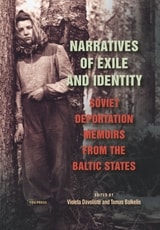
Narratives of Exile and Identity
Soviet Deportation Memoirs from the Baltic StatesTomas Balkelis
Central European University Press, 2018
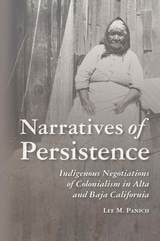
Narratives of Persistence
Indigenous Negotiations of Colonialism in Alta and Baja CaliforniaLee M. Panich
University of Arizona Press, 2020
The Ohlone of the San Francisco Bay area and the Paipai of northern Baja California occupy opposite ends of the spectrum of Native Californian identities. Or so it would appear. While the Ohlone lack popular recognition and official acknowledgement from the United States government, the Paipai occupy a large reserve and celebrate their ongoing cultural traditions throughout Baja California and southern California. Yet the two groups share a similar colonial history: entanglements with early European explorers, labor and enculturation at Spanish missions, and sustained interactions with American and Mexican settler colonialism.
Based on fifteen years of archaeological and historical research in the two regions, Narratives of Persistence charts the remarkable persistence of the Ohlone and Paipai alongside a synthesis of Native Californian endurance over the past five centuries. As the case studies demonstrate, Ohlone and Paipai people made intelligent and culturally appropriate choices to cope with the impact of colonialism on their communities, even as they took different pathways to the present day.
Lee M. Panich illustrates how changes in Native identity and practice within these colonial contexts were made to best conduct the groups’ lives within shifting sets of colonial constraints. He draws connections between the events and processes of the deeper past and the way the Ohlone and Paipai today understand their own histories and identities, offering a model for how scholars of Indigenous histories may think about the connections between the past and the present.
Narratives, Nerdfighters, and New Media
Jennifer Burek Pierce
University of Iowa Press, 2020
For decades, we’ve been warned that video killed the radio star, and, more recently, that social media has replaced reading. Nerdfighteria, a first-of-its-kind online literary community with nearly three million members, challenges these assumptions. It is the brainchild of brothers Hank and John Green, who provide literary themed programming on their website and YouTube channel, including video clips from John, a best-selling author most famous for his young adult book, The Fault in Our Stars. These clips not only give fans personal insights into his works and the writing process writ large, they also provide unique access to the author, inspiring fans to create their own fan art and make connections with one another.
In the twenty-first century, reading and watching videos are related activities that allow people to engage with authors and other readers. Whether they turn to The Fault in Our Stars or titles by lesser-known authors, Nerdfighters are readers. Incorporating thousands of testimonials about what they read and why, Jennifer Burek Pierce not only sheds light on this particular online community, she also reveals what it tells us about the changing nature of reading in the digital age. In Nerdfighteria, we find a community who shows us that being online doesn’t mean disinterest in books.
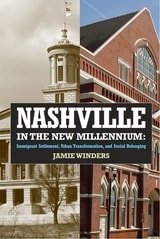
Nashville in the New Millennium
Immigrant Settlement, Urban Transformation, and Social BelongingJamie Winders
Russell Sage Foundation, 2013
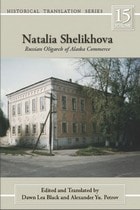
Natalia Shelikhova
Russian Oligarch of Alaska CommerceEdited by Dawn Lea Black and Alexander Petrov
University of Alaska Press, 2010
This volume makes available for the first time in English a variety of primary source materials relating to the life and work of Natalia Shelikov, a pioneering nineteenth-century Russian-American businesswoman. As a principal of the Russian-American Company, Shelikov worked in Alaska, and her business acumen and wide-ranging connections—including the empress of Russia and a swathe of northern leaders—were crucial to the growth of Alaska’s economy, as well as to the welfare of the Native people, in whose life and culture she took a strong interest. The letters, petitions, and personal documents presented here will be indispensable for students of Alaska and nineteenth-century women’s history.
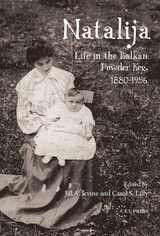
Natalija
Life in the Balkan Powder Keg, 1880-1956Natalija Matic-Zrnic
Central European University Press, 2009
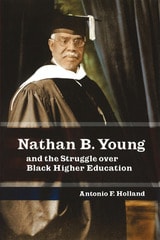
Nathan B. Young and the Struggle over Black Higher Education
Antonio F. Holland
University of Missouri Press, 2006
Born in slavery in Alabama, Young followed a love of learning to degrees from Talladega and Oberlin Colleges and a career in higher education. Employed by Booker T. Washington in 1892, he served at Tuskegee Institute until conflict with Washington’s vocational orientation led him to move on. During a brief tenure at Georgia State Industrial College under Richard R. Wright, Sr., he became disillusioned by efforts of whites to limit black education to agriculture and the trades. Hired as president of Florida A&M in 1901, he fought for twenty years to balance agricultural/vocational education with the liberal arts, only to meet with opposition from state officials that led to his ouster.
This principled educator finally found his place as president of Lincoln University in Missouri in 1923. Here Young made a determined effort to establish the school as a standard institution of higher learning. Holland describes how he campaigned successfully to raise academic standards and gain accreditation for Lincoln’s programs—successes made possible by the political and economic support of farsighted members of Missouri’s black community.
Holland shows that the great debate over black higher education was carried on not only in the rhetoric of Washington and Du Bois but also on the campuses, as Young and others sought to prepare African American students to become thinkers and creators. In tracing Young’s career, Holland presents a wealth of information on the nature of the education provided for former slaves and their descendents in four states—shedding new light on the educational environment at Oberlin and Tuskegee—and on the actions of racist white government officials to limit the curriculum of public education for blacks.
Although Young’s efforts to improve the schools he served were often thwarted, Holland shows that he kept his vision alive in the black community. Holland’s meticulous reconstruction of an eventful career provides an important look at the forces that shaped and confounded the development of black higher education during traumatic times.

Nathan Straus
From Macy's Magnate to International HumanitarianAndrew Fisher
Rutgers University Press, 2026
Nathan Straus (1848–1931) encompassed worlds. He rose from his Jewish German immigrant family’s ruin in Civil War Georgia to become co-owner of Macy’s and Abraham & Straus department stores. He helped build American Zionism and cofounded the American Jewish Congress movement. His public service led to a nomination for New York City mayor.
This, the first comprehensive biography of Straus, details each of these lives but argues that his most historic achievements lay elsewhere—in philanthropy. Inspired by both his Jewish values and no-nonsense pragmatism, Straus designed, funded, and oversaw four Progressive philanthropic initiatives. The greatest—his demonstration and advocacy campaigns for milk pasteurization—saved the lives of countless thousands of infants in New York City and, ultimately, across much of America and western Europe. Straus also founded America’s first TB preventorium for at-risk children: a model for the forty-five more that followed. Partnering with Hadassah, he brought American public health innovations to Mandate Palestine. He provided vast relief for New York City’s jobless in the severe 1890s depression. In all, Straus’s humanitarianism won the acclaim of American presidents and world leaders and the gratitude of millions. We can learn from him today.
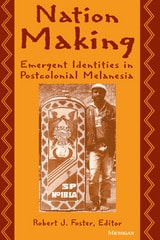
Nation Making
Emergent Identities in Postcolonial MelanesiaRobert J. Foster, Editor
University of Michigan Press, 1997
In this theoretically sophisticated volume, contributors examine the process of nation making in Fiji, Papua New Guinea, the Solomon Islands, and Vanuatu- states that attained formal political independence between 1970 and 1980. The remarkable cultural diversity within these states demands close ethnographic study of different groups and their contesting definitions of nationhood and leads to highly original approaches.
The essays explore the political conditions and cultural assumptions that inform how Melanesians variously imagine a national community. The authors interpret a wide range of materials, from political speeches and official ceremonies of state to newspaper advertisements and life crisis rites. They demonstrate both how the legacies of divisive colonial rule, the weakness of the postcolonial state, and the exigencies of capitalist markets undermine the processes of nation making in contemporary Melanesia and how new forms of popular and consumer culture potentially shape an emergent national consciousness.
Comparative and historical in its orientation, this book will appeal to readers not only in anthropology but in political science, social history, and cultural studies. It will be of special value to those interested in comparative politics and history, Pacific studies, ethnicity and nationalism, and colonial and postcolonial studies.
Robert J. Foster is Assistant Professor of Anthropology, University of Rochester.
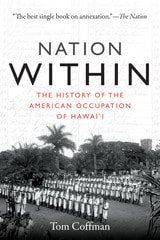
Nation Within
The History of the American Occupation of Hawai'iTom Coffman
Duke University Press, 2009
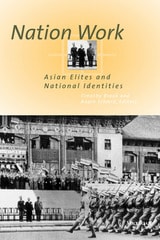
Nation Work
Asian Elites and National IdentitiesTimothy Brook and Andre Schmid, Editors
University of Michigan Press, 2000

Nation and Migration
How Citizens in Europe Are Coping with XenophobiaGyörgy Csepeli
Central European University Press, 2021
Nation and Migration provides a way to understand recent migration events in Europe that have attracted the world's attention. The emergence of the nations in the West promised homogenization, but instead the imagined national communities have everywhere become places of heterogeneity, and modern nation states have been haunted by the specter of minorities. This study analyses experiences relating to migration in 23 European countries. It is based on data from the International Social Survey Programme, a global cross-national collaborative exercise, with surveys made in 1995, 2003, and 2013. In the authors' view, a critical test for Europe will be its ability to find adequate responses to the challenges of globalization.
The book provides a detailed overview of how citizens in Europe are coping with a xenophobia fueled by their own sense of insecurity. The authors reconstruct the competing sociological reactions to migration in the forms of integration, assimilation and segregation. Hungary receives special attention: the data show that people living there are far less closed and xenophobic than they might seem through the prism of a media-instigated moral panic.
Nation as Network
Diaspora, Cyberspace, and CitizenshipVictoria Bernal
University of Chicago Press, 2014
Bernal argues that Benedict Anderson’s famous concept of nations as “imagined communities” must now be rethought because diasporas and information technologies have transformed the ways nations are sustained and challenged. She traces the development of Eritrean diaspora websites over two turbulent decades that saw the Eritrean state grow ever more tyrannical. Through Eritreans’ own words in posts and debates, she reveals how new subjectivities are formed and political action is galvanized online. She suggests that “infopolitics”—struggles over the management of information—make politics in the 21st century distinct, and she analyzes the innovative ways Eritreans deploy the internet to support and subvert state power. Nation as Network is a unique and compelling work that advances our understanding of the political significance of digital media.
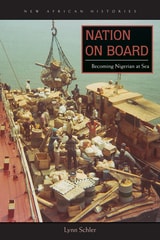
Nation on Board
Becoming Nigerian at SeaLynn Schler
Ohio University Press, 2016
In the 1940s, British shipping companies began the large-scale recruitment of African seamen in Lagos. On colonial ships, Nigerian sailors performed menial tasks for low wages and endured discrimination as cheap labor, while countering hardships by nurturing social connections across the black diaspora. Poor employment conditions stirred these seamen to identify with the nationalist sentiment burgeoning in postwar Nigeria, while their travels broadened and invigorated their cultural identities.
Working for the Nigerian National Shipping Line, they encountered new forms of injustice and exploitation. When mismanagement, a lack of technical expertise, and pillaging by elites led to the NNSL’s collapse in the early 1990s, seamen found themselves without prospects. Their disillusionment became a broader critique of corruption in postcolonial Nigeria.
In Nation on Board: Becoming Nigerian at Sea, Lynn Schler traces the fate of these seamen in the transition from colonialism to independence. In so doing, she renews the case for labor history as a lens for understanding decolonization, and brings a vital transnational perspective to her subject. By placing the working-class experience at the fore, she complicates the dominant view of the decolonization process in Nigeria and elsewhere.
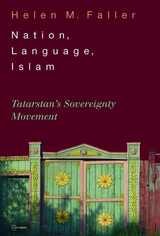
Nation, Language, Islam
Tatarstan's Sovereignty MovementHelen M. Faller
Central European University Press, 2011

National Abjection
The Asian American Body OnstageKaren Shimakawa
Duke University Press, 2002
Shimakawa looks at the origins of Asian American theater, particularly through the memories of some of its pioneers. Her examination of the emergence of Asian American theater companies illuminates their strategies for countering the stereotypes of Asian Americans and the lack of visibility of Asian American performers within the theater world. She shows how some plays—Wakako Yamauchi’s 12-1-A, Frank Chin’s Chickencoop Chinaman, and The Year of the Dragon—have both directly and indirectly addressed the displacement of Asian Americans. She analyzes works attempting to negate the process of abjection—such as the 1988 Broadway production of M. Butterfly as well as Miss Saigon, a mainstream production that enacted the process of cultural displacement both onstage and off. Finally, Shimakawa considers Asian Americanness in the context of globalization by meditating on the work of Ping Chong, particularly his East-West Quartet.
National Conversations
Public Service Media and Cultural Diversity in EuropeEdited by Gavan Titley, Karina Horsti, and Gunilla Hultén
Intellect Books, 2014
National Cultures at Grass-root Level
Antonina Kloskowska
Central European University Press, 2001
The major dilemma this volume addresses is the function of national identity in a modern society, for despite the trend towards globalization, the world continues to be riddled with national conflict.
Kłoskowska begins by looking at the controversy between two competing concepts of the origin of the nation – political and ethnic. She examines the central issues of the argument, and in particular, the characteristics and effects of ethnic differences on personal identity and the appropriation of national culture. Her theories are based upon autobiographies by individuals belonging to various national minorities in Poland and other areas where ethnic borders are blurred. The group studied included mostly young intellectuals: Ukrainians, Belarussians and Silesian-Germans. She examines the national attitudes of the various countries the ethnic minorities have been forced to live with. In her conclusion, Kłoskowska takes the view that national cultures are either ‘open’ or ‘closed’ and stresses the importance of participating in more than one cultural medium.
National Cultures at the Grass-Root Level is rich in information on contemporary theories of the nation, on its origin, character and future, and offers a deep insight into the complex and often ambiguous reality of national attitudes.

National Greens
The Natures of Korean GolfRachael Miyung Joo
Duke University Press, 2027
National Identity of Romanians in Transylvania
Sorin Mitu
Central European University Press, 2001
This meticulously researched and elegantly written book is the most authoritative study of the emergence of modern Romanian identity in Transylvania during the eighteenth and nineteenth centuries. Based upon a plethora of contemporary published sources, Mitu approaches national identity from a variety of perspectives - from within the Romanian community itself and their reaction to the image others had of them.
The author sheds new light on the problems of self-evaluation using a method he describes as "functional analysis" to examine a complex set of ideologies and propaganda. This approach helps the reader to understand the intricate web of contemporary Romanian nationalism.
National Identity of Romanians in Transylvania appeals to scholars of modern Romanian history, those focusing on the Habsburg Monarchy and the study of modern nationalism. The book is an important contribution to the expanding debate on nationalism and national identity from an East European perspective.