Results by title
3027 books match the query 'Sociology' and 61 start with n
NATO and Germany
A Study in the Sociology of Supranational RelationsStanford Lyman
University of Arkansas Press, 1995
Focusing on the Cold War years, thismonograph examines the processes, problems, and policies through which the Federal Republic of Germany was formed and admitted into the North Atlantic Treaty Organization (NATO). The author compares the situation of Weimar Germany during its short-lived postwar decade with that of the Federal Republic by applying geopolitical concepts and theory, illustrating Germany’s territorial uniqueness and how that special aspect of its place on the European continent in?uenced the nation’s diplomacy in both eras.
During the late 1940s and the 1950s, the problem presented by Germany to the other NATO allies was how to secure and maintain the Federal Republic’s allegiance to the anticommunist alliance without eliminating the country’s desire to be reunited with its Soviet-dominated eastern section. How both NATO and Germany managed to maintain themselves in a state of dynamic equilibrium throughout the era of the Cold War illustrates the concept of international organization called “cooptation,” which Lyman helped to de?ne and expand.
The epilogue explores the larger issues that the case study illuminates: global space, national territorialization, collective identity, and ethnocentrism. Considering the current con?ict in the Balkans as it relates to the new Germany and the role of NATO, this far-reaching book is especially relevant with its suggestions for a basic supranational sociology.

Nagara and Commandery
Origins of the Southeast Asian Urban TraditionsPaul Wheatley
University of Chicago Press, 1983

Naked Fieldnotes
A Rough Guide to Ethnographic WritingDenielle Elliott
University of Minnesota Press, 2024
Creative and diverse approaches to ethnographic knowledge production and writing
Ethnographic research has long been cloaked in mystery around what fieldwork is really like for researchers, how they collect data, and how it is analyzed within the social sciences. Naked Fieldnotes, a unique compendium of actual fieldnotes from contemporary ethnographic researchers from various modalities and research traditions, unpacks how this research works, its challenges and its possibilities.
The volume pairs fieldnotes based on observations, interviews, drawings, photographs, soundscapes, and other contemporary modes of recording research encounters with short, reflective essays, offering rich examples of how fieldnotes are composed and shaped by research experiences. These essays unlock the experience of conducting qualitative research in the social sciences, providing clear examples of the benefits and difficulties of ethnographic research and how it differs from other forms of writing such as reporting and travelogue. By granting access to these personal archives, Naked Fieldnotes unsettles taboos about the privacy of ethnographic writing and gives scholars a diverse, multimodal approach to conceptualizing and doing ethnographic fieldwork.
Contributors: Courtney Addison, Te Herenga Waka—Victoria U of Wellington; Patricia Alvarez Astacio, Brandeis U; Sareeta Amrute, The New School; Barbara Andersen, Massey U Auckland, New Zealand; Adia Benton, Northwestern U; Letizia Bonanno, U of Kent; Alexandrine Boudreault-Fournier, U of Victoria; Michael Cepek, U of Texas at San Antonio; Michelle Charette, York U; Tomás Criado, Humboldt-U of Berlin; John Dale, George Mason U; Elsa Fan, Webster U; Kelly Fayard, U of Denver; Michele Friedner, U of Chicago; Susan Frohlick, U of British Columbia, Okanagan, Syilx Territory; Angela Garcia, Stanford U; Danielle Gendron, U of British Columbia; Mascha Gugganig, Technical U Munich; Natalia Gutkowski, Hebrew U of Jerusalem; T. S. Harvey, Vanderbilt U; Saida Hodžić, Cornell U; K. G. Hutchins, Oberlin College; Basit Kareem Iqbal, McMaster U; Emma Kowal, Deakin U in Melbourne; Mathangi Krishnamurthy, IIT Madras; Shyam Kunwar; Margaret MacDonald, York U in Toronto; Stephanie McCallum, U Nacional de San Martín and U de San Andrés, Argentina; Diana Ojeda, Cider, U de los Andes in Bogotá, Colombia; Valerie Olson, U of California, Irvine; Patrick Mbullo Owuor, Northwestern U; Stacy Leigh Pigg, Fraser U; Jason Pine, Purchase College, State U of New York; Chiara Pussetti, U of Lisbon; Tom Rice, U of Exeter; Leslie A. Robertson, U of British Columbia, Vancouver; Yana Stainova, McMaster U; Richard Vokes, U of Western Australia; Russell Westhaver, Saint Mary’s U in Nova Scotia; Paul White, U of Nevada, Reno.
Naming Colonialism
History and Collective Memory in the Congo, 1870–1960Osumaka Likaka
University of Wisconsin Press, 2009
Methodologically innovative, Naming Colonialism advances a new approach that shows how a cultural process—the naming of Europeans—can provide a point of entry into economic and social histories. Drawing on archival documents and oral interviews, Likaka encounters and analyzes a welter of coded fragments. The vivid epithets Congolese gave to rubber company agents—“the home burner,” “Leopard,” “Beat, beat,” “The hippopotamus-hide whip”—clearly conveyed the violence that underpinned colonial extractive economies. Other names were subtler, hinting at derogatory meaning by way of riddles, metaphors, or symbols to which the Europeans were oblivious. Africans thus emerge from this study as autonomous actors whose capacity to observe, categorize, and evaluate reverses our usual optic, providing a critical window on Central African colonialism in its local and regional dimensions.
Narrating Love and Violence
Women Contesting Caste, Tribe, and State in Lahaul, IndiaBhattacharya, Himika
Rutgers University Press, 2017
The women in this book tell their stories through love, articulated as rejection, redefinition and reproduction of notions of violence and solidarity. Himika Bhattacharya centers the women’s narratives as a site of knowledge—beyond love and beyond violence. This book shows how women on the margins of tribe and caste know both, love and violence, as agents wishing to re-shape discourses of caste, tribe and community.

Narrating the City
Mediated Representations of Architecture, Urban Forms and Social LifeEdited by Aysegül Akçay Kavakoglu, Türkan Nihan Haciömeroglu, and Lisa Landrum
Intellect Books, 2020
An analysis of the ways film and media create topographies of cities, architecture, and metropolitan experiences.
Narrating the City examines how film and related visual media offer insights and commentary on the city as both a constructed object and a lived social experience. It brings together filmmakers, architects, digital artists, designers, and media journalists who critically read, reinterpret, and create narratives of the city. Analyzing a variety of international films and placing them in dialogue with video art, photographic narratives, and emerging digital image-based technologies, the authors explore the expanding range of “mediated” narratives of contemporary architecture and urban culture from both a media and a sociological standpoint.
The authors explore how moving-image narratives can create cinematic topographies, presenting familiar cities and modes of seeing in unfamiliar ways. The authors then turn to the new age of digital image making and consumption, revealing new techniques of representation, mediation, and augmentation of sensorial reality for city dwellers. The book’s emphasis on narrative also offers insights into critical societal issues including cultural identity, diversity, memory, and spatial politics, as they are both informed by and represented in various media.
Nation as Network
Diaspora, Cyberspace, and CitizenshipVictoria Bernal
University of Chicago Press, 2014
Bernal argues that Benedict Anderson’s famous concept of nations as “imagined communities” must now be rethought because diasporas and information technologies have transformed the ways nations are sustained and challenged. She traces the development of Eritrean diaspora websites over two turbulent decades that saw the Eritrean state grow ever more tyrannical. Through Eritreans’ own words in posts and debates, she reveals how new subjectivities are formed and political action is galvanized online. She suggests that “infopolitics”—struggles over the management of information—make politics in the 21st century distinct, and she analyzes the innovative ways Eritreans deploy the internet to support and subvert state power. Nation as Network is a unique and compelling work that advances our understanding of the political significance of digital media.
National Past-Times
Narrative, Representation, and Power in Modern ChinaAnn Anagnost
Duke University Press, 1997
Using interviews and participant observation as well as close readings of official documents, propaganda materials, and popular media, Anagnost notes the discontinuities in the nation’s narrative—moments where this narrative has been radically reorganized at critical junctures in China’s modern history. Covering a broad range of issues relating to representation and power—issues that have presented themselves with particular clarity in the years since the violent crackdown on the student movement of 1989—National Past-Times critiques the ambiguous possibilities produced by the market, as well as new opportunities for "unfreedom" in the discipline of labor and the commodification of women. Anagnost begins with a retrospective reflection on the practice of "speaking bitterness" in socialist revolutionary practice. Subsequent essays discuss the culture debates of the 1980s, the discourse of social disorder, the issue of population control, the film The Story of Qiu Ju, and anomalies at the theme park "Splendid China."
Natural Landscape Amenities and Suburban Growth
Metropolitan Chicago, 1970-1980Christopher Mueller-Wille
University of Chicago Press, 1990

Natural Resource Development and Human Rights in Latin America
State and non-state actors in the promotion of and opposition to extractivismEdited by Malayna Raftopoulos and Radoslaw Poweska
University of London Press, 2017
Navajo Kinship and Marriage
Gary Witherspoon
University of Chicago Press, 1996
"Witherspoon . . . clarifies problems pertaining to Navajo kinship and marriage through his skillful use of the concepts of cultural and social systems. He adds to the body of knowledge on the Navajo by his own fieldwork and unique life experiences." —R. S. Freed, Sociology
"Not only can Witherspoon's book on Navajo kinship help unravel the web for the Anglo willing to concentrate, it can also bring to Navajo readers an understanding of why Anglos don't understand Navajo family relationships." —Joanne Reuter, Navajo Times
"This is an important work on Navajo kinship and marriage." —David F. Aberle, American Anthropology

Navigating Interracial Borders
Black-White Couples and Their Social WorldsChilds, Erica Chito
Rutgers University Press, 2005
Is love color-blind, or at least becoming increasingly so? Today’s popular rhetoric and evidence of more interracial couples than ever might suggest that it is. But is it the idea of racially mixed relationships that we are growing to accept or is it the reality? What is the actual experience of individuals in these partnerships as they navigate their way through public spheres and intermingle in small, close-knit communities?
In Navigating Interracial Borders, Erica Chito Childs explores the social worlds of black-white interracial couples and examines the ways that collective attitudes shape private relationships. Drawing on personal accounts, in-depth interviews, focus group responses, and cultural analysis of media sources, she provides compelling evidence that sizable opposition still exists toward black-white unions. Disapproval is merely being expressed in more subtle, color-blind terms.
Childs reveals that frequently the same individuals who attest in surveys that they approve of interracial dating will also list various reasons why they and their families wouldn’t, shouldn’t, and couldn’t marry someone of another race. Even college students, who are heralded as racially tolerant and open-minded, do not view interracial couples as acceptable when those partnerships move beyond the point of casual dating. Popular films, Internet images, and pornography also continue to reinforce the idea that sexual relations between blacks and whites are deviant.
Well-researched, candidly written, and enriched with personal narratives, Navigating Interracial Borders offers important new insights into the still fraught racial hierarchies of contemporary society in the United States.

Navigators of the Contemporary
Why Ethnography MattersDavid A. Westbrook
University of Chicago Press, 2008
Navigators of the Contemporary describes the changing nature of ethnography as anthropologists use it to analyze places closer to home. Westbrook maintains that a conversational style of ethnography can help us look beyond our assumptions and gain new insight into arenas of contemporary life such as corporations, financial institutions, science, the military, and religion. Westbrook’s witty, absorbing book is a friendly challenge to anthropologists to shed light on the present and join broader streams of intellectual life. And for those outside the discipline, his inspiring vision of ethnography opens up the prospect of understanding our own world in much greater depth.

Negotiated Care
The Experience of Family Day Care ProvidersMargaret K. Nelson
Temple University Press, 1991
Weaving together numerous richly detailed interviews and surveys with recent feminist literature on the role of caregiving in women’s lives and investigations of women’s involvement in home-based work, this book explores the daily lives of family day care providers. Margaret K. Nelson uncovers the dilemmas providers face in their relationships with parents who bring children to them, with the children themselves, with the providers’ family members, and with representatives of the state’s regulatory system. She links these dilemmas to the contradiction between an increasing demand for personalized, cheap, informal child care services and a public policy that subjects child care providers to public scrutiny while giving them limited material and ideological support.
Nelson’s discussions with day care providers reveal considerable tensions that emerge over issues of control and intimacy. The dual motivation of business and family gives rise to problems, such as how to maintain enough distance from the parents to set limits on hours while providing personal service in a family setting. Family day care providers often enter this occupation as a way to engage in paid work and meet their own child care responsibilities. This book looks at how they manage to negotiate a setting that simultaneously involves money, trust, and caring.
Family day care represents one of the most prevalent sources of child care for working parents. It is an especially common form of care for very young children, yet it remains little studied. In the popular press, stereotypes—many of them negative—prevail. This book substitutes a thorough, detailed examination of this child care setting from a perspective that has generally been ignored-that of the caregiver. While providing useful insights into the role of caregiving in women’s lives and the phenomenon of home-based work, it contributes to the ongoing policy debates about child care.
In the series Women in the Political Economy, edited by Ronnie J. Steinberg.
Negotiating Power and Privilege
Career Igbo Women in Contemporary NigeriaPhilomina E. Okeke-Ihejirika
Ohio University Press, 2004

Neither Villain nor Victim
Empowerment and Agency among Women Substance AbusersAnderson, Tammy
Rutgers University Press, 2008
Essays explore a range of topics, including the many ways that women negotiate the illicit drug world, how former drug addicts manage the more intimate aspects of their lives as they try to achieve abstinence, how women tend to use intervention resources more positively than their male counterparts, and how society can improve its response to female substance abusers by moving away from social controls (such as the criminalization of prostitution) and rehabilitative programs that have been shown to fail women in the long term.
Advancing important new perspectives about the position of women in the drug world, this book is essential reading in courses on women and crime, feminist theory, and criminal justice.
Neo-Confederacy
A Critical IntroductionEdited by Euan Hague, Heidi Beirich, and Edward H. Sebesta
University of Texas Press, 2008
A century and a half after the conclusion of the Civil War, the legacy of the Confederate States of America continues to influence national politics in profound ways. Drawing on magazines such as Southern Partisan and publications from the secessionist organization League of the South, as well as DixieNet and additional newsletters and websites, Neo-Confederacy probes the veneer of this movement to reveal goals far more extensive than a mere celebration of ancestry.
Incorporating groundbreaking essays on the Neo-Confederacy movement, this eye-opening work encompasses such topics as literature and music; the ethnic and cultural claims of white, Anglo-Celtic southerners; gender and sexuality; the origins and development of the movement and its tenets; and ultimately its nationalization into a far-reaching factor in reactionary conservative politics. The first book-length study of this powerful sociological phenomenon, Neo-Confederacy raises crucial questions about the mainstreaming of an ideology that, founded on notions of white supremacy, has made curiously strong inroads throughout the realms of sexist, homophobic, anti-immigrant, and often "orthodox" Christian populations that would otherwise have no affiliation with the regionality or heritage traditionally associated with Confederate history.
Neoliberal Apartheid
Palestine/Israel and South Africa after 1994Andy Clarno
University of Chicago Press, 2017
After a decade of research in the Johannesburg and Jerusalem regions, Andy Clarno presents here a detailed ethnographic study of the precariousness of the poor in Alexandra township, the dynamics of colonization and enclosure in Bethlehem, the growth of fortress suburbs and private security in Johannesburg, and the regime of security coordination between the Israeli military and the Palestinian Authority in the West Bank. The first comparative study of the changes in these two areas since the early 1990s, the book addresses the limitations of liberation in South Africa, highlights the impact of neoliberal restructuring in Palestine, and argues that a new form of neoliberal apartheid has emerged in both contexts.
Neoliberal Chicago
Edited by Larry Bennett, Roberta Garner, and Euan Hague
University of Illinois Press, 2017
Networking Futures
The Movements against Corporate GlobalizationJeffrey S. Juris
Duke University Press, 2008
In an account full of activist voices and on-the-ground detail, Juris provides a history of anti–corporate globalization movements, an examination of their connections to local dynamics in Barcelona, and an analysis of movement-related politics, organizational forms, and decision-making. Depicting spectacular direct action protests in Barcelona and other cities, he describes how far-flung activist networks are embodied and how networking politics are performed. He further explores how activists have used e-mail lists, Web pages, and free software to organize actions, share information, coordinate at a distance, and stage “electronic civil disobedience.” Based on a powerful cultural logic, anti–corporate globalization networks have become models of and for emerging forms of radical, directly democratic politics. Activists are not only responding to growing poverty, inequality, and environmental devastation; they are also building social laboratories for the production of alternative values, discourses, and practices.
Networks and Markets
James E. Rauch
Russell Sage Foundation, 2001
Neutral Accent
How Language, Labor, and Life Become GlobalA. Aneesh
Duke University Press, 2015

Never Married Women
Barbara Levy Simon
Temple University Press, 1989
Never Saw It Coming
Cultural Challenges to Envisioning the WorstKaren A. Cerulo
University of Chicago Press, 2006
People—especially Americans—are by and large optimists. They're much better at imagining best-case scenarios (I could win the lottery!) than worst-case scenarios (A hurricane could destroy my neighborhood!). This is true not just of their approach to imagining the future, but of their memories as well: people are better able to describe the best moments of their lives than they are the worst.
Though there are psychological reasons for this phenomenon, Karen A.Cerulo, in Never Saw It Coming, considers instead the role of society in fostering this attitude. What kinds of communities develop this pattern of thought, which do not, and what does that say about human ability to evaluate possible outcomes of decisions and events?
Cerulo takes readers to diverse realms of experience, including intimate family relationships, key transitions in our lives, the places we work and play, and the boardrooms of organizations and bureaucracies. Using interviews, surveys, artistic and fictional accounts, media reports, historical data, and official records, she illuminates one of the most common, yet least studied, of human traits—a blatant disregard for worst-case scenarios. Never Saw It Coming, therefore, will be crucial to anyone who wants to understand human attempts to picture or plan the future.
“In Never Saw It Coming, Karen Cerulo argues that in American society there is a ‘positive symmetry,’ a tendency to focus on and exaggerate the best, the winner, the most optimistic outcome and outlook. Thus, the conceptions of the worst are underdeveloped and elided. Naturally, as she masterfully outlines, there are dramatic consequences to this characterological inability to imagine and prepare for the worst, as the failure to heed memos leading up to both the 9/11 and NASA Challenger disasters, for instance, so painfully reminded us.”--Robin Wagner-Pacifici, Swarthmore College
“Katrina, 9/11, and the War in Iraq—all demonstrate the costliness of failing to anticipate worst-case scenarios. Never Saw It Coming explains why it is so hard to do so: adaptive behavior hard-wired into human cognition is complemented and reinforced by cultural practices, which are in turn institutionalized in the rules and structures of formal organizations. But Karen Cerulo doesn’t just diagnose the problem; she uses case studies of settings in which people effectively anticipate and deal with potential disaster to describe structural solutions to the chronic dilemmas she describes so well. Never Saw It Coming is a powerful contribution to the emerging fields of cognitive and moral sociology.”--Paul DiMaggio, Princeton University

New Blood
Third-Wave Feminism and the Politics of MenstruationChris Bobel
Rutgers University Press, 2010
Through her critical ethnographic lens, Bobel focuses on debates central to feminist thought (including the utility of the category "gender") and challenges to building an inclusive feminist movement. Filled with personal narratives, playful visuals, and original humor, New Blood reveals middle-aged progressives communing in Red Tents, urban punks and artists "culture jamming" commercial menstrual products in their zines and sketch comedy, queer anarchists practicing DIY health care, African American health educators espousing "holistic womb health," and hopeful mothers refusing to pass on the shame to their pubescent daughters. With verve and conviction, Bobel illuminates today's feminism-on-the-ground--indisputably vibrant, contentious, and ever-dynamic.
New Borders
Migration, Hotspots and the European SuperstateAntonis Vradis, Evie Papada, Joe Painter, and Anna Papoutsi
Pluto Press, 2018
As borders across Europe have come to symbolize the European Union, this book provides answers to questions of European policy, the securitization of national boundaries, and how legislation determines who is free to belong to a place.
New Brunswick, New Jersey
The Decline and Revitalization of Urban AmericaListokin, David
Rutgers University Press, 2016
New Destinations
Mexican Immigration in the United StatesVictor Zuniga
Russell Sage Foundation, 2005
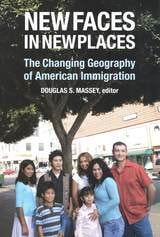
New Faces in New Places
The Changing Geography of American ImmigrationDouglas S. Massey
Russell Sage Foundation, 2008
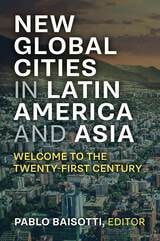
New Global Cities in Latin America and Asia
Welcome to the Twenty-First CenturyPablo Baisotti, Editor
University of Michigan Press, 2022
New Global Cities in Latin America and Asia: Welcome to the Twenty-First Century proposes new visions of global cities and regions historically considered “secondary” in the international context. The arguments are not only based on material progress made by these metropolises, but also on the growing social difficulties experienced (e.g., organized crime, drug trafficking, slums, economic inequalities). The book illustrates the growth of cities according to these problems arising from the modernity of the new century, comparing Latin American and Asian cities.
This book analyzes the complex relationships within cities through an interdisciplinary approach, complementing other research and challenging orthodox views on global cities. At the same time, the book provides new theoretical and methodological tools to understand the progress of “Third World” cities and the way of understanding “globality” in the 21st century by confronting the traditional views with which global cities were appreciated since the 1980s. Pablo Baisotti brings together researchers from various fields who provide new interpretative keys to certain cities in Latin America and Asia.

New Imaginaries, Volume 14
Dilip Parameshwar Gaonkar and Benjamin Lee, eds.
Duke University Press, 0
Contributors to this collection include major voices in the fields of philosophy, critical literature, sociology, anthropology, and communication studies. The articles consider how people conceive of and categorize themselves as part of a cohesive group under the multiple rubrics of the public and counterpublic, nation, ethnos, civilization, genealogy, democracy, and the market. Many of the essays are situated in specific national and cultural sites such as Africa, Australia, eighteenth-century England, the European Union, India, and Turkey. Others examine the intersections of global financial markets and democratic institutions.
As a whole, New Imaginaries suggests a new way of synthesizing economic, political, and cultural approaches to social life.
Contributors. Arjun Appadurai, Craig Calhoun, Dilip Parameshwar Gaonkar, Nilüfer Göle, Benjamin Lee, Edward LiPuma, Achille Mbembe, Mary Poovey, Elizabeth A. Povinelli, Charles Taylor, Michael Warner
New Jersey's Multiple Municipal Madness
Karcher, Alan
Rutgers University Press, 1998
Alan Karcher looks at the history and high cost of New Jersey's multiple municipalities. He investigates the economic considerations, political pressures, and personal agendas that created the bizarre configurations dividing the Garden State, while analyzing the public policies that allowed and even encouraged the formation of new municipalities. Karcher also examines the political dynamics that thwarted every effort of New Jersey metropolises to join the front ranks of major American cities.
Karcher identifies the major motivations behind the unparalleled experience of New Jersey's municipal multiplication. He delves deeply into the primary causes of new lines being drawn, such as road appropriations, the location of a railroad station, control of a local school district, the regulation of alcohol sales, and the preservation of exclusivity prior to the acceptance of zoning. He also assesses the present situation and what has happened in the past 60 years since the municipal multiplication madness ceased, calling on elected officials to confront reality and correct yesterday's excesses.
The genesis of the present political map of the state is a story that while interesting is not always charming, while fascinating is far from edifying. Little in the history can be called quaint. Rather it is a story of separation and exclusion, of division and greed, of preservation of prerogatives and prejudices. It is a story that supports the conclusion that these lines are rarely the product of chance, rather they were drawn by politicians with very human foibles and frailties, and with very narrow agendas-agendas that have proven to be egregiously expensive for today's taxpayers.
Alan Karcher, the former Speaker of the New Jersey Assembly during the activist 1980s, currently practices municipal law in Middlesex County. He represents the third generation of his family to serve as a member of the New Jersey State Legislature.

New Orleans Sports
Playing Hard in the Big EasyThomas Aiello
University of Arkansas Press, 2019
Tracing that history from the early nineteenth century to the present, while also surveying the state of the city’s sports historiography, New Orleans Sports places sport in the context of race relations, politics, and civic and business development to expand that historiography—currently dominated by a text that stops at 1900—into the twentieth century, offering a modern examination of sports in the city.
New Social Movements
From Ideology to Identityedited by Enrique Laraña, Hank Johnston and Joseph R. Gusfield
Temple University Press, 1994
Cultural changes over the past two decades have led to a proliferation of new social movements in Europe and the United States. New social movements such as ecology, peace, ethnicity, New Age philosophies, alternative medicine, and gender and sexual identity are among those that are emerging to challenge traditional categories in social movement theory. Synthesizing classic and modern perspectives the contributors help to redefine the field of social movements and advance an understanding of them through cross-cultural research, comparison with older movements, and an examination of the dimensions of identity—individual, collective, and melding of the two.
New South African Keywords
Nick Shepherd
Ohio University Press, 2008
New Urban Development
Looking Back to See ForwardGruen, Claude
Rutgers University Press, 2010
New Urban Development traces how locally induced housing cost increases led federal policy-makers to toss out the safeguards against lending excesses that had been put in place during the 1930s. But the story begins much earlier, during the colonial era, continuing up through the mortgage collapse that ushered in the recession of 2008. In his sweeping history of these issues, Gruen considers gentrification, environmentalism, sprawl, anti-sprawl movements, and more. His clarification of how urban development change occurs backs up his recommendations for increasing the production of housing and replacing obsolete commercial and industrial spaces with development that serves the twenty-first-century economy. New Urban Development specifies thirteen changes to policies at the federal, state, and local levels to provide better and less expensive urban housing, desirable neighborhoods, and thriving workplaces across the country.
New York City Politics
Governing GothamBerg, Bruce F
Rutgers University Press, 2018
New York City Politics focuses on the impact of these three forces on the governance of New York City’s political system including the need to promote democratic accountability, service delivery equity, as well as the maintenance of civil harmony. This second edition updates the discussion with examples from the Bloomberg and de Blasio administrations as well as current public policy issues including infrastructure, housing and homelessness, land use regulations, and education.
New York Recentered
Building the Metropolis from the ShoreKara Murphy Schlichting
University of Chicago Press, 2019
The history of New York City’s urban development often centers on titanic municipal figures like Robert Moses and on prominent inner Manhattan sites like Central Park. New York Recentered boldly shifts the focus to the city’s geographic edges—the coastlines and waterways—and to the small-time unelected locals who quietly shaped the modern city. Kara Murphy Schlichting details how the vernacular planning done by small businessmen and real estate operators, performed independently of large scale governmental efforts, refigured marginal locales like Flushing Meadows and the shores of Long Island Sound and the East River in the late nineteenth and early twentieth centuries. The result is a synthesis of planning history, environmental history, and urban history that recasts the story of New York as we know it.
New York Sports
Glamour and Grit in the Empire CityStephen Norwood
University of Arkansas Press, 2018
New York has long been both America’s leading cultural center and its sports capital, with far more championship teams, intracity World Series, and major prizefights than any other city. Pro football’s “Greatest Game Ever Played” took place in New York, along with what was arguably history’s most significant boxing match, the 1938 title bout between Joe Louis and Max Schmeling. As the nation’s most crowded city, basketball proved to be an ideal sport, and for many years it was the site of the country’s most prestigious college basketball tournament. New York boasts storied stadiums, arenas, and gymnasiums and is the home of one of the world’s two leading marathons as well as the Belmont Stakes, the third event in horse racing’s Triple Crown.
New York sportswriters also wield national influence and have done much to connect sports to larger social and cultural issues, and the vitality and distinctiveness of New York’s street games, its ethnic institutions, and its sports-centered restaurants and drinking establishments all contribute to the city’s uniqueness.
New York Sports collects the work of fourteen leading sport historians, providing new insight into the social and cultural history of America’s major metropolis and of the United States. These writers address the topics of changing conceptions of manhood and violence, leisure and social class, urban night life and entertainment, women and athletics, ethnicity and assimilation, and more.
New York and Los Angeles
Politics, Society, and Culture--A Comparative ViewEdited by David Halle
University of Chicago Press, 2003
This volume presents advanced studies that consider this fundamental difference between New York and Los Angeles while comparing and contrasting politics and culture in each region. An esteemed group of contributors from a wide variety of disciplines considers issues that include immigration, the effects of race and class on residence, the efficacy of public schools, the value of welfare reform, the meaning of mayoral politics, the function of charter reform, and the respective roles of the cinema and art scenes in each city.
Capturing much of what is new and vibrant in urban studies today, New York and Los Angeles will prove to be must reading for scholars in that field, as well as in sociology, political science, and government.
Contributors:
Andrew Beveridge, Mehdi Bozorgmehr, Geoffrey DeVerteuil, Susan S. Fainstein, Robert Gedeon, Saverio Giovacchini, David L. Gladstone, David Halle, Jack Katz, Karen M. Kaufmann, Rebecca Kim, Mark Levitan, Kevin Rafter, Georges Sabagh, David O. Sears, Heidi Sommer, Raphael J. Sonenshein, András Szántó, Lois Takahashi, Susan Weber, Jennifer Wolch, Julia Wrigley, Min Zhou
New York's New Edge
Contemporary Art, the High Line, and Urban Megaprojects on the Far West SideDavid Halle and Elisabeth Tiso
University of Chicago Press, 2014
David Halle and Elisabeth Tiso offer a deep analysis of the transforming district in New York’s New Edge, and the result is a new understanding of how we perceive and interpret culture and the city in New York’s gallery district. From individual interviews with gallery owners to the behind-the-scenes politics of preservation initiatives and megaprojects, the book provides an in-depth account of the developments, obstacles, successes, and failures of the area and the factors that have contributed to them.
New York, Chicago, Los Angeles
America’s Global CitiesJanet Abu-Lughod
University of Minnesota Press, 2001
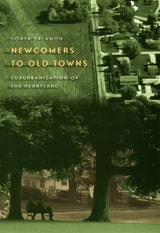
Newcomers to Old Towns
Suburbanization of the HeartlandSonya Salamon
University of Chicago Press, 2003
Although the death of the small town has been predicted for decades, during the 1990s the population of rural America actually increased by more than three million people. In this book, Sonya Salamon explores these rural newcomers and the impact they have on the social relationships, public spaces, and community resources of small town America.
Salamon draws on richly detailed ethnographic studies of six small towns in central Illinois, including a town with upscale subdivisions that lured wealthy professionals as well as towns whose agribusinesses drew working-class Mexicano migrants and immigrants. She finds that regardless of the class or ethnicity of the newcomers, if their social status differs relative to that of oldtimers, their effect on a town has been the same: suburbanization that erodes the close-knit small town community, with especially severe consequences for small town youth. To successfully combat the homogenization of the heartland, Salamon argues, newcomers must work with oldtimers so that together they sustain the vital aspects of community life and identity that first drew them to small towns.
An illustration of the recent revitalization of interest in the small town, Salamon's work provides a significant addition to the growing literature on the subject. Social scientists, sociologists, policymakers, and urban planners will appreciate this important contribution to the ongoing discussion of social capital and the transformation in the study and definition of communities.

Newcomers
Gentrification and Its DiscontentsMatthew L. Schuerman
University of Chicago Press, 2019
In Newcomers, journalist Matthew L. Schuerman explains how a phenomenon that began with good intentions has turned into one of the most vexing social problems of our time. He builds a national story using focused histories of northwest Brooklyn, San Francisco’s Mission District, and the onetime site of Chicago’s Cabrini-Green housing project, revealing both the commonalities among all three and the place-specific drivers of change. Schuerman argues that gentrification has become a too-easy flashpoint for all kinds of quasi-populist rage and pro-growth boosterism. In Newcomers, he doesn’t condemn gentrifiers as a whole, but rather articulates what it is they actually do, showing not only how community development can turn foul, but also instances when a “better” neighborhood truly results from changes that are good. Schuerman draws no easy conclusions, using his keen reportorial eye to create sharp, but fair, portraits of the people caught up in gentrification, the people who cause it, and its effects on the lives of everyone who calls a city home.

News at Work
Imitation in an Age of Information AbundancePablo J. Boczkowski
University of Chicago Press, 2010
Before news organizations began putting their content online, people got the news in print or on TV and almost always outside of the workplace. But nowadays, most of us keep an eye on the headlines from our desks at work, and we have become accustomed to instant access to a growing supply of constantly updated stories on the Web. This change in the amount of news available as well as how we consume it has been coupled with an unexpected development in editorial labor: rival news organizations can now keep tabs on the competition and imitate them, resulting in a decrease in the diversity of the news. Peeking inside the newsrooms where journalists create stories and the work settings where the public reads them, Pablo J. Boczkowski reveals why journalists contribute to the growing similarity of news—even though they dislike it—and why consumers acquiesce to a media system they find increasingly dissatisfying.
Comparing and contrasting two newspapers in Buenos Aires with similar developments in the United States, News at Work offers an enlightening perspective on living in a world with more information but less news.
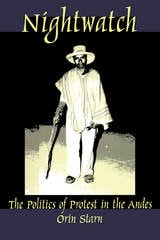
Nightwatch
The Politics of Protest in the AndesOrin Starn
Duke University Press, 1999
Drawing on fieldwork conducted over the course of a decade, Orin Starn chronicles the historical conditions that led to the formation of the rondas, the social and geographical expansion of the movement, and its gradual decline in the 1990s. Throughout this anecdotal yet deeply analytical account, the author relies on interviews with ronda participants, villagers, and Peru’s regional and national leaders to explore the role of women, the involvement of nongovernmental organizations, and struggles for leadership within the rondas. Starn moves easily from global to local contexts and from the fifteenth to the twentieth century, presenting this movement in a straightforward manner that makes it accessible to both specialists and nonspecialists.
An engagingly written story of village mobilization, Nightwatch is also a meditation on the nature of fieldwork, the representation of subaltern people, the relationship between resistance and power, and what it means to be politically active at the end of the century. It will appeal widely to scholars and students of anthropology, Latin American studies, cultural studies, history, subaltern studies, and those interested in the politics of social movements.
No Apocalypse, No Integration
Modernism and Postmodernism in Latin AmericaMartín Hopenhayn
Duke University Press, 2001
What form does the crisis of modernity take in Latin America when societies are politically demobilized and there is no revolutionary agenda in sight? How does postmodern criticism reflect on enlightenment and utopia in a region marked by incomplete modernization, new waves of privatization, great masses of excluded peoples, and profound sociocultural heterogeneity? In No Apocalypse, No Integration Martín Hopenhayn examines the social and philosophical implications of the triumph of neoliberalism and the collapse of leftist and state-sponsored social planning in Latin America.
With the failure of utopian movements that promised social change, the rupture of the link between the production of knowledge and practical intervention, and the defeat of modernization and development policy established after World War II, Latin American intellectuals and militants have been left at an impasse without a vital program of action. Hopenhayn analyzes these crises from a theoretical perspective and calls upon Latin American intellectuals to reevaluate their objects of study, their political reality, and their society’s cultural production, as well as to seek within their own history the elements for a new collective discourse. Challenging the notion that strict adherence to a single paradigm of action can rescue intellectual and cultural movements, Hopenhayn advocates a course of epistemological pluralism, arguing that such an approach values respect for difference and for cultural and theoretical diversity and heterodoxy.
This essay collection will appeal to readers of sociology, public policy, philosophy, cultural theory, and Latin American history and culture, as well as to those with an interest in Latin America’s current transition.

No Easy Walk
Newark, 1980-1993Helen M. Stummer
Temple University Press, 1994
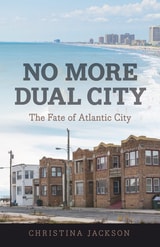
No More Dual City
The Fate of Atlantic CityChristina Jackson
Rutgers University Press, 2027
No More Dual City: The Fate of Atlantic City examines Atlantic City as a vivid case study of how Black communities endure and resist the forces of economic redevelopment, racialized planning, and environmental vulnerability. Drawing on five years of ethnographic research, Jackson reveals how the city’s famed tourism and casino economy depends upon, yet marginalizes, the historically Black Northside neighborhood. Through the concept of dualness, Jackson explores how racial capitalism produces both material and emotional divides, between growth and decay, visibility and exclusion, and belonging and dispossession. Combining first-person narrative, theory, and community storytelling, the book illuminates the “slow violence” of urban inequality and the creativity of residents who build rooted futures amid instability. No More Dual City reframes Atlantic City not as an anomaly but as a microcosm of racialized urban America, offering a compelling new way to think about sustainability, justice, and the right to stay in place.

No Place Like Home
Relationships and Family Life among Lesbians and Gay MenChristopher Carrington
University of Chicago Press, 1999
"Carefully separating stereotype from reality, Carrington investigates family in the gay and lesbian community. Relying upon interviews and observation, the author analyzes the loves and routings of 52 diverse lesbian, gay, and bisexual couples in the Bay area. . . . [He] closes the work with a discussion of the raging same-sex marriage debate and posits an enlightened solution to this dilemma." —Library Journal