248 books match the query 'Theology' and 6 start with n
cover of Native American Catholic Studies Reader: History and Theology

Native American Catholic Studies Reader

History and Theology

David J. Endres

Catholic University of America Press, 2022
Before there was an immigrant American Church, there was a Native American Church. The Native American Catholic Studies Reader offers an introduction to the story of how Native American Catholicism has developed over the centuries, beginning with the age of the missions and leading to inculturated, indigenous forms of religious expression. Though the Native-Christian relationship could be marked by tension, coercion, and even violence, the Christian faith took root among Native Americans and for those who accepted it and bequeathed it to future generations it became not an imposition, but a way of expressing Native identity. From the perspective of historians and theologians, the Native American Catholic Studies Reader offers a curated collection of essays divided into three sections: education and evangelization; tradition and transition; and Native American lives. Contributors include scholars currently working in the field: Mark Clatterbuck, Damian Costello, Conor J. Donnan, Ross Enochs, Allan Greer, Mark G. Thiel, and Christopher Vecsey, as well as selections from a past generation: Gerald McKevitt, SJ, and Carl F. Starkloff, SJ. These contributions explore the interaction of missionaries and tribal leaders, the relationship of traditional Native cosmology and religiosity to Christianity, and the role of geography and tribal consciousness in accepting and maintaining indigenous and religious identities. These readings highlight the state of the emergent field of Native-Catholic studies and suggest further avenues for research and publication. For scholars, teachers, and students, the Native American Catholic Studies Reader explores how the faith of the American Church’s eldest members became a means of expressing and celebrating language, family, and tribe.
[more]
cover of Nature's Prophet: Alfred Russel Wallace and His Evolution from Natural Selection to Natural Theology

Nature's Prophet

Alfred Russel Wallace and His Evolution from Natural Selection to Natural Theology

Michael A. Flannery

University of Alabama Press, 2018

An astute study of Alfred Russel Wallace’s path to natural theology.

A spiritualist, libertarian socialist, women’s rights advocate, and critic of Victorian social convention, Alfred Russel Wallace was in every sense a rebel who challenged the emergent scientific certainties of Victorian England by arguing for a natural world imbued with purpose and spiritual significance. Nature’s Prophet: Alfred Russel Wallace and His Evolution from Natural Selection to Natural Theology is a critical reassessment of Wallace’s path to natural theology and counters the dismissive narrative that Wallace’s theistic and sociopolitical positions are not to be taken seriously in the history and philosophy of science.

Author Michael A. Flannery provides a cogent and lucid account of a crucial—and often underappreciated—element of Wallace’s evolutionary worldview. As co-discoverer, with Charles Darwin, of the theory of natural selection, Wallace willingly took a backseat to the well-bred, better known scientist. Whereas Darwin held fast to his first published scientific explanations for the development of life on earth, Wallace continued to modify his thinking, refining his argument toward a more controversial metaphysical view which placed him within the highly charged intersection of biology and religion.

Despite considerable research into the naturalist’s life and work, Wallace’s own evolution from natural selection to natural theology has been largely unexplored; yet, as Flannery persuasively shows, it is readily demonstrated in his writings from 1843 until his death in 1913. Nature’s Prophet provides a detailed investigation of Wallace’s ideas, showing how, although he independently discovered the mechanism of natural selection, he at the same time came to hold a very different view of evolution from Darwin.

Ultimately, Flannery shows, Wallace’s reconsideration of the argument for design yields a more nuanced version of creative and purposeful theistic evolution and represents one of the most innovative contributions of its kind in the Victorian and Edwardian eras, profoundly influencing a later generation of scientists and intellectuals.
[more]
cover of New Narratives for Old: The Historical Method of Reading Early Christian Theology: Essays in Honor of Michel Rene Barnes

New Narratives for Old

The Historical Method of Reading Early Christian Theology: Essays in Honor of Michel Rene Barnes

Anthony Briggman

Catholic University of America Press, 2022
Guilds and conferences have grown up around historical theology, yet no volume has ever been dedicated to the definition and illustration of the method undergirding historical theology. This volume both defines and illustrates the methodology of historical theology, especially as it relates to the study of early Christianity, and situates historical theology among other methodological approaches to early Christianity, including confessional apologetics, constructive theology, and socio-cultural history. Historical theology as a discipline stands in contrast to these other approaches to the study of early Christianity. In contrast to systematic or constructive approaches, it remains essentially historical, with a desire to elucidate the past rather than speak to the present. In contrast to socio-historical approaches, it remains essentially theological, with a concern to value and understand the full complexity of the abstract thought world that stands behind the textual tradition of early Christian theology. Moreover, historical theology is characterized by the methodological presupposition that, unless good reason exists to think otherwise, the theological accounts of the ancient church articulate the genuine beliefs of their authors. The significance of this volume lies in the methodological definition it offers. The strength of this volume lies in the fact that its definition of the historical method of studying theology is not the work of a single mind but that of over twenty respected scholars, many of whom are leaders in the field. The volume begins with an introductory essay that orients readers to various approaches to early Christian literature, it moves to two technical essays that define the historical method of studying early Christian theology, and then it illustrates the practice of this method with more than twenty essays that cover a period stretching from the first century to the dawn of the seventh.
[more]
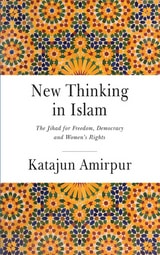
cover of New Thinking in Islam: The Jihad for Democracy, Freedom and Women’s Rights

New Thinking in Islam

The Jihad for Democracy, Freedom and Women’s Rights

Katajun Amirpur

Gingko, 2015

In Rethinking Islam, Katajun Amirpur argues that the West’s impression of Islam as a backward-looking faith, resistant to post-Enlightenment thinking, is misleading and—due to its effects on political discourse—damaging. Introducing readers to key thinkers and activists—such as Abu Zaid, a free-thinking Egyptian Qur’an scholar; Abdolkarim Soroush, an academic and former member of Khomeini’s Cultural Revolution Committee; and Amina Wadud, an American feminist who was the first woman to lead the faithful in Friday Prayer—Amirpur reveals a powerful yet lesser-known tradition of inquiry and dissent within Islam, one that is committed to democracy and human rights. By examining these and many other similar figures’ ideas, she reveals the many ways they reject fundamentalist assertions and instead call for a diversity of opinion, greater freedom, and equality of the sexes. 
[more]
cover of New Thought, Ancient Wisdom: The History and Future of the New Thought Movement

New Thought, Ancient Wisdom

The History and Future of the New Thought Movement

Glenn Mosley

Templeton Press, 2006


In this book, Glenn R. Mosley chronicles the history of the movement, including biographical sketches and the philosophies of pioneers and influential leaders linked to the movement's development and growth. These include Charles and Myrtle Fillmore, the founders of Unity; Ernest Holmes, founder of the Science of Mind; Mary Baker Eddy, founder of the Church of Christ Science; Ralph Waldo Trine, philosopher, mystic, teacher, and early mentor of New Thought; Joel Goldsmith, founder of The Infinite Way, among others. 

 

[more]
cover of Nietzsche and the Shadow of God

Nietzsche and the Shadow of God

Didier Franck; Translated from the French by Bettina Bergo and Philippe Farah

Northwestern University Press, 2011

In Nietzsche and the Shadow of God (Nietzsche et l’ombre de Dieu), his study of Nietzsche’s integral philosophical corpus, Franck revisits the fundamental concepts of Nietzsche’s thought, from the death of God and the will to power, to the body as the seat of thinking and valuing, and finally to his conception of a post-Christian justice. The work engages Heidegger’s interpretation of Nietzsche’s destruction of the Platonic-Christian worldview, showing how Heidegger’s hermeneutic overlooked Nietzsche’s powerful confrontation with revelation and justice by working through the Christian body, as set forth in the Epistles of Saint Paul and reread both by Martin Luther and by German Idealism. Franck shows systematically how Nietzsche “transvalued” the metaphysical tenets of the Christian body of believers. In so doing, he provides an unparalleled demonstration of the coherence of Nietzsche’s project and the ways in which the revaluation of values, amor fati, and the trials of eternal recurrence reshape the living self toward a creative existence beyond original sin—indeed, beyond an ethics of “good” versus “evil.” 

Bergo and Farah’s clear translation introduces this work to an English-speaking audience for the first time.
[more]