Results by title
1185 books match the query 'Travel' and 33 start with n
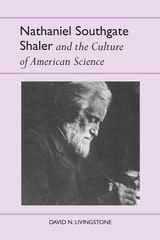
Nathaniel Southgate Shaler and the Culture of American Science
David N. Livingstone
University of Alabama Press, 1987
An influential American scientist and educator.
Nathaniel Southgate Shaler and the Culture of American Science is the first book-length study of the man who served a Harvard’s Professor of Geology and Paleontology during the Darwinian era. Shaler was a student of Louis Agassiz and went on to a successful, multifaceted career as a geologist, geographer, educator, humanist, and poet. Livingstone employs a thematic approach to chart Shaler’s career against the broader intellectual currents of America’s Gilded Age. After tracing Shaler’s life story from his boyhood in Kentucky through his student years at Harvard, his service with the Geological Survey, and eventually his years as Dean of Harvard’s Lawrence Scientific School, the author examines Shaler’s evolutionary vision and portrays his strategic efforts to reconcile the nineteenth century’s scientific and religious world views.
Livingstone assesses Shaler’s prolific writings, including those on race, which demonstrate a typical concern to provide a “scientific” perspective on the political questions of immigration restriction and eugenic control. IN addition, the book explores his efforts to interweave geography and history, particularly in relation to the American frontier; and his contributions to geology and geomorphology. The portrait of Shaler is completed with a review of his educational thinking and his role in establishing the American Summer School and in furthering scientific and technological education.
Nathaniel Southgate Shaler emerges from Livingstone’s work as a distinctive figure in the development of the new scientific culture, a figure who provides a focal point for assessing the impact of evolutionary naturalism on late-nineteenth-century American thought.
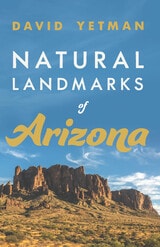
Natural Landmarks of Arizona
David Yetman
University of Arizona Press, 2021
Whether you have climbed these peaks many times, enjoy seeing them from your car window, or simply want to learn more about southwestern geology and history, reading Natural Landmarks of Arizona is a fascinating way to learn about the ancient and recent history of beloved places such as Cathedral Rock, Granite Dells, Kitt Peak, and many others. With Yetman as your guide, you can tuck this book into your glove box and hit the road with profound new knowledge about the towering natural monuments that define our beautiful Arizona landscapes.
Natural and Moral History of the Indies
José de Acosta
Duke University Press, 2002
A significant contribution to Renaissance Europe's thinking about the New World, Acosta's Natural and Moral History of the Indies reveals an effort to incorporate new information into a Christian, Renaissance worldview. He attempted to confirm for his European readers that a "new" continent did indeed exist and that human beings could and did live in equatorial climates. A keen observer and prescient thinker, Acosta hypothesized that Latin America's indigenous peoples migrated to the region from Asia, an idea put forth more than a century before Europeans learned of the Bering Strait. Acosta's work established a hierarchical classification of Amerindian peoples and thus contributed to what today is understood as the colonial difference in Renaissance European thinking.

Nature in Translation
Japanese Tourism Encounters the Canadian RockiesShiho Satsuka
Duke University Press, 2015
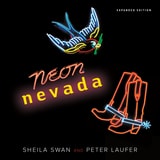
Neon Nevada
Expanded EditionSheila Swan
University of Nevada Press, 2023
Sheila Swan and Peter Laufer take readers on a journey, not only along the Las Vegas Strip, but down quiet, two-lane rural roads punctuated occasionally by a neon sign—those glistening beacons that represent civilization in our vast Great Basin. The photographers’ stunning work captures the argon violets, krypton purples, helium golds, and xenon blues that glow amidst the nighttime desert sky.
The book makes clear that neon is not just a medium for casino advertising. The colorful images of cowboys and cowgirls, animals, desert landscapes, and countless other creative designs all illuminate an aspect of Americana—the neon sign—that helps define Nevada and its businesses, from bars and casinos to hardware stores, restaurants, motels, and theaters that line the streets of the Silver State’s cities and towns, and those rural areas that are barely a blip on the map. With a compelling blend of striking full-color photographs and fascinating historical commentary, the book celebrates an artform that wholly embraces the state’s unique personality.
First published in 1994, this newly updated and expanded edition of Neon Nevada explores the resurgence of this artform during the last decade, which has resulted in an appreciation of Nevada neon that is not likely to fade. Swan and Laufer’s project, this survey of neon, casts the new edition as a defining source for neon scholars and attracts neon aficionados to what can only be defined as a medium as distinctive and interesting as Nevada itself.
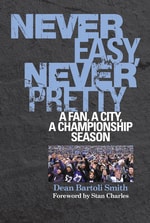
Never Easy, Never Pretty
A Fan, A City, A Championship SeasonDean Bartoli Smith
Temple University Press, 2013
When the Ravens won Super Bowl XLVII in New Orleans, it was a joyous moment for fans and team alike. For Dean Bartoli Smith, a lifelong Baltimore football fan and writer for The Baltimore Brew and Press Box, it was especially sweet. In Never Easy, Never Pretty, he recalls the ups and downs and ultimate thrills of a special season while also showing how a football team impacts its fans and its city. Smith recounts the season from start to glorious finish while interweaving Baltimore’s professional football history, telling his own story of growing up with the Colts, then gradually transferring adult loyalties to the new team in town, the Ravens. Family, friends, and other fans share their recollections, too, letting us see how a football team becomes part of a community.
Smith’s game-by-game recounting of an improbable season brings back all the excitement and uncertainty as the team starts strong, wobbles, then finds its inspiration and character in the playoffs. For each game Never Easy, Never Pretty features a diverse array of quotes, interviews, and commentary from players, broadcasters, and executives, including Joe Flacco, Ray Lewis, Art Donovan, Kevin Byrne, Steve Bisciotti, and Ozzie Newsome.
Never Easy, Never Pretty highlights the Ravens’ electrifying season and celebrates a team, a city, and its emotional landscape during an unlikely run to a Super Bowl victory. The result is an insightful and poignant book about much more than a championship season.
Never Easy, Never Pretty includes:
•The 4th & 29 play by Ray Rice against the Chargers
•
The game-saving first down
•
The 70-yard bomb from Joe Flacco to Jacoby Jones known as the “Mile High Miracle”
•Interviews with Rob Burnett, Keith Mills, Lenny Moore, Sean Landeta, Terrell Suggs, Tom Matte, and many others
•Photographs by long-time Ravens photographer Phil Hoffmann
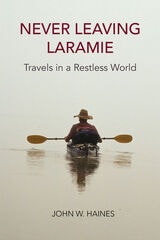
Never Leaving Laramie
Travels in a Restless WorldJohn W. Haines
Oregon State University Press, 2020
In the years since, Haines has added writer to a resume that already included baker and banker. In Never Leaving Laramie, he pulls stories about traveling into an exploration of home: How a rural home fueled and sustained a worldview. How beauty and danger blend together with humility and ego. How itchy feet combine with the comfort of home in Laramie, a tough railroad town turned college town and a launchpad for wanderers. Throughout, Haines returns to ideas of rivers and movement. He ends with a chapter on a different kind of travel, reflecting on how his accident did and did not change him and the varied ways that people can move through the world.
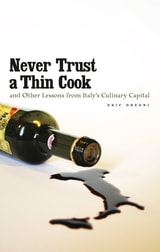
Never Trust a Thin Cook and Other Lessons from Italy’s Culinary Capital
Eric Dregni
University of Minnesota Press, 2024
The food-obsessed chronicle of an American’s three years in Italy—now available in paperback
I simply want to live in the place with the best food in the world. This dream led Eric Dregni to Italy, first to Milan and eventually to a small, fog-covered town to the north: Modena, the birthplace of balsamic vinegar, Ferrari, and Luciano Pavarotti. Never Trust a Thin Cook is a classic American abroad tale, brimming with adventures both expected and unexpected, awkward social moments, and most important, very good food.
Parmesan thieves. Tortellini based on the shape of Venus’s navel. Infiltrating the secret world of the balsamic vinegar elite. Life in Modena is a long way from the Leaning Tower of Pizza (the south Minneapolis pizzeria where Eric and his girlfriend and fellow traveler Katy first met), and while some Italians are impressed that “Minnesota” sounds like “minestrone,” they are soon learning what it means to live in a country where the word “safe” doesn’t actually exist—only “less dangerous.” Thankfully, another meal is always waiting, and Dregni revels in uncorking the secrets of Italian cuisine, such as how to guzzle espresso “corrected” with grappa and learning that mold really does make a good salami great.
What begins as a gastronomical quest soon becomes a revealing, authentic portrait of how Italians live and a hilarious demonstration of how American and Italian cultures differ. In Never Trust a Thin Cook, Eric Dregni dishes up the sometimes wild experiences of living abroad alongside the simple pleasures of Italian culture in perfect, complementary portions.
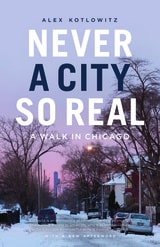
Never a City So Real
A Walk in ChicagoAlex Kotlowitz
University of Chicago Press, 2019
The book is a tour of the people of Chicago, those who have been Kotlowitz’s guide into this city’s – and by inference, this country’s – heart. Chicago, after all, is America’s city. Kotlowitz introduces us to the owner of a West Side soul food restaurant who believes in second chances, a steelworker turned history teacher, the “Diego Rivera of the projects,” and the lawyers and defendants who populate Chicago’s Criminal Courts Building. These empathic, intimate stories chronicle the city’s soul, its lifeblood.
This new edition features a new afterword from the author, which examines the state of the city today as seen from the double-paned windows of a pawnshop. Ultimately, Never a City So Real is a love letter to Chicago, a place that Kotlowitz describes as “a place that can tie me up in knots but a place that has been my muse, my friend, my joy.”
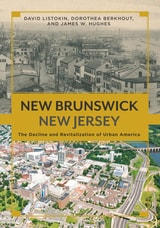
New Brunswick, New Jersey
The Decline and Revitalization of Urban AmericaListokin, David
Rutgers University Press, 2016
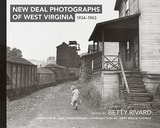
New Deal Photographs of West Virginia, 1934-1943
Betty Rivard
West Virginia University Press, 2012
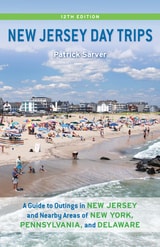
New Jersey Day Trips
A Guide to Outings in New Jersey and Nearby Areas of New York, Pennsylvania, and DelawareSarver, Patrick
Rutgers University Press, 0
Shades of F. Scott Fitzgerald roam Princeton as lads and lasses walk the well-clipped paths between venerable university halls, while russet leaves flutter overhead from rows of sturdy trees. Visions of knights and their fair maidens come to mind as explorers wander around Lambert Castle, an 1892 sandstone and granite mansion that looms like a medieval fortress with rounded towers and turrets on a hillside below the cliffs of the Garret Mountain Reservation. For art lovers who like to stroll on lush lawns and enjoy the beauty around them, Grounds for Sculpture is the place to be seen in New Jersey. And, then there's always the 127 miles of beach along the state's east coast that make perfect day trips for swimming, boating, fishing, and other fun activities.
Now in a revised and expanded 12th edition, New Jersey Day Trips offers everyone a fascinating journey through hundreds of tourist attractions in all corners of the Garden State. Plus, this comprehensive resource explores the most popular points just beyond the state's borders. Patrick Sarver has updated most entries and added more than twenty new points of interest to an already extensive list of destinations, making this the most sought-after guidebook about New Jersey. Attractions can be located easily by subject category, letting travelers zero in on places that appeal to them. Entries include descriptions, hours of operation, location, price range, telephone numbers, and Web sites, making this best seller a one-stop source of discovery for day trippers of all ages--an ideal travel guide for adults or families who live in or plan to visit New Jersey..
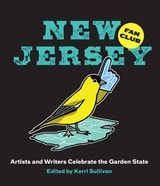
New Jersey Fan Club
Artists and Writers Celebrate the Garden StateKerri Sullivan
Rutgers University Press, 2022
Despite the many jokes and stereotypes about New Jersey and its residents, in reality the state is a wildly diverse place, home to a vast variety of landscapes, cultures, and people. There is no singular New Jersey experience, and the stories that its residents have to share about the state will surprise you.
New Jersey Fan Club: Artists and Writers Celebrate the Garden State is an eclectic anthology featuring personal essays, interviews, and comics from a broad group of established and emerging writers and artists who have something to say about New Jersey. It offers a multifaceted look at the state’s history and significance, told through narrative nonfiction, photographs, and illustrations.
New Jersey Fan Club is edited by Kerri Sullivan, founder of the popular Instagram account Jersey Collective (@jerseycollective), which features weekly takeovers by different New Jerseyans. This book functions the same way: it gives dozens of different contributors the chance to share what New Jersey looks like to them. The book is an exploration of how the same locale can shape people in different ways, and it will inspire readers to look at the Garden State with fresh eyes and appreciate its bounty of beautiful places and vibrant spaces.
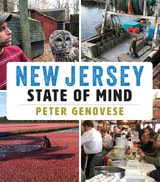
New Jersey State of Mind
Peter Genovese
Rutgers University Press, 2020
For this new book, Genovese spent months scouring the state for rich stories and fascinating locations. New Jersey State of Mind takes us on a journey to over twenty-five of these places and introduces us to the colorful characters who live and work there, from a demolition derby driver to a female craft brewer, and from a Cuban celebrity chef to a Portuguese pig breeder. He also reveals the many natural wonders that have earned New Jersey its “Garden State” nickname, from cranberry bogs to river tours to wild bird sanctuaries.
Collectively, these pieces paint a picture of a diverse state full of hard-working individuals who care for their communities. This book cuts through the myths and stereotypes surrounding the state and reveals the proud beating heart of the real New Jersey.
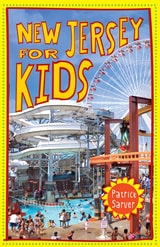
New Jersey for Kids
Sarver, Patrick
Rutgers University Press, 2012
Many parents in the Garden State are familiar with Great Adventure in Jackson, the boardwalk at Point Pleasant, and the Adventure Aquarium in Camden, but do they know about Kindermusik in Teaneck, the Young Chef’s Academy in Hillsborough, or the Buehler Challenger and Science Center in Paramus?
In New Jersey for Kids, Patrick Sarver provides parents with a handy reference guide offering hundreds of educational and entertaining ideas for children and their parents to explore and enjoy. Activities are designed specifically for kids ages 12 and under and cover a wide array of fun ways to enrich their intellectual lives, build their athletic skills, express themselves creatively, or just have room to play. The activities covered include:
- Robotics workshops
- Themed tea parties
- Plays and performances for children
- Museum tours, special exhibits, and programs for kids
- Pony rides and horseback riding lessons
- Specialized summer camps
- Arts and crafts classes
- Gymnastics classes
- Zoos and nature activities
- Hockey, soccer, and baseball clinics
- Acting and dancing lessons
- Play centers with slides, ball pits, and bounce castles
Busy parents no longer need to spend hours surfing the Web and scouting out resources to find nearby activities their kids might enjoy. New Jersey for Kids puts this information right in the palms of their hands. Chapters are organized by category so it is easy to locate just the right activities to suit an individual child’s interests, whether it’s a fun way to spend an afternoon or a class that might inspire a lifelong passion. Along with descriptions and commentary, listings include recommended age ranges, handicap accessibility, and estimated durations of activities as well as practical information on hours, price ranges, Web sites, and phone numbers.
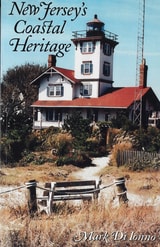
New Jersey's Coastal Heritage
A GuideDi Ionno, Mark
Rutgers University Press, 1997
Most people see the Jersey Shore as sun, sand, and surf . . . and hours in bumper-to-bumper traffic on the Garden State Parkway. But theres much more to the Shore!Long before the first hotel, miniature golf range, and amusement pier were built, explorers, sailors, and settlers were drawn to New Jerseys coast and left their mark upon it.
In this book, Mark Di Ionno invites you to join him in discovering New Jerseys rich and varied coastal heritage. Hell take you on a personal tour to explore the Sandy Hook Lighthouse and Spermaceti Cove Station, admire offbeat collections of saltwater taffy boxes and sand art in Atlantic City, spend an afternoon at Brigantine and unravel the legend of Captain Kidd, marvel at the skills of Tuckertons boatbuilders, discover New Jerseys own version of the Boston Tea Party in Greenwich, and find inspiration at Ocean Grove, a Methodist meeting place.
Organized by county and amply illustrated with photographs and maps, the guides entries give directions and information about hours, programs, and accessibility, and, above all, lively descriptions of the local history and cultural traditions that make each place special. Di Ionno includes many sites on the National Park Services Coastal Heritage Trail, but roves beyond the Trail to highlight a host of other wonderful museums, buildings, byways, and landmarks that could not be incorporated into the official trail.
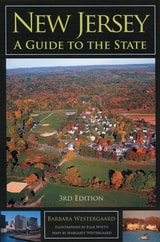
New Jersey
A Guide to the StateWestergaard, Barbara
Rutgers University Press, 2006
In the third edition of this classic guide, Barbara Westergaard surveys the state’s rich diversity while providing the most up-to-date information on several hundred of New Jersey’s towns, cities, and parks. Entries are arranged alphabetically with concise yet thorough descriptions detailing what there is to see and do in each community and its surrounding area and how each place is connected to its past. The book lists museums, parks, historical points of interest, natural and recreational areas, and many other attractions. There is even a guided tour of the New Jersey Turnpike—the most heavily traveled toll road in the country. Updated for this edition, the book includes new points of interest and population figures.
Whether you are a longtime resident or newcomer to New Jersey, a commuter, a visitor, or a neighbor from a nearby state, this easy-to-use, town-by-town guide will lead you to new discoveries.
Includes information on:
· towns and cities
· museums
· arts centers
· historic sites
· lighthouses
· nature centers
· animal refuges and zoos
· amusement parks
· wineries
· sports facilities
· planetariums
· parks and gardens
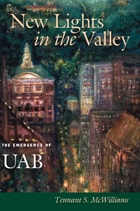
New Lights in the Valley
The Emergence of UABTennant S. McWilliams
University of Alabama Press, 2007
A scholarly narrative of UAB from its nascent beginnings through the mid 1990s.
While the economy and culture of the post—World War II South changed from an era of material capital (e.g., cotton and iron ore) to a period of social capital (intellectual development and networked approaches to social change), one of the most important components of urban life, the university, emerged as both a creator and a reflector of such modernization.
This is the case with Birmingham and its youthful institution of higher learning, the University of Alabama at Birmingham. From its early days as a struggling offshoot of the capstone campus in Tuscaloosa, UAB’s journey to its current status as a major university has been a bumpy but interesting one. Tennant McWilliams, a longtime UAB history professor, explores the whole range of historical considerations, including UAB’s similarities and connections to trans-Atlantic civic universities; the irony of the shift from Big Steel to Big Medicine in Birmingham; the visionary administrations of Joseph F. Volker and others; and the evolving decision to make non-medical life at UAB less of a commuter experience and more of a traditional campus experience.
McWilliams does not palliate the missteps and disputes that have, from time to time, impeded the institution’s progress. But he explains why, despite various hurdles and distractions, UAB has risen to be Alabama’s largest employer and can rightly boast that its complex of health care services, especially organ transplantation and neuroscience, as well as such fields as philosophy and psychology, are among the best in the nation.
New York in Quotations
Compiled by Jaqueline Mitchell
Bodleian Library Publishing, 2014
New York, Chicago, Los Angeles
America’s Global CitiesJanet Abu-Lughod
University of Minnesota Press, 2001
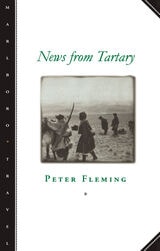
News from Tartary
A Journey from Peking to KashmirPeter Fleming
Northwestern University Press, 1999
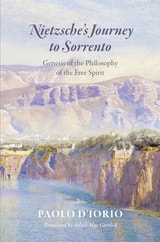
Nietzsche's Journey to Sorrento
Genesis of the Philosophy of the Free SpiritPaolo D'Iorio
University of Chicago Press, 2016
Nietzsche first voyaged to the south in the autumn of 1876, upon the invitation of his friend, Malwida von Meysenbug. The trip was an immediate success, reviving Nietzsche’s joyful and trusting sociability and fertilizing his creative spirit. Walking up and down the winding pathways of Sorrento and drawing on Nietzsche’s personal notebooks, D’Iorio tells the compelling story of Nietzsche’s metamorphosis beneath the Italian skies. It was here, D’Iorio shows, that Nietzsche broke intellectually with Wagner, where he decided to leave his post at Bâle, and where he drafted his first work of aphorisms, Human, All Too Human, which ushered in his mature era. A sun-soaked account of a philosopher with a notoriously overcast disposition, this book is a surprising travelogue through southern Italy and the history of philosophy alike.
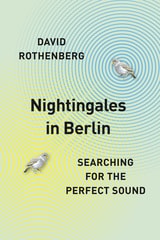
Nightingales in Berlin
Searching for the Perfect SoundDavid Rothenberg
University of Chicago Press, 2019
But have you ever listened closely to a nightingale’s song? It’s a strange and unsettling sort of composition—an eclectic assortment of chirps, whirs, trills, clicks, whistles, twitters, and gurgles. At times it is mellifluous, at others downright guttural. It is a rhythmic assault, always eluding capture. What happens if you decide to join in?
As philosopher and musician David Rothenberg shows in this searching and personal new book, the nightingale’s song is so peculiar in part because it reflects our own cacophony back at us. As vocal learners, nightingales acquire their music through the world around them, singing amidst the sounds of humanity in all its contradictions of noise and beauty, hard machinery and soft melody. Rather than try to capture a sound not made for us to understand, Rothenberg seeks these musical creatures out, clarinet in tow, and makes a new sound with them. He takes us to the urban landscape of Berlin—longtime home to nightingale colonies where the birds sing ever louder in order to be heard—and invites us to listen in on their remarkable collaboration as birds and instruments riff off of each other’s sounds. Through dialogue, travel records, sonograms, tours of Berlin’s city parks, and musings on the place animal music occupies in our collective imagination, Rothenberg takes us on a quest for a new sonic alchemy, a music impossible for any one species to make alone. In the tradition of The Hidden Life of Trees and The Invention of Nature, Rothenberg has written a provocative and accessible book to attune us ever closer to the natural environment around us.
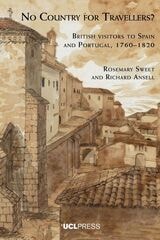
No Country for Travellers?
British Visitors to Spain and Portugal, 1760–1820Rosemary Sweet and Richard Ansell
University College London, 2025
Using extensive archival and printed sources left by contemporary travelers, No Country for Travellers? explores the rise and nature of British travel to Spain and Portugal in the late eighteenth and early nineteenth centuries. Not only is it the first book to address the trend of travelers to the Iberian Peninsula during this time, revealing the extent of British interest in Islamic Spain before the Romantic era, but it also brings to light the role of non-combatant travelers to Iberia during the Peninsular War. Beyond uncovering a previously overlooked dimension of the Peninsular War, this history contends with stereotypes of Iberia that were embedded in early modern confessional and civilizational hierarchies.

No Germs Allowed!
How to Avoid Infectious Diseases At Home and on the RoadWeinberg, Winkler G
Rutgers University Press, 1996
AIDS, tuberculosis, hepatitis, chickenpox, malaria, Lyme disease, salmonella, strep throat-no matter where you go or where you live, you are at risk from infectious disease. But there are ways you can protect yourself and your family!
The revised and expanded edition of this classic guide explains what you need to know to keep the germs away. From the infections of daily life, like the common cold and traveler's diarrhea, to dangerous, rare diseases such as plague, hantavirus, and invasive strep bacteria, to recent threats of mad cow disease, West Nile virus, SARS, and bioterrorism, this unique guide tells you:
- your chances of getting sick
- simple precautions you can take
- which vaccinations and shots are worthwhile
- how to avoid catching infections in the hospital
- special precautions to take if you are pregnant
- how to ward off infections even if you have chronic health problems or are HIV positive
- how to keep well while traveling
- what to eat-and not eat-on the road
- symptoms that signal trouble
- what illnesses you can get from bug bites and animals
- how to prevent sexually transmitted diseases
- who should get flu shots and why
- why you should see your doctor before you get sick
Dr. Winkler G. Weinberg lets you know what you need to worry about and what you don't.
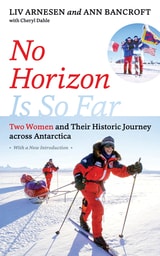
No Horizon Is So Far
Two Women and Their Historic Journey across AntarcticaLiv Arnesen
University of Minnesota Press, 2019
The extraordinary story of the first two women to cross Antarctica
The fascinating chronicle of Liv Arnesen and Ann Bancroft’s dramatic journey as the first two women to cross Antarctica, No Horizon Is So Far follows the explorers from the planning of their expedition through their brutal trek from the Norwegian sector all the way to McMurdo Station as they walked, skied, and ice-sailed for almost three months in temperatures reaching as low as -35°F, all while towing their 250-pound supply sledges across 1,700 miles of ice full of dangerous crevasses. Through website transmissions and satellite phone calls, Ann and Liv, two former schoolteachers, were able to broadcast their expedition to more than three million students in sixty-five countries to teach geography, science, and the importance of following your dreams.
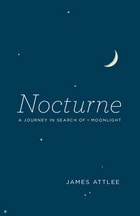
Nocturne
A Journey in Search of MoonlightJames Attlee
University of Chicago Press, 2011
“Nobody who has not taken one can imagine the beauty of a walk through Rome by full moon,” wrote Goethe in 1787. Sadly, the imagination is all we have today: in Rome, as in every other modern city, moonlight has been banished, replaced by the twenty-four-hour glow of streetlights in a world that never sleeps. Moonlight, for most of us, is no more.
So James Attlee set out to find it. Nocturne is the record of that journey, a traveler’s tale that takes readers on a dazzling nighttime trek that ranges across continents, from prehistory to the present, and through both the physical world and the realms of art and literature. Attlee attends a Buddhist full-moon ceremony in Japan, meets a moon jellyfish on a beach in Northern France, takes a moonlit hike in the Arizona desert, and experiences a lunar eclipse on New Year’s Eve atop the snowbound Welsh hills. Each locale is illuminated not just by the moonlight he seeks, but by the culture and history that define it. We learn about Mussolini’s pathological fear of moonlight; trace the connections between Caspar David Friedrich, Rudolf Hess, and the Apollo space mission; and meet the inventors of the Moonlight Collector in the American desert, who aim to cure all kinds of ailments with concentrated lunar rays. Svevo and Blake, Whistler and Hokusai, Li Po and Marinetti are all enlisted, as foils, friends, or fellow travelers, on Attlee’s journey.
Pulled by the moon like the tide, Attlee is firmly in a tradition of wandering pilgrims that stretches from Basho to Sebald; like them, he presents our familiar world anew.
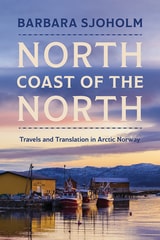
North Coast of the North
Travels and Translation in Arctic NorwayBarbara Sjoholm
University of Minnesota Press, 2027
A traveler and translator explores the multiethnic cultures, histories, and landscapes of Norway's high north
A companionable travel memoir about Arctic Norway, North Coast of the North details Barbara Sjoholm’s trip in the summer of 2024 to the northernmost region of the Scandinavian peninsula, a borderland that is home to a richly multicultural society, an expanding tourist industry, and landscapes bearing the marks of colonization, environmental damage, and climate change. A writer with decades of experience in the Nordic countries, Sjoholm flew from her home in the Pacific Northwest to Norway’s high north to research a collection of Sámi folktales and witness firsthand the settings from which the stories emerged.
Sjoholm’s journey takes her from Kirkenes, the final port on the Hurtigruten coastal route and an outpost on the Russian border, to the fertile farmlands of the Pasvik River Valley and to Indigenous archaeological sites and historic trading posts around the Varangerfjord. She voyages west along the Barents Sea coastline and south to Tromsø, past islands and inlets of surpassing beauty (as well as liquid gas plants and wind farms), and writes about the ongoing resource exploitation and local resistance to Norwegian and global corporate interests. North Coast of the North intertwines Sjoholm’s observations on the tragedies of World War II and the literature and folklore of the Sámi with her own warm memories of Norway, a country that never ceases to intrigue her.
An absorbing and expansive blend of travel writing, memoir, and reflections on translation, history, and literature, North Coast of the North is a vivid look at an often exoticized, frequently overlooked, yet increasingly important environmental and geopolitical region of Northern Europe.
Retail e-book files for this title are screen-reader friendly with images accompanied by short alt text and/or extended descriptions.
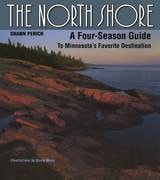
North Shore
A Four-Season Guide to Minnesota’s Favorite DestinationShawn Perich
University of Minnesota Press, 2003
The North Shore leads you along the wild and beautiful 150-mile inland coast that stretches from Duluth to the Canadian border. It guides you through historic sites, wilderness trails, and the seven state parks you’ll find along the way.
Read The North Shore as you plan your trip; then take it along and enjoy the milepost-by-milepost descriptions of Lake Superior’s scenic splendor. Fascinating details of the history, the people, and the events on the Shore offer you a multitude of options for making your trip more enjoyable.
The North Shore guides you to breathtaking vistas and exciting adventures. Explore river gorges and cascading waterfalls. Hike scenic wilderness trails. Experience four seasons of color and light. Ski miles of freshly groomed tracks. Fish Lake Superior and the tumbling streams that feed it. Explore pathways of early settlers.
The North Shore will help you plan adventures for all the seasons-from one-day excursions to two-week vacations. It’s a great gift for everyone who loves Minnesota’s favorite destination.
Shawn Perich is a free-lance writer who lives on the North Shore. His writing has been featured in numerous regional and national publications. He served as editor of the Cook County News-Herald in Grand Marais and as editor for Fins and Feathers magazine. Shawn and Vikki live in Hovland, Minnesota, on the edge of Lake Superior, with their yellow labrador, Casey.
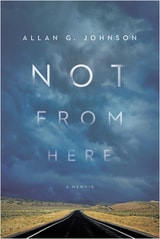
Not from Here
A MemoirAllan Johnson
Temple University Press, 2015
As a white man with Norwegian and English lineage, Johnson explores both America and the question of belonging to a place whose history holds the continuing legacy of the displacement, dispossession, and genocide of Native peoples.
More than a personal narrative, Not from Here illuminates the national silence around unresolved questions of accountability, race, and identity politics, and the dilemma of how to take responsibility for “a past we did not create.” Johnson’s story—about the past living in the present; of redemption, fate, family, tribe, and nation; of love and grief—raises profound questions about belonging, identity, and place.
Notes of Travel Through the Territory of Arizona
J. H. Marion; Edited by Donald M. Powell
University of Arizona Press, 1965
“A valuable and well written document, now made available to the general public and enhanced by the addition of an introduction and notes by Mr. Powell. . . . the publication will be of value to serious students of Arizona history.”—Journal of Arizona History
Nowhere in Africa
An Autobiographical NovelStefanie Zweig, Translated by Marlies Comjean
University of Wisconsin Press, 2007
Visit the Web site for the film at www.nowhereinafrica.com
Nowhere to Arrive
PoemsJenny Xie, foreword by Chris Abani
Northwestern University Press, 2017
At the chapbook's center are two long poems, titled "Phnom Penh Diptych: Wet Season" and "Phnom Penh Diptych: Dry Season," that examine the escapist narratives that draw tourists and expatriates to Cambodia, and the speaker’s own privileged positioning.
On a formal level, the poems in Nowhere to Arrive make room for the unsaid and that which cannot be articulated. Here, we have a vocabulary of silence alongside stark imagistic juxtapositions, poems that celebrate compression and the force of paratactic constructions. Attentiveness and concentration emerge as virtues, as the speaker surveys the vast territory of the present with a wakeful gaze.