Results by title
644 books match the query 'Wars & Conflicts' and 12 start with n
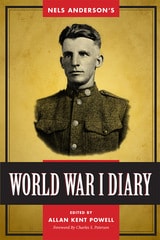
Nels Anderson’s World War I Diary
Allan Kent Powell
University of Utah Press, 2013
Nels Anderson’s World War I Diary provides a rare glimpse into the wartime experiences of one of the most well-respected sociologists of the twentieth century, the renowned author of The Hobo (1920) and Desert Saints: The Mormon Frontier in Utah (1942). Anderson, a keen observer of people, places, and events his entire life, joined the U.S. Army in 1918 at the age of 29 and was sent to Europe to fight as part of the Allied Expeditionary Force (AEF) under General Pershing. Because keeping a journal was strongly discouraged among American forces during WWI, particularly among the rank-and-file soldiers, Anderson’s diary stands as a rare gem. Furthermore, it is the only known account of war service during WWI by a member of the LDS Church. Anderson joined the Mormon faith after accepting the hospitality of an extended Mormon ranching family during his travels throughout the American West as a working hobo.
Anderson’s accounts of the St. Mihiel and Meuse-Argonne offensives are particularly remarkable given the challenges of keeping a detailed journal amidst the chaos and suffering of the war’s Western Front. His insights into the depravity and callousness of war are buttressed with intimate human portraits of those to whom he was closest. The war years provided many formative experiences that would prove to have a lasting influence on Anderson’s views regarding the working poor, authority, and human values; this would come to bear heavily on his later work as a pioneering sociologist at the University of Chicago, where he helped establish participant observation as a research method. The many introspective entries contained in this volume will be of reat interest to military historians and history buffs as well as to those in the social sciences looking to find the intellectual origins of Anderson’s later work in the burgeoning field of sociology.
Winner of the Army Historical Foundation Distinguished Writing Award for Journals, Memoirs, and Letters.
Nightmare on Iwo Jima
A Marine in CombatPatrick F. Caruso, with a foreword by David G. Rathgeber
University of Alabama Press, 2007
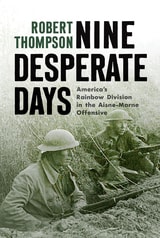
Nine Desperate Days
America's Rainbow Division in the Aisne-Marne OffensiveRobert Thompson
Westholme Publishing, 2022
American forces entered World War I combat in October 1917, but it was not until July 1918 that they went on the offensive for the first time. Among the units selected for this operation was the 42nd Division, or the “Rainbow Division” as it was known popularly. This division, which was composed of National Guard units from twenty-six states, including Joyce Kilmer’s 69th New York Infantry, would spend 164 days in combat, a number exceeded by only two other American divisions. However, it was the nine days from July 25 to August 2, 1918 that were the most terrible and heroic in the division’s history. General of the Army Douglas MacArthur, who served as the division’s chief of staff, later said of the Rainbow Division’s fighting during those pivotal days, “There was neither rest nor mercy.” During those nine days, the Rainbow Division would spearhead the Allied attack in the Aisne-Marne region, the final phase of the Second Battle of the Marne, which saw the last major German offensive on the Western Front defeated. Unfortunately, American leadership proved to be completely unprepared for a dynamic war of maneuver. Basing decisions on wildly inaccurate information about the Germans, senior commanders ordered the men of the Rainbow Division to make ill-advised assaults again and again with little support. Facing an enemy who was determined to hold itspositions, these National Guardsmen fought with courage and determination to gain what was often only yards of ground, and did so at a deadly cost.
In Nine Desperate Days: America’s Rainbow Division in the Aisne-Marne Offensive, historian Robert Thompson chronicles the hardships and tenacity of the men from the 42nd Division during this pivotal campaign. The Americans did not break despite heavy losses, and were able to drive the Germans back from territory they initially gained. The efforts of the Rainbow Division during Aisne-Marne were key to the ultimate Allied victory and are a symbol of American valor and sacrifice during the “war to end all wars.”
Nisei
The Quiet Americans, Revised EditionBill Hosokawa
University Press of Colorado, 2002
As Hosokawa additionally demonstrates, since World War II, Japanese Americans have achieved exceptional social, economic, and political progress. Their efforts led to apologies by four U.S. presidents for wartime injustices and redress through the landmark Civil Liberties Act of 1988. Brought up-to-date in this newly revised edition, Nisei details the transformation of these "quiet Americans" from despised security risks to respected citizens.
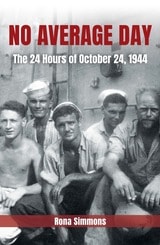
No Average Day
The 24 Hours of October 24, 1944Rona Simmons
University of Missouri Press, 2024
On Tuesday, October 24, 1944, nearly three years after the United States entered World War II, over 2,600 Americans perished—more than on any other single day of the conflict—yet the day remains overshadowed by more widely remembered dates in WWII history. Drawing from the accounts of men from diverse backgrounds who served in the U.S. Army, Navy, Marines, and Air Corps, Rona Simmons offers a gripping retelling of the fateful day, hour by hour and incident by incident. The book begins with Army Private First Class Paul Miller’s demise in a prisoner of war camp and ends with the death of Navy Seaman Second Class Wanza E. Matthews after the Japanese submarine I-56 attacked his ship off New Guinea. The sinking of the Japanese “hellship” Arisan Maru—a lesser-known tragedy of the war—looms large, deftly interwoven through each part of the narrative.
Perhaps the most compelling aspect of No Average Day is its attention to the human side of conflict, telling the stories of ordinary individuals—clerks, radio operators, cooks, sailors, machinist mates, riflemen, and pilots and their air crews—as they grapple with the horrors of the war. Despite its narrow focus, or perhaps because of it, No Average Day reveals the vastness of World War II through a consideration of the largely overlooked events that unfolded on what, for members of the US Armed Forces, was its deadliest day.
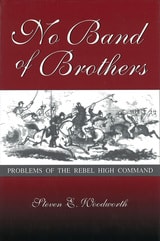
No Band of Brothers
Problems of the Rebel High CommandSteven E. Woodworth
University of Missouri Press, 1999
The Civil War was barely over before Southerners and other students of the war began to examine the Confederate high command in search of an explanation for the South's failure. Although years of research failed to show that the South's defeat was due to a single, overriding cause, the actions of the Southern leaders during the war were certainly among the reasons the South lost the war.
In No Band of Brothers, Steven Woodworth explores, through a series of essays, various facets of the way the Confederacy waged its unsuccessful war for secession. He examines Jefferson Davis and some of his more important generals, including Pierre G. T. Beauregard, Leonidas Polk, Joseph E. Johnston, Robert E. Lee, James Longstreet, and Thomas J. "Stonewall" Jackson; the Confederacy's strategic plans; and the South's success in making competent officers out of men with very little military preparation.
Woodworth particularly looks at the personalities and personal relationships that affected the course and outcome of the war. What made a good general? What could make an otherwise able man a failure as a general? What role did personal friendships or animosities play in the Confederacy's top command assignments and decisions? How successful was the Confederacy in making competent generals out of its civilian leaders? In what ways did Jefferson Davis succeed or fail in maximizing the chances for the success of his cause?
In analyzing the Confederate leadership, Woodworth reveals some weaknesses, many strengths, and much new information. No Band of Brothers will be an important addition to Civil War scholarship and will be welcomed by professional historians, amateur historians, students, and the general reader alike.
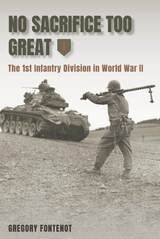
No Sacrifice Too Great
The 1st Infantry Division in World War IIGregory Fontenot
University of Missouri Press, 2027
The U.S. 1st Infantry Division (1st ID), familiarly known as the Big Red One, adapted to dynamic battlefield conditions throughout the course of its deployment during World War II by innovating and altering behavior, including tactics, techniques, and procedures. Both the Division’s leaders and soldiers accomplished this by thinking critically about their experiences in combat and wasting little time in putting lessons learned to good use. Simply put, they learned on the job—in battle and after battle—and did so quickly.
In telling the Division’s WWII story, which includes an extensive photographic essay featuring many previously unpublished images, Gregory Fontenot includes the stories of individual members of the Big Red One, from high-ranking officers to enlisted men fresh off the streets of Brooklyn, both during and after the conflict. Colonel Fontenot’s rare ability to combine expert analysis with compelling narrative history makes No Sacrifice Too Great an absorbing read for anyone interested in the military history of the United States.
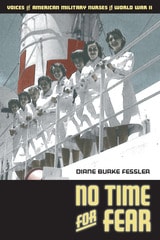
No Time for Fear
Voices of American Military Nurses in World War IIDiane Burke Fessler
Michigan State University Press, 1996
No Time for Fear summons the voices of more than 100 women who served as nurses overseas during World War II, letting them tell their story as no one else can. Fessler has meticulously compiled and transcribed more than 200 interviews with American military nurses of the Army, Army Air Force, and Navy who were present in all theaters of WWII. Their stories bring to life horrific tales of illness and hardship, blinding blizzards, and near starvation—all faced with courage, tenacity, and even good humor. This unique oral-history collection makes available to readers an important counterpoint to the seemingly endless discussions of strategy, planning, and troop movement that often characterize discussions of the Second World War.
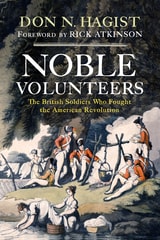
Noble Volunteers
The British Soldiers Who Fought the American RevolutionDon N. Hagist
Westholme Publishing, 2025
Winner of the 2020 American Revolution Roundtable of Philadelphia Book of the Year
Redcoats. For Americans, the word brings to mind the occupying army that attempted to crush the Revolutionary War. There was more to these soldiers than their red uniforms, but the individuals who formed the ranks are seldom described in any detail in historical literature, leaving unanswered questions. Who were these men? Why did they join the army? Where did they go when the war was over?
In Noble Volunteers: The British Soldiers Who Fought the American Revolution, Don N. Hagist brings life to these soldiers, describing the training, experiences, and outcomes of British soldiers who fought during the Revolution. Drawing on thousands of military records and other primary sources in British, American, and Canadian archives, and the writings of dozens of officers and soldiers, Noble Volunteers shows how a peacetime army responded to the onset of war, how professional soldiers adapted quickly and effectively to become tactically dominant, and what became of the thousands of career soldiers once the war was over.
In this historical tour de force, introduced by Pulitzer Prize winner Rick Atkinson, Hagist dispels long-held myths, revealing how remarkably diverse British soldiers were. They represented a variety of ages, nationalities, and socioeconomic backgrounds, and many had joined the army as a peacetime career, only to find themselves fighting a war on another continent in often brutal conditions. Against the sweeping backdrop of the war, Hagist directs his focus on the small picture, illuminating the moments in an individual soldier’s life—those hours spent nursing a fever while standing sentry in the bitter cold, or writing a letter to a wife back home. What emerges from these vignettes is the understanding that while these were “common” soldiers, each soldier was completely unique, for, as Hagist writes, “There was no ‘typical’ British soldier.”

Normandy to the Bulge
An American GI in Europe During World War IIRichard Courtney
Southern Illinois University Press, 1997
Basing this compelling war memoir on his original World War II diary, Pfc. Richard D. Courtney tells what it was like to be a combat infantryman in the greatest and most destructive war in history.
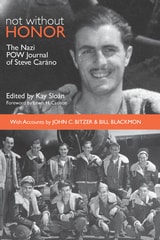
Not Without Honor
The Nazi POW Journal of Steve Carano; With Accounts by John C. Bitzer and Bill BlackmonKay Sloan
University of Arkansas Press, 2008
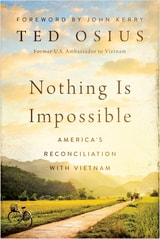
Nothing Is Impossible
America's Reconciliation with VietnamTed Osius
Rutgers University Press, 2022
Ted Osius, former ambassador during the Obama administration, offers a vivid account, starting in the 1990s, of the various forms of diplomacy that made this reconciliation possible. He considers the leaders who put aside past traumas to work on creating a brighter future, including senators John McCain and John Kerry, two Vietnam veterans and ideological opponents who set aside their differences for a greater cause, and Pete Peterson—the former POW who became the first U.S. ambassador to a new Vietnam. Osius also draws upon his own experiences working first-hand with various Vietnamese leaders and traveling the country on bicycle to spotlight the ordinary Vietnamese people who have helped bring about their nation’s extraordinary renaissance.
With a foreword by former Secretary of State John Kerry, Nothing Is Impossible tells an inspiring story of how international diplomacy can create a better world.