Results by title
1296 books match the query 'Women authors' and 33 start with n
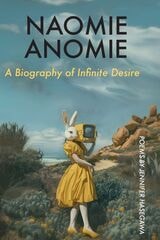
NAOMIE ANOMIE
A Biography of Infinite DesireJennifer Hasegawa
Omnidawn, 2025
Jennifer Hasegawa’s NAOMIE ANOMIE: A Biography of Infinite Desire, is an experimental poetic take on biography, growing increasingly surreal as it follows the truths behind its unreliable narrator through paradoxes rendered in luxurious detail. This book is a portrait of a flawed life, a call for attention to the looming ecological crisis, and a lyrical experiment in truth-telling.
Feeling ever-increasing existential strain leading up to the COVID-19 pandemic and culminating in her decision to no longer venture outside of her apartment, Naomie is not surprised to find her name is an anagram for anomie, a term for the breakdown of social norms. In these pages is a meticulous account of everything that went wrong in Naomie’s five decades of life. We find retellings of a life’s most significant moments—not because they are sources of pride, but because they stand as the only decipherable moments of humanity amid a world of static. This story in verse acts as a survival guide, romance novel, liberation handbook, pulp thriller, and jokebook for those who will live through ongoing plagues, environmental change, total AI integration, water wars, and cyberattacks and who will come out the other side ready to restart.
NEW WOMAN AND THE EMPIRE
Iveta Jusová
The Ohio State University Press, 2005
Naked Wanting
Margo Tamez
University of Arizona Press, 2003
Margo Tamez’s voice is that of the cicada and the cricket, the raven and the crane. In this volume of poetry, she shows us that the earth is an erotic current linking all beings, a vibrant network of birth, death, and rebirth. A sacred intertwining from which we as humans have become disconnected. Tamez shares the perspective of other creatures in images that remind us of Nature's beauty and fragility. An invocation of birds: “Sudden hum / wings touching / wings in swift turn / hush / a fast red out of the flux.” An appreciation for the delicacy of insects, for spiderwebs “like a hundred needle-thin tubes of blown glass.”
Here too are reflections on childbirth and children—and on miscarriage, when damage inflicted on the environment by herbicides comes back to haunt all of us in our skin and bones, our very wombs. Warning of “the chemical cocktail seeping into the air ducts,” she brings the voice of someone who has experienced firsthand what happens when our land and water are compromised. For Tamez, earth, food, and family are the essentials of life, and we ignore them at our own peril. “If a person / does not admit the peril . . . that becomes a dangerous / form of existence.”
Written with the wisdom of one who knows and loves the land, her lyrical meditations speak to the naked wanting in us all.
Nancy Drew and Company
Culture, Gender, and Girls’ SeriesEdited by Sherrie A. Inness
University of Wisconsin Press, 1997
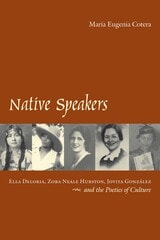
Native Speakers
Ella Deloria, Zora Neale Hurston, Jovita Gonzalez, and the Poetics of CultureBy María Eugenia Cotera
University of Texas Press, 2008
Gloria Anzaldua Book Prize, National Women's Studies Association, 2009
In the early twentieth century, three women of color helped shape a new world of ethnographic discovery. Ella Cara Deloria, a Sioux woman from South Dakota, Zora Neale Hurston, an African American woman from Florida, and Jovita González, a Mexican American woman from the Texas borderlands, achieved renown in the fields of folklore studies, anthropology, and ethnolinguistics during the 1920s and 1930s. While all three collaborated with leading male intellectuals in these disciplines to produce innovative ethnographic accounts of their own communities, they also turned away from ethnographic meaning making at key points in their careers and explored the realm of storytelling through vivid mixed-genre novels centered on the lives of women.
In this book, Cotera offers an intellectual history situated in the "borderlands" between conventional accounts of anthropology, women's history, and African American, Mexican American and Native American intellectual genealogies. At its core is also a meditation on what it means to draw three women—from disparate though nevertheless interconnected histories of marginalization—into conversation with one another. Can such a conversation reveal a shared history that has been erased due to institutional racism, sexism, and simple neglect? Is there a mode of comparative reading that can explore their points of connection even as it remains attentive to their differences? These are the questions at the core of this book, which offers not only a corrective history centered on the lives of women of color intellectuals, but also a methodology for comparative analysis shaped by their visions of the world.
Nebulous Vertigo
Belle Ling
Tupelo Press, 2025
The realm that belongs to Nebulous Vertigo is both visceral and vibrant, and it is mysteriously familiar. If you come close to it, you will hear how rains eat, how a silken tofu revolts, how the Chinese word for “beans” turns into a speaking persona, and how a telephone bridges the surviving and the afterlife. In Nebulous Vertigo, everyday life is inevitably lost to the inevitable fate. And yet, with unexpected quivers, our fate and life keep surprising us.
Traveling through the cha chaan teng in Hong Kong, you can hear how Mrs. Suen, Mr. Yuen, and Waiter Kuen carry out intriguing conversations; astounded by the night sky in Paris, you will see how constellations narrate the lovers’ quirky destiny; and all the way through the Sayama Hills in Tokorozawa, you will be surprised by the turnings and upturnings of the myths told by a Japanese Uncle. Nebulous Vertigo, as its title beckons, “sighs an unreal cloud / for the fated sun to rise.” If fate can never be changed, how can we embrace its weaving? Every attempt, as the poems suggest, can be calmingly adventurous, unobvious yet magnanimous.
Negotiating Difference
Race, Gender, and the Politics of PositionalityMichael Awkward
University of Chicago Press, 1995
From Spike Lee's She's Gotta Have It to Michael Jackson's physical transmutations, from Toni Morrison's Song of Solomon to August Wilson's Fences, from male scholars' investments in feminism to white scholars' in black texts—Awkward explores cultural moments that challenge the exclusive critical authority of race and gender. In each instance he confronts the question: What do artists, scholars, and others concerned with representations of Afro-American life make of the view that gender, race, and sexuality circumscribe their own and others' lives and narratives? Throughout he demonstrates the perils and merits of the sort of "boundary crossing" this book ultimately makes: a black male feminism.
In pursuing a black male feminist criticism, Awkward's study acknowledges the complexities of interpretation in an age when a variety of powerful discourses have proliferated on the subject of racial, gendered, and sexual difference; at the same time, it identifies this proliferation as an opportunity to negotiate seemingly fixed cultural and critical positions.
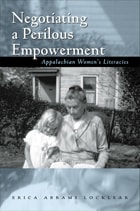
Negotiating a Perilous Empowerment
Appalachian Women’s LiteraciesErica Abrams Locklear
Ohio University Press, 2011
In many parts of Appalachia, family ties run deep, constituting an important part of an individual’s sense of self. In some cases, when Appalachian learners seek new forms of knowledge, those family ties can be challenged by the accusation that they have gotten above their raisings, a charge that can have a lasting impact on family and community acceptance. Those who advocate literacy sometimes ignore an important fact — although empowering, newly acquired literacies can create identity conflicts for learners, especially Appalachian women. In Negotiating a Perilous Empowerment, Erica Abrams Locklear explores these literacy-initiated conflicts, analyzing how authors from the region portray them in their fiction and creative nonfiction.
Abrams Locklear blends literacy studies with literary criticism to analyze the central female characters in the works of Harriette Simpson Arnow, Linda Scott DeRosier, Denise Giardina, and Lee Smith. She shows how these authors deftly overturn stereotypes of an illiterate Appalachia by creating highly literate characters, women who not only cherish the power of words but also push the boundaries of what literacy means.
Negotiating a Perilous Empowerment includes in-depth interviews with Linda Scott DeRosier and Lee Smith, making this an insightful study of an important literary genre.

Negritude Women
T. Denean Sharpley-Whiting
University of Minnesota Press, 2002
Rediscovers the crucial role that women played in the influential Negritude movement.
The Negritude movement, which signaled the awakening of a pan-African consciousness among black French intellectuals, has been understood almost exclusively in terms of the contributions of its male founders: Aimé Césaire, Léopold Sédar Senghor, and Léon G. Damas. This masculine genealogy has completely overshadowed the central role played by French-speaking black women in its creation and evolution. In Negritude Women, T. Denean Sharpley-Whiting offers a long-overdue corrective, revealing the contributions made by the women who were not merely integral to the success of the movement, but often in its vanguard.
Through such disparate tactics as Lacascade’s use of Creole expressions in her French prose writings, the literary salon and journal founded by the Martinique-born Nardal sisters, and Roussy-Césaire’s revolutionary blend of surrealism and Negritude in the pages of Tropiques, the journal she founded with her husband, these four remarkable women made vital contributions. In exploring their influence on the development of themes central to Negritude-black humanism, the affirmation of black peoples and their cultures, and the rehabilitation of Africa-Sharpley-Whiting provides the movement’s first genuinely inclusive history.
New Black Feminist Criticism, 1985-2000
Barbara Christian. Edited by Gloria Bowles, M. Giulia Fabi, and Arlene Keizer
University of Illinois Press, 2007

New Hope
Ruth Suckow
University of Iowa Press, 1998
A writer of wide experience, Ruth Suckow nevertheless remained focused on small-town life; one could even call her the Jane Austen of small-town America. Many of her characters were the “sparrows of Iowa,” ordinary folks whom she made extraordinary by writing about them. In her 1942 novel about the little community of New Hope, written during the desperate days of World War II, life is marked by unusual optimism, openness, mutual care, trust, communal spirit, democracy, and above all light.
Life in New Hope recaptures a feeling of youth that would seem overly idealistic if it were not for Suckow's unflinching realism. As seen through the eyes of its Edenic main characters—Clarence Miller, son of the town's banker and chief booster, and Delight Greenwood, daughter of the Congregational minister who serves New Hope during the two years of the novel—the town itself is the protagonist. Death, crime, and heartbreak intervene, but a sense of freedom and possibility, “where all were to share equally in the boundlessness of light and hope,” always illuminates the town. This sunlit novel, with its blend of romance and reality, reintroduces a regional writer whom H. L. Mencken called “unquestionably the most remarkable woman …writing stories in the republic.”
New Latina Narrative
The Feminine Space of Postmodern EthnicityEllen McCracken
University of Arizona Press, 1999
New Observations on the French Language, with Praises of Illustrious Learned Women
Marguerite Buffet
Iter Press, 2023
According to the few historical records that mention Marguerite Buffet, she lived her entire life in seventeenth-century Paris where she taught French to aristocratic women. Buffet’s vivid example of proper language use in New Observations on the French Language offers a rare glimpse into the life, habits, and culture of seventeenth-century France. She describes common errors in contemporary language use and gives examples of correct expressions for speaking and writing all the while encouraging women to aspire to higher levels of intellectual achievement.
In addition, her Praises of Illustrious Learned Women, a catalog of biographies of women who displayed exemplary intellect, wit, and conversation, includes a number of the author’s contemporaries such as Anna Maria van Schurman and Madeleine de Scudéry. Buffet’s collected praises of these women, many of whom were connected to the court of Louis XIV, show her unique position as both a participant in and historian of the intellectual and social world of the French salon.
This volume presents Buffet’s work in its near entirety for the first time in English, bringing to light Buffet’s unique contribution to the centuries-long debate concerning the status of women known as the querelle des femmes.
New Visions of Community in Contemporary American Fiction
Tan, Kingsolver, Castillo, MorrisonMagali Cornier Michael
University of Iowa Press, 2006

New Women, New Novels
Ardis, Ann
Rutgers University Press, 1990
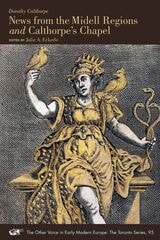
News from the Midell Regions and Calthorpe’s Chapel
Dorothy Calthorpe
Iter Press, 2022
This first print edition of two extant manuscripts by Dorothy Calthorpe (1648–1693) introduces a new seventeenth-century woman writer to the growing canon of early modern female authors. The edition provides transcriptions of the manuscripts and Calthorpe’s will, as well as a hefty apparatus that features a comprehensive introduction to Calthorpe, her family, and her work; a glossary of persons who figured in her writing and her life; and two genealogical charts. Calthorpe’s writings (including both prose and verse and ranging from Petrarchan love poems to roman à clef and devotional verse), and the thoughtfully constructed and illustrated volumes in which her texts appear, demonstrate the rich intellectual life of a previously unknown female writer and provide a compelling example of Restoration manuscript production.
Nick of Time
Women Write about Art and AgingJulie Landsman
University of Minnesota Press, 2026
A bold, collective portrait of the sustaining force of art while aging
Nick of Time celebrates the artistic community of the Twin Cities and the wisdom that comes with age. Bringing together the voices of women creatives over the age of sixty-five, this collection is as varied as the artists’ vocations, spanning from narrative prose to poetry, essay, monologue, letters, historical reflection, and more. As the contributors examine their lived experiences, hopes and regrets, joy and grief while traversing their last decades of life, they serve as a guiding beacon for others navigating the intersection of creativity and aging—as well as a ballast against its inevitable challenges. They write with refreshing honesty about feeling invisible in older age, receiving late recognition, or being dismissed as hair turns gray and wrinkles appear. Their openness provides strength and support for us all.
A beautiful collection of pieces from established and emerging writers, painters, singers, photographers, musicians, playwrights, dancers, sculptors, and beyond, Nick of Time traces the contours of both the commonalities and the differences that can be found in the creative life of an aging artist. This generous book is a provocative meditation on finding power in age, demonstrating that creativity is an integral part of a full life as well as a lifelong pursuit.
Contributors: Shari Albers, Hend Al-Mansour, Hazel Belvo, Chris Cinque, Venus de Mars, Julia Dinsmore, Mary Moore Easter, Jan Elftmann, Georgia A. Greeley, Kathryn Haddad, Kim Hines, Carolyn Holbrook, Adar Kahin, Deborah Keenan, Amoke Kubat, Fiona McCrae, Teresa Ortiz, Rebecca Pavlenko, Marcie R. Rendon, Joyce Sutphen, Suzanne Thao, JoAnn Verburg, Diane Wilson, Mieko Yamazaki.
Retail e-book files for this title are screen-reader friendly.
Nightshade
Andrea Cohen
Four Way Books, 2019

Nineteenth-Century Women at the Movies
Adapting Classic Women's Fiction to FilmBarbara Tepa Lupack
University of Wisconsin Press, 1999
This volume’s twelve essays offer critical insights not only into the visions of the novelist and the filmmaker but also into contemporary cultural concerns. The adaptations of novels by eight popular writers are analyzied: Mary Shelley, Jane Austen, Charlotte Brontë, Emily Brontë, Harriet Beecher Stowe, Louisa May Alcott, Ouida, and George Eliot.
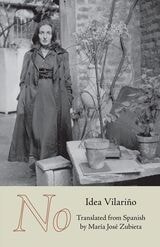
No
Idea Vilariño
Carnegie Mellon University Press, 2025
In No, Idea Vilariño strips poetry to its essence—distilling love, loss, and the inexorable passage of time into spare yet searing verses. Renowned as a leading voice of Uruguay’s “Generation of 45,” Vilariño’s final collection is at once a defiant refusal and an unrelenting assertion of existence. From its stark nihilism emerges a poetic voice that insists on being heard, even as it denies life’s joys.
Now available in English for the first time, No has been masterfully translated by María José Zubieta, in collaboration with poet and musicologist J. Martin Daughtry. This bilingual edition preserves Vilariño’s rhythmic precision and existential intensity, giving readers a rare glimpse into a body of work that continues to resonate far beyond its origins. No is a testament to the power of poetry to confront the void, and to carve meaning from silence.
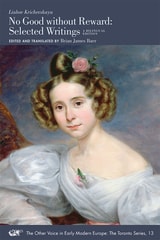
No Good without Reward
Selected Writings: A Bilingual EditionLiubov Krichevskaya
Iter Press, 2011
—Helena Goscilo
Chair and Professor of Slavic, The Ohio State University
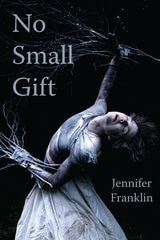
No Small Gift
Jennifer Franklin
Four Way Books, 2018
Nomadic Voices of Exile
Feminine Identity in the Francophone Literature of the MaghrebValérie K. Orlando
Ohio University Press, 1999
Contemporary French writing on the Maghreb—that part of Africa above the Sahara—is truly postmodern in scope, the rich product of multifaceted histories promoting the blending of two worlds, two identities, two cultures, and two languages.
Nomadic Voices of Exile demonstrates how that postmodern sentiment has altered perceptions concerning Maghrebian feminine identity since the end of the French-colonial era. The authors discussed here, both those who reside in the Maghreb and those who have had to seek asylum in France, find themselves at the intersection of French and North African viewpoints, exposing a complicated world that must be negotiated and redefined.
In looking at the authors whose writings extend beyond a gender-based dialogue to include such issues as race, politics, religion, and history, Valérie Orlando explores the rich and changing landscape of the literature and the culture, addresses the stereotypes that have defined the past, and navigates the space of the exiled, a space previously at the peripheries of Western discourse.
Nomadic Voices of Exile will be useful to a variety of classrooms—women’s studies, Middle East studies, Francophone literature, Third World women writers—and to anyone interested in postcolonial and postmodern theory and philosophy and the history of the Maghreb through literature.
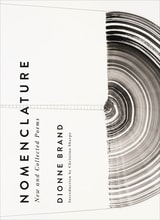
Nomenclature
New and Collected PoemsDionne Brand
Duke University Press, 2022
Spanning almost four decades, Dionne Brand’s poetry has given rise to whole new grammars and vocabularies. With a profound alertness that is attuned to this world and open to some other, possibly future, time and place, Brand’s ongoing labors of witness and imagination speak directly to where and how we live and reach beyond those worlds, their enclosures, and their violences.
Nomenclature: New and Collected Poems begins with a new long poem, the titular Nomenclature for the Time Being, in which Dionne Brand’s diaspora consciousness dismantles our quotidian disasters. In addition to this searing new work, Nomenclature collects eight volumes of Brand’s poetry published between 1982 and 2010 and includes a critical introduction by the literary scholar and theorist Christina Sharpe.
Nomenclature: New and Collected Poems features the searching and centering cantos of Primitive Offensive; the sharp musical conversations of Winter Epigrams and Epigrams to Ernesto Cardenal in Defense of Claudia; and the documentary losses of revolutions in Chronicles of the Hostile Sun, in which “The street was empty/with all of us standing there.” No Language Is Neutral reads language, coloniality, and sexuality as a nexus. Land to Light On writes intimacies and disaffections with nation, while in thirsty a cold-eyed flâneur surveys the workings of the city. In Inventory, written during the Gulf Wars, the poet is “the wars’ last and late night witness,” her job is not to soothe but to “revise and revise this bristling list/hourly.” Ossuaries’ futurist speaker rounds out the collection and threads multiple temporal worlds—past, present, and future.
This masterwork displays Dionne Brand’s ongoing body of thought—trenchant, lyrical, absonant, discordant, and meaning-making. Nomenclature: New and Collected Poems is classic and living, a record of one of the great writers of our age.
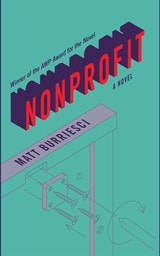
Nonprofit
Matt Burriesci
New Issues Poetry and Prose, 2015
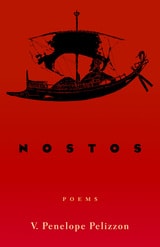
Nostos
V. Penelope Pelizzon
Ohio University Press, 1999
In choosing the winning manuscript for the Hollis Summers Poetry Prize, judge Andrew Hudgins remarked: “With immense poetic verve, Pelizzon finds flamboyance in places where it has been forgotten and brings it back to vivid life—and she sees it for what it is. Her vision is then both passionate and dispassionate at the same time, a maturity of perspective that is just one of the many accomplishments of this superb first book.”
In Nostos (the voyage of return) V. Penelope Pelizzon demonstrates again and again a worldly perspective, made clear and complex by her intelligence that is itself a treat to witness at play. Whether set in a Purgatory garden or on the platform of a bombed train station, these poems enthrall with language that is, in the words of one reader, “both the vehicle for vision and the vision itself.”
Nostos is indeed a voyage—of the mind and heart—guided by Pelizzon’s compelling images and rhythms and one that returns us to where we started, but not unchanged.
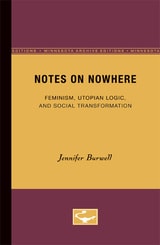
Notes on Nowhere
Feminism, Utopian Logic, and Social TransformationJennifer Burwell
University of Minnesota Press, 1997
Notes on Nowhere was first published in 1997. Minnesota Archive Editions uses digital technology to make long-unavailable books once again accessible, and are published unaltered from the original University of Minnesota Press editions.
The term utopia implies both "good place" and "nowhere." Since Sir Thomas More wrote Utopia in 1516, debates about utopian models of society have sought to understand the implications of these somewhat contradictory definitions. In Notes on Nowhere, author Jennifer Burwell uses a cross section of contemporary feminist science fiction to examine the political and literary meaning of utopian writing and utopian thought.
Burwell provides close readings of the science fiction novels of five feminist writers-Marge Piercy, Sally Gearhart, Joanna Russ, Octavia Butler, and Monique Wittig-and poses questions central to utopian writing: Do these texts promote a tradition in which narratives of the ideal society have been used to hide rather than reveal violence, oppression, and social divisions? Can a feminist critical utopia offer a departure from this tradition by using utopian narratives to expose contradiction and struggle as central aspects of the utopian impulse? What implications do these questions have for those who wish to retain the utopian impulse for emancipatory political uses?
As one way of answering these questions, Burwell compares two "figures" that inform utopian writing and social theory. The first is the traditional abstract "revolutionary" subject who contradicts existing conditions and who points us to the ideal body politic. The second, "resistant," subject is partial, concrete, and produced by conditions rather than operating outside of them. In analyzing contemporary changes in the subject's relationship to social space, Burwell draws from and revises "standpoint approaches" that tie visions of social transformation to a group's position within existing conditions.
By exploring the dilemmas, antagonisms, and resolutions within the critical literary feminist utopia, Burwell creates connections to a similar set of problems and resolutions characterizing "nonliterary" discourses of social transformation such as feminism, gay and lesbian studies, and Marxism. Notes on Nowhere makes an original, significant, and persuasive contribution to our understanding of the political and literary dimensions of the utopian impulse in literature and social theory.
Jennifer Burwell teaches in the Department of English at Wesleyan University in Connecticut.
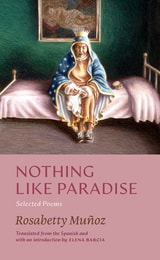
Nothing Like Paradise
Selected PoemsRosabetty Muñoz, Elena Barcia
Northwestern University Press, 2027
The first English-language translation of Rosabetty Muñoz’s vital and innovative poetry from across her extraordinary body of work
Rosabetty Muñoz is one of Chile’s most acclaimed and innovative contemporary poets. Her poems highlight the lives of girls and women on the islands of the Chilean archipelago, portraying the hardships they encounter in this often-overlooked region of the world. In this meticulous and compelling translation from Elena Barcia, Nothing Like Paradise offers a collection of selected works from across Muñoz’s oeuvre, offering a close look into the breadth and emotional intensity of her poetry.
These poems depict the wounds inflicted by the Pinochet dictatorship, foreign invasions, sexual exploitation, the incursions of global capitalism, and political exile. Renowned for her powerful use of multiple voices and striking images, Muñoz channels the thoughts and emotions of the islands’ female inhabitants, bringing immediacy and drama to their stories and transforming readers into their witnesses and confidants. Her poems invite us to confront pain and injustice with empathy and to turn understanding into a collective act of compassion and resistance.
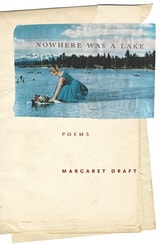
Nowhere Was a Lake
Margaret Draft
Four Way Books, 2024
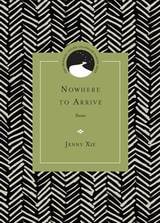
Nowhere to Arrive
PoemsJenny Xie, foreword by Chris Abani
Northwestern University Press, 2017
At the chapbook's center are two long poems, titled "Phnom Penh Diptych: Wet Season" and "Phnom Penh Diptych: Dry Season," that examine the escapist narratives that draw tourists and expatriates to Cambodia, and the speaker’s own privileged positioning.
On a formal level, the poems in Nowhere to Arrive make room for the unsaid and that which cannot be articulated. Here, we have a vocabulary of silence alongside stark imagistic juxtapositions, poems that celebrate compression and the force of paratactic constructions. Attentiveness and concentration emerge as virtues, as the speaker surveys the vast territory of the present with a wakeful gaze.
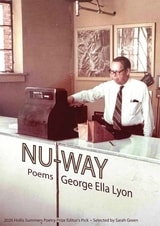
Nu-Way
PoemsGeorge Ella Lyon
Ohio University Press, 2027
Nu-Way traces the evolution of a writer from a three-year-old sitting on the counter of her daddy’s dry cleaner's to a fully developed poet. George Ella Lyon journeys from her role as the keeper of family stories to the teller of her own. This is a book of becoming, of claiming a self.
Growing up in the mountains of eastern Kentucky, near all four of her grandparents, Lyon was schooled in secrets and learned, of necessity, to keep her own. In Nu-Way, her sixth collection, she takes up both sides of the family tapestry: the scenes intentionally stitched and the tangle on the other side. This is not a process of power, but of inner transformation, of coming to terms with herself as well as the people who made her. It holds the tension of opposites—the individual and the collective—without sacrificing either. Highly sharable, Nu-Way will appeal to readers who often feel shut out of poetry.

Nuyorican Feminist Performance
From the Café to Hip Hop TheaterPatricia Herrera
University of Michigan Press, 2020
The Nuyorican Poets Café has for the past forty years provided a space for multicultural artistic expression and a platform for the articulation of Puerto Rican and black cultural politics. The Café’s performances—poetry, music, hip hop, comedy, and drama—have been studied in detail, but until now, little attention has been paid to the voices of its women artists. Through archival research and interview, Nuyorican Feminist Performance examines the contributions of 1970s and ’80s performeras and how they challenged the Café’s gender politics. It also looks at recent artists who have built on that foundation with hip hop performances that speak to contemporary audiences. The book spotlights the work of foundational artists such as Sandra María Esteves, Martita Morales, Luz Rodríguez, and Amina Muñoz, before turning to contemporary artists La Bruja, Mariposa, Aya de León, and Nilaja Sun, who infuse their poetry and solo pieces with both Nuyorican and hip hop aesthetics.
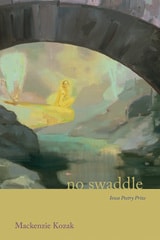
no swaddle
Mackenzie Kozak
University of Iowa Press, 2025
Brockman-Campbell Book Award for Poetry, Honorable Mention
Mackenzie Kozak examines the complex question of whether or not to bear children. Through a series of untitled American sonnets, the poems speak to themes of origin and desire, noting the shame that can accompany such a decision. Many poetry collections speak to the varied griefs of becoming a mother, losing a child, or being unable to have a child, but this collection gives specific voice to another grief that feels unspeakable: the possible conclusion of not wanting to be a mother.
no swaddle reads as a sort of meditation on theme, its repeated form mirroring the spiraling nature of indecision and reconsideration of the same major question alongside its continuous struggle to name. In the end, this grappling with elements of grief and shame becomes a way of moving toward greater agency and fulfillment.