Results by title
1441 books match the query 'World' and 26 start with n
NATO and the UN
A Peculiar RelationshipLawrence S. Kaplan
University of Missouri Press, 2010
In NATO and the UN, Lawrence Kaplan, one of the leading experts on NATO, examines the intimate and often contentious relations between the two and describes how this relationship has changed over the course of two generations. Kaplan documents the many interactions between them throughout their interconnected history, focusing on the major flashpoints where either NATO clashed with UN leadership, the United States and the Soviet Union confronted each other directly, or fissures within the Atlantic alliance were dramatized in UN sessions. He draws on the organizations’ records as well as unpublished files from the National Archives and its counterparts in Britain, France, and Germany to provide the best account yet of working relations between the two organizations. By examining their complex connection with regard to such conflicts as the Balkan wars, Kaplan enhances our understanding of both institutions.
Crisis management has been a source of conflict between the two in the past but has also served as an incentive for collaboration, and Kaplan shows how this peculiar but persistent relationship has functioned. Although the Cold War years are gone, the UN remains the setting where NATO problems have played out, as they have in Iraq during recent decades. And it is to NATO that the UN has turned for military power to face crises in the Balkans, Middle East, and South Asia.
Kaplan stresses the importance of both organizations in the twenty-first century, recognizing their potential to advance global peace and security while showing how their tangled history explains the obstacles that stand in the way. His work offers significant findings that will especially impact our understanding of NATO while filling a sizable gap in our understanding of post-World War II diplomacy.

Naija Marxisms
Revolutionary Thought in NigeriaAdam Mayer
Pluto Press, 2016
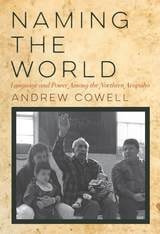
Naming the World
Language and Power Among the Northern ArapahoAndrew Cowell
University of Arizona Press, 2018
As the Arapaho people resist Euro-American assimilation or domination, the Arapaho language and the idea that the language is sacred are key rallying points—but also key points of contestation. Cowell finds that while many at Wind River see the language as crucial for maintaining access to more-than-human power, others primarily view the language in terms of peer-oriented identities as Arapaho, Indian, or non-White. These different views lead to quite different language usage and attitudes in relation to place naming, personal naming, cultural metaphors, new word formation, and the understudied practice of folk etymology.
Cowell presents data from conversations and other natural discourse to show the diversity of everyday speech and attitudes, and he links these data to broader debates at Wind River and globally about the future organization of indigenous societies and the nature of Arapaho and indigenous identity.
Nation and World, Church and God
The Legacy of Garry WillsEdited by Kenneth L. Vaux and Melanie Baffes
Northwestern University Press, 2014
Garry Wills is the polymathic public intellectual bemoaned as missing from American letters. A professor emeritus at Northwestern University, he has built upon his early studies in classics and patristics, while bringing his considerable intellect to bear on American culture, politics, and religion, notably through provocative articles and books on wars, past and present presidents, and the Catholic Church Wills has distinguished himself in the crowded field of Civil War history; fearlessly taken on the legacies of Richard Nixon and Ronald Reagan, among other presidents; and offered a critical voice in many fraught ethical discussions, especially in the areas of war and peace.
Nation and World, Church and God gathers original critical reflections by leading writers and scholars on Garry Wills’s life work. Organized around the themes of “Classics,” “Civil War,” “War and Peace,” and “Theology, Church, and the Arts,” the book reflects the cultural acumen, fine-grained political analysis, ethical candor, and theological wisdom of one of America’s most prolific writers.
Nation of Outlaws, State of Violence
Nationalism, Grassfields Tradition, and State Building in CameroonMeredith Terretta
Ohio University Press, 2014
Nation of Outlaws, State of Violence is the first extensive history of Cameroonian nationalism to consider the global and local influences that shaped the movement within the French and British Cameroons and beyond. Drawing on the archives of the United Nations, France, Great Britain, Ghana, and Cameroon, as well as oral sources, Nation of Outlaws, State of Violence chronicles the spread of the Union des populations du Cameroun (UPC) nationalist movement from the late 1940s into the first postcolonial decade. It shows how, in the French and British Cameroon territories administered as UN Trusteeships after the Second World War, notions of international human rights, the promise of Third World independence, Pan-African federation, and national citizenship blended with local political and spiritual practices that resurfaced as the period of European rule came to a close. After French and British administrators banned the party in the mid-1950s, UPC nationalists adopted violence as a revolutionary strategy. In the 1960s, the nationalist vision disintegrated. The postcolonial regime labeled UPC nationalists “outlaws” and rounded them up for imprisonment or execution as the state shifted to single-party rule in 1966.
Nation of Outlaws, State of Violence traces the connection between local and transregional politics in the age of Africa’s decolonization and the early decades of the Cold War. Rather than stop at official independence as most conventional histories of African nationalist movements do, this book considers postindependence events as crucial to the history of Cameroonian nationalism and to an understanding of the postcolonial government that came to power on 1 January 1960. While the history of the UPC is a story that ends with the party’s failure to gain access to political power with independence, it is also a story of the postcolonial state’s failure to become a nation.
National Cultures at Grass-root Level
Antonina Kloskowska
Central European University Press, 2001
The major dilemma this volume addresses is the function of national identity in a modern society, for despite the trend towards globalization, the world continues to be riddled with national conflict.
Kłoskowska begins by looking at the controversy between two competing concepts of the origin of the nation – political and ethnic. She examines the central issues of the argument, and in particular, the characteristics and effects of ethnic differences on personal identity and the appropriation of national culture. Her theories are based upon autobiographies by individuals belonging to various national minorities in Poland and other areas where ethnic borders are blurred. The group studied included mostly young intellectuals: Ukrainians, Belarussians and Silesian-Germans. She examines the national attitudes of the various countries the ethnic minorities have been forced to live with. In her conclusion, Kłoskowska takes the view that national cultures are either ‘open’ or ‘closed’ and stresses the importance of participating in more than one cultural medium.
National Cultures at the Grass-Root Level is rich in information on contemporary theories of the nation, on its origin, character and future, and offers a deep insight into the complex and often ambiguous reality of national attitudes.
National History and the World of Nations
Capital, State, and the Rhetoric of History in Japan, France, and the United StatesChristopher L. Hill
Duke University Press, 2008
Delving into narrative histories, prose fiction, and social philosophy, Hill analyzes the rhetoric, narrative form, and intellectual genealogy of late-nineteenth-century texts that contributed to the creation of national history in each of the three countries. He discusses the global political economy of the era, the positions of the three countries in it, and the reasons that arguments about history loomed large in debates on political, economic, and social problems. Examining how the writing of national histories in the three countries addressed political transformations and the place of the nation in the world, Hill illuminates the ideological labor national history performed. Its production not only naturalized the division of the world by systems of states and markets, but also asserted the inevitability of the nationalization of human community; displaced dissent to pre-modern, pre-national pasts; and presented the subject’s acceptance of a national identity as an unavoidable part of the passage from youth to adulthood.
National Identity of Romanians in Transylvania
Sorin Mitu
Central European University Press, 2001
This meticulously researched and elegantly written book is the most authoritative study of the emergence of modern Romanian identity in Transylvania during the eighteenth and nineteenth centuries. Based upon a plethora of contemporary published sources, Mitu approaches national identity from a variety of perspectives - from within the Romanian community itself and their reaction to the image others had of them.
The author sheds new light on the problems of self-evaluation using a method he describes as "functional analysis" to examine a complex set of ideologies and propaganda. This approach helps the reader to understand the intricate web of contemporary Romanian nationalism.
National Identity of Romanians in Transylvania appeals to scholars of modern Romanian history, those focusing on the Habsburg Monarchy and the study of modern nationalism. The book is an important contribution to the expanding debate on nationalism and national identity from an East European perspective.
Natural Resources and the New Frontier
Constructing Modern China's BorderlandsJudd C. Kinzley
University of Chicago Press, 2018
China’s westernmost province of Xinjiang has experienced escalating cycles of violence, interethnic strife, and state repression since the 1990s. In their search for the roots of these growing tensions, scholars have tended to focus on ethnic clashes and political disputes. In Natural Resources and the New Frontier, historian Judd C. Kinzley takes a different approach—one that works from the ground up to explore the infrastructural and material foundation of state power in the region.
As Kinzley argues, Xinjiang’s role in producing various natural resources for regional powers has been an important but largely overlooked factor in fueling unrest. He carefully traces the buildup to this unstable situation over the course of the twentieth century by focusing on the shifting priorities of Chinese, Soviet, and provincial officials regarding the production of various resources, including gold, furs, and oil among others. Through his archival work, Kinzley offers a new way of viewing Xinjiang that will shape the conversation about this important region and offer a model for understanding the development of other frontier zones in China as well as across the global south.

Neck of the World
F. Daniel Rzicznek
Utah State University Press, 2007
Negotiating in Civil Conflict
Constitutional Construction and Imperfect Bargaining in IraqHaider Ala Hamoudi
University of Chicago Press, 2013
Networking the World, 1794-2000
Armand Mattelart
University of Minnesota Press, 2000
New Countries
Capitalism, Revolutions, and Nations in the Americas, 1750–1870John Tutino, editor
Duke University Press, 2016
Contributors. Alfredo Ávila, Roberto Breña, Sarah C. Chambers, Jordana Dym, Carolyn Fick, Erick Langer, Adam Rothman, David Sartorius, Kirsten Schultz, John Tutino
New Global Cities in Latin America and Asia
Welcome to the Twenty-First CenturyPablo Baisotti, Editor
University of Michigan Press, 2022
New Global Cities in Latin America and Asia: Welcome to the Twenty-First Century proposes new visions of global cities and regions historically considered “secondary” in the international context. The arguments are not only based on material progress made by these metropolises, but also on the growing social difficulties experienced (e.g., organized crime, drug trafficking, slums, economic inequalities). The book illustrates the growth of cities according to these problems arising from the modernity of the new century, comparing Latin American and Asian cities.
This book analyzes the complex relationships within cities through an interdisciplinary approach, complementing other research and challenging orthodox views on global cities. At the same time, the book provides new theoretical and methodological tools to understand the progress of “Third World” cities and the way of understanding “globality” in the 21st century by confronting the traditional views with which global cities were appreciated since the 1980s. Pablo Baisotti brings together researchers from various fields who provide new interpretative keys to certain cities in Latin America and Asia.
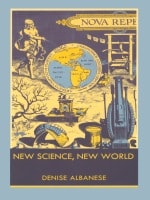
New Science, New World
Denise Albanese
Duke University Press, 1996
Albanese reads the inaugurators of the scientific revolution against the canonical authors of early modern literature, discussing Galileo’s Dialogue on the Two Chief World Systems and Bacon’s New Atlantis as well as Milton’s Paradise Lost and Shakespeare’s The Tempest. She examines how the newness or “novelty” of investigating nature is expressed through representations of the New World, including the native, the feminine, the body, and the heavens. “New” is therefore shown to be a double sign, referring both to the excitement associated with a knowledge oriented away from past practices, and to the oppression and domination typical of the colonialist enterprise. Exploring the connections between the New World and the New Science, and the simultaneously emerging patterns of thought and forms of writing characteristic of modernity, Albanese insists that science is at its inception a form of power-knowledge, and that the modern and postmodern division of “Two Cultures,” the literary and the scientific, has its antecedents in the early modern world.
New Science, New World makes an important contribution to feminist, new historicist, and cultural materialist debates about the extent to which the culture of seventeenth-century England is proto-modern. It will offer scholars and students from a wide range of fields a new critical model for historical practice.
News Parade
The American Newsreel and the World as SpectacleJoseph Clark
University of Minnesota Press, 2020
A fascinating look at the United States’ conflicted relationship with news and the media, through the lens of the newsreel
When weekly newsreels launched in the early twentieth century, they offered the U.S. public the first weekly record of events that symbolized “indisputable evidence” of the news. In News Parade, Joseph Clark examines the history of the newsreel and how it changed the way Americans saw the world. He combines an examination of the newsreel’s methods of production, distribution, and reception with an analysis of its representational strategies to understand the newsreel’s place in the history of twentieth-century American culture and film history.
Clark focuses on the sound newsreel of the 1930s and 1940s, arguing that it represents a crucial moment in the development of a spectacular society where media representations of reality became more fully integrated into commodity culture. Using several case studies, including the newsreel’s coverage of Charles Lindbergh’s transatlantic flight and the Sino–Japanese War, News Parade shows how news film transformed the relationship between its audience and current events, as well as the social and political consequences of these changes. It pays particular attention to how discourses of race and gender worked together with the rhetoric of speed, mobility, and authority to establish the power and privilege of newsreel spectatorship.
In the age of fake news and the profound changes to journalism brought on by the internet, News Parade demonstrates how new technologies and media reshaped the American public’s relationship with the news in the 1930s—a history that can help us to better understand the transformations happening today.
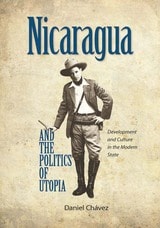
Nicaragua and the Politics of Utopia
Development and Culture in the Modern StateDaniel Chavez
Vanderbilt University Press, 2015
For each era, Chavez reveals the ways Nicaraguan popular culture adapted and interpreted the new political order, shaping, critiquing, or amplifying the regime's message of stability and prosperity for the people. These tactics of interpretation, otherwise known as meaning-making, became all-important for the Nicaraguan people, as they opposed the autocracy of Somocismo, or complemented the Sandinistas, or struggled to find their place in the Neoliberal era. In every case, Chavez shows the reflective nature of cultural production and its pursuit of utopian idealism.
No Equal In The World
An Interpretation Of The Academic PresidencyJoseph N. Crowley
University of Nevada Press, 1994
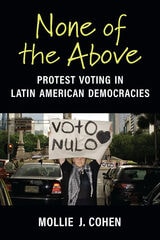
None of the Above
Protest Voting in Latin American DemocraciesMollie J. Cohen
University of Michigan Press, 2024
Winner of the 2025 International Society of Political Psychology David O. Sears Best Book on Mass Politics Award
Around the world each year, millions of citizens turn out to vote but leave their ballots empty or spoil them. Increasingly, campaigns have emerged that promote “invalid” votes like these. Why do citizens choose to cast blank and spoiled votes? And how do campaigns mobilizing the invalid vote influence this decision? None of the Above answers these questions using evidence from presidential and gubernatorial elections in eighteen Latin American democracies. Author Mollie J. Cohen draws on a broad range of methods and sources, incorporating data from electoral management bodies, nationally representative surveys, survey experiments, focus groups, semi-structured interviews, and news sources.
Contrary to received wisdom, this book shows that most citizens cast blank or spoiled votes in presidential elections on purpose. By participating in invalid vote campaigns, citizens can voice their concerns about low-quality candidates while also expressing a preference for high-quality democracy. Campaigns promoting blank and spoiled votes come about more often, and succeed at higher rates, when incumbent politicians undermine the quality of elections. Surprisingly, invalid vote campaigns can shore up the quality of democracy in the short term. None of the Above shows that swings in blank and spoiled vote rates can serve as a warning about the trajectory of a country’s democracy.
Nonhuman Witnessing
War, Data, and Ecology after the End of the WorldMichael Richardson
Duke University Press, 2024
Normalization in World Politics
Gëzim Visoka and Nicolas Lemay-Hébert
University of Michigan Press, 2022
This book traces main discourses and practices associated with normalcy in world politics. Visoka and Lemay-Hébert mostly focus on how dominant states and international organizations try to manage global affairs through imposing normalcy over fragile states, restoring normalcy over disaster-affected states, and accepting normalcy over suppressive states. They show how discourses and practices come together in constituting normalization interventions and how in turn they play in shaping the dynamics of continuity and change in world politics.
North in the World
Selected Poems of Rolf Jacobsen, A Bilingual EditionRolf Jacobsen
University of Chicago Press, 2002
Drawing from all twelve of his books, and including one poem collected posthumously, North in the World offers award-winning English translations of Jacobsen's poems, accompanied by the original Norwegian texts. The translator, the American poet Roger Greenwald, worked with Jacobsen himself to correct errors that had crept into the Norwegian texts over the years. An in-depth introduction by Greenwald highlights the main features of Jacobsen's poetry, and extensive endnotes, as well as indexes to titles and first lines in both languages, enhance the usefulness of the book for general readers and scholars alike. The result is the definitive bilingual edition of Jacobsen's marvelous poetry.
Not One More!
Feminicidio on the BorderNina Maria Lozano
The Ohio State University Press, 2019
Finding theories of new materialism inadequate to explain the feminicidios, Lozano critiques and extends this approach—advancing instead a new theoretical framework, border materialism, to argue that capitalist systems of neoliberalism and free trade are directly correlated to the killing of women on the US–Mexico border. Through the author’s fifteen-plus years of on-the-ground fieldwork, readers are presented with firsthand accounts, testimonies, and new social movement strategies from family members and activists attempting to stop these gendered crimes.
By offering concrete case studies—including analysis of maquiladoras/factories and free trade zones, public monuments and murals memorializing the victims, rastreos/searches by family members for victims’ DNA remains, and testimony from Mothers, family members, and activists—Not One More! lays bare the socioeconomic and geopolitical forces at work in the killing of women in Juárez.
Nothing Is Impossible
America's Reconciliation with VietnamTed Osius
Rutgers University Press, 2022
Ted Osius, former ambassador during the Obama administration, offers a vivid account, starting in the 1990s, of the various forms of diplomacy that made this reconciliation possible. He considers the leaders who put aside past traumas to work on creating a brighter future, including senators John McCain and John Kerry, two Vietnam veterans and ideological opponents who set aside their differences for a greater cause, and Pete Peterson—the former POW who became the first U.S. ambassador to a new Vietnam. Osius also draws upon his own experiences working first-hand with various Vietnamese leaders and traveling the country on bicycle to spotlight the ordinary Vietnamese people who have helped bring about their nation’s extraordinary renaissance.
With a foreword by former Secretary of State John Kerry, Nothing Is Impossible tells an inspiring story of how international diplomacy can create a better world.

Nuevos Desplazados
Crimen y Desplazamiento en America LatinaEdited by Nicolás Rodríguez Serna and David James Cantor
University of London Press, 2016
Numbers and Nerves
Information, Emotion, and Meaning in a World of DataScott Slovic
Oregon State University Press, 2015
The essays and interviews in Numbers and Nerves explore the quandary of our cognitive responses to quantitative information, while also offering compelling strategies for overcoming insensitivity to the meaning of such information. With contributions by journalists, literary critics, psychologists, naturalists, activists, and others, this book represents a unique convergence of psychological research, discourse analysis, and visual and narrative communication.
At a time of unprecedented access to information, our society is frequently stymied in its efforts to react to the world’s massive problems. Many of these problems are systemic, deeply rooted in seemingly intransigent cultural patterns and lifestyles. In order to sense the significance of these issues and begin to confront them, we must first understand the psychological tendencies that enable and restrict our processing of numerical information.
Numbers and Nerves explores a wide range of psychological phenomena and communication strategies—fast and slow thinking, psychic numbing, pseudoinefficacy, the prominence effect, the asymmetry of trust, contextualized anecdotes, multifaceted mosaics of prose, and experimental digital compositions, among others—and places these in real-world contexts. In the past two decades, cognitive science has increasingly come to understand that we, as a species, think best when we allow numbers and nerves, abstract information and experiential discourse, to work together. This book provides a roadmap to guide that collaboration. It will be invaluable to scholars, educators, professional communicators, and anyone who struggles to grasp the meaning behind the numbers.