Results by title
22279 books match the query 'Social Science' and 509 start with n
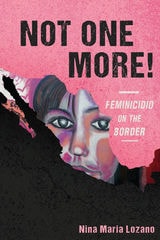
Not One More!
Feminicidio on the BorderNina Maria Lozano
The Ohio State University Press, 2019
Finding theories of new materialism inadequate to explain the feminicidios, Lozano critiques and extends this approach—advancing instead a new theoretical framework, border materialism, to argue that capitalist systems of neoliberalism and free trade are directly correlated to the killing of women on the US–Mexico border. Through the author’s fifteen-plus years of on-the-ground fieldwork, readers are presented with firsthand accounts, testimonies, and new social movement strategies from family members and activists attempting to stop these gendered crimes.
By offering concrete case studies—including analysis of maquiladoras/factories and free trade zones, public monuments and murals memorializing the victims, rastreos/searches by family members for victims’ DNA remains, and testimony from Mothers, family members, and activists—Not One More! lays bare the socioeconomic and geopolitical forces at work in the killing of women in Juárez.
Not Only the Market
Martin Potucek
Central European University Press, 1999
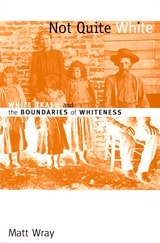
Not Quite White
White Trash and the Boundaries of WhitenessMatt Wray
Duke University Press, 2006
Of crucial importance are the ideas about poor whites that circulated through early-twentieth-century public health campaigns, such as hookworm eradication and eugenic reforms. In these crusades, impoverished whites, particularly but not exclusively in the American South, were targeted for interventions by sanitarians who viewed them as “filthy, lazy crackers” in need of racial uplift and by eugenicists who viewed them as a “feebleminded menace” to the white race, threats that needed to be confined and involuntarily sterilized.
Part historical inquiry and part sociological investigation, Not Quite White demonstrates the power of social categories and boundaries to shape social relationships and institutions, to invent groups where none exist, and to influence policies and legislation that end up harming the very people they aim to help. It illuminates not only the cultural significance and consequences of poor white stereotypes but also how dominant whites exploited and expanded these stereotypes to bolster and defend their own fragile claims to whiteness.

Not Quite a Cancer Vaccine
Selling HPV and Cervical CancerS.D. Gottlieb
Rutgers University Press, 2018
Prior to its market debut, Gardasil seemed to offer female empowerment, touting protection against HPV and its potential for cervical cancer. Gottlieb questions the marketing pitch’s vaunted promise and asks why vaccine marketing unnecessarily gendered the vaccine’s utility, undermining Gardasil’s benefit for men and women alike. This book demonstrates why in the ten years since Gardasil’s U.S. launch its low rates of public acceptance have their origins in the early days of the vaccine dissemination. Not Quite a Cancer Vaccine addresses the on-going expansion in U.S. healthcare of patients-as-consumers and the ubiquitous, and sometimes insidious, health marketing of large pharma.

Not Religion
Liberal Separation in a Christian Brotherhood and a Masonic LodgeGraham Hill
Temple University Press, 2027
In Mexico, a Christian brotherhood invites members to have a religion-free personal relationship with God and practice a particular form of born-again self-transformation. In Switzerland, a Masonic lodge pursues a peculiar blend of enlightenment philosophy and esoteric truth seeking. Both organizations cultivate ethical brotherhoods and ritualized relationships to the sacred. Both organizations also disavow “religion,” sidestepping the divisions in time, space, and personhood that liberal modes of governance typically draw between public and private, as well as civic and conscientious.
In Not Religion, Graham Hill asks why members of these organizations pursue relationships with God, the sacred, and the spiritual while also rejecting the religious character of their engagements. He investigates, and sometimes participates in, the organizational activities of both groups with a view to understanding their respective attempts to bridge civic-conscience divides and pursue everyday life-enchanting practices of self-transformation. Hill finds, in both organizations, reflexive, experimental orientations to language—of very different sorts— animating both types of practice.
Not Religion probes the curious features that the two organizations share despite all the ways in which they differ, examining why these vaguely theistic, mundane-sacralizing, everyday life-enchanting organizations distance themselves, their practices, and their beliefs from the category of “religion.”
In the series Religious Engagement in Democratic Politics
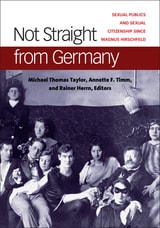
Not Straight from Germany
Sexual Publics and Sexual Citizenship since Magnus HirschfeldMichael Thomas Taylor, Annette F. Timm, and Rainer Herrn, Editors
University of Michigan Press, 2017
Two visual sourcebooks and catalog essays on an exhibition of contemporary artists’ responses to the Hirschfeld historical materials interrogate the modes of visual representation that Hirschfeld employed by re-imagining the public visibility of his institute from a contemporary perspective. The archival material includes stunning, never-before-published images from Hirschfeld’s institute that challenge many received ideas, while the scholarly and art catalog essays explore collaboration and dialogue as methods of research and activism that resonate beyond the academy to pressing issues of public concern.
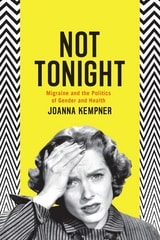
Not Tonight
Migraine and the Politics of Gender and HealthJoanna Kempner
University of Chicago Press, 2014
In Not Tonight, Joanna Kempner argues that this general dismissal of migraine can be traced back to the gendered social values embedded in the way we talk about, understand, and make policies for people in pain. Because the symptoms that accompany headache disorders—like head pain, visual auras, and sensitivity to sound—lack an objective marker of distress that can confirm their existence, doctors rely on the perceived moral character of their patients to gauge how serious their complaints are. Kempner shows how this problem plays out in the history of migraine, from nineteenth-century formulations of migraine as a disorder of upper-class intellectual men and hysterical women to the influential concept of “migraine personality” in the 1940s, in which women with migraine were described as uptight neurotics who withheld sex, to contemporary depictions of people with highly sensitive “migraine brains.” Not Tonight casts new light on how cultural beliefs about gender, pain, and the distinction between mind and body influence not only whose suffering we legitimate, but which remedies are marketed, how medicine is practiced, and how knowledge about disease is produced.
Not Trying
Infertility, Childlessness, and AmbivalenceKristin J. Wilson
Vanderbilt University Press, 2014
But the majority of women who struggle with fertility avoid treatment. The women whose interviews appear in Not Trying belong to this majority. Their attitudes vary and may change as their life circumstances evolve. Some support the prevailing cultural narrative that women are meant to be mothers and refuse to see themselves as childfree by choice. Most of these women, who come from a wider range of social backgrounds than most researchers have studied, experience deep ambivalence about motherhood and non-motherhood, never actually choosing either path. They prefer to let life unfold, an attitude that seems to reduce anxiety about not conforming to social expectations.
Not Under My Roof
Parents, Teens, and the Culture of SexAmy T. Schalet
University of Chicago Press, 2011
Winner of the Healthy Teen Network’s Carol Mendez Cassell Award for Excellence in Sexuality Education and the American Sociological Association's Children and Youth Section's 2012 Distinguished Scholarly Research Award
For American parents, teenage sex is something to be feared and forbidden: most would never consider allowing their children to have sex at home, and sex is a frequent source of family conflict. In the Netherlands, where teenage pregnancies are far less frequent than in the United States, parents aim above all for family cohesiveness, often permitting young couples to sleep together and providing them with contraceptives. Drawing on extensive interviews with parents and teens, Not Under My Roof offers an unprecedented, intimate account of the different ways that girls and boys in both countries negotiate love, lust, and growing up.
Tracing the roots of the parents’ divergent attitudes, Amy T. Schalet reveals how they grow out of their respective conceptions of the self, relationships, gender, autonomy, and authority. She provides a probing analysis of the way family culture shapes not just sex but also alcohol consumption and parent-teen relationships. Avoiding caricatures of permissive Europeans and puritanical Americans, Schalet shows that the Dutch require self-control from teens and parents, while Americans guide their children toward autonomous adulthood at the expense of the family bond.
Not White Enough, Not Black Enough
Racial Identity in the South African Coloured CommunityMohamed Adhikari
Ohio University Press, 2005

Not Yet a Placeless Land
Tracking an Evolving American GeographyWilbur Zelinsky
University of Massachusetts Press, 2011
In this book, cultural geographer Wilbur Zelinsky challenges that nearly universal view and reaches a paradoxical conclusion: that American land and society are becoming more uniform and more diverse at the same time. After recounting the many ways in which modern technologies, an advanced capitalist market system, and a potent central political establishment have standardized the built landscape of the country's vast territory and its burgeoning population over the past two hundred and fifty years, he also considers the vigor of countervailing forces. In a carefully balanced assessment, he documents steady increases in the role of the unpredictable, in the number and variety of arbitrarily located places and activities, and the persistence of basic cultural diversities. Contrary to popular perceptions, place-to-place differences in spoken language, religion, and political behavior have not diminished or disappeared. In fact, Zelinsky shows, novel cultural regions and specialized cities have been emerging even as a latter-day version of regionalism and examples of neo-localism are taking root in many parts of the United States.
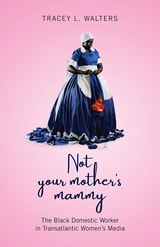
Not Your Mother's Mammy
The Black Domestic Worker in Transatlantic Women’s MediaTracey L Walters
Rutgers University Press, 2021
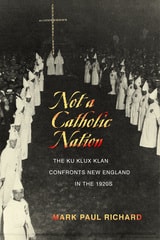
Not a Catholic Nation
The Ku Klux Klan Confronts New England in the 1920sMark Paul Richard
University of Massachusetts Press, 2015
Drawing on a wide range of previously untapped sources—French-language newspapers in the New England–Canadian borderlands; KKK documents scattered in local, university, and Catholic repositories; and previously undiscovered copies of the Maine Klansmen—Richard demonstrates that the Klan was far more active in the Northeast than previously thought. He also challenges the increasingly prevalent view that the Ku Klux Klan became a mass movement during this period largely because it functioned as a social, fraternal, or civic organization for many Protestants. While Richard concedes that some Protestants in New England may have joined the KKK for those reasons, he shows that the politics of ethnicity and labor played a more significant role in the Klan's growth in the region.
The most comprehensive analysis of the Ku Klux Klan's antagonism toward Catholics in the 1920s, this book is also distinctive in its consideration of the history of the Canada–U.S. borderlands, particularly the role of Canadian immigrants as both proponents and victims of the Klan movement in the United States.

Not from Here, Not from There/No Soy de Aquí ni de Allá
The Autobiography of Nelson DíazNelson A. Díaz
Temple University Press, 2018
Raised in the squalor of a New York tenement until he was 10 years old, Nelson Díaz saw his life change when his family moved to a brand-new high-rise project in West Harlem in the 1950s. That experience, along with lessons learned as the only Latino law student at Temple University, would drive him throughout his life as a lawyer and activist, fighting for the expansion of rights for all Americans.
“No soy de aquí ni de allá” is a mantra for Puerto Ricans who feel like foreigners wherever they are and who seek a place for themselves. In his inspiring autobiography, Not from Here, Not from There, Díaz tells the story of his struggles and triumphs as his perspective widened from the New York streets and law school classrooms to the halls of power in Philadelphia and Washington, DC. Whether as a leader in economic development, a pioneer in court reform, or a champion of fair housing, Díaz has never stopped advocating for others. Díaz was happy to be the first Latino to “do something,” but he never wanted to be the last. This story of an outsider who worked his way to the inside offers powerful lessons on finding a place in the world by creating spaces where everyone is welcome.
Not from Here
A MemoirAllan Johnson
Temple University Press, 2015
As a white man with Norwegian and English lineage, Johnson explores both America and the question of belonging to a place whose history holds the continuing legacy of the displacement, dispossession, and genocide of Native peoples.
More than a personal narrative, Not from Here illuminates the national silence around unresolved questions of accountability, race, and identity politics, and the dilemma of how to take responsibility for “a past we did not create.” Johnson’s story—about the past living in the present; of redemption, fate, family, tribe, and nation; of love and grief—raises profound questions about belonging, identity, and place.
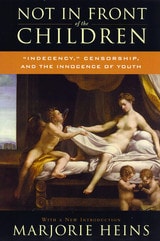
Not in Front of the Children
'Indecency,' Censorship, and the Innocence of YouthHeins, Marjorie
Rutgers University Press, 2007
From Huckleberry Finn to Harry Potter, from Internet filters to the v-chip, censorship exercised on behalf of children and adolescents is often based on the assumption that they must be protected from “indecent” information that might harm their development—whether in art, in literature, or on a Web site. But where does this assumption come from, and is it true?
In Not in Front of the Children, Marjorie Heins explores the fascinating history of “indecency” laws and other restrictions aimed at protecting youth. From Plato’s argument for rigid censorship, through Victorian laws aimed at repressing libidinous thoughts, to contemporary battles over sex education in public schools and violence in the media, Heins guides us through what became, and remains, an ideological minefield. With fascinating examples drawn from around the globe, she suggests that the “harm to minors” argument rests on shaky foundations.
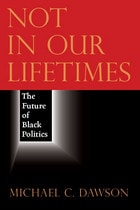
Not in Our Lifetimes
The Future of Black PoliticsMichael C. Dawson
University of Chicago Press, 2011
For all the talk about a new postracial America, the fundamental realities of American racism—and the problems facing black political movements—have not changed. Michael C. Dawson lays out a nuanced analysis of the persistence of racial inequality and structural disadvantages, and the ways that whites and blacks continue to see the same problems—the disastrous response to Katrina being a prime example—through completely different, race-inflected lenses. In fact, argues Dawson, the new era heralded by Barack Obama’s election is more racially complicated, as the widening class gap among African Americans and the hot-button issue of immigration have the potential to create new fissures for conservative and race-based exploitation. Through a thoughtful analysis of the rise of the Tea Party and the largely successful “blackening” of President Obama, Dawson ultimately argues that black politics remains weak—and that achieving the dream of racial and economic equality will require the sort of coalition-building and reaching across racial divides that have always marked successful political movements.
Polemical but astute, passionate but pragmatic, Not in Our Lifetimes forces us to rethink easy assumptions about racial progress—and begin the hard work of creating real, lasting change.

Not of Pure Blood
The Free People of Color and Racial Prejudice in Nineteenth-Century Puerto RicoJay Kinsbruner
Duke University Press, 1996
Following a discussion of Puerto Rican racial prejudice in historical perspective, Kinsbruner describes residential patterns, marriages, births, deaths, occupations, and family and household matters to demonstrate that free people of color were a disadvantaged community whose political, social, and economic status was diminished by racism. He analyzes the complexities and contradictions of Puerto Rican racial prejudice and discrimination, explains the subtleties of “shade discrimination,” and examines the profoundly negative impact on race relations of the U.S. occupation of the island following the Spanish American War.
Looking behind the myth of Puerto Rican racial equity, Not of Pure Blood will be of interest to specialists in Caribbean studies, Puerto Rican history, and Latin America studies, and to scholars in a variety of fields investigating questions of racism and discrimination.
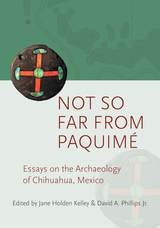
Not so Far from Paquimé
Essays on the Archaeology of Chihuahua, MexicoEdited by Jane Holden Kelley and David A. Phillips Jr.
University of Utah Press, 2017
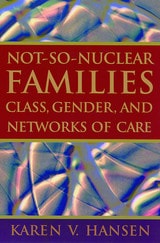
Not-So-Nuclear Families
Class, Gender, and Networks of CareHansen, Karen V
Rutgers University Press, 2004
In recent years U.S. public policy has focused on strengthening the nuclear family as a primary strategy for improving the lives of America's youth. It is often assumed that this normative type of family is an independent, self-sufficient unit adequate for raising children. But half of all households in the United States with young children have two employed parents. How do working parents provide care and mobilize the help that they need?
In Not-So-Nuclear Families: Class, Gender, and Networks of Care, Karen V. Hansen investigates the lives of working parents and the informal networks they construct to help care for their children. She chronicles the conflicts, hardships, and triumphs of four families of various social classes. Each must navigate the ideology that mandates that parents, mothers in particular, rear their own children, in the face of an economic reality that requires that parents rely on the help of others. In vivid family stories, parents detail how they and their networks of friends, paid caregivers, and extended kin collectively close the "care gap" for their school-aged children.
Hansen not only debunks the myth that families in the United States are independent, isolated, and self-reliant units, she breaks new theoretical ground by asserting that informal networks of care can potentially provide unique and valuable bonds that nuclear families cannot.

Notes from the EU’s Eastern Edge
How Migrants Were Weaponized on the Polish-Belarusian BorderJo Harper
Central European University Press, 2026
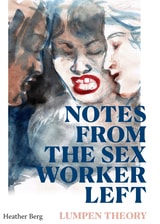
Notes from the Sex Worker Left
Lumpen TheoryHeather Berg
Duke University Press, 2026
Notes on Nowhere
Feminism, Utopian Logic, and Social TransformationJennifer Burwell
University of Minnesota Press, 1997
Notes on Nowhere was first published in 1997. Minnesota Archive Editions uses digital technology to make long-unavailable books once again accessible, and are published unaltered from the original University of Minnesota Press editions.
The term utopia implies both "good place" and "nowhere." Since Sir Thomas More wrote Utopia in 1516, debates about utopian models of society have sought to understand the implications of these somewhat contradictory definitions. In Notes on Nowhere, author Jennifer Burwell uses a cross section of contemporary feminist science fiction to examine the political and literary meaning of utopian writing and utopian thought.
Burwell provides close readings of the science fiction novels of five feminist writers-Marge Piercy, Sally Gearhart, Joanna Russ, Octavia Butler, and Monique Wittig-and poses questions central to utopian writing: Do these texts promote a tradition in which narratives of the ideal society have been used to hide rather than reveal violence, oppression, and social divisions? Can a feminist critical utopia offer a departure from this tradition by using utopian narratives to expose contradiction and struggle as central aspects of the utopian impulse? What implications do these questions have for those who wish to retain the utopian impulse for emancipatory political uses?
As one way of answering these questions, Burwell compares two "figures" that inform utopian writing and social theory. The first is the traditional abstract "revolutionary" subject who contradicts existing conditions and who points us to the ideal body politic. The second, "resistant," subject is partial, concrete, and produced by conditions rather than operating outside of them. In analyzing contemporary changes in the subject's relationship to social space, Burwell draws from and revises "standpoint approaches" that tie visions of social transformation to a group's position within existing conditions.
By exploring the dilemmas, antagonisms, and resolutions within the critical literary feminist utopia, Burwell creates connections to a similar set of problems and resolutions characterizing "nonliterary" discourses of social transformation such as feminism, gay and lesbian studies, and Marxism. Notes on Nowhere makes an original, significant, and persuasive contribution to our understanding of the political and literary dimensions of the utopian impulse in literature and social theory.
Jennifer Burwell teaches in the Department of English at Wesleyan University in Connecticut.
Notes on Social Measurement
Historical and CriticalOtis Dudley Duncan
Russell Sage Foundation, 1984
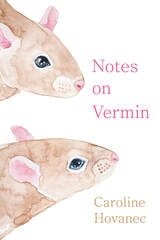
Notes on Vermin
Caroline Hovanec
University of Michigan Press, 2025
Notes on Vermin is an atlas of the literary vermin that appear in modern and contemporary literature, from Franz Kafka’s gigantic insect to Richard Wright’s city rats to Namwali Serpell’s storytelling mosquitoes. As parasites, trespassers, and collectives, vermin animals prove useful to writers who seek to represent life in the margins of power. Drawing on psychoanalysis, cultural studies, eco-Marxism, and biopolitics, this book explores four uses for literary vermin: as figures for the repressed thought, the uncommitted fugitive, the freeloading parasite, and the surplus life. In a series of short, accessible, interlinked essays, Notes on Vermin explores what animal pests can show us about our cultures, our environments, and ourselves.
Notes on the Heart
Affective Issues in the Writing ClassroomSusan H. McLeod
Southern Illinois University Press, 1997
It has long been recognized that affect (that is, the noncognitive aspect of mental activity) plays a large role in writing and in learning to write. According to Susan H. McLeod, however, the model that has been most used for empirical research on the writing process is based on cognitive psychology and does not take into account affective phenomena. Nor does the social constructionist view of the writing process acknowledge the affective realm except in a very general way. To understand the complete picture, McLeod insists, we need to explore how cognitive, affective, and social elements interact as people write.
In this book, McLeod follows a group of students through a semester of writing assignments, tracking the students’ progress and examining the affective elements relevant to their writing. To facilitate future discussion of these phenomena, McLeod also provides suggested definitions for terms in the affective domain.
In a very real sense, this book is the result of a collaboration of three Susans: Susan McLeod, who researched and wrote the book; Sue Hallett, an instructor in Washington State University’s composition program whose classes McLeod observed and who helped provide much of the data; and Susan Parker, a graduate student who observed Hallett’s class and who ran a tutorial connected to that class. To provide a narrative structure, McLeod and her two collaborators have constructed a simulated semester, conflating the year and a half of the study into one semester and creating a class that is a composite drawn from seven classrooms over three semesters.
Although philosophers have had much to say about the affective domain, Notes on the Heart is based for the most part on research from the social sciences. Discussions of pedagogy, while meant to have practical value, are suggestive rather than prescriptive. The goal is to help teachers see their practice in new way.
Teachers will be particularly interested in McLeod’s discussion of teacher affect/effect. This section examines both the issue of the "Pygmalion effect" (students becoming better because the teacher believes they are) and perhaps the more common opposite, the "golem effect" (students becoming less capable because their teachers view them that way).
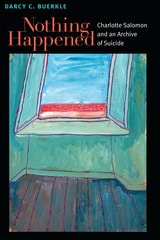
Nothing Happened
Charlotte Salomon and an Archive of SuicideDarcy C. Buerkle
University of Michigan Press, 2013
Charlotte Salomon's (1917-43) fantastical autobiography, Life? or Theater?, consists of 769 sequenced gouache paintings, through which the artist imagined the circumstances of the eight suicides in her family, all but one of them women. But Salomon's focus on suicide was not merely a familial idiosyncrasy. Nothing Happened argues that the social history of early-twentieth-century Germany has elided an important cultural and social phenomenon by not including the story of German Jewish women and suicide. This absence in social history mirrors an even larger gap in the intellectual history of deeply gendered suicide studies that have reproduced the notion of women's suicide as a rarity in history. Nothing Happened is a historiographic intervention that operates in conversation and in tension with contemporary theory about trauma and the reconstruction of emotion in history.
Nothing Has to Make Sense
Upholding White Supremacy through Anti-Muslim RacismSherene H. Razack
University of Minnesota Press, 2022
How Western nations have consolidated their whiteness through the figure of the Muslim in the post-9/11 world
While much has been written about post-9/11 anti-Muslim racism (often termed Islamophobia), insufficient attention has been given to how anti-Muslim racism operates through law and is a vital part of law’s protection of whiteness. This book fills this gap while also providing a unique new global perspective on white supremacy. Sherene H. Razack, a leading critical race and feminist scholar, takes an innovative approach by situating law within media discourses and historical and contemporary realities. We may think of law as logical, but, argues Razack, its logic breaks down when the subject is Muslim.
Tracing how white subjects and majority-white nations in the post-9/11 era have consolidated their whiteness through the figure of the Muslim, Razack examines four sites of anti-Muslim racism: efforts by American evangelical Christians to ban Islam in the school curriculum; Canadian and European bans on Muslim women’s clothing; racial science and the sentencing of Muslims as terrorists; and American national memory of the torture of Muslims during wars and occupations. Arguing that nothing has to make sense when the subject is Muslim, she maintains that these legal and cultural sites reveal the dread, phobia, hysteria, and desire that mark the encounter between Muslims and the West.
Through the prism of racism, Nothing Has to Make Sense argues that the figure of the Muslim reveals a world divided between the deserving and the disposable, where people of European origin are the former and all others are confined in various ways to regimes of disposability. Emerging from critical race theory, and bridging with Islamophobia/critical religious studies, it demonstrates that anti-Muslim racism is a revelatory window into the operation of white supremacy as a global force.
Nothing Wanting
Asexuality and the Matter of AbsenceKJ Cerankowski
University of Minnesota Press, 2025
Advancing asexuality studies in new, queer directions—beyond identity and beyond the human
We’ve all seen the page that states “this page intentionally left blank” or heard an authority figure declare “nothing to see here, folks,” and yet the so-called blank page has writing on it, and folks definitely have something to see. From the entry point of these and other paradoxical declarations of absence, KJ Cerankowski applies the aesthetics of asexuality to theorize silences, nothings, and emptiness. In the process, he explores new ways of making meaning out of the supposedly meaningless.
Throughout this investigation into absences, Cerankowski moves intuitively and idiosyncratically, taking readers along a series of waypoints that include Border, the acclaimed horror film about a customs officer who can smell fear; Jenny Hval’s discomfiting novel Paradise Rot; and disabled artist Finnegan Shannon’s iconic benches. Experimental in form as well as content, Nothing Wanting offers an innovative and mischievous reading experience that plays with structural elements like redaction, erasure, supertext, and repetition. With a deeply anticapitalist, anticolonial motivating ideology, it pushes to the limits of language, subverting commonplace notions of books, knowledge, and what it is to be human.
Moving beyond identity and representation, Nothing Wanting is playful, fascinating, and provocative as it conceives asexuality as additive and expansive rather than lacking. As it reveals the vibrant lifeworlds that hum in silences and thrum in stillnesses, Nothing Wanting pivots from the imposition of wanting nothing to the craving of nothing wanting: satisfied, yet always yearning for more worlds of thriving—for everything and everyone.
Nothing to Lose But Our Chains
Work and Resistance in Twenty-First-Century BritainJane Hardy
Pluto Press, 2021
Capitalism is a dynamic system, continually adapting itself to exploit workers in new ways. In Britain today, the gig economy is its newest form, expressed through precarious contracts and the supposed atomization of workers. In this book, Jane Hardy argues that despite capitalism’s best efforts to stop us, we can always find ways to fight it.
Through a range of case studies, from cleaners to university lecturers, Hardy looks at how workers are challenging employers’ assaults in the neoliberal workplace, comparing these new actions to a long history of British working class struggle. She explores the historic role of migrants in the British workforce, from the Windrush generation to more recent arrivals from the European Union, as well as placing womens’ collective action center stage. Analysing the rise of robotics and artificial intelligence, she refutes claims that we are entering a post-capitalist society.
Nothing to Lose But Our Chains is an optimistic exploration into the power of the working class, showing that no matter what tools capitalism uses, it can always be resisted.
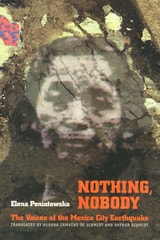
Nothing, Nobody
The Voices of the Mexico City EarthquakeElena Poniatowska, translated by Aurora Camacho de Schmidt, foreword by Arthur Schmidt
Temple University Press, 1995
September 19, 1985: A powerful earthquake hits Mexico City in the early morning hours. As the city collapses, the government fails to respond. Long a voice of social conscience, prominent Mexican journalist Elena Poniatowska chronicles the disintegration of the city's physical and social structure, the widespread grassroots organizing against government corruption and incompetence, and the reliency of the human spirit. As a transformative moment in the life of mexican society, the earthquake is as much a component of the country's current crisis as the 1982 debt crisis, the problematic economic of the last ten years, and the recent elections.
In masterfully weaving together a multiplicity of voices, Poniatowska has reasserted the inherent value and latent power of people working together. Punctuated by Poniatowska's own experiences and observations, these post disaster testimonies speak of the disruption of families and neighborhoods, of the destruction of homes and hospitals, of mutilation and death—the collective loss of a city. Drawing the reader dramatically into the scene of national horror through dozens of personal stories, Poniatowska demonstrates the importance of courage and self-reliance in redeeming life from chaos.
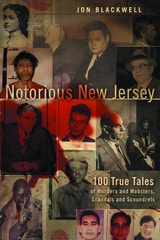
Notorious New Jersey
100 True Tales of Murders and Mobsters, Scandals and ScoundrelsJon Blackwell
Rutgers University Press, 2007
Notorious New Jersey is the definitive guide to murder, mayhem, the mob, and corruption in the Garden State. With tabloid punch, Jon Blackwell tells riveting accounts of Alexander Hamilton falling mortally wounded on the dueling grounds of Weehawken; Dutch Schultz getting pumped full of lead in the men’s room of the Palace Chop House in Newark; and a gang of Islamic terrorists in Jersey City mixing the witch’s brew of explosives that became the first bomb to rock the World Trade Center. Along with these dramatic stories are tales of lesser-known oddities, such as the nineteenth-century murderer whose skin was turned into leather souvenirs, and the state senator from Jersey City who faked his death in a scuba accident in the 1970s in an effort to avoid prison.
Blackwell also sheds light on some historical whodunits—was Bruno Hauptmann really guilty of kidnapping the Lindbergh baby? Who was behind the anthrax attacks of 2001? Not forgotten either are notorious characters who may actually be innocent, including Rubin “Hurricane” Carter, and those who have never been convicted of wrongdoing although they left office in scandal, including Robert Torricelli and James McGreevey.
Through 100 historic true-crime tales that span over 300 years of history, Blackwell shows readers a side of New Jersey that would make even the Sopranos shudder.

Nourish the People
The State Civilian Granary System in China, 1650–1850Pierre-Etienne Will and R. Bin Wong; With James Lee; Contributions by Jean Oi and Peter Perdue
University of Michigan Press, 1991
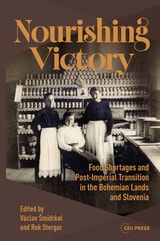
Nourishing Victory
Food Shortages and Post-Imperial Transition in the Bohemian Lands and SloveniaRok Stergar
Central European University Press, 2026

Novel Bodies
Disability and Sexuality in Eighteenth-Century British LiteratureJason S. Farr
Bucknell University Press, 2019
Published by Bucknell University Press. Distributed worldwide by Rutgers University Press.
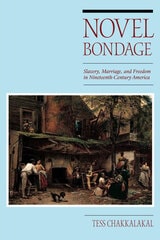
Novel Bondage
Slavery, Marriage, and Freedom in Nineteenth-Century AmericaTess Chakkalakal
University of Illinois Press, 2013
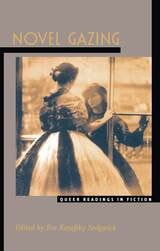
Novel Gazing
Queer Readings in FictionEve Kosofsky Sedgwick, ed.
Duke University Press, 1997
Through discussions of a diverse array of British, French, and American novels—including major canonical novels, best-sellers, children’s fiction, and science fiction—these essays explore queer worlds of taste, texture, joy, and ennui, focusing on such subjects as flogging, wizardry, exorcism, dance, Zionist desire, and Internet sexuality. Interpreting the works of authors as diverse as Benjamin Constant, Toni Morrison, T. H. White, and William Gibson, along with canonical queer modernists such as James, Proust, Woolf, and Cather, contributors reveal the wealth of ways in which selves and communities succeed in extracting sustenance from the objects of a culture whose avowed desire has often been not to sustain them. The dramatic reframing that these essays perform will make the significance of Novel Gazing extend beyond the scope of queer studies to literary criticism in general.
Contributors. Stephen Barber, Renu Bora, Anne Chandler, James Creech, Tyler Curtain, Jonathan Goldberg, Joseph Litvak, Michael Lucey, Jeff Nunokawa, Cindy Patton, Jacob Press, Robert F. Reid-Pharr, Eve Kosofsky Sedgwick, Melissa Solomon, Kathryn Bond Stockton, John Vincent, Maurice Wallace, Barry Weller
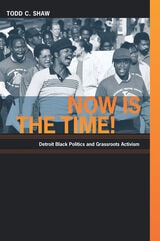
Now Is the Time!
Detroit Black Politics and Grassroots ActivismTodd C. Shaw
Duke University Press, 2009
Shaw uses the tools of social movement analysis, including the quantitative analysis of budgets, electoral data, and housing statistics, as well as historical research and personal interviews, to better understand the dilemmas, innovations, and dynamics of grassroots activism. He begins with a history of discriminatory housing practices and racial divisions that deeply affected Detroit following the Second World War and set the stage for the election of the city’s first black mayor, Coleman Young. By emphasizing downtown redevelopment, Mayor Young’s administration often collided with low-income housing advocates. Only through grassroots activism were those advocates able to delay or derail governmental efforts to demolish low-income housing in order to make way for more upscale development. Shaw then looks at present-day public housing activism, assessing the mixed success of the nationally sponsored HOPE VI project aimed at fostering home ownership in low-income areas. Descriptive and prescriptive, Now Is the Time! traces the complicated legacy of community activism to illuminate what is required for grassroots activists to be effective in demanding public accountability to poor and marginalized citizens.
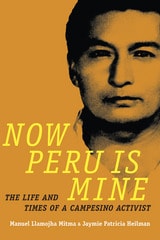
Now Peru Is Mine
The Life and Times of a Campesino ActivistManuel Llamojha Mitma and Jaymie Patricia Heilman
Duke University Press, 2016

Nowaki
Natsume Soseki; Translated and with an Afterword and Chronology by William N. Ridgeway
University of Michigan Press, 2011
Nowville
The Untold History of Nashville's Contemporary Art SceneJoe Nolan
Vanderbilt University Press, 2024
This is the origin story of Nashville’s surging contemporary art scene told by the ones who were there before anyone else. Not a story about commercial spaces or official institutions—this is the story of moldy warehouse studios and improvised galleries, happy-kegger after-parties and front lawn art sales, exhibitions in apartment living rooms and secret art displays hidden in plain sight.
Nowville is an oral history of the Nashville art scene beginning in the 1990s. Author Joe Nolan tracks down the city’s art punks, art monks, radical art students, and visionary pioneers to share what made their moments in Nashville so special. He also offers insights into how this homespun movement powered by DIY innovating came to be a thriving creative community and a cornerstone of the city’s contemporary allure.
This book is the recipient of the 2025 Norman L. and Roselea J. Goldberg Prize from Vanderbilt University Press for the best book in the area of art or medicine.
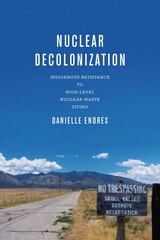
Nuclear Decolonization
Indigenous Resistance to High-Level Nuclear Waste SitingDanielle Endres
The Ohio State University Press, 2023
Honorable Mention, 2024 NCA Public Address Division’s Marie Hochmuth Nichols Award
Honorable Mention, 2025 Association for the Rhetoric of Science, Technology, and Medicine Book Award
While research demonstrates how Indigenous populations have been disproportionately affected by the global nuclear production complex, less attention has been given to tactics that have successfully resisted such projects. Danielle Endres’s Nuclear Decolonization shifts the conversation around nuclear colonialism in important ways, offering an account of how the Western Shoshone, Southern Paiute, and Skull Valley Goshute peoples and nations prevented two high-level nuclear waste sites from being built on their lands.
Using a decolonial approach, Endres highlights two sets of rhetorical tactics—Indigenous Lands rhetorics and national interest rhetorics—used to fight nuclear colonialism. The book reframes nuclear decolonization as fundamentally a struggle for the return of Indigenous lands while also revealing how Native activists selectively move between Indigenous nationhood and US citizenship in order to resist settler decision-making. Working at the intersection of Indigenous antinuclear advocacy, Indigenized environmental justice, and decolonization, Nuclear Decolonization centers Native activism and voices while amplifying the power and resilience of Indigenous peoples and nations.

Nuclear Freeze in a Cold War
The Reagan Administration, Cultural Activism, and the End of the Arms RaceWilliam M. Knoblauch
University of Massachusetts Press, 2017
Alarmed, the Reagan administration worked to co-opt the rhetoric of the nuclear freeze and contain antinuclear activism. Recently declassified White House memoranda reveal a concerted campaign to defeat activists' efforts. In this book, William M. Knoblauch examines these new sources, as well as the influence of notable personalities like Carl Sagan and popular culture such as the film The Day After, to demonstrate how cultural activism ultimately influenced the administration's shift in rhetoric and, in time, its stance on the arms race.
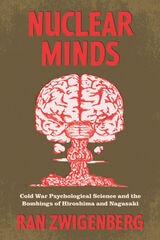
Nuclear Minds
Cold War Psychological Science and the Bombings of Hiroshima and NagasakiRan Zwigenberg
University of Chicago Press, 2023
In 1945, researchers on a mission to Hiroshima with the United States Strategic Bombing Survey canvassed survivors of the nuclear attack. This marked the beginning of global efforts—by psychiatrists, psychologists, and other social scientists—to tackle the complex ways in which human minds were affected by the advent of the nuclear age. A trans-Pacific research network emerged that produced massive amounts of data about the dropping of the bomb and subsequent nuclear tests in and around the Pacific rim.
Ran Zwigenberg traces these efforts and the ways they were interpreted differently across communities of researchers and victims. He explores how the bomb’s psychological impact on survivors was understood before we had the concept of post-traumatic stress disorder. In fact, psychological and psychiatric research on Hiroshima and Nagasaki rarely referred to trauma or similar categories. Instead, institutional and political constraints—most notably the psychological sciences’ entanglement with Cold War science—led researchers to concentrate on short-term damage and somatic reactions or even, in some cases, on denial of victims’ suffering. As a result, very few doctors tried to ameliorate suffering.
But, Zwigenberg argues, it was not only that doctors “failed” to issue the right diagnosis; the victims’ experiences also did not necessarily conform to our contemporary expectations. As he shows, the category of trauma should not be used uncritically in a non-Western context. Consequently, this book sets out, first, to understand the historical, cultural, and scientific constraints in which researchers and victims were acting and, second, to explore how suffering was understood in different cultural contexts before PTSD was a category of analysis.
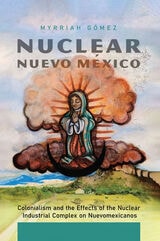
Nuclear Nuevo México
Colonialism and the Effects of the Nuclear Industrial Complex on NuevomexicanosMyrriah Gómez
University of Arizona Press, 2022
Contrary to previous works that suppress Nuevomexicana/o presence throughout U.S. nuclear history, Nuclear Nuevo México focuses on recovering the voices and stories that have been lost or ignored in the telling of this history. By recuperating these narratives, Myrriah Gómez tells a new story of New Mexico, one in which the nuclear history is not separate from the collective colonial history of Nuevo México but instead demonstrates how earlier eras of settler colonialism laid the foundation for nuclear colonialism in New Mexico.
Gómez examines the experiences of Nuevomexicanas/os who have been impacted by the nuclear industrial complex, both the weapons industry and the commercial industry. Gómez argues that Los Alamos was created as a racist project that targeted poor and working-class Nuevomexicana/o farming families, along with their Pueblo neighbors, to create a nuclear empire. The resulting imperialism has left a legacy of disease and distress throughout New Mexico that continues today.
Nuer Conquest
The Structure and Development of an Expansionist SystemRaymond C. Kelly
University of Michigan Press, 1985
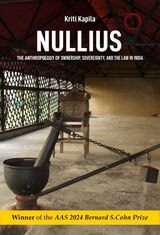
Nullius
The Anthropology of Ownership, Sovereignty, and the Law in IndiaKriti Kapila
HAU, 2022
Nullius is an award-winning anthropological account of the troubled status of ownership in India and its consequences for our understanding of sovereignty and social relations. Though property rights and ownership are said to be a cornerstone of modern law, in the Indian case they are often a spectral presence. Kapila offers a detailed study of paradigms where proprietary relations have been erased, denied, misappropriated.
The book examines three forms of negation, where the Indian state de facto adopted doctrines of terra nullius (in the erasure of indigenous title), res nullius (in acquiring museum objects), and, controversially, corpus nullius (in denying citizens ownership of their bodies under biometrics). The result is a pathbreaking reconnection of questions of property, exchange, dispossession, law, and sovereignty.
Nullius is the winner of the 2024 Bernard S. Cohn Prize, Association of Asian Studies.
Numbered Voices
How Opinion Polling Has Shaped American PoliticsSusan Herbst
University of Chicago Press, 1993
Exploring the history of public opinion in the United States from the mid-nineteenth century to the present day, Herbst shows how numbers served both instrumental and symbolic functions, not only conveying neutral information but creating a basis authority. Addressing how the quantification of public opinion has affected contemporary politics and the democratic process, Herbst asks difficult but fundamental questions about the workings of American politics.
"An original and thought-provoking analysis of why we have polls, what they accomplish, and how they affect the current political scene. Herbst's scholarship is impeccable, her writing is clear and crisp, and her findings are original. . . . Every reader will benefit by carefully weighing the issues she raises and the conclusions she draws."—Doris A. Graber, Political Science Quarterly
"An intelligent, theoretically rich, and historically broad account of public opinion over several millennia. . . . The historical accounts are interesting and her interpretations are thought-provoking."—Paul Brace, Journal of American History
Numbers and Nerves
Information, Emotion, and Meaning in a World of DataScott Slovic
Oregon State University Press, 2015
The essays and interviews in Numbers and Nerves explore the quandary of our cognitive responses to quantitative information, while also offering compelling strategies for overcoming insensitivity to the meaning of such information. With contributions by journalists, literary critics, psychologists, naturalists, activists, and others, this book represents a unique convergence of psychological research, discourse analysis, and visual and narrative communication.
At a time of unprecedented access to information, our society is frequently stymied in its efforts to react to the world’s massive problems. Many of these problems are systemic, deeply rooted in seemingly intransigent cultural patterns and lifestyles. In order to sense the significance of these issues and begin to confront them, we must first understand the psychological tendencies that enable and restrict our processing of numerical information.
Numbers and Nerves explores a wide range of psychological phenomena and communication strategies—fast and slow thinking, psychic numbing, pseudoinefficacy, the prominence effect, the asymmetry of trust, contextualized anecdotes, multifaceted mosaics of prose, and experimental digital compositions, among others—and places these in real-world contexts. In the past two decades, cognitive science has increasingly come to understand that we, as a species, think best when we allow numbers and nerves, abstract information and experiential discourse, to work together. This book provides a roadmap to guide that collaboration. It will be invaluable to scholars, educators, professional communicators, and anyone who struggles to grasp the meaning behind the numbers.