Results by title
2817 books match the query 'Nature' and 98 start with n
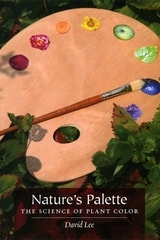
Nature's Palette
The Science of Plant ColorDavid Lee
University of Chicago Press, 2007
Nature’s Palette is the fully ripened fruit of that journey—a highly illustrated, immensely entertaining exploration of the science of plant color. Beginning with potent reminders of how deeply interwoven plant colors are with human life and culture—from the shifting hues that told early humans when fruits and vegetables were edible to the indigo dyes that signified royalty for later generations—Lee moves easily through details of pigments, the evolution of color perception, the nature of light, and dozens of other topics. Through a narrative peppered with anecdotes of a life spent pursuing botanical knowledge around the world, he reveals the profound ways that efforts to understand and exploit plant color have influenced every sphere of human life, from organic chemistry to Renaissance painting to the highly lucrative orchid trade.
Lavishly illustrated and packed with remarkable details sure to delight gardeners and naturalists alike, Nature’s Palette will enchant anyone who’s ever wondered about red roses and blue violets—or green thumbs.
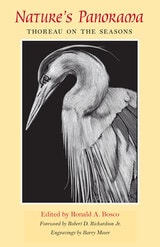
Nature's Panorama
Thoreau on the SeasonsRonald A. Bosco
University of Massachusetts Press, 2005
Sponsored by the Thoreau Society, the brief, handsomely presented books in this series offer the thoughts of a great writer on a variety of topics, some that we readily associate with him, some that may be surprising. Each volume includes selections from his familiar published works as well as from less well known lectures, letters, and journal entries. The books include original engravings by renowned illustrator and book artist Barry Moser.
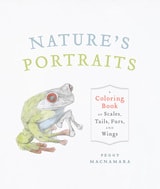
Nature's Portraits
A Coloring Book of Scales, Tails, Furs, and WingsPeggy Macnamara
University of Chicago Press, 2016
Nature’s Portraits offers sixty of Macnamara’s detailed drawings that can be brought brilliantly to life with nothing more than a few colored pencils or crayons and a sense of wonder about the world around us. Many of the drawings depict animals as they might appear in their natural habitats—like a tree frog, a dashing, playful fox, a snowy owl poised for flight, a sauntering jaguar, and a watchful herd of giraffe. These wild furry and feathered friends are joined by animals found in museums, including Sue, the Field Museum’s resident Tyrannosaurus rex. Each illustration is captioned with a brief scientific description of the species pictured.
Combining inspiration from natural history with a calming, creative activity, Nature’s Portraits encourages us to take a closer look at what we miss when we don’t take the time to stop and look with deep appreciation at the bounty of the natural world around us.
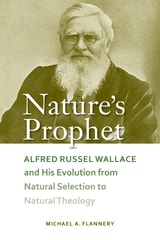
Nature's Prophet
Alfred Russel Wallace and His Evolution from Natural Selection to Natural TheologyMichael A. Flannery
University of Alabama Press, 2018
An astute study of Alfred Russel Wallace’s path to natural theology.
A spiritualist, libertarian socialist, women’s rights advocate, and critic of Victorian social convention, Alfred Russel Wallace was in every sense a rebel who challenged the emergent scientific certainties of Victorian England by arguing for a natural world imbued with purpose and spiritual significance. Nature’s Prophet: Alfred Russel Wallace and His Evolution from Natural Selection to Natural Theology is a critical reassessment of Wallace’s path to natural theology and counters the dismissive narrative that Wallace’s theistic and sociopolitical positions are not to be taken seriously in the history and philosophy of science.
Author Michael A. Flannery provides a cogent and lucid account of a crucial—and often underappreciated—element of Wallace’s evolutionary worldview. As co-discoverer, with Charles Darwin, of the theory of natural selection, Wallace willingly took a backseat to the well-bred, better known scientist. Whereas Darwin held fast to his first published scientific explanations for the development of life on earth, Wallace continued to modify his thinking, refining his argument toward a more controversial metaphysical view which placed him within the highly charged intersection of biology and religion.
Despite considerable research into the naturalist’s life and work, Wallace’s own evolution from natural selection to natural theology has been largely unexplored; yet, as Flannery persuasively shows, it is readily demonstrated in his writings from 1843 until his death in 1913. Nature’s Prophet provides a detailed investigation of Wallace’s ideas, showing how, although he independently discovered the mechanism of natural selection, he at the same time came to hold a very different view of evolution from Darwin.
Ultimately, Flannery shows, Wallace’s reconsideration of the argument for design yields a more nuanced version of creative and purposeful theistic evolution and represents one of the most innovative contributions of its kind in the Victorian and Edwardian eras, profoundly influencing a later generation of scientists and intellectuals.
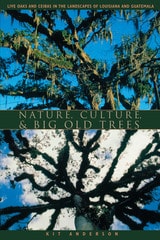
Nature, Culture, and Big Old Trees
Live Oaks and Ceibas in the Landscapes of Louisiana and GuatemalaBy Kit Anderson
University of Texas Press, 2004
Big old trees inspire our respect and even affection. The poet Walt Whitman celebrated a Louisiana live oak that was solitary "in a wide flat space, / Uttering joyous leaves all its life without a friend a lover near." Groves and alleys of live oaks remain as distinctive landscape features on Louisiana's antebellum plantations, while massive individuals still cast their shade over churches, graveyards, parks, and roads. Cajuns have adopted the "Evangeline Oak" as one of their symbols. And the attachment that Louisianians feel for live oaks is equaled by that of Guatemalans for ceibas, the national tree of Guatemala. Long before Europeans came to the Americas, the ceiba, tallest of all native species, was the Mayan world tree, the center of the universe. Today, many ceibas remain as centers of Guatemalan towns, spreading their branches over the central plaza and marketplace.
In this compelling book, Kit Anderson creates a vibrant portrait of the relationship between people and trees in Louisiana and Guatemala. Traveling in both regions, she examined and photographed many old live oaks and ceibas and collected the stories and symbolism that have grown up around them. She describes who planted the trees and why, how the trees have survived through many human generations, and the rich meanings they hold for people today. Anderson also recounts the natural history of live oaks and ceibas to show what human use of the landscape has meant for the trees. This broad perspective, blending cultural geography and natural history, adds a new dimension to our understanding of how big old trees and the places they help create become deeply meaningful, even sacred, for human beings.
Nature/Southwestern Colorado C*Op*
D Paulson
University Press of Colorado, 2006
Nature
Course Notes from the College de FranceMaurice Merleau-Ponty
Northwestern University Press, 2000
Merleau-Ponty's project in these courses is an interrogation of nature, a task at the center of his investigation of perception, truth, and subjectivity. The first course, a survey of the historical elements in our concept of nature, examines first the Cartesian concept of nature and then historical and contemporary responses to Descartes, all with an eye toward developing a vision of nature more consistent with the findings of contemporary science.
In the second course, Merleau-Ponty takes up the problem of the relation of nature to ontology in general. Here, the key question is how the animal finds itself in its world. Because the human body is ultimately "an animal of movements and perceptions," humanity is intertwined with animality.
In the third course, "Nature and Logos: The Human Body," Merleau-Ponty assesses his previous findings and examines the emergence of the human body at the intersection of nature and Logos. This course, contemporaneous with the working notes for <i>The Visible and the Invisible<i>, allows us to observe the evolution of that work as well as to revisit the research he had begun in <i>Primacy of Perception</i>.
In these traces: a new reading of Descartes; a measured appreciation of Schelling; an assessment of recent developments in the sciences (both physical and biological) that leads to the notion of the body as a "system of equivalencies"; and an examination of the phenomenon of life. We have a wealth of material that allows us to reconsider Merleau-Ponty's thinking and to engage his philosophical project anew.
Before his death in 1961, Maurice Merleau-Ponty was chair in philosophy at the Collège de France.
Robert Vallier is completing his doctoral work on Merleau-Ponty and Schelling at DePaul University. He has also taught at the Universite de Paris-X (Nanterre) and at the College Internationale de Philosophie.
Natures of Colonial Change
Environmental Relations in the Making of the TranskeiJacob A. Tropp
Ohio University Press, 2006
In this groundbreaking study, Jacob A. Tropp explores the interconnections between negotiations over the environment and an emerging colonial relationship in a particular South African context—the Transkei—subsequently the largest of the notorious “homelands” under apartheid.
In the late nineteenth century, South Africa’s Cape Colony completed its incorporation of the area beyond the Kei River, known as the Transkei, and began transforming the region into a labor reserve. It simultaneously restructured popular access to local forests, reserving those resources for the benefit of the white settler economy. This placed new constraints on local Africans in accessing resources for agriculture, livestock management, hunting, building materials, fuel, medicine, and ritual practices.
Drawing from a diverse array of oral and written sources, Tropp reveals how bargaining over resources—between and among colonial officials, chiefs and headmen, and local African men and women—was interwoven with major changes in local political authority, gendered economic relations, and cultural practices as well as with intense struggles over the very meaning and scope of colonial rule itself.
Natures of Colonial Change sheds new light on the colonial era in the Transkei by looking at significant yet neglected dimensions of this history: how both “colonizing” and “colonized” groups negotiated environmental access and how such negotiations helped shape the broader making and meaning of life in the new colonial order.
Navajo Textiles
The Crane Collection at the Denver Museum of Nature and ScienceLaurie D. Webster
University Press of Colorado, 2017
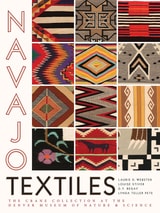
Navajo Textiles provides a nuanced account the Navajo weavings in the Crane Collection at the Denver Museum of Nature & Science—one of the largest collections of Navajo textiles in the world. Bringing together the work of anthropologists and indigenous artists, the book explores the Navajo rug trade in the mid-nineteenth century and changes in the Navajo textile market while highlighting the museum’s important, though still relatively unknown, collection of Navajo textiles.
In this unique collaboration among anthropologists, museums, and Navajo weavers, the authors provide a narrative of the acquisition of the Crane Collection and a history of Navajo weaving. Personal reflections and insights from foremost Navajo weavers D. Y. Begay and Lynda Teller Pete are also featured, and more than one hundred stunning full-color photographs of the textiles in the collection are accompanied by technical information about the materials and techniques used in their creation. An introduction by Ann Lane Hedlund documents the growing collaboration between Navajo weavers and museums in Navajo textile research.
The legacy of Navajo weaving is complex and intertwined with the history of the Diné themselves. Navajo Textiles makes the history and practice of Navajo weaving accessible to an audience of scholars and laypeople both within and outside the Diné community.

Near Human
Border Zones of Species, Life, and BelongingMette N. Svendsen
Rutgers University Press, 2022
Nelumbonaceae to Vitaceae
Water Lotuses to GrapesRobert H. Mohlenbrock
Southern Illinois University Press, 2010
In this fourth and final installment in the Aquatic and Standing Water Plants of the Central Midwest series, veteran botanist Robert H. Mohlenbrock identifies aquatic and wetland plants in eight central Midwestern states, which include Iowa, Illinois, Indiana, Ohio, Kansas, Kentucky (excluding the Cumberland Mountain region), Missouri, and Nebraska.
Nelumbonaceae to Vitaceae: Water Lotuses to Grapes contains 346 highly informative and technically accurate illustrations as well as ecological information, nomenclature, and keys for plants in the aforementioned families, including white water lily, fireweed, smartweed, mild water pepper, hawthorn, and wild strawberry. Mohlenbrock identifies and describes each plant in concise and readable prose and indicates its usual habitats and the states in which it occurs.
As with previous volumes, Mohlenbrock organizes each species into three groups: truly aquatic plants, which spend their entire life with their vegetative parts either completely submerged or floating on the water’s surface; emergents, which are usually rooted under water with their vegetative parts standing above the water’s surface; and wetland plants, which live most or all of their lives out of water.
With Nelumbonaceae to Vitaceae, Mohlenbrock completes the four-volume series organizing and identifying wetland plants in the central Midwest. The botanical series will aid many, from teachers and students to state and federal employees, focused on conservation efforts and mitigation issues.

Neotropical Birds
Ecology and ConservationDouglas F. Stotz, John W. Fitzpatrick, Theodore A. Parker III, and Debra K. Moskovits
University of Chicago Press, 1996
Because bird communities are good indicators of habitat type and condition, and because extensive bird surveys can be done quickly, bird communities are critical to rapid evaluations of an ecosystem's biological value and integrity. The authors analyze the bird species of major habitats from a conservation perspective, and develop specific guidelines to illustrate how governments, conservation organizations, and wildlife managers can use this ecological information to anchor conservation strategies on sound biological reality.
"Students of ecology and wildlife management, as well as conservationists, will benefit from this book . . . . Governmental and conservation agencies should use this book when making critical decisions about where to focus their efforts as they work to preserve the environment in fragile regions of the world." —Edward I. Saiff, Science Books & Films
Neotropical Rainforest Mammals
A Field GuideLouise H. Emmons and François Feer
University of Chicago Press, 1997
In this completely revised and updated second edition:
A total of 226 species are treated in full (206 were included in the first edition).
All species accounts retained from the first edition have been updated to include the most recent research.
All 195 maps showing the distribution and geographic range of each species have been revised to reflect the most current information.
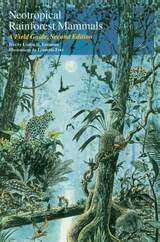
Twenty-nine beautiful color plates illustrate more than 220 species (including significant color variants between males and females or adults and young). Seven black-and-white plates contain more than 60 images of individual species, mainly bats.
A compact disc of mammal vocalizations—crucial to identifying nocturnal and otherwise cryptic animals that sometimes may be heard rather than seen—will be available for purchase separately.
Praise for the first edition:
"If you can't go to the Central and South American rain forests to see firsthand their threatened ecosystems, here is the next best thing."—Washington Post Book World
"A large amount of information is presented concisely and in a way that is easy to use."—Choice
"The presentation and wealth of information contained in this field guide is outstanding and will satisfy the needs of both the 'tourist' and 'researcher' traveling to the Neotropics."—Canadian Field-Naturalist
Neotropical Wildlife Use and Conservation
Edited by John G. Robinson and Kent H. Redford
University of Chicago Press, 1991
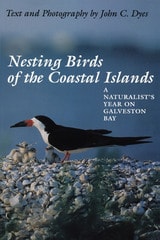
Nesting Birds of the Coastal Islands
A Naturalist's Year on Galveston BayBy John C. Dyes
University of Texas Press, 1993
Every year, more than twenty species of terns, gulls, and colonial wading birds raise their young on rookery islands all along the Gulf Coast. Their breeding and nesting activities go on in the wake of passing oil tankers, commercial fishing vessels, and pleasure boats of all kinds—human traffic that threatens their already circumscribed habitats.
John C. Dyes has spent more than ten years photographing and observing the birds in their rookeries on the Texas Coast, and, in Nesting Birds of the Coastal Islands, he presents a year in the birds' life through fine photographs and an evocative and informative text. In a month-by-month account, he follows the annual rituals and daily dramas of courtship, mating, and chick rearing among herons, egrets, spoonbills, cormorants, ibises, and other birds that migrate and gather in colonies ranging from half a dozen birds to tens of thousands.
Net Values
Environmental, Economic, and Social Entanglements in the Gulf of CaliforniaNicole D. Peterson
University of Arizona Press, 2025
In Loreto, Baja California Sur, Mexico, artisanal fishing families and staff of Loreto Bay National Park face an array of choices as tourism, environmental concerns, and economic precarity challenge livelihoods and natural resource availability. In Net Values, Nicole D. Peterson offers a critical examination of how the idea of “choice” is understood, and what it means for policies, planning, and programs to ignore the social, political, economic, and cultural contexts surrounding these choices.
Anchored by more than twenty years of research, Peterson provides insight into the fishing community of Loreto and reveals an important role in decision-making that diverges from previous studies. She argues that decisions about fishing, natural resource management, and other aspects of life are influenced by context, values, and expectations in ways that go beyond the typical psychological or cognitive theories of choice. Instead, Net Values highlights the ways that choices are constrained and enabled by values and expectations of cultures, histories, relationships, and experiences, both personal and shared. Peterson answers questions such as “why do the fishermen fish?” or “what is the marine park staff doing?” These decisions and choices are related to the larger implication addressed by this book: that in order to make effective policies around natural resource management and other issues, we must understand how those potential policies interact with the decision processes already underway.
Divided into five chapters, Net Values is rich in ethnographic detail, drawing from real people to inform the narratives, chapters, and theoretical elaboration. Peterson’s interactions with fishers such as Don Javier and his family and friends support the ideas offered around choice, values, and strategies, connecting ideas to real experiences.
Nevada Mountains
Landforms, Trees, and VegetationDavid Alan Charlet
University of Utah Press, 2020
Divided into three parts, the book presents a simple system recognizing the primary landscape features of Nevada. Part I describes the methods used to define the boundaries of the ranges and divides the state into meaningful landforms. Part II describes the ecological life zones and their vegetation types. Part III describes the individual mountain ranges. Each mountain range entry contains a descriptive narrative and a data summary that includes the county or counties in which the range occurs, whether the author has visited and collected plants there, the highest point, the base elevation, a brief discussion of the geology, any historic settlements or post offices located in the range, the distribution of life zones, and a list of all conifers and flowering trees.
The result of over thirty years of exploration and study throughout the state, this is a long-overdue compendium of Nevada’s mountains and associated flora. This book is a required reference for anyone venturing out into the Nevada wilds.
Nevada's Changing Wildlife Habitat
An Ecological HistoryGeorge E. Gruell
University of Nevada Press, 2013
For millennia the ecology of the Great Basin has evolved because of climate change and the impacts of human presence. Nevada’s Changing Wildlife Habitat is the first book to explain the transformations in the plants and animals of this region over time and how they came about. Using data gleaned from archaeological and anthropological studies, numerous historical documents, repeat photography, and several natural sciences, the authors examine changes in vegetation and their impact on wildlife species and the general health of the environment. They also outline the choices that current users and managers of rangelands face in being good stewards of this harsh but fragile environment and its wildlife.
Nevada's Environmental Legacy
Progress or PlunderJames W. Hulse
University of Nevada Press, 2009
Nevada's relatively brief history (it became a state in 1864) has been largely a story of the exploitation of its natural resources. Mining has torn down mountains and poisoned streams and groundwater. Uncontrolled grazing by vast herds of sheep and cattle has denuded grasslands and left them prey to the invasion of noxious plant species and vulnerable to wildfire. Clear-cut logging practices have changed the composition of forests and induced serious soil erosion. More recently, military testing, including hundreds of atomic blasts to determine the efficacy of nuclear weapons, has irreversibly polluted expanses of fragile desert landscape. And rampant development throughout the state over the past four decades, along with the public's growing demand for recreational facilities, has placed intolerable demands on the arid state's limited water resources and threatened the survival of numerous rare plant and animal species. Veteran historian and Nevada native James W. Hulse considers the state's complex environmental history as a series of Faustian bargains between the state's need for economic development and the industries, government agencies, and individuals that have exploited Nevada's natural resources with little concern for the long-term consequences of their activities. His survey covers all these issues, and examines public attitudes about the environment and the role of federal and state agencies in creating, interpreting, and enforcing environmental policies.

New England Weather, New England Climate
Gregory A. Zielinski
University of New Hampshire Press, 2005
Combining a scholarly appreciation of weather systems and events with an ability to transmit their passion to a general audience, Gregory A. Zielinski and Barry D. Keim have written a one-of-a-kind guide to New England weather and climate. Not only are weather patterns in New England more changeable and more extreme than almost anywhere in the country, New England is the ultimate destination of nearly all storm tracks nationwide. Recently, newsworthy items such as global warming, El Niño, and La Niña have significantly impacted our local weather, in both the short and long term. Luckily, the science of meteorology and climatology and their tools of observation and analysis have made great strides in the past few years.
The authors offer an in-depth explanation of the latest theoretical insights into New England's weather along with a flurry of stories and lore about the vagaries of our clime. The book is divided into the seasons as we actually experience them—ski season, mud season, beach and lake season, and foliage season. It includes photos and illustrations: some all too familiar, many hard to believe. Zielinski and Keim succeed in providing an illuminating and entertaining analysis and commentary while whole-heartedly embracing our region's atmospheric peculiarities. This book won't do anything about New England's weather or climate but it will help you understand each of them.
New England Wildlife
Habitat, Natural History, and DistributionRichard M. DeGraaf and Mariko Yamasaki
University Press of New England, 2000

New Jersey Ferns and Fern Allies
Montgomery, James D.
Rutgers University Press, 1993
New Jersey is exceptionally rich in ferns, as three centuries of naturalists have recognized. Both amateur and professional botanists will welcome this new, complete, fully illustrated guide to the state's ferns and fern allies (the lycopods and horsetails). After an introduction to fern classification and nomenclature, the history of fern collecting, and the ecology and distribution of ferns within New Jersey, the authors describe eighty-three species, in thirty genera, and thiry-two hybrid forms (more than any other state). They include a fascinating account of the rare curly-grass fern, Schizaea pusilla, "New Jersy's most famous plant."
For each species, the authors provide a detailed drawing and comments on taxonomy, habitat, chromosome counts, habits of growth, and status as endangered species. Distribution maps show not only where plants have been collected, but also the time period for the most recent date of collectionÐÐa convenient way of showing the plant's spread or depletion. Throughout, the book reflects the latest research by fern experts.
An essential field guide and reference for naturalists, botanists, hikers, gardeners, and conservationists in New Jersey and the mid-Atlantic states.
New Jersey Parks, Forests, and Natural Areas
A GuideBrown, Michael P
Rutgers University Press, 2004
Want to know where in New Jersey you can go fossil hunting? How about cranberry harvesting? Perhaps you’d like to find the most accessible Garden State fishing areas for people with disabilities? Or maybe you’ve just been wondering how Double Trouble State Park got its name?
Now in its third edition, this updated guide—the first of its kind for New Jersey—lists over 250 parks, forests, and natural areas in the Garden State, from national, state, city, and county parks to nature preserves run by non-profit groups, arboretums, and undeveloped wildlife management areas. Wherever you live in New Jersey, you can find a beautiful place nearby for picnicking, hiking, camping, hunting, fishing, boating, and a host of other outdoor activities. All are open to the public, and most are free or charge only a small fee. Michael Brown divides the state into six regions along county lines and includes helpful maps, so outdoor enthusiasts can easily plan excursions.
For each park, the guide provides up-to-date, practical information about locations and phone numbers, fees, hours, seasons, acreage, regulations, handicap access, special facilities and activities, campsites, swimming and boat launching sites, restrooms, playgrounds and picnic sites, hunting and fishing, and hiking. Also included in this edition is broadened coverage of mountain biking and horseback riding.
New Jersey's Environments
Past, Present, and FutureMaher, Neil M
Rutgers University Press, 2006
Americans often think of New Jersey as an environmental nightmare. As seen from its infamous turnpike, which is how many travelers experience the Garden State, it is difficult not to be troubled by the wealth of industrial plants, belching smokestacks, and hills upon hills of landfills. Yet those living and working in New Jersey often experience a very different environment. Despite its dense population and urban growth, two-thirds of the state remains covered in farmland and forest, and New Jersey has a larger percentage of land dedicated to state parks and forestland than the average for all states. It is this ecological paradox that makes New Jersey important for understanding the relationship between Americans and their natural world.
In New Jersey’s Environments,historians, policy-makers, and earth scientists use a case study approach to uncover the causes and consequences of decisions regarding land use, resources, and conservation. Nine essays consider topics ranging from solid waste and wildlife management to the effects of sprawl on natural disaster preparedness. The state is astonishingly diverse and faces more than the usual competing interests from environmentalists, citizens, and businesses.
This book documents the innovations and compromises created on behalf of and in response to growing environmental concerns in New Jersey, all of which set examples on the local level for nationwide and worldwide efforts that share the goal of protecting the natural world.
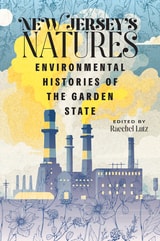
New Jersey's Natures
Environmental Histories of the Garden StateRaechel Lutz
Rutgers University Press, 2026
New Jersey’s Natures takes up the challenge of expanding academic and popular conceptions of New Jersey and its landscapes through the lens of environmental history. Scholars’ essays showcase the ways in which nature is integral to understandings of the state and its past as well as its future. These essays show that New Jersey should no longer solely be known as a place where pollution and suburbanization run amok but rather a place where history happens.
The contributors investigate how nature and history are intertwined within this small but mighty state, covering topics from the colonial period to the present across North, South, and Central Jersey. They investigate natural features like the Delaware River and Bay, the Pinelands, and the unforgettable Jersey Shore. In this book, you will find Indigenous Americans making meaning as settlers threaten their ways of life, Governor William Livingston considering Central Jersey’s features as he fights in the American Revolution, farmers building the state’s industrial agriculture, a foreign diplomat planting an arboretum, squatters in the swampy Meadowlands subverting social and economic norms, activists fighting for parks, forests, and beaches across two centuries, and much more.
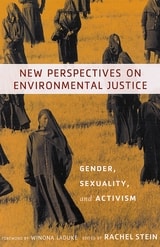
New Perspectives on Environmental Justice
Gender, Sexuality, and ActivismStein, Rachel
Rutgers University Press, 2004
Women make up the vast majority of activists and organizers of grassroots movements fighting against environmental ills that threaten poor and people of color communities. New Perspectives on Environmental Justice is the first collection of essays that pays tribute to the enormous contributions women have made in these endeavors.
The writers offer varied examples of environmental justice issues such as children's environmental health campaigns, cancer research, AIDS/HIV activism, the Environmental Genome Project, and popular culture, among many others. Each one focuses on gender and sexuality as crucial factors in women's or gay men's activism and applies environmental justice principles to related struggles for sexual justice. The contributors represent a wide variety of activist and scholarly perspectives including law, environmental studies, sociology, political science, history, medical anthropology, American studies, English, African and African American studies, women's studies, and gay and lesbian studies, offering multiple vantage points on gender, sexuality, and activism.
Feminist/womanist impulses shape and sustain environmental justice movements around the world, making an understanding of gender roles and differences crucial for the success of these efforts.
New Wilderness Voices
Collected Essays from the Waterman Fund ContestEdited by Christine Woodside
University Press of New England, 2017
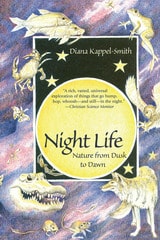
Night Life
Nature from Dusk to DawnDiana Kappel-Smith
University of Arizona Press, 0
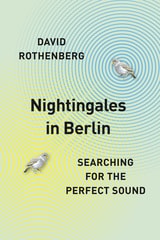
Nightingales in Berlin
Searching for the Perfect SoundDavid Rothenberg
University of Chicago Press, 2019
But have you ever listened closely to a nightingale’s song? It’s a strange and unsettling sort of composition—an eclectic assortment of chirps, whirs, trills, clicks, whistles, twitters, and gurgles. At times it is mellifluous, at others downright guttural. It is a rhythmic assault, always eluding capture. What happens if you decide to join in?
As philosopher and musician David Rothenberg shows in this searching and personal new book, the nightingale’s song is so peculiar in part because it reflects our own cacophony back at us. As vocal learners, nightingales acquire their music through the world around them, singing amidst the sounds of humanity in all its contradictions of noise and beauty, hard machinery and soft melody. Rather than try to capture a sound not made for us to understand, Rothenberg seeks these musical creatures out, clarinet in tow, and makes a new sound with them. He takes us to the urban landscape of Berlin—longtime home to nightingale colonies where the birds sing ever louder in order to be heard—and invites us to listen in on their remarkable collaboration as birds and instruments riff off of each other’s sounds. Through dialogue, travel records, sonograms, tours of Berlin’s city parks, and musings on the place animal music occupies in our collective imagination, Rothenberg takes us on a quest for a new sonic alchemy, a music impossible for any one species to make alone. In the tradition of The Hidden Life of Trees and The Invention of Nature, Rothenberg has written a provocative and accessible book to attune us ever closer to the natural environment around us.
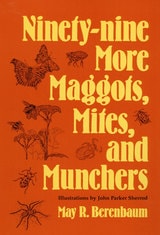
Ninety-nine More Maggots, Mites, and Munchers
May R. Berenbaum
University of Illinois Press, 1993
Why the rove beetle gives mind-altering drugs to ants
How the snail-killing fly enjoys its escargot
Why Piophila casei doesn’t care when you eat its larvae
What strange fate awaits a honey ant worker engorged with nectar
As lively as a fly in the buttermilk, Ninety-nine More Maggots, Mites, and Munchers is a who’s who and what’s THAT? guide to Lilliputian life-forms both familiar and obscure.
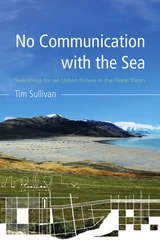
No Communication with the Sea
Searching for an Urban Future in the Great BasinTim Sullivan
University of Arizona Press, 2010
No Communication with the Sea is a journey through this urbanizing Great Basin landscape. Here, the land fosters illusions of limitless space and resources, but its space and resources are severely limited; its people live clustered in cities but are often reluctant to embrace urbanity. These tensions led journalist and urban planner Tim Sullivan to explore the developing centers and edges of the Great Basin cities and the ways some are trying to build livable and sustainable urban environments.
In this highly readable book of creative nonfiction, Sullivan employs a variety of methods—including interviews, research, travelogues, and narrative—to survey the harsh landscape for clues to the ways cities can adapt to their geography, topography, ecology, hydrography, history, and culture. No Communication with the Sea embarks on a quest for a livable future for the heart of the interior West. In the process, it both unearths the past and ponders the present and future Great Basin cities.
No More Fossils
Dominic Boyer
University of Minnesota Press, 2023
Explores ecological impasses and opportunities of our fossil-fueled civilization
It is more and more obvious that our fossilized civilization has no sustainable future. It is an ecological Ponzi scheme stealing away the lives of countless species and the wellbeing of future generations in exchange for contemporary conveniences and the luxuries of a small subset of the human population. Yet a civilization wholly beyond fossils still seems difficult to grasp.
In No More Fossils, Dominic Boyer tells the story of the rise of fossil civilization through successive phases of sucropolitics (plantation sugar), carbopolitics (industrial coal), and petropolitics (oily automobility and plasticity), showing what tethers us to the ecocidal trajectory of petroculture today and what it will take to overcome the forces that mire us in place. He also looks ahead toward the world that the rapid electrification of vehicles, buildings, and power is creating. What can we do to make electroculture more just and sustainable than the petroculture we are leaving behind?
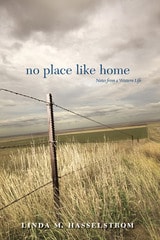
No Place Like Home
Notes from a Western LifeLinda M. Hasselstrom
University of Nevada Press, 2010
In No Place Like Home, Linda Hasselstrom ponders the changing nature of community in the modern West, where old family ranches are being turned into subdivisions and historic towns are evolving into mean, congested cities. Her scrutiny, like her life, moves back and forth between her ranch on the South Dakota prairie and her house in an old neighborhood at the edge of downtown Cheyenne, Wyoming. The vignettes that form the foundation of her consideration are drawn from the communities she has known during her life in the West, reflecting on how they have grown, thrived, failed, and changed, and highlighting the people and decisions that shaped them. Hasselstrom’s ruminations are both intensely personal and universal. She laments the disappearance of the old prairie ranches and the rural sense of community and mutual responsibility that sustained them, but she also discovers that a spirit of community can be found in unlikely places and among unlikely people. The book defines her idea of how a true community should work, and the kind of place she wants to live in. Her voice is unique and honest, both compassionate and cranky, full of love for the harsh, hauntingly beautiful short-grass prairie that is her home, and rich in understanding of the intricacies of the natural world around her and the infinite potentials of human commitment, hope, and greed. For anyone curious about the state of the contemporary West, Hasselstrom offers a report from the front, where nature and human aspirations are often at odds, and where the concepts of community and mutual responsibility are being redefined.
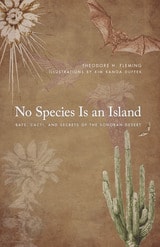
No Species Is an Island
Bats, Cacti, and Secrets of the Sonoran DesertTheodore H. Fleming; Illustrations by Kim Kanoa Duffek
University of Arizona Press, 2017
The Sonoran Desert is the most biologically diverse desert in the world. Four species of columnar cacti, including the iconic saguaro and organ pipe, are among its most conspicuous plants. No Species Is an Island describes Theodore H. Fleming’s eleven-year study of the pollination biology of these species at a site he named Tortilla Flats in Sonora, Mexico, near Kino Bay.
Now Fleming shares the surprising results of his intriguing work. Among the novel findings are one of the world’s rarest plant-breeding systems in a giant cactus; the ability of the organ pipe cactus to produce fruit with another species’ pollen; the highly specialized moth-cactus pollination system of the senita cactus; and the amazing lifestyle of the lesser long-nosed bat, the major nocturnal pollinator of three of these species.
These discoveries serve as a primer on how to conduct ecological research, and they offer important conservation lessons for us all. Fleming highlights the preciousness of the ecological web of our planet—Tortilla Flats is a place where cacti and migratory bats and birds connect such far-flung habitats as Mexico’s tropical dry forest, the Sonoran Desert, and the temperate rain forests of southeastern Alaska. Fleming offers an insightful look at how field ecologists work and at the often big surprises that come from looking carefully at a natural world where no species stands alone.
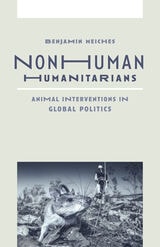
Nonhuman Humanitarians
Animal Interventions in Global PoliticsBenjamin Meiches
University of Minnesota Press, 2023
Examining the appearance of nonhuman animals laboring alongside humans in humanitarian operations
Both critical and mainstream scholarly work on humanitarianism have largely been framed from anthropocentric perspectives highlighting humanity as the rationale for providing care to others. In Nonhuman Humanitarians, Benjamin Meiches explores the role of animals laboring alongside humans in humanitarian operations, generating new ethical possibilities of care in humanitarian practice.
Nonhuman Humanitarians examines how these animals not only improve specific practices of humanitarian aid but have started to transform the basic tenets of humanitarianism. Analyzing case studies of mine-clearance dogs, milk-producing cows and goats, and disease-identifying rats, Nonhuman Humanitarians ultimately argues that nonhuman animal contributions problematize foundational assumptions about the emotional and rational capacities of humanitarian actors as well as the ethical focus on human suffering that defines humanitarianism.
Meiches reveals that by integrating nonhuman animals into humanitarian practice, several humanitarian organizations have effectively demonstrated that care, compassion, and creativity are creaturely rather than human and that responses to suffering and injustice do not—and cannot—stop at the boundaries of the human.
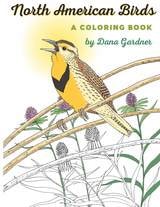
North American Birds
A Coloring BookDana Gardner
University of Iowa Press, 2017
The birds are arranged in order of their evolutionary history so that you can see the relationships among species and families. Some of them, like the northern cardinal, are familiar backyard friends; some, like the mountain quail and American bittern, are wary denizens of brushlands and marshes; and some, like the great horned owl, are seldom seen in daylight. One, unfortunately, is extinct—the bright and raucous Carolina parakeet, which once ranged widely in huge noisy flocks. All are waiting for you to bring them to life with your own vibrant colors.
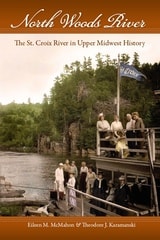
North Woods River
The St. Croix River in Upper Midwest HistoryEileen M. McMahon and Theodore J. Karamanski
University of Wisconsin Press, 2009
North Woods River is a thoughtful biography of the river over the course of more than three hundred years. Eileen McMahon and Theodore Karamanski track the river’s social and environmental transformation as newcomers changed the river basin and, in turn, were changed by it. The history of the St. Croix revealed here offers larger lessons about the future management of beautiful and fragile wild waters.
North Writers II
Our Place in the WoodsJohn Henricksson
University of Minnesota Press, 1997
A new collection of writing by contemporary Minnesota writers.
This companion volume to the widely praised North Writers: A Strong Woods Collection features the work of a variety of authors-some new voices, some old friends-all of them writing about life in northern Minnesota.
The essays included in North Writers II explore the special relationship that exists between the people of northern Minnesota and the rugged yet beautiful landscape that surrounds them. These writers consider the things that make living in the far north unique—the red earth of the Iron Range, the spectacular and forbidding wildness of Lake Superior’s North Shore, the elemental nature of climate and wilderness that tests one’s mettle. There are also the farms and towns of northern Minnesota, with their heritage of self-reliance and the insight that comes with it. Taken together, these essays provide an exploration of the character, the essence, the spirit of this northern country, as well as the mystique it holds for those from more hospitable climes.
Northern Fishes
With special reference to the upper Mississippi valleySamuel Eddy and Thaddeus Surber
University of Minnesota Press, 1974
Northern Fishes was first published in 1974. Minnesota Archive Editions uses digital technology to make long-unavailable books once again accessible, and are published unaltered from the original University of Minnesota Press editions.
With the greatly increased interest in fishes and fishing since the earlier editions of this work were published, there has been need for a revised version of this indispensable book on the fishes of the Upper Mississippi Valley. This, the third edition, revised, of Northern Fishes by Samuel Eddy and Thaddeus Surber, contains much new material and up-to-date information based on current knowledge about fishes, their environment, and fishing techniques.
The book covers more than 160 species with descriptions and line drawings to illustrate almost all of them. The authors discuss recently introduced species and their importance to sportsmen and provide current data on the distribution of northern fishes. There are keys for the identification of the species and information about where they are found and their habits. This edition also contains a number of additions to the species list which result from rather extensive collecting of specimens since the earlier editions were compiled.
Before presenting the data on individual species, the authors provide basic information about fishes in general—their structure, classification and origin, their food, and their parasites. The revised, updated section on fishing techniques includes information about spin casting. There are important chapters on lake dynamics, fish population dynamics, management of Minnesota and northern waters for fish production, and improvement of lakes and streams. The detailed information about species is arranged according to families. For further reading or reference there is a bibliography.
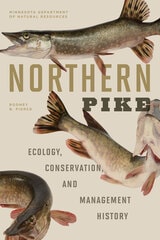
Northern Pike
Ecology, Conservation, and Management HistoryRodney B. Pierce
University of Minnesota Press, 2012
The northern pike—sometimes affectionately known as the “aquatic wolf”—is one of the most sought after and mythologized fishes in Minnesota, but until now there have been few books devoted to the history and ecological management of the species. Based on pioneering research carried out in Minnesota by leading pike specialist Rodney B. Pierce, Northern Pike Ecology, Conservation, and Management History is the most complete collection of information to date on the species, for everyone from scientists and conservation biologists to general readers and recreational anglers.
A tremendously important game fish and resource both in Minnesota and throughout the northern hemisphere, northern pike populations directly reflect local geology and human influence, playing a key role in the health of freshwater ecosystems. As urbanization spreads and the human population continues to grow, pike populations face increasing pressure, requiring new ways of looking at and managing the species. In Minnesota, groundbreaking work has been conducted on northern pike: analyses of stocking success and investigations into the relationships within fish communities, the management of rearing marshes, environmental effects on natural production, the genetics of northern pike, and strategies for scientifically monitoring pike. The state has been a leader in developing fishing regulations to help restore large pike, among many other measures designed to ensure the future quantity and health of a key species in Minnesota’s waterways.
Weaving significant historical scientific literature and technical details together with his own research, Pierce’s benchmark study documents and synthesizes the long history of northern pike management and describes the latest efforts being taken to better understand and manage this critical and renowned species.
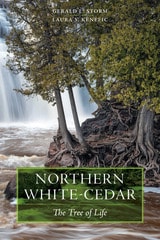
Northern White-Cedar
The Tree of LifeGerald L. Storm
Michigan State University Press, 2022

Northwest Birds in Winter
Alan Contreras
Oregon State University Press, 1997
Notes from the North Country
O. B. Eustis
University of Michigan Press, 1983
Notes of a Provincial Wildfowler
Sergei Aksakov
Northwestern University Press, 2012
Notes of a Provincial Wildfowler is filled with precise descriptions of bird behavior, observations of their life cycles, and lyrical discourses on the habitats of the Russian steppe. Aksakov's nostalgic fondness for his homeland permeates his Notes, and his passion for the habits of his subjects provides a stark contrast with his enthusiasm for the shooting--and eating--of his quarry.
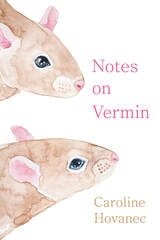
Notes on Vermin
Caroline Hovanec
University of Michigan Press, 2025
Notes on Vermin is an atlas of the literary vermin that appear in modern and contemporary literature, from Franz Kafka’s gigantic insect to Richard Wright’s city rats to Namwali Serpell’s storytelling mosquitoes. As parasites, trespassers, and collectives, vermin animals prove useful to writers who seek to represent life in the margins of power. Drawing on psychoanalysis, cultural studies, eco-Marxism, and biopolitics, this book explores four uses for literary vermin: as figures for the repressed thought, the uncommitted fugitive, the freeloading parasite, and the surplus life. In a series of short, accessible, interlinked essays, Notes on Vermin explores what animal pests can show us about our cultures, our environments, and ourselves.
Novel Ecologies
Nature Remade and the Illusions of TechAllison Carruth
University of Chicago Press, 2025
Allison Carruth’s Novel Ecologies shows how the tech industry has taken up the wilderness mythologies that shaped one strain of American environmentalism over the last century. Calling this twenty-first-century environmental imagination Nature Remade, Carruth describes a distinctly West Coast framework that is at once nostalgic and futuristic. Through three case studies (synthetic wildlife, the digital cloud, and space colonization), the book shows Nature Remade to be a quasi-religious belief in venture capitalism and big tech. This paradigm thus imagines a future in which species, ecosystems, and entire planets are re-generated and re-created through engineering.
Novel Ecologies challenges the conviction that climate change and other environmental crises must be met with ever larger-scale forms of technological intervention. Against the new worlds conjured by Google, Meta, Open AI, Amazon, SpaceX, and a host of lesser-known start-ups, Carruth marshals writers and artists who imagine provisionally hopeful environmental futures while refusing to forget the histories that have made the world what it is. On this track of the book, Carruth discusses the works of Octavia Butler, Becky Chambers, Jennifer Egan, Ruth Ozeki, Craig Santos Perez, Tracy K. Smith, Jeff VanderMeer, Saya Woolfalk, and many more. Their novels, poems, installation artworks, and expressive media offer a speculative world built on livable communities rather than engineered lifeforms.
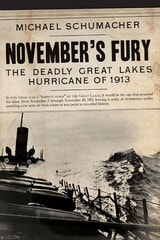
November's Fury
The Deadly Great Lakes Hurricane of 1913Michael Schumacher
University of Minnesota Press, 2014
On Thursday, November 6, the Detroit News forecasted “moderate to brisk” winds for the Great Lakes. On Friday, the Port Huron Times-Herald predicted a “moderately severe” storm. Hourly the warnings became more and more dire. Weather forecasting was in its infancy, however, and radio communication was not much better; by the time it became clear that a freshwater hurricane of epic proportions was developing, the storm was well on its way to becoming the deadliest in Great Lakes maritime history.
The ultimate story of man versus nature, November’s Fury recounts the dramatic events that unfolded over those four days in 1913, as captains eager—or at times forced—to finish the season tried to outrun the massive storm that sank, stranded, or demolished dozens of boats and claimed the lives of more than 250 sailors. This is an account of incredible seamanship under impossible conditions, of inexplicable blunders, heroic rescue efforts, and the sad aftermath of recovering bodies washed ashore and paying tribute to those lost at sea. It is a tragedy made all the more real by the voices of men—now long deceased—who sailed through and survived the storm, and by a remarkable array of photographs documenting the phenomenal damage this not-so-perfect storm wreaked.
The consummate storyteller of Great Lakes lore, Michael Schumacher at long last brings this violent storm to terrifying life, from its first stirrings through its slow-mounting destructive fury to its profound aftereffects, many still felt to this day.
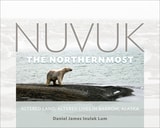
Nuvuk, the Northernmost
Altered Land, Altered Lives in Barrow, AlaskaDaniel James Inulak Lum
University of Alaska Press, 2013
As arguments over climate change rage in more temperate locales, Nuvuk, the Northernmost is a poignant snapshot of life in a town where these changes are impossible to overlook. Lum’s vivid photographs of wildlife, such as whales, polar bears, and birds, offer rare close-ups of animals few ever see. In addition, Lum provides vivid descriptions and pictures of daily life in and around Barrow, offering a compelling insider’s introduction to living on the tip of the world. With Lum as a capable guide, Nuvuk, the Northernmost is a chance to see a rare world before it changes forever.