Results by title
3785 books match the query 'Poetry' and 86 start with n

No Day at the Beach
John Brehm
University of Wisconsin Press, 2020
By turns playfully philosophical and bracingly open hearted, Brehm’s engagement with the specters of memory, pride, yearning, gain, and loss illuminate the human condition with humor and empathy.

No Doubt the Nameless
Sydney Lea
Four Way Books, 2016
No Evil Star
Selected Essays, Interviews, and ProseAnne Sexton
University of Michigan Press, 1985

No Lonesome Road
SELECTED PROSE AND POEMSDon West
University of Illinois Press, 2004
No Lonesome Road allows Don West to speak for himself. It provides the most comprehensive collection of his poetry ever published, spanning five decades of his literary career. It also includes the first comprehensive and annotated collection of West's nonfiction essays, articles, letters, speeches, and stories, covering his role at the forefront of Southern and Appalachian history, and as a pioneer researcher and writer on the South's little-known legacy of radical activism.
Drawing from both primary and secondary sources, including previously unknown documents, correspondence, interviews, FBI files, and newspaper clippings, the introduction by Jeff Biggers stands as the most thorough, insightful biographical sketch of Don West yet published in any form.
The afterword by George Brosi is a stirring personal tribute to the contributions of West and also serves as a thoughtful reflection on the interactions between the radicals of the 1930s and the 1960s.
The best possible introduction to his extraordinary life and work, this annotated selection of Don West's writings will be inspirational reading for anyone interested in Southern history, poetry, religion, or activism.
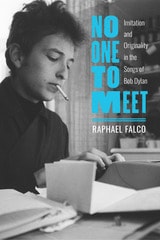
No One to Meet
Imitation and Originality in the Songs of Bob DylanRaphael Falco
University of Alabama Press, 2022
WINNER OF THE ELIZABETH AGEE PRIZE IN AMERICAN LITERATURE
A groundbreaking appreciation of Dylan as a literary practitioner.
The literary establishment tends to regard Bob Dylan as an intriguing, if baffling, outsider. That changed overnight when Dylan was awarded the 2016 Nobel Prize in Literature, challenging us to think of him as an integral part of our national and international literary heritage. No One to Meet: Imitation and Originality in the Songs of Bob Dylan places Dylan the artist within a long tradition of literary production and offers an innovative way to understand his unique and often controversial methods of composition.
Dylan expert Raphael Falco traces the similarities between the way Dylan borrows, digests, and transforms traditional songs and what Renaissance writers called imitatio. Although Dylan’s lyrical postures may suggest an avant-garde consciousness, No One to Meet shows that Dylan’s creative process creatively expands methods used by classical and Renaissance authors.
Drawing on numerous examples, including Dylan’s previously unseen manuscript excerpts and archival materials, Raphael Falco illuminates how the ancient process of poetic imitation, handed down from Greco-Roman antiquity, allows us to make sense of Dylan’s musical and lyrical technique. By placing Dylan firmly in the context of an age-old poetic practice, No One to Meet deepens our appreciation of Dylan’s songs and allows us to celebrate him as what he truly is: a great writer.
No Rattling of Sabers
An Anthology of Israeli War PoetryTranslation and introduction by Esther Raizen
University of Texas Press, 1995
<p>Raizen explores in an introductory essay the issue of whether poetry written with a defined political message and in the context of certain historical events can function adequately on the aesthetic level. She also tracks the changes in the characteristics of Israeli war poetry from 1948 to 1991, beginning with the glorified patriotism expected in the 1930s-1940s and progressing to the critical ideas in the later years, during which poetry is characterized by understatement and cynicism.</p>

No Second Eden
PoemsTurner Cassity
Ohio University Press, 2002
If you think that Turner Cassity has mellowed or slowed down since the 1998 release of his selected poems, The Destructive Element, think again. In No Second Eden Cassity is back more Swiftian than ever. Among the targets reduced to ruin are countertenors, parole boards, the French Symbolists, calendar reformers, the Yale Divinity School, and the cult of Elvis. Without turning a blind eye, he even extends a toast to Wernher von Braun.
Surprisingly, there is a poem about the Mississippi in which Cassity grew up. Unsurprisingly, it is a vision quite unlike others of that state. Its chilly and amusing precision is about as far from Southern Gothic as you can get, although elsewhere there are faint hints of a failed Good Ole Boy. Indeed, the final poems in the collection are a bit more personal than one expects of this writer.
As rigorous in form as they are in feeling, the poems of No Second Eden are not for those with preconceived ideas of poetry or its purpose. Early in Cassity’s career, James Merrill described Cassity’s work as “an opera house in the jungle.” True so far as it goes, but he might also have called it the jungle in the opera house: a glimpse at the savagery behind every façade.
No Sign
Peter Balakian
University of Chicago Press, 2022
In these poems, Peter Balakian wrestles with national and global cultural and political realities, including challenges for the human species amid planetary transmutation and the impact of mass violence on the self and culture. At the collection’s heart is “No Sign,” another in Balakian’s series of long-form poems, following “A-Train/Ziggurat/Elegy” and “Ozone Journal,” which appeared in his previous two collections. In this dialogical multi-sectioned poem, an estranged couple encounters each other, after years, on the cliffs of the New Jersey Palisades. The dialogue that ensues reveals the evolution of a kaleidoscopic memory spanning decades, reflecting on the geological history of Earth and the climate crisis, the film Hiroshima Mon Amour, the Vietnam War, a visionary encounter with the George Washington Bridge, and the enduring power of love..
Whether meditating on the sensuality of fruits and vegetables, the COVID-19 pandemic, the trauma and memory of the Armenian genocide, James Baldwin in France, or Arshile Gorky in New York City, Balakian’s layered, elliptical language, wired phrases, and shifting tempos engage both life’s harshness and beauty and define his inventive and distinctive style.
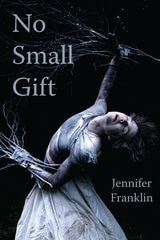
No Small Gift
Jennifer Franklin
Four Way Books, 2018
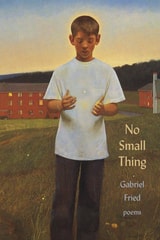
No Small Thing
Gabriel Fried
Four Way Books, 2025
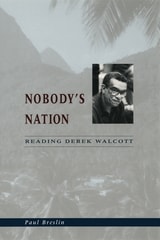
Nobody's Nation
Reading Derek WalcottPaul Breslin
University of Chicago Press, 2001
According to Breslin, Walcott's work is centrally concerned with the West Indies' imputed absence from history and lack of cohesive national identity or cultural tradition. Walcott sees this lack not as impoverishment but as an open space for creation. In his poems and plays, West Indian history becomes a realm of necessity, something to be confronted, contested, and remade through literature. What is most vexed and inspired in Walcott's work can be traced to this quixotic struggle.
Linking extensive archival research and new interviews with Walcott himself to detailed critical readings of major works, Nobody's Nation will take its place as the definitive study of the poet.
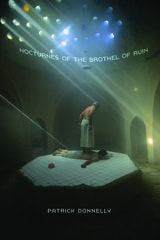
Nocturnes of the Brothel of Ruin
Patrick Donnelly
Four Way Books, 2012
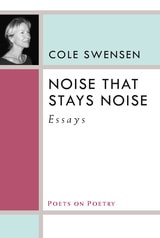
Noise That Stays Noise
EssaysCole Swensen
University of Michigan Press, 2011
Praise for Cole Swensen:
"One of the most assured voices in contemporary poetry."
---Library Journal
"Engaging and delightful."
---Publishers Weekly
A volume in the Poets on Poetry series, which collects critical works by contemporary poets, gathering together the articles, interviews, and book reviews by which they have articulated the poetics of a new generation.
Ezra Pound famously said that literature is "news that stays news," but recent experiments in poetry and the sciences allow us to enlarge the statement to bring information theory and biology to bear on the issue---in particular, how the information theory–based model of self-organization from noise offers a way to look at language as an art material as well as a mode of communication. This concept directs these essays on poetry by contemporary poet Cole Swensen.
Noise That Stays Noise covers a variety of subjects relevant to contemporary poetry and will give the general reader a broad notion of the issues that inform discourse around poetry today. Space---the conceptual geometry of poetry and its concrete mise-en-page---is an underlying theme of this collection, sometimes approached directly through the work of other twentieth-century poets, sometimes more obliquely through considerations of the role of the visual arts in contemporary poetry. This question of space and the shapes it includes and acquires offers a different way to look at some familiar writers, such as Mallarmé and Olson, and a way to introduce several more recent writers who may not yet be known to the general public.
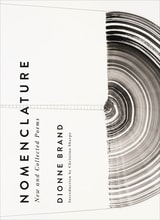
Nomenclature
New and Collected PoemsDionne Brand
Duke University Press, 2022
Spanning almost four decades, Dionne Brand’s poetry has given rise to whole new grammars and vocabularies. With a profound alertness that is attuned to this world and open to some other, possibly future, time and place, Brand’s ongoing labors of witness and imagination speak directly to where and how we live and reach beyond those worlds, their enclosures, and their violences.
Nomenclature: New and Collected Poems begins with a new long poem, the titular Nomenclature for the Time Being, in which Dionne Brand’s diaspora consciousness dismantles our quotidian disasters. In addition to this searing new work, Nomenclature collects eight volumes of Brand’s poetry published between 1982 and 2010 and includes a critical introduction by the literary scholar and theorist Christina Sharpe.
Nomenclature: New and Collected Poems features the searching and centering cantos of Primitive Offensive; the sharp musical conversations of Winter Epigrams and Epigrams to Ernesto Cardenal in Defense of Claudia; and the documentary losses of revolutions in Chronicles of the Hostile Sun, in which “The street was empty/with all of us standing there.” No Language Is Neutral reads language, coloniality, and sexuality as a nexus. Land to Light On writes intimacies and disaffections with nation, while in thirsty a cold-eyed flâneur surveys the workings of the city. In Inventory, written during the Gulf Wars, the poet is “the wars’ last and late night witness,” her job is not to soothe but to “revise and revise this bristling list/hourly.” Ossuaries’ futurist speaker rounds out the collection and threads multiple temporal worlds—past, present, and future.
This masterwork displays Dionne Brand’s ongoing body of thought—trenchant, lyrical, absonant, discordant, and meaning-making. Nomenclature: New and Collected Poems is classic and living, a record of one of the great writers of our age.
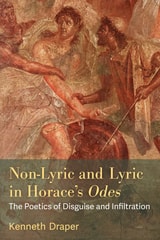
Non-Lyric and Lyric in Horace's Odes
The Poetics of Disguise and InfiltrationKenneth Draper
University of Michigan Press, 2026
Kenneth Draper’s new volume investigates genre, gender, and self-presentation in Horace’s first collection of Odes. It examines how Horace uses non-lyric genres—elegy, epic, invective, and philosophical discourse—to define his lyric project, responding to the rhetorical challenge of writing in the wake of civil war. It shows how Horace employs a “poetics of disguise and infiltration” in his engagement with these other genres. At times, he assimilates his lyric persona to an elegiac one, claiming to share elegy’s effeminacy and disinterest in politics. Similarly, he draws on philosophical discourse to present himself as too modest for heavy political themes. In both cases, he turns to clothing metaphors to identify the slight persona as a disguise that he may assume or discard as needed. Through this disingenuous self-presentation, he disavows interest in the masculine modes of epic and invective. Read as reflections on Horace’s own infiltration of epic territory, the examined scenes give clues about his motivations: focusing on the characters’ self-preservation amid dangers, he reminds readers of the risks and audacity of his project.
Nonprofit
Matt Burriesci
New Issues Poetry and Prose, 2015
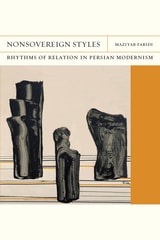
Nonsovereign Styles
Rhythms of Relation in Persian ModernismMaziyar Faridi
Northwestern University Press, 2027
Exploring motifs in modern Persian literature and Iranian film that demand new forms of relationality from politics
Assembling an understudied corpus of literary and filmic texts at the intersection of Persian and global modernism, Maziyar Faridi traces a constellation of aesthetic motifs that resist colonially imported constructs of political relationality in order to argue for an intermedial poetics of nonsovereignty. Moving from the poetry of Nima Yushij and Ahmad Shamlou to the ciné-poems of Férydoun Rahnéma and Forugh Farrokhzad, Nonsovereign Styles charts the transformation of poetic language through its exposure to minor ethnic languages and the rhetorics of English, French, and Spanish modernist poetry and alternative film. Faridi centers two key motifs: ezterāb, a trembling rhythm in which the self encounters itself as difference, and mehr, an aporetic mode of relation beyond identity, community, and sovereignty. Against the state’s project of ethnonationalism, these motifs form a poetics that is both transhistorical and transnational, producing a translational link between Iranian and internationalist poets, such as Langston Hughes and Paul Éluard. By situating Persian modernism within the broader map of global modernism, this book invites us to consider what reading these texts can teach us today about styles of relating to the world and the very sense of the political.
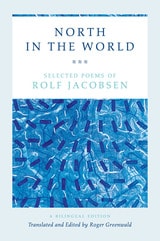
North in the World
Selected Poems of Rolf Jacobsen, A Bilingual EditionRolf Jacobsen
University of Chicago Press, 2002
Drawing from all twelve of his books, and including one poem collected posthumously, North in the World offers award-winning English translations of Jacobsen's poems, accompanied by the original Norwegian texts. The translator, the American poet Roger Greenwald, worked with Jacobsen himself to correct errors that had crept into the Norwegian texts over the years. An in-depth introduction by Greenwald highlights the main features of Jacobsen's poetry, and extensive endnotes, as well as indexes to titles and first lines in both languages, enhance the usefulness of the book for general readers and scholars alike. The result is the definitive bilingual edition of Jacobsen's marvelous poetry.
Nostalgia for a World Where We Can Live
Monica Berlin
Southern Illinois University Press, 2018
These poems notice the day in the wind, the night tucked up to the train tracks, and a slipping-in of yesterday, memory-laden, alongside the promise of a more hopeful tomorrow. Here is the Midwest, vibrant and relic, in the ongoing years of collapse and recovery. Here the constant companionship of weather lays claim to its own field of vision. Here, too, devastation: what’s left after. Berlin reminds us we are at the mercy of rivers, oceans, earth, wind, rain, blizzard, drought, and each other. “Maybe what I mean / to say is that I’ve come to see all the names we might / recognize destruction by,” Berlin’s speaker discovers. “We might / sometimes, stupidly, call it love.”
On her familiar prairie of lyricism and tumult, beauty and ruin, Berlin’s poems insist, plead, and seek to reassure. In a collection both mournful and urgent, both a “little book of days” and a song, this poet meditates on loss, wonder, and always the consolations of language.
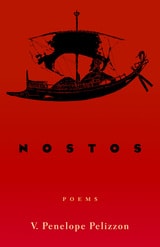
Nostos
V. Penelope Pelizzon
Ohio University Press, 1999
In choosing the winning manuscript for the Hollis Summers Poetry Prize, judge Andrew Hudgins remarked: “With immense poetic verve, Pelizzon finds flamboyance in places where it has been forgotten and brings it back to vivid life—and she sees it for what it is. Her vision is then both passionate and dispassionate at the same time, a maturity of perspective that is just one of the many accomplishments of this superb first book.”
In Nostos (the voyage of return) V. Penelope Pelizzon demonstrates again and again a worldly perspective, made clear and complex by her intelligence that is itself a treat to witness at play. Whether set in a Purgatory garden or on the platform of a bombed train station, these poems enthrall with language that is, in the words of one reader, “both the vehicle for vision and the vision itself.”
Nostos is indeed a voyage—of the mind and heart—guided by Pelizzon’s compelling images and rhythms and one that returns us to where we started, but not unchanged.
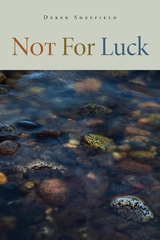
Not For Luck
Derek Sheffield
Michigan State University Press, 2021
In Not For Luck, Derek Sheffield ushers us into the beauty and grace that comes from giving attention to the interconnections that make up our lives. In particular, these poems explore a father’s relationship with his daughters, which is rooted in place and time. There is tenderness and an abiding ecological consciousness, but also loss and heartache, especially about environmental degradation. We are invited to listen to the languages of other beings. Through encounters with a herd of deer, a circle of salmon in a mountain creek, two bears on a stretch of coast, a river otter, and a shiny-eyed wood rat, these poems offer moments of wonder that celebrate our place as one species among many on our only earth.

Not God
A Play in VerseMarc J. Straus
Northwestern University Press, 2006
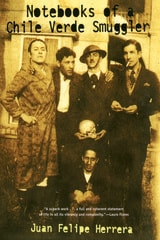
Notebooks of a Chile Verde Smuggler
Juan Felipe Herrera
University of Arizona Press, 2002
Notebooks of a Chile Verde Smuggler is a river of faces and phrases, jottings and reflections—a personal pilgrimage and collective parade of love, mock-prophecy, and chiste. Tuning in voices from numerous time zones, languages, and minds, Herrera recalls his childhood and coming of age, his participation in the Chicano Movement, and the surreal aspects of postmodern America. He uses broad strokes to paint a historical, social, and familial portrait that moves from the twilight of the nineteenth century to the dawn of the twenty-first, then takes up a finer brush to etch the eternal tension between desire and frustration, hope and disillusionment, violence and tenderness.
Here are transamerican sutras spanning metrocenters from Mexico City to San Francisco, or slinking across the border from Juárez to El Paso. Outrageous, rhythmic lists—"Foodstuffs They Never Told Us About," "Things Religion Makes Me Do"—that fire the imagination. Celebrations of his Plutomobile that "runs on ham hawks & bird grease," and of Chicano inventions such as cilantro aftershave and "the art of eating Vicks VapoRub with your dedos."
Pushing forms to the edge of possibility while forcing readers to rethink reality as well as language, Herrera invokes childhoods and neighborhoods, stand-up clowns and Movimiento gypsies, grandmothers of the buñuelo kitchen and tragicomic soliloquies of dizzy-headed outcasts of paradise. Notebooks of a Chile Verde Smuggler is a crucible of flavorful language meant to be rolled lazily on the mind's tongue—and then swallowed whole to let its hot and savory sweetness fill your soul.
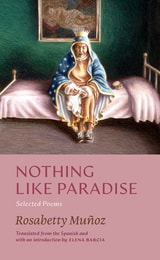
Nothing Like Paradise
Selected PoemsRosabetty Muñoz, Elena Barcia
Northwestern University Press, 2027
The first English-language translation of Rosabetty Muñoz’s vital and innovative poetry from across her extraordinary body of work
Rosabetty Muñoz is one of Chile’s most acclaimed and innovative contemporary poets. Her poems highlight the lives of girls and women on the islands of the Chilean archipelago, portraying the hardships they encounter in this often-overlooked region of the world. In this meticulous and compelling translation from Elena Barcia, Nothing Like Paradise offers a collection of selected works from across Muñoz’s oeuvre, offering a close look into the breadth and emotional intensity of her poetry.
These poems depict the wounds inflicted by the Pinochet dictatorship, foreign invasions, sexual exploitation, the incursions of global capitalism, and political exile. Renowned for her powerful use of multiple voices and striking images, Muñoz channels the thoughts and emotions of the islands’ female inhabitants, bringing immediacy and drama to their stories and transforming readers into their witnesses and confidants. Her poems invite us to confront pain and injustice with empathy and to turn understanding into a collective act of compassion and resistance.
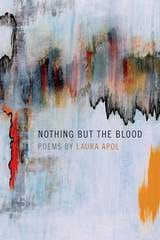
Nothing but the Blood
Laura Apol
Michigan State University Press, 2018
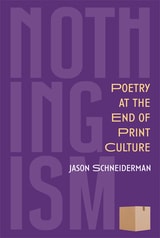
Nothingism
Poetry at the End of Print CultureJason Schneiderman
University of Michigan Press, 2025
In this collection, the essays range from blistering manifesto to deep historical dives to gentle classroom guidance to considerations of the poems of James Merrill and Agha Shahid Ali, moving between the theoretical and the practical. Nothingism is both deeply personal and highly erudite, providing an engaging and scholarly account of reading, writing, and teaching poetry as our world continues its unsupervised lurch toward digital culture.

Novas
Selected WritingsHaroldo de Campos
Northwestern University Press, 2007
A generous introduction to one of the key literary figures to emerge from Brazil in the second half of the twentieth century, this book offers English-speaking readers an ample selection of this prodigious writer's celebrated poetry and widely influential critical work. As a poet and as a cofounder of the renowned group Noigandres, Haroldo de Campos has made a unique and substantial contribution to the theory and practice of experimental writing, particularly the form known as concrete poetry, and to the Latin American avant-garde as a whole. These contributions, acclaimed worldwide by figures such as Umberto Eco, Jacques Derrida, Octavio Paz, and Guillermo Cabrera Infante, can be observed unfolding here, first in poetry selections ranging from de Campos' early work before concretism through his most recent production; then in theoretical texts that trace his evolution as a critic from an early interest in baroque and modernist writers to his development of an innovative model for reading, translating, and writing. This second, critical section of the book includes de Campos' encounters with the tasks of translating and reading some of the most important texts of Eastern and Western culture-from Ecclesiastes to the No play Hagoromo, from Dante to Paz-thus charting a genealogy of modern literature.
Together, these poems and critical writings afford English-speaking readers their first sustained exposure to a unique personality within the international avant-garde, a writer described by Brazilian poet João Cabral de Melo Neto as "that wonderful thing: / a poet and a translator who came to literature armed with an enviable / knowledge of the literary phenomenon."
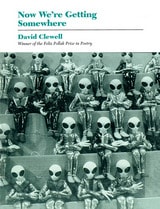
Now We're Getting Somewhere
David Clewell
University of Wisconsin Press, 1994
This is a book of sustenance, of fresh assurances that come to us—ready or not—out of the blue of this spirited poet’s most engaging work yet.
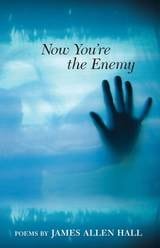
Now You're the Enemy
PoemsJames Allen Hall
University of Arkansas Press, 2007
A family in the aftermath of violence These raw and powerful poems have at their heart the charged, archetypal figure of the mother. Conflicted by the twin desires of self-destruction and self-preservation, this mother is both terrible and beautiful. This compassionate, nervy collection of poems shows a family in the aftermath of violence. James Allen Hall explores themes of loss, the intersection of grief and desire, and the ways in which history, art, and politics shape the self. We meet the speaker's mother in many guises-she is the rogue Republic of Texas, the titular character of Rosemary's Baby, a nineteenth century artist's model, a fake entry in an encyclopedia, the lost queen of King Lear. With clarity, wit, and compassion, the speaker discovers the facets of his mother-her own abuse, her years of adultery, her struggle to remain independent-so that he may come to terms with his own sexuality. By seeing his mother in these guises, the speaker understands identity as it develops along and is reclaimed from the most repressive of social margins. Hall's poems twine the autobiographical impulse with a deeper emotional, somewhat surreal, temperament. This is a book as much about the way we tell our stories as it is about the stories we tell. Now You're the Enemy negotiates narrative in order to refashion the self-as a way to survive, to learn the redemptive power of love.
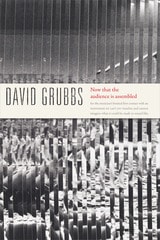
Now that the audience is assembled
David Grubbs
Duke University Press, 2018
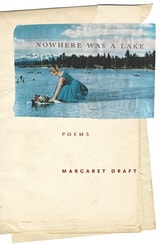
Nowhere Was a Lake
Margaret Draft
Four Way Books, 2024
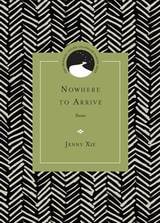
Nowhere to Arrive
PoemsJenny Xie, foreword by Chris Abani
Northwestern University Press, 2017
At the chapbook's center are two long poems, titled "Phnom Penh Diptych: Wet Season" and "Phnom Penh Diptych: Dry Season," that examine the escapist narratives that draw tourists and expatriates to Cambodia, and the speaker’s own privileged positioning.
On a formal level, the poems in Nowhere to Arrive make room for the unsaid and that which cannot be articulated. Here, we have a vocabulary of silence alongside stark imagistic juxtapositions, poems that celebrate compression and the force of paratactic constructions. Attentiveness and concentration emerge as virtues, as the speaker surveys the vast territory of the present with a wakeful gaze.
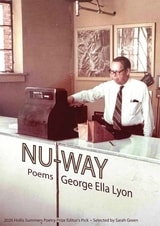
Nu-Way
PoemsGeorge Ella Lyon
Ohio University Press, 2027
Nu-Way traces the evolution of a writer from a three-year-old sitting on the counter of her daddy’s dry cleaner's to a fully developed poet. George Ella Lyon journeys from her role as the keeper of family stories to the teller of her own. This is a book of becoming, of claiming a self.
Growing up in the mountains of eastern Kentucky, near all four of her grandparents, Lyon was schooled in secrets and learned, of necessity, to keep her own. In Nu-Way, her sixth collection, she takes up both sides of the family tapestry: the scenes intentionally stitched and the tangle on the other side. This is not a process of power, but of inner transformation, of coming to terms with herself as well as the people who made her. It holds the tension of opposites—the individual and the collective—without sacrificing either. Highly sharable, Nu-Way will appeal to readers who often feel shut out of poetry.
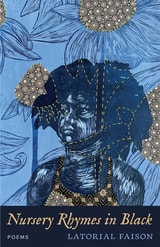
Nursery Rhymes in Black
PoemsLatorial Faison
University of Alaska Press, 2025
The collection highlights family, overcoming adversity, and endurance from the Black female perspective and celebrates the individuals and experiences that shape life and have catapulted the author into a unique existence. Narrative poems give voice to the Black Southern girlhood experience of being saved, nurtured, inspired, and even challenged by plight and circumstance. Strengthened by her experiences, Faison provides power, courage, and wisdom that resonate deeply. These poems walk in naked truth on a lyrical, musical tightrope as each brings wisdom and honesty in the intimacy of arranged words. Faison takes readers along the development of her own identity, considering stories of unsung heroes, the hands that feed us, the ancestors and traditions that form us, and the challenging ways that race, history, education, and culture intersect. With this spiritually moving collection, Faison joins all poets and writers who have come to prolifically amplify Black voices, to tell Black stories, to continue the Black literary tradition we have been gifted.
In these poems, Faison calls readers into poetic fellowship with the memories, the legacies, the truths of Black women in the South. There is reverence, history, and glory on these pages celebrating the hands, hearts, work, trouble, and ways of Black women and all the ways they teach, become, fascinate, struggle, survive, and exist in the world. Nursery Rhymes in Black lulls us—but not to sleep—rather, to wake up, to speak out, to take a stand, to advocate as we pause to remember, understand, and celebrate.
neckbone
visual versesavery r. young; foreword by Theaster Gates
Northwestern University Press, 2019
no swaddle
Mackenzie Kozak
University of Iowa Press, 2025
Brockman-Campbell Book Award for Poetry, Honorable Mention
Mackenzie Kozak examines the complex question of whether or not to bear children. Through a series of untitled American sonnets, the poems speak to themes of origin and desire, noting the shame that can accompany such a decision. Many poetry collections speak to the varied griefs of becoming a mother, losing a child, or being unable to have a child, but this collection gives specific voice to another grief that feels unspeakable: the possible conclusion of not wanting to be a mother.
no swaddle reads as a sort of meditation on theme, its repeated form mirroring the spiraling nature of indecision and reconsideration of the same major question alongside its continuous struggle to name. In the end, this grappling with elements of grief and shame becomes a way of moving toward greater agency and fulfillment.